

P0430 on 2017-2018 Chevrolet Express: Catalyst Efficiency Causes and Fixes
P0430 on a 2017-2018 Chevy Express indicates that the catalytic converter on Bank 2 (passenger side) is inefficient. The most likely cause is a failed catalytic converter, but always check for exhaust leaks (especially broken manifold bolts on V8 models) and faulty oxygen sensors first to avoid a costly misdiagnosis. The 6.0L V8 is notorious for the rearmost manifold bolts breaking, causing a leak that mimics a bad converter.
- P0430 means the catalytic converter on the passenger side (Bank 2) is not working efficiently.
- Before assuming the expensive catalytic converter has failed, ALWAYS inspect for exhaust leaks, especially broken exhaust manifold bolts, which are a very common issue on these vans.
- Use a scan tool to watch O2 sensor data. If the downstream sensor's voltage graph mimics the upstream sensor's, the converter is likely bad.
- If you find and fix other codes first, especially engine misfires (P0300-P0308), you will prevent the premature failure of a new catalytic converter.
- On a brand new or very low mileage van, this code might appear due to an interrupted catalyst break-in procedure as noted in TSB PIP3119P.
What's Unique About the 2017-2018 Chevrolet EXPRESS
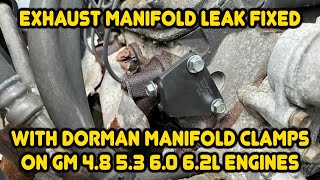
On V8-equipped Chevrolet Express vans, a very common trigger for a P0430 code is not the catalytic converter itself, but an exhaust leak from a broken exhaust manifold bolt. These engines are known for the rearmost bolts breaking due to extreme heat cycling, which allows oxygen into the exhaust and tricks the sensors into reporting poor catalyst efficiency. This issue is so prevalent that aftermarket clamp-style repair kits are widely available to fix the leak without the difficult task of extracting the broken bolt. 🎬 Watch: How to install manifold clamps on GM V8 engines. Additionally, GM issued a TSB (PIP3119P) noting that on new or low-mileage vehicles, the diagnostic test for this code is disabled for the first hour of engine operation to allow the converter to break in.
Diagnostic Flowchart
Tap your situation to follow the diagnostic path that matches what you're seeing on this vehicle.
Symptoms You May Notice
- Check Engine Light is on
- Vehicle fails an emissions test
- Increased engine noise, such as a ticking or hissing sound, especially when the engine is cold. This often goes away as the engine warms up and the metal expands, temporarily sealing the leak.
- Reduced engine power and acceleration, feeling 'bogged down'.
- Decrease in fuel economy.
- Exhaust or rotten egg smell from the exhaust.
- Replacing the oxygen sensors when the catalytic converter is the actual failure.
- Replacing the catalytic converter without first checking for exhaust leaks from broken manifold bolts, which is a very common root cause on the 6.0L V8.
- Replacing the catalytic converter without fixing an underlying engine problem (like a misfire), which will cause the new converter to fail prematurely.
Most Likely Causes
- Failing or Clogged Catalytic Converter 🔴 High Probability Catalytic converters can fail from age or contamination from engine issues like misfires or burning oil, which can be a concern on higher-mileage work vans. Owners and mechanics often report that if no exhaust leaks or sensor issues are found, the converter is almost certainly the cause.
How to confirm: After ruling out other causes, use an infrared thermometer to measure the converter's temperature on a fully warmed-up engine. The outlet pipe should be at least 100°F hotter than the inlet pipe. If the temperatures are similar or the inlet is hotter, the converter is likely bad. A fully functional converter should 'light off' around 350-500°F.
Typical fix: Replace the Bank 2 catalytic converter assembly. It is highly recommended to use OEM or high-quality aftermarket parts to ensure proper function and longevity, as cheap aftermarket converters are known to fail quickly.
Est. part cost: $400-$1500+ - Exhaust Leak (especially broken manifold bolts) 🟡 Medium Probability The 6.0L V8 engines in these vans are notorious for the rear-most exhaust manifold bolts breaking off due to heat cycle stress, causing a leak that allows unmetered oxygen into the exhaust stream, triggering a false P0430 code. This is a widely documented issue across GM trucks with this engine family.
How to confirm: Listen for a distinct ticking noise from the passenger side of the engine bay, especially on a cold start. Visually inspect the exhaust manifold for black soot trails indicating a leak. A smoke test is the most definitive way to find a small leak.
Typical fix: Replace the broken exhaust manifold bolts and the manifold gasket. This can be difficult as broken bolts often need to be drilled out. A popular and much faster alternative is to install a clamp-style repair kit (e.g., Dorman 917-107 or APDTY 028253) which brackets the manifold to the cylinder head, sealing the leak without removing the broken bolt.
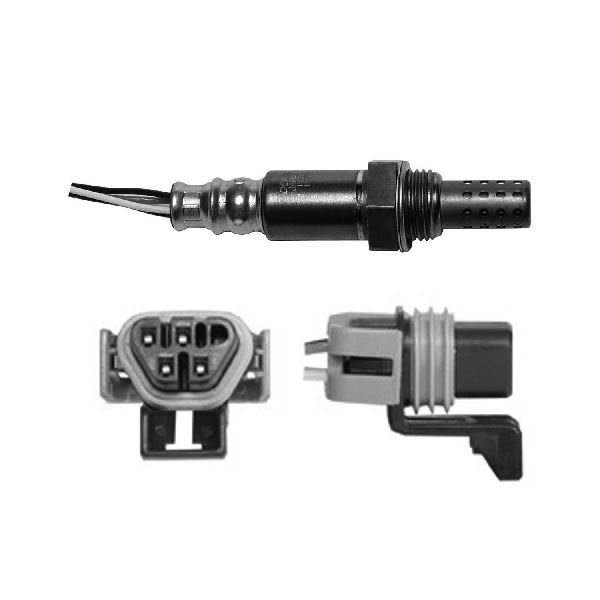
Est. part cost: $20-$100 - Faulty Oxygen (O2) Sensor 🟡 Medium Probability O2 sensors are wear-and-tear items. A failing downstream (post-catalyst) sensor can become slow or biased, sending incorrect data to the PCM and falsely triggering the P0430 code.
How to confirm: Use a scan tool to monitor the live voltage data from the Bank 2, Sensor 2 (downstream) O2 sensor. A healthy downstream sensor should show a relatively stable voltage (typically above 0.5V). If it's fluctuating rapidly, mimicking the upstream sensor, the converter is likely bad. If the voltage is stuck, lazy, or does not respond, the sensor itself is likely faulty. Swapping the downstream sensors from Bank 1 and Bank 2 and seeing if the code changes to P0420 is another effective diagnostic trick.
Typical fix: Replace the Bank 2 downstream oxygen sensor. The ACDelco OEM part is a common choice. It is often recommended to replace O2 sensors when replacing a high-mileage catalytic converter as a set.
Est. part cost: $50-$120 - Engine Misfires or Fuel Mixture Issues ⚪ Low Probability Worn spark plugs, failing ignition coils, or faulty fuel injectors can cause unburnt fuel to enter the exhaust, which overheats and rapidly destroys the catalytic converter's internal structure.
How to confirm: Check for other trouble codes, particularly misfire codes (P0300-P0308) or fuel trim codes (P0172, P0175). A flashing check engine light indicates a severe, active misfire that is damaging the converter.
Typical fix: Address the root cause of the misfire or fuel mixture issue before replacing the catalytic converter. This may involve replacing spark plugs, ignition coils, or fuel injectors. Failure to do so will cause the new converter to fail prematurely.
Est. part cost: $50-$400
Rare But Worth Checking
- PCM Software Issue on New/Low-Mileage Vehicles: Per TSB #PIP3119P, a P0430 code can be set falsely on a new vehicle if the battery was disconnected before the one-hour catalyst break-in period was complete. The fix is to clear the codes and perform a specific drive cycle: 25-30 minutes at sustained highway speed, stop and shut off for 1 minute, then another 10-15 minutes at highway speed.
Diagnosis Steps
- Scan the PCM for any other trouble codes. Address any misfire, fuel system, or other sensor codes before proceeding, as they can be the root cause.
- Inspect the exhaust system thoroughly from the engine manifold to the rear of the vehicle. Listen for a ticking/hissing noise, especially on a cold start, which is a classic sign of a manifold leak. Look for black soot trails. A smoke test is the most effective method to find hard-to-see leaks.
- Use a scan tool to observe live data for the Bank 2 oxygen sensors. The upstream (Sensor 1) voltage should fluctuate rapidly between approximately 0.1V and 0.9V. The downstream (Sensor 2) voltage should be relatively steady and high (e.g., >0.6V). If the downstream sensor mimics the upstream, the converter is not working.
- If the downstream O2 sensor's readings are stuck, lazy, or erratic, test the sensor and its wiring. Consider swapping the left and right downstream sensors to see if the fault code follows the sensor (e.g., changes to P0420), which would confirm a bad sensor.
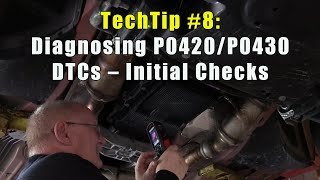
- If no exhaust leaks are found and the O2 sensors are functioning correctly, perform a temperature test on the catalytic converter using an infrared thermometer. The outlet should be at least 100°F hotter than the inlet on a fully warmed-up engine.
- If the temperature test fails and all other possibilities are ruled out, the catalytic converter has failed and needs to be replaced.
Parts You'll Likely Need
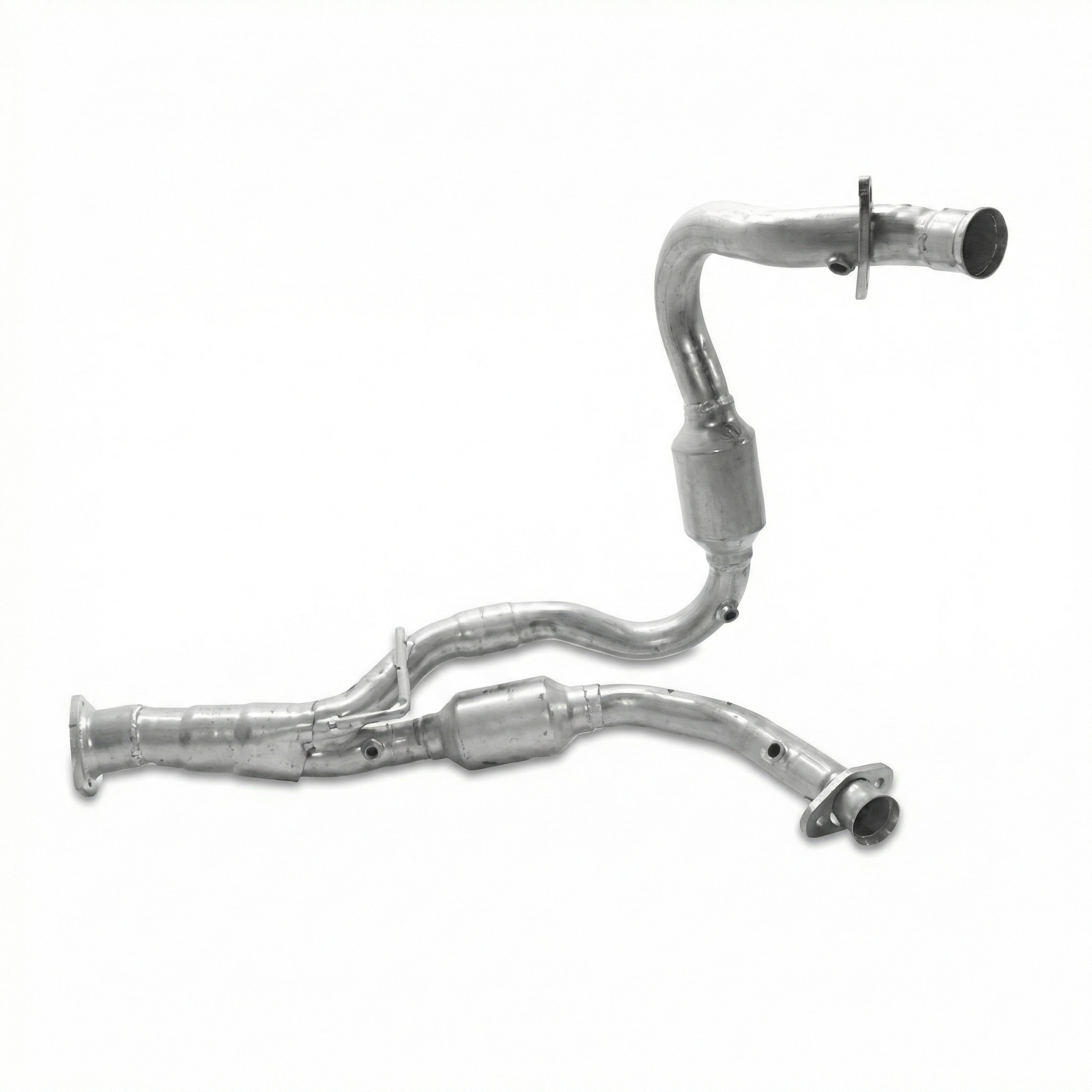
- Bank 2 Catalytic Converter — This is the most common direct cause of P0430 when exhaust leaks and sensor faults are ruled out.
Trusted brands: ACDelco, Walker Exhaust, MagnaFlow
OEM price range: $800-$1500+
Aftermarket price range: $400-$900 - Downstream Oxygen Sensor (Bank 2, Sensor 2)
(OEM #12609457)— A faulty sensor can send incorrect data, causing a false P0430 code. It's a common wear item and a key part of the diagnostic process. Note: Fitment for 12609457 is primarily listed up to 2016 models, so verifying the part number for 2017-2018 with a VIN is critical.
Trusted brands: ACDelco, Denso, Bosch
OEM price range: $80-$150
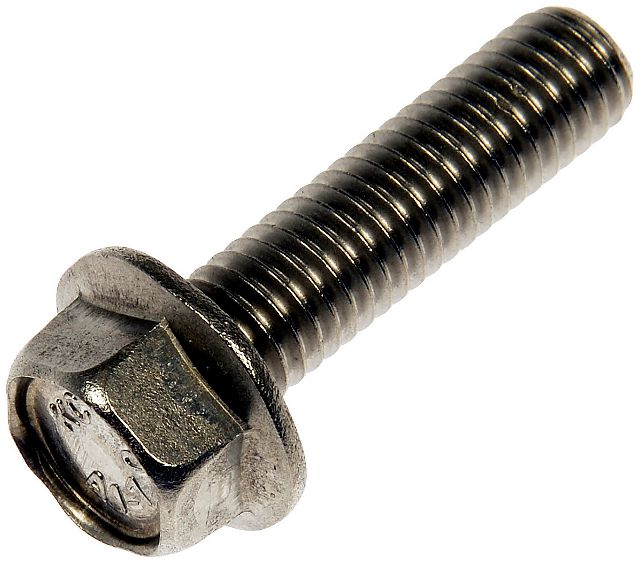
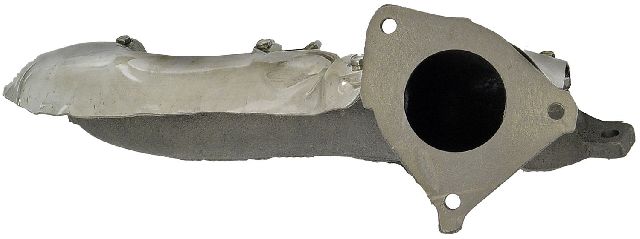
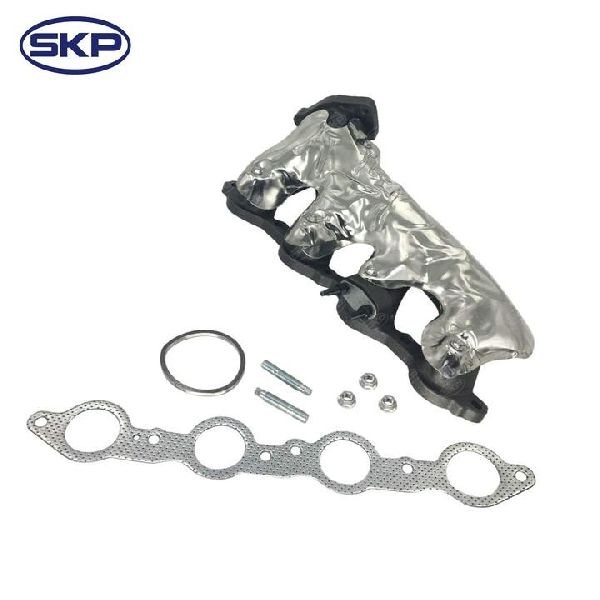
Aftermarket price range: $50-$100 - Exhaust Manifold Bolt & Gasket Kit — Fixing a broken exhaust manifold bolt is a common prerequisite to fixing a P0430 on the 6.0L V8.
Trusted brands: Dorman, ACDelco, Fel-Pro
OEM price range: $50-$150
Aftermarket price range: $20-$80 - Exhaust Manifold Clamp Repair Kit — A popular, time-saving alternative to extracting broken manifold bolts on the 6.0L V8.
Trusted brands: Dorman 917-107, APDTY 028253
OEM price range: N/A
Aftermarket price range: $40-$100
Related Codes That Often Appear With This One
- P0420 — This is the identical code for Bank 1 (driver's side). If both appear, it may suggest a systemic issue like contaminated fuel, an issue affecting both banks (like broken manifold bolts on both sides), or simply that both converters have reached the end of their service life.
- P0300-P0308 — These are misfire codes. An engine misfire can dump raw fuel into the exhaust, destroying the catalytic converter and causing P0430. The misfire must be fixed first.
Technical Service Bulletins (TSBs) & Recalls
- PIP3119P: Details a potential for false P0420/P0430 codes on new or low-mileage vehicles due to an incomplete catalyst break-in cycle, often after a battery disconnect. It provides a specific drive cycle to properly break-in the converter and clear the code.
Platform-Specific Known Issues
- Broken exhaust manifold bolts are a very common problem on the 6.0L V8 engines. The rear-most bolts are especially prone to breaking due to heat cycles, causing an exhaust leak that is frequently misdiagnosed as a failed catalytic converter. Owners often report a ticking noise on cold starts that disappears as the engine warms up.
Mechanic-Grade Diagnostic Values
- Downstream O2 Sensor (B2S2) Voltage at steady cruise — expected: Relatively stable voltage, typically between 0.65V and 0.74V. It should not fluctuate rapidly like the upstream sensor.. Failure: Voltage fluctuates rapidly, mirroring the upstream (B2S1) sensor, or is stuck low (e.g., near 0.1V-0.2V at idle).
- Downstream O2 Sensor (B2S2) Voltage at idle — expected: A stable, lazy signal that is generally low, around 0.1V to 0.2V, but can be as high as 0.4V to 0.6V. The key is stability, not rapid switching.. Failure: The voltage reading is unstable and switches high and low frequently.
- O2 Sensor Heater Circuit Resistance — expected: Approximately 6.4 ohms when tested across the two wires of the same color on the sensor's pigtail.. Failure: An open circuit (infinite resistance) or a reading far outside the expected range indicates a failed heater element within the sensor.
- O2 Sensor Connector Voltage Checks (Key On, Engine Off) — expected: Heater Power (Pink wire): Battery Voltage (~12V). Heater Control (Light Blue wire): Good ground from PCM (~0.01V). High Signal (Purple/White wire): PCM Bias Voltage (~0.43V). Low Signal/Sensor Ground (Tan wire): Good ground from PCM (~0.04V).. Failure: Absence of battery voltage on the power wire, high resistance on ground wires, or missing bias voltage points to a wiring or PCM issue, not a bad sensor.
Scan Tool Commands That Help
- GM GDS2 (Global Diagnostic System 2): Catalyst Monitor Test — The GDS2 software, used for 2014+ GM vehicles, can manually initiate the catalyst monitor test. This allows a technician to verify catalyst operation at idle without performing a full drive cycle. The tool forces the PCM to cycle the air/fuel ratio and measures the response time of the front and rear O2 sensors to determine catalyst oxygen storage capacity.
- GM GDS2 (Global Diagnostic System 2): Clear DTCs — After a repair, such as replacing a catalytic converter or O2 sensor, the GDS2 tool is used to clear the P0430 code. The vehicle must then be driven through a specific drive cycle to allow the catalyst monitor to run and confirm the fix.
Wiring & Ground Locations
- G103 / G104 — On the 6.0L V8, G103 is located on the front of the passenger side cylinder head. G104 is located on the rear of the driver's side cylinder head, often a ground strap from the firewall. A service bulletin also mentions G104, G105, and G106 as critical ground connections.. The Powertrain Control Module (PCM) and its sensors rely on clean ground connections. A corroded or loose engine ground at G103 or G104 can introduce electrical noise or voltage offsets, causing incorrect readings from the oxygen sensors and potentially triggering a false P0430 code.
- PCM Connector X1 (6.0L V8) — This is one of the main connectors at the Powertrain Control Module (PCM).. For Bank 2 Sensor 2 (downstream), the high signal wire is Purple and located at Pin 65. The low signal (ground reference) is Tan/White and located at Pin 26. Verifying signal integrity at these pins can rule out wiring issues between the sensor and the PCM.
Real Owner Repair Stories
- YouTube channel 'P0430 – Meaning, Causes, Symptoms, & Fixes' (Vehicle with a V6 engine (specific model not mentioned, but diagnosis is applicable)) — Check Engine Light with code P0430.
❌ Tried (didn't work) The video focuses on direct diagnosis rather than failed attempts.
✅ What actually fixed it The diagnosis concluded the catalytic converter was bad. This was confirmed using an infrared temperature gun, which showed the outlet temperature (max 310°F) was significantly cooler than the inlet temperature (almost 400°F), indicating the converter was not 'lighting off' and performing its chemical reaction.
OEM Part Supersession History
12609457 (as noted in Pass 2)→ACDelco 213-4764— GM regularly updates part designs to integrate new materials and technologies.
Heads up: The part number 12609457 from Pass 2 appears to be incorrect for the 2017-2018 Express. Multiple parts suppliers show that ACDelco 213-4764 fits other GM vehicles (Cruze, Sonic, Encore) but not the Express. Fitment for the Express O2 sensors must be verified by VIN, as several different sensors were used depending on engine and emissions package. For example, some 2017 6.0L models may use a different part number entirely.
Helpful Videos
![How to Fix P0430 Error Code in 8 Minutes [7 DIY Methods / Only $5.97]](https://img.youtube.com/vi/KziSvVBjuEc/mqdefault.jpg)
Used OEM Parts in Stock
New Aftermarket Parts Available


The information in this article is provided for general reference and educational purposes only. Vehicle specifications, procedures, and part compatibility can vary by production date, trim level, and region. Always consult your vehicle's factory service manual and verify part numbers before purchasing or performing repairs. Safety-critical components such as airbags, seat belts, and braking systems should be installed by a qualified professional.
- Chevrolet EXPRESS:
- 🎬 Helpful Videos
- 🛍️ Shop This Part
- What's Unique About the 2017-2018 Chevrolet EXPRESS
- Diagnostic Flowchart
- Symptoms You May Notice
- Most Likely Causes
- Rare But Worth Checking
- Diagnosis Steps
- Parts You'll Likely Need
- Related Codes That Often Appear With This One
- Technical Service Bulletins (TSBs) & Recalls
- Platform-Specific Known Issues
- Mechanic-Grade Diagnostic Values
- Scan Tool Commands That Help
- Wiring & Ground Locations
- Real Owner Repair Stories
- OEM Part Supersession History
- 🎟️ Get 5% Off