

P0430 on 2012-2016 Chevrolet Express: Catalyst Efficiency Causes & Fixes
P0430 on a Chevy Express almost always indicates a failing Bank 2 (passenger side) catalytic converter, a very expensive part to replace. However, before replacing the converter, it is critical to rule out cheaper and highly common causes like exhaust leaks (especially from broken manifold bolts) and failing oxygen sensors, which are frequent misdiagnoses on these vans.
- P0430 points to a problem with the passenger side (Bank 2) catalytic converter.
- The most likely cause is a failed catalytic converter, which is an extremely expensive repair on these vans, often costing over $3,000.
- Before replacing the converter, you must rule out cheaper problems like exhaust leaks or a faulty oxygen sensor.
- Always check for and resolve any engine misfire codes (P030x) before replacing the converter, or the new part will be quickly destroyed.
- A GM service bulletin (PIP3119P) indicates these vans may have a software quirk where the code's diagnostic test is delayed for the first hour of driving.
What's Unique About the 2012-2016 Chevrolet EXPRESS
For the Chevrolet Express, a unique factor is highlighted in a GM Technical Service Bulletin (TSB). TSB #PIP3119P notes that on some vehicles, the diagnostic tests for codes P0420 and P0430 are intentionally disabled for the first hour of engine operation. It also mentions that these codes can appear at surprisingly low mileage. This suggests a potential sensitivity in the monitoring system or early-life failure of the converters on these specific work vans. Furthermore, the platform is known for specific mechanical failures like broken exhaust manifold bolts that can cause exhaust leaks and trigger this code falsely.
Diagnostic Flowchart
Tap your situation to follow the diagnostic path that matches what you're seeing on this vehicle.
Symptoms You May Notice
- Check Engine Light is on
- Vehicle fails an emissions test
- Reduced engine power or sluggish acceleration (if the converter is clogged)
- A rotten egg or sulfur smell from the exhaust (less common, indicates the converter is failing to break down hydrogen sulfide).
- A ticking or hissing noise from the engine bay or exhaust, especially on a cold start, indicating an exhaust leak.
- Replacing the oxygen sensors when the catalytic converter is the actual failure. While sensors can fail, the P0430 code is most often caused by the converter itself if no leaks are present.
- Replacing the catalytic converter without fixing an underlying engine problem (like a misfire or rich fuel condition), which will cause the new converter to fail prematurely.
- Replacing the catalytic converter when an undetected exhaust leak (often from a broken manifold bolt) is the true cause of the code.
Most Likely Causes
- Failing Bank 2 Catalytic Converter 🔴 High Probability Catalytic converters can fail from age, contamination from burning oil or coolant, or damage from engine misfires causing unburnt fuel to enter the exhaust. Forum consensus among mechanics is that if other causes are ruled out, the code almost certainly points to a bad converter.
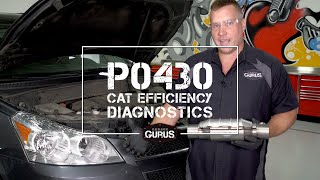
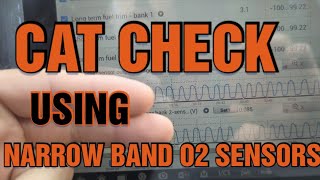
How to confirm: After confirming no exhaust leaks or sensor issues, use a scan tool to watch live O2 sensor data. If the downstream sensor (Bank 2, Sensor 2) voltage switches rapidly, mirroring the upstream sensor 🎬 Watch: A mechanic's guide to diagnosing P0420 and P0430 codes. (Bank 2, Sensor 1), the converter is not working. Alternatively, use an infrared thermometer; the outlet of a working converter should be at least 100°F hotter than the inlet.
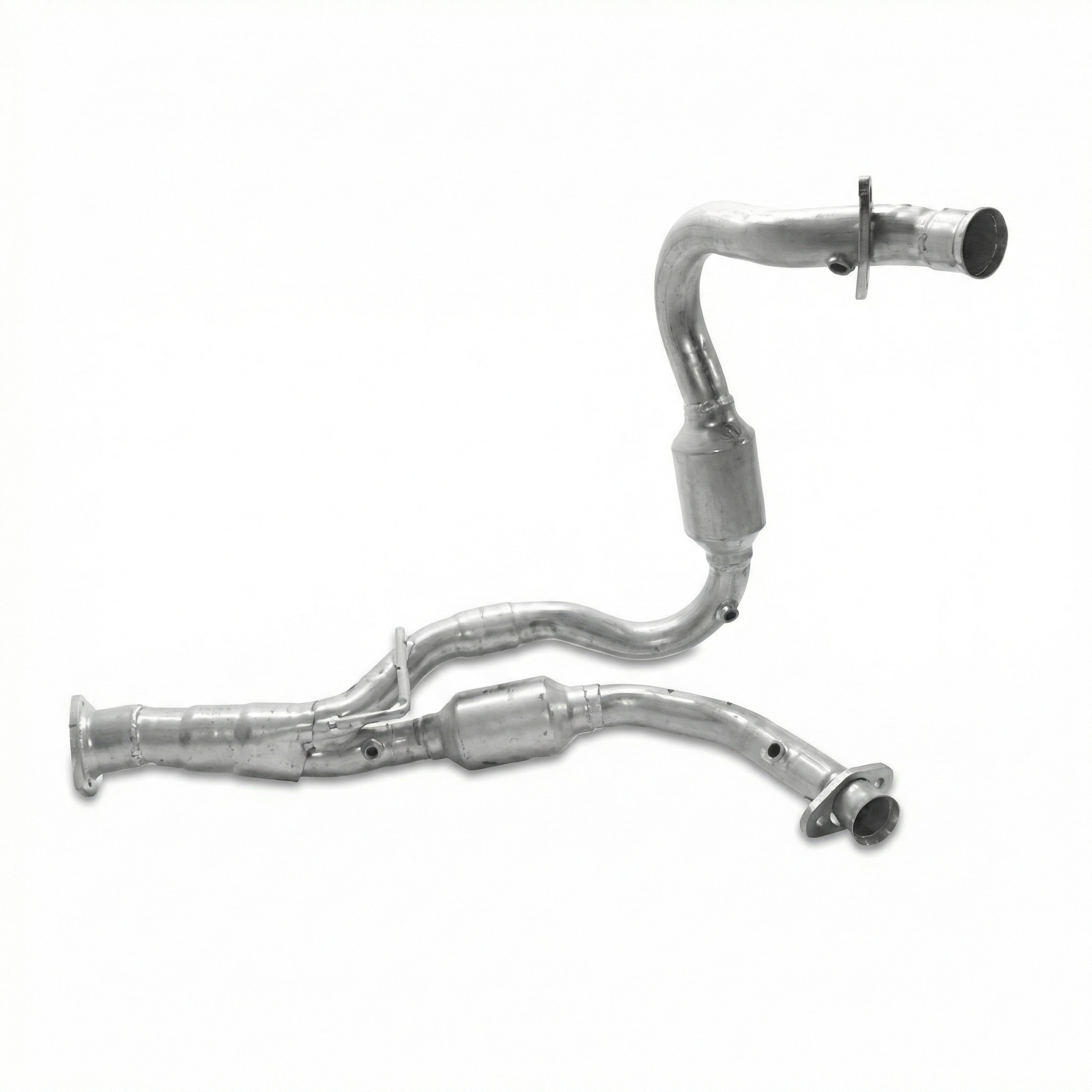
Typical fix: Replace the Bank 2 catalytic converter assembly. This is often a large Y-pipe section. 🎬 Watch: How to replace the catalytic converters and Y-pipe. It is often recommended to use OEM replacements as some aftermarket units may not last as long or have sufficient catalyst loading. Note: A brand new converter may briefly set a code in the first 100 miles due to out-gassing of internal materials.
Est. part cost: $2000-$4000 - Exhaust Leak 🔴 High Probability These vans are notorious for exhaust leaks at specific points. The most common are broken exhaust manifold bolts at the cylinder head, which causes a leak at the manifold gasket. Rusted-out flange gaskets and cracks in the Y-pipe or flex pipe are also frequent culprits. An upstream leak allows oxygen into the exhaust, tricking the O2 sensors and causing a false P0430.
How to confirm: Perform a visual inspection for black soot trails or cracks, especially around the exhaust manifolds and flanges. Listen for ticking or hissing noises. A smoke test is the most effective way to find small leaks that may not be audible or visible.
Typical fix: Repairing the leak. This may involve replacing a gasket, welding a crack, or, in the common case of broken manifold bolts, extracting the broken bolts 🎬 See this easy fix for leaking exhaust manifold bolts. and replacing them and the manifold gasket.
Est. part cost: $20-$500 - Failing Oxygen (O2) Sensor 🟡 Medium Probability
How to confirm: A faulty downstream (Sensor 2) O2 sensor can give false readings. A faulty upstream (Sensor 1) O2 sensor can cause an incorrect air-fuel mixture, damaging the converter over time. Test the sensor's response using a scan tool or multimeter. A lazy or stuck sensor reading points to a bad sensor.
Typical fix: Replace the faulty oxygen sensor. It is often recommended to replace the downstream (Sensor 2) sensor as a diagnostic step if its readings are suspect. The ACDelco OEM part is 213-4229.
Est. part cost: $50-$250 - Engine Performance Issues ⚪ Low Probability
How to confirm: Check for other trouble codes, especially for engine misfires (P0300-P0308), fuel system problems, or mass airflow sensor issues. A misfire sends raw fuel into the exhaust, which will overheat and destroy a catalytic converter, making this a root cause.
Typical fix: Address the root cause, which could be spark plugs, ignition coils, fuel injectors, or a vacuum leak, before replacing the catalytic converter.
Est. part cost: $50-$500
Diagnosis Steps
- Scan for all DTCs. If other codes are present (especially misfire or fuel system codes), diagnose and fix them first, as they can cause converter failure.
- Thoroughly inspect the exhaust system for leaks. Check for broken exhaust manifold bolts at the cylinder head, look for black soot trails at flanges, and listen for ticking noises. For best results, perform an exhaust smoke test to find pinhole leaks.
- Use a scan tool to view live data for the Bank 2 oxygen sensors (B2S1 and B2S2). At a steady 2,500 RPM, the B2S1 (upstream) voltage should fluctuate rapidly between approximately 0.1V and 0.9V. The B2S2 (downstream) voltage should remain relatively stable and steady, typically above 0.5V.
- If the B2S2 voltage is fluctuating rapidly and its graph pattern mirrors the B2S1 signal, the catalytic converter has likely failed.
- If the B2S2 voltage is stuck high, low, or is slow to respond, the sensor itself may be faulty. Test the sensor before condemning the converter.
- As an alternative test, use an infrared thermometer to check the converter's temperature. With the engine fully warm, the outlet pipe should be significantly hotter (e.g., 100°F+) than the inlet pipe. If temperatures are similar or the inlet is hotter, the converter is not working or is clogged.
- If no exhaust leaks are found and the O2 sensors test good, the catalytic converter is the most likely culprit.
Parts You'll Likely Need
- Bank 2 Catalytic Converter
(OEM #19420297 (Example for 4.8L/6.0L Y-Pipe Assembly, supersedes 23269390, 25943820))— This is the most common direct cause for a P0430 code. On these vans, it is often integrated into a Y-pipe assembly that includes both Bank 1 and Bank 2 converters.
Trusted brands: ACDelco (OEM), Walker Exhaust, MagnaFlow
OEM price range: $2000-$3200
Aftermarket price range: $400-$1500 - Bank 2, Sensor 2 (Downstream) Oxygen Sensor
(OEM #12609457 (ACDelco P/N: 213-4229))— This sensor is responsible for reporting the converter's efficiency. It can fail and provide inaccurate readings, falsely triggering the code.
Trusted brands: ACDelco, Denso, NGK/NTK
OEM price range: $100-$180
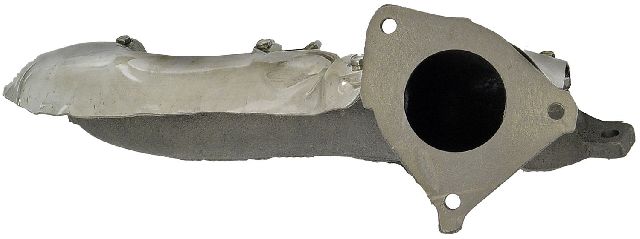
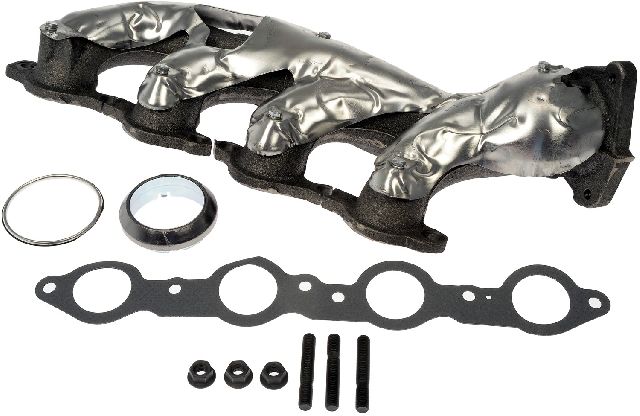
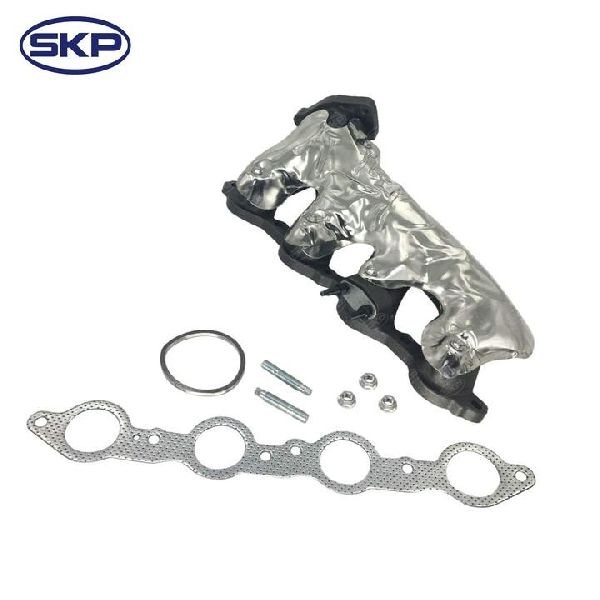
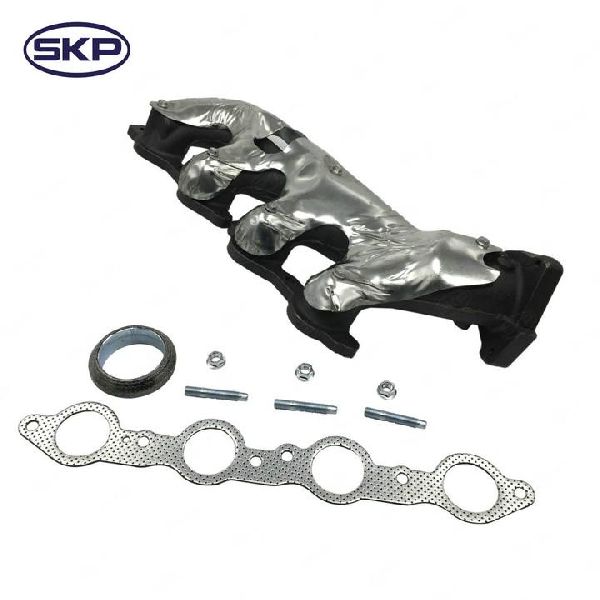
Aftermarket price range: $50-$120 - Exhaust Manifold Gasket — Required if the repair involves removing the exhaust manifold, which is common for fixing broken manifold bolts—a frequent cause of leaks that trigger P0430.
Trusted brands: ACDelco, Fel-Pro
OEM price range: $20-$40
Aftermarket price range: $10-$25
Related Codes That Often Appear With This One
- P0420 — This is the identical code but for Bank 1 (driver's side). If both appear, it may suggest a common problem like contaminated fuel or a systemic engine issue affecting both banks.
- P0300-P0308 — These are misfire codes. An engine misfire is a primary cause of catalytic converter failure, as it allows unburnt fuel to enter the exhaust and overheat the converter.
Technical Service Bulletins (TSBs) & Recalls
- PIP3119P: Addresses the potential for P0420 and P0430 codes appearing at low mileage and clarifies that the related diagnostic tests are disabled for the first hour of operation.
- PIP5110C / PIP5110B: While for the GMC Savana, these are highly relevant as they advise checking for exhaust leaks behind the downstream O2 sensor as a cause for P0420/P0430, pointing to a known platform issue.
Platform-Specific Known Issues
- Per TSB #PIP3119P, the Malfunction Indicator Lamp may come on for code P0430 at low mileage, and the diagnostic test for this code is disabled for the first hour of engine operation on some vehicles.
- Broken exhaust manifold bolts are a very common problem on these GM V8 engines. The rear-most bolts are especially prone to breaking, causing an exhaust leak between the manifold and cylinder head that will trigger a P0420/P0430 code. This should be one of the first mechanical checks performed.
Mechanic-Grade Diagnostic Values
- Downstream O2 Sensor (B2S2) Voltage — expected: Relatively stable and constant, around 0.45V to 0.7V on a healthy, warm converter.. Failure: Voltage rapidly fluctuates between ~0.1V and ~0.9V, mirroring the upstream sensor's activity. This indicates the catalyst is not storing oxygen.
- O2 Sensor Heater Circuit Fuse Voltage — expected: 12V at the fuse with key on.. Failure: 0V or significantly lower voltage, indicating a blown fuse or wiring issue upstream.
- O2 Sensor Heater Circuit Power Supply at Connector — expected: 12V (or ~14V+ with engine running) at the power supply pin of the O2 sensor connector.. Failure: No voltage indicates a wiring break or blown fuse between the fuse box and the sensor.
- Short-Term Fuel Trim (STFT) and Long-Term Fuel Trim (LTFT) — expected: Within +/- 5% to +/- 10% at idle and steady cruise.. Failure: Sustained positive values (e.g., +15% or higher) suggest a vacuum or unmetered air leak (like an exhaust leak upstream of the B1S1 sensor), which the PCM is compensating for by adding fuel. This can trick the catalyst monitor.
Wiring & Ground Locations
- O2 Sensor Fuses (Underhood Fuse Block) — In the underhood fuse block, often labeled as 'O2' or similar. For a 2014 Silverado (similar architecture), fuses 46 and 50 were identified as O2 sensor related.. A blown fuse for the O2 sensor heater circuit will prevent the sensor from reaching operating temperature quickly, leading to inaccurate readings and potentially triggering catalyst efficiency codes. The PCM expects the heater to work.
- G100 / G103 / G104 (Engine/Chassis Grounds) — Typically located on the engine block, cylinder heads, or on the frame near the front of the engine bay. For a 2014 Express, a ground distribution diagram shows G100 on the left front of the engine.. The Engine Control Module (ECM) and its sensors rely on clean ground connections for accurate voltage readings. A corroded or loose engine ground can introduce noise and voltage offsets into the O2 sensor signals, leading to false P0430 codes.
- O2 Sensor Harness Routing — The harness runs along the engine and down the exhaust pipes to each sensor.. The wiring is exposed to extreme heat and potential physical damage. It can melt against the exhaust, get snagged on road debris, or corrode at the connectors. A short or open in the wiring will cause the same symptoms as a bad sensor.
Real Owner Repair Stories
- YouTube channel 'Auto Repair Tips' (2014 Chevrolet Silverado 5.3L (similar GM V8 architecture and logic)) — Persistent P0420 and P0430 codes after multiple shops replaced parts.
❌ Tried (didn't work) Replaced catalytic converters (using old O2 sensors), Replaced all O2 sensors (with aftermarket parts), Replaced fuel injectors
✅ What actually fixed it The issue was traced to the cheap, aftermarket O2 sensors that had been installed. Even though they were new, their readings were erratic compared to OEM sensors. Replacing the aftermarket Bank 1 sensors with OEM parts resolved the P0420 code, proving the aftermarket sensors were the problem. The video implies the same fix would apply to the P0430 on Bank 2.
OEM Part Supersession History
25943820→23269390, then 19420294, and finally 19420297— Standard part evolution for material, manufacturing, or minor design updates by GM.
Heads up: The parts are generally interchangeable as long as you are using the latest number for your vehicle's specific engine (4.8L/6.0L) and model year. Using an older, superseded part number is not recommended.
Helpful Videos

Used OEM Parts in Stock
New Aftermarket Parts Available



The information in this article is provided for general reference and educational purposes only. Vehicle specifications, procedures, and part compatibility can vary by production date, trim level, and region. Always consult your vehicle's factory service manual and verify part numbers before purchasing or performing repairs. Safety-critical components such as airbags, seat belts, and braking systems should be installed by a qualified professional.
- Chevrolet EXPRESS:
- 🎬 Helpful Videos
- 🛍️ Shop This Part
- What's Unique About the 2012-2016 Chevrolet EXPRESS
- Diagnostic Flowchart
- Symptoms You May Notice
- Most Likely Causes
- Diagnosis Steps
- Parts You'll Likely Need
- Related Codes That Often Appear With This One
- Technical Service Bulletins (TSBs) & Recalls
- Platform-Specific Known Issues
- Mechanic-Grade Diagnostic Values
- Wiring & Ground Locations
- Real Owner Repair Stories
- OEM Part Supersession History
- 🎟️ Get 5% Off