

P0430 on 2007-2011 Chevrolet Express: Catalyst Efficiency Fixes
P0430 on a 2007-2011 Chevy Express most often means the passenger-side (Bank 2) catalytic converter has failed. Before replacing it, check for exhaust leaks, especially broken exhaust manifold bolts, which are a very common issue on these V8 engines, often causing a ticking sound on cold starts. A new converter can cost from $250 for an aftermarket part to over $800 for an OEM unit.
- P0430 means the passenger-side catalytic converter is not working efficiently.
- Before buying a new converter, ALWAYS check for exhaust leaks. Broken exhaust manifold bolts are a very common cause of P0430 on these Chevy Express vans.
- If there are no leaks, use a scan tool or temperature gun to confirm the converter has failed before replacing it.
- Always fix any engine misfires or fuel system problems before installing a new catalytic converter, or the new one will be damaged as well.
What's Unique About the 2007-2011 Chevrolet EXPRESS

On the V8-equipped Chevrolet Express vans (4.8L, 5.3L, 6.0L), a very common trigger for a P0430 code is not the catalytic converter itself, but an exhaust leak from a broken or missing exhaust manifold bolt. These iron manifolds and steel bolts expand and contract at different rates, leading to bolt failure over time, especially the rearmost bolts near the firewall. This leak allows oxygen into the exhaust, tricking the sensors into reporting poor catalyst efficiency. Always inspect the passenger-side exhaust manifold for leaks, black soot trails, and a distinct ticking sound before condemning the expensive catalytic converter.
Diagnostic Flowchart
Tap your situation to follow the diagnostic path that matches what you're seeing on this vehicle.
Symptoms You May Notice
- Check Engine Light is on.
- Vehicle fails an emissions test.
- A ticking or puffing noise from the engine bay, especially noticeable on a cold start, indicating an exhaust leak.
- A sulfur or "rotten egg" smell from the exhaust.
- Reduced engine power or acceleration, especially if the converter is clogged.
- Rough idle.
- Replacing the oxygen sensors without first checking for exhaust leaks or confirming that the catalytic converter has actually failed. An exhaust leak from a broken manifold bolt is a very common cause on this specific vehicle and should be ruled out first.
- Replacing the catalytic converter without fixing the root cause, such as an engine misfire or a rich/lean fuel condition, which will cause the new converter to fail prematurely.
Most Likely Causes

- Failed Catalytic Converter 🔴 High Probability Catalytic converters are wear items that degrade over time. High mileage and harsh operating conditions typical for a work van can accelerate this process. If no exhaust leaks are found, the converter itself is the most likely failure.
How to confirm: Use a scan tool to watch O2 sensor data; the downstream (Bank 2, Sensor 2) voltage should be steady, not fluctuating like the upstream sensor. A bad cat will show the downstream sensor mimicking the upstream. 🎬 Watch: How to diagnose P0420 and P0430 codes like a pro. An infrared thermometer can also be used; the converter's outlet temperature should be at least 100°F hotter than the inlet on a warm engine.
Typical fix: Replace the Bank 2 catalytic converter. Ensure any underlying issues like misfires or fuel mixture problems are fixed first. After replacement, perform the drive cycle outlined in TSB PIP3119P to ensure proper break-in.
Est. part cost: $250-$800 - Exhaust Leak (before or near the converter) 🔴 High Probability The V8 engines in these vans are notorious for breaking exhaust manifold bolts, especially the rear bolts closest to the firewall, creating a leak at the cylinder head that is a very common cause for this code. Gaskets at the manifold or flanges can also fail.
How to confirm: Visually inspect the exhaust manifold on the passenger side for black soot trails indicating a leak. Listen for a ticking or puffing sound from the engine bay, especially on a cold start. A smoke machine can be used to pinpoint small, hard-to-see leaks.
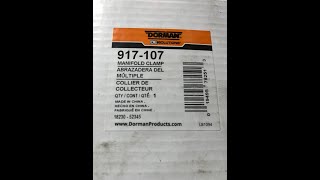
Typical fix: Replace the broken exhaust manifold bolts and the manifold gasket. This can be a difficult job as broken bolts often need to be drilled out or have a nut welded to them for extraction. Alternatively, time-saving clamp kits (like Dorman 917-107 or Kral KAP169) can be installed to seal the leak without removing the broken bolt. 🎬 See this easy fix for leaking exhaust manifolds.
Est. part cost: $20-$150 - Faulty Downstream Oxygen Sensor (Bank 2, Sensor 2) 🟡 Medium Probability O2 sensors are wear items. While often replaced, they are frequently not the root cause for a P0430 code unless diagnostic testing proves they are faulty.
How to confirm: Test the sensor's function using a scan tool. If the sensor's voltage is stuck (e.g., at 0V or 1V) or does not respond correctly when the fuel mixture is manually changed, it is likely faulty. Check wiring for damage or melting. The sensor's internal heater circuit can also be tested for resistance.
Typical fix: Replace the Bank 2, Sensor 2 (downstream) oxygen sensor. The ACDelco OEM part is 213-4229.
Est. part cost: $40-$120 - Engine Misfires or Fuel Mixture Issues ⚪ Low Probability Underlying issues like failing spark plugs, ignition coils, or leaky fuel injectors can dump raw fuel into the exhaust, which superheats and destroys the catalytic converter's internal structure.
How to confirm: Check for other trouble codes related to misfires (P0300-P0308) or fuel trim (P0171, P0174, P0172, P0175). Address these codes first before replacing any exhaust components.
Typical fix: Perform a full engine tune-up, replacing spark plugs and wires. Replace faulty ignition coils or fuel injectors as needed.
Est. part cost: $100-$500
Rare But Worth Checking
- Intake Manifold Gasket Leak:
Diagnosis Steps
- Scan for all DTCs. If any misfire (P030x) or fuel trim (P017x) codes are present, diagnose and repair those issues first, as they are likely the root cause.
- Perform a thorough visual and auditory inspection of the entire exhaust system, especially on a cold engine start. Pay extremely close attention to the passenger-side exhaust manifold for a distinct 'ticking' sound and look for black soot trails indicating broken bolts.
- If a leak is suspected but not obvious, use a smoke machine to pressurize the exhaust system and watch for smoke escaping from gaskets or pinholes.
- If no leaks are found, use a scan tool with live data capability. Graph the voltage of the Bank 2 upstream (Sensor 1) and downstream (Sensor 2) oxygen sensors.
- With the engine fully warmed up and running at a steady 2000-2500 RPM, observe the graphs. The upstream sensor should fluctuate rapidly between ~0.1V and ~0.9V. A healthy downstream sensor should show a relatively stable, flat voltage, typically above 0.45V.
- If the downstream sensor's graph mimics the rapid switching of the upstream sensor, the catalytic converter is not working and has likely failed.
- If the downstream sensor's voltage is stuck high, low, or is slow to respond, the sensor itself may be faulty. Test it before replacing the converter.
- As a final confirmation, use an infrared temperature gun to measure the inlet and outlet pipe temperatures of the catalytic converter. The outlet should be significantly hotter (by 100°F or more) than the inlet. If it's the same temperature or cooler, the converter is not functioning.
Parts You'll Likely Need
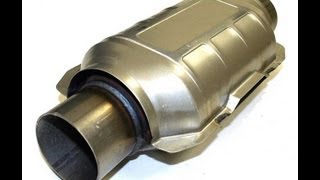
- Bank 2 Catalytic Converter — This is the most common failed component that directly causes the P0430 code when no exhaust leaks are present. An integrated manifold/converter assembly is a common replacement part.
Trusted brands: ACDelco (OEM), Walker Exhaust, MagnaFlow, Dorman (e.g., 674-758 for integrated manifold/converter)
OEM price range: $600-$900
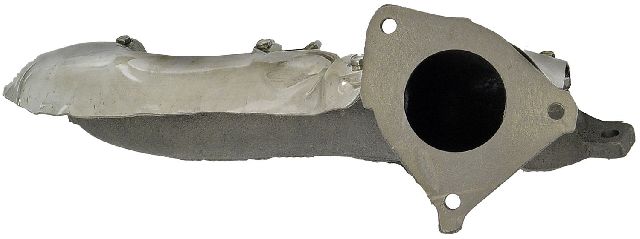
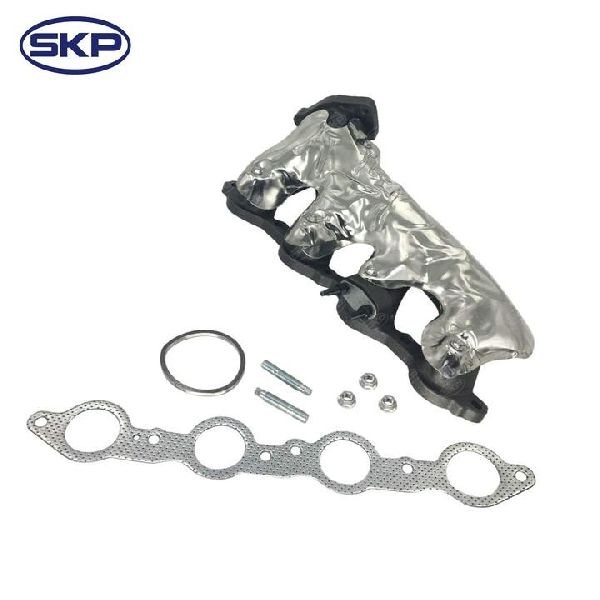
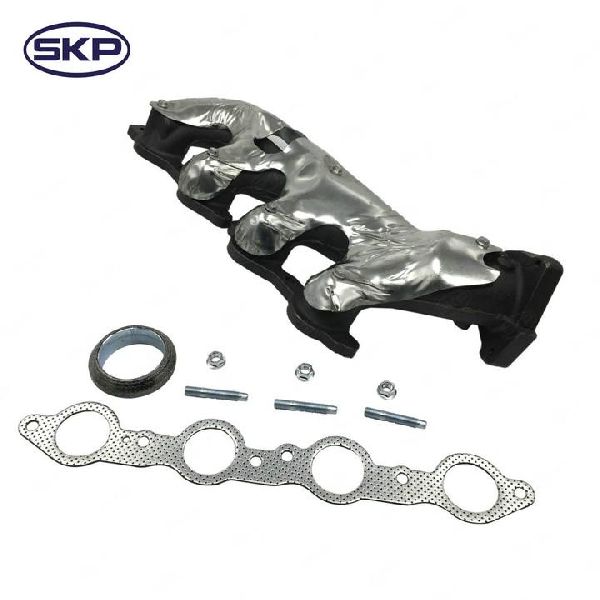
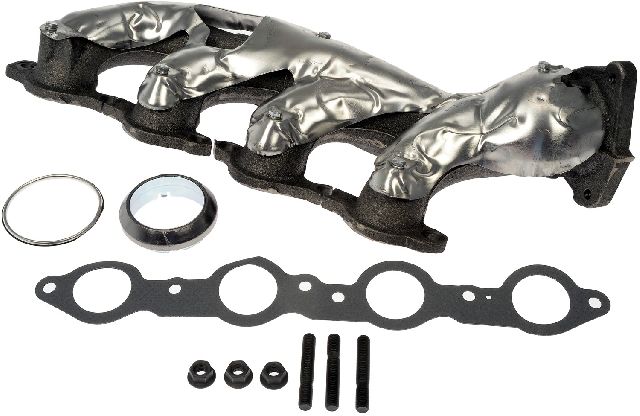
Aftermarket price range: $250-$500 - Exhaust Manifold Gasket and Bolt Kit — Fixing a common exhaust leak at the manifold is often the true solution for a P0430 code on these vans. Upgraded stainless steel bolts are recommended.
Trusted brands: ACDelco (OEM), Fel-Pro (e.g., MS 96582 gasket set), Dorman (e.g., 03413HP stainless bolt kit)
OEM price range: $50-$100
Aftermarket price range: $20-$50 - Downstream Oxygen Sensor (Bank 2, Sensor 2)
(OEM #ACDelco 213-4229)— If diagnosis points to a faulty sensor providing incorrect data, this part will need to be replaced. It corresponds to GM part number 12609457.
Trusted brands: ACDelco (OEM), Denso (234-4256), NGK/NTK, Bosch
OEM price range: $80-$120
Aftermarket price range: $40-$70
Related Codes That Often Appear With This One
- P0420 — This is the identical code for Bank 1 (driver's side). If both converters are of similar age and condition, or if manifold bolts are broken on both sides, they may fail around the same time, triggering both codes.
- P0300-P0308 — These are misfire codes. An engine misfire is a root cause of catalytic converter failure, as it sends unburnt fuel into the exhaust, overheating and melting the converter's internal structure.
Technical Service Bulletins (TSBs) & Recalls
- PIP3119P — Catalytic Converter Break-In Information To Prevent DTCs P0420 And/Or P0430 — This bulletin advises technicians that on new vehicles, the P0420/P0430 diagnostic tests are disabled for the first hour of engine run time to allow the converter to break in. If a code appears shortly after a converter replacement on a used vehicle, it may be a false code because the new part did not undergo a proper break-in. The TSB provides a specific drive cycle to perform to correctly break-in the new converter and prevent false codes.
Platform-Specific Known Issues

- A known weak point on the 4.8L, 5.3L, and 6.0L V8 engines is the tendency for exhaust manifold bolts to break, causing an exhaust leak that triggers catalyst efficiency codes like P0430. The rearmost bolts are most prone to failure.
- Repairing broken manifold bolts can be very difficult, especially for the bolts near the firewall, often requiring right-angle drills or welding a nut onto the broken stud for removal.
- Technical Service Bulletin #PIP3119P notes that if this code appears shortly after a catalytic converter replacement, a specific drive cycle may be needed to 'break-in' the new converter and clear a false code.
Mechanic-Grade Diagnostic Values
- Downstream O2 Sensor (Bank 2, Sensor 2) Voltage — expected: Relatively stable voltage, typically between 0.4V and 0.6V, when the engine is warm and at a steady RPM.. Failure: Voltage rapidly fluctuates in a pattern similar to the upstream O2 sensor, or is stuck at 0V or 1V.
- O2 Sensor Heater Circuit Resistance — expected: Between 3 and 25 ohms when measured at ambient temperature (cold sensor).. Failure: An open circuit (infinite resistance) or a short (very low resistance) indicates a failed heater element. A common reading for a good sensor is around 4-6 ohms.
- Short/Long Term Fuel Trims (Bank 2) — expected: Ideally within +/- 5% at idle and steady cruise. Deviations up to +/- 10% are often acceptable.. Failure: Consistently high positive values (e.g., >10%) suggest a vacuum or unmetered air leak (like an exhaust leak before the upstream O2 sensor). Consistently high negative values suggest a rich condition. Note: The downstream sensor (Sensor 2) does not generate fuel trim data; its reading is a result, not an input for fuel control.
Hidden / Shadow Codes Worth Checking
- Mode $06: This is not a trouble code, but a diagnostic mode on advanced scan tools that shows the results of the PCM's self-tests. For P0430, a technician can view the Catalyst Monitor Bank 2 test results (TID $02, CID $01 or similar, depending on the specific tool) to see the measured efficiency value versus the PCM's pass/fail threshold. This can confirm a borderline converter before the MIL is triggered. (see via Professional scan tool (like a GM Tech2/GDS2 or equivalent) with Mode $06 data viewing capability.)
Scan Tool Commands That Help

- GM Diagnostic Software (Tech2/GDS2) or any OBD-II scanner: Catalyst System Readiness Test (Drive Cycle) — This is not a direct command, but a specific driving procedure required to force the catalyst monitor to run after a repair (like replacing a converter or O2 sensor) or clearing codes. This verifies the fix and confirms the P0430 code will not return. The monitor may not run under normal driving for some time.
Wiring & Ground Locations
- G103 / G104 — G104 is located on the lower right front of the engine. G103 is located on the rear of the engine head (some sources say left, some say right for V8s) or on the cowl above the brake booster. These grounds are critical for the ECM and other modules.. A poor ground connection at these points can cause erratic behavior from the Engine Control Module (ECM) and its sensors, potentially leading to incorrect sensor readings and false trouble codes. A TSB for other issues on these vans specifically calls out checking the G103 ground for a clean, tight connection.
- Downstream O2 Sensor Connector — On the exhaust pipe after the Bank 2 (passenger side) catalytic converter.. The connector itself can be a point of failure. It is a 4-terminal connector, often black and blue. The four wires are typically two for the heater circuit (often the same color), one for the sensor signal, and one for the signal ground. Wiggling the connector while watching live data can expose intermittent connection faults.
Real Owner Repair Stories
- 2CarPros Forum (Vehicle with P0430 code) — P0430 code, rough running, exhaust fumes.
❌ Tried (didn't work) Patching the hole with epoxy, which still leaked.
✅ What actually fixed it The diagnosis identified a large hole in the Bank 2 (driver's side for that specific user's V6, but the principle applies) exhaust manifold. The definitive fix is to replace the damaged exhaust manifold and gasket, as the leak introduces unmetered oxygen that causes the P0430 code. - r/MechanicAdvice user, 35-year master tech (General advice for any vehicle with P0430) — P0430 code present.
❌ Tried (didn't work) Using additives like Cataclean., Replacing O2 sensors without full diagnosis.
✅ What actually fixed it The expert advice states that if there are no other codes, no exhaust leaks affecting the O2 sensors, and all other I/M monitors have passed, the only permanent solution is to replace the catalytic converter. The PCM's algorithm for detecting catalyst failure is very reliable and has to fail multiple tests before setting the code.
"I Checked Everything" — The Actual Cause
- A hairline crack in the exhaust manifold may not show up during a cold smoke test but can open up when the manifold heats up, allowing oxygen to enter the exhaust stream and trigger P0430. This is especially relevant for the known-problematic iron manifolds on these vans.
- The catalytic converter may have an internal failure, such as a cracked substrate, that allows exhaust to bypass the catalyst material. This will not be detected by an external smoke test but will cause the downstream O2 sensor to report low efficiency.
OEM Part Supersession History
GM 12609457→ACDelco 213-4229— This is not a supersession but a cross-reference. 213-4229 is the ACDelco service part number for the original GM part 12609457.
Model Year Variations Within This Range
- 2010-2011: Around 2010, the 6.0L V8 offering began to include the L96 engine, which is Flex-Fuel (E85) capable. The previous LY6 was gasoline only. The properties of E85 and its combustion byproducts can have different long-term effects on catalytic converters and oxygen sensors compared to gasoline, which could be a diagnostic consideration on higher-mileage Flex-Fuel models.
- 2011: A voluntary emissions recall was issued for some 2011 models because condensation from the exhaust could enter and fracture the Bank 2 oxygen sensor, directly causing a fault code. The dealer fix was to replace the affected O2 sensors.
Helpful Videos
We Have This Part in Stock



The information in this article is provided for general reference and educational purposes only. Vehicle specifications, procedures, and part compatibility can vary by production date, trim level, and region. Always consult your vehicle's factory service manual and verify part numbers before purchasing or performing repairs. Safety-critical components such as airbags, seat belts, and braking systems should be installed by a qualified professional.
- Chevrolet EXPRESS:
- 🎬 Helpful Videos
- 🛍️ Shop This Part
- What's Unique About the 2007-2011 Chevrolet EXPRESS
- Diagnostic Flowchart
- Symptoms You May Notice
- Most Likely Causes
- Rare But Worth Checking
- Diagnosis Steps
- Parts You'll Likely Need
- Related Codes That Often Appear With This One
- Technical Service Bulletins (TSBs) & Recalls
- Platform-Specific Known Issues
- Mechanic-Grade Diagnostic Values
- Hidden / Shadow Codes Worth Checking
- Scan Tool Commands That Help
- Wiring & Ground Locations
- Real Owner Repair Stories
- "I Checked Everything" — The Actual Cause
- OEM Part Supersession History
- Model Year Variations Within This Range
- 🎟️ Get 5% Off