

P0430 on 2002-2006 Chevrolet Express: Catalyst Efficiency Fixes
P0430 on a 2002-2006 Chevy Express means the driver's side (Bank 2) catalytic converter is failing its efficiency test. While the converter itself is the most common cause, always check for exhaust leaks (especially from broken manifold bolts) and failing oxygen sensors first to avoid a costly misdiagnosis.
- P0430 points to an inefficient catalytic converter on the driver's side (Bank 2).
- Before replacing the expensive converter, always rule out cheaper fixes: exhaust leaks and faulty oxygen sensors.
- If other engine codes are present (especially for misfires), they MUST be fixed first to prevent damaging the new converter.
- These vans are high-risk for catalytic converter theft; consider preventative measures like an anti-theft shield.
- A working converter will be hotter at its outlet pipe than its inlet pipe; this can be checked with an infrared thermometer.
What's Unique About the 2002-2006 Chevrolet EXPRESS
The 2002-2006 Chevrolet Express vans are part of a generation known for high ground clearance, which unfortunately makes them a prime target for catalytic converter theft. Beyond theft, the primary issues leading to P0430 are age-related converter failure, worn-out oxygen sensors, and particularly, exhaust leaks from broken exhaust manifold bolts—a notorious issue on GM V8 engines of this era. A GM Technical Service Bulletin (PIP3119P) notes that on new vehicles or after a converter replacement, the P0420/P0430 diagnostic test is disabled for the first hour of operation to allow for a proper break-in period and prevent false codes.
🎬 Watch: 9 solutions to fix P0430 before you start repairs.Diagnostic Flowchart
Tap your situation to follow the diagnostic path that matches what you're seeing on this vehicle.
Symptoms You May Notice
- Check Engine Light is on
- Reduced engine power and sluggish acceleration, especially under load or going uphill.
- A rotten egg or sulfur smell from the exhaust, which can occur when the converter is failing to process sulfur in the fuel.
- Rattling or hissing noise from underneath the vehicle. Rattling can indicate the converter's internal ceramic brick has broken apart, while a hissing or ticking sound, especially when the engine is cold, often points to an exhaust leak from a broken manifold bolt or failed gasket.
- Failure to pass an emissions test.
- Immediately replacing the catalytic converter without checking for exhaust leaks or faulty O2 sensors first. An exhaust leak from a broken manifold bolt is a very common issue on these vans and is a much cheaper fix.
- Replacing the wrong O2 sensor. The P0430 code is based on the reading from the downstream (post-catalyst) sensor, also called Sensor 2. While the upstream sensor can affect the converter's health long-term, it's the downstream sensor that triggers the efficiency code.
Most Likely Causes
- Failing Catalytic Converter 🔴 High Probability Converters have a finite lifespan (often 100k-150k miles) and can fail from age, contamination from burning oil/coolant, or damage from engine misfires. Aftermarket converters may use fewer precious metals and fail more quickly.
How to confirm: Use an infrared thermometer to measure the temperature of the pipe entering and exiting the converter after the engine is fully warm. A working converter should be significantly hotter (at least 100°F) at the outlet than the inlet. A scan tool showing the downstream O2 sensor (B2S2) voltage switching rapidly like the upstream sensor (B2S1) also indicates a bad converter.
Typical fix: Replace the Bank 2 (driver's side) catalytic converter assembly. It is highly recommended to replace oxygen sensors at the same time and resolve any engine issues (misfires, leaks) that may have caused the original failure.
Est. part cost: $200-$600 - Exhaust System Leak (Manifold/Flange) 🟡 Medium Probability The V8 engines in these vans are notorious for the rear-most exhaust manifold bolts breaking off flush with the cylinder head, causing a leak that allows oxygen into the exhaust stream before the O2 sensors, triggering a false P0430 code.
How to confirm: Listen for a distinct 'ticking' sound from the engine bay, especially on a cold start, that may quiet down as the engine warms and the metal expands. Visually inspect the rear of the driver's side exhaust manifold for a missing bolt head and black soot trails. A smoke machine test is the most definitive way to find leaks.
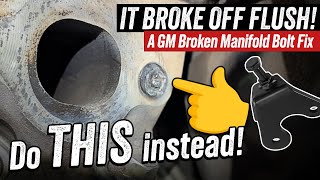
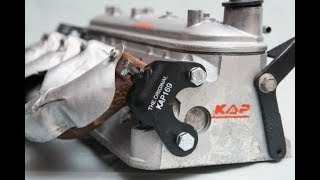
Typical fix: Replace the leaking gasket. For a broken manifold bolt, the official fix is to extract the broken stud and replace it, which is labor-intensive. A common, effective alternative is to install a specialized exhaust manifold clamp (e.g., Dorman) that bolts to the head and presses the manifold flange tight, sealing the leak without drilling.
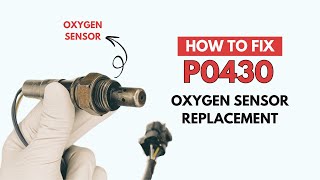
Est. part cost: $10-$150 - Faulty Oxygen (O2) Sensor 🟡 Medium Probability O2 sensors wear out and can become slow, biased, or send inaccurate voltage readings, tricking the PCM into thinking the converter is bad. Owners have reported fixing P0430 by only replacing the downstream O2 sensor.
How to confirm: Use a scan tool to graph the O2 sensor voltages. A healthy downstream sensor (B2S2) should show a relatively steady voltage (typically above 0.5V). If it's stuck, dead, or fluctuating wildly like the upstream sensor, it's suspect. Swapping the Bank 1 and Bank 2 downstream sensors and seeing if the code changes to P0420 can also confirm a bad sensor.
Typical fix: Replace the Bank 2 downstream (post-catalyst) oxygen sensor. Given the vehicle's age, replacing both upstream and downstream sensors on Bank 2 is often a good preventative measure.
Est. part cost: $40-$120
Rare But Worth Checking
- Engine Misfires or Fuel Mixture Issues: If you have other codes like P0300 (misfire) or P0171/P0174 (lean condition), you must fix those first. Unburned fuel from misfires will destroy a new catalytic converter. Check long-term fuel trims (LTFT) on a scan tool; values consistently above +10% indicate a vacuum leak or fuel delivery problem that needs correction.
- Damaged O2 Sensor Wiring: The wiring harness for the O2 sensors can be damaged by road debris or contact with hot exhaust components, causing a short or open circuit. Wiggle the harness while watching live sensor data on a scan tool to check for intermittent connections.
Diagnosis Steps
- Check for any other diagnostic trouble codes. If codes for misfires (P030x), fuel mixture (P0171/P0174), or O2 sensor heaters are present, diagnose and fix them first.
- Inspect the Bank 2 (driver's side) exhaust system for leaks. Pay extremely close attention to the rear-most exhaust manifold bolt. Look for black soot trails or a missing bolt head. Listen for a ticking noise on a cold start.
- Use a scan tool to observe live data. Check Long-Term Fuel Trims (LTFT) for Bank 2. High positive trims (>10%) suggest a vacuum or exhaust leak.
- Graph the live data for the Bank 2 oxygen sensors (B2S1 and B2S2). At a steady 2000 RPM, the upstream sensor (B2S1) should fluctuate rapidly between ~0.1V and ~0.9V. The downstream sensor (B2S2) should hold a relatively steady, high voltage (e.g., >0.6V). If B2S2 mirrors B2S1's fluctuations, the converter is not working.
- If the B2S2 sensor is flatlined or slow to respond, test the sensor and its wiring. A common real-world test is to swap the downstream sensors from Bank 1 and Bank 2 to see if the trouble code follows the sensor (i.e., P0430 changes to P0420).
- If no leaks or sensor faults are found, perform a temperature check. Use an infrared temperature gun to measure the inlet and outlet pipes of the catalytic converter after the engine is fully warmed up. The outlet should be at least 100°F hotter than the inlet. If not, the converter has failed.
Parts You'll Likely Need
- Bank 2 Catalytic Converter
(OEM #GM 15861399 (Y-Pipe Assembly for some 4.8L/6.0L models, supersedes 10345415))— This is the most common cause of P0430, failing due to age or contamination. Bank 2 is the driver's side. On many Express vans, this is part of a larger Y-pipe assembly.
Trusted brands: Walker, MagnaFlow, ACDelco (OEM)
OEM price range: $500-$800
Aftermarket price range: $250-$500 - Downstream Oxygen Sensor (Bank 2, Sensor 2)
(OEM #ACDelco 213-2857 or GM 19209805 (Varies by engine/year, confirm fitment))— A faulty or slow downstream O2 sensor can send incorrect data, falsely triggering a P0430 code. It's recommended to replace it when replacing the converter.
Trusted brands: Denso, Bosch, ACDelco (OEM)
OEM price range: $80-$150
Aftermarket price range: $40-$90 - Exhaust Manifold Bolt Repair Clamp
(OEM #N/A (Aftermarket solution))— A cost-effective and time-saving fix for the common broken rear manifold bolt, which causes an exhaust leak and a false P0430 code.
Trusted brands: Dorman, APDTY, Various Amazon/eBay sellers
OEM price range: N/A
Aftermarket price range: $25-$60
Related Codes That Often Appear With This One
- P0420 — P0420 is the identical code but for Bank 1 (passenger side). It's common for both converters to fail around the same time due to age and similar operating conditions.
- P0300-P0308 — Misfire codes (P030X) indicate the root cause of converter failure. Unburned fuel from a misfiring cylinder will overheat and melt the converter's internal structure, rendering it useless.
- P0174 — This code indicates a lean condition on Bank 2. An exhaust leak between the cylinder head and the upstream O2 sensor can cause this code to appear alongside P0430, as unmetered air enters the exhaust.
Technical Service Bulletins (TSBs) & Recalls
- PIP3119P: Explains that on new vehicles or after a converter replacement, the P0420/P0430 diagnostics are disabled for the first hour of engine run time. If the code appears shortly after a replacement, a specific drive cycle (sustained highway driving) may be needed to 'break-in' the new converter and clear the false code.
Platform-Specific Known Issues
- Due to high ground cle
Mechanic-Grade Diagnostic Values
- Upstream O2 Sensor (B2S1) Voltage — expected: Rapidly fluctuating between 0.1V (lean) and 0.9V (rich).. Failure: Slow or non-fluctuating voltage, or voltage stuck high or low.
- Downstream O2 Sensor (B2S2) Voltage — expected: Relatively stable voltage, typically between 0.5V and 0.8V on a healthy, warm converter.. Failure: Voltage mimics the rapid fluctuations of the upstream sensor, indicating the catalyst is not storing oxygen.
- O2 Sensor Heater Circuit Power — expected: 12V (battery voltage) on the Pink wire at the O2 sensor connector with the key on.. Failure: No voltage indicates a blown O2B fuse or a wiring issue.
- O2 Sensor Bias Voltage (Key On, Engine Off) — expected: Approximately 0.43V - 0.45V on the signal wire (Tan or Purple w/ White tracer) from the PCM.. Failure: Significantly different or no voltage suggests a wiring or PCM problem.
- Mode $06 Catalyst Monitor Test — expected: Test values should be well within the manufacturer's specified MIN/MAX thresholds.. Failure: A test value that is close to or has exceeded the threshold indicates degraded catalyst oxygen storage capacity, even before a code sets.
Scan Tool Commands That Help
- Tech 2 / GDS2: O2 Heater Circuit Test — Can be used to command the O2 sensor heaters on to verify the circuit's integrity when diagnosing related codes like P0161 alongside P0430.
Wiring & Ground Locations
- G102 — Located at the left rear of the engine.. This is the primary ground for the ignition coils. A poor ground here can cause weak spark and misfires, which can lead to an overloaded and damaged catalytic converter.
- G103 — Located at the left rear of the engine compartment on the cowl, above the brake booster.. Grounds the BCM, Instrument Panel Cluster (IPC), and the Data Link Connector (DLC). A fault here can cause communication issues or erratic behavior of multiple systems, potentially affecting PCM data.
- G104 — On the passenger's side rear of the engine block/cylinder head.. Provides a ground path for the Vehicle Control Module (VCM/PCM) and fuel pump relay trigger. A poor connection here can directly impact engine management and sensor readings.
- Bank 2 O2 Sensor Connector — Driver's side of the transmission. The wiring harness can sometimes rub on the front driveshaft on 4WD models.. Physical damage to the O2 sensor wiring is a common but overlooked cause for sensor-related codes, including P0430. A visual inspection for chafing is critical.
Real Owner Repair Stories
- Quora User (General Motors Vehicle) — Check Engine Light with P0430 code returned after replacing parts.
❌ Tried (didn't work) Replacing the catalytic converter, Replacing the O2 sensors
✅ What actually fixed it The user points out the common mistake of replacing the Bank 1 (passenger side) converter when the code is for Bank 2 (driver's side). Emphasizes that P0430 specifically points to a Bank 2 issue and that throwing parts without confirming the location is a common, expensive error. - Bo Builds on YouTube (Chevy/GMC Truck with 5.3L engine) — Loud exhaust 'tick' noise, especially on a cold start.
❌ Tried (didn't work) Attempting to weld a nut onto the broken bolt to extract it (failed multiple times).
✅ What actually fixed it Installed an aftermarket exhaust manifold clamp (Dorman style) over the rear-most broken bolt on the driver's side. The clamp bolted to existing holes in the cylinder head and applied pressure to the manifold, successfully sealing the exhaust leak and eliminating the noise.
Model Year Variations Within This Range
- 2003 vs 2006: A notable change occurred in the fuel system. A 2003 model may use a fuel rail with a return line and a rail-mounted fuel pressure regulator, while a 2006 engine often uses a returnless system. When swapping engines between these years, the intake manifold and fuel rail assembly must be swapped from the original engine to match the vehicle's chassis and fuel system.
Helpful Videos
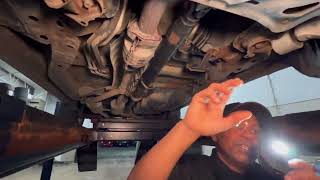
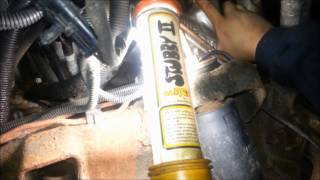
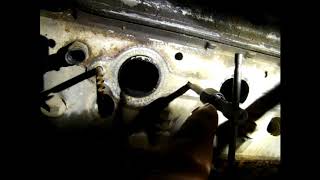

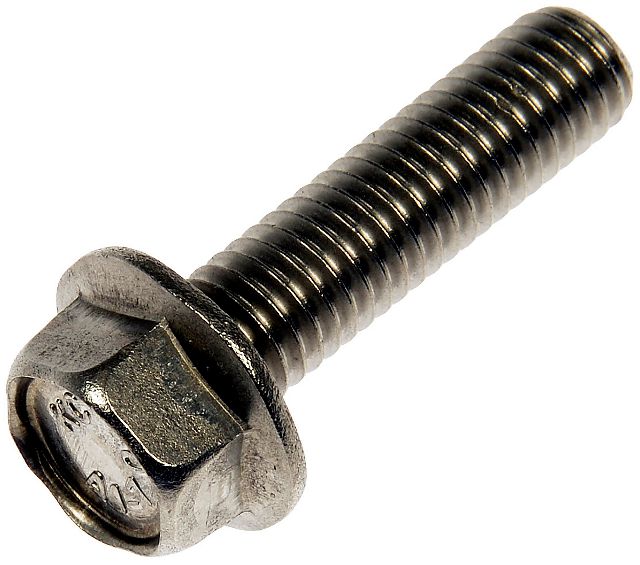
We Have This Part in Stock



The information in this article is provided for general reference and educational purposes only. Vehicle specifications, procedures, and part compatibility can vary by production date, trim level, and region. Always consult your vehicle's factory service manual and verify part numbers before purchasing or performing repairs. Safety-critical components such as airbags, seat belts, and braking systems should be installed by a qualified professional.
- Chevrolet EXPRESS:
- 🎬 Helpful Videos
- 🛍️ Shop This Part
- What's Unique About the 2002-2006 Chevrolet EXPRESS
- Diagnostic Flowchart
- Symptoms You May Notice
- Most Likely Causes
- Rare But Worth Checking
- Diagnosis Steps
- Parts You'll Likely Need
- Related Codes That Often Appear With This One
- Technical Service Bulletins (TSBs) & Recalls
- Platform-Specific Known Issues
- Mechanic-Grade Diagnostic Values
- Scan Tool Commands That Help
- Wiring & Ground Locations
- Real Owner Repair Stories
- Model Year Variations Within This Range
- 🎟️ Get 5% Off