

P0430 on 2016-2019 Chevrolet Camaro: Catalyst Efficiency Causes and Fixes for Bank 2
On a 2016-2019 Camaro, P0430 often points to a failing passenger-side catalytic converter. However, before replacing it, check for a poorly sealed air filter box, as specified in GM Technical Service Bulletin #16-NA-111. This is a common, non-obvious cause for this code on this specific car, confirmed by numerous owner experiences.
- For a 2016-2019 Camaro, your first step for a P0430 code should be to inspect the air filter box for a perfect seal, as per TSB #16NA111.
- Do not replace the expensive catalytic converter until you have ruled out exhaust leaks and a faulty downstream (post-cat) oxygen sensor.
- Bank 2 on a V6 or V8 Camaro is the passenger side of the engine.
- If other engine codes are present, especially for misfires, they must be addressed first as they are likely the root cause of the catalyst issue.
What's Unique About the 2016-2019 Chevrolet CAMARO

While a bad catalytic converter is a common cause for P0430 on any vehicle, the sixth-generation Camaro has a unique and well-documented issue. General Motors issued a Technical Service Bulletin (TSB #16-NA-111) indicating that an improperly sealed air box or air filter can trigger this code. This allows unmetered, and potentially debris-filled, air to enter the intake tract, causing a lean condition that can foul sensors and eventually damage the catalytic converter itself. This makes inspecting the air intake system a critical first step that is specific to this platform and its relatives.
Diagnostic Flowchart
Tap your situation to follow the diagnostic path that matches what you're seeing on this vehicle.
Symptoms You May Notice
- Check Engine Light is on
- Vehicle fails emissions testing
- Reduced engine performance or acceleration
- A sulfur or 'rotten egg' smell from the exhaust.
- In some cases, no noticeable symptoms other than the Check Engine Light.
- Immediately replacing the catalytic converter without checking for airbox seal issues, exhaust leaks, or faulty oxygen sensors. The converter is the most expensive part, and these other issues can mimic its failure.
- Replacing oxygen sensors when the root cause is an exhaust leak or an unmetered air leak from the intake. The sensors are often reporting the problem correctly.
Most Likely Causes

- Improperly Sealed Air Box or Air Filter 🔴 High Probability A known issue documented in GM Technical Service Bulletin #16-NA-111. An improper seal allows unmetered air to enter the engine, leading to a lean fuel mixture that can trigger catalyst efficiency codes. Debris bypassing the filter can also damage the O2 sensors and clog the converter.
How to confirm: Visually inspect the air filter housing to ensure it is fully seated, all clips are secure, and the seal is intact and not damaged or folded over. Check the air cleaner outlet duct for any signs of dirt or debris that has bypassed the filter.
Typical fix: Reseat the air filter and air box cover correctly. If the seal is damaged, replace the air filter. If the housing is warped or broken, it must be replaced.
Est. part cost: $20-$60 for a new filter, more for housing. - Failing Catalytic Converter (Bank 2) 🔴 High Probability Converters can fail from age, contamination from engine issues (like misfires or bad injectors), or physical damage. This is the component the code directly points to.
How to confirm: After ruling out other causes, a technician can use a scan tool to analyze O2 sensor data or use a temperature gun to check for a significant temperature increase across the converter. A properly working converter should be hotter at the outlet than the inlet.
Typical fix: Replace the Bank 2 (passenger side) catalytic converter.
Est. part cost: $400-$1600 - Exhaust Leak 🟡 Medium Probability
How to confirm: Visually inspect the exhaust system from the engine to the tailpipe for cracks, rust, or loose connections, especially around the exhaust manifold and converter flanges. A shop can perform a smoke test to find small leaks. Even a small leak can let oxygen in and skew sensor readings. One owner on the Camaro6 forums traced a persistent P0430 to a small hole in the exhaust which was fixed with high-temp JB weld.
Typical fix: Repair the leak by replacing the faulty gasket, tightening bolts, or welding the cracked component.
Est. part cost: $10-$150 - Failing Downstream Oxygen Sensor (Bank 2) 🟡 Medium Probability
How to confirm: Use a scan tool to monitor the sensor's voltage. A healthy downstream sensor should show a relatively stable voltage. If it's switching rapidly like the upstream sensor or shows no activity, it's likely faulty. A common diagnostic trick is to swap the downstream O2 sensors between Bank 1 and Bank 2; if the code changes to P0420, the sensor is bad.
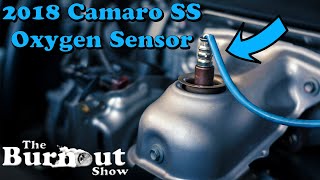
Typical fix: Replace the Bank 2, Sensor 2 🎬 See this step-by-step guide for replacing Camaro oxygen sensors. (passenger side, post-catalyst) oxygen sensor.
Est. part cost: $50-$150
Rare But Worth Checking
- Failing Fuel Injector(s): A leaking or malfunctioning fuel injector can cause a rich condition, which can foul O2 sensors and eventually damage the catalytic converter. One owner on Camaro6 forums traced a persistent P0430 back to failed injectors that had coated the O2 sensors in carbon.
- Engine Misfires: Unburnt fuel from a misfiring cylinder can enter the exhaust and superheat the catalytic converter, causing it to fail prematurely. This would typically be accompanied by a misfire code (e.g., P0300-P0308).
- Contaminated Mass Airflow (MAF) Sensor: On vehicles with aftermarket oiled air filters (like K&N), excess oil can contaminate the MAF sensor, causing incorrect airflow readings and a lean fuel mixture. One Camaro6 forum member had a dealer blame a P0430 code on a K&N filter, which can lead to this condition.
Diagnosis Steps

- Check the Air Intake System: Following TSB #16-NA-111, carefully inspect the air filter box. Ensure the cover is fully latched and the filter and its seal are seated correctly with no gaps. Inspect the ducting past the filter for any dust or debris, which is a sure sign of a leak.
- Inspect for Exhaust Leaks: Visually and audibly inspect the entire Bank 2 (passenger side) exhaust path for leaks, paying close attention to the manifold and converter flanges. This is especially important if any exhaust modifications (like a secondary cat delete) have been performed. A smoke test is the most effective method.
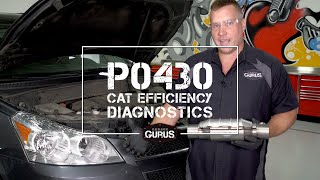
- Analyze Oxygen Sensor Data: 🎬 Watch: A professional walkthrough on diagnosing catalyst efficiency codes. Use an OBD-II scanner with live data capability. Observe the voltage graphs for Bank 2 Sensor 1 (upstream) and Bank 2 Sensor 2 (downstream). The upstream sensor should fluctuate rapidly. The downstream sensor should hold a relatively steady, high voltage. If the downstream sensor mimics the upstream, the converter is likely bad.
- Test the Oxygen Sensor: Consider swapping the downstream O2 sensors between Bank 1 and Bank 2. Clear the codes and drive the vehicle. If the trouble code changes to P0420 (Bank 1), the O2 sensor you moved is faulty.
- Check for Other Codes: Scan for any other pending or active codes, especially for engine misfires or fuel trim issues, that could be the root cause of converter damage.
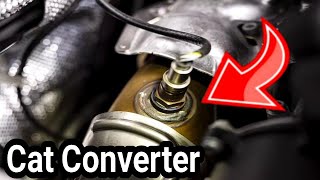
- Verify Catalytic Converter Failure: 🎬 Watch: How to replace your converter to clear P0430 codes. Only after confirming the above steps should the catalytic converter be considered the culprit. A temperature test (checking inlet vs. outlet temps with an infrared thermometer) can provide a final confirmation before replacement.
Parts You'll Likely Need

- Catalytic Converter (Bank 2)
(OEM #GM 84088393 (V8 LT1); GM 23188133 (V6 LGX))— This is the component the code directly points to as inefficient. It's often the ultimate failure point after other issues are ruled out.
Trusted brands: ACDelco (GM Genuine), Walker Exhaust, MagnaFlow
OEM price range: $700-$1600
Aftermarket price range: $400-$800 - Oxygen Sensor (Bank 2, Sensor 2)
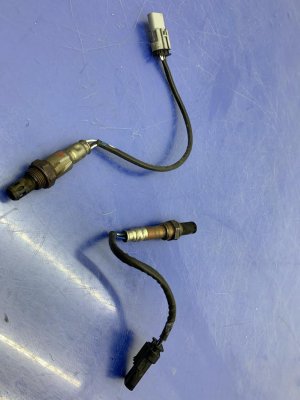
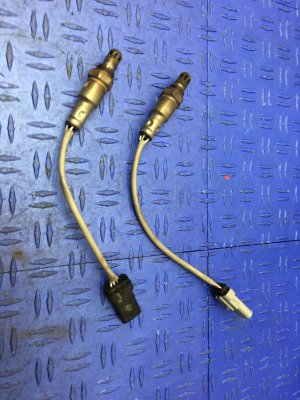
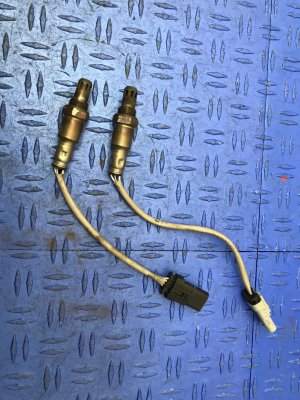
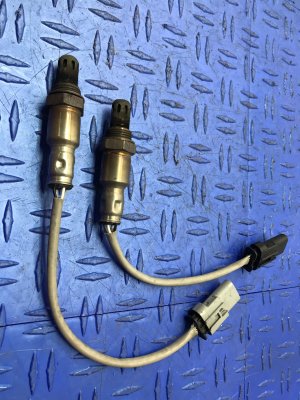
(OEM #ACDelco 12677600 (V8 LT1); ACDelco 12661231 (V6 LGX))— A faulty downstream sensor can send incorrect data to the PCM, falsely triggering the P0430 code.
Trusted brands: ACDelco, Denso, Bosch
OEM price range: $80-$150
Aftermarket price range: $50-$100 - Engine Air Filter
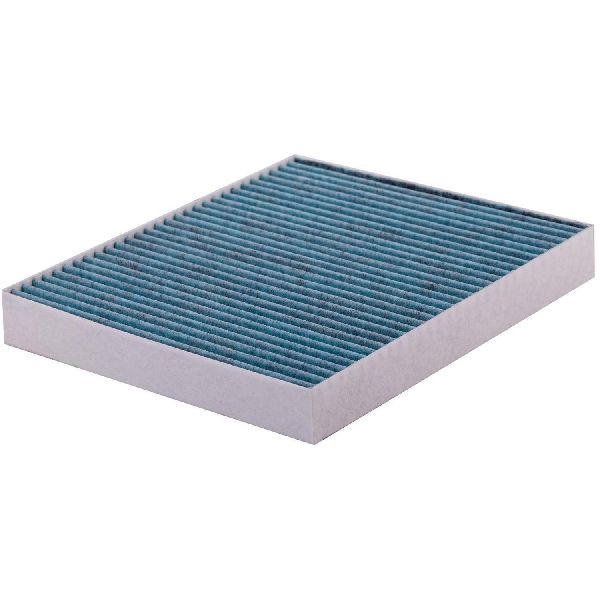
(OEM #ACDelco A3181C (V8); ACDelco A3205C (V6))— A damaged or improperly seated air filter seal is a known cause of this code on the 2016-2019 Camaro, as per TSB #16-NA-111. Replacing the filter ensures a proper seal.
Trusted brands: ACDelco, WIX, Fram
OEM price range: $25-$50
Aftermarket price range: $20-$40
Related Codes That Often Appear With This One
- P0420 — This is the equivalent code for Bank 1 (driver's side). If both appear, it could indicate a systemic issue like the airbox seal problem from TSB #16-NA-111, or that both converters are at the end of their life.
- P0300-P0308 — These are misfire codes. A misfire can dump raw fuel into the exhaust, which will quickly destroy the catalytic converter. The misfire is the root cause that must be fixed first.
- P0172/P0175 — These codes indicate a rich fuel condition on Bank 1 and/or Bank 2. A persistent rich condition can overwhelm and damage the catalytic converter. The root cause of the rich condition (e.g., leaking injector) must be fixed to solve the P0430 code long-term.
Technical Service Bulletins (TSBs) & Recalls
- Bulletin #16-NA-111: This informational bulletin provides diagnostic/inspection information for the air box and air filter seal to correct a MIL and DTCs P0420 and P0430 setting. It notes that debris bypassing the seal can damage the O2 sensor and block the catalytic converter.
Platform-Specific Known Issues
- TSB #16-NA-111: GM issued this bulletin specifically to address P0420 and P0430 codes caused by a poor seal on the air filter box. The bulletin instructs technicians to inspect for debris bypassing the filter and to validate the housing is completely sealed before replacing any parts.
Mechanic-Grade Diagnostic Values
- Downstream O2 Sensor (Bank 2, Sensor 2) Voltage at Idle/Steady Cruise — expected: A relatively stable voltage between 0.45V and 0.8V (450-800mV).. Failure: Voltage fluctuates rapidly, mimicking the upstream sensor's 0.1V to 0.9V switching pattern.
- Long Term Fuel Trim (LTFT) for Bank 2 — expected: Within +/- 5% at idle and steady cruise.. Failure: Consistently greater than +10% can indicate an unmetered air leak (like the TSB airbox issue) which can contribute to the P0430 code over time.
- Short Term Fuel Trim (Bank 2, Sensor 2) on some scanners — expected: Should read N/A or 0%.. Failure: A reading of 99.2% is a common anomaly on some scan tools for GM vehicles; it does not indicate a fault and should be disregarded.
Hidden / Shadow Codes Worth Checking
- Mode $06, TID $81: This is the OBD-II generic test ID for the Catalyst Monitor Bank 2 efficiency test. A technician can view the raw test value and compare it against the manufacturer's specified minimum and maximum thresholds to see if the catalyst is marginal, even before a DTC is set. (see via A professional scan tool capable of displaying Mode $06 test data.)
Scan Tool Commands That Help
- GM GDS2 (Global Diagnostic System 2): Catalyst System Test — This is a service bay function that forces the engine to run under the specific conditions required to execute the catalyst efficiency monitor. It allows a technician to quickly verify if a repair was successful without having to perform a lengthy drive cycle.
- HP Tuners / similar tuning software: DTC Disable (P0430) — This is commonly used on vehicles with aftermarket headers or high-flow cats that persistently trigger the code. By setting the code to 'No Error Reported', the Check Engine Light is suppressed. This is for off-road use only and will cause an emissions test failure.
Wiring & Ground Locations
- G100 (V8) — On the lower right (passenger) side of the engine block, located above the starter solenoid.. A poor engine ground can introduce electrical noise into sensor circuits. The ECM relies on clean signals from the O2 sensors, and a faulty ground can cause erratic readings that might be misinterpreted as a catalyst or sensor failure.
- Passenger Cylinder Head Grounds — Two small ground points are located on the back of the passenger-side cylinder head.. These grounds are critical for the sensors located on Bank 2. A loose or corroded connection here directly impacts the O2 sensor and other components on the passenger side of the engine.
- Bank 2 O2 Sensor Harness — Runs from the sensors on the passenger-side exhaust, up towards the top/rear of the engine to connect to the main engine harness.. The harness is routed near hot exhaust components. It should be inspected for any signs of melting or chafing, which could cause a short or open circuit in the O2 sensor wiring, leading to false codes.
Real Owner Repair Stories
- Camaro6 Forum User (2019 Camaro 1SS) — Persistent P0430 Check Engine Light after a separate repair for failed fuel injectors.
❌ Tried (didn't work) Having exhaust shops check for leaks (none found)., Installing aftermarket high-flow secondary cats., Replacing the Bank 2 O2 sensors with new GM parts.
✅ What actually fixed it The story highlights the complexity of diagnosis. The issue began immediately after two fuel injectors failed, which likely contaminated the primary catalytic converter with raw fuel. Even though the O2 sensors were also replaced (as they were coated in carbon), the underlying damage to the catalytic converter from the injector failure was the most probable root cause, a fact that was being obscured by the presence of aftermarket exhaust modifications. The final resolution was not posted, but the evidence points to the primary cat needing replacement. - Reddit r/camaro User (2013 Camaro SS (5th Gen, but relevant principle)) — P0420 and P0430 codes appeared simultaneously about two weeks after the car was repaired from a front-end collision.
❌ Tried (didn't work) Using a catalytic converter cleaner (CataClean)., Resetting the ECM by pulling fuses for several hours.
✅ What actually fixed it The user did not post a final fix, but the strong implication is that the simultaneous failure of both banks points to a systemic issue. Given the recent collision repair where the car was run out of fuel and then refilled with low-octane gas, the likely cause is contamination or thermal shock to the catalytic converters, or a damaged wiring harness affecting both downstream O2 sensor circuits. The key takeaway is that simultaneous P0420/P0430 codes are rarely two independent converter failures.
"I Checked Everything" — The Actual Cause
- In some cases, a smoke test may not reveal a small crack in the exhaust manifold or a leak at a flange that only opens up when the exhaust system heats up and components expand. If a smoke test comes back clean but an exhaust leak is still suspected, the next step is a careful visual inspection of the manifolds and collector flanges with the engine cold, looking for soot trails or hairline cracks.
OEM Part Supersession History
22907428, 22985639→23188133— Part consolidation and potential design revision for the V6 LGX Bank 2 catalytic converter.
Model Year Variations Within This Range
- 2016-2019: While the core engines (LGX, LT1) and the airbox design (related to TSB #16-NA-111) remained consistent, GM may have released ECM software updates over the years. These updates can alter the sensitivity of the catalyst efficiency monitor. A dealer can check for and apply the latest calibration, which in some cases can resolve persistent codes if the issue is a borderline-performing converter and an overly sensitive monitor threshold.
Helpful Videos
Used OEM Parts in Stock
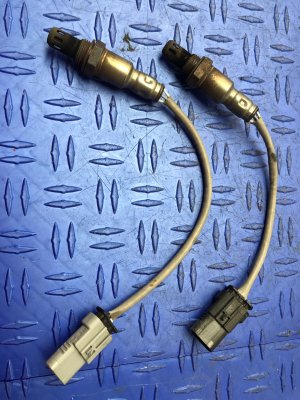
New Aftermarket Parts Available
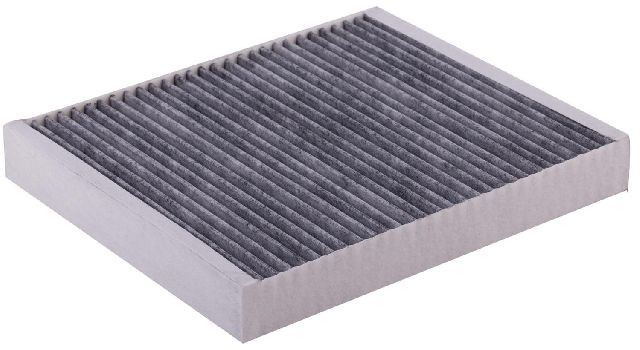


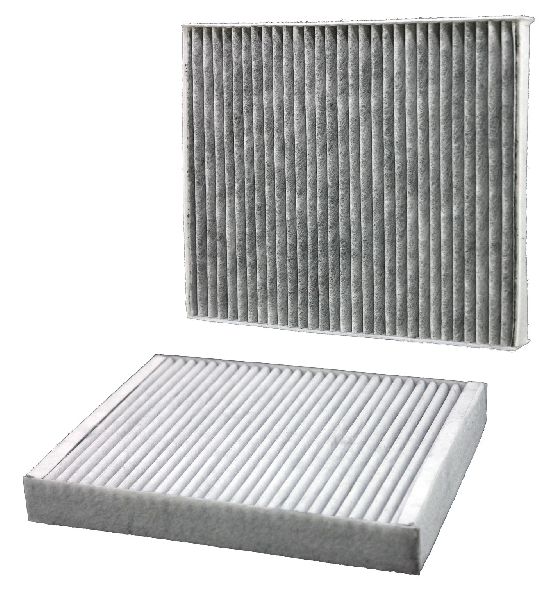

The information in this article is provided for general reference and educational purposes only. Vehicle specifications, procedures, and part compatibility can vary by production date, trim level, and region. Always consult your vehicle's factory service manual and verify part numbers before purchasing or performing repairs. Safety-critical components such as airbags, seat belts, and braking systems should be installed by a qualified professional.
- Chevrolet CAMARO:
- 🎬 Helpful Videos
- 🛍️ Shop This Part
- What's Unique About the 2016-2019 Chevrolet CAMARO
- Diagnostic Flowchart
- Symptoms You May Notice
- Most Likely Causes
- Rare But Worth Checking
- Diagnosis Steps
- Parts You'll Likely Need
- Related Codes That Often Appear With This One
- Technical Service Bulletins (TSBs) & Recalls
- Platform-Specific Known Issues
- Mechanic-Grade Diagnostic Values
- Hidden / Shadow Codes Worth Checking
- Scan Tool Commands That Help
- Wiring & Ground Locations
- Real Owner Repair Stories
- "I Checked Everything" — The Actual Cause
- OEM Part Supersession History
- Model Year Variations Within This Range
- 🎟️ Get 5% Off