

P0430 on 2004-2006 Chevrolet Avalanche 2500 8.1L: Catalytic Converter and O2 Sensor Guide
P0430 on your Avalanche 2500 most often points to a failed passenger-side catalytic converter or a bad downstream oxygen sensor. A failing O2 sensor is a relatively cheap fix (~$50-$150 DIY), while a new catalytic converter can cost over $1,500 installed. Before replacing the converter, always check for exhaust leaks, especially from broken exhaust manifold bolts, a common issue on this engine.
- P0430 on your 8.1L Avalanche points to an emissions problem on the passenger side.
- The most likely cause is a worn-out catalytic converter, but a faulty oxygen sensor is also a common and much cheaper possibility.
- Always diagnose before buying parts. A simple temperature check or scan tool data analysis can save you from replacing a $1,500+ part unnecessarily.
- If you have any engine misfire codes, you must fix that problem first, or you will ruin your new catalytic converter.
- Check your state's laws before buying a converter; you may need a more expensive CARB-compliant part.
What's Unique About the 2004-2006 Chevrolet AVALANCHE 2500 🎬 Watch: 8.1L Vortec reliability and common engine problems explained.
The 2004-2006 Avalanche 2500 is equipped with the large 8.1L V8 (RPO code L18) engine, a big-block V8 that produces significant heat and exhaust volume, placing heavy demands on the catalytic converters. A very common failure point on these engines is broken exhaust manifold bolts, particularly those closest to the firewall. This creates an exhaust leak upstream of the sensors, introducing oxygen that confuses the PCM and frequently triggers a false P0430 or P0420 code. Additionally, a GM Technical Service Bulletin (superseded by PIP3119P) notes that the diagnostic tests for P0420/P0430 were intentionally disabled for the first hour of engine operation to allow for a converter break-in period, indicating a specific sensitivity in the diagnostic strategy for this powertrain.
Diagnostic Flowchart
Tap your situation to follow the diagnostic path that matches what you're seeing on this vehicle.
Symptoms You May Notice
- Check Engine Light is on
- Vehicle may fail an emissions test
- Reduced engine power or sluggish acceleration, especially if the converter is clogged
- A sulfur or "rotten egg" smell from the exhaust
- In rare cases of a clogged converter, a rough idle
- Audible 'ticking' or hissing noise from the engine bay (especially when cold) that may indicate an exhaust manifold leak from a broken bolt.
- Replacing the oxygen sensor when the catalytic converter is the actual cause of failure.
- Replacing the catalytic converter without first diagnosing and fixing an underlying engine problem (like misfires or a rich/lean condition) that caused the original converter to fail.
- Replacing the catalytic converter or O2 sensors when an exhaust leak from a broken manifold bolt is the true root cause.
Most Likely Causes
- Failed Catalytic Converter (Bank 2) 🔴 High Probability The large 8.1L engine and the age of the vehicle mean the catalytic converter has likely reached the end of its service life. Contamination from oil or coolant, or damage from engine misfires, can also cause premature failure. The internal ceramic honeycomb can break down or become clogged.
How to confirm: Use an infrared thermometer to measure the temperature of the exhaust pipe before and after the converter. A working converter should be significantly hotter at the outlet (by at least 100°F) than the inlet. A professional can also use a five-gas analyzer or view live O2 sensor data; a downstream sensor that mimics the upstream sensor's rapid switching indicates a bad converter. 🎬 Watch: A professional guide to diagnosing P0420 and P0430 codes.
Typical fix: Replace the Bank 2 (passenger side) catalytic converter. Depending on the state, a specific CARB-compliant converter may be required. Note that the original OEM part is a one-piece assembly with the exhaust manifold.
Est. part cost: $300-$1400 - Exhaust System Leak (especially at Manifold) 🟡 Medium Probability The 8.1L V8 engines are known for breaking exhaust manifold bolts, especially the rearmost ones. 🎬 See this trick for fixing broken exhaust manifold bolts. This creates a leak that lets in unmetered oxygen, which fools the O2 sensors into providing incorrect data and setting a false P0430 code. Rust can also cause leaks at gaskets or pipe flanges.
How to confirm: Listen for an audible ticking sound from the engine bay, which is most noticeable on a cold start and may quiet down as the engine warms up. Visually inspect the exhaust manifold on the passenger side for black soot marks or a visible broken bolt head. A smoke test can also pinpoint leaks.
Typical fix: This can be a difficult repair. It involves removing the broken bolt (which often requires drilling and extraction), replacing the exhaust manifold gasket, and installing new bolts. Sometimes the manifold itself may be warped and require replacement.
Est. part cost: $50-$400 (for gaskets, bolts, and potentially a new manifold) - Failed Downstream Oxygen Sensor (Bank 2, Sensor 2) 🟡 Medium Probability Oxygen sensors are wear items and can fail over time, sending inaccurate readings to the computer. This is a more likely cause on lower-mileage vehicles or if the code appears intermittently. It's a common misdiagnosis to replace the sensor when the converter or an exhaust leak is the real issue.
How to confirm: Graph the voltage of the Bank 2 downstream O2 sensor using an OBD-II scanner. A healthy downstream sensor should show a relatively steady voltage (typically 0.4-0.8V). If it's stuck at a certain voltage or switching rapidly like the upstream sensor, it has likely failed.
Typical fix: Replace the Bank 2, Sensor 2 (passenger side, downstream) oxygen sensor.
Est. part cost: $35-$140
Rare But Worth Checking
- Engine Misfires or Fuel Mixture Problems: If you have other codes like P0300 (Random Misfire) or P0171/P0174 (System Too Lean), these must be fixed first. An engine misfire can send unburned fuel into the exhaust, which will quickly destroy a new catalytic converter. A rich condition from a leaking fuel injector can also damage the converter.
- PCM Software Issue / Break-in Period: As per TSB PIP3119P, if the code appears on a very low mileage vehicle or immediately after a new catalytic converter has been installed, the converter may not have completed its break-in cycle. Clearing the code and performing a specific drive cycle may be required. In rare cases, a dealer may have a software update.
Diagnosis Steps
- Scan for Codes: Use an OBD-II scanner to confirm P0430 and check for any other codes (e.g., misfire, fuel trim, or O2 sensor codes). Address any other codes first.
- Inspect for Exhaust Leaks: This is a critical first step for the 8.1L engine. With the engine cold, start it and listen carefully for a 'ticking' noise from the passenger-side exhaust manifold area. Visually inspect the manifold bolts, especially the one nearest the firewall, for breakage. Check all exhaust flanges and gaskets for soot trails.
- Analyze O2 Sensor Data: Use a scanner with live data graphing. Warm the engine to operating temperature. The upstream sensor (Bank 2, Sensor 1) should switch rapidly between ~0.1V and ~0.9V. The downstream sensor (Bank 2, Sensor 2) should hold a relatively steady, high voltage (e.g., >0.6V). If the downstream sensor is switching rapidly and mirroring the upstream sensor, the converter is not working.
- Test the Catalytic Converter: As a secondary check, use an infrared temperature gun after the engine is fully warmed up. The outlet pipe of the converter should be at least 100°F hotter than the inlet pipe. If temperatures are similar, the converter is not functioning.
- Isolate the Fault: If an exhaust leak is found, repair it first, clear the codes, and perform a drive cycle. This is a very likely fix. If no leak is found and the downstream O2 sensor mimics the upstream, the converter has failed. If the O2 sensor data is stuck or erratic but the converter passes the temperature test, the sensor itself is the likely culprit.
- Replace the Faulty Component: Based on your findings, replace the failed component. If replacing the converter, consider a break-in drive cycle as described in GM TSB PIP3119P to prevent the code from returning prematurely.
Parts You'll Likely Need
- Bank 2 Catalytic Converter
(OEM #15079086)— This is the most common cause of P0430 on a high-mileage vehicle. The internal catalyst materials degrade over time. The OEM part is an assembly including the exhaust manifold but has been discontinued. Aftermarket direct-fit options are available.
Trusted brands: ACDelco (Aftermarket), MagnaFlow, Walker Exhaust
OEM price range: N/A (Discontinued)
Aftermarket price range: $300-$1400 (Varies greatly based on Federal vs. CARB compliance) - Bank 2, Sensor 2 (Downstream) Oxygen Sensor
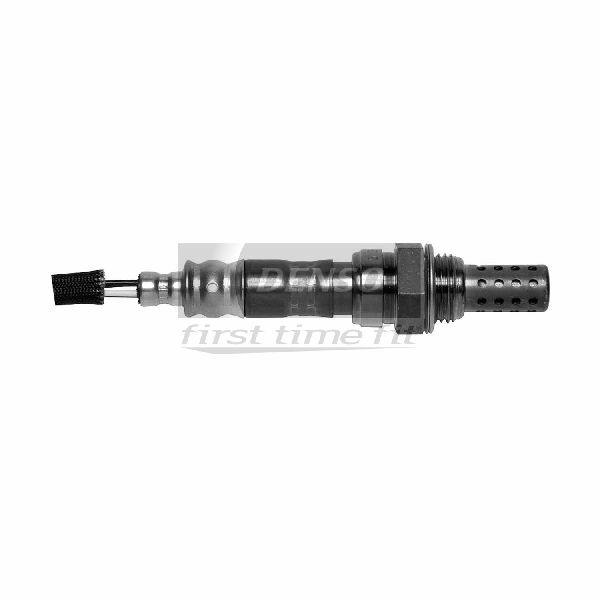
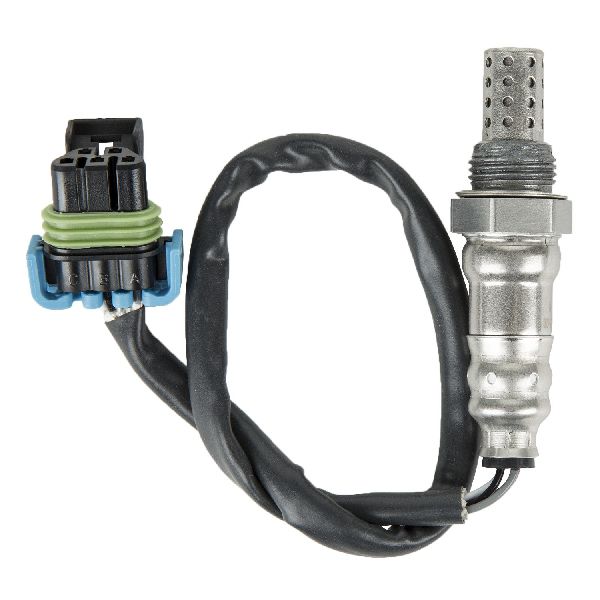
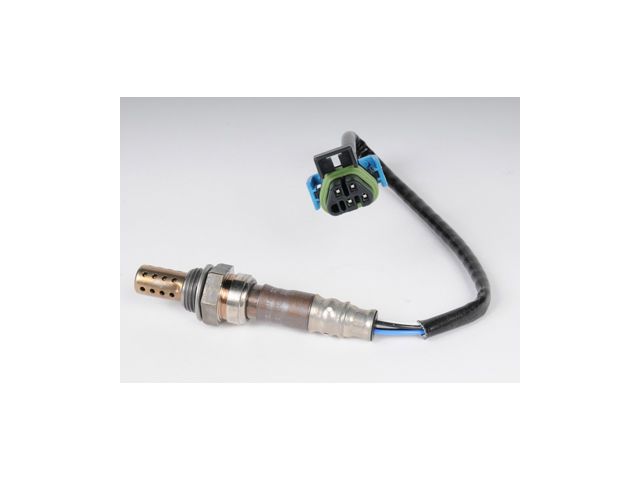
(OEM #12572728)— A faulty sensor can send incorrect data, falsely triggering the P0430 code. It's a common wear-and-tear item and a much cheaper first step than replacing the converter if diagnosis is inconclusive.
Trusted brands: ACDelco, Denso, NGK/NTK, Bosch
OEM price range: $80-$150
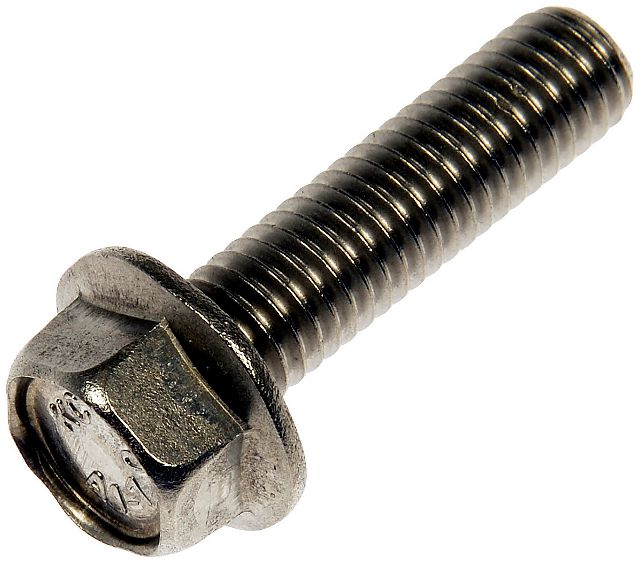
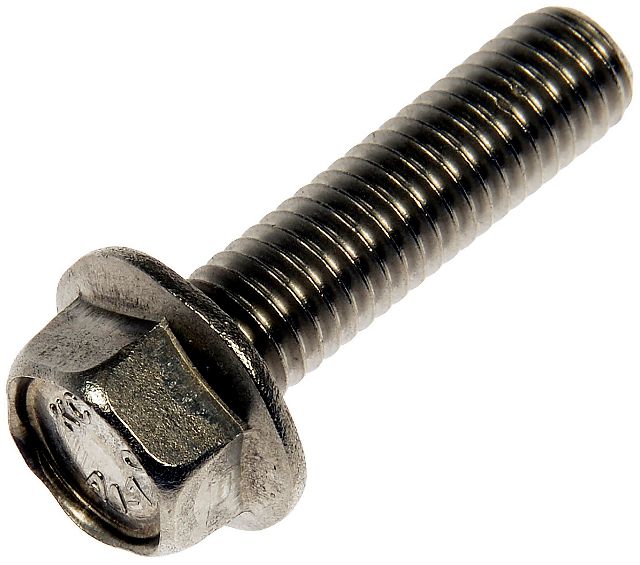
Aftermarket price range: $35-$140 - Exhaust Manifold Bolt & Gasket Kit — Due to the high frequency of broken exhaust manifold bolts on the 8.1L engine causing false P0420/P0430 codes, replacing the bolts and gasket is a common repair needed to fix the underlying exhaust leak.
Trusted brands: Dorman, Fel-Pro, ACDelco
OEM price range: $40-100
Aftermarket price range: $25-$80
Related Codes That Often Appear With This One
- P0420 — This is the identical code but for Bank 1 (driver's side). It's common for both converters to fail around the same time on an older, high-mileage vehicle. It can also appear with P0430 if there's a systemic issue like a fuel problem or if both exhaust manifolds have leaking bolts.
- P0300-P0308 — Misfire codes (e.g., P0302 for cylinder 2) can cause unburned fuel to enter the exhaust, overheating and damaging the catalytic converter, leading to a P0430 code.
Technical Service Bulletins (TSBs) & Recalls
- PIP3119N: Service Engine Soon Malfunction Indicator Lamp on at low mileage with DTC P0420 and or P0430 stored.
- PIP3119P: Catalytic Converter Break-In Information To Prevent DTCs P0420 And/Or P0430. (Supersedes previous versions). Details a specific drive cycle to perform after converter replacement to prevent false codes.
Platform-Specific Known Issues
- A Technical Service Bulletin (TSB #PIP3119N, superseded by PIP3119P) was issued for 2004+ models, noting that the diagnostic test for P0430 is disabled for the first hour of engine operation to prevent the code from setting on new vehicles. This TSB also provides a specific drive cycle procedure to follow after replacing a catalytic converter to ensure it breaks in properly.
- Broken exhaust manifold bolts are a very common problem on the 8.1L V8, leading to exhaust leaks that are a primary cause of false P0430 codes. The ticking noise on a cold start is the key symptom.
Mechanic-Grade Diagnostic Values
- Long & Short Term Fuel Trims (LTFT/STFT) — expected: Combined value should be within +/- 10% at idle and steady cruise.. Failure: Sustained positive values (e.g., > +10%) indicate a lean condition, which could be an exhaust or vacuum leak fooling the O2 sensors. Sustained negative values indicate a rich condition.
- Downstream O2 Sensor (Bank 2, Sensor 2) Voltage — expected: A relatively steady voltage between 0.6V and 0.8V on a fully warm engine with a healthy converter.. Failure: Voltage rapidly switching between high and low values, mirroring the upstream sensor, indicates a failed converter. A flatline voltage (e.g., stuck at 0.1V or 0.9V) indicates a failed sensor.
- Heated Oxygen Sensor (HO2S) Installation Torque — expected: 42 N·m (31 lb ft). Failure: Improper torque can lead to exhaust leaks at the sensor bung or damage to the sensor threads.
Hidden / Shadow Codes Worth Checking
- Mode $06, Catalyst Monitor: This is not a specific code but a diagnostic mode that shows the raw data from the PCM's self-tests. For P0430, a technician can view the test results for the Bank 2 catalyst monitor (e.g., Test ID $81 or similar, specific to GM) to see the measured value (e.g., switching ratio) compared to the minimum and maximum thresholds allowed by the PCM. This can reveal if the converter is borderline failing even if the CEL is not consistently on. (see via An advanced OBD-II scan tool that supports Mode $06 data display.)
Wiring & Ground Locations
- Bank 2 Sensor 2 PCM Pins (2004 Blue/Green Connectors) — At the Powertrain Control Module (PCM), located on the left front of the engine compartment. For the C1 (Blue) connector: Pin 25 is the HO2S Low Signal (TAN wire) and Pin 65 is the HO2S High Signal (PPL/WHT wire).. These specific pins are for the downstream passenger-side oxygen sensor. A poor connection or damaged wire at these pins will cause incorrect readings and can trigger P0430 or related sensor circuit codes.
- G103 (Engine Ground) — Located on the right rear of the engine block.. This is a primary engine ground point. Poor grounding here can affect various sensors, including the oxygen sensors, leading to erratic readings and false codes.
- PCM Ground — A critical ground wire runs from the main wiring harness to a bolt on the top rear of the engine block.. This is the main ground reference for the computer and all its sensors. If this ground is corroded, loose, or broken, it can cause a wide range of bizarre electrical problems and sensor codes, including P0430.
- O2 Sensor Grounding Type — Internal to the PCM and wiring harness.. 2004-2006 models use an 'Isolated Ground' system where the PCM provides the ground reference for the O2 sensors internally. Using an older 'Case Grounded' sensor, which grounds through the exhaust, will not work correctly and will cause incorrect readings.
Real Owner Repair Stories
- Reddit user post in r/Silverado (GM Truck with 6.0L V8 (similar architecture and known issues as 8.1L)) — Check Engine Light with both P0420 and P0430 codes, plus an audible 'ticking' noise from the engine on startup.
❌ Tried (didn't work) Initial diagnosis suggested replacing both catalytic converters and/or O2 sensors.
✅ What actually fixed it The actual cause was a snapped exhaust manifold bolt. The final repair required replacing the warped exhaust manifold, installing a new gasket, and extracting the broken bolts to seal the exhaust leak.
"I Checked Everything" — The Actual Cause
- While no specific stories were found, a known issue on Vortec engines is a leaking intake manifold gasket. An exhaust system smoke test would come back clean, but the intake leak introduces unmetered air, creating a lean condition (often setting P0171/P0174). The PCM's attempts to correct this lean state can alter exhaust chemistry enough to cause a failure of the catalyst monitor test, leading to a P0430 code that appears unrelated to the true source of the problem.
OEM Part Supersession History
15035106→15066810 (on Sept 1, 2000), then 15079086 (on Sept 1, 2006)— Standard part updates and revisions by the manufacturer.
Heads up: The final part number, 15079086, is now discontinued by GM. Aftermarket is the only option.
Model Year Variations Within This Range
- 2004-2006: The Avalanche 2500 models in this year range were exclusively offered with the 8.1L V8 and four-wheel drive.
- 2004-2006: All trucks from 2003 onward, including this range, use 'Isolated Ground' oxygen sensors, which receive their ground reference from the PCM. This is different from earlier 'Case Grounded' sensors and is critical for part compatibility.
- 2006: 2006 was the final model year for the Avalanche 2500 series. While minor changes like a combined OnStar/satellite antenna were made, the core powertrain diagnosis for P0430 remains the same as 2004-2005.
Helpful Videos

We Have This Part in Stock


The information in this article is provided for general reference and educational purposes only. Vehicle specifications, procedures, and part compatibility can vary by production date, trim level, and region. Always consult your vehicle's factory service manual and verify part numbers before purchasing or performing repairs. Safety-critical components such as airbags, seat belts, and braking systems should be installed by a qualified professional.
- Chevrolet AVALANCHE 2500:
- 🎬 Helpful Videos
- 🛍️ Shop This Part
- What's Unique About the 2004-2006 Chevrolet AVALANCHE 2500
- Diagnostic Flowchart
- Symptoms You May Notice
- Most Likely Causes
- Rare But Worth Checking
- Diagnosis Steps
- Parts You'll Likely Need
- Related Codes That Often Appear With This One
- Technical Service Bulletins (TSBs) & Recalls
- Platform-Specific Known Issues
- Mechanic-Grade Diagnostic Values
- Hidden / Shadow Codes Worth Checking
- Wiring & Ground Locations
- Real Owner Repair Stories
- "I Checked Everything" — The Actual Cause
- OEM Part Supersession History
- Model Year Variations Within This Range
- 🎟️ Get 5% Off