

P0430 on 2004-2009 Cadillac SRX 4.6L: Catalyst Efficiency Causes and Fixes
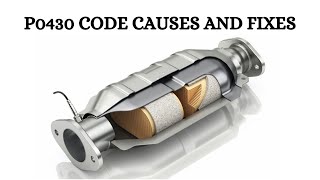
P0430 on a 2004-2009 Cadillac SRX with the 4.6L V8 most often indicates a failing catalytic converter on Bank 2 (passenger side). Before replacing this expensive part, it's critical to rule out a bad oxygen sensor or an exhaust leak. Northstar-specific issues like oil consumption are a common root cause that must be addressed to prevent repeat failure. Expect costs to range from $100 for a sensor to over $2,500 for an OEM converter replacement at a dealership.
- P0430 on your SRX means the passenger-side catalytic converter is not working efficiently.
- Do not replace the catalytic converter without first checking for exhaust leaks and testing the downstream O2 sensor; these are cheaper and common failure points.
- Always investigate and fix the root cause of the failure (like engine misfires or oil burning) before installing a new converter, or the new part will likely fail prematurely.
- The 2004-2009 SRX is the first generation; ensure you are buying parts specified for this model and the 4.6L V8 engine.
What's Unique About the 2004-2009 Cadillac SRX
For the first-generation Cadillac SRX with the Northstar V8, the P0430 code is a straightforward but often expensive issue. The primary challenge is that catalytic converters don't typically fail on their own; their demise is often a symptom of another problem. The Northstar engine's health is paramount. These engines, particularly in this era, can be prone to oil consumption due to piston ring issues. This oil burning contaminates the exhaust and will quickly destroy a new catalytic converter, making it critical to assess engine health before replacing the cat. Unlike some other GM vehicles, there are no common, model-specific TSBs pointing to unusual causes like airbox leaks for this specific model year range. However, it is worth noting that for other Cadillac models, Bulletin #16NA111 suggests inspecting the air box and air filter seal to correct a MIL and DTCs P0420 and P0430.
Symptoms You May Notice
- Check Engine Light is on
- Failure to pass an emissions test
- Reduced engine power and weak acceleration (if converter is clogged).
- A sulfur or "rotten egg" smell from the exhaust.
- Excessive heat coming from under the vehicle.
- A rattling sound from the exhaust if the converter's internal substrate has broken apart.
- Immediately replacing the catalytic converter without checking for exhaust leaks or testing the oxygen sensors first. A faulty O2 sensor is a much cheaper fix and a common cause.
- Replacing the O2 sensor when it is correctly reporting a failed converter. Many technicians on forums state that if P0430 is the only code, the converter is the problem 9 times out of 10.
- Installing a cheap, aftermarket catalytic converter. Many owners report that low-quality aftermarket cats are not efficient enough to satisfy the PCM's monitoring, causing the code to return.
Most Likely Causes
- Failing Catalytic Converter (Bank 2) 🔴 High Probability Catalytic converters have a finite lifespan and are a documented common failure item. Their failure is often accelerated by the Northstar engine's tendency to consume oil, which poisons the catalyst material.
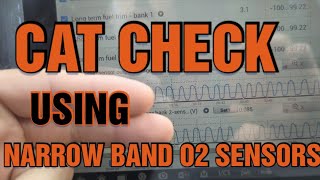
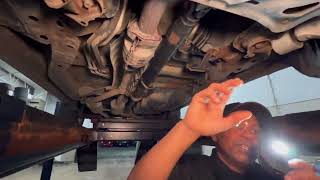
How to confirm: After ruling out O2 sensors and exhaust leaks, use a scan tool to observe O2 sensor graphs. 🎬 Watch: How to diagnose a P0430 using sensor data If the Bank 2 downstream sensor (Sensor 2) mimics the waveform of the upstream sensor (Sensor 1), the converter is not working. An infrared thermometer can also be used; the outlet of a working converter should be at least 100°F hotter than the inlet. Tapping the converter with a rubber mallet may produce a rattle, confirming the internal honeycomb is broken.
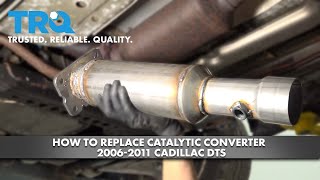
Typical fix: Replace the Bank 2 (passenger side) catalytic converter. It is critical to fix any underlying engine issues like misfires or oil burning before replacing the converter to avoid repeat failure. Per TSB #PIP3119P, a new converter may require a break-in period.
Est. part cost: $250-$800 (aftermarket), $1000-$2600 (OEM) - Faulty Downstream Oxygen (O2) Sensor 🟡 Medium Probability Oxygen sensors are wear items and can fail with age, sending incorrect data. However, many technicians note that if P0430 is the only code present, the sensor is likely doing its job of reporting a bad converter.
How to confirm: A lazy or biased O2 sensor can send false data. Use a scan tool to monitor the Bank 2, Sensor 2 voltage. It should be relatively steady (e.g., above 0.6V) on a warm, running engine. If it's stuck low or fluctuating wildly like the upstream sensor, it may be faulty. A good diagnostic trick is to swap the downstream sensors from Bank 1 and Bank 2. If the code changes to P0420 (Bank 1), the sensor is bad.
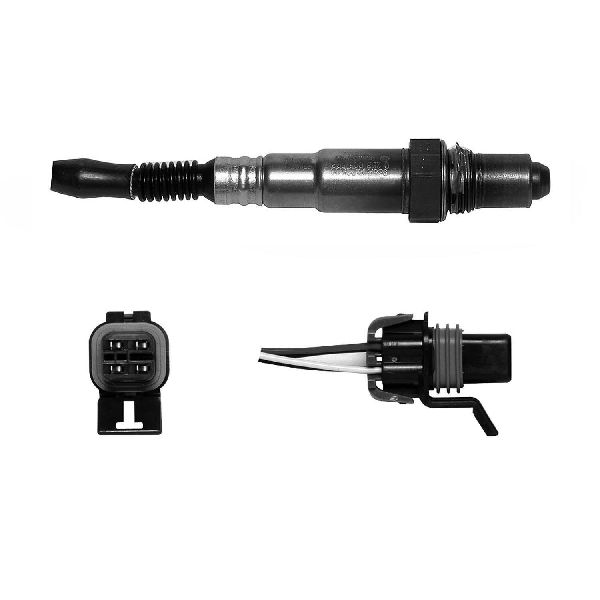
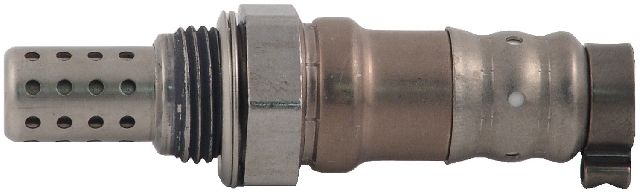
Typical fix: Replace the Bank 2, Sensor 2 (downstream, passenger side) oxygen sensor. Recommended parts include Denso 234-4338 or OEM ACDelco 213-3851.
Est. part cost: $50-$150 - Exhaust System Leak ⚪ Low Probability Rust and vibration can cause leaks at gaskets and flex pipes over time.
How to confirm: Visually inspect the exhaust system from the engine manifold to the post-converter O2 sensor on the passenger side. Look for black soot, listen for hissing or ticking sounds, and feel for escaping air (when the exhaust is cool). A shop can use a smoke machine to find small leaks. 🎬 See this guide on how to find an exhaust leak Even a small pinhole leak can cause a 'Venturi effect' that draws in fresh air and fools the O2 sensor.
Typical fix: Replace the leaking gasket or repair the cracked pipe. Manifold-to-converter gaskets are common leak points.
Est. part cost: $20-$100 - Underlying Engine Performance Issues ⚪ Low Probability Any issue that causes an overly rich or lean fuel mixture or allows oil/coolant into the exhaust will damage the catalytic converter over time. The Northstar's potential for oil consumption is a key concern here. In some cases, as noted in NHTSA ODI #11022616, a P0430 code was associated with a timing chain issue caused by a manufacturer defect.
How to confirm: Check for other diagnostic trouble codes. Misfire codes (P0300-P0308), fuel trim codes (P0171, P0174), or coolant temperature sensor codes must be diagnosed and fixed before addressing P0430. Check oil level and for signs of coolant in oil.
Typical fix: Fix the root cause, which could be replacing spark plugs, ignition coils, fuel injectors, or addressing engine oil consumption issues.
Est. part cost: $50-$500+
Rare But Worth Checking
- PCM Software or Hardware Fault: This is very rare. Before considering PCM replacement, all other possibilities, including wiring and connectors to the O2 sensors, must be exhaustively checked.
- Contaminated Fuel: Fuel with high sulfur content can temporarily coat the catalyst and cause a P0430 code. While less common with modern fuel, it's a possibility. Some manufacturers have TSBs that prescribe a specific drive cycle to 'de-sulfate' the converters.
Diagnosis Steps
- Scan for all DTCs. If any misfire (P030x) or fuel trim (P0171/P0174) codes are present, resolve them first as they are the likely root cause.
- Perform a thorough visual inspection of the Bank 2 (passenger side) exhaust system. Check for cracks in the manifold, broken bolts, and leaking gaskets. Use a smoke machine for best results.
- With a scan tool, monitor the live data for the Bank 2 oxygen sensors (B2S1 and B2S2) with the engine fully warmed up and running at around 2000 RPM.
- Observe the sensor readings. The upstream sensor (B2S1) should show a rapidly fluctuating voltage (e.g., 0.1V to 0.9V). The downstream sensor (B2S2) should show a relatively steady, high voltage (e.g., >0.6V).
- If the downstream sensor (B2S2) voltage is mirroring the upstream sensor's fluctuations, the catalytic converter has failed.
- If the downstream sensor (B2S2) voltage is stuck low, flat, or unresponsive, the sensor itself is likely faulty. Consider swapping the Bank 1 and Bank 2 downstream sensors to see if the code follows the sensor (changes to P0420).
- Tap the catalytic converter with a rubber mallet (when cool). If you hear a rattling sound, the internal substrate is broken and the converter must be replaced.
- Use an infrared thermometer to measure the temperature of the pipe entering and exiting the converter. The outlet should be at least 100°F hotter than the inlet on a working converter.
- If all sensors and wiring appear good and there are no exhaust leaks, the catalytic converter is the confirmed point of failure.
Parts You'll Likely Need
- Catalytic Converter (Bank 2 / Right / Passenger Side)
(OEM #12638982 (Verify with VIN))— This is the most common part to fail and directly cause the P0430 code. Failure is often a symptom of an underlying engine issue.
Trusted brands: ACDelco (OEM), Walker Exhaust, MagnaFlow
OEM price range: $1000-$2600
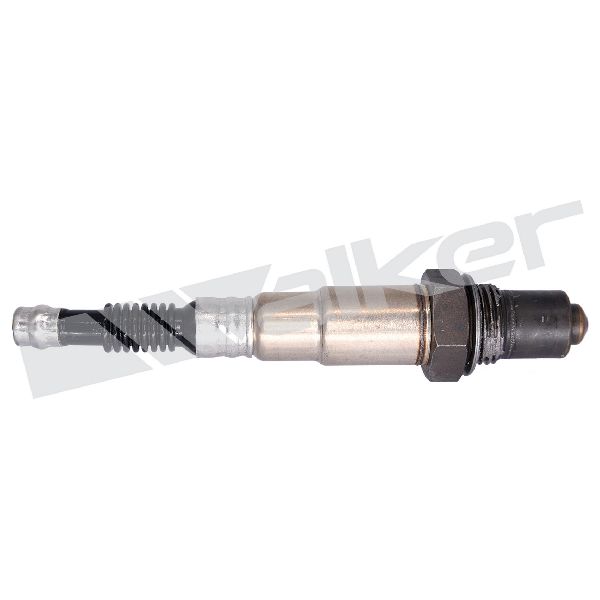
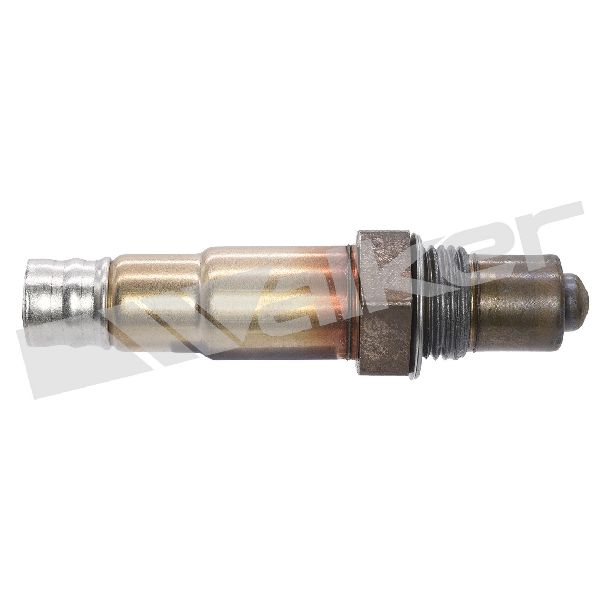
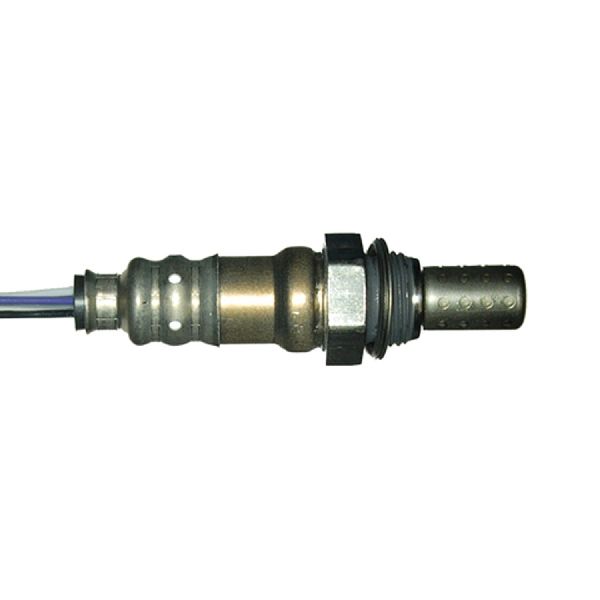
Aftermarket price range: $250-$800 - Downstream Oxygen Sensor (Bank 2, Sensor 2)
(OEM #ACDelco 213-3851)— A faulty sensor can send incorrect data to the PCM, falsely triggering the P0430 code. It's often replaced as a preventative measure when the converter is changed.
Trusted brands: ACDelco (OEM), Denso (e.g., 234-4338), Bosch
OEM price range: $80-$150
Aftermarket price range: $50-$100
Related Codes That Often Appear With This One
- P0420 — This is the identical code but for Bank 1 (driver's side). Seeing both together suggests a systemic issue like contaminated fuel, an engine-wide problem (like oil consumption), or simply that both converters have reached the end of their service life.
- P0300-P0308 — These are misfire codes. A misfire dumps raw, unburnt fuel into the exhaust, which rapidly overheats and destroys the catalytic converter. A misfire is a common root cause of P0430.
- P0171 / P0174 — These 'System Too Lean' codes indicate an air/fuel mixture problem. An unmetered air leak from the intake or a vacuum line is a common cause, which can affect converter operation and must be fixed first.
Technical Service Bulletins (TSBs) & Recalls
- TSB #PIP5232C: Addresses premature catalytic converter failures on various GM vehicles, suggesting inspection for internal damage.
- TSB #PIP3119P: Explains that new catalytic converters require a break-in period. The P0420/P0430 diagnostic tests are disabled on new vehicles for the first hour of operation. This is relevant for anyone replacing a converter, as an immediate code may not indicate a faulty new part. This bulletin also notes that some vehicles may have a Service Engine Soon lamp on at low mileage with these codes stored.
- Bulletin #16NA111: Provides diagnostic and inspection information for the air box and air filter seal to correct a MIL and DTCs P0420 and P0430 setting.
Platform-Specific Known Issues
- A common topic on CadillacForums and r/MechanicAdvice is the futility of replacing O2 sensors when P0430 is the only code present. Experienced technicians in these forums consistently advise that if no exhaust leaks are found, the code reliably indicates a failed converter, and replacing the sensor is often a waste of money.
- Northstar engine oil consumption is a significant contributor to premature catalytic converter failure on the SRX. Before investing in a new converter, owners should monitor oil levels closely to determine if the engine is burning oil, as this root cause will destroy the new part.
Mechanic-Grade Diagnostic Values
- O2 Sensor Heater Element Resistance — expected: Approximately 5 to 15 Ohms, depending on the specific sensor and ambient temperature. Check service manual for exact spec.. Failure: A reading of infinity (open circuit) or near zero (short circuit) indicates a failed heater element. A failed heater can slow the sensor's response time, affecting catalyst monitoring.
- Downstream O2 Sensor (B2S2) Voltage - Healthy Converter — expected: Relatively steady voltage, typically between 0.6V and 0.8V, at a steady cruise RPM once the engine is warm.. Failure: Voltage fluctuates rapidly, mimicking the upstream sensor's 0.1V to 0.9V switching pattern. This indicates the converter is not storing oxygen.
- Catalyst Temperature Differential (Inlet vs. Outlet) — expected: The outlet pipe temperature should be at least 100°F (approx. 38°C) hotter than the inlet pipe temperature after the engine is fully warmed up and running at a steady 2000-2500 RPM.. Failure: Outlet temperature is the same as or cooler than the inlet temperature, indicating the catalytic reaction is not occurring.
- Short-Term Fuel Trim (STFT) & Long-Term Fuel Trim (LTFT) — expected: Should be within +/- 5% at idle and steady cruise. Values up to +/- 10% can be acceptable.. Failure: Sustained positive trims (>+10%) suggest a vacuum leak, while sustained negative trims (<-10%) suggest a rich condition. Either condition can lead to catalyst damage and must be fixed before replacing a converter.
Hidden / Shadow Codes Worth Checking
- Mode $06, TID $01, CID $01-$02 (Bank 2): This refers to the onboard diagnostic test results for the Bank 2 Catalyst Monitor. It provides the raw data the PCM uses to determine if the converter passes or fails. Technicians can compare the current test value against the maximum allowable threshold. (see via A professional scan tool with Mode $06 capabilities is required. The specific Test ID (TID) and Component ID (CID) can vary by year, so consult the tool's help function or service information.)
Scan Tool Commands That Help
- Tech2 / GDS2: IPC Data Display -> Engine Hour Meter — As per TSB PIP3119P, if a P0420/P0430 code sets on a new vehicle or after a converter replacement, you must verify the engine run time. The catalyst monitor is disabled for the first hour of engine run time to allow for break-in. If the battery was disconnected, this timer might reset, causing a false code.
- Tech2 / GDS2: Clear DTCs — After replacing a catalytic converter that failed due to a lack of break-in time, the TSB instructs to clear the codes and perform a specific drive cycle to complete the break-in and verify the repair.
Wiring & Ground Locations
- ECM (Engine Control Module) — On the left (driver's side) frame rail, located below the headlight assembly.. The ECM processes all O2 sensor data and determines when to set the P0430 code. Its power and ground integrity are paramount for accurate sensor readings.
- G100 — On the right rear of the 4.6L V8 engine.. This is a primary engine ground. A poor connection here can introduce electrical noise or voltage offsets, potentially affecting sensor readings.
- G102 — On the right rear of the 4.6L engine.. This is a critical engine ground that provides the ground reference for ignition coils and other components. While not directly for the O2 sensor, electrical noise from a bad ground can interfere with sensitive sensor signals.
- G103 — On the left side of the engine block, closer to the oil pan.. This is another critical engine-to-chassis ground point. The ECM and its sensors rely on a stable ground path back to the battery.
- HO2S Wiring — From the O2 sensor connector to the main engine harness.. Service information explicitly warns against soldering O2 sensor wires. The sensor uses the space between wire strands to reference clean outside air. Soldering or using inappropriate connectors can block this path and cause incorrect readings, potentially leading to a false P0430 code.
Real Owner Repair Stories
- YouTube user comment/demonstration (2000-2004 Cadillac with Northstar V8 (demonstrates common issue applicable to the SRX)) — Persistent, difficult-to-diagnose codes including misfires (P0300) and lean conditions, which are root causes for P0430.
❌ Tried (didn't work) Replacing Mass Airflow (MAF) sensor, Replacing spark plugs, Replacing ignition coils, Replacing fuel injectors
✅ What actually fixed it The rubber intake coupler between the throttle body and the intake manifold had a large, hidden crack. This caused a massive unmetered air leak (vacuum leak) that the computer could not compensate for, leading to various codes. Replacing the coupler resolved the issue. - NHTSA ODI #11022616 — An owner reported a P0430 code which they associated with a cam or crankshaft position sensor and a timing chain issue caused by a manufacturer defect.
"I Checked Everything" — The Actual Cause
- On some GM V8s, a P0430 code can be caused by a leaking intake manifold gasket. While an exhaust smoke test would come back clean, a vacuum leak from a bad intake gasket can lean out one bank more than the other, altering the combustion chemistry enough to make the PCM believe the catalytic converter is inefficient. This is often accompanied by lean codes (P0171/P0174) but can sometimes manifest as just the catalyst code if the leak is minor.
Model Year Variations Within This Range
- 2004-2009: The first generation SRX (2004-2009) used a longitudinal engine layout (Northstar V8 or 3.6L V6) on the Sigma platform. The second generation (2010-2016) switched to a transverse engine layout on the Epsilon II platform. All parts, diagnostic procedures, and component locations are completely different between the two generations. This guide is specific to the first generation with the 4.6L V8.
Diagnostic Flowchart
Real Owner Stories
Aggregated from forums and TSBs cited above. Mileages and costs reflect what owners reported in those sources.
Cadillac SRX
Symptoms: Check engine light came on and retrieved a solitary P0430 code.
What fixed it: Replaced the catalytic converter, as multiple technicians noted that replacing O2 sensors for a solitary P0430 code is a waste of money.
Source hint: Reddit r/MechanicAdvice: P0430 Code - O2 Sensors vs. Catalytic Converter Debate
2006 Cadillac SRX
Symptoms: Diagnosing a P0430 code.
What fixed it: Followed standard diagnostic procedure: checked for exhaust leaks, tested sensors, and then addressed the converter.
Source hint: Car Talk Community: 2006 Cadillac SRX - P0430 Code Discussion
Cadillac CTS
Symptoms: The owner reported a P0430 code along with cam or crankshaft position sensor issues.
What fixed it: The owner identified a timing chain issue caused by a manufacturer defect as the root cause of the diagnostic trouble code.
Source hint: NHTSA ODI #11022616
Related OBD-II Codes
Frequently Asked Questions
Does TSB #PIP3119P apply to my 2004-2009 Cadillac SRX if I just replaced the catalytic converter?
I have a P0430 code on my 4.6L Northstar SRX. Should I replace the O2 sensors first?
What are the recommended replacement parts for a faulty downstream O2 sensor on this vehicle?
Why is my Northstar V8 engine prone to catalytic converter failures?
How can I test if the Bank 2 catalytic converter is clogged or broken internally on my SRX?
Are there other Cadillac models that share this exact P0430 issue with the 4.6L engine?
Helpful Videos
![How to Fix P0430 Error Code in 8 Minutes [7 DIY Methods / Only $5.97]](https://img.youtube.com/vi/KziSvVBjuEc/mqdefault.jpg)
We Have This Part in Stock


The information in this article is provided for general reference and educational purposes only. Vehicle specifications, procedures, and part compatibility can vary by production date, trim level, and region. Always consult your vehicle's factory service manual and verify part numbers before purchasing or performing repairs. Safety-critical components such as airbags, seat belts, and braking systems should be installed by a qualified professional.
- Cadillac SRX:
- 🎬 Helpful Videos
- 🛍️ Shop This Part
- What's Unique About the 2004-2009 Cadillac SRX
- Symptoms You May Notice
- Most Likely Causes
- Rare But Worth Checking
- Diagnosis Steps
- Parts You'll Likely Need
- Related Codes That Often Appear With This One
- Technical Service Bulletins (TSBs) & Recalls
- Platform-Specific Known Issues
- Mechanic-Grade Diagnostic Values
- Hidden / Shadow Codes Worth Checking
- Scan Tool Commands That Help
- Wiring & Ground Locations
- Real Owner Repair Stories
- "I Checked Everything" — The Actual Cause
- Model Year Variations Within This Range
- Diagnostic Flowchart
- Real Owner Stories
- Cadillac SRX
- 2006 Cadillac SRX
- Cadillac CTS
- Related OBD-II Codes
- Frequently Asked Questions
- 🎟️ Get 5% Off