

P0430 on 2012-2013 Cadillac Escalade EXT: Catalyst Efficiency Causes and Fixes
P0430 on a 2012-2013 Escalade EXT indicates that the passenger-side (Bank 2) catalytic converter is no longer efficient. While the converter itself is the most common failure, especially at higher mileage, it's critical to first rule out cheaper causes like exhaust leaks or a faulty downstream oxygen sensor. Underlying issues like oil consumption from the Active Fuel Management (AFM) system can also be a root cause that destroys the converter.
- P0430 points to an inefficient passenger-side (Bank 2) catalytic converter.
- Before replacing the expensive converter, ALWAYS inspect for exhaust leaks, especially at the manifold, and test the downstream O2 sensor.
- Using a scan tool to graph the upstream and downstream O2 sensor data is the most reliable way to confirm a failed converter.
- If any other codes are present, particularly for engine misfires (P030x), they must be repaired first to prevent damaging a new converter.
What's Unique About the 2012-2013 Cadillac ESCALADE EXT
The 2012-2013 Escalade EXT uses the robust 6.2L V8 engine, part of the GMT900 truck platform. A unique characteristic noted in a GM Technical Service Bulletin (TSB #PIP3119N) is that the P0420 and P0430 catalyst efficiency diagnostics were intentionally disabled for the first hour of engine operation when the vehicle was new to allow for a break-in period. While this doesn't affect diagnosis on a used vehicle, it highlights a known sensitivity. The most common issues leading to P0430 on these trucks are age-related converter failure, exhaust leaks from broken manifold bolts (a frequent problem on this platform), and oil consumption related to the Active Fuel Management (AFM) system which can poison the catalyst over time.
Diagnostic Flowchart
Tap your situation to follow the diagnostic path that matches what you're seeing on this vehicle.
Symptoms You May Notice
- Check Engine Light is on
- Failure to pass an emissions inspection
- Reduced engine power or sluggish acceleration (if the converter is clogged).
- Rotten egg or sulfur smell from the exhaust.
- Rattling noise from underneath the vehicle if the internal catalyst has broken apart.
- Engine may run rough, misfire, or stall if the clog is severe.
- Replacing the oxygen sensor(s) when the catalytic converter has actually failed. Many technicians and forum users note that O2 sensors typically generate their own specific codes when they fail.
- Replacing the catalytic converter when an inexpensive exhaust leak is the true cause of the code.
- Using a cheap, universal catalytic converter that doesn't have enough catalyst material, causing the P0430 code to return shortly after installation.
Most Likely Causes
- Failing Catalytic Converter (Bank 2) 🔴 High Probability Catalytic converters have a finite lifespan and degrade over time from heat and mileage. On the 6.2L V8, contamination from oil consumption, often linked to the Active Fuel Management (AFM) system's lifters or VLOM, can poison the catalyst material, leading to premature failure. Persistent misfires also send unburnt fuel that overheats and destroys the converter.
How to confirm: Use a scan tool to graph O2 sensor data. If the downstream sensor (Bank 2, Sensor 2) voltage mirrors the rapid switching of the upstream sensor, the converter has failed. An infrared thermometer should also show a higher temperature at the converter's outlet than its inlet (often by 100°F or more); if not, it's not working.
Typical fix: Replace the Bank 2 (passenger side) catalytic converter assembly. It is highly recommended to use OEM or high-quality, direct-fit aftermarket parts to ensure the code does not return, as cheap converters often lack sufficient precious metals and fail quickly.
Est. part cost: $400-$1200 - Exhaust System Leak 🟡 Medium Probability The steel exhaust manifold bolts on these GM V8 engines are notorious for rusting and breaking, especially the rearmost bolts closest to the firewall. This creates a leak that allows unmetered oxygen into the exhaust stream, fooling the O2 sensors and triggering a P0430 code.
How to confirm: Listen for a ticking or hissing sound from the engine bay, especially on a cold start. Visually inspect the exhaust manifold and all flange gaskets for black soot marks. A smoke test is the most definitive way to find a leak. Extracting broken bolts can be a difficult DIY job.
Typical fix: Repair the leak. This may involve replacing a failed gasket or, more commonly, extracting broken manifold bolts and replacing the manifold gasket. Bolt extraction often requires specialized tools or welding a nut onto the broken stud.
Est. part cost: $20-$150 - Failing Downstream Oxygen Sensor (Bank 2, Sensor 2) ⚪ Low Probability
How to confirm: Using a scan tool, observe the live data for the Bank 2, Sensor 2. A healthy sensor on a good converter should show a steady voltage (approx. 0.6-0.8V). If the sensor reading is stuck, flatlined, or slow to respond, it may be faulty. Swapping the downstream sensors from Bank 1 and Bank 2 is a common diagnostic trick; if the code changes to P0420, the sensor is bad. Many forum users caution that the O2 sensors usually have their own codes and are often replaced unnecessarily when the converter is the real issue.
Typical fix: Replace the Bank 2, Sensor 2 (downstream, passenger side) oxygen sensor. Using a quality brand like ACDelco, Denso, or NTK is recommended.
Est. part cost: $50-$100
Rare But Worth Checking
- Underlying Engine Issues: Persistent engine misfires (P0300-P0308) or a rich/lean fuel condition (P0171/P0174) can damage a catalytic converter over time by sending unburnt fuel into the exhaust. These issues must be fixed before replacing the converter, or the new one will fail quickly. Oil consumption from AFM lifter issues is a significant, specific concern for this engine.
Diagnosis Steps
- Check for any other stored trouble codes. Address all misfire, fuel trim, or O2 sensor circuit codes before diagnosing P0430.
- Perform a thorough visual and audible inspection of the exhaust system from the passenger-side exhaust manifold back to the rear O2 sensor. Look for soot trails and listen for ticking noises that indicate a leak, especially from a cold start.
- Use a scan tool with live data graphing capabilities. Warm the engine to operating temperature.
- Graph the voltage for Bank 2, Sensor 1 (upstream) and Bank 2, Sensor 2 (downstream).
- A healthy system will show the upstream sensor switching rapidly between ~0.1V and ~0.9V, while the downstream sensor remains relatively stable and high (e.g., >0.6V).
- If the downstream sensor's graph mimics the upstream sensor's rapid switching, and no exhaust leaks are present, the catalytic converter has failed.
- If the downstream sensor signal is flat or unresponsive, test the sensor and its wiring before condemning the converter. Consider swapping the Bank 1 and Bank 2 downstream sensors to see if the code follows the sensor.
- Use an infrared temperature gun to measure the pipe temperature just before and just after the catalytic converter. The outlet should be at least 100°F hotter than the inlet on a working converter.
Parts You'll Likely Need
- Catalytic Converter (Bank 2, Passenger Side)
(OEM #19418941)— This is the most common cause of P0430 on higher-mileage vehicles once leaks and sensors are ruled out. Be aware that many aftermarket converters are not legal for sale or use in states with stricter emissions laws like CA, CO, NY, and ME.
Trusted brands: GM Genuine Parts, ACDelco, Walker Exhaust, MagnaFlow
OEM price range: $900-$1500
Aftermarket price range: $400-$800 - Downstream Oxygen Sensor (Bank 2, Sensor 2)
(OEM #213-4229)— A faulty sensor can send incorrect data, falsely triggering the P0430 code. It's a common diagnostic step to rule this out before replacing the expensive converter. It is often recommended to replace this sensor when a new converter is installed due to age and potential contamination.
Trusted brands: ACDelco, Denso, Bosch, NTK
OEM price range: $80-$120
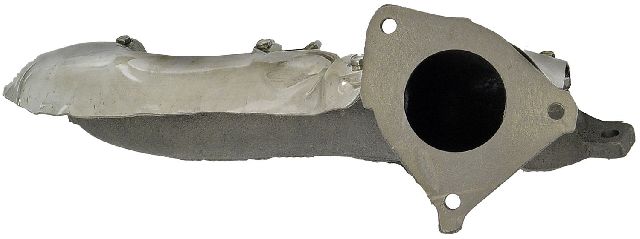
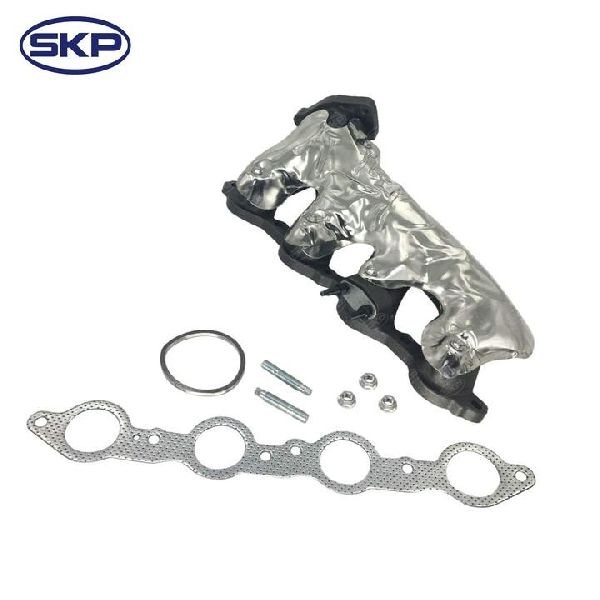
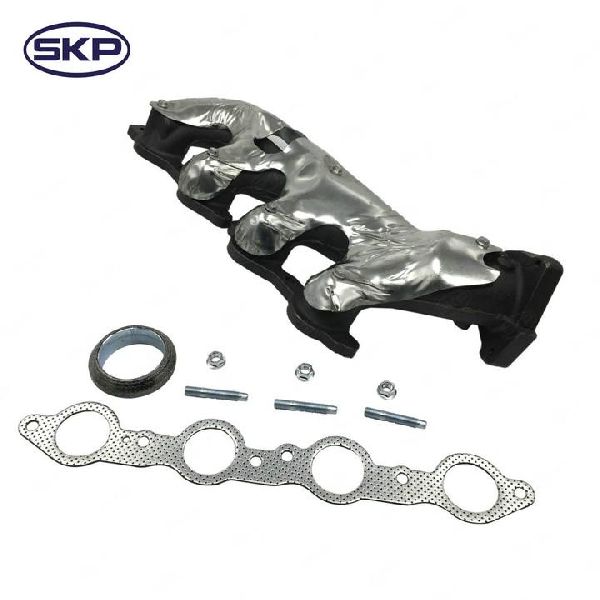
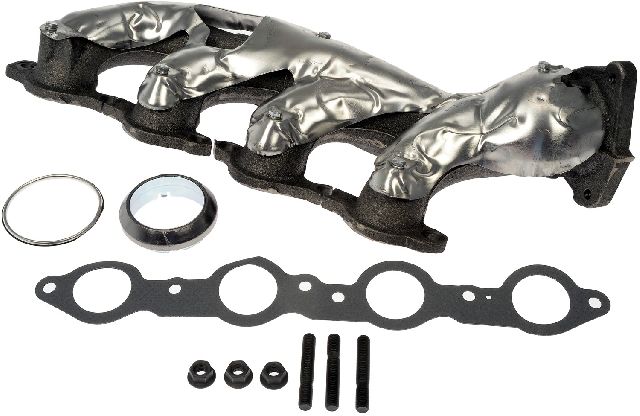
Aftermarket price range: $50-$90 - Exhaust Manifold Gasket Kit — Needed if the diagnosis reveals an exhaust leak at the manifold, a common issue caused by broken bolts on these engines. Using an OEM gasket is often recommended for better sealing.
Trusted brands: ACDelco, Fel-Pro
OEM price range: $30-$50
Aftermarket price range: $15-$30
Related Codes That Often Appear With This One
- P0420 — This is the identical code for Bank 1 (driver's side). Seeing both codes together often indicates that both catalytic converters are nearing the end of their service life due to age and mileage, or a systemic issue like fuel contamination or an intake leak is affecting both banks.
- P0300-P0308 — Misfire codes indicate that unburnt fuel is entering the exhaust, which can overheat and destroy the catalytic converter, leading to a P0430 code. The misfire is the root cause and must be fixed first.
- P2099 — This code for "Post Catalyst Fuel Trim System Too Rich Bank 2" can point to an exhaust leak between the sensors or a faulty downstream O2 sensor, which are also primary suspects for a P0430 code.
Technical Service Bulletins (TSBs) & Recalls
- PIP3119N: Service Engine Soon Malfunction Indicator Lamp on at low mileage. Technician may find Diagnostic Trouble Codes P0420 and or P0430 stored. Technician should be advised that the catalytic converter efficiency Diagnostic Trouble Codes P0420 and P0430 are disabled for the first hour… This TSB also applies if a code sets shortly after a new converter is installed, and prescribes a drive cycle to properly break-in the new part.
Platform-Specific Known Issues
- A GM Technical Service Bulletin (TSB #PIP3119N) notes that on new vehicles, the diagnostics for codes P0420 and P0430 are disabled for the first hour of engine operation to allow for catalyst break-in. The bulletin also provides a specific drive cycle to perform after a new converter is installed to ensure it breaks in properly.
Mechanic-Grade Diagnostic Values
- Upstream O2 Sensor (B2S1) Voltage — expected: Fluctuating rapidly between 0.1V and 0.9V (100-900mV) at operating temperature.. Failure: Slow or no fluctuation, or voltage stuck in a specific range.
- Downstream O2 Sensor (B2S2) Voltage (Good Catalyst) — expected: Fairly constant and steady voltage, typically between 0.45V and 0.8V at a steady RPM.. Failure: Voltage fluctuates in a pattern that mimics the upstream sensor, indicating the catalyst is not storing oxygen.
- Spark Plug Wire Resistance (L94 Engine) — expected: 397 - 1,337 ohms. Failure: Resistance outside this range can contribute to weak spark and misfires, which can destroy a catalytic converter.
Hidden / Shadow Codes Worth Checking
- Mode $06, Catalyst Monitor Test: This is not a DTC, but a function on advanced scan tools that shows the raw test results from the ECM's internal catalyst efficiency monitor. It provides a numerical value for the converter's oxygen storage capacity, along with the minimum and maximum allowable thresholds, allowing a technician to see if the converter is marginal before a P0430 code is set. (see via Use a professional-grade scan tool with Global OBD-II Mode $06 capability.)
Scan Tool Commands That Help
- GDS2 / Professional Scan Tool: Catalyst Monitor Test — Found under 'System Tests' or 'Service Functions', this command forces the vehicle to run the internal diagnostic for the catalytic converter. It is useful to verify a repair after replacing a converter or O2 sensor, without having to complete multiple, lengthy drive cycles.
Wiring & Ground Locations
- G102 — Located at the left rear of the engine.. This ground serves the 8 ignition coils. A poor connection here can cause intermittent misfires, which send unburnt fuel to the catalytic converter and can cause it to fail, leading to a P0430 code.
- G103 — Located at the left rear of the engine compartment on the cowl, above the brake booster.. This is a major ground for the Body Control Module (BCM), Instrument Panel Cluster (IPC), and the Data Link Connector (DLC). While not a direct cause, a poor ground here can create various electrical issues and communication problems that could complicate diagnosis.
- Bank 2 O2 Sensor Connector — The downstream sensor is located on the passenger side exhaust pipe, after the catalytic converter. The connector is typically a gray and blue, 4-terminal female plug.. This is the direct electrical connection for the sensor that triggers the P0430 code. The wiring harness and connector should be inspected for damage, corrosion, or loose pins before replacing the sensor itself.
Real Owner Repair Stories
- Reddit user in r/MechanicAdvice (2007 Escalade, 110k miles) — P0420 and P0430 codes, small cloud of white smoke from exhaust, occasional stalling at idle.
❌ Tried (didn't work) Throwing unspecified parts at it for a month.
✅ What actually fixed it The owner suspected a failing head gasket was leaking coolant into the cylinders, which contaminated and destroyed the catalytic converters. The final fix required replacing the head gasket before replacing the converters. - YouTube user (2013 Escalade) — Stubborn O2 sensor code (likely P0420 or P0430).
❌ Tried (didn't work) Using a 90-degree elbow O2 sensor extension (defouler).
✅ What actually fixed it The user was attempting to fix the code by swapping to a different style of O2 sensor extension. This is not a true repair but a common attempt to trick the ECM by pulling the sensor out of the direct exhaust stream. The final outcome was not documented, but it highlights a common, though improper, tactic used by owners to avoid replacing the converter.
"I Checked Everything" — The Actual Cause
- A pinhole leak in the exhaust system can cause a Venturi effect, pulling fresh air into the pipe as exhaust gases rush past. This introduces unmetered oxygen that can fool the downstream O2 sensor, even if a smoke test at low pressure doesn't reveal the leak.
- According to some GM service bulletins, an exhaust leak located *after* the downstream O2 sensor can, in some cases, still trigger a catalyst efficiency code. This is counter-intuitive as most diagnosis focuses on leaks between the two sensors.
When the Usual Fixes Don't Work
- While Pass 2 correctly identifies Bank 2 as the passenger side for this GM V8, it is a frequent point of confusion. Some sources and even mechanics may incorrectly identify it as the driver's side. Bank 1 is always the bank containing cylinder #1; on GM V8s, cylinder #1 is the front-most cylinder on the driver's side, making that Bank 1 and the passenger side Bank 2.
OEM Part Supersession History
15905948, 20854454→19418941— Part has been updated by the manufacturer.
Heads up: Part number 19418941 is the correct current replacement catalytic converter assembly for 2009-2014 GM trucks/SUVs including the Escalade EXT.N/A→ACDelco 213-4229 / GM 12609457— This is the standard OE part for this application.
Heads up: This is a 4-wire heated O2 sensor. Some sources indicate this part may require programming or special setup procedures after installation, as detailed in official GM Service Information. Failure to perform these procedures could lead to incorrect readings.
Model Year Variations Within This Range
- 2012-2013: There are no significant mechanical or electronic differences affecting the diagnosis of P0430 between the 2012 and 2013 Escalade EXT models. Both use the same 6.2L L94 V8 engine and GMT900 platform architecture.
Helpful Videos
We Have This Part in Stock


The information in this article is provided for general reference and educational purposes only. Vehicle specifications, procedures, and part compatibility can vary by production date, trim level, and region. Always consult your vehicle's factory service manual and verify part numbers before purchasing or performing repairs. Safety-critical components such as airbags, seat belts, and braking systems should be installed by a qualified professional.
- Cadillac ESCALADE EXT:
- 🎬 Helpful Videos
- 🛍️ Shop This Part
- What's Unique About the 2012-2013 Cadillac ESCALADE EXT
- Diagnostic Flowchart
- Symptoms You May Notice
- Most Likely Causes
- Rare But Worth Checking
- Diagnosis Steps
- Parts You'll Likely Need
- Related Codes That Often Appear With This One
- Technical Service Bulletins (TSBs) & Recalls
- Platform-Specific Known Issues
- Mechanic-Grade Diagnostic Values
- Hidden / Shadow Codes Worth Checking
- Scan Tool Commands That Help
- Wiring & Ground Locations
- Real Owner Repair Stories
- "I Checked Everything" — The Actual Cause
- When the Usual Fixes Don't Work
- OEM Part Supersession History
- Model Year Variations Within This Range
- 🎟️ Get 5% Off