

P0430 on 2010-2017 Cadillac Escalade: Catalyst Efficiency Fixes
P0430 indicates low efficiency from the passenger-side catalytic converter (Bank 2). While the converter itself may have failed, first check for exhaust leaks, a faulty downstream oxygen sensor, and air intake leaks, as these are common and cheaper alternative causes. On these GM trucks, a specific TSB points to a faulty air box seal as a potential culprit.
- P0430 on your Escalade points to a problem with the passenger-side catalytic converter's efficiency.
- Before spending over $1,000 on a new converter, thoroughly inspect for cheaper fixes: exhaust leaks, a bad downstream O2 sensor, and especially the air filter housing seal (per TSB #16NA111).
- A scan tool that can graph live O2 sensor data is the most powerful tool for diagnosing this code correctly.
- If you have any other engine codes, such as for a misfire, fix those first, as they can trigger a P0430 and will damage a new converter if left unresolved.
What's Unique About the 2010-2017 Cadillac ESCALADE
On the powerful 6.2L V8 engines in the Escalade and its platform mates, the catalytic converters are subjected to high heat and exhaust volume, making eventual failure a common issue. However, a unique problem documented by GM in Technical Service Bulletin (TSB) #16NA111 points to a faulty air box or air filter seal. This allows sand and debris to bypass the filter, which can directly damage the O2 sensor element and even block the catalytic converter with particles, causing a P0430 code. This specific issue can trick the computer into thinking the catalyst has failed, leading to a costly and unnecessary repair if not diagnosed correctly.
Diagnostic Flowchart
Tap your situation to follow the diagnostic path that matches what you're seeing on this vehicle.
Generation note: This range covers two Escalade generations. The 2010-2014 models belong to the third generation (GMT900) with the 6.2L L94 V8. The 2015-2017 models are the fourth generation (K2XX) with the updated 6.2L L86 EcoTec3 direct-injection V8. While the code's meaning is the same, diagnostic approaches and part numbers, especially for oxygen sensors and catalytic converters, differ between these generations.
Symptoms You May Notice
- Check Engine Light is on
- Reduced fuel economy
- Sluggish acceleration or lack of engine power, especially if the converter is clogged.
- A sulfur or "rotten egg" smell from the exhaust.
- Vehicle fails an emissions test.
- Ticking or tapping noise from the engine bay, which could indicate an exhaust leak preceding the converter.
- Immediately replacing the catalytic converter without checking for exhaust leaks, intake leaks (per TSB #16NA111), or testing the oxygen sensors. The sensors and leaks are far cheaper to fix and are common causes.
- Replacing the upstream (Bank 2, Sensor 1) oxygen sensor to fix a P0430 code. This code is based on the readings from the downstream (Bank 2, Sensor 2) sensor, which monitors the converter's efficiency.
- A user on TahoeYukonForum chased P0420/P0430 for two years, replacing cats, upstream O2s, plugs, coils, and more, when the issue was likely the downstream O2 sensors which had not been replaced.
Most Likely Causes
- Failed Catalytic Converter (Bank 2) 🔴 High Probability High mileage and the high heat output of the large V8 engine can lead to natural degradation of the catalyst materials over time. Prolonged engine issues like misfires or rich/lean conditions can also overheat and destroy the converter.
How to confirm: After ruling out other causes, a mechanic can use a scan tool to graph O2 sensor data. If the downstream sensor (Bank 2, Sensor 2) voltage switches rapidly like the upstream sensor, the converter is not working. An infrared temperature gun should show a higher temperature at the converter's outlet than the inlet; if the inlet is hotter, it may be clogged. An exhaust backpressure test can also confirm a clog.
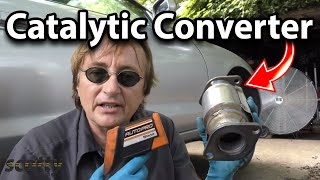
Typical fix: Replace the Bank 2 catalytic converter assembly. Using cheap, universal converters is not recommended as they often lack the catalyst material to satisfy the ECM, causing the code to return. 🎬 Watch: Step-by-step guide on how to replace a catalytic converter.
Est. part cost: $400-$1200 - Faulty Downstream Oxygen Sensor (Bank 2, Sensor 2) 🟡 Medium Probability Oxygen sensors are wear items and have a finite lifespan. A lazy or biased sensor can send incorrect data to the ECM, falsely indicating a bad converter.
How to confirm: Use a scan tool to observe the sensor's voltage. A healthy downstream sensor should show a relatively steady voltage, often around 0.7-0.8V at a steady RPM. If it's stuck high, low, or fluctuating wildly like the upstream sensor (after confirming no exhaust leaks), it's likely faulty.
Typical fix: Replace the Bank 2, Sensor 2 oxygen sensor with an OEM or high-quality equivalent brand. 🎬 See how to replace the Bank 2 Sensor 2 oxygen sensor.
Est. part cost: $50-$150 - Exhaust System Leak 🟡 Medium Probability Corrosion and vibration can cause leaks at gaskets (especially manifold gaskets) or welds in the exhaust system. A leak between the upstream and downstream O2 sensors can introduce oxygen and trick the downstream sensor into reporting a bad catalytic converter.
How to confirm: Perform a visual inspection for soot trails or cracks, particularly around the exhaust manifold and converter flanges. Listen for ticking noises when the engine is cold. A professional smoke test is the most effective way to pinpoint a leak.
Typical fix: Replace the leaking gasket or repair the leaking section of the exhaust pipe.
Est. part cost: $20-$100 - Air Intake System Leak (per TSB #16NA111) ⚪ Low Probability GM TSB #16NA111 specifically states that a poor seal on the air box can allow sand/debris to bypass the air filter. This can directly damage the O2 sensor and clog the catalytic converter.
How to confirm: Visually inspect the air filter housing, the seal around the filter, and all intake ducting for cracks, loose clamps, or improper fitment. Check inside the air cleaner outlet duct for any signs of dirt or debris that has bypassed the filter.
Typical fix: Reseat or replace the air filter, or replace the air box housing/seal if it is warped or damaged.
Est. part cost: $30-$200
Rare But Worth Checking
- Engine Misfires or Fuel System Issues: An underlying issue like a leaking fuel injector, worn spark plugs, or vacuum leak can create a rich or lean condition. This can cause the P0430 code and, if left unaddressed, will quickly destroy a new catalytic converter. Always resolve other engine codes (e.g., P030x misfire codes, P017x fuel trim codes) before replacing the converter. A technician noted that after fixing injectors on a 2015 GM truck, the previously-disabled catalyst monitor ran and immediately set a P0430, proving the injector issue had already damaged the cat.
Diagnosis Steps
- Check for any other stored trouble codes. Address any misfire, fuel trim, or other sensor codes before proceeding, as they can cause the P0430.
- Visually inspect the exhaust system from the engine manifold to the rear O2 sensor on the passenger side. Look for cracks, holes, or black soot indicating a leak. Listen for ticking sounds on a cold start.
- Inspect the entire air intake system per TSB #16NA111. Check for a warped air box, a bad filter seal, or any signs of debris bypassing the filter.
- Use a scan tool with live data capability. Graph the voltage for Bank 2 Sensor 1 (upstream) and Bank 2 Sensor 2 (downstream).
- At a steady 2500 RPM, the upstream sensor (B2S1) should fluctuate rapidly between ~0.1V and ~0.9V. The downstream sensor (B2S2) should hold a relatively steady, high voltage (e.g., >0.6V).
- If B2S2 is fluctuating rapidly like B2S1, and no exhaust/intake leaks are present, the catalytic converter has likely failed.
- If B2S2 voltage is stuck low, stuck high, or responds very slowly, the sensor itself is the likely problem.
- Use an infrared thermometer to measure the temperature of the pipe just before and just after the catalytic converter. A working converter should be at least 100°F hotter at the outlet.
- If a clogged converter is suspected, a professional can perform an exhaust backpressure test. 🎬 Watch: A professional walkthrough of P0430 catalytic efficiency diagnostics.
Parts You'll Likely Need
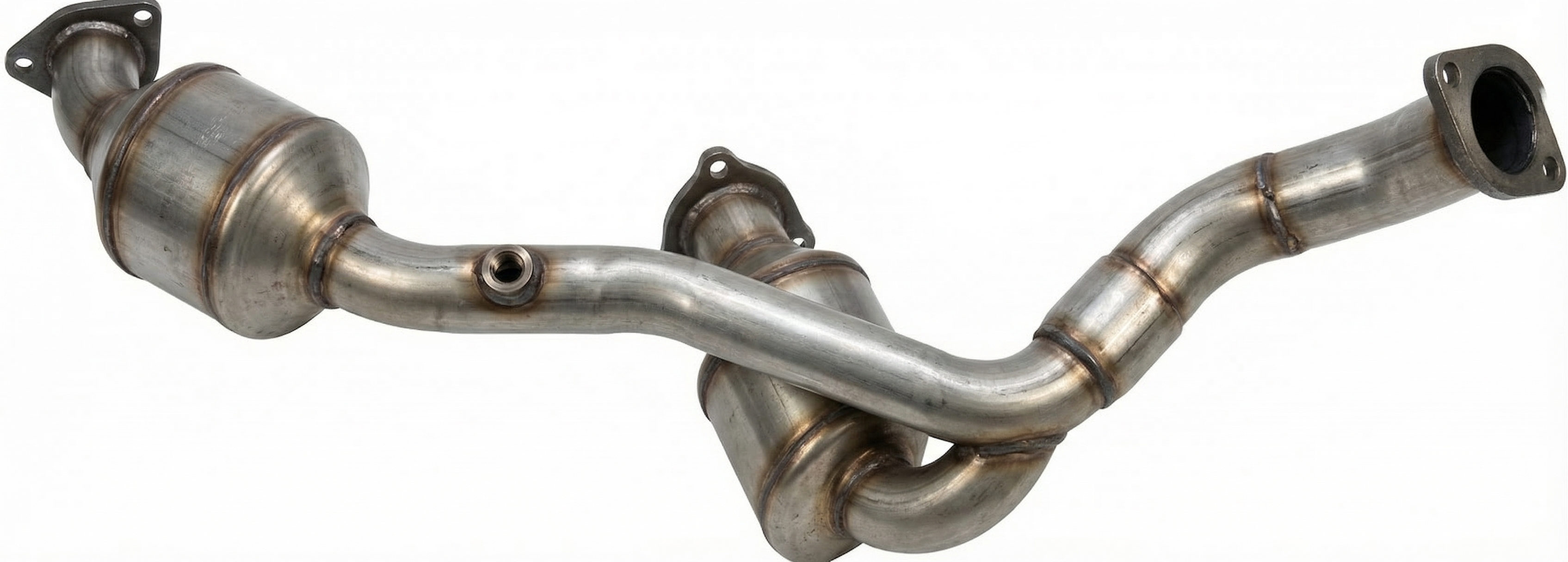
- Bank 2 Catalytic Converter — This is the most common direct cause of the code, especially on higher-mileage vehicles, after other possibilities have been ruled out. Note that EPA-compliant converters are not legal for sale or use in states like CA, CO, NY, and ME.
Trusted brands: ACDelco (OEM), Walker, MagnaFlow (e.g., 52617 for 2015+), AP Exhaust
OEM price range: $800-$1500
Aftermarket price range: $400-$900 - Downstream Oxygen Sensor (Bank 2, Sensor 2)
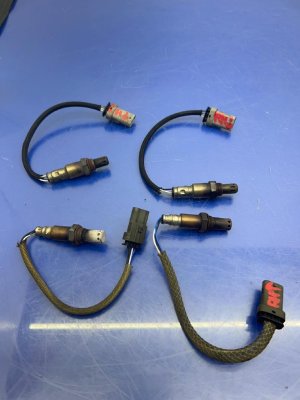
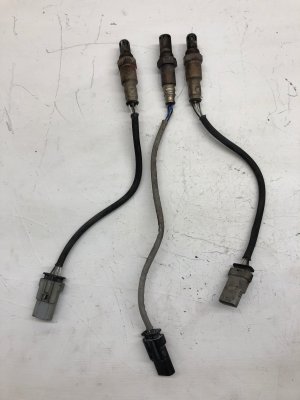
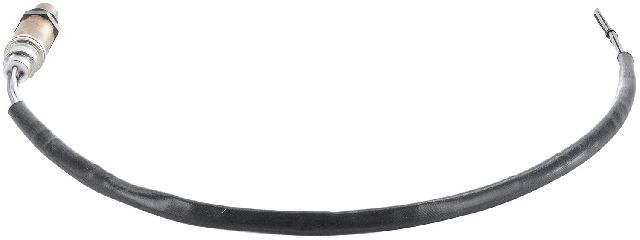
(OEM #ACDelco 213-4229 (GM 12609457) for 2010-2014 models. 2015+ models use different sensors (e.g., ACDelco 12659516 or 12657188).)— A faulty sensor can send incorrect readings, mimicking a bad converter. It's a common wear item and a wise part to replace before the more expensive converter. Owners report success with Bosch replacements as well.
Trusted brands: ACDelco (OEM), Bosch, Denso, NTK
OEM price range: $60-$120
Aftermarket price range: $40-$80
Related Codes That Often Appear With This One
- P0420 — This is the identical code but for Bank 1 (driver's side). If both appear, it could indicate a systemic issue like contaminated fuel, a major intake/exhaust leak affecting both banks, or simply that both converters have failed around the same time due to age.
- P2099 — This code means "Post Catalyst Fuel Trim System Too Rich Bank 2". It often points to an exhaust leak or a problem with the downstream O2 sensor on the same bank, which are also primary suspects for a P0430 code.
- P0300-P0308 — Misfire codes (e.g., P0300 for random, P0302 for cylinder 2) cause unburnt fuel to enter the exhaust, which can overheat and destroy the catalytic converter, leading to a P0430 code. The misfire must be fixed first.
Technical Service Bulletins (TSBs) & Recalls
- 16NA111: Diagnostic information for an air box and air filter seal issue that can cause DTCs P0420 and P0430 due to debris bypassing the filter and damaging components.
- PIP3119P: Diagnostic trouble codes P0420 and or P0430 are disabled for the first hour of engine run time on low mileage vehicles.
Platform-Specific Known Issues
- TSB #16NA111: Notes that a poor seal at the air filter box can cause P0430 by allowing abrasive debris to enter, which can damage the O2 sensor and/or clog the catalytic converter.
- TSB #PIP3119P: Mentions that on low-mileage vehicles, the diagnostic test for P0430 is disabled for the first hour of engine operation, which is useful for technicians to know but not a direct fix for owners.
- Active Fuel Management (AFM) Correlation: Some owners have reported that the P0430 code appears intermittently, often corresponding with the engine's AFM system activating (switching from V8 to V4 mode). Using an AFM disabler device has reportedly caused the code to stop appearing for some owners, suggesting a potential link between cylinder deactivation cycles and the catalyst monitor's behavior.
Mechanic-Grade Diagnostic Values
- Upstream O2 Sensor (B2S1) Voltage — expected: Fluctuating rapidly between 0.1V and 0.9V (100mV to 900mV) at operating temperature.. Failure: Slow or no fluctuation, or voltage stuck high or low.
- Downstream O2 Sensor (B2S2) Voltage (Good Catalyst) — expected: Fairly constant and steady voltage, typically around 0.45V to 0.8V, at steady RPM.. Failure: Voltage fluctuates in a similar pattern to the upstream sensor, indicating the catalyst is not storing oxygen.
- Spark Plug Wire Resistance (2010-2014 L94) — expected: 397-1,337 ohms.. Failure: Resistance outside of this range can indicate a bad wire, potentially causing misfires that damage the converter.
Scan Tool Commands That Help
- GDS2 / Tech2: Heated O2 Sensor Relearn — After replacing any oxygen sensors, this procedure should be performed to reset learned values and ensure the ECM uses the new sensor data correctly.
Wiring & Ground Locations
- G218 — A common ground point for the Body Control Module (BCM). A TSB for 2015-2017 models mentions a poor ground at G218 can cause various electrical issues.. While not directly tied to the P0430 code, a poor BCM ground can cause unpredictable electrical behavior in the vehicle, which could potentially interfere with sensor readings or module communication.
- G103 — Located at the left rear of the engine compartment on the cowl, often above the brake booster.. This is a critical ground point for the ECM, Instrument Panel Cluster (IPC), and Data Link Connector (DLC). A poor connection here can directly impact engine management and diagnostic communication.
- Frame Grounds — Under the driver's side door on the frame rail.. Owners of similar GM trucks have reported that corroded or loose frame grounds can cause a host of strange electrical issues. Ensuring these are clean and tight is a good practice when diagnosing any electrical-related trouble code.
Real Owner Repair Stories
- Reddit user in r/MechanicAdvice (2007 Escalade, 110k miles) — P0420 and P0430 codes, white smoke from exhaust, occasional stalling at red lights.
❌ Tried (didn't work) The user was in the process of 'throwing parts at it' for a month without resolution.
✅ What actually fixed it While the final fix wasn't posted by the original author, the symptoms described (stalling, smoke) combined with catalyst codes strongly suggest either severely clogged converters causing excessive backpressure or an underlying engine issue (like a head gasket leak) that was destroying the converters.
OEM Part Supersession History
GM 12609457→ACDelco 213-4229— Standard part number update and branding change from GM to ACDelco.
Heads up: This part is for the 2010-2014 (L94 engine) models. It is not compatible with 2015+ (L86/L87) models, which use a different sensor design.
Model Year Variations Within This Range
- 2010-2014: These models use the 6.2L L94 V8, which is a Gen IV LS-based engine. It features Active Fuel Management (AFM). The downstream O2 sensor is typically part number ACDelco 213-4229.
- 2015-2017: These models use the newer 6.2L L86 EcoTec3 V8, a Gen V engine with direct injection. While it also has AFM, the engine architecture, fuel system, and electronics are significantly different. The L86 has different intake/exhaust components and uses different oxygen sensors than the earlier L94. In 2019, the L86 was succeeded by the L87, which introduced Dynamic Fuel Management (DFM).
Helpful Videos
Used OEM Parts in Stock

New Aftermarket Parts Available

The information in this article is provided for general reference and educational purposes only. Vehicle specifications, procedures, and part compatibility can vary by production date, trim level, and region. Always consult your vehicle's factory service manual and verify part numbers before purchasing or performing repairs. Safety-critical components such as airbags, seat belts, and braking systems should be installed by a qualified professional.
- Cadillac ESCALADE:
- 🎬 Helpful Videos
- 🛍️ Shop This Part
- What's Unique About the 2010-2017 Cadillac ESCALADE
- Diagnostic Flowchart
- Symptoms You May Notice
- Most Likely Causes
- Rare But Worth Checking
- Diagnosis Steps
- Parts You'll Likely Need
- Related Codes That Often Appear With This One
- Technical Service Bulletins (TSBs) & Recalls
- Platform-Specific Known Issues
- Mechanic-Grade Diagnostic Values
- Scan Tool Commands That Help
- Wiring & Ground Locations
- Real Owner Repair Stories
- OEM Part Supersession History
- Model Year Variations Within This Range
- 🎟️ Get 5% Off