

P0430 on 2014-2017 Acura RLX: Catalyst Efficiency Fixes & TSB Info
On a 2014-2017 Acura RLX, code P0430 is frequently caused by a software issue, not a failed catalytic converter. Acura issued TSB B17-034 to fix this. Always have a dealer check for this software update before replacing any parts, as it is the most likely and cheapest solution.
- For a 2014-2017 Acura RLX, your first step for a P0430 code should be to check with a dealer about TSB B17-034 for a software update.
- Do not replace the expensive catalytic converter without first confirming the software is up-to-date and ruling out simpler issues like exhaust leaks.
- Bank 2 on the Acura 3.5L V6 engine is the cylinder bank located closer to the front of the vehicle (radiator side).
What's Unique About the 2014-2017 Acura RLX
For this specific vehicle and its platform mates, the P0430 code has a well-documented history of being a false alarm. Acura released Technical Service Bulletin (TSB) #B17-034 because the original engine computer software was overly sensitive and could misinterpret normal sensor readings as a failing catalytic converter. This TSB was an update and replacement for earlier, similar bulletins like 15-053 and 17-019, indicating an ongoing issue that received multiple software revisions. This makes a software update the most important first step in diagnosis, potentially saving you from an expensive and unnecessary converter replacement.
Diagnostic Flowchart
Tap your situation to follow the diagnostic path that matches what you're seeing on this vehicle.
Symptoms You May Notice 🎬 Watch: A quick breakdown of P0430 causes and symptoms.
- Check Engine Light is on
- Vehicle may fail an an emissions inspection
- Potentially reduced fuel economy
- In severe cases of a clogged converter, reduced engine power and acceleration
- A sulfur or 'rotten egg' smell from the exhaust, indicating a rich fuel mixture or failing converter.
- Replacing the catalytic converter before checking for and performing the PCM software update as per TSB B17-034.
- Replacing the oxygen sensors when the actual problem is the converter or a software issue. A forum user on Acurazine with a 3G TL noted they replaced all O2 sensors to fix a P0430, but this is often not the case for the RLX due to the known TSB.
Most Likely Causes
- PCM Software Needs Update 🔴 High Probability Acura issued TSB B17-034 specifically for this issue, where the PCM software misinterprets sensor data and falsely triggers the P0430 code. The bulletin explicitly states the probable cause is that 'The PCM software may misinterpret sensor inputs as a deteriorated catalytic converter'.
How to confirm: Contact an Acura dealership with your vehicle's VIN. They can check their service history to see if TSB B17-034 (or its preceding versions) is open and has not been applied to your vehicle. The TSB applies to all 2014-2017 RLX models.
Typical fix: The dealership performs a PGM-FI (Programmed Fuel Injection) software update on the PCM. This is a non-mechanical repair that only involves reprogramming the car's computer.
Est. part cost: $0-$200 - Failing Catalytic Converter 🟡 Medium Probability While software is the first suspect, converters can still fail from age, mileage, or contamination from engine problems like misfires or burning oil. An engine running rich can overheat and damage the converter.
How to confirm: After confirming the PCM software is up to date, a technician can analyze O2 sensor voltage graphs. A downstream sensor that mimics the rapid switching 🎬 See how to diagnose catalyst efficiency using live data. of the upstream sensor indicates a failed converter. A non-contact thermometer can also be used to check for a significant temperature increase (100°F or more) from the converter inlet to the outlet, which indicates proper function; no change or a decrease in temperature suggests a dead or clogged converter.
Typical fix: Replacement of the Bank 2 catalytic converter. Bank 2 is the front converter, closer to the radiator.
Est. part cost: $800-$2000+ - Exhaust Leak ⚪ Low Probability Gaskets and flex pipes can degrade over time, allowing outside oxygen to enter the exhaust stream before the downstream O2 sensor. This extra oxygen fools the sensor into thinking the converter isn't working, triggering the code.
How to confirm: A visual inspection for black soot trails around flanges or a smoke test of the exhaust system will reveal any leaks between the engine and the rear O2 sensor. Listening for ticking or hissing noises from the exhaust when the engine is cold is also a good indicator.
Typical fix: Replace the leaking gasket or repair the cracked exhaust component.
Est. part cost: $20-$200 - Faulty Oxygen Sensor ⚪ Low Probability
How to confirm: A lazy or biased O2 sensor can be identified using a scan tool to graph its voltage. The downstream sensor (Bank 2, Sensor 2) should show a relatively stable voltage (e.g., ~0.7-0.8V) on a warm engine at steady RPM. If it's stuck low, stuck high, or fluctuating rapidly like the upstream sensor, it may be faulty. However, this symptom is identical to a bad converter, making it a common misdiagnosis.
Typical fix: Replace the faulty Bank 2 oxygen sensor (either upstream/Sensor 1 or downstream/Sensor 2).
Est. part cost: $50-$150
Rare But Worth Checking
- Engine Misfires or Fuel Mixture Problems: Unburned fuel entering the exhaust from misfires (P030x codes) or a rich running condition (leaking fuel injectors) can overheat and destroy the catalytic converter's internal structure. These root causes must be addressed, or the new converter will fail as well.
Diagnosis Steps
- Use an OBD-II scanner to confirm P0430 is the only code present. If other codes exist (e.g., P0300-P0306 for misfires, or fuel trim codes), address them first as they can cause catalyst damage.
- Crucial Step: Contact an Acura dealership with your VIN to determine if TSB B17-034 applies to your vehicle and if the software update has been performed. This TSB specifically notes that the PCM software can misinterpret sensor inputs, causing a false P0430. This is the most likely and cost-effective fix.
- If the TSB has been done, perform a thorough visual inspection of the Bank 2 exhaust system (front/radiator side) from the engine to the tailpipe. Look for any signs of leaks, such as black soot around flanges or cracks in the pipes.
- Use a scan tool with live data capability to monitor the voltage of the Bank 2 oxygen sensors (B2S1 and B2S2). At a steady 2500 RPM, the upstream sensor (B2S1) should fluctuate rapidly between ~0.1V and ~0.9V. The downstream sensor (B2S2) should remain relatively stable and high (e.g., above 0.6V). If B2S2 mimics B2S1's rapid switching, the converter is likely inefficient.
- Use a non-contact infrared thermometer. After warming the engine, measure the temperature of the pipe just before the Bank 2 converter and just after. A working converter should be at least 100°F hotter on the outlet side. If the temperature is the same or cooler, the converter is not functioning.
- If the software is updated and the converter tests bad, it requires replacement. If the converter tests good but the code persists, investigate the O2 sensors and their wiring more closely.
- If all other possibilities are eliminated, the Bank 2 catalytic converter is faulty and requires replacement.
Parts You'll Likely Need
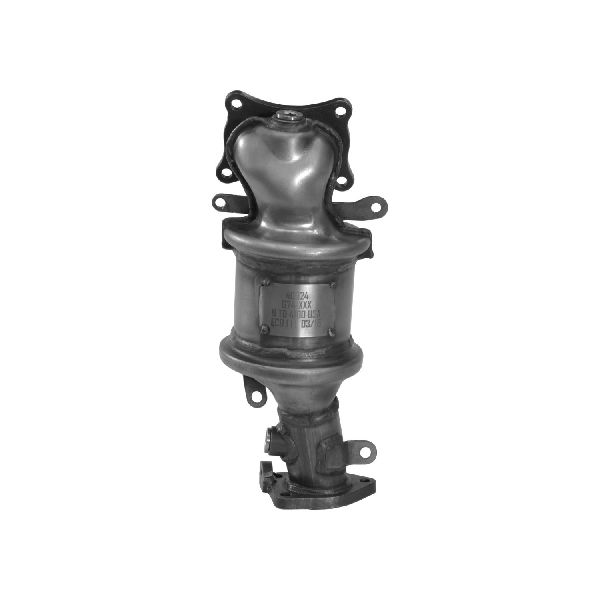
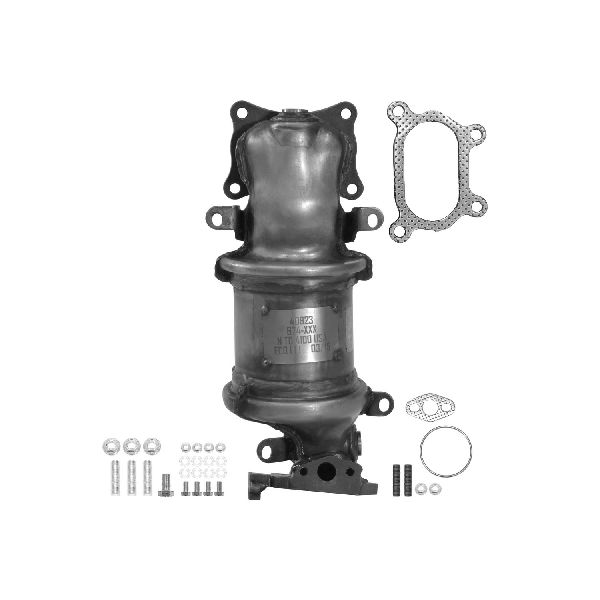
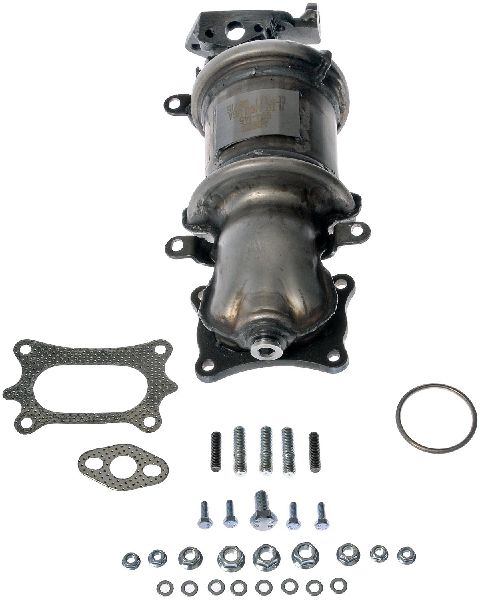
- Bank 2 Catalytic Converter
(OEM #18150-R9S-A00)— This is the component flagged by the code, though it should only be replaced after ruling out the software issue and other causes. Bank 2 is the front converter assembly. 🎬 Watch: Step-by-step Bank 2 catalytic converter replacement walkthrough.
Trusted brands: Walker, MagnaFlow, AP Exhaust, Acura (OEM)
OEM price range: $1170-$1740
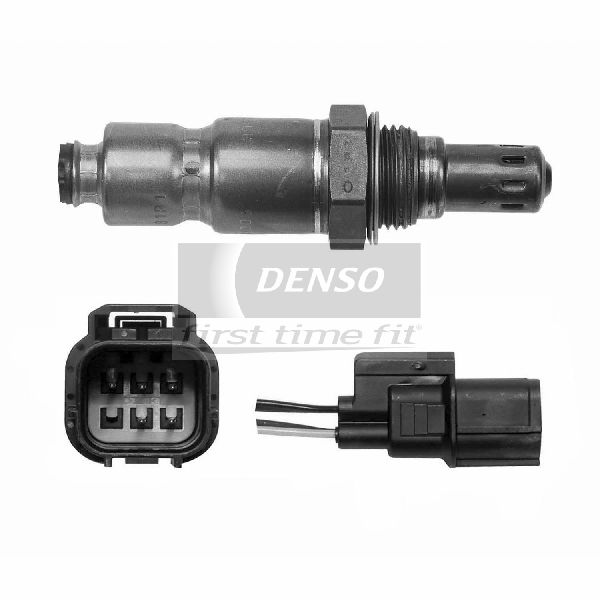
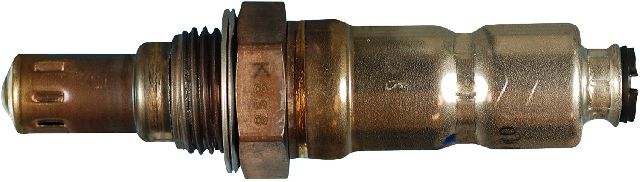
Aftermarket price range: $600-$1200 - Bank 2 Downstream Oxygen Sensor (Sensor 2)
(OEM #36542-5G0-A01)— Sometimes a faulty sensor can cause the code, or it may be replaced as a preventative measure when installing a new converter. This is the sensor after the catalytic converter.
Trusted brands: Denso, NGK/NTK, Bosch, Acura (OEM)
OEM price range: $140-$200
Aftermarket price range: $50-$120 - Bank 2 Upstream Oxygen (Air/Fuel Ratio) Sensor (Sensor 1)
(OEM #36531-5G0-A11)— Less commonly the cause for a P0430, a faulty upstream A/F sensor can affect fuel trim and indirectly impact converter efficiency readings.
Trusted brands: Denso, NGK/NTK, Bosch, Acura (OEM)
OEM price range: $215-$310
Aftermarket price range: $70-$150
Related Codes That Often Appear With This One
- P0420: If both P0420 (Bank 1) and P0430 (Bank 2) appear simultaneously, it is less likely that both converters failed at the exact same time. This points towards a systemic issue like a software problem, a major exhaust leak affecting both banks, or a fuel delivery problem.
Technical Service Bulletins (TSBs) & Recalls
- Bulletin #B17-034 (2017-10-12): Addresses an issue where the MIL comes on with DTC P0430 because the PCM software may misinterpret sensor inputs as a deteriorated catalytic converter. This bulletin explicitly includes the 2014-17 RLX and supersedes previous related bulletins.
- Bulletin #17-019 (2017-09-13): An earlier
Platform-Specific Known Issues
- The most significant issue for the 2014-2017 Acura RLX is the PCM software's tendency to misinterpret sensor data, leading to a false P0430 code. This is officially documented in Acura's Technical Service Bulletin B17-034, which superseded two previous bulletins for the same issue.
- Acura extended the warranty on some vehicles for P0420/P0430 issues, requiring converter replacement and a software update, though this was primarily for different models and states. It highlights the manufacturer's awareness of catalyst-related code issues in this era.
Mechanic-Grade Diagnostic Values
- Downstream O2 Sensor (B2S2) Voltage — expected: Relatively stable and high voltage, typically above 0.6V-0.7V, on a fully warmed engine at a steady RPM.. Failure: Voltage fluctuates rapidly, mimicking the upstream sensor's waveform (e.g., switching between 0.2V and 0.9V), or is stuck low.
- Long-Term Fuel Trim (LTFT) — expected: Ideally close to 0%, with a normal operating range typically within +/- 5%. A healthy engine should have values between -3% and +3%.. Failure: High positive values (e.g., +10% or more) indicate the engine is compensating for a lean condition (too much air/not enough fuel). High negative values (e.g., -10% or more) indicate compensation for a rich condition (too much fuel/not enough air).
- Mode $06 Catalyst Monitor Test ID ($21) — expected: Using a capable scan tool, the test value reported by the PCM should be significantly lower than the maximum allowable threshold provided by the same test.. Failure: The reported test value is at or exceeds the maximum threshold, indicating the catalyst efficiency test has failed.
Hidden / Shadow Codes Worth Checking
- Mode $06, Test ID $21: This is not a traditional DTC but a non-continuous monitor test result for Catalyst Monitor Bank 2. The vehicle's computer runs this test under specific conditions to determine catalyst efficiency. The raw data provides a value and a pass/fail threshold, which can confirm a failing converter before the P0430 code becomes permanent. (see via A professional scan tool or an advanced OBD-II reader capable of displaying Mode $06 data.)
Scan Tool Commands That Help
- Honda HDS (or equivalent bidirectional scanner like Autel/Launch): Active Tests / Bidirectional Controls — These functions allow a technician to command specific components to operate, which can help diagnose related systems. For P0430, while there may not be a direct 'test converter' command, functions like 'Injector Cut-off Test' can help identify a leaking injector causing a rich condition, and 'ETCS (Electronic Throttle Control System) Test' can check for throttle body issues affecting the air/fuel mixture.
- Honda HDS (or equivalent): PCM Reset / Clear Codes — Used after a repair is completed to clear the P0430 code and reset the fuel trims. This forces the PCM to relearn the fuel strategy with the new or repaired components.
- Honda HDS (or equivalent): View Live Data Stream — This is the primary function used to monitor and graph the upstream A/F sensor and downstream O2 sensor voltages in real-time to visually confirm if the catalytic converter is functioning correctly.
Wiring & Ground Locations
- Bank 2 Oxygen Sensors — Bank 2 is the cylinder bank closer to the radiator. The upstream sensor (B2S1) is typically accessible from the top of the engine bay, pre-catalytic converter. The downstream sensor (B2S2) is located after the catalytic converter and is best accessed from underneath the vehicle.. The PCM relies on accurate signals from both sensors to judge catalyst efficiency. Damaged wiring or connectors to either sensor will provide faulty data and can trigger P0430.
- Engine/Transmission Ground Straps — Common Honda/Acura locations include: 1) A primary ground from the negative battery terminal to the chassis. 2) A ground strap from the engine block or cylinder head to the chassis (often on the passenger side). 3) A ground strap near the transmission mount, sometimes under the battery tray area.. Poor or corroded grounds can introduce electrical noise and voltage fluctuations. This can cause erratic readings from the oxygen sensors, leading the PCM to misinterpret the data and falsely trigger a P0430 code.
Real Owner Repair Stories
- Acurazine Forum User (4G TL) (Acura TL with J-series V6 engine) — Chronic P0430 code that would return within 50-100 miles of being cleared.
❌ Tried (didn't work) Replacing the downstream oxygen sensor made no difference., Using a spark plug non-fouler (extender) on the O2 sensor made the code appear less frequently but did not eliminate it.
✅ What actually fixed it The root cause was a severe oil burning issue from a damaged cylinder liner on Bank 2. This contaminated and destroyed the catalytic converter. The ultimate fix required addressing the oil consumption problem first, after which the catalytic converter would need to be replaced. The user noted their Long Term Fuel Trim was -15% during the oil consumption issue, and returned to a normal +/- 3% after the engine was repaired.
Model Year Variations Within This Range
- 2018+: The 2018 model year RLX received a facelift and a significant powertrain update, replacing the 6-speed automatic transmission of the 2014-2017 models with a 10-speed automatic. While the J35Y4 engine was retained in the FWD model, diagnostic approaches for transmission-related data or behaviors would differ. The TSB B17-034 for the P0430 software issue specifically covers up to the 2017 model year.
Helpful Videos
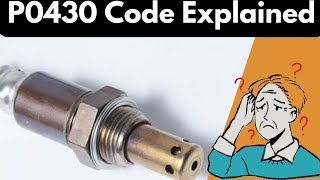
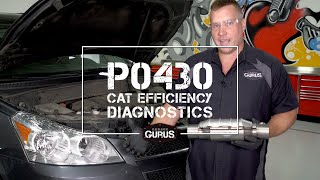
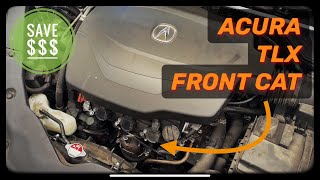
Used OEM Parts in Stock
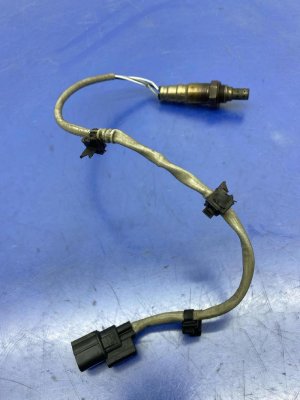
New Aftermarket Parts Available

The information in this article is provided for general reference and educational purposes only. Vehicle specifications, procedures, and part compatibility can vary by production date, trim level, and region. Always consult your vehicle's factory service manual and verify part numbers before purchasing or performing repairs. Safety-critical components such as airbags, seat belts, and braking systems should be installed by a qualified professional.
- Acura RLX:
- 🎬 Helpful Videos
- 🛍️ Shop This Part
- What's Unique About the 2014-2017 Acura RLX
- Diagnostic Flowchart
- Symptoms You May Notice
- Most Likely Causes
- Rare But Worth Checking
- Diagnosis Steps
- Parts You'll Likely Need
- Related Codes That Often Appear With This One
- Technical Service Bulletins (TSBs) & Recalls
- Platform-Specific Known Issues
- Mechanic-Grade Diagnostic Values
- Hidden / Shadow Codes Worth Checking
- Scan Tool Commands That Help
- Wiring & Ground Locations
- Real Owner Repair Stories
- Model Year Variations Within This Range
- 🎟️ Get 5% Off