

P0426 on 2014-2018 Ram 1500 EcoDiesel: Catalyst Temp Sensor Causes and Fixes
On a Ram 1500 EcoDiesel, P0426 is most often caused by outdated engine software or a failed Exhaust Gas Temperature (EGT) sensor. Always check for software updates, especially the 'AEM' emissions recall, before replacing the sensor. A failed sensor often reads a fixed high value like 999°F/1832°F on a scan tool. The sensor part costs about $65-$150.
- For a P0426 on a Ram 1500 EcoDiesel, always check with a dealer for the AEM emissions recall first. This free software update is a very common fix.
- The code refers to the Exhaust Gas Temperature (EGT) sensor right after the turbo, NOT an oxygen sensor.
- A failed sensor will often report a fixed, maxed-out temperature like 999°F or 1832°F on a scan tool.
- The most likely failed part, after software is ruled out, is the EGT sensor itself (Mopar P/N 68211210AA).
- Do not drive for extended periods with this code, as it will prevent DPF regeneration and can lead to a much more expensive DPF failure.
What's Unique About the 2014-2018 Ram 1500
The 2014 model year was the debut for the 3.0L EcoDiesel in the Ram 1500, which brought a complex emissions system reliant on multiple EGT sensors. As an early-generation engine, many initial bugs, including the logic for triggering P0426, were addressed through a series of PCM software updates from Ram. Crucially, a major emissions settlement resulted in the "Approved Emissions Modification" (AEM) recall (e.g., V08, VA7), a free software update that often resolves this code and extends the warranty on emissions components. Therefore, unlike on many other vehicles, a software check via a dealer for the AEM recall is a mandatory first step before replacing any hardware.
Symptoms You May Notice
- Check Engine Light illuminated
- Warning messages on the dash such as 'Exhaust Filter 80% Full, Drive to Regenerate'.
- Inability for the DPF system to perform a regeneration cycle, leading to rapid DPF percentage increase.
- Reduced fuel economy.
- Noticeably louder whistling or whining noise during acceleration.
- Vehicle may enter a reduced power or 'limp' mode if the DPF becomes completely clogged.
- Replacing the catalytic converter or DPF assembly. The code points to a sensor circuit problem, not a failure of the catalyst itself.
- Replacing an Oxygen (O2) sensor. Generic code definitions can be misleading; the EcoDiesel uses a dedicated EGT sensor for this measurement, not an O2 sensor.
Most Likely Causes
- Outdated Powertrain Control Module (PCM) Software 🔴 High Probability The original software logic was overly sensitive. FCA released multiple updates, culminating in the major AEM emissions recall (V08, VA7) which was designed to bring vehicles into compliance and often corrected false sensor codes.
How to confirm: A Ram dealership can check your VIN for open recalls, specifically the AEM software flash. This should be the first diagnostic step and is often performed free of charge.
Typical fix: Flash the PCM with the latest software calibration, typically as part of the AEM recall. This also provides an extended warranty on many emissions components.
Est. part cost: $0-$250 - Faulty Exhaust Gas Temperature (EGT) Sensor (Bank 1, Sensor 1) 🔴 High Probability EGT sensors operate in an extremely harsh environment of high heat and diesel soot, making them a common failure item. The sensor can fail internally, creating an open circuit.
How to confirm: Use an OBD-II scanner with live data capability. Monitor the 'Catalyst Temp B1S1' PID. A classic sign of failure is the reading being stuck at a default high value (e.g., 999.94°F or 1832°F) regardless of engine temperature. A resistance test on the sensor should yield 200-240 ohms at room temperature.
Typical fix: Replace the EGT sensor located in the exhaust pipe just after the turbocharger. Access is often improved by removing the passenger side front wheel and wheel well liner.
Est. part cost: $65-$150 - Damaged Sensor Wiring or Connector ⚪ Low Probability The wiring harness is routed near hot exhaust and transmission components and can become brittle, melted, or chafed over time, especially where it runs over the transmission.
How to confirm: Visually inspect the wiring and connector for the Bank 1 Sensor 1 EGT sensor. Check for breaks, melting, or corrosion on the pins. Perform a continuity test on the wires if a visual inspection is inconclusive.
Typical fix: Repair the damaged section of the wiring harness or replace the connector pigtail.
Est. part cost: $10-$50
Rare But Worth Checking
- Clogged or Failing Diesel Particulate Filter (DPF): This is rarely the root cause of P0426. More often, a failing DPF is the result of an ignored P0426 code that prevented proper regeneration.
- Faulty Powertrain Control Module (PCM): This is extremely rare. The PCM should only be considered after all other possibilities, including software, sensor, and wiring, have been definitively ruled out.
Diagnosis Steps
- Check for AEM Recall & Software Updates: Before any other step, contact a Ram dealer with your VIN. Verify if the AEM emissions recall (V08, VA7, etc.) is open or has been completed. This is a free update that often fixes the code and provides an extended warranty.
- Scan Tool Live Data Analysis: Connect a scanner and monitor the live data for 'Catalyst Temperature Sensor Bank 1 Sensor 1'. Confirm if the reading is stuck at a high value (e.g., 999°F or 1832°F) or if it's completely unresponsive as the engine warms up.
- Visual Inspection: Carefully inspect the EGT sensor's wiring harness and connector. The sensor is the first one after the turbocharger. Trace the wiring over the transmission, looking for any signs of melting, chafing, corrosion, or loose connections.
- Test the Sensor: If the sensor is accessible, disconnect it and measure the resistance between its two pins using a multimeter. A healthy sensor should read between 200 and 240 ohms at room temperature. A reading of infinity (open loop) indicates a failed sensor.
- Replace the EGT Sensor: If the software is up-to-date and the wiring is intact, the sensor itself is the most likely culprit. Replace the Bank 1 Sensor 1 EGT sensor.
- Clear Codes and Test Drive: After the repair, clear all diagnostic trouble codes and perform a complete drive cycle to ensure the code does not return and the emissions monitors are set.
Parts You'll Likely Need
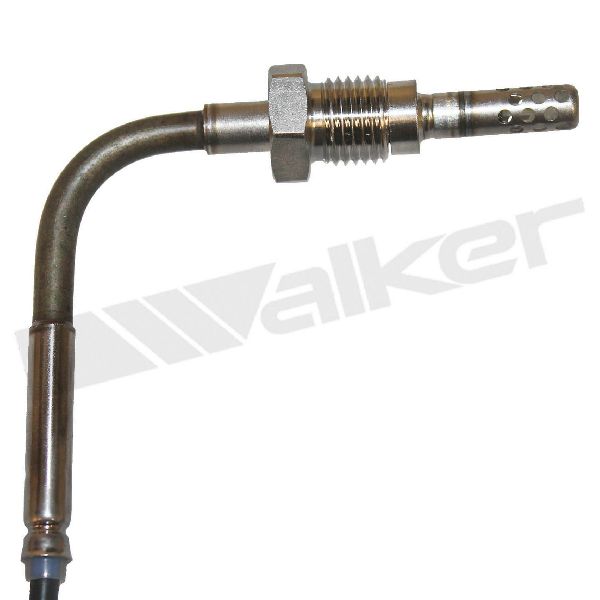
- Exhaust Gas Temperature (EGT) Sensor (Bank 1 Sensor 1)
(OEM #68211210AA)— This sensor is the primary hardware component that fails, triggering the P0426 code after software issues are ruled out.
Trusted brands: Mopar, Bosch, Standard Motor Products (SMP), NTK, Walker Products
OEM price range: $100-$150
Aftermarket price range: $65-$120
Related Codes That Often Appear With This One
- P0428 — Stands for 'Catalyst Temperature Sensor Circuit High'. It often appears alongside P0426 as both codes point to a failure of the same sensor or its circuit, typically an internal open that causes a maxed-out reading.
- P2080 — Stands for 'Exhaust Gas Temperature Sensor Circuit Performance'. This code is often mentioned in the same TSBs as P0426, indicating a related software logic issue that can be fixed with a PCM reflash.
Technical Service Bulletins (TSBs) & Recalls
- TSB 18-023-15 REV. C: Addresses reprogramming the PCM for EGT sensor rationality diagnostics for the Jeep Grand Cherokee EcoDiesel, which uses the same powertrain and has the identical issue.
- TSB 18-012-16: Another Jeep TSB that lists P0426 as a code resolved by a PCM software update, further confirming the software-based nature of the problem on this powertrain.
- Emissions Recall V08 / Customer Satisfaction Notification VA7: These are the official FCA campaigns for the Approved Emissions Modification (AEM). This software reflash is the most critical update and supersedes earlier TSBs for many vehicles. It also extends the warranty on affected components.
Platform-Specific Known Issues
- A known issue on early EcoDiesel engines where outdated PCM software would incorrectly interpret sensor data, setting a false P0426 code. This was addressed by manufacturer software updates, most notably the AEM emissions recall.
- The Bank 1 Sensor 1 EGT sensor is prone to internal failure, causing an open circuit that results in a fixed high-temperature reading (999°F/1832°F) on scan tools.
Mechanic-Grade Diagnostic Values
- EGT Sensor (B1S1) Internal Resistance — expected: 200 - 240 Ohms at room temperature (65-75°F / 18-25°C). Failure: A reading of infinity (open circuit) or a value significantly outside the specified range.
- Scan Tool Live Data (Catalyst Temp B1S1) — expected: Should read near ambient temperature on a cold engine and rise steadily as the engine warms up.. Failure: A fixed reading that does not change, typically stuck at a default high value like 999°F, 1832°F, or 999°C.
- EGT Sensor Wiring Harness Resistance to Ground — expected: Less than 5 Ohms. Failure: Resistance greater than 5 Ohms indicates a poor ground connection or a compromised wire.
Scan Tool Commands That Help
- wiTECH (OEM Dealer Tool): PCM Reprogram/Flash — This is the primary function used to apply the critical software updates specified in TSBs and the AEM emissions recall, which is the most common fix for a false P0426 code.
- wiTECH (OEM Dealer Tool): Live Data Graphing — To monitor and graph all EGT sensors simultaneously as the engine warms up. This allows a technician to easily spot an outlier sensor that is not responding logically compared to the others, confirming a sensor fault.
- wiTECH (OEM Dealer Tool): SCR DEF Tank Fluid Level Reset — This service routine is required by some TSBs as a final step after reprogramming the PCM to ensure the emissions system is properly reset.
Wiring & Ground Locations
- EGT Sensor Harness — The wiring for the Bank 1 Sensor 1 runs from the sensor (post-turbo) across the top of the transmission. The electrical connector is tucked up high on the passenger side of the transmission.. This location is a known chafe point and is susceptible to heat damage from the transmission and exhaust, which can cause shorts or open circuits in the sensor wiring.
- G909A — Located at the left rear of the engine compartment.. This is a primary engine compartment ground point. While not exclusive to the EGT sensor, a poor or corroded connection here can cause unstable sensor readings and various difficult-to-diagnose electrical issues for components controlled by the PCM.
OEM Part Supersession History
68211210AA→N/A, still current— N/A
Heads up: The official Mopar parts catalog sometimes mislabels this EGT sensor as an 'Air Temperature Sensor' that is 'In manifold'. This is incorrect. P0426 refers to the Catalyst Temperature Sensor located in the downpipe after the turbocharger, which is the correct application for this part number despite the confusing description.
Model Year Variations Within This Range
- 2014-2016: These model years are the primary target for the AEM (V08, VA7) emissions recall software update. While later years may also have updates, the AEM flash for these specific years is the most critical diagnostic step and often resolves the P0426 code without any parts replacement.
Diagnostic Flowchart
Other Known Issues on This Vehicle
Issues unrelated to this code that are worth knowing about as an owner of this generation:
- EGR Cooler Failure 🔴 High — Very common. The cooler cracks due to thermal fatigue, leaking coolant into the intake. This can cause intake manifold combustion and, in rare cases, a vehicle fire. (Ref: NHTSA Recall 19V-757 (FCA code VB1) was issued for this problem.)
- Oil Cooler Failure 🔴 High — Common, especially on 2014-2016 models. The cooler fails internally, mixing oil and coolant. This contaminates the entire cooling system and can lead to engine damage if not caught early. (Ref: No direct recall, but often discussed in forums. The AEM extended warranty may provide coverage if the failure can be linked to an emissions component.)
- Main Bearing / Crankshaft Failure 🔴 High — Less common than cooler failures, but a well-documented catastrophic failure. Theories point to tight bearing clearances, crankshaft flex under load ('lugging'), and oil contamination from soot. (Ref: No recall. This is often referred to as 'bottom end failure' by owners.)
- High-Pressure Fuel Pump (CP4) Failure 🔴 High — A known issue with the Bosch CP4.2 fuel pump used on these models. The pump can self-destruct, sending metal debris throughout the entire fuel system, requiring a very expensive repair. (Ref: A recall was issued for this problem, affecting 2014-2019 models.)
Used vs. New Parts: Buying Guide for This Vehicle
When a used part is the smart pick: A used part is NOT recommended for the EGT sensor itself due to its high failure rate and exposure to extreme heat and soot. The low cost of a new aftermarket sensor makes a used part a poor value proposition. A used wiring harness pigtail from a junkyard is a viable option if only the connector is physically damaged.
Donor-vehicle mileage cap: roughly under 100000 miles for the part to have meaningful remaining life.
What to inspect on the donor part:
- For a wiring pigtail, inspect for any signs of melting on the plastic connector.
- Check for brittle or stiff wiring, which indicates heat damage.
- Ensure connector pins are clean and free of green or white corrosion.
- Avoid parts from vehicles with obvious signs of engine fire or flood damage.
OEM-only on this vehicle (don't cheap out):
- Powertrain Control Module (PCM)
Aftermarket brands forum-validated for this vehicle:
- Bosch
- NTK
- Walker Products
- Standard Motor Products (SMP)
Real Owner Stories
Aggregated from forums and TSBs cited above. Mileages and costs reflect what owners reported in those sources.
2015 Ram 1500 3.0L EcoDiesel — 88000 miles
Symptoms: Check Engine Light with code P0426, 'Exhaust Filter 80% Full' message that quickly jumped to 100%, and a noticeably louder whistling or whining noise during acceleration.
What fixed it: The owner identified the issue as a DPF regeneration failure linked to the P0426 code.
Source hint: RamForum.com - 'DPF regen and CEL P0426'
2015 Ram 1500 3.0L EcoDiesel
Symptoms: Diagnostic codes P0426 and P0428 appeared. Using a scan tool, the owner found the Inlet DPF Exhaust Gas Temperature reading was stuck at 999.94 degrees.
What fixed it: Replacement of the failed EGT sensor which was stuck at a default high-temperature reading.
Source hint: EcoDieselRam.com - 'Inlet DPF Exhaust Gas Temperature (C) 999.94'
Related OBD-II Codes
Frequently Asked Questions
Will the AEM emissions recall (V08/VA7) cover the repair for code P0426 on my Ram 1500 EcoDiesel?
My scan tool shows 'Catalyst Temp B1S1' at exactly 999.94°F. Does this mean the sensor is bad?
Where is the Bank 1 Sensor 1 EGT sensor located on the 3.0L EcoDiesel?
Can I check the EGT sensor with a multimeter before buying a new one?
Does TSB 18-023-15 apply to my Ram 1500 even though it mentions the Jeep Grand Cherokee?
Why is my Ram 1500 showing 'Exhaust Filter 80% Full' immediately after a P0426 code?
We Have This Part in Stock


The information in this article is provided for general reference and educational purposes only. Vehicle specifications, procedures, and part compatibility can vary by production date, trim level, and region. Always consult your vehicle's factory service manual and verify part numbers before purchasing or performing repairs. Safety-critical components such as airbags, seat belts, and braking systems should be installed by a qualified professional.
- Ram 1500:
- 🛍️ Shop This Part
- What's Unique About the 2014-2018 Ram 1500
- Symptoms You May Notice
- Most Likely Causes
- Rare But Worth Checking
- Diagnosis Steps
- Parts You'll Likely Need
- Related Codes That Often Appear With This One
- Technical Service Bulletins (TSBs) & Recalls
- Platform-Specific Known Issues
- Mechanic-Grade Diagnostic Values
- Scan Tool Commands That Help
- Wiring & Ground Locations
- OEM Part Supersession History
- Model Year Variations Within This Range
- Diagnostic Flowchart
- Other Known Issues on This Vehicle
- Used vs. New Parts: Buying Guide for This Vehicle
- Real Owner Stories
- 2015 Ram 1500 3.0L EcoDiesel — 88000 miles
- 2015 Ram 1500 3.0L EcoDiesel
- Related OBD-II Codes
- Frequently Asked Questions
- 🎟️ Get 5% Off