

OBD-II Code P0426: Catalyst Temperature Sensor Performance - The Ultimate Guide
What P0426 means, why it triggers, and how to fix it like a pro
- Diagnose the upstream oxygen sensor, exhaust leaks, and PCM software before replacing a catalytic converter to save up to $2,500.
- Check for manufacturer Technical Service Bulletins (TSBs) first; 2014-2018 Jeep and Ram 3.0L EcoDiesels frequently resolve P0426 with a 1-hour dealership software update.
- Verify your vehicle's mileage against the 8-year/80,000-mile Federal Emissions Warranty, which covers catalytic converters and related ECU components at zero cost.
- Stop driving long distances with an active P0426 code to prevent a 10% drop in fuel economy and irreversible thermal damage to the catalytic converter.
- Use an OBD-II scanner with live data capabilities to verify if the O2 sensor voltage is stuck outside the normal 0.1V to 0.9V range before buying replacement parts.
What Does P0426 Mean?
Code P0426 indicates the Powertrain Control Module (PCM) is receiving an erratic or out-of-range signal from the catalyst temperature sensor on engine bank 1. This sensor ensures the catalytic converter operates at the correct temperature to clean exhaust gases without sustaining thermal damage. When the sensor's reading falls outside the expected 0.1V to 4.5V range, the PCM triggers the check engine light.
Technical definition: The official SAE/OBD-II definition is "Catalyst Temperature Sensor Circuit Range/Performance (Bank 1, Sensor 1)". This means the PCM detects the signal from the first temperature sensor in the bank 1 exhaust system is outside its operational range. On most modern gasoline vehicles, the PCM infers this temperature using the upstream oxygen (O2) or Air/Fuel Ratio sensor. On some diesels, it uses a dedicated Exhaust Gas Temperature (EGT) sensor.
Can I Drive With P0426?
Yes, But With Caution. Short trips under 50 miles are safe, but avoid long drives, heavy towing, or high-revving conditions. Ignoring the code causes the engine to run inefficiently, leading to a clogged catalytic converter—a repair costing $800 to $2,500+. Address the issue promptly to prevent expensive secondary failures.
Common Causes
- Faulty Catalyst Temperature Sensor (or Upstream O2 Sensor) (Very Common) — The sensor wears out from extreme heat and chemical exposure, sending slow or biased voltage readings to the PCM. 🎬 Watch: How to diagnose and fix a faulty oxygen sensor. Internal coolant or oil leaks also contaminate the sensor tip, causing premature failure.
- Outdated PCM Software (Common) — Particularly on Jeep and Ram EcoDiesel models, overly sensitive PCM software misinterprets normal sensor signals. A dealership software update resolves this.
- Damaged Wiring or Connectors (Common) — Exhaust heat, road debris, or moisture damages the sensor's wiring harness. Corrosion or pushed-out pins at the connector disrupt the signal.
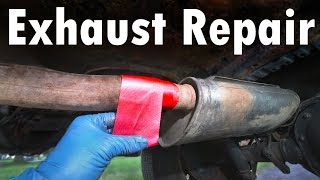
- Exhaust Leaks (Common) — Leaks in the exhaust manifold, flex pipe, or gaskets upstream of the sensor introduce unmetered oxygen. This cools the exhaust flow, altering the temperature and forcing false sensor readings. 🎬 See this easy guide on finding and repairing exhaust leaks.
- Incorrect Fuel Mixture (Less Common) — An engine running too rich or too lean forces exhaust temperatures outside the normal range. Vacuum leaks, faulty injectors, or a dirty mass airflow sensor cause this, typically accompanied by P0171 or P0172 codes.
- Low System Voltage (Rare) — A weak battery or failing alternator drops system voltage, corrupting the 5-volt reference signal supplied to the sensor and triggering a false code.
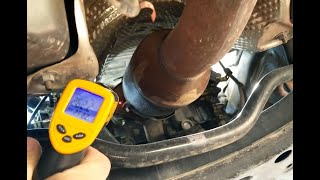
- Failing Catalytic Converter (Rare) — A partially clogged converter creates excessive backpressure and heat, damaging the sensor. This is usually a consequence of ignoring P0426 rather than the root cause. 🎬 Watch: How to test your catalytic converter with a thermometer.
Symptoms
- Check Engine Light is On — The primary and often only noticeable symptom.
- Reduced Fuel Economy — Fuel consumption increases by 5-10% because the PCM defaults to a less efficient, richer fuel map.
- Rough Idling and Sluggish Acceleration — The engine hesitates, idles erratically, or lacks power during acceleration due to an improper air-fuel mixture.
- Failed Emissions Test — The vehicle produces excess pollutants and automatically fails state smog inspections.
- Unpleasant Exhaust Odors — A sulfur or rotten egg smell indicates the catalytic converter cannot process unburnt fuel correctly.
- Abnormal Fuel Trims (scan-tool only — no driver-felt sign) — Long-term fuel trims exceeding the normal +/-10% range appear on a scan tool, indicating the PCM is fighting an underlying air/fuel imbalance.
Diagnostic Flowchart
Tap your situation to follow the diagnostic path that matches what you're seeing on this code.
Common Fixes & Costs
- Replace Upstream Oxygen (O2) / EGT Sensor — Parts: $75-$250, Labor: $120-$250, ~1 hr book time (DIY)
- Update Powertrain Control Module (PCM) Software — Parts: $0, Labor: $150-$250, ~1.5 hr book time (Professional)
- Repair Damaged Wiring or Connector — Parts: $20-$50, Labor: $120-$250, ~1.5 hr book time (Intermediate)
- Repair Exhaust Leak (Gasket or Flex Pipe) — Parts: $30-$150, Labor: $150-$450, ~2.5 hr book time (Intermediate)
- Replace Catalytic Converter — Parts: $800-$2,500, Labor: $150-$300, ~2 hr book time (Professional)
Used vs. New Parts: Buying Guide
When a used part is worth it: For catalytic converters, a used OEM part from a low-mileage vehicle (under 80,000 miles) scrapped for non-engine reasons is cost-effective. Always buy oxygen sensors new due to their limited lifespan.
Donor-vehicle mileage cap: roughly under 80000 miles for the part to have meaningful remaining life.
Donor quality checklist:
- Verify the donor vehicle's mileage and reason for salvage.
- Avoid parts from rust-belt states; corrosion seizes bolts and damages housings.
- Match the part number exactly; visually identical parts have different internal calibrations.
Decision logic:
- If The part is an oxygen sensor → Always buy new. Used sensors have an unknown remaining lifespan.
- If The part is a catalytic converter and the vehicle is < 80K miles → Favor a new aftermarket or OEM part for longevity and warranty.
- If The part is a catalytic converter and budget is the primary concern → A used OEM converter from a verified low-mileage donor is acceptable but carries risk.
Warranty tradeoff: Used parts typically carry a 30-90 day warranty. New aftermarket parts offer 1-3 years, while new OEM parts carry the manufacturer's warranty.
Worst-case if a used part fails: $400-1500 if a used catalytic converter fails after installation, requiring repeat labor and another replacement part.
What Happens If You Wait — Timeline
- 0-2 weeks: Check engine light is on with no noticeable driving symptoms. The fault is logged in the PCM. (MPG impact: 0-3%% · Added cost: $0)
- 2 weeks - 2 months: The PCM operates in a less efficient fuel map. A subtle drop in fuel economy and slight hesitation occur. (MPG impact: 5-10%% · Added cost: $20-50 in wasted fuel)
- 2-6 months: Incorrect air/fuel mixtures cause the catalytic converter to consistently overheat. The internal ceramic substrate cracks or coats with soot, triggering a P0420 code. (MPG impact: 10-15%% · Added cost: $50-150 in wasted fuel, plus setting the stage for converter failure.)
- 6+ months: The catalytic converter's internal structure melts down, creating a severe exhaust blockage. This results in significant power loss and requires converter replacement. (MPG impact: 20%+% · Added cost: $1,200 - $2,800 for catalytic converter replacement.)
Cost of Not Fixing It
- 0-1 month: Reduced fuel economy by 5-10% and automatic failure of state emissions tests. (Added cost: $20-$60 per month in extra fuel costs.)
- 1-6 months: The engine running on an improper air/fuel mixture causes the catalytic converter to overheat and degrade internally, triggering a P0420 code. (Added cost: Negligible, but sets the stage for major failure.)
- 6+ months: Continued overheating melts the catalytic converter's internal substrate, creating a severe exhaust restriction, power loss, and requiring full replacement. (Added cost: $1,200 - $2,800 for catalytic converter replacement.)
Diagnosis Steps
- Read Codes and Analyze Freeze Frame Data
Use an OBD-II scanner to confirm P0426. Check for related codes (P0420, P0135, P0171, P0172) and examine freeze-frame data to see engine conditions (RPM, speed, temp) when the code set.
Tools: OBD-II Scanner (Beginner) - Check for PCM Software Updates (TSBs)
Before replacing parts, contact a dealership to check for Technical Service Bulletins (TSBs). A software reflash is the prescribed fix for false P0426 codes on many Chrysler, Jeep, and Ram vehicles.
Tools: Phone or Computer (Beginner) - Analyze Sensor Live Data
Watch the sensor's voltage with the engine fully warmed up using a scanner's live data function. A healthy upstream O2 sensor switches rapidly between 0.1V and 0.9V. A stuck or slow reading confirms a bad sensor.
Tools: OBD-II Scanner with Live Data (Intermediate) - Visually Inspect the Exhaust System and Wiring
Inspect the exhaust from the manifold to the catalytic converter for black soot marks indicating leaks. Examine the Bank 1 Sensor 1 wiring for burns, chafing, or loose connector pins.
Tools: Flashlight, Safety Glasses, Mechanic's Mirror (Beginner) - Check for Exhaust Leaks with a Smoke Machine
Pressurize the cold exhaust system with a smoke machine. Smoke escaping from cracks or gaskets reveals invisible leaks altering the sensor's temperature readings.
Tools: Smoke Machine (Intermediate) - Analyze Fuel Trim Data
Check long-term fuel trims (LTFT). Values outside ±10% indicate the PCM is compensating for a rich or lean condition (like a vacuum leak) causing the abnormal exhaust temperatures.
Tools: OBD-II Scanner with Live Data (Advanced) - [ADVANCED] Test Sensor Heater Circuit Resistance
Disconnect the cold sensor and measure resistance between the two heater pins with a multimeter. Standard O2 sensors read 5-20 ohms; diesel EGT sensors read 200-240 ohms. 'OL' or 0 ohms requires replacement.
Tools: Digital Multimeter, Wiring Diagram (Advanced) - [ADVANCED] Perform Oscilloscope Analysis
Connect a lab scope to the sensor signal wire. A healthy O2 sensor produces a clean 1 Hz sine wave at idle, transitioning in under 100 milliseconds. A lazy or noisy waveform condemns the sensor.
Tools: Automotive Oscilloscope (Lab Scope) (Professional) - [ADVANCED] Test Catalytic Converter Temperature Differential
Run the engine at 2,000 RPM for 5 minutes. Measure the exhaust pipe temperature before and after the catalytic converter. The outlet must be at least 100°F hotter than the inlet; otherwise, the converter has failed.
Tools: Infrared Thermometer (Advanced) - [ADVANCED] Check Fuel Pressure
Connect a gauge to the fuel rail. Pressure must match manufacturer specs (typically 40-60 PSI) and remain stable at idle. Drops or spikes indicate fuel delivery issues affecting exhaust temps.
Tools: Fuel Pressure Gauge, Service Manual (Advanced)
When This Code Triggers (Freeze-Frame Conditions)
- Engine Coolant Temp: 180-220°F (82-104°C) (The engine must be fully warmed up for the monitor to run.)
- RPM: 1500-2500 RPM (The code sets during steady-state cruising, not during heavy acceleration or idling.)
- Engine Load: 30-60% (A moderate and stable engine load is required, typical of light highway driving.)
- Vehicle Speed: 40-60 mph (The monitor runs during steady highway or freeway driving conditions.)
Related Codes
- P0420 — Indicates 'Catalyst System Efficiency Below Threshold.' A faulty sensor causing P0426 feeds bad data to the PCM, triggering a false P0420. Always diagnose P0426 first.
- P0135 — Indicates a fault in the 'O2 Sensor Heater Circuit.' A failed internal heater prevents the sensor from reaching operating temperature, triggering the P0426 performance code.
- P0436 — The identical code for Bank 2. Seeing both P0426 and P0436 simultaneously points to a common system failure, such as a PCM software issue, fuel delivery problem, or bad fuel.
- P0171 / P0172 — Indicate a fuel mixture problem (Lean or Rich). These directly alter exhaust temperatures. Fix the fuel mixture problem first, as it is the root cause of the abnormal temperature reading.
Climate & Environmental Factors
- Cold Climates: Extreme cold makes sensor wiring brittle and prone to cracking. Metal contraction also opens pre-existing cracks in exhaust manifolds, creating leaks that trigger the code.
- High Humidity / Road Salt: Moisture and salt accelerate corrosion on the sensor's electrical connector. This increases circuit resistance, corrupting the voltage signal sent to the PCM.
- High Altitude: Less dense air causes engines to run naturally richer. The PCM compensates, but this pushes the fuel control system to its limits, exposing borderline 'lazy' sensors.
How to Talk to a Mechanic About This Code
Say this: "I have a P0426 code and need a diagnostic. Please check for TSBs and perform a smoke test to rule out software updates or exhaust leaks before replacing the upstream O2 sensor."
This directs the mechanic toward a logical diagnostic process, preventing them from jumping to the most expensive conclusion and focusing on common, cheaper root causes first.
Avoid saying:
- 'My check engine light is on, can you just fix it?'
- 'I think I need a new catalytic converter.'
- 'Just do whatever you think is best.'
Questions to ask before authorizing the repair:
- Did you find any TSBs related to this code for my vehicle?
- What were the results of the smoke test for exhaust leaks?
- Can you show me the live data from the upstream O2 sensor?
- What is the warranty on the proposed parts and labor?
Where to Take It: Dealer vs Independent vs Chain
- Dealer:
Recommended if a known software update (TSB) is the likely cause or if the vehicle is under its federal emissions warranty.
Best for: Vehicles under an emissions warranty (8yr/80k miles), Jeep/Ram EcoDiesel models known for software issues, Complex German brands (BMW, Mercedes-Benz)
Downsides: Highest labor rates, often 1.5-2x more than independent shops., May recommend replacing a larger assembly instead of a smaller failed component. (Typical cost: +50% vs. baseline) - Independent Shop:
Best fit for most cases, especially for straightforward sensor replacements or exhaust leaks. Ensure they use a smoke machine for leak diagnosis.
Best for: Out-of-warranty vehicles where cost is a major factor., Common vehicles (Ford, Chevy, Toyota) where P0426 is well-understood.
Downsides: Quality varies widely; look for ASE certification and good reviews., May lack access to the latest manufacturer software updates. (Typical cost: +0% vs. baseline) - Chain Shop:
Acceptable for a simple, pre-diagnosed oxygen sensor replacement, but AVOID for initial diagnosis due to the risk of misdiagnosis and upselling.
Best for: Simple, clear-cut part replacements like batteries or tires.
Downsides: Technician skill varies dramatically., High pressure to upsell services; may push for unnecessary catalytic converter replacements. (Typical cost: -10% vs. baseline)
When to Walk Away From the Repair
If the estimated repair cost exceeds 40-50% of the car's private-party value, consider selling or trading it in.
- Car worth $4000, fix is $2000: Borderline. The repair is 50% of the car's value. Get a second opinion before proceeding.
- Car worth $12000, fix is $1800: Fix it. The repair cost is only 15% of the vehicle's value, well below the walk-away threshold.
- Car worth $2500, fix is $1500: Walk away. The repair is 60% of the car's value. Put this money toward a replacement vehicle.
What Scan Tool You Need for This Code
Minimum: A scanner that reads and graphs live O2 sensor data and accesses Mode $06 test results for the catalyst monitor.
A basic $20 code reader only gives the P0426 code, leading to guesswork. Seeing live sensor voltage and Mode $06 data determines if the sensor is lazy or the catalyst is failing, saving you from expensive misdiagnosis.
Budget: BlueDriver Pro (~$100) — Connects to a smartphone, provides live data graphing for the O2 sensor, freeze-frame data, and accesses Mode $06 results.
Mid-range: Foxwell NT510 Elite (~$180) — A handheld unit offering manufacturer-specific diagnostics, live data graphing, and bidirectional controls to command components.
Professional: Autel MaxiCOM MK808S (~$450) — A tablet-based tool with full bidirectional control, extensive live data, and all system diagnostic functions. Powerful enough for professional shops.
Rent vs buy: For a one-time diagnosis, AutoZone's Loan-A-Tool program allows you to borrow a scanner for free. If you do your own repairs regularly, buying a tool like the BlueDriver is a worthwhile investment.
How to Clear the Code After You Fix It
- Use an OBD-II scan tool to clear the P0426 code.
- Perform a complete OBD-II drive cycle to allow readiness monitors to run.
- Rescan the vehicle to confirm the code has not returned.
Drive cycle (~30 minutes): A generic drive cycle includes a cold start, 2-3 minutes of idling, 10-15 minutes of mixed city/highway driving including steady cruising and stop-and-go, and allowing the vehicle to cool down completely.
Readiness monitors affected: Catalyst (CAT) monitor, Oxygen (O2) Sensor monitor, Oxygen Sensor Heater monitor
Before emissions retest: drive at least 100 miles to fully set monitors.
Watch out for:
- Disconnecting the battery clears the code but resets all readiness monitors to 'Not Ready', guaranteeing an emissions test failure.
- The code returns immediately if the root cause (hidden exhaust leak or bad wiring) was not fixed.
- Failing to complete the specific drive cycle leaves monitors in a 'Not Ready' state.
Will This Fail Emissions / State Inspection?
Yes — this code typically fails an OBD-II emissions inspection.
- California: A P0426 code is an automatic failure. CARB regulations require all readiness monitors to be set to 'Ready' to pass a Smog Check.
- New York: An active P0426 code causes an automatic failure. For 2001+ vehicles, only one readiness monitor can be 'Not Ready' to pass.
- Texas: In the 17 counties requiring emissions testing, an active P0426 code results in a failed inspection.
Most Commonly Affected Vehicles
- Jeep Grand Cherokee (2014-2016) — Models with the 3.0L EcoDiesel engine. TSB #18-023-15 REV. C identifies faulty PCM software logic as the primary cause. A software update is the required fix.
- Ram 1500 (2014-2018) — Models with the 3.0L EcoDiesel share the Jeep software issue. The affected EGT Sensor (Bank 1 Sensor 1) is located just after the turbo.
- Ford Focus, Mondeo, F-150 (2001-2015) — Frequently related to aging upstream oxygen sensors or developing exhaust leaks at the manifold or flex pipe.
- BMW 3 Series, 5 Series, X3, X5 (2000-2012) — Commonly associated with failing upstream oxygen sensors and brittle wiring harnesses degraded by extreme exhaust heat.
- Mercedes-Benz C-Class, E-Class, ML-Class (1998-2012) — Prone to P0426 due to sensor failure or electrical issues within harness connectors. Verifying sensor voltage and ground integrity is critical.
- Volkswagen Jetta, Golf, Passat, Tiguan (2002-2014) — Typically caused by a failing upstream oxygen sensor or exhaust leaks from the turbocharger flange.
- Chevrolet Silverado, Equinox, Cruze (2005-2016) — Exhaust manifold cracks and flex pipe leaks are very common and must be ruled out before replacing the oxygen sensor.
- Subaru Outback, Forester, Impreza (2005-2014) — Linked to failing front air/fuel ratio sensors. Oil from leaking valve cover gaskets drips onto the exhaust, contaminating the sensor and causing premature failure.
Manufacturer-Specific Notes
- Chrysler/Jeep/Ram: On 3.0L EcoDiesel engines, P0426 is frequently caused by outdated PCM software. Check for TSBs (like 18-023-15) before replacing the EGT sensor.
- Ford/Toyota/Honda: These brands lack a dedicated 'catalyst temperature sensor.' Code P0426 refers to a performance problem with the upstream Air/Fuel Ratio (A/F) sensor used to infer temperature.
- General Motors (Chevrolet/GMC): The flexible joint in the exhaust pipe (flex pipe) is a common failure point. Leaks here introduce oxygen upstream of the sensor, triggering P0426.
- Subaru: Due to the horizontal engine layout, oil from leaking valve cover gaskets drips directly onto the exhaust, contaminating the front air/fuel ratio sensor and causing failure.
- All Manufacturers (USA): The Federal Emissions Performance Warranty mandates coverage for major emissions components (catalytic converters, ECUs) for 8 years or 80,000 miles. Defective parts triggering P0426 are covered at no cost.
Real Owner Stories
2014 Ram 1500 EcoDiesel at 75K miles
Check engine light came on with no drivability symptoms. Scanned code P0426.
What they tried:
- Took the truck to the dealership after researching common software issues.
Outcome: The dealership found a TSB for outdated PCM software. A reflash resolved the code, covered under the emissions warranty.
Lesson: Always check for TSBs related to emissions codes on modern diesels before replacing parts. Software updates are common fixes.
2012 Mercedes-Benz C250
Intermittent check engine light during cold starts with occasional hesitation. Scanned code P0426.
What they tried:
- Removed and cleaned the upstream temperature sensor based on forum advice.
Outcome: Cleaning failed. The owner replaced the faulty catalyst temperature sensor (Bank 1, Sensor 1) to clear the code and fix the hesitation.
Lesson: Cleaning a sensor rarely works. P0426 indicates internal element failure from heat and age, requiring full replacement.
2007 Ford Mondeo 2.2 TDCi
Black smoke from the exhaust during hard acceleration and a check engine light. Scanned code P0426.
What they tried:
- Sought advice on a Ford owners forum.
Outcome: The black smoke indicated a rich fuel condition causing incorrect temperature readings. Replacing a failing fuel injector cleared the P0426 code.
Lesson: P0426 is often a symptom of a larger problem. Diagnose underlying fuel issues (rich/lean conditions) before replacing sensors.
How to Prevent This Code From Triggering
- Use high-quality, top-tier gasoline (Every fill-up) — Top-tier fuels contain detergents preventing injector deposits. Clean injectors ensure complete combustion, preventing unburned fuel from overheating the catalytic converter.
- Replace upstream oxygen sensors proactively (Every 80,000 to 100,000 miles) — Oxygen sensors degrade and become slow. A 'lazy' sensor provides inaccurate data, leading to a rich fuel mixture that overheats the catalytic converter.
- Address engine misfires immediately (As needed) — Misfires dump raw fuel into the exhaust. This fuel ignites inside the catalytic converter, melting the internal ceramic structure.
- Ensure regular, longer drives (At least once a week) — Frequent short trips prevent the exhaust from reaching optimal temperature. A weekly 30-minute highway drive burns off carbon deposits.
- Perform regular engine maintenance (Per manufacturer's schedule) — Replacing spark plugs and air filters ensures efficient combustion, preventing rich or lean conditions that stress the O2 sensor.
Frequently Asked Questions
What is the most common mistake when diagnosing P0426?
The most common mistake is immediately replacing the oxygen sensor without a full diagnosis. Technicians strongly recommend checking for PCM software updates, inspecting for exhaust leaks with a smoke machine, and testing wiring first. These are frequent, cheaper root causes.
I replaced the oxygen sensor but the code came back. What now?
If a new sensor failed to fix the issue, the problem lies elsewhere in the circuit or system. Check for a PCM software update at a dealership, perform a smoke test to find hidden exhaust leaks, and inspect the sensor connector pins for corrosion.
Will a 'catalytic converter cleaner' additive fix a P0426 code?
No. P0426 points to a sensor performance or electrical circuit problem, not a dirty converter. You must fix the root cause of the incorrect sensor readings, such as a dead sensor, exhaust leak, or software glitch.
Can a bad battery cause a P0426 code?
Yes. A failing battery or alternator causes low or unstable system voltage. This corrupts the 5-volt reference signal supplied to various sensors, including the catalyst temperature sensor, triggering a false code.
What's the difference between the upstream and downstream oxygen sensor?
The upstream sensor (Sensor 1) sits before the catalytic converter and dictates engine fuel control. The downstream sensor (Sensor 2) sits after the converter and monitors its efficiency. P0426 specifically flags a performance issue with the upstream sensor.
How do I find Bank 1 on my engine?
Bank 1 is the side of the engine containing cylinder #1. For inline engines, there is only one bank; for V-shaped engines, consult your vehicle's repair manual or a quick online search for the specific cylinder layout.
Will the P0426 code clear itself?
Rarely. Unless the fault was a temporary glitch like a loose connector that re-seated itself, the underlying hardware or software issue requires a physical repair before the code clears permanently.
Key Takeaways
- Diagnose the upstream oxygen sensor, exhaust leaks, and PCM software before replacing a catalytic converter to save up to $2,500.
- Check for manufacturer Technical Service Bulletins (TSBs) first; 2014-2018 Jeep and Ram 3.0L EcoDiesels frequently resolve P0426 with a 1-hour dealership software update.
- Verify your vehicle's mileage against the 8-year/80,000-mile Federal Emissions Warranty, which covers catalytic converters and related ECU components at zero cost.
- Stop driving long distances with an active P0426 code to prevent a 10% drop in fuel economy and irreversible thermal damage to the catalytic converter.
- Use an OBD-II scanner with live data capabilities to verify if the O2 sensor voltage is stuck outside the normal 0.1V to 0.9V range before buying replacement parts.
Helpful Videos

The information in this article is provided for general reference and educational purposes only. Vehicle specifications, procedures, and part compatibility can vary by production date, trim level, and region. Always consult your vehicle's factory service manual and verify part numbers before purchasing or performing repairs. Safety-critical components such as airbags, seat belts, and braking systems should be installed by a qualified professional.
- 🎬 Helpful Videos
- What Does P0426 Mean?
- Can I Drive With P0426?
- Common Causes
- Symptoms
- Diagnostic Flowchart
- Common Fixes & Costs
- Used vs. New Parts: Buying Guide
- What Happens If You Wait — Timeline
- Cost of Not Fixing It
- Diagnosis Steps
- When This Code Triggers (Freeze-Frame Conditions)
- Related Codes
- Climate & Environmental Factors
- How to Talk to a Mechanic About This Code
- Where to Take It: Dealer vs Independent vs Chain
- When to Walk Away From the Repair
- What Scan Tool You Need for This Code
- How to Clear the Code After You Fix It
- Will This Fail Emissions / State Inspection?
- Most Commonly Affected Vehicles
- Manufacturer-Specific Notes
- Real Owner Stories
- 2014 Ram 1500 EcoDiesel at 75K miles
- 2012 Mercedes-Benz C250
- 2007 Ford Mondeo 2.2 TDCi
- How to Prevent This Code From Triggering
- Frequently Asked Questions
- What is the most common mistake when diagnosing P0426?
- I replaced the oxygen sensor but the code came back. What now?
- Will a 'catalytic converter cleaner' additive fix a P0426 code?
- Can a bad battery cause a P0426 code?
- What's the difference between the upstream and downstream oxygen sensor?
- How do I find Bank 1 on my engine?
- Will the P0426 code clear itself?
- Key Takeaways
- 🎟️ Get 5% Off