

P0421 on 2014-2016 Mazda MAZDA6: Software Glitch (TSB #01-010-16-3185) or Bad Catalytic Converter?
On a 2014-2016 Mazda6, code P0421 is frequently caused by a software glitch in the engine's computer, not a failed catalytic converter. The primary fix is often a simple software update performed by a Mazda dealer, as detailed in Technical Service Bulletin #01-010-16-3185. Before replacing any parts, owners must verify if this TSB applies and has been performed.
- Your first step should always be to check if your vehicle needs the software update from Mazda TSB #01-010-16-3185.
- Do not replace the catalytic converter or oxygen sensors until you have ruled out the software issue, as this can save you over $1,000.
- The vehicle is safe to drive with this code, but you will need to resolve it to pass an emissions test.
- This code is specific to the catalyst's performance during warm-up, not its overall function.
- The issue also affects other Mazdas with the 2.5L SKYACTIV-G engine, like the CX-5 and Mazda3.
What's Unique About the 2014-2016 Mazda MAZDA6

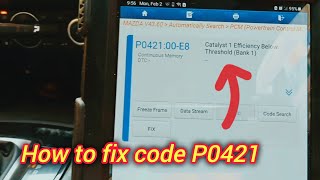
For this specific generation of Mazda6, the P0421 code has a well-documented history of being a false alarm. Mazda issued a Technical Service Bulletin (TSB #01-010-16-3185) acknowledging that an "improper control logic" in certain Mitsubishi-made engine computers (PCMs) could falsely trigger the P0421 code without any actual problem with the catalytic converter. This makes it crucial for owners to investigate the software solution before spending 🎬 Watch: This video explains the common Mazda software fix. a significant amount of money on replacing a perfectly good catalytic converter.
Diagnostic Flowchart

Tap your situation to follow the diagnostic path that matches what you're seeing on this vehicle.
Symptoms You May Notice
- Check Engine Light is on
- Inability to pass state emissions inspection
- Code may appear intermittently, sometimes clearing on its own after long drives.
- Replacing the catalytic converter before checking for the PCM software update. This is a very expensive mistake given the known TSB.
- Replacing oxygen sensors without confirming they are faulty through diagnostic testing.
- Assuming the code means the converter is bad when an upstream exhaust leak is the true cause.
Most Likely Causes

- Powertrain Control Module (PCM) Software Update Needed 🔴 High Probability Mazda TSB #01-010-16-3185 directly addresses this, stating that improper control logic in Mitsubishi-made PCMs can cause a false P0421 code. This is the most likely cause, especially on vehicles within the specified VIN range. The repair is covered under the Federal Emission Warranty (8 years / 80,000 miles).
How to confirm: A Mazda dealership or a qualified independent shop with access to Mazda's Diagnostic System (M-MDS) can check the current PCM software calibration version against the TSB to see if an update is needed.
Typical fix: Reprogramming the PCM with the updated software file from Mazda. The dealer uses the IDS tool to perform the update.
Est. part cost: $0 - Failing Warm-Up Catalytic Converter 🟡 Medium Probability If the PCM software is already up-to-date, the catalytic converter itself is the next most likely culprit. Over time, converters can become contaminated or degrade, losing their efficiency. This is particularly true on higher mileage vehicles (over 100k miles).
How to confirm: After ruling out software, a technician can use a scan tool to monitor oxygen sensor data. A downstream O2 sensor that mimics the upstream sensor's activity indicates a failing converter. A backpressure test can also check for internal blockages.
Typical fix: Replacement of the exhaust manifold, which has the catalytic converter integrated into it.
Est. part cost: $800-$1500 - Faulty Oxygen Sensor(s) ⚪ Low Probability While less common than the software or converter issue, a 'lazy' or failing oxygen sensor can provide incorrect data to the PCM, leading to a false P0421 code.
How to confirm: A technician can graph the sensor's voltage output on a scan tool to see if it is responding correctly to changes in the air-fuel mixture. A sensor that is slow to respond or has a biased reading is faulty.
Typical fix: Replace the faulty upstream (Air/Fuel Ratio) or downstream oxygen sensor.
Est. part cost: $80-$200 per sensor - Exhaust Leak ⚪ Low Probability Leaks in the exhaust manifold or gaskets before the first O2 sensor can introduce oxygen into the exhaust stream, skewing sensor readings and potentially triggering the code.
How to confirm: Visually inspect the exhaust manifold and gaskets for black soot marks, which indicate a leak. A ticking or hissing noise from the engine bay, especially when cold, can also be a sign. A smoke test is the most definitive 🎬 Watch: A breakdown of common causes for the P0421 code. way to find a leak.
Typical fix: Replace the leaking gasket or repair the cracked component.
Est. part cost: $20-$100
Rare But Worth Checking
- Poor fuel quality or use of fuel additives that are not safe for catalytic converters.
- Engine misfires or running rich due to other issues (bad spark plugs, injectors) can damage the catalytic converter over time.
Diagnosis Steps
- Read the code with an OBD-II scanner to confirm P0421 is the primary or only code present.
- Contact a Mazda dealer with your VIN to determine if TSB #01-010-16-3185 applies to your vehicle and if the software update has already been performed. This TSB supersedes a previous version, 01-016/15.
- If the TSB applies and has not been done, have the PCM reprogrammed. This is the most probable fix and may be covered by the 8-year/80,000-mile federal emissions warranty.
- If the software is up-to-date or the code returns, perform a thorough inspection of the exhaust system for any leaks between the engine and the catalytic converter. Check gaskets and the manifold itself.
- Use a scan tool with live data graphing capabilities. Monitor the voltage of the upstream (Bank 1, Sensor 1) and downstream (Bank 1, Sensor 2) oxygen sensors after the engine is warm. The downstream sensor's reading should be relatively stable and not mimic the rapid fluctuations of the upstream sensor. If it does, the converter is likely failing.
- If sensor data is inconclusive, test the sensors themselves to ensure they are responding correctly. A lazy sensor can be the root cause.
- As a final step, if all other possibilities are ruled out, the catalytic converter (integrated into the exhaust manifold) is the defective component and requires replacement.
Parts You'll Likely Need
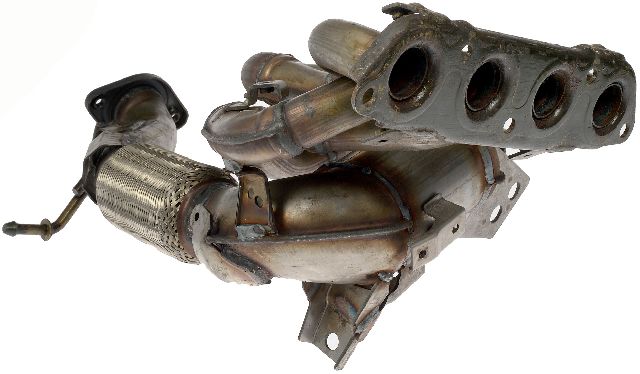
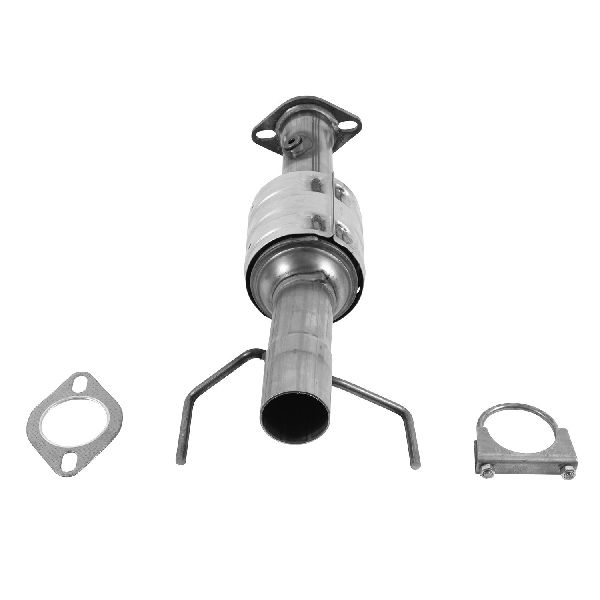
- Exhaust Manifold with Integrated Catalytic Converter
(OEM #PY47-20-50X)— If the PCM software update does not resolve the issue, the warm-up catalytic converter, which is part of the exhaust manifold assembly, has likely failed.
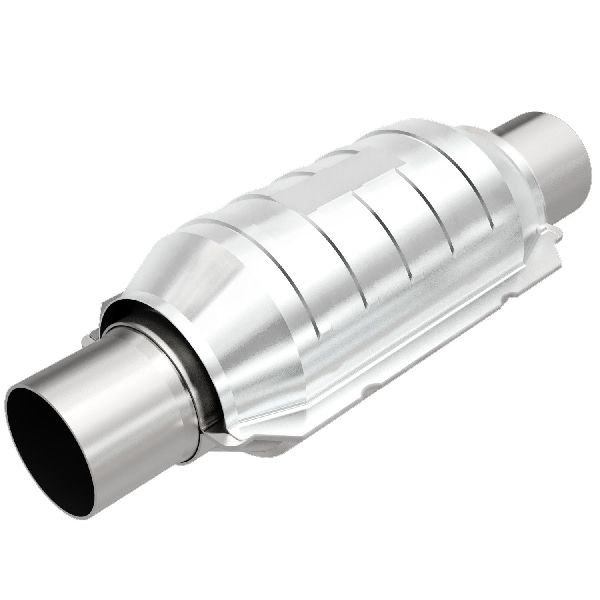
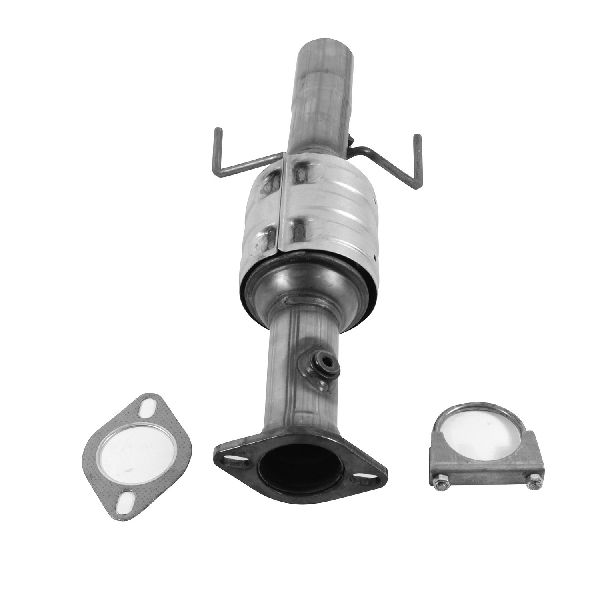
Trusted brands: Mazda (OEM), Walker Exhaust, MagnaFlow, Bosal
OEM price range: $985 - $1400
Aftermarket price range: $500-$900
Technical Service Bulletins (TSBs) & Recalls
- Bulletin #01-010-16-3185 (NHTSA ID #10093127): States that some vehicles may experience the check engine light on with DTC P0421:00 without poor engine performance, caused by improper PCM control logic in Mitsubishi-made PCMs. The fix is a PCM software update. This TSB supersedes 01-016/15.
- Bulletin #01-016/15 (NHTSA ID #10079203): An earlier version of the TSB for the same P0421 issue, also affecting the Mazda CX-5. It details a specific drive cycle procedure to verify converter function after reprogramming.
Platform-Specific Known Issues
- A significant number of 2014-2016 Mazda6 models are affected by a PCM software issue that incorrectly flags the P0421 code. This is detailed in Mazda's TSB #01-010-16-3185.
- Some owners on forums report that even after the PCM update, the code can return, eventually requiring a catalytic converter replacement, especially on vehicles with over 100,000 miles.
- The issue is not exclusive to the Mazda6; the related Mazda CX-5 with the same 2.5L engine has a nearly identical TSB (01-016/15) for the same P0421 false detection problem.
Mechanic-Grade Diagnostic Values
- Mode 6 Catalyst Monitor Bank 1 Value — expected: ≥ 1.0. Failure: A value less than 1.0 indicates the Warm-Up Three-Way Catalyst (WU-TWC) may be deteriorated, per TSB #01-010-16-3185.
- Downstream O2 Sensor (Bank 1, Sensor 2) Voltage at idle, engine warm — expected: Relatively steady voltage, typically between 0.6V and 0.8V.. Failure: Voltage fluctuates rapidly, mimicking the pattern of the upstream (Bank 1, Sensor 1) O2 sensor. This indicates the catalyst is not storing oxygen and is inefficient.
- Long-Term and Short-Term Fuel Trims — expected: Within a few percent of 0% (e.g., +/- 5%).. Failure: Fuel trims skewed significantly positive or negative (e.g., > 10%) indicate a fuel control issue (like a vacuum leak or fuel delivery problem) that must be fixed before diagnosing the catalyst.
Hidden / Shadow Codes Worth Checking
- Mode 6, OBDMID: $21, Test ID: $82: This is not a DTC, but a specific onboard test monitor for 'Catalyst monitor bank 1 - Equivalence Oxygen Storage Component'. It provides a raw data value indicating the health of the warm-up catalytic converter. (see via Requires a professional scan tool like the Mazda M-MDS (or equivalent) that can access OBD-II Mode $06 test results. Navigate to: Powertrain -> OBD Test Modes -> Mode6 On Board Test Results.)
Scan Tool Commands That Help
- Mazda M-MDS / IDS: Module Reprogramming — This function is used to apply the software update specified in TSB #01-010-16-3185 to correct the false P0421 detection logic.
- Mazda M-MDS / IDS: DRIVE MODE Procedure — After reprogramming the PCM under certain conditions specified in the TSB, a specific drive cycle is required to re-verify catalyst function. It involves a 15-minute drive at 50 mph, followed by at least 10 cycles of accelerating from 25 mph to 40 mph in 3rd gear (M-Mode) and decelerating back to 25 mph.
Wiring & Ground Locations
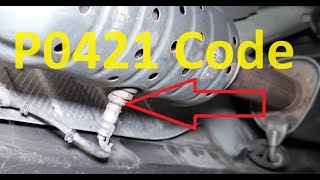
- Downstream O2 Sensor Connector — Underneath the vehicle, with the wiring routed above the aluminum and plastic underbody shields. The connector is tucked up on the vehicle body, requiring removal of shields for access.. A poor connection or damaged wiring at the downstream O2 sensor can cause incorrect readings, leading to a false P0421 code.
- G02 / G03 Engine Compartment Grounds — On related Mazda platforms (CX-5), critical grounds are located under the driver's side headlight (G02) and on the left front of the engine compartment (G03). These are logical places to inspect on a Mazda6 for similar issues.. A loose or corroded main engine or chassis ground can cause intermittent voltage drops and erratic behavior from the PCM and its sensors, potentially triggering false codes.
Real Owner Repair Stories
- Reddit user in r/mazda (2015 Mazda 3 2.0L with 265,000 KM) — P0421 code appeared, returned shortly after a dealer PCM software update.
❌ Tried (didn't work) Resetting the code, Dealer PCM software update
✅ What actually fixed it A combination of changing due spark plugs, filling the tank with 91 octane fuel, and adding a Duralube catalytic converter cleaner additive to the fuel. The light went out on its own after 100km and stayed off. - Mazdas247 Forum user (2002 Mazda Protege5 with 128,000 miles) — P0421 code appeared after fixing engine misfires. Noticed a slight drop in MPG.
❌ Tried (didn't work) Replacing spark plugs and wires (fixed misfire but P0421 appeared after)
✅ What actually fixed it Installed two stacked spark plug non-foulers on the downstream O2 sensor to act as a spacer. This tricks the PCM by pulling the sensor out of the direct exhaust stream, preventing the CEL from returning. The user acknowledged this is a workaround to pass emissions, not a true repair.
When the Usual Fixes Don't Work
- While the TSB software update is the most common and logical first step, there are multiple owner accounts where this fix was not permanent. In a case involving a 2015 CX-5 with the same engine and TSB, a dealer performed the PCM update multiple times, but the P0421 code continued to return, indicating the catalytic converter itself had failed and required replacement. Similarly, a 2015 Mazda 3 owner reported the PCM update only resolved the light for 50km before it returned, forcing them to seek an alternative fix. This demonstrates that if the catalyst is truly degraded, a software update will not fix it.
Model Year Variations Within This Range
- 2016: The 2016 model year received a cosmetic refresh (new grille, headlights, interior console) and an updated Mazda Connect infotainment system. However, the 2.5L SKYACTIV-G engine and exhaust system were carried over from 2014-2015, and there is no evidence this refresh affected the cause or fix for P0421.
Helpful Videos

We Have This Part in Stock



The information in this article is provided for general reference and educational purposes only. Vehicle specifications, procedures, and part compatibility can vary by production date, trim level, and region. Always consult your vehicle's factory service manual and verify part numbers before purchasing or performing repairs. Safety-critical components such as airbags, seat belts, and braking systems should be installed by a qualified professional.
- Mazda MAZDA6:
- 🎬 Helpful Videos
- 🛍️ Shop This Part
- What's Unique About the 2014-2016 Mazda MAZDA6
- Diagnostic Flowchart
- Symptoms You May Notice
- Most Likely Causes
- Rare But Worth Checking
- Diagnosis Steps
- Parts You'll Likely Need
- Technical Service Bulletins (TSBs) & Recalls
- Platform-Specific Known Issues
- Mechanic-Grade Diagnostic Values
- Hidden / Shadow Codes Worth Checking
- Scan Tool Commands That Help
- Wiring & Ground Locations
- Real Owner Repair Stories
- When the Usual Fixes Don't Work
- Model Year Variations Within This Range
- 🎟️ Get 5% Off