

P0421 on 2014-2016 Mazda CX-5: Catalyst Efficiency Code Causes and Fixes
On many 2014-2016 Mazda CX-5s with the 2.5L engine, code P0421 is caused by a software glitch in the engine computer (PCM), not a bad catalytic converter. A PCM software update at a dealership, as specified in TSB 01-010-16, is the official fix and should be the first step before replacing any parts. This service is often covered under the 8-year/80,000-mile federal emissions warranty and typically costs between $100 and $250 if paid out-of-pocket.
- For a 2014-2016 Mazda CX-5, P0421 is very often a software issue, not a hardware failure.
- Always check if TSB 01-010-16 applies to your vehicle before replacing any parts.
- The most likely fix is a PCM reflash at a Mazda dealer, which is much cheaper than a new catalytic converter.
- If the catalytic converter does need replacement, it is an expensive part that is integrated with the exhaust manifold.
What's Unique About the 2014-2016 Mazda CX-5

For this specific generation of Mazda CX-5 (and its platform mates), P0421 is frequently a false alarm. Mazda issued a Technical Service Bulletin (TSB 01-010-16) acknowledging that "improper control logic" in some Mitsubishi-made engine computers can falsely trigger this code, even when the catalytic converter is working perfectly. The TSB explains the PCM may detect a false error of the A/F sensor, resulting in the P0421 code. The TSB applies specifically to 2014-2015 CX-5s with the 2.5L A/T and 2016 CX-5 models produced before April 8, 2015 (VINs lower than JM3KE**656820). This makes it critical for owners to check for the software update before assuming the expensive catalytic converter has failed, which is a common misdiagnosis.
Diagnostic Flowchart

Tap your situation to follow the diagnostic path that matches what you're seeing on this vehicle.
Symptoms You May Notice
- Check Engine Light is on
- Absence of other drivability issues like poor performance or misfiring (this is a key indicator of the software issue described in the TSB)
- Possible slight decrease in engine performance or fuel economy
- In some cases, owners report sluggish performance that resolves after the correct fix.
- Replacing the catalytic converter before verifying the PCM software is up-to-date. This is the most common and expensive mistake for this code on this vehicle.
- Replacing the downstream (rear) oxygen sensor. This sensor's job is to monitor the converter, so it reports the problem but is rarely the cause of a P0421 code. The TSB confirms the logic error is related to the upstream A/F sensor.
- Using cheap aftermarket catalytic converters or oxygen sensors, which may not meet the specific performance thresholds required by the Mazda PCM, causing the code to return.
Most Likely Causes

- Improper PCM Control Logic 🔴 High Probability A known issue acknowledged by Mazda in TSB #01-010-16, affecting vehicles with a Mitsubishi-made PCM. The software is overly sensitive and can falsely interpret A/F sensor data, triggering P0421.
How to confirm: Have a Mazda dealership check your vehicle's VIN against TSB 01-010-16. The TSB applies to 2014-2015 2.5L A/T models and 2016 models produced before April 8, 2015 (VIN lower than JM3KE**656820). The repair may be covered under the 8-year/80,000-mile federal emissions warranty.
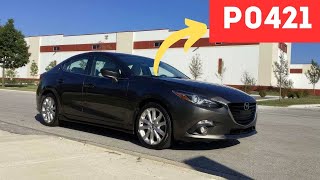
Typical fix: Reprogramming (reflashing) the Powertrain Control Module (PCM) 🎬 Watch: A quick overview of common P0421 fixes for Mazda. with updated software. This must be done by a dealer or a qualified shop with Mazda's Diagnostic System (M-MDS).
Est. part cost: $0 (Software) - Failing Warm-Up Catalytic Converter (WU-TWC) 🟡 Medium Probability This is the component the code is designed to monitor. Over time, converters can become contaminated or degrade, especially on higher-mileage vehicles (over 100,000 miles). The WU-TWC is integrated into the exhaust manifold on the CX-5.
How to confirm: This should only be suspected after the PCM software has been confirmed to be up-to-date. A technician can use a scan tool to check Mode 6 data as per the TSB. If the 'Catalyst monitor bank 1' value is 'less than 1', the WU-TWC is likely deteriorated.
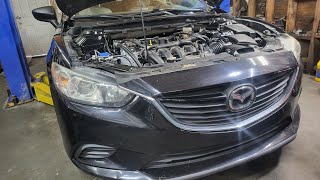
Typical fix: Replacement of the exhaust manifold assembly, which includes the integrated catalytic converter. 🎬 See this walkthrough for replacing the exhaust manifold assembly.
Est. part cost: $900-$1700 - Exhaust Leak ⚪ Low Probability
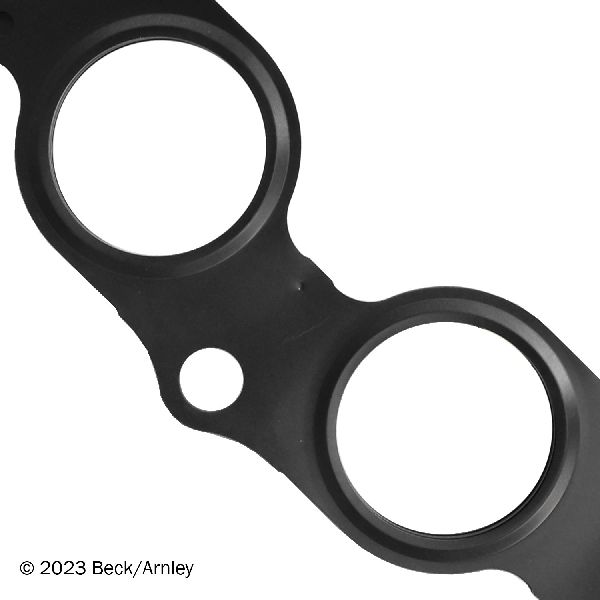
How to confirm: Visually inspect the exhaust manifold and gaskets for black soot marks or cracks. Listen for a ticking noise when the engine is cold. A smoke machine test is the most effective way to find small leaks between the cylinder head and the upstream A/F sensor.
Typical fix: Replace the leaking gasket or repair the cracked component.
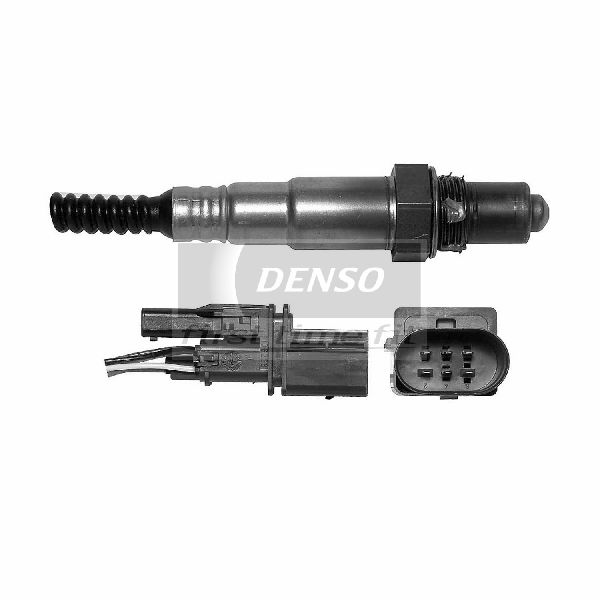
Est. part cost: $20-$100 - Failing Upstream Oxygen (A/F) Sensor ⚪ Low Probability The TSB notes that the PCM logic may falsely interpret signals from the A/F sensor. While the sensor itself may not be faulty, a truly 'lazy' or slow-to-respond sensor can also cause this code, especially on higher mileage vehicles.
How to confirm: Use a scan tool to graph the sensor's voltage or current. A healthy upstream sensor should show rapid fluctuations. A slow or flat-lining sensor is faulty. Using an OEM Denso sensor is highly recommended for this platform.
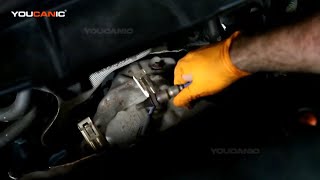
Typical fix: Replace the upstream Air/Fuel ratio sensor. The OEM part number is PE01-18-8G1A. 🎬 Watch: Step-by-step guide to replacing the upstream oxygen sensor.
Est. part cost: $250-$400
Rare But Worth Checking
- A faulty PCM that fails to retain the software update. One owner on a forum reported a dealer having to re-flash the PCM multiple times because it kept 'dropping' the update, suggesting a potential hardware failure in the PCM itself.
Diagnosis Steps
- Check for TSBs: The first and most important step. Contact a Mazda dealer with your VIN or use an online service to see if TSB 01-010-16 applies to your vehicle (2014-15 2.5L A/T, or 2016 with VIN < JM3KE**656820).
- Reprogram PCM: If the TSB is applicable, have the dealer reprogram the PCM. This resolves the issue in a majority of cases and may be covered by the emissions warranty.
- Perform Mode 6 Test: If the code returns, a technician should use the Mazda M-MDS tool to check Mode 6, OBDMID: 21, Test ID: 82 ('Catalyst monitor bank 1'). If the value is 'less than 1', the catalytic converter is likely faulty. If it is '1 or higher', the converter is likely okay, and other causes should be investigated.
- Inspect for Exhaust Leaks: Thoroughly inspect the exhaust system for any leaks between the cylinder head and the catalytic converter. An air leak can trick the A/F sensor and cause a false code.
- Analyze Sensor Data: Use a capable scan tool to graph the upstream (A/F) and downstream (O2) sensor data. The upstream sensor should switch rapidly, while the downstream should be relatively stable. If the downstream sensor mimics the upstream, it confirms low catalyst efficiency.
- Test the Catalytic Converter: If all other causes are ruled out, the catalytic converter is the likely culprit. The Mode 6 test is the most direct confirmation before committing to the expensive replacement.
Parts You'll Likely Need
- PCM Reprogramming Service — This is the most common required fix, as specified by Mazda's TSB for false P0421 codes on this vehicle.
Trusted brands: Mazda Dealership Service
OEM price range: $100-$250
Aftermarket price range: N/A - Exhaust Manifold with Integrated Catalytic Converter
(OEM #PY47-20-50X (Confirmed for 2.5L Mazda 6, likely same/similar for CX-5))— If the PCM reflash does not work and the converter is confirmed to be faulty, it must be replaced. On the CX-5, it is part of the exhaust manifold assembly.
Trusted brands: Mazda (OEM), Walker Exhaust, MagnaFlow
OEM price range: $985-$1700
Aftermarket price range: $500-$900 - Upstream Air/Fuel Ratio Sensor
(OEM #PE01-18-8G1A (supersedes PE01-18-8G1))— A failing sensor can send incorrect data, leading to a false code. It's a less common cause but a possible one if the TSB doesn't apply or doesn't fix the issue.
Trusted brands: Denso (OEM supplier), Mazda (OEM)
OEM price range: $250-$400
Aftermarket price range: $150-$250
Technical Service Bulletins (TSBs) & Recalls

- 01-010-16 (supersedes 01-016/15, NHTSA ID: 10093127): States that some vehicles may show a check engine light with DTC P0421 without any performance issues, caused by improper PCM control logic falsely detecting an A/F sensor error. The fix is a PCM software update. It provides specific VIN/production date cutoffs for affected Mazda3, Mazda6, and CX-5 models and details a Mode 6 test to verify catalyst condition.
Platform-Specific Known Issues
- A significant number of 2014-2016 CX-5 models with the 2.5L engine are affected by a PCM software issue that incorrectly triggers the P0421 code. This is detailed in Mazda's TSB #01-010-16.
- Owners on forums report that dealers sometimes perform the PCM update, but the code returns, eventually requiring a catalytic converter replacement, especially on vehicles with over 100,000 miles.
- One owner on Reddit reported their dealer struggled to get the PCM software update to 'stick', with it reverting multiple times, indicating a possible deeper issue with the PCM itself or improper procedure by the technician.
Mechanic-Grade Diagnostic Values
- Mode 6 Catalyst Monitor Test — expected: A value of '1 or higher'. Failure: A value of 'less than 1' indicates the Warm-Up Three-Way Catalyst (WU-TWC) has deteriorated.
- Upstream A/F Sensor Current (PID: O2S11) — expected: Approximately -39 µA at idle after the engine is fully warmed up.. Failure: Significant deviation from this value may indicate a sensor or wiring issue.
- Exhaust Backpressure Test (at O2 sensor port) — expected: Should not exceed 1.0 PSI at idle.. Failure: Exceeding 3.0 PSI at 2500 RPM indicates a restriction, likely a clogged catalytic converter.
- Engine Vacuum Test (at intake manifold port) — expected: 16-21 inHg at idle. When revved to 2500 RPM, vacuum should dip and then return to near the baseline idle reading within a few seconds.. Failure: If the vacuum reading is low or continues to drop while holding at 2500 RPM, it indicates an exhaust restriction.
- Catalytic Converter Temperature Differential — expected: The outlet pipe temperature should be significantly hotter (e.g., 100-200°F) than the inlet pipe temperature after the engine is at operating temperature.. Failure: Similar or cooler outlet temperature suggests the catalyst is not functioning.
Hidden / Shadow Codes Worth Checking
- Mode 6, OBDMID: $21, TID: $82: This is not a DTC but a specific onboard diagnostic test result for 'Catalyst monitor bank 1'. It provides a raw data value representing the catalyst's efficiency, which the PCM uses to determine if it should set the P0421 code. (see via Requires a professional scan tool capable of reading Mode 6 data, such as the dealer's Mazda M-MDS.)
Scan Tool Commands That Help
- Mazda M-MDS / IDS: Module Reprogramming — This function is required to load the updated software file into the Powertrain Control Module (PCM) to correct the control logic error described in TSB 01-010-16. This is the primary fix for the false P0421 code on affected vehicles.
Real Owner Repair Stories
- Reddit user post on r/CX5 and r/Cartalk (2015 Mazda CX-5 Sport) — Intermittent P0421 Check Engine Light, sluggish performance.
❌ Tried (didn't work) Dealer performed the TSB PCM software update, but the code returned after two weeks., Dealer re-applied the update, claiming it hadn't 'stuck' the first time; code returned again., Dealer confirmed the PCM 'dropped' the firmware update again while in their possession.
✅ What actually fixed it The story highlights a rare failure mode where the PCM itself appears to be faulty and unable to retain the necessary software update. The final resolution was not posted by the owner, but the diagnosis points to needing a new PCM rather than a catalytic converter. - Reddit user post on r/mazda (2015 Mazda 3 Sport 2.0L (platform mate with same engine family)) — P0421 code appeared, was reset, and returned a week later.
❌ Tried (didn't work) Dealer performed the PCM software update, but the light returned after 50km.
✅ What actually fixed it The owner filled the tank with 91 octane fuel, changed the spark plugs (which were due), and added a bottle of Duralube catalytic converter cleaner to the fuel. The light went out on its own after 100km and had not returned after 300km. - Mazdas247 forum user (2013 CX-5 with 152k miles) — Persistent P0421 code.
❌ Tried (didn't work) Replacement of catalytic converter with an aftermarket unit., Replacement of both oxygen sensors., Replacement of ignition coils and spark plugs.
✅ What actually fixed it The issue was only resolved after replacing the exhaust manifold with an integrated OEM-quality catalytic converter. The forum discussion strongly suggested the previously used aftermarket parts were not sufficient to meet the Mazda PCM's strict monitoring parameters.
"I Checked Everything" — The Actual Cause
- The scenario described in TSB 01-010-16 is the primary example for this vehicle. An owner could have a perfect exhaust system with no leaks (smoke test clean), and perfectly functioning sensors and catalytic converter, yet still get a P0421 code. The actual cause is an 'improper control logic' within the PCM software, which falsely interprets sensor data.
OEM Part Supersession History
PE01-18-8G1, PEDD-18-8G1→PE01-18-8G1A— Standard part revision and consolidation.
Heads up: These part numbers refer to the upstream Air/Fuel Ratio sensor. While physically similar, using older or incorrect revisions may cause performance issues. It is critical to use the latest specified part number.
Model Year Variations Within This Range
- 2016: The TSB for the P0421 software issue only applies to 2016 models with a VIN lower than JM3KE**656820, which corresponds to a production date before April 8, 2015. 2016 models produced after this date should already have the updated PCM logic.
- 2016 vs 2014-2015: The 2016 model year received a significant facelift. While the core powertrain was unchanged, it featured an updated interior, a new infotainment system (Mazda Connect), an electronic parking brake, and improved sound insulation. These changes do not affect the root cause of P0421 but are a key differentiator for the model year.
Helpful Videos
Used OEM Parts in Stock



New Aftermarket Parts Available


The information in this article is provided for general reference and educational purposes only. Vehicle specifications, procedures, and part compatibility can vary by production date, trim level, and region. Always consult your vehicle's factory service manual and verify part numbers before purchasing or performing repairs. Safety-critical components such as airbags, seat belts, and braking systems should be installed by a qualified professional.
- Mazda CX-5:
- 🎬 Helpful Videos
- 🛍️ Shop This Part
- What's Unique About the 2014-2016 Mazda CX-5
- Diagnostic Flowchart
- Symptoms You May Notice
- Most Likely Causes
- Rare But Worth Checking
- Diagnosis Steps
- Parts You'll Likely Need
- Technical Service Bulletins (TSBs) & Recalls
- Platform-Specific Known Issues
- Mechanic-Grade Diagnostic Values
- Hidden / Shadow Codes Worth Checking
- Scan Tool Commands That Help
- Real Owner Repair Stories
- "I Checked Everything" — The Actual Cause
- OEM Part Supersession History
- Model Year Variations Within This Range
- 🎟️ Get 5% Off