

P0420 on 2015-2018 Volkswagen Jetta: Catalyst Efficiency Causes & Fixes
P0420 on a 2015-2018 VW Jetta means the catalytic converter's efficiency is low. While this often points to a failed catalytic converter, it's crucial to first check for exhaust leaks (especially the flex pipe) and failing oxygen sensors to avoid a costly misdiagnosis. Underlying issues like oil consumption can also be the root cause.
- P0420 means the catalytic converter on Bank 1 is not operating at minimum efficiency.
- Do not immediately replace the catalytic converter. First, rule out a bad downstream O2 sensor and any exhaust leaks between the two sensors.
- Use a scan tool to watch live O2 sensor data; this is the best way to determine if the converter is truly bad.
- Always fix underlying issues like engine misfires or rich/lean conditions before replacing a catalytic converter, or the new one will fail as well.
- You can drive with a P0420 code, but your vehicle will pollute more and will not pass an emissions inspection.
What's Unique About the 2015-2018 Volkswagen JETTA

For the 2015-2018 VW Jetta (A6/Mk6 generation), the P0420 code is a very common issue. A primary suspect, often cited by owners in forums like VWVortex and Reddit, is a leak in the exhaust flex pipe located before the catalytic converter. This leak introduces oxygen that fools the downstream O2 sensor. Furthermore, the direct-injected turbocharged engines (1.4T EA211 and 1.8T/2.0T EA888) can be prone to oil consumption issues. This burning oil can contaminate and clog the catalytic converter, leading to premature failure and a P0420 code.
Diagnostic Flowchart

Tap your situation to follow the diagnostic path that matches what you're seeing on this vehicle.
Symptoms You May Notice

- Check Engine Light is on
- Reduced fuel economy
- Poor acceleration or engine performance if the converter is clogged
- A sulfur or "rotten egg" smell from the exhaust, indicating an overheating or failing converter due to unburnt fuel.
- Audible exhaust leak noise (ticking or hissing), especially when the engine is cold, pointing to a cracked manifold or bad flex pipe.
- Replacing the catalytic converter when the actual problem is a less expensive faulty oxygen sensor or an exhaust leak.
- Replacing oxygen sensors when the catalytic converter has already been damaged by a long-term engine misfire or rich running condition.
- Using a cheap, non-approved 'O2 spacer' or 'extender' to trick the sensor. This does not fix the underlying problem and will cause the vehicle to fail any visual emissions inspection.
Most Likely Causes

- Failed Catalytic Converter 🔴 High Probability Catalytic converters can fail from age (typically over 100,000 miles) or from contamination due to other engine problems like burning oil or coolant, which is a known issue on some VW engines. Unresolved misfires can also quickly destroy a converter by sending raw fuel into it.
How to confirm: After confirming O2 sensors and the exhaust system are good, use a scan tool to watch live O2 sensor data. If the downstream sensor (Sensor 2) voltage graph mimics the upstream sensor (Sensor 1) 🎬 Watch: How to diagnose P0420 using live scan tool data., the converter is not working. An infrared temperature gun can also be used; a healthy, warm converter should have an outlet temperature significantly hotter (e.g., by 100°F) than the inlet. If the temperatures are similar or the outlet is cooler, the converter is not functioning.
Typical fix: Replace the catalytic converter. Some TSBs, like 01-20-01 for other VW models, mandate an ECM software update at the same time to prevent future failure.
Est. part cost: $400-$1200 - Exhaust System Leak 🟡 Medium Probability The flexible pipe section of the exhaust is a well-documented weak point on this Jetta generation. Cracks or holes develop, allowing outside air to be drawn into the exhaust stream between the upstream and downstream O2 sensors. This extra oxygen fools the downstream sensor and triggers the P0420 code.
How to confirm: Perform a visual inspection for soot trails or cracks, especially around the exhaust manifold and flex pipe. A professional smoke test is the most effective way to pinpoint a leak. Some owners find leaks by spraying soapy water on the cold exhaust and looking for bubbles when the car is started.
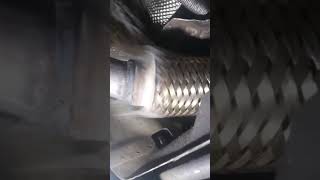
Typical fix: Repair the leak by replacing the gasket, the entire flex pipe section, or by welding 🎬 See this budget-friendly no-weld flex pipe repair guide. the crack.
Est. part cost: $20-$300 - Faulty Downstream Oxygen (O2) Sensor 🟡 Medium Probability The rear O2 sensor can become 'lazy' or fail with age and contamination, sending incorrect data to the ECM that falsely indicates a bad converter. It's a common misdiagnosis to replace the expensive converter when only the sensor is at fault.
How to confirm: Using a scan tool, observe the live data for the downstream O2 sensor (Bank 1, Sensor 2). If the voltage is stuck (e.g., at 0.45V), flat-lined, or responds very slowly compared to the upstream sensor, the sensor is likely bad.
Typical fix: Replace the downstream (post-catalyst) oxygen sensor. A common OEM part number for the 1.4T engine is 04E906262EF.
Est. part cost: $50-$180 - Engine Misfires or Fuel System Issues ⚪ Low Probability Worn spark plugs, failing ignition coils, or leaky fuel injectors can send unburned fuel into the exhaust. This raw fuel superheats the catalytic converter, causing it to melt internally and fail. These issues should be addressed immediately to prevent destroying a new converter.
How to confirm: Check for other trouble codes related to misfires (P0300-P0304) or fuel trim (P0171, P0172). Address these codes first before diagnosing the P0420.
Typical fix: Perform a tune-up: replace spark plugs, ignition coils, or faulty fuel injectors as needed.
Est. part cost: $50-$400
Rare But Worth Checking
- ECM Software Issue: In some cases, the parameters for triggering the P0420 code are too sensitive. A Technical Service Bulletin (TSB) may be available to update the ECM software. TSB 01-20-01, while for the Atlas, shows VW's practice of pairing catalyst replacement with a software update to reduce thermal stress. Check with a dealer for any applicable updates for your Jetta's VIN.
- High Oil Consumption: Some VW engines are known for consuming oil. This oil can pass through the combustion chamber and into the exhaust, where it coats the catalytic converter's internal honeycomb structure, clogging it and rendering it ineffective. If you are frequently adding oil, this could be the root cause of your P0420 code.
Diagnosis Steps

- Check for any other stored trouble codes with an OBD-II scanner. If codes for misfires (P030x), fuel trim (P0171/P0172), or oxygen sensors are present, diagnose and fix those first.
- Visually inspect the entire exhaust system from the engine to the tailpipe. Look for black soot marks, cracks, or rust, which indicate a leak. Pay extremely close attention to the woven steel flex pipe section, as it is a common failure point.
- If a leak is suspected but not visible, perform a smoke test. This involves feeding pressurized smoke into the exhaust system and watching where it escapes.
- Use a scan tool with live data capability. Graph the voltage of the upstream (Bank 1 Sensor 1) and downstream (Bank 1 Sensor 2) O2 sensors.
- While holding the engine at a steady 2,000-2,500 RPM, observe the graphs. The upstream sensor's voltage should fluctuate rapidly between approximately 0.1V and 0.9V. The downstream sensor's voltage should remain relatively stable and steady (e.g., around 0.6V-0.8V).
- If the downstream sensor's graph mirrors the upstream sensor's rapid fluctuations, the catalytic converter has failed.
- If the downstream sensor's voltage is flat-lined (e.g., 0V or 1V) or very slow to respond, the sensor itself is likely the problem.
- Use an infrared temperature gun to check the converter's temperature. After the engine is fully warmed up, the outlet pipe of the converter should be at least 100°F (38°C) hotter than the inlet pipe. If not, the catalyst is not working.
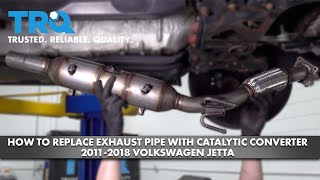
- If all other possibilities are ruled out, the catalytic converter is the confirmed cause 🎬 Watch: Step-by-step walkthrough for replacing the catalytic converter. of the fault.
Parts You'll Likely Need
- Catalytic Converter
(OEM #5Q0254502X (for 1.8T, check dealer with VIN))— This is the most common, and most expensive, fix for a persistent P0420 code after other causes are ruled out.
Trusted brands: Walker, MagnaFlow, Bosal, Eastern Catalytic
OEM price range: $800-$1500
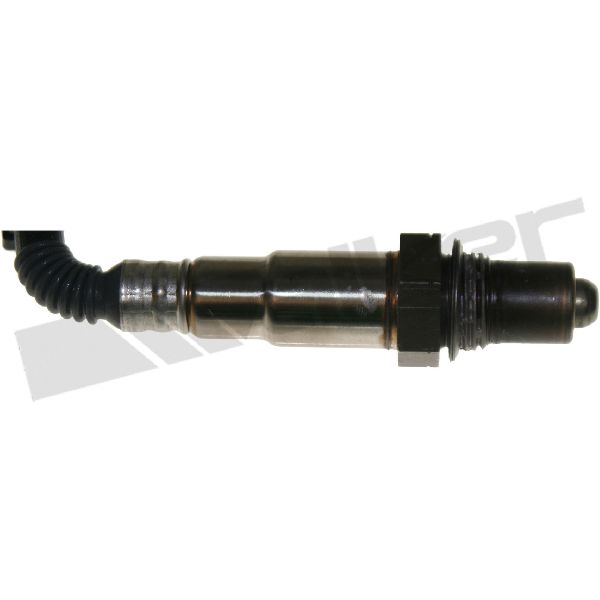
Aftermarket price range: $300-$800 - Downstream Oxygen Sensor (Post-Catalyst)
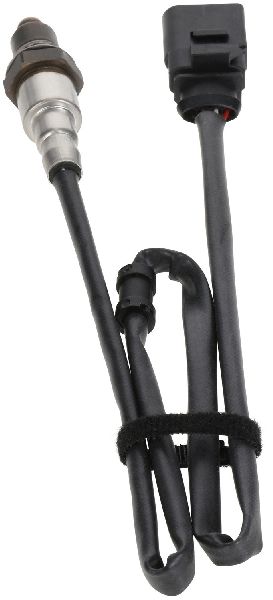
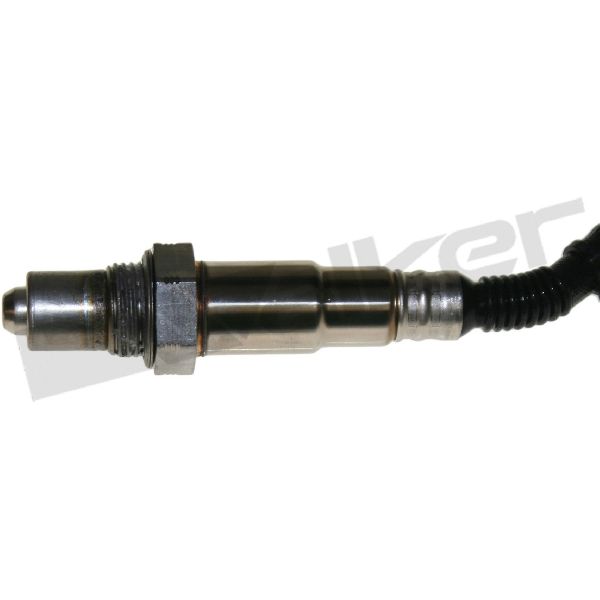
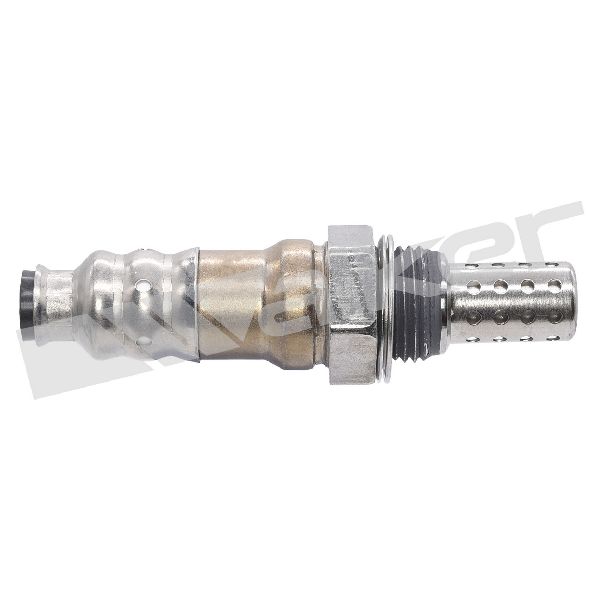
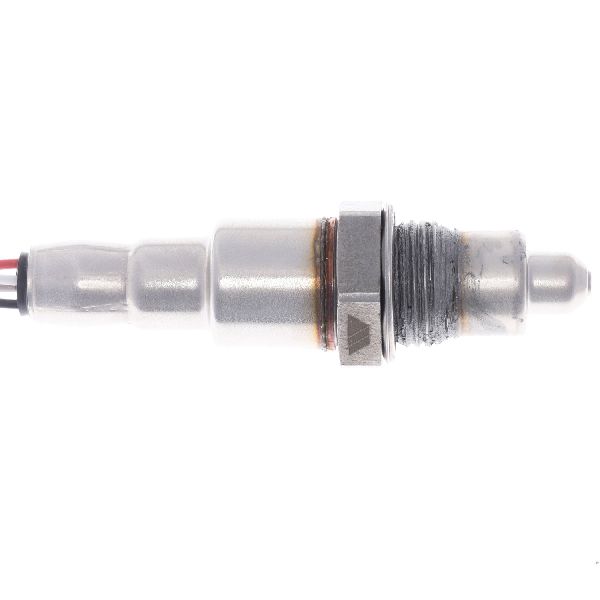
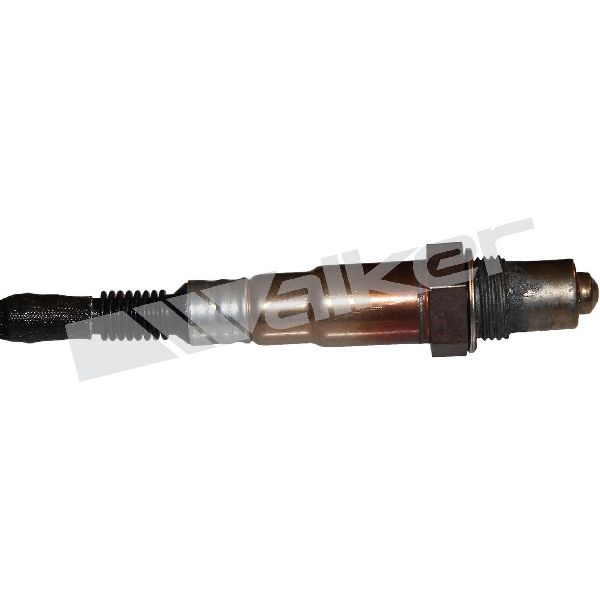
(OEM #04E906262EF (for 1.4T CZTA engine))— A faulty rear O2 sensor can send incorrect readings, falsely triggering the P0420 code. It is a common misdiagnosis to replace the converter when only the sensor is bad.
Trusted brands: Bosch (e.g., 18179), NTK (e.g., 23162), Denso
OEM price range: $318-$445
Aftermarket price range: $50-$180
Related Codes That Often Appear With This One
- P0430 — This is the same efficiency code but for Bank 2. While not applicable to most 4-cylinder Jettas, it's often mentioned in the same TSBs.
- P0300-P0304 — These are misfire codes. An engine misfire can dump raw fuel into the exhaust, destroying the catalytic converter.
- P0171 — System Too Lean. A lean condition, potentially caused by an exhaust leak before the upstream O2 sensor, can increase temperatures in the converter and damage it over time.
- P0172 — System Too Rich. A rich condition sends unburnt fuel to the converter, causing it to overheat and fail. This is a primary cause of catalyst failure.
- P0463 / B103E1B — A VW Technical Service Bulletin mentions that P0420 can appear alongside these codes. [VIN-4-A-PIN Sept (2017 EQUIPMENT, dated 2017-09-07)]
Technical Service Bulletins (TSBs) & Recalls
- VIN-4-A-PIN Sept (2017 EQUIPMENT, dated 2017-09-07): MIL-on P0420 and/or P0430 in the ECM, MIL-on P0463 and B103E1B stored
- 01-20-01 (dated 04/21/2020): Catalyst Replacement with Updated Programming DTCs P0420 or P0430. This TSB for the VW Atlas details a service solution involving improved catalytic converter hardware and an ECM software update to reduce thermal stress.
Platform-Specific Known Issues
- A Volkswagen TSB (01-20-01) was issued for some 2018-2019 Atlas models for P0420/P0430, indicating a need for improved catalytic converter hardware and an ECM software update to reduce thermal stress. The bulletin mandates that both the hardware and software update be performed together. This indicates a potential pattern of similar issues and solutions that could apply to other VW models.
- High oil consumption on the 1.8T/2.0T EA888 engines can lead to oil ash clogging the catalyst, causing a P0420 code. This is a separate issue from a standard catalyst failure and points to a larger engine problem.
Mechanic-Grade Diagnostic Values
- Long/Short Term Fuel Trim — expected: -5% to +5%. Failure: Values consistently outside the normal range indicate a fuel mixture problem that must be fixed before addressing the P0420.
- Downstream O2 Sensor Heater Circuit Resistance — expected: Approximately 5 to 15 ohms (varies by manufacturer). Failure: A reading of 0 ohms (short circuit) or infinite/OL (open circuit) indicates a failed heater element within the sensor, requiring sensor replacement.
- Downstream O2 Sensor Voltage (steady state) — expected: Relatively stable between 0.4V and 0.8V (e.g., 650mV).. Failure: Voltage fluctuates rapidly, mimicking the upstream sensor, or is stuck high/low.
Hidden / Shadow Codes Worth Checking
- 16804 / 001056: These are Volkswagen-specific identifiers for the generic P0420 code, representing "Catalyst System; Bank 1: Efficiency Below Threshold". (see via Professional VW/Audi scan tools like VCDS (VAG-COM) or OBDeleven will display these alongside the generic P-code.)
Scan Tool Commands That Help
- VCDS (VAG-COM) / Ross-Tech: Oxygen Sensor Aging Check — This is a specific diagnostic routine to test the response rate and performance of the oxygen sensors, helping to determine if a sensor is 'lazy' or faulty, which could be the true cause of the P0420 code.
Wiring & Ground Locations
- O2 Sensor Connectors — For 1.8T engines, the connectors are often mounted to the firewall on the driver's side of the engine compartment.. Corrosion or damage at these connectors can cause incorrect sensor readings, mimicking a sensor or catalyst failure. They must be inspected for integrity.
- Downstream O2 Connector Access — The downstream sensor's electrical connector is often located above a plastic underbody shield which must be partially removed by taking out 10mm nuts.. Technicians need to know that accessing the connector for testing or replacement requires removing a shield and is not immediately visible.
- Engine/Chassis Grounds — Key grounding points for similar VW models are on the right A-pillar (G638) and in the engine compartment on the right side frame rail (G13). While not guaranteed for this exact model, they are high-probability locations to check for corrosion or looseness.. A poor ground for the ECU or sensor circuits can introduce electrical noise and cause erroneous sensor readings, potentially leading to a false P0420 code.
Real Owner Repair Stories
- Reddit user charles_araujo007 (2016 Jetta 1.8 TSI with 265,000 km) — Car went into 'super limp mode' with EPC light. Repeatedly turning the car off and on no longer cleared the issue.
❌ Tried (didn't work) Restarting the car to clear the EPC light.
✅ What actually fixed it The root cause was discovered to be a melted spark plug and a 'shiit load' of carbon buildup on the intake valves, viewed with a borescope. The confirmed repair for this level of buildup is mechanical cleaning, typically walnut shell blasting. - YouTube channel dave sterl (VW Golf/Jetta (Mk5 shown, but principle applies)) — P0420 code logged.
✅ What actually fixed it A smoke test revealed a break in the exhaust flex pipe between the two O2 sensors. The leak pulled in extra oxygen, tricking the downstream sensor and causing the P0420 code. The fix was to repair the exhaust leak.
Model Year Variations Within This Range
- 2015-2018: The engine lineup changed significantly. The TDI diesel was discontinued after 2015 due to 'Dieselgate'. In 2016, the base 2.0L naturally aspirated engine was replaced by a modern 1.4L Turbo (TSI) from the EA211 family. The 1.8L TSI (EA888 family) was also a common option. These engines have different designs, and parts like O2 sensors are not interchangeable. The 1.4T and 1.8T/2.0T are both direct-injection and prone to carbon buildup issues.
Helpful Videos
We Have This Part in Stock

The information in this article is provided for general reference and educational purposes only. Vehicle specifications, procedures, and part compatibility can vary by production date, trim level, and region. Always consult your vehicle's factory service manual and verify part numbers before purchasing or performing repairs. Safety-critical components such as airbags, seat belts, and braking systems should be installed by a qualified professional.
- Volkswagen JETTA:
- 🎬 Helpful Videos
- 🛍️ Shop This Part
- What's Unique About the 2015-2018 Volkswagen JETTA
- Diagnostic Flowchart
- Symptoms You May Notice
- Most Likely Causes
- Rare But Worth Checking
- Diagnosis Steps
- Parts You'll Likely Need
- Related Codes That Often Appear With This One
- Technical Service Bulletins (TSBs) & Recalls
- Platform-Specific Known Issues
- Mechanic-Grade Diagnostic Values
- Hidden / Shadow Codes Worth Checking
- Scan Tool Commands That Help
- Wiring & Ground Locations
- Real Owner Repair Stories
- Model Year Variations Within This Range
- 🎟️ Get 5% Off