

P0420 on 2017-2023 Subaru Impreza: Catalyst Efficiency Causes & Fixes
On a 2017-2023 Subaru Impreza, the P0420 code almost always points to a failing catalytic converter. While an exhaust leak or a bad rear O2 sensor are possible, the converter itself is the most common failure. A new OEM converter is expensive, often costing over $2,000 for the part alone. Proper diagnosis is crucial to avoid unnecessarily replacing cheaper parts like O2 sensors first.
- The P0420 code on a 2017-2023 Impreza means the catalytic converter's efficiency is below standard.
- The most common fix is replacing the catalytic converter, which is an expensive repair. Always use a high-quality or OEM part for the best results.
- Before replacing the converter, always rule out cheaper possibilities like an exhaust leak or a faulty rear oxygen sensor.
- Proper diagnosis using a scan tool to graph sensor data is critical to avoid replacing the wrong parts.
- Your vehicle will not pass an emissions test with an active P0420 code.
What's Unique About the 2017-2023 Subaru IMPREZA

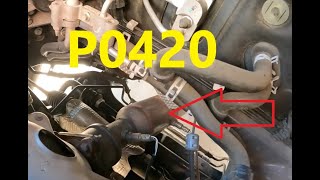
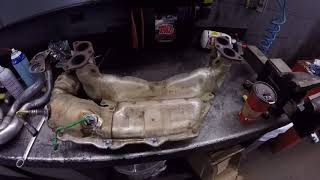
The 2017-2023 Subaru Impreza, part of the fifth generation, uses the 2.0L FB20D direct-injection engine. Like many modern Subarus, these vehicles are known for having sensitive emissions monitoring systems. The P0420 code is notoriously common across the Subaru lineup 🎬 Watch: Everything you need to know about Subaru P0420 codes., and often, the catalytic converter itself is the point of failure, sometimes at lower mileage than owners expect (e.g., around 77,000 miles). Some forum discussions speculate that issues like oil consumption, even if minor, could contribute to premature poisoning and failure of the catalytic converter's precious metals over time. While software updates have been issued for some Subaru models to adjust the sensitivity of this code, the most frequent repair remains a hardware replacement.
Diagnostic Flowchart
Tap your situation to follow the diagnostic path that matches what you're seeing on this vehicle.
Symptoms You May Notice
- Check Engine Light is on
- Cruise control may be disabled (a common Subaru feature when a CEL is active)
- Possible reduction in fuel economy
- In rare cases of a clogged converter, loss of engine power or a sluggish feeling.
- Replacing the oxygen sensors when the catalytic converter is the actual point of failure. This is a very common and costly mistake, as many owners and shops replace the cheaper parts first without confirming the converter's failure via live data.
- Replacing the catalytic converter when a small, hard-to-find exhaust leak between the O2 sensors is the true cause.
- Using a cheap, non-compliant aftermarket catalytic converter which fails to meet the Subaru ECM's strict efficiency monitoring parameters, causing the code to return quickly.
Most Likely Causes

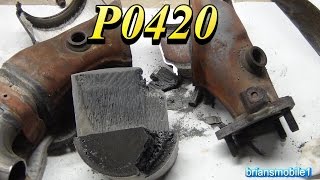
- Failed Catalytic Converter 🔴 High Probability Subaru's catalytic converters are known to be a common failure point leading to this code. Some sources suggest a potential weakness in the design or materials, leading to premature degradation. The converter can become contaminated by oil or coolant, or simply wear out.
How to confirm: Use a scan tool to graph the upstream and downstream O2 sensor voltages. If the downstream sensor's voltage graph mimics the upstream sensor's, the converter is not functioning. An infrared thermometer can also be used to check for a temperature increase across the converter; the outlet should be significantly hotter than the inlet on a properly functioning, warmed-up converter.
Typical fix: Replace the front exhaust pipe assembly, which includes the integrated catalytic converter. Using an OEM part is strongly recommended to ensure the code does not return, as aftermarket converters have mixed success rates on Subarus.
Est. part cost: $1200-$2500+ - Failed Rear (Downstream) Oxygen Sensor 🟡 Medium Probability Oxygen sensors are wear items with a finite lifespan. A lazy or faulty sensor can send incorrect data to the ECM, falsely triggering the P0420 code. However, it's more common for the sensor to be correctly reporting the inefficiency of the catalyst.
How to confirm: Test the sensor's response time and voltage output with a scan tool. A healthy downstream sensor should show a relatively stable, steady voltage on a warm engine at a steady RPM. If it's stuck at a certain voltage or fluctuating rapidly like the front sensor, it may be faulty, but this pattern is also the primary indicator of a failed converter.
Typical fix: Replace the rear (post-catalyst) oxygen sensor. This is often attempted first due to lower cost, but frequently does not solve the P0420 on this platform.
Est. part cost: $80-$200 - Exhaust Leak 🟡 Medium Probability Leaks in the exhaust system, particularly between the front and rear O2 sensors or at the manifold gaskets, can introduce extra oxygen into the exhaust stream. This skews the sensor readings and can trick the ECM into thinking the catalyst is inefficient.
How to confirm: Perform a visual inspection of the exhaust manifold, gaskets, and pipes for soot trails or cracks. A smoke test, where smoke is forced into the exhaust system, is the most effective way to pinpoint small leaks. A shop vacuum on its 'blow' setting can also be used to pressurize the system for a soapy water test.
Typical fix: Replace the leaking gasket (e.g., donut gasket) or repair/replace the cracked pipe section.
Est. part cost: $20-$150
Rare But Worth Checking
- Engine Misfires or Rich/Lean Running Condition: If the engine is running too rich (too much fuel), it can send unburned fuel into the exhaust, overheating and damaging the catalytic converter over time. This is usually accompanied by other codes (e.g., misfire codes P030x, fuel trim codes P0171/P0172), which should be addressed first as per TSB 09-110-23R.
- Loose Air Intake / Un-metered Air: In one documented case, a P0420 code was resolved by properly securing the engine air filter box, which was missing its clips. The theory was that un-metered air was entering the system, creating a fuel trim issue that the ECM interpreted as a catalyst problem.
Diagnosis Steps

- Read the code with an OBD-II scanner to confirm P0420 is present. Per TSB 09-110-23R, check for any other codes first, especially P0300-P0304 (misfires), P0171/P0172 (fuel trim), or any O2/AF sensor circuit codes. Address those codes before proceeding with P0420 diagnosis.
- Check engine oil level and condition. Low oil or contamination can be related to issues that damage a catalytic converter.
- Thoroughly inspect the exhaust system for any leaks from the engine block all the way to the rear O2 sensor. Pay close attention to manifold gaskets and flange connections. A smoke test is the most reliable method.
- With the engine fully warmed up and at a steady 2,500 RPM, use a scan tool with live data graphing capabilities to observe the voltage of the front (Bank 1, Sensor 1) and rear (Bank 1, Sensor 2) oxygen sensors.
- Analyze the graphs: The front A/F sensor should show rapid fluctuations. The rear O2 sensor should show a relatively steady and stable voltage (often cited as ~0.7-0.8V on a good converter). If the rear sensor's graph mirrors the front sensor's rapid fluctuations, the catalytic converter has failed and is no longer storing oxygen.
- If the rear O2 sensor's signal is flat, stuck, or unresponsive, test the sensor itself before condemning the converter.
- If the sensors and exhaust system check out, the catalytic converter is the most likely culprit. The TSB directs technicians to replace the front exhaust pipe if other diagnostics pass.
Parts You'll Likely Need

- Catalytic Converter
(OEM #44620AF010 (This is a common part number for the front pipe assembly, but always verify with VIN))— This is the most common failure item for a P0420 code on this vehicle. The internal materials degrade over time and lose their ability to effectively treat exhaust gases. It is typically sold as a complete front pipe assembly.
Trusted brands: Subaru (OEM), MagnaFlow, Walker Exhaust
OEM price range: $2000-$2500+
Aftermarket price range: $400-$1600 - Rear Oxygen Sensor
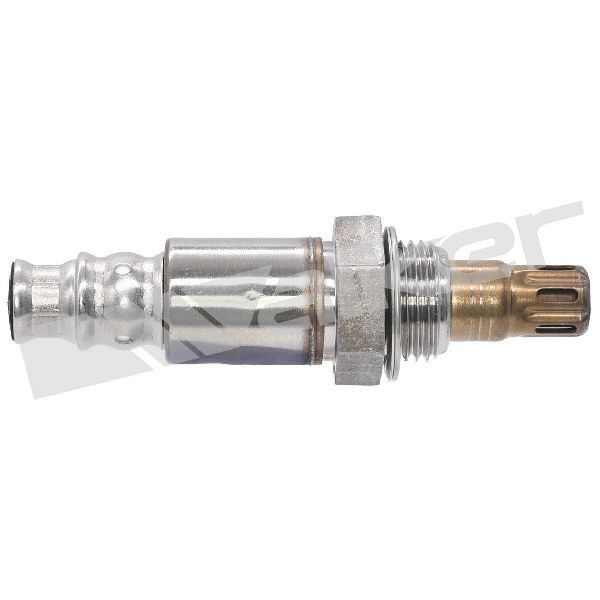
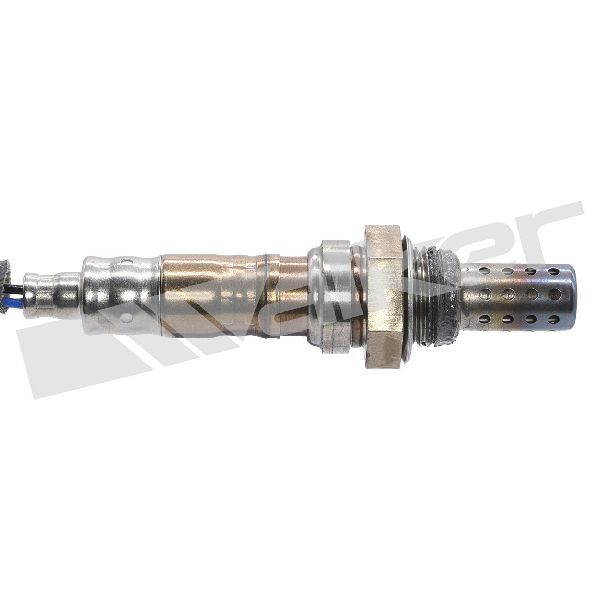
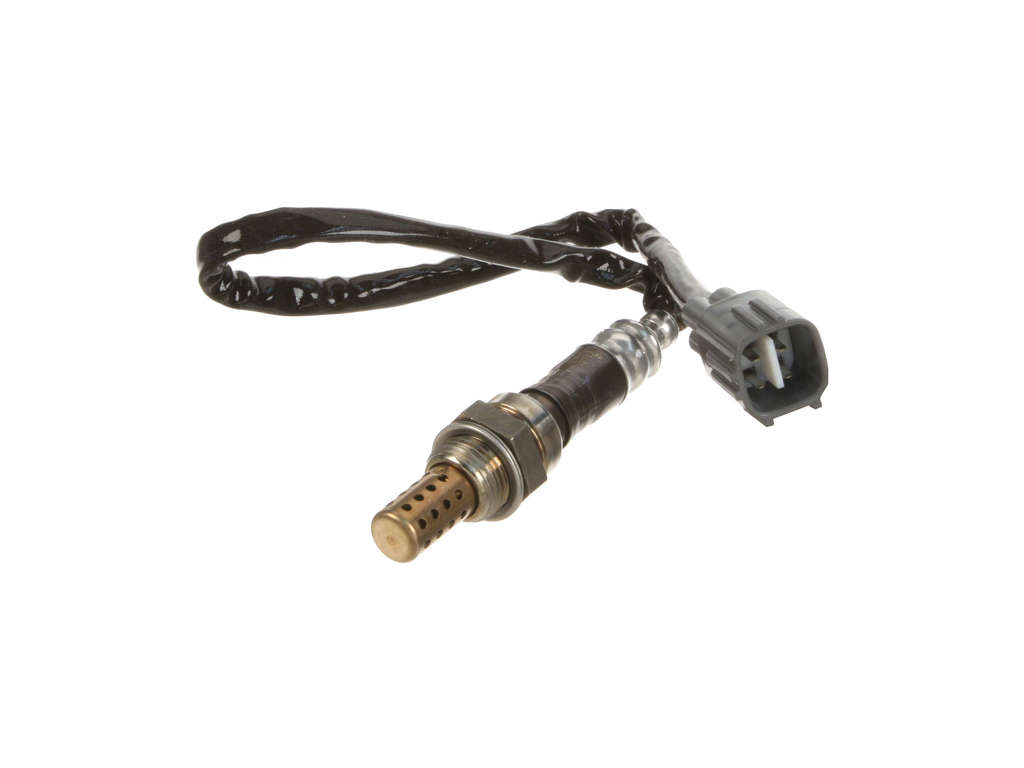
(OEM #22690AA850 (Always verify with VIN))— This sensor is responsible for monitoring the converter's efficiency. If it becomes lazy or fails, it can provide false readings that trigger the P0420 code. It's often replaced as a primary diagnostic step due to its lower cost, though it's often not the root cause.
Trusted brands: Denso (OEM supplier), Bosch, NGK/NTK
OEM price range: $120-$185
Aftermarket price range: $50-$120
Technical Service Bulletins (TSBs) & Recalls
- Bulletin #09-110-23R: Announces diagnostic service procedures for DTC P0420. It applies to 2017-2023 Impreza and Crosstrek models, among others. The procedure involves checking for other codes first, verifying oil level, and then performing specific road tests and sensor checks before recommending converter replacement.
Platform-Specific Known Issues
- Subaru issued Technical Service Bulletin (TSB) #09-110-23R, which provides updated diagnostic procedures for the P0420 code, indicating it's a recognized issue by the manufacturer. The TSB prioritizes checking for other DTCs before condemning the converter.
- The check engine light being triggered by P0420 will almost always disable the cruise control system as a safety precaution, a well-known Subaru feature.
- The Federal Emissions Warranty covers the catalytic converter for 8 years or 80,000 miles. Owners experiencing this issue near that threshold should contact a dealer.
Mechanic-Grade Diagnostic Values
- Long-Term and Short-Term Fuel Trims (LTFT/STFT) — expected: Should ideally be between -10% and +10% at steady RPM.. Failure: Consistently high positive fuel trims (e.g., >15-20%) at idle that decrease as RPMs rise to ~2500 RPM can indicate a vacuum leak, which can contribute to a P0420 code. If long-term fuel trims fluctuate in a pattern similar to short-term trims, it can suggest a defective catalytic converter.
- Downstream O2 Sensor Voltage (at steady 2,500 RPM, engine warm) — expected: A relatively constant, stable voltage. While some sources mention a general ~0.5V to 0.8V, the key is stability, not a specific number.. Failure: The voltage fluctuates rapidly, mimicking the sine-wave pattern of the upstream Air/Fuel sensor. This indicates the catalyst is not storing oxygen.
- Rear Oxygen Sensor Heater Circuit Resistance — expected: While specific values for the FB20D are not readily available in these searches, a typical test on a Subaru O2 sensor involves checking resistance across the two heater circuit pins. A good sensor will have a specific resistance value (e.g., older EJ253 coils are ~12,800 ohms), whereas an open circuit (infinite resistance) or a short indicates a failed heater.. Failure: An 'OL' (Over Limit/Open Loop) reading on a multimeter, or zero resistance, indicates a faulty heater circuit within the sensor.
Hidden / Shadow Codes Worth Checking
- Mode $06, TID $21: This is not a 'shadow code' but a standard OBD-II diagnostic monitor for catalyst efficiency. A technician can view the raw test data the ECU uses to determine if the catalyst passes or fails its efficiency test. (see via A professional scan tool that can access OBD-II Mode $06 data. The tool will show the test ID (TID), component ID (CID), the measured value, and the min/max allowable limits. A value outside the limits indicates a failure that will set P0420.)
Scan Tool Commands That Help
- Subaru Select Monitor (SSM III or SSM4): Catalyst Diagnosis / Efficiency Test — This is a dealer-level function used to actively test the catalyst. The tool may guide the technician through specific driving cycles (e.g., holding certain RPMs) to run the monitor. One unique Subaru diagnostic involves converting the rich-to-lean switching time of the rear O2 sensor into a 'precious metal loading life left' value in grams, which is then compared to a table to determine catalyst health.
Wiring & Ground Locations

- Main Engine Ground Strap — On the FB20 engine, a primary ground strap connects from the engine block or transmission bell housing to the chassis, often near the starter motor. A common attachment point is one of the top starter bolts.. The ECU and its sensors rely on a clean, solid ground reference. A corroded or loose main engine ground can introduce electrical noise and voltage offsets, potentially causing the ECU to misinterpret sensor readings from the O2 sensors, leading to false codes.
- Intake Manifold Grounds — The ECU itself is often grounded to the intake manifold.. This is the most critical ground reference for the ECU. If the manifold's ground path to the block or chassis is compromised (for example, by non-conductive spacers or corrosion), it can cause a host of bizarre electrical issues, including erroneous sensor-related codes like P0420.
- Rear O2 Sensor Connector — The rear O2 sensor wire runs up from the exhaust pipe to a connector. On many Imprezas, both the front and rear sensor connectors are located in the engine bay on the passenger side, near the air intake box. The rear sensor's connector is typically the all-gray one.. Water intrusion or corrosion in this connector can disrupt the sensor's signal or heater circuit, leading to sensor-specific codes (like P0037/P0038) or contributing to an incorrect reading that triggers P0420.
Real Owner Repair Stories
- Reddit user in r/SubaruForester (2009 Subaru Forester (similar emissions system principles)) — P0420 code, blinking cruise light, solid traction control light.
❌ Tried (didn't work) Ignoring the issue, driving for an extended period.
✅ What actually fixed it The user replaced a very dirty engine air filter. After replacement and driving, the code cleared itself and did not return. The theory is the dirty filter caused a running condition issue that the ECU interpreted as a catalyst problem.
Model Year Variations Within This Range
- 2016+: Starting in 2016, Subaru began using the Subaru Select Monitor 4 (SSM4) diagnostic software, which works with the Denso DST-i or VXDIAG interface. While the diagnostic principles for P0420 remain the same, the specific software and hardware used by dealerships to perform advanced diagnostics (like the catalyst life test) are different from the older SSM3 used on prior generations.
Helpful Videos
We Have This Part in Stock




The information in this article is provided for general reference and educational purposes only. Vehicle specifications, procedures, and part compatibility can vary by production date, trim level, and region. Always consult your vehicle's factory service manual and verify part numbers before purchasing or performing repairs. Safety-critical components such as airbags, seat belts, and braking systems should be installed by a qualified professional.
- Subaru IMPREZA:
- 🎬 Helpful Videos
- 🛍️ Shop This Part
- What's Unique About the 2017-2023 Subaru IMPREZA
- Diagnostic Flowchart
- Symptoms You May Notice
- Most Likely Causes
- Rare But Worth Checking
- Diagnosis Steps
- Parts You'll Likely Need
- Technical Service Bulletins (TSBs) & Recalls
- Platform-Specific Known Issues
- Mechanic-Grade Diagnostic Values
- Hidden / Shadow Codes Worth Checking
- Scan Tool Commands That Help
- Wiring & Ground Locations
- Real Owner Repair Stories
- Model Year Variations Within This Range
- 🎟️ Get 5% Off