

P0420 on 2010-2013 Mazda 3 2.5L: Catalyst Efficiency Causes and Fixes
The P0420 code on a 2010-2013 Mazda 3 2.5L most often indicates a failing catalytic converter. Before replacing this expensive part, it's crucial to first rule out exhaust leaks and faulty oxygen sensors, which are common and much cheaper to fix. Some owners have also reported that ensuring spark plugs are in good condition and using fuel system cleaners can sometimes resolve the issue, suggesting that combustion quality can be a contributing factor.
- P0420 means the catalytic converter on Bank 1 is not efficient.
- The most likely cause is a failed catalytic converter, but ALWAYS check for exhaust leaks and faulty oxygen sensors first.
- An engine misfire or rich fuel condition must be fixed before replacing the converter, or the new one will be damaged.
- On this Mazda 3, the converter is part of the exhaust manifold, making replacement a moderately difficult job.
- Consider asking a dealer if a PCM software update related to emissions is available for your vehicle before performing expensive repairs.
What's Unique About the 2010-2013 Mazda 3
The 2010-2013 Mazda 3 (second generation, or 'BL') with the 2.5L engine integrates the primary catalytic converter directly into the exhaust manifold. This design, often called a 'maniverter', helps it heat up quickly for better emissions control but makes replacement more labor-intensive and expensive than a separate, under-car converter. While generally reliable, these vehicles can be sensitive, and using cheap aftermarket converters may not resolve the check engine light, with some technicians recommending only OEM units for a lasting fix. While a specific TSB for the 2010-2013 2.5L is not widely documented, Mazda has issued TSBs for similar models (like TSB 01-010/16 for P0421 on 2014-2016 models) to address false codes via PCM software updates, so checking for an available update for your specific VIN is a worthwhile diagnostic step.
Symptoms You May Notice
- Check Engine Light is on.
- Reduced engine power and sluggish acceleration.
- A 'rotten egg' or sulfur smell from the exhaust.
- Decreased fuel economy.
- In cases of a clogged converter, the vehicle may struggle to exceed 30-40 mph.
- Rattling noises from the exhaust if the internal catalyst substrate has broken apart.
- Immediately replacing the catalytic converter without checking for exhaust leaks or testing the oxygen sensors first. An exhaust leak or a bad O2 sensor are much cheaper fixes and common causes.
- Replacing the catalytic converter without addressing the root cause of its failure, such as an engine misfire or oil consumption, which will lead to premature failure of the new converter.
Most Likely Causes
- Failing Catalytic Converter 🔴 High Probability Catalytic converters fail over time from age, heat cycles, and potential contamination from engine issues. An engine that burns oil or has persistent misfires can send unburned fuel into the exhaust, superheating and melting the converter's internal ceramic structure, rendering it useless.
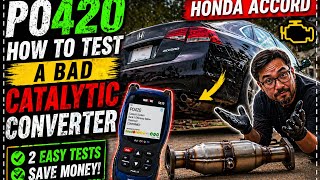
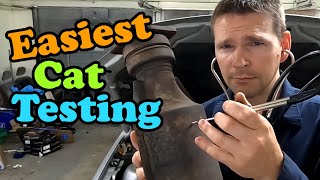
How to confirm: A professional can use a scan tool to analyze O2 sensor data. A simple DIY test involves using an infrared thermometer to measure the temperature of the pipe before and after the converter once the engine is fully warm; the outlet should be at least 100°F hotter than the inlet. A large temperature drop or minimal difference suggests a clogged or inefficient converter. A backpressure test can also confirm a clog; pressure should be below 1.5 PSI at idle.
Typical fix: Replacement of the catalytic converter assembly. On this vehicle, it is part of the exhaust manifold.
Est. part cost: $300-$800 for an aftermarket part, $1000+ for OEM. - Failing Downstream Oxygen (O2) Sensor 🟡 Medium Probability O2 sensors have a finite lifespan and degrade over time, typically after 80,000-100,000 miles. A lazy or faulty downstream sensor can send incorrect data to the PCM, falsely triggering a P0420 code, though many modern cars will set a specific O2 sensor code if it fails completely.
How to confirm: Use a scan tool with live data graphing. The downstream (Bank 1, Sensor 2) O2 sensor voltage should be relatively stable (e.g., around 0.6-0.8V) when the car is at a steady cruise. If it's fluctuating rapidly and mirroring the upstream sensor's graph, it indicates a problem with either the converter or, less commonly, the sensor itself.
Typical fix: Replace the downstream oxygen sensor. Given its lower cost, this is often recommended as a first step before replacing the converter.
Est. part cost: $50-$150 - Exhaust System Leak 🟡 Medium Probability Leaks from cracked exhaust manifolds, failed gaskets (especially the manifold-to-head gasket), or rusted flex pipes can allow outside oxygen to enter the exhaust stream before the downstream O2 sensor. This extra oxygen fools the sensor into thinking the converter isn't working, triggering the code. One owner reported a single missing manifold nut caused a leak sufficient to set the code.
How to confirm: Perform a visual inspection of the exhaust system from the engine to the rear O2 sensor, looking for black soot marks, cracks, or holes. A common method is to have a helper temporarily block the tailpipe with a rag while the engine is running, which can make leaks more audible (a hissing sound). A smoke test is the most definitive way to find small leaks.
Typical fix: Repair the leak by replacing the faulty gasket, flex pipe, or welding the crack. Always use new gaskets when replacing any exhaust components.
Est. part cost: $20-$200 depending on the location and severity of the leak.
Rare But Worth Checking
- Engine Misfires or Rich Fuel Condition: Problems like failing spark plugs, ignition coils, or leaking fuel injectors can dump unburned fuel into the exhaust, which will destroy a new catalytic converter quickly. If you have other codes like P030x (misfire), you must fix that root cause first before replacing the converter.
- PCM Software Glitch: Mazda has issued TSBs for other models/years to correct overly sensitive parameters for catalyst efficiency codes (e.g., TSB 01-010/16 for P0421). It is crucial to check with a dealer if a software update is available for your VIN, as this is a simple and inexpensive potential fix.
- Contaminated or Incorrect Fuel: Using leaded fuel (if available) can quickly destroy a catalytic converter. Some owners have also anecdotally reported that switching to a higher octane fuel and using a quality fuel system/catalytic converter cleaner has resolved the code, suggesting minor deposits or poor combustion can be a factor.
Diagnosis Steps
- Read all stored trouble codes with an OBD-II scanner. If any misfire (P030x), fuel system, or O2 sensor circuit codes (P0137, etc.) are present, diagnose and fix those first.
- Visually and audibly inspect the entire exhaust system from the engine manifold to the rear O2 sensor. Look for cracks, holes, and black soot indicating a leak. Pay close attention to gaskets and the flex pipe section. A smoke test is the most reliable method for finding small leaks.
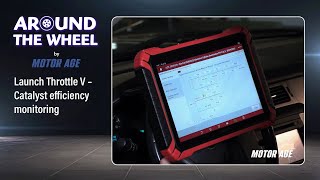
- Use a scan tool with live data to monitor the upstream (Bank 1, Sensor 1) and downstream (Bank 1, Sensor 2) oxygen sensors. At a steady 2500 RPM, the upstream sensor should fluctuate rapidly, while the downstream sensor should remain relatively stable and flat. If the 🎬 Watch: How to diagnose catalyst efficiency codes with confidence downstream sensor mirrors the upstream, it points to a bad converter or, less likely, a downstream O2 sensor issue.
- Check with a Mazda dealer or use an online service to see if any PCM software updates or TSBs apply to your vehicle's VIN. This could be the simplest fix.
- If no leaks are found and no other codes are present, consider replacing the downstream O2 sensor first. It is a common failure point and much less expensive than a converter. Many owners replace this as a preventative measure regardless.
- If the code returns after replacing the O2 sensor, the catalytic converter is the most likely culprit. Use an infrared thermometer to confirm: a hot, running converter should have an outlet temperature at least 100°F hotter than the inlet. If not, it's likely clogged or chemically inert.
- Before final replacement, ensure the engine is in good health (no misfires, not burning oil) to protect the new, expensive converter from premature failure.
Parts You'll Likely Need
- Manifold Catalytic Converter
(OEM #LFJ1-20-55X (Note: Part numbers can vary by specific model year and emissions requirements. Always verify with VIN.))— This is the most common, though most expensive, fix for a persistent P0420 code after other causes have been ruled out.
Trusted brands: Walker Exhaust, MagnaFlow, Davico
OEM price range: $1000+
Aftermarket price range: $300-$800 - Downstream Oxygen Sensor (Bank 1, Sensor 2)
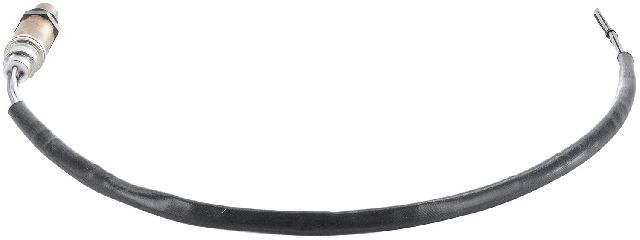
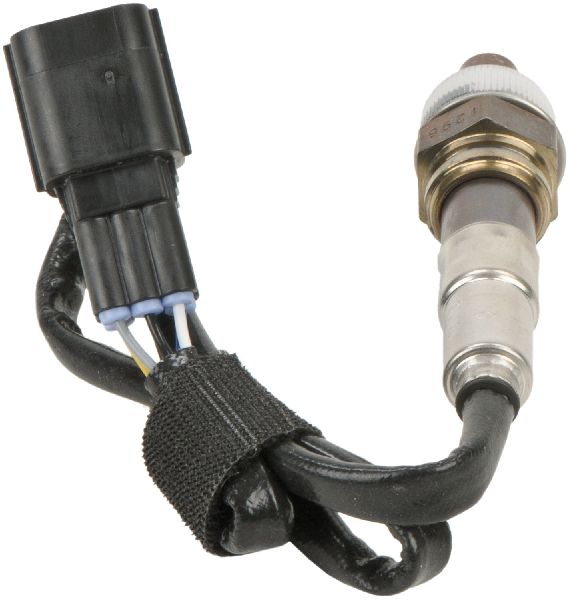
(OEM #L502-18-861A)— A faulty or 'lazy' downstream O2 sensor can mimic the symptoms of a failing converter and is a common, relatively inexpensive part to replace as a diagnostic step.
Trusted brands: Denso, NGK/NTK, Bosch
OEM price range: $150-$250
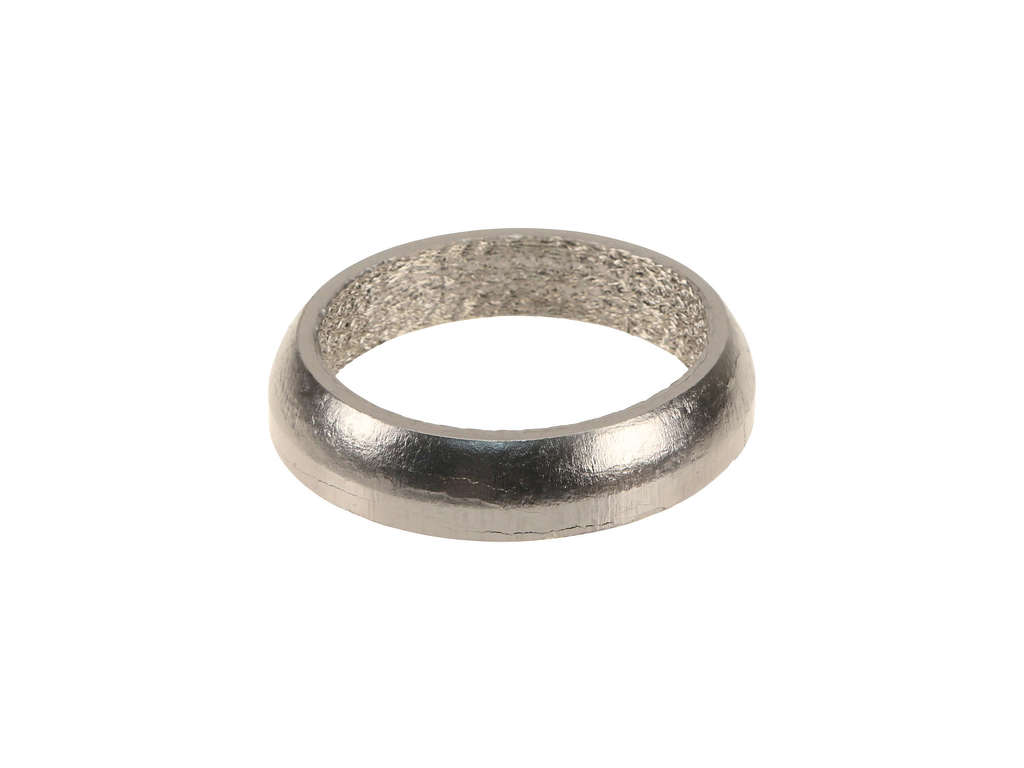
Aftermarket price range: $50-$150 - Exhaust Manifold Gasket — If an exhaust leak is found between the cylinder head and the exhaust manifold, this gasket must be replaced. It's also mandatory to replace it whenever the manifold converter is removed.
Trusted brands: Fel-Pro, Victor Reinz, Mahle
OEM price range: $30-$50
Aftermarket price range: $15-$30
Related Codes That Often Appear With This One
- P0300-P0304 — Cylinder misfire codes (P030x) indicate an underlying engine problem that can cause unburned fuel to enter the exhaust, damaging the catalytic converter and leading to a P0420 code.
- P0137, P0138, P0140 — These codes are specific to the downstream oxygen sensor (Bank 1, Sensor 2) circuit. Their presence alongside P0420 strongly suggests the O2 sensor or its wiring is the root cause, not the converter itself.
- P0421 — This code for 'Warm Up Catalyst Efficiency Below Threshold' is very similar to P0420 and often points to the same set of potential failures. On some Mazda vehicles, TSBs have been issued specifically for P0421 related to PCM logic.
Technical Service Bulletins (TSBs) & Recalls
- TSB 01-010/16: While this TSB applies to the 2014-2016 Mazda3/Mazda6/CX-5 for a P0421 code, it is highly relevant. It describes how the PCM's control logic can be overly sensitive and falsely trigger a catalyst code. The fix is a PCM software update. This establishes a precedent for this type of issue on Mazda vehicles, making a software check for the 2010-2013 model a logical step.
Platform-Specific Known Issues
- Tendency for Aftermarket Converters to Fail: Multiple owner and technician accounts suggest that cheaper, non-OEM catalytic converters may not have enough precious metal loading to satisfy the Mazda PCM's strict monitoring parameters, leading to the P0420 code returning shortly after replacement. For a long-term fix, an OEM or high-quality CARB-compliant aftermarket converter is often recommended.
- Potential for PCM Software Updates: While a specific TSB for the 2010-2013 2.5L is elusive, Mazda has a history of issuing software updates for catalyst efficiency codes on similar platforms (like the CX-5). A Reddit user with a 2015 Mazda 3 noted the dealer's first step was to update the PCM software, indicating this is a standard diagnostic procedure for the dealership. This should be investigated before part replacement.
Mechanic-Grade Diagnostic Values
- Downstream O2 Sensor (B1S2) Voltage at Steady Cruise — expected: Relatively stable between 0.6V and 0.8V.. Failure: Voltage fluctuates rapidly, mirroring the upstream sensor's pattern (0.1V to 0.9V).
- Upstream Air/Fuel Ratio Sensor (B1S1) Voltage — expected: This is a wideband sensor, not a traditional O2 sensor. Its voltage should fluctuate rapidly, but typically within a 2.2V to 3.0V range on this platform.. Failure: A flat or slow-to-respond voltage indicates a faulty sensor.
- Exhaust Backpressure — expected: Below 1.5 PSI at idle and under 3.0 PSI at 2500 RPM.. Failure: Readings higher than 3.0 PSI indicate a clogged catalytic converter or other exhaust restriction.
- Mode $06, TID $01, CID $01/$02 (Catalyst Monitor) — expected: Value should be well below the maximum threshold specified in the scan tool.. Failure: A test value that is very close to, or exceeds, the maximum limit indicates the catalyst is borderline or has failed the PCM's internal test.
Scan Tool Commands That Help
- FORScan: Reset KAM (Keep Alive Memory) — After replacing a major component like a catalytic converter or oxygen sensor, resetting the KAM clears the long-term fuel trims and adaptive learning tables. This forces the PCM to relearn with the new parts, preventing old data from causing issues.
- Professional Scan Tool (e.g., Autel, Snap-on): Catalyst Monitor Drive Cycle / On-Board System Readiness Test — To manually initiate the catalyst efficiency monitor without having to perform a full, lengthy drive cycle. This is used to verify if a repair has been successful and if the P0420 code will stay cleared.
Wiring & Ground Locations
- G03 / G04 — Main engine-to-chassis grounds. One is typically located on the passenger side inner fender near the engine mount, and another on the transmission housing.. A corroded or loose main ground can cause floating voltages and erratic behavior from all engine sensors, including the O2 sensors, leading to false codes.
- PCM Ground — The PCM is located in the passenger footwell, behind the carpet and a metal plate. Its ground points are critical for stable sensor readings.. A poor ground at the PCM itself can corrupt the interpretation of O2 sensor signals, leading to a false P0420 diagnosis.
- Downstream O2 Sensor Harness — The wiring harness for the downstream O2 sensor runs along the underbody of the vehicle.. This harness is susceptible to damage from road debris, heat from the exhaust, and chafing against the subframe. A damaged wire or corroded connector can cause incorrect signals, triggering a P0420 code.
Real Owner Repair Stories
- mazda3forums.com user report (2010 Mazda 3 2.5L) — Persistent P0420 code.
❌ Tried (didn't work) Replacing both upstream and downstream oxygen sensors, Replacing the manifold catalytic converter with an aftermarket unit
✅ What actually fixed it The root cause was a leaking intake manifold gasket. This was discovered by performing a smoke test on the intake system (not the exhaust), which revealed a vacuum leak that was causing a lean condition the PCM was trying to correct, ultimately affecting the catalyst readings. Replacing the intake manifold gasket resolved the code. - General mechanic forum discussions (Mazda 3 2.5L) — P0420 code returns shortly after replacing the catalytic converter with a cheap aftermarket unit.
❌ Tried (didn't work) Using a universal or non-CARB compliant aftermarket catalytic converter
✅ What actually fixed it The P0420 code was only permanently resolved after installing a high-quality, CARB-compliant aftermarket converter or a genuine Mazda OEM part. The cheaper converters often lack sufficient precious metal loading to meet the PCM's strict efficiency monitoring thresholds. - mazda3revolution.com user report (2012 Mazda 3 2.5L) — P0420 code along with slightly rough idle and poor fuel economy.
❌ Tried (didn't work) Using fuel additives and catalytic converter cleaners
✅ What actually fixed it The actual cause was a faulty evaporative emissions (EVAP) purge solenoid valve stuck partially open. This created a constant, unmetered vacuum leak and introduced fuel vapors at the wrong time, leading to a rich running condition that overwhelmed the catalytic converter. Replacing the purge solenoid fixed the fuel trims and the P0420 code did not return.
"I Checked Everything" — The Actual Cause
- A common story for this platform is passing an exhaust smoke test, only to find the true cause was a vacuum leak elsewhere. A leaking intake manifold gasket or a faulty PCV/EVAP system component can alter the air-fuel mixture so significantly that the PCM logs a P0420 code. The key takeaway is that if an exhaust smoke test is clean, the next step should be to smoke test the intake system.
When the Usual Fixes Don't Work
- While the most common fixes are the O2 sensors and the catalytic converter, a significant number of owners have chased this code by replacing those expensive parts, only to find the true culprit was an inexpensive vacuum leak. In one documented case, a user replaced both O2 sensors and the catalytic converter, but the P0420 code persisted. The final solution was replacing a leaking intake manifold gasket, which was discovered with an intake smoke test. This highlights the critical importance of diagnosing the entire system, including intake vacuum, before condemning the most expensive component in the circuit.
OEM Part Supersession History
LFJ1-20-55X→L520-20-55X, L520-20-55XA, L520-20-55XB— Standard part revisions for manufacturing improvements or material changes.
Heads up: While the parts are physically interchangeable for the 2010-2013 2.5L, always verify the exact part number required for your vehicle's specific VIN and emissions configuration (Federal vs. California) with a dealer.
Model Year Variations Within This Range
- 2010-2013: The core components related to the P0420 code (engine, manifold converter, sensors) are consistent across the 2010-2013 model years for the 2.5L engine. A minor cosmetic facelift occurred for the 2012 model year, but it did not significantly alter the powertrain or emissions systems relevant to this code.
Diagnostic Flowchart
Real Owner Stories
Aggregated from forums and TSBs cited above. Mileages and costs reflect what owners reported in those sources.
2010 Mazda 3 2.0L — 68350 miles
Symptoms: Check engine light came on with code P2096. The car drove completely normally with good acceleration and no noticeable issues, getting around 10L/100km in city driving.
What fixed it: Investigated exhaust leaks, catalytic converter health, and a Mazda service bulletin regarding the PCM having too tight of tolerances.
Source hint: Reddit r/MechanicAdvice
2015 Mazda 3
Symptoms: Catalyst efficiency code triggered due to overly sensitive monitoring parameters.
What fixed it: The dealership's first step was to update the PCM software to address the strict monitoring logic.
Source hint: Reddit r/mazda
Mazda 3 2.5L
Symptoms: P0420 code triggered by outside oxygen entering the exhaust stream before the downstream O2 sensor.
What fixed it: Replaced a single missing manifold nut that was causing an exhaust leak sufficient to set the code.
Source hint: Owner report cited in common_causes
Related OBD-II Codes
Frequently Asked Questions
Is there a PCM software update for the 2010-2013 Mazda 3 2.5L that fixes the P0420 code?
Can I use a cheap aftermarket catalytic converter on my Mazda 3?
Does TSB 01-010/16 apply to my 2010-2013 Mazda 3?
Where is the catalytic converter located on the 2.5L L5-VE engine?
Could an exhaust leak cause the P0420 code on this car?
Should I replace the downstream O2 sensor before the catalytic converter?
Helpful Videos
Used OEM Parts in Stock

New Aftermarket Parts Available



The information in this article is provided for general reference and educational purposes only. Vehicle specifications, procedures, and part compatibility can vary by production date, trim level, and region. Always consult your vehicle's factory service manual and verify part numbers before purchasing or performing repairs. Safety-critical components such as airbags, seat belts, and braking systems should be installed by a qualified professional.
- Mazda 3:
- 🎬 Helpful Videos
- 🛍️ Shop This Part
- What's Unique About the 2010-2013 Mazda 3
- Symptoms You May Notice
- Most Likely Causes
- Rare But Worth Checking
- Diagnosis Steps
- Parts You'll Likely Need
- Related Codes That Often Appear With This One
- Technical Service Bulletins (TSBs) & Recalls
- Platform-Specific Known Issues
- Mechanic-Grade Diagnostic Values
- Scan Tool Commands That Help
- Wiring & Ground Locations
- Real Owner Repair Stories
- "I Checked Everything" — The Actual Cause
- When the Usual Fixes Don't Work
- OEM Part Supersession History
- Model Year Variations Within This Range
- Diagnostic Flowchart
- Real Owner Stories
- 2010 Mazda 3 2.0L — 68350 miles
- 2015 Mazda 3
- Mazda 3 2.5L
- Related OBD-II Codes
- Frequently Asked Questions
- 🎟️ Get 5% Off