

P0420 on 2013-2019 Lincoln MKT: Catalyst Efficiency Causes and Fixes
P0420 on a Lincoln MKT indicates the passenger-side catalytic converter is failing. While the converter itself may need replacement, the root cause is often an engine issue like a misfire or leaking fuel injector, or a faulty oxygen sensor. Always diagnose upstream problems before replacing the expensive converter. Note that Ford issued a warranty extension (Customer Satisfaction Program 19M01) for these converters to 11 years/120,000 miles.
- P0420 means the passenger-side catalytic converter is inefficient, but the converter itself is often the victim, not the villain.
- Before replacing the expensive catalytic converter, you MUST rule out upstream issues like engine misfires, leaking fuel injectors, and exhaust leaks.
- Use a scan tool to watch live O2 sensor data. This is the most effective way to confirm if the converter is truly bad.
- Check for any available PCM software updates from a Lincoln dealer, as some TSBs indicate this can be a fix for overly sensitive monitoring.
- If you replace the converter, you must also fix what caused it to fail, or you will be replacing it again soon.
What's Unique About the 2013-2019 Lincoln MKT
The Lincoln MKT shares its D4 platform and engines (3.7L V6 and 3.5L EcoBoost V6) with the Ford Flex, Taurus, and Explorer, so issues are often identical. A critical point for owners is Ford's Customer Satisfaction Program 19M01, which acknowledges that overheating can cause catalyst degradation and extends the warranty on the catalytic converters to 11 years or 120,000 miles, whichever comes first. This overheating is often a symptom of another problem, like unburned fuel from a misfire entering the exhaust and destroying the converter.
Diagnostic Flowchart
Tap your situation to follow the diagnostic path that matches what you're seeing on this vehicle.
Symptoms You May Notice
- Check Engine Light is on
- Reduced engine power and sluggish acceleration
- Noticeable decrease in fuel economy
- Hesitation or jerking during acceleration or gear changes
- Louder than normal exhaust sound, which could indicate a leak or damaged converter
- A 'rotten egg' or sulfur smell from the exhaust
- Extreme heat felt from under the vehicle, especially under the floorboards
- Immediately replacing the catalytic converter without diagnosing the root cause. The new converter will likely fail quickly if an underlying issue like a misfire or fuel leak is not resolved.
- Replacing the oxygen sensors without testing them. While O2 sensors can be the cause, they are often replaced unnecessarily when the converter is truly at fault.
- Using a cheap, low-quality aftermarket catalytic converter. These often lack the necessary precious metals to satisfy the PCM's efficiency test, causing the P0420 code to return even with a new part.
Most Likely Causes
- Failing Catalytic Converter 🔴 High Probability Ford has acknowledged issues with catalyst degradation from overheating via TSBs and Customer Satisfaction Program 19M01. Converters can also be contaminated by coolant from internal engine leaks or poisoned by excessive oil consumption, leading to failure.
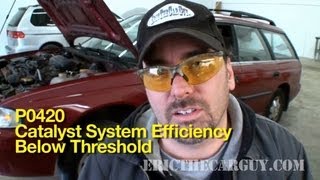
How to confirm: Use a scan tool to compare upstream and downstream O2 sensor readings. If the downstream sensor graph mimics the upstream sensor, the converter is not working. 🎬 Watch: EricTheCarGuy shows you how to diagnose a bad converter. An infrared thermometer can also be used; the outlet of a working converter should be at least 100°F hotter than the inlet. If the inlet is hotter, the converter is likely clogged.
Typical fix: Replace the Bank 1 catalytic converter. It is critical to identify and fix the root cause of the failure (e.g., misfires, fuel leaks) before replacing the converter. Check eligibility for warranty coverage under Ford's program 19M01.
Est. part cost: $400-$1200 - Faulty or 'Lazy' Oxygen Sensor 🟡 Medium Probability O2 sensors are a common wear item. A sensor that is slow to respond can provide inaccurate data to the PCM, leading to a false P0420 code. In some cases on related platforms, intermittent codes have been traced to moisture in the sensor's wiring harness connectors.
How to confirm: Graph the sensor's voltage output on a scan tool. The downstream sensor should show a relatively stable, steady voltage (typically >0.6V). If it fluctuates rapidly like the upstream sensor, the converter is bad. If the downstream sensor is flatlined, sluggish, or stuck, the sensor itself is likely faulty.
Typical fix: Replace the downstream oxygen sensor for Bank 1 (Sensor 2).
Est. part cost: $50-$150 - Engine Misfires or Rich Fuel Condition 🟡 Medium Probability Worn spark plugs, failing ignition coils, or leaking fuel injectors are common maintenance items. These issues cause unburned fuel to enter the exhaust, which can quickly destroy a catalytic converter by superheating it.
How to confirm: Check for other trouble codes, especially misfire codes (P0300-P0306) or fuel trim codes (P0172, P0175). Analyze freeze-frame data to see engine conditions when the code was set. A smell of raw fuel from the exhaust is also a strong indicator.
Typical fix: Perform a full tune-up including spark plugs and ignition coils. Test and replace any leaking fuel injectors.
Est. part cost: $150-$600 - Exhaust Leak ⚪ Low Probability Exhaust manifold gaskets or flex pipe connections can develop leaks over time due to heat cycles and corrosion. An exhaust leak upstream of or near the O2 sensors can introduce extra oxygen, confusing the sensors and triggering a false P0420 code.
How to confirm: Perform a visual inspection of the exhaust system from the engine to the rear O2 sensor. Listen for hissing or ticking sounds that change with engine RPM. A smoke test is the most definitive way to identify the location of a leak.
Typical fix: Replace the leaking gasket or repair the cracked pipe.
Est. part cost: $20-$300
Rare But Worth Checking
- PCM Software Calibration: Ford has issued TSBs for similar vehicles/engines where the PCM's monitoring strategy is too sensitive. TSB 21-2021 for the 3.7L engine requires a PCM reprogram after converter replacement. If no physical faults are found, checking for a software update with a dealer is a valid diagnostic step.
- Fuel Sulfur Content: TSB 22-2260, issued for other Ford EcoBoost engines, notes that high sulfur content in fuel can temporarily poison the catalyst and trigger P0420/P0430. The fix involves a specific 'de-sulfation' drive cycle procedure. While not specific to the MKT, it's a possibility if the code appears after refueling at a different station.
Diagnosis Steps
- Scan for all DTCs. Pay close attention to any misfire, fuel system, or other O2 sensor codes. Address these first.
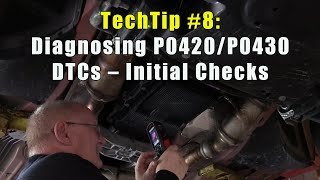
- Inspect the exhaust system for any visible leaks, especially between the engine (exhaust manifold) and the downstream O2 sensor. Listen for audible hissing sounds. 🎬 Watch: A quick guide to performing initial exhaust system checks. A smoke test is recommended for hard-to-find leaks.
- Use a scan tool with live data capabilities. Graph the voltage for the Bank 1 Upstream (O2S11) and Downstream (O2S12) sensors.
- At a steady 2500 RPM, observe the graphs. The upstream sensor should fluctuate rapidly between ~0.1V and ~0.9V. The downstream sensor should hold a relatively steady voltage above 0.6V.
- If the downstream sensor's graph mirrors the upstream sensor's fluctuations, the catalytic converter has failed its efficiency test.
- If the downstream sensor shows a flat, unchanging voltage (e.g., 0V or a fixed value), the sensor itself or its wiring is likely faulty. Inspect wiring and connectors for damage or moisture.
- Perform a temperature check with an infrared thermometer. A healthy, warm converter should have an outlet temperature at least 100°F hotter than its inlet. If temperatures are similar or the inlet is hotter, suspect a failed or clogged converter.
- Before replacing a confirmed-bad converter, check with a dealer for eligibility under Customer Satisfaction Program 19M01 and for any applicable PCM software updates.
- CRITICAL: Ensure there are no engine misfires, oil leaks, coolant leaks, or rich fuel conditions that will damage the new part.
Parts You'll Likely Need
- Bank 1 Catalytic Converter
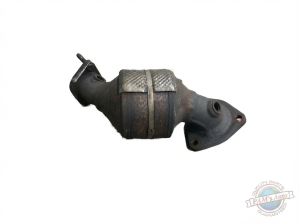
(OEM #FA5Z-5E212-A (For 3.5L EcoBoost, verify with VIN))— This is the part identified by the code as failing. On the 3.7L/3.5L engines, this is often an integrated manifold/converter assembly. Bank 1 is the right/rear/passenger side.
Trusted brands: Motorcraft, Walker Exhaust, MagnaFlow, Eastern Catalytic
OEM price range: $800-$1500
Aftermarket price range: $400-$800 - Downstream Oxygen Sensor (Bank 1, Sensor 2)
(OEM #DE9Z-9G444-A or Motorcraft W0133-1911718 (For 3.7L, verify with VIN))— This sensor is responsible for reporting the converter's efficiency. It can fail or become 'lazy' with age, leading to an incorrect P0420 code.
Trusted brands: Motorcraft, Bosch, Denso, NTK
OEM price range: $80-$180
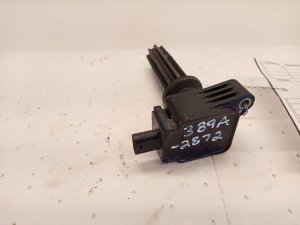
Aftermarket price range: $50-$100 - Ignition Coils and Spark Plugs — A common root cause of converter failure is an engine misfire. Replacing plugs and any faulty coils is critical preventative maintenance before installing a new converter.
Related Codes That Often Appear With This One
- P0430 — This is the identical code but for Bank 2 (driver's side). If both appear, it suggests a systemic issue like poor fuel quality, a vacuum leak affecting both banks, or that both converters have reached the end of their life.
- P0300-P0306 — These are misfire codes. A misfire is a primary cause of catalytic converter failure, as it sends raw fuel into the exhaust, causing overheating and meltdown of the catalyst substrate.
- P0172 / P0175 — These codes indicate a rich fuel condition on Bank 1 and Bank 2, respectively. A rich condition from a leaking injector or other issue will destroy a catalytic converter over time.
Technical Service Bulletins (TSBs) & Recalls
- Bulletin #20M01: Mentions that an overheated catalytic converter can cause catalyst degradation and trigger DTCs P0420 and/or P0430.
Platform-Specific Known Issues
- A Technical Service Bulletin (#20M01) was issued by the manufacturer for some 2013 models, noting that an overheated catalytic converter can lead to catalyst degradation and the P0420/P0430 codes.
- Other Ford TSBs for vehicles with the same engines suggest that PCM software updates may be necessary to correct overly sensitive catalyst monitoring, which could falsely trigger a P0420 code.
Mechanic-Grade Diagnostic Values
- Mode $06 Oxygen Storage Value (Bank 1) — expected: >0.4 (on a healthy system). Failure: A value less than 0.4 after a catalyst stabilization drive cycle indicates a failure.
- Downstream O2 Sensor Voltage (at steady cruise) — expected: Relatively stable reading between 0.4V and 0.5V.. Failure: Voltage fluctuates rapidly, mimicking the upstream sensor's wave pattern.
- Low-Pressure Fuel System Pressure (KOER) — expected: Should maintain pressure above 55 PSI, even when revving the engine.. Failure: Pressure drops below 55 PSI, especially under load, indicating a potential fuel delivery issue that could cause a lean condition and affect catalyst readings.
Hidden / Shadow Codes Worth Checking
- Mode $06, TID $81, CID $01/$02: This is not a DTC, but rather a specific test result within the PCM's onboard diagnostics. It represents the Catalyst Efficiency Monitor for Bank 1. Technicians can view the raw test values and limits to see how close the catalyst is to failing, even before a DTC is set. TSBs specifically reference checking the 'oxygen storage values' via Mode 6. (see via Advanced scan tool (like Ford IDS, FORScan) capable of displaying Mode $06 test results.)
Scan Tool Commands That Help
- Ford IDS (Integrated Diagnostic System): Catalyst Monitor Test / Datalogger — To force the PCM to run the catalyst efficiency self-test and to record high-resolution data from the oxygen sensors for detailed analysis.
- Ford IDS or equivalent: PCM Reprogram — Required when a TSB indicates the P0420 code may be caused by overly sensitive software calibration. The module must be updated to the latest software level.
- Ford IDS or FORScan: Clear DTCs / Reset Catalyst Monitor Data — After performing a de-sulfation or stabilization drive cycle as instructed by a TSB, the DTCs and Mode 6 data must be cleared to reset the monitor to zero before running a new drive cycle to verify the fix.
Wiring & Ground Locations
- G102 — Right rear of the engine compartment.. This is a primary engine ground. A poor connection here could cause erratic voltage signals for various engine sensors, including the oxygen sensors, potentially leading to false codes.
- G301 — Behind the left kick panel, inside the cabin.. This is an interior/chassis ground. While less likely to be the primary cause, it can affect modules located inside the vehicle that communicate with the PCM.
- C175B — This is a main connector for the Powertrain Control Module (PCM), located at the right rear of the engine bay.. The oxygen sensor signals are processed by the PCM. Corrosion or a loose pin in this critical connector could interrupt the signal from the Bank 1 O2 sensors, causing diagnostic faults.
When the Usual Fixes Don't Work
- In a case involving a 2013 Ford Flex with the same platform, an owner reported the P0420 code returned immediately after replacing both the catalytic converter and the oxygen sensors. Community feedback pointed towards two likely culprits that defy the simple part replacement: a persistent, undiagnosed exhaust leak or the use of a low-quality aftermarket converter that cannot meet the PCM's efficiency standards. This highlights that even when the 'correct' parts are replaced, the code can persist if the replacement part is inadequate or another root cause is missed.
OEM Part Supersession History
FA5Z-5E212-A→N/A— No supersession history found during research. This suggests the part has not been revised or replaced by Ford.
Model Year Variations Within This Range
- 2013: The 2013 model year marked a significant refresh, including updated styling and increased horsepower for both the 3.7L (to 303 hp) and 3.5L EcoBoost (to 365 hp) engines. This change in engine output implies different PCM calibrations compared to 2010-2012 models, which could affect catalyst monitor sensitivity.
- 2013: Ford Emission Recall #13E04 applies to some 2011-2013 Ford/Lincoln vehicles and addresses a software issue where the PCM may clear diagnostic data on every startup or fail to set readiness monitors. This could prevent proper diagnosis or cause persistent readiness issues related to the catalyst monitor.
Helpful Videos

Used OEM Parts in Stock



New Aftermarket Parts Available


The information in this article is provided for general reference and educational purposes only. Vehicle specifications, procedures, and part compatibility can vary by production date, trim level, and region. Always consult your vehicle's factory service manual and verify part numbers before purchasing or performing repairs. Safety-critical components such as airbags, seat belts, and braking systems should be installed by a qualified professional.
- Lincoln MKT:
- 🎬 Helpful Videos
- 🛍️ Shop This Part
- What's Unique About the 2013-2019 Lincoln MKT
- Diagnostic Flowchart
- Symptoms You May Notice
- Most Likely Causes
- Rare But Worth Checking
- Diagnosis Steps
- Parts You'll Likely Need
- Related Codes That Often Appear With This One
- Technical Service Bulletins (TSBs) & Recalls
- Platform-Specific Known Issues
- Mechanic-Grade Diagnostic Values
- Hidden / Shadow Codes Worth Checking
- Scan Tool Commands That Help
- Wiring & Ground Locations
- When the Usual Fixes Don't Work
- OEM Part Supersession History
- Model Year Variations Within This Range
- 🎟️ Get 5% Off