

P0420 on 2018 Land Rover Range Rover: Catalyst Efficiency Causes & Fixes
P0420 on a 2018 Range Rover indicates the catalytic converter on Bank 1 isn't working efficiently. Before replacing the extremely expensive converter, it is critical to diagnose for exhaust leaks and failing oxygen sensors, which are common, less costly causes. Also, verify if your vehicle is still under the 8-year/80,000-mile federal emissions warranty, which may cover the repair for free at a dealership.
- P0420 means the Bank 1 catalytic converter is inefficient, but the converter itself isn't always the root cause.
- Before any repair, check if your 2018 Range Rover is still under the 8-year/80,000-mile federal emissions warranty, as the catalytic converter replacement could be free at a dealer.
- Always diagnose in order: check for other codes, inspect for exhaust leaks, test the O2 sensors, and only then conclude the converter has failed.
- Ignoring underlying issues like engine misfires or fuel problems will cause a new catalytic converter to fail again.
What's Unique About the 2018-2018 Land Rover RANGE ROVER
For the 2018 Range Rover (L405 generation), the P0420 code is a known issue, as acknowledged by Land Rover in Technical Service Bulletin #SSM73866. While the bulletin was issued for the 2.0L PHEV variant and instructs dealers to replace the converter if the code is present, owner experiences across the V6 and V8 gasoline engines suggest a thorough diagnostic process is crucial. Unlike some vehicles where the code almost always means a bad converter, on Land Rovers it's frequently triggered by exhaust leaks (especially at manifold gaskets or flex pipes) or faulty oxygen sensors. It is critical to rule these out before condemning a very expensive part. Additionally, owners should be aware that the catalytic converters are covered by an 8-year/80,000-mile federal emissions warranty, which could make the repair free at a dealership.
Diagnostic Flowchart
Tap your situation to follow the diagnostic path that matches what you're seeing on this vehicle.
Symptoms You May Notice
- Check Engine Light is on.
- Reduced engine power and acceleration, especially under load.
- Lowered fuel economy.
- A 'rotten egg' or sulfur smell from the exhaust, indicating an overheating converter due to unburned fuel.
- Failure to pass a vehicle emissions test.
- A rattling noise from the exhaust if the internal honeycomb structure of the converter has broken apart.
- Immediately replacing the catalytic converter without first checking for exhaust leaks or testing the oxygen sensors. An exhaust leak or a bad sensor is a much cheaper fix and a very common cause of this code.
Most Likely Causes
- Failed Catalytic Converter 🔴 High Probability Catalytic converters are wear items. Underlying issues like engine misfires or oil consumption can accelerate their failure. On some JLR engines, specific fueling strategies during warm-up have been linked to premature catalyst degradation, as noted in TSB SSM74404 for the 2.0L engine. Unresolved rich running conditions can also overheat and destroy the converter.
How to confirm: After confirming no exhaust leaks or sensor issues, use a scan tool to monitor live O2 sensor data. If the downstream sensor's voltage reading fluctuates wildly, mimicking the upstream sensor, 🎬 Watch: How to tell if it's a bad converter or O2 sensor the converter is not storing oxygen and has likely failed. A temperature check showing the outlet is not significantly hotter (at least 100°F) than the inlet can also indicate failure.
Typical fix: Replace the Bank 1 catalytic converter. It is crucial to fix any underlying engine problems (misfires, leaks, rich/lean conditions) first to avoid damaging the new converter.
Est. part cost: $1500-$4100+ - Exhaust Leak 🟡 Medium Probability Leaks can develop at gaskets or welds, particularly at the exhaust manifold-to-head gasket or the flex pipe sections. These leaks allow unmetered oxygen into the exhaust, which skews the O2 sensor readings and can falsely trigger a P0420 code.
How to confirm: Perform a visual inspection for soot trails around gaskets and listen for a ticking or huffing noise, especially on a cold start. A professional smoke test is the most effective method to pinpoint small leaks anywhere in the system before the downstream O2 sensor.
Typical fix: Repair the leak by replacing the faulty gasket or welding/replacing the cracked component.
Est. part cost: $20-$300 - Faulty Downstream Oxygen (O2) Sensor 🟡 Medium Probability Oxygen sensors are wear-and-tear parts that can degrade over time, becoming 'lazy' or sending inaccurate readings to the PCM, falsely triggering the P0420 code.
How to confirm: Using a scan tool, observe the live data for the Bank 1 downstream sensor (Sensor 2). The voltage should be relatively stable, typically between 0.5V and 0.8V on a warm engine at idle. If the sensor is stuck, slow to respond, or its readings mirror the upstream sensor without an actual converter failure, it is likely faulty.
Typical fix: Replace the Bank 1 downstream (post-catalyst) oxygen sensor. Many technicians recommend replacing O2 sensors in pairs. It is also possible for a brand new replacement sensor to be faulty.
Est. part cost: $60-$250 - Engine Misfires or Fuel System Issues ⚪ Low Probability Issues like failing spark plugs, ignition coils, or leaky fuel injectors can cause unburned fuel to enter the exhaust, which will overheat and destroy the catalytic converter's internal structure, leading to a P0420 code.
How to confirm: Check for other trouble codes, particularly misfire codes (P0300-P0308) or fuel trim codes (P0171, P0174). Address and resolve these codes before addressing P0420, as they indicate the root cause.
Typical fix: Repair the root cause of the misfire or fuel system problem, which may involve replacing spark plugs, ignition coils, or fuel injectors.
Est. part cost: $50-$500
Rare But Worth Checking
- Internal Engine Wear/Leaks: If the engine is burning oil (worn piston rings) or coolant (head gasket leak), it can permanently poison the catalytic converter with contaminants. Visible blue or white smoke from the exhaust is a strong indicator of this severe issue, which must be fixed before replacing the converter.
Diagnosis Steps
- Check for other DTCs. Use an OBD-II scanner to see if any other codes are present. If you have misfire, fuel system, or O2 sensor codes, diagnose and fix them first as they are the likely root cause.
- Inspect for Exhaust Leaks. Visually and audibly inspect the exhaust system from the engine manifold to the downstream O2 sensor for any cracks, holes, or gasket leaks (look for black soot). A professional smoke test is the most reliable method to find hidden leaks.
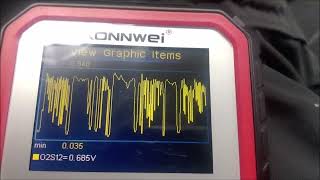
- Analyze Live O2 Sensor Data. With the engine warm and at a steady 2,500 RPM, use a scan tool to graph the voltage of the upstream (Sensor 1) and downstream (Sensor 2) O2 sensors for Bank 1. The upstream sensor should fluctuate rapidly. The downstream sensor should remain relatively steady and stable. 🎬 Watch: Troubleshooting catalytic converters and O2 sensors with a scan tool If the downstream sensor's graph mirrors the upstream sensor's, the converter has likely failed.
- Test the Oxygen Sensors. If the downstream O2 sensor's signal is flat, stuck, or slow to respond, the sensor itself may be faulty. Consider swapping the downstream sensors from Bank 1 and Bank 2 to see if the code follows the sensor (e.g., P0420 changes to P0430).
- Check Fuel Trims and Misfire Data. Review Short Term (STFT) and Long Term (LTFT) fuel trim data. Values outside of -10% to +10% suggest an underlying fuel mixture problem that needs to be addressed. Check for any recorded misfires.
- Perform a Catalytic Converter Temperature Check. Use an infrared thermometer to measure the temperature of the pipe entering the converter and the pipe exiting it. The outlet should be at least 100°F hotter than the inlet on a fully warmed-up engine. If not, the converter is not working.
- Confirm Catalytic Converter Failure. If all other possibilities have been ruled out, the catalytic converter is the most likely culprit.
Parts You'll Likely Need
- Catalytic Converter (Bank 1)
(OEM #LR052356 (Left/Bank 2 for 5.0L V8, check VIN for Bank 1), LR052355 (Right/Bank 1 for 5.0L V8))— This is the component identified by the code as failing. It is often the ultimate point of failure, but its failure is frequently caused by other issues. OEM part costs are very high.
Trusted brands: Land Rover (OEM), Walker Exhaust, MagnaFlow
OEM price range: $3300-$4100
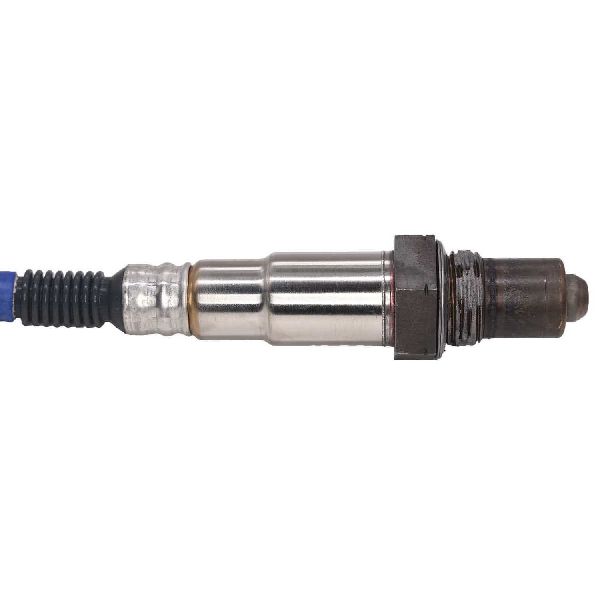
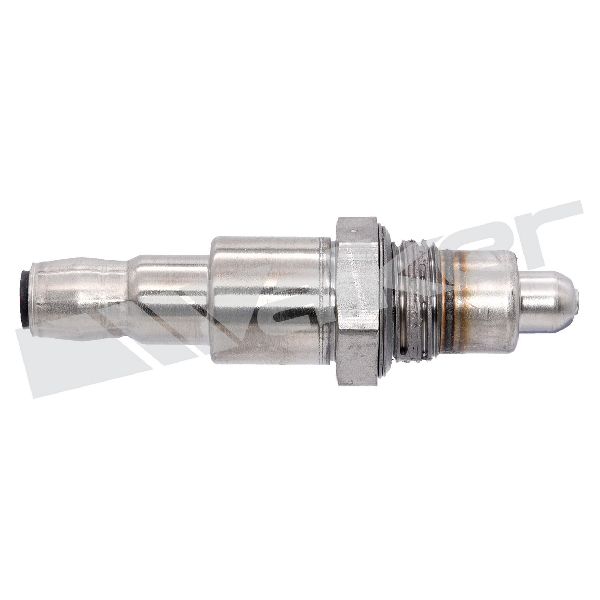
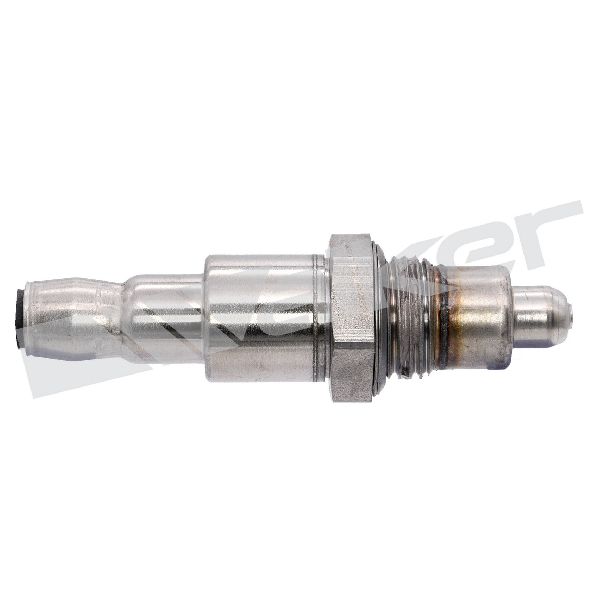
Aftermarket price range: $700-$1500 - Downstream Oxygen Sensor (Bank 1, Sensor 2)
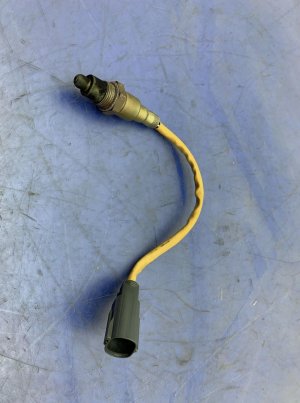
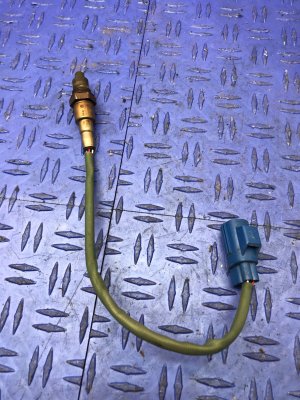
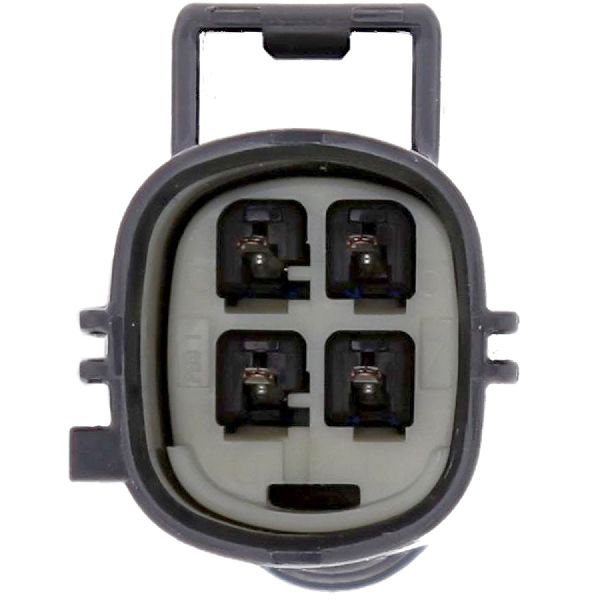
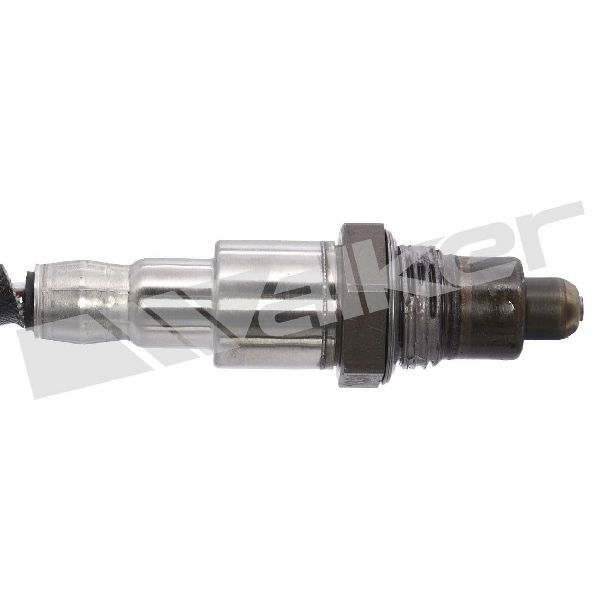
(OEM #Bosch 16042 (cross-reference, confirm with VIN))— A faulty sensor can send incorrect data, falsely triggering the P0420 code. It's a common wear item and a frequent point of misdiagnosis.
Trusted brands: Bosch, Denso, NTK
OEM price range: $150-$250
Aftermarket price range: $60-$150 - Exhaust Manifold Gasket (Bank 1)
Related Codes That Often Appear With This One
- P0430 — This is the identical code but for Bank 2 (the opposite side of the engine). If both appear, it may suggest a systemic issue like contaminated fuel or a common engine problem affecting both banks, such as an intake leak.
- P0300-P0308 — These are misfire codes. An engine misfire allows unburned fuel to enter the exhaust, which can quickly damage the catalytic converter and trigger P0420. The misfire is the root cause that must be fixed first.
- P0136, P0137, P0138 — These codes relate directly to the downstream oxygen sensor on Bank 1 (circuit malfunction, low voltage, high voltage). Their presence strongly suggests the O2 sensor itself or its circuit is the problem, not the catalytic converter.
Technical Service Bulletins (TSBs) & Recalls
- SSM73866: Acknowledges the presence of DTC P0420-00 in the Powertrain Control Module (PCM) for the 2018 Range Rover.
Platform-Specific Known Issues
- A Technical Service Bulletin (TSB #SSM73866) was issued by Land Rover acknowledging that the P0420 code may be stored in the PCM of 2018 Range Rovers.
- Owners should check if their vehicle's mileage and age fall under the USA's federal emissions warranty, which covers major emissions components like the catalytic converter for 8 years or 80,000 miles, whichever comes first. A dealership may replace a failed converter for free under this warranty.
- Bank 1 is the side of the engine that contains cylinder #1. On V-engine Land Rovers, this is typically the passenger side in left-hand-drive countries like the USA.
Mechanic-Grade Diagnostic Values
- Downstream O2 Sensor (Bank 1, Sensor 2) Voltage — expected: Relatively stable voltage between 0.5V and 0.8V at steady cruise/RPM.. Failure: Voltage fluctuates rapidly, mirroring the upstream sensor's pattern (0.1V-0.9V), or is stuck flat.
- Long Term and Short Term Fuel Trims (LTFT/STFT) — expected: Within a range of -10% to +10% at idle and under load.. Failure: Consistently high positive values (>10%) suggest a vacuum/exhaust leak. Consistently high negative values (<-10%) suggest a rich condition (e.g., leaky injector).
- Catalytic Converter Temperature Differential — expected: The outlet pipe temperature should be at least 100°F (approx. 38°C) hotter than the inlet pipe temperature on a fully warmed-up engine.. Failure: Outlet temperature is the same as or cooler than the inlet temperature, indicating no chemical reaction is occurring.
Hidden / Shadow Codes Worth Checking
- Mode $06, Test ID $A9 (Bank 1): This is not a DTC but a component monitor test result accessible via advanced scan tools. It shows the measured efficiency value from the PCM's last catalyst monitor self-test. The tool will display a measured value alongside a minimum and maximum threshold. (see via Use an OBD-II scan tool with Mode 6 functionality. A value outside the manufacturer's specified range indicates the self-test failed, confirming the reason P0420 was set.)
Scan Tool Commands That Help
- JLR SDD / Pathfinder / iLand / GAP IIDTool: Powertrain Control Module (PCM) Adaption Clear / Reset Adaptive Values — This is a critical step after replacing components like oxygen sensors, mass airflow sensors, fuel injectors, or fixing a significant exhaust/intake leak. The PCM adapts to faulty sensor readings over time; clearing these adaptations forces it to re-learn based on the new, correct sensor data, preventing the vehicle from running poorly after the repair.
- JLR SDD / Pathfinder: Guided Diagnostics for P0420 — When starting the diagnosis, the dealer-level software provides a step-by-step test plan (pinpoint tests) specific to the P0420 code, linking directly to relevant TSBs and wiring diagrams.
Wiring & Ground Locations
- G1D129AL / G1D132A (Example) — These are examples from a similar Land Rover platform (Evoque). G1D129AL is at the left front of the engine compartment, and G1D132A is at the right front.. The PCM and its sensors rely on clean, tight ground connections. A corroded or loose engine ground can cause erratic voltage signals from the O2 sensors, potentially triggering a false P0420 code by mimicking component failure.
Real Owner Repair Stories
- landroverforums.com user 'djkaosone' (Land Rover LR4 (5.0L V8, similar architecture)) — P0420 and P0430 codes.
❌ Tried (didn't work) Initial diagnosis pointed towards catalytic converters.
✅ What actually fixed it An exhaust leak between the exhaust manifold and downpipes on both sides. The leak was found using a smoke tester. After repairing the leak, the owner cleared the PCM adaptations using a GAP tool to allow the fuel trims to relearn. - landroverforums.com user 'RyanR' (2007 Land Rover LR3 V6) — Recurring P0420 code that would disappear and return over several months.
❌ Tried (didn't work) Clearing the code., Replacing both downstream O2 sensors initially.
✅ What actually fixed it The P0420 code returned even after replacing the O2 sensors. A different mechanic diagnosed that one of the *new* replacement O2 sensors was faulty. Replacing the faulty new sensor a second time permanently resolved the code. - YouTube user comment on EricTheCarGuy video (Not specified) — P0420 code.
❌ Tried (didn't work) The car already had a brand new catalytic converter., Replacing the O2 sensors did not fix the code.
✅ What actually fixed it The root cause was badly worn spark plugs with a very large gap. This likely caused a misfire condition that contaminated the new converter. Replacing the spark plugs resolved the issue.
When the Usual Fixes Don't Work
- While Pass 2 correctly identifies faulty O2 sensors as a common cause, a real-world repair story highlights a critical nuance: new parts can be faulty out of the box. A vehicle owner replaced downstream O2 sensors to fix a P0420, but the code returned. A second diagnosis revealed one of the newly installed sensors was defective, and replacing it again finally solved the problem. This serves as a strong reminder to test the functionality of replacement parts rather than assuming they are good.
Helpful Videos
Used OEM Parts in Stock



New Aftermarket Parts Available


The information in this article is provided for general reference and educational purposes only. Vehicle specifications, procedures, and part compatibility can vary by production date, trim level, and region. Always consult your vehicle's factory service manual and verify part numbers before purchasing or performing repairs. Safety-critical components such as airbags, seat belts, and braking systems should be installed by a qualified professional.
- Land Rover RANGE ROVER:
- 🎬 Helpful Videos
- 🛍️ Shop This Part
- What's Unique About the 2018-2018 Land Rover RANGE ROVER
- Diagnostic Flowchart
- Symptoms You May Notice
- Most Likely Causes
- Rare But Worth Checking
- Diagnosis Steps
- Parts You'll Likely Need
- Related Codes That Often Appear With This One
- Technical Service Bulletins (TSBs) & Recalls
- Platform-Specific Known Issues
- Mechanic-Grade Diagnostic Values
- Hidden / Shadow Codes Worth Checking
- Scan Tool Commands That Help
- Wiring & Ground Locations
- Real Owner Repair Stories
- When the Usual Fixes Don't Work
- 🎟️ Get 5% Off