

P0420 on 2012-2016 Kia Soul: Causes of Catalytic Converter Failure and Fixes
On a 2012-2016 Kia Soul, the P0420 code almost always means the catalytic converter is failing. This is often a symptom of a more serious underlying engine problem, like excessive oil consumption, especially on the 1.6L GDI engine. Replacing oxygen sensors alone will not fix the issue; the root cause must be addressed to prevent repeat failures.
- P0420 on a 2012-2016 Kia Soul is a serious code that often points to more than just a bad catalytic converter.
- Always investigate for excessive oil consumption; this is the most likely root cause of converter failure on this vehicle.
- Do not replace the oxygen sensors as a first step; this is a common misdiagnosis that wastes money.
- Verify that Kia safety recall SC176 has been performed on your vehicle, as it directly addresses the cause of converter failure.
- Replacing the catalytic converter without fixing an underlying oil consumption or engine combustion issue will result in the new converter failing again.
What's Unique About the 2012-2016 Kia SOUL

For the 2012-2016 Kia Soul, particularly those with the 1.6L GDI engine, P0420 is not just a simple emissions component failure. It is strongly linked to severe, well-documented engine problems, including excessive oil consumption and abnormal combustion that can destroy the catalytic converter. Kia issued a safety recall (SC176) for the 1.6L engine to update software and inspect the converter, acknowledging that high exhaust temperatures could damage it. If damaged, particles from the converter can enter the engine, causing piston damage, engine failure, and even fire. Therefore, this code should be treated as a serious warning sign of potential engine health issues, not just a bad converter.
Diagnostic Flowchart

Tap your situation to follow the diagnostic path that matches what you're seeing on this vehicle.
Generation note: The 2012-2016 year range covers two generations of the Kia Soul. The first generation (AM) runs from 2012-2013 and the second generation (PS) from 2014-2016. The primary engines were a 1.6L GDI and a 2.0L MPI. The most severe issues related to code P0420, including a major safety recall (SC176), are specifically linked to the 1.6L GDI engine across both generations in this range.
Symptoms You May Notice
- Check Engine Light is on
- Reduced engine power and sluggish acceleration, especially uphill.
- Vehicle may stall or hesitate.
- Engine misfiring or running rough.
- Strong rotten egg or sulfur smell from the exhaust.
- Rattling noise from underneath the vehicle if the converter's internal structure has broken apart.
- Replacing only the oxygen sensors. Many owners, and even some shops, replace the O2 sensors first, only for the P0420 code to return. An NHTSA complaint details an owner replacing both sensors with genuine Kia parts without success because the underlying issue was not addressed.
- Replacing the catalytic converter without addressing oil consumption. If the engine is burning oil, a new catalytic converter will be contaminated and fail again in a short amount of time, sometimes within months.
- Using fuel additives like 'CataClean'. While some users try these products, they cannot repair a physically damaged or oil-fouled converter substrate. Many forum users report the code returns shortly after clearing it.
Most Likely Causes

- Failing Catalytic Converter 🔴 High Probability The converter itself often fails as a direct result of other known issues on this platform, such as excessive oil consumption or high exhaust gas temperatures from abnormal combustion, particularly in the 1.6L GDI engine. This was acknowledged by Kia in safety recall SC176, which states high exhaust temps can damage the converter. Many owners report replacing the converter multiple times because the root cause was not fixed.
How to confirm: A mechanic can use a scan tool to monitor upstream and downstream O2 sensor data; a bad converter will show the downstream sensor voltage fluctuating similarly to the upstream one. An infrared thermometer can also be used to check temperatures; the outlet should be significantly hotter (approx. 100°F or more) than the inlet on a working converter. A rattling sound from the exhaust is a clear sign the internal substrate has broken.
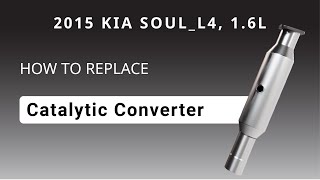
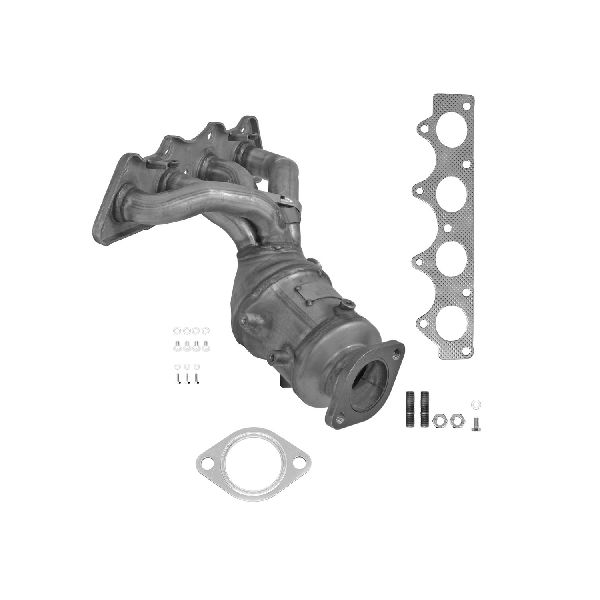
Typical fix: Replacement of the catalytic converter assembly, which is integrated with the exhaust manifold. 🎬 Watch: Step-by-step guide to replacing the catalytic converter assembly. This must be done *after* confirming the root cause (like oil consumption) is fixed to prevent immediate repeat failure.
Est. part cost: $400-$1200 - Excessive Engine Oil Consumption 🔴 High Probability These engines, especially the 1.6L GDI, are known for issues with piston rings and cylinder bores that lead to burning oil. This oil contaminates the oxygen sensors and coats the precious metals inside the catalytic converter, rendering it useless. Multiple owner complaints and forum threads explicitly link excessive oil consumption (e.g., 1 quart every 300-1000 miles) to a recurring P0420 code and eventual engine failure.
How to confirm: Monitor the engine oil level closely between changes. A loss of more than one quart per 1,000 miles is a clear indicator. There may be no visible leaks. A dealer can perform a formal oil consumption test.
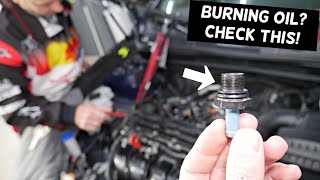
Typical fix: This is a major engine repair. Some owners have had success with piston soaks to free up stuck rings. However, in many cases, it may require new piston rings or a complete engine short block replacement. 🎬 Watch: Why these Kia engines suffer from high oil consumption. This is the root cause that must be addressed to prevent repeat converter failure.
Est. part cost: $50-$5000 - Faulty Oxygen (O2) Sensors ⚪ Low Probability While O2 sensors can fail, they are an unlikely root cause for P0420 on this platform. They are more often a symptom of contamination from oil burning. Many owners report replacing both sensors without resolving the code because the converter was already bad.
How to confirm: Use a scan tool to graph the live voltage data from both the upstream (Sensor 1) and downstream (Sensor 2) sensors. A healthy upstream sensor fluctuates rapidly, while a healthy downstream sensor should hold a relatively steady voltage above 450mV (0.45V). If either sensor is lazy, stuck, or not responding, it should be tested and likely replaced.
Typical fix: Replace the faulty oxygen sensor (either upstream or downstream). This is often done as a preventative measure when replacing the converter, but it rarely solves P0420 on its own.
Est. part cost: $50-$150 - Exhaust Leak ⚪ Low Probability
How to confirm: Perform a visual inspection of the exhaust system from the engine to the tailpipe, looking for cracks or rust at flanges and welds. A professional can use a smoke machine to pressurize the exhaust and pinpoint small leaks that allow outside air to enter and skew O2 sensor readings.
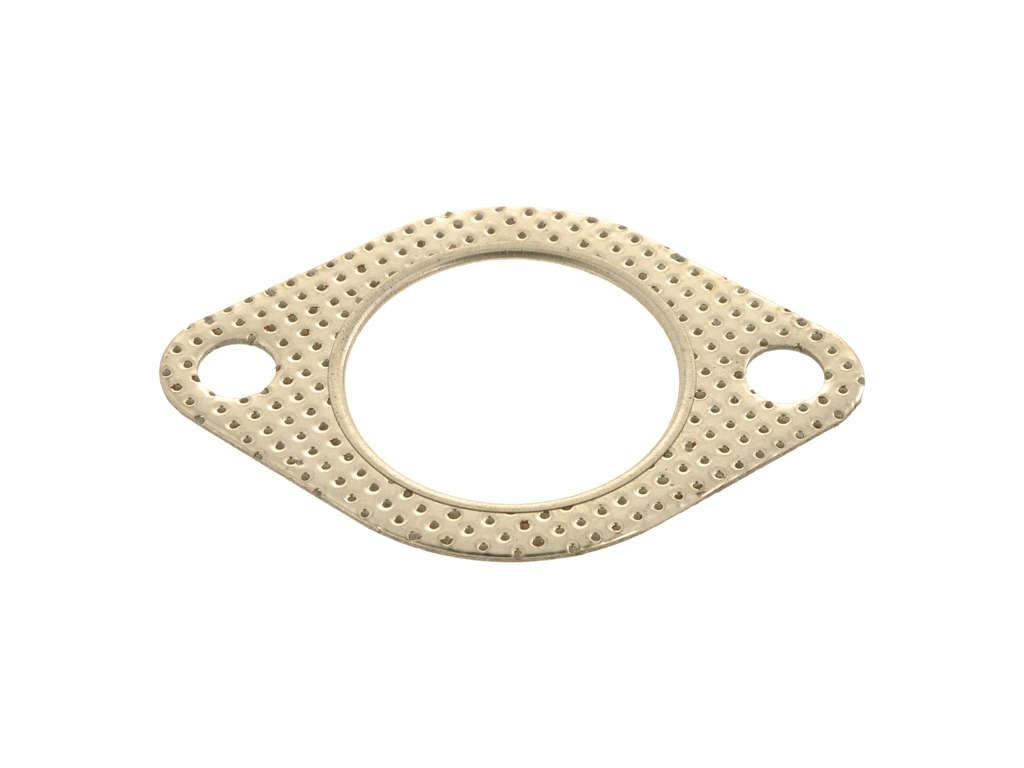
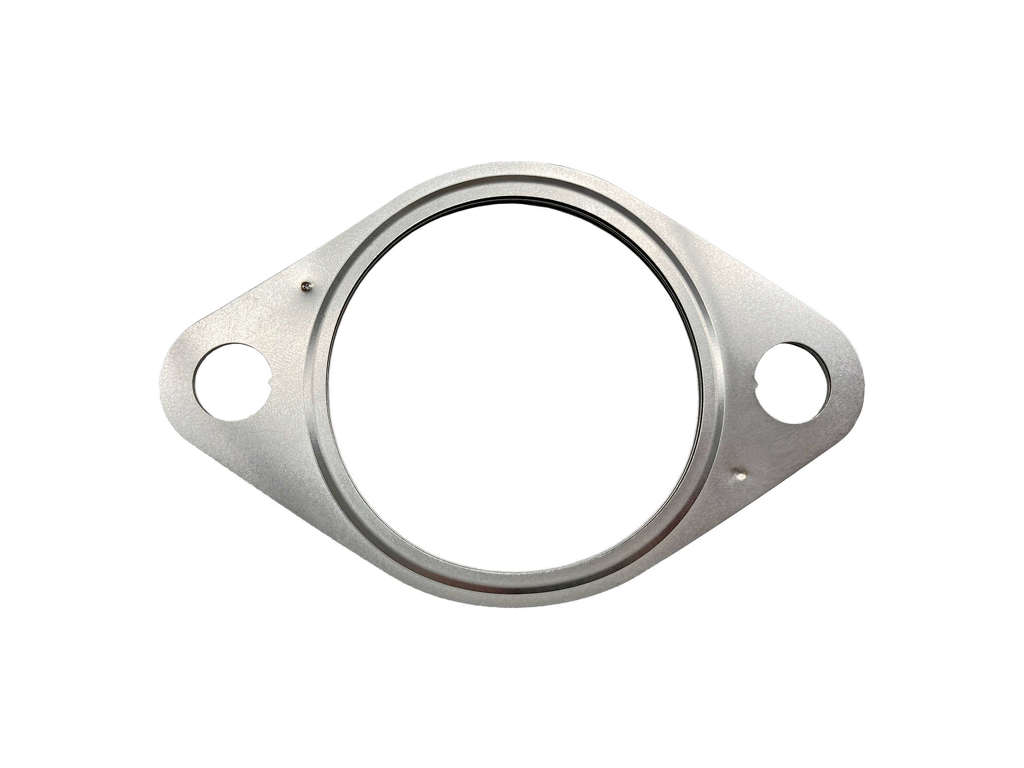
Typical fix: Repair the leak by replacing the gasket or damaged pipe section.
Est. part cost: $20-$200
Rare But Worth Checking
- Engine Control Unit (ECU) Software: Kia issued recall SC176 which involves a software update to the ECU to better manage exhaust gas temperatures and protect the catalytic converter. If this update was never performed, it could be a contributing factor. An owner complaint also mentions software updates being performed to try and resolve the code. Some owners report the P0420 code returning even after the SC176 software update was performed.
Diagnosis Steps

- Read all fault codes stored in the ECU. Address any misfire (P030x), knock sensor (P1326), or fuel system (P2187/P2192) codes first, as they are critical.
- Check engine oil level immediately. If it is low, top it off and begin monitoring for excessive consumption (e.g., more than 1 quart per 1000 miles). This is the most likely root cause.
- Check vehicle history for recall SC176. Contact a Kia dealer with your VIN to confirm if the ECU software update was performed.
- Inspect the exhaust system for any leaks, especially between the two oxygen sensors. Pay close attention to flex pipes and flange gaskets. A smoke test is the most effective method.
- Use a scan tool to observe live data. Watch the voltage graphs for the upstream (Bank 1, Sensor 1) and downstream (Bank 1, Sensor 2) oxygen sensors at a steady 2500 RPM. If the downstream sensor mimics the upstream sensor's rapid fluctuations, the converter is not working. A healthy downstream sensor should show a steady voltage above 0.45V.
- If O2 sensor readings are suspect (e.g., flatline or slow response), test the sensors themselves before condemning the converter. However, be aware they are often contaminated by oil.
- If the converter is confirmed bad (via sensor data or rattling noises), you MUST investigate the root cause. Confirm the SC176 recall/software update has been performed and, most importantly, determine if the engine is consuming oil before replacing the converter to avoid a costly repeat failure.
Parts You'll Likely Need
- Catalytic Converter
(OEM #28510-2BEF1 (for 1.6L GDI))— This is the part that has failed to trigger the code. It is an integrated exhaust manifold unit. It is often the victim of another problem, not the root cause.
Trusted brands: Walker Exhaust, MagnaFlow, Bosal, Davico
OEM price range: $800-$1200
Related Codes That Often Appear With This One
- P0300-P0304 — Engine misfire codes (P030X) can appear alongside P0420. Misfires allow unburnt fuel to enter the exhaust, which can overheat and damage the catalytic converter. TSB SC176 specifically mentions looking for P0420 with or without P030X codes to determine if the engine needs replacement.
- P2187, P2192 — These codes indicate the system is too lean at idle (P2187) or too rich at higher load (P2192). These fuel mixture imbalances can contribute to the conditions that damage a catalytic converter, and may appear after driving for an extended time with a failing converter.
- P1326 — This code indicates a problem with the Knock Sensor Detection System. This is a very serious code often associated with the engine failures on these vehicles and may appear alongside P0420 as the engine's health deteriorates.
Technical Service Bulletins (TSBs) & Recalls
- SC176 / SC176Y_TSB_R1: Details the procedure for the safety recall on 2012-2016 Souls with the 1.6L GDI engine. Involves an ECU software update to prevent catalytic converter overheating. Mandates inspection and, if P0420 is present, replacement of the converter. If P030x misfire codes are also present, the engine short block may be replaced.
- ENG133: A TSB covering excessive oil consumption testing and repair for various Kia engines, including the Gamma 1.6L GDI. Outlines the procedure for dealers to confirm consumption over 1qt/1,000 miles and subsequent engine repairs.
Platform-Specific Known Issues
- Owner Experience: Repeat Failures and The Oil Consumption Link: A common story on forums is an owner getting a P0420 code, replacing the O2 sensors with no luck, then replacing the catalytic converter. The code then returns a few thousand miles later. The root cause is almost always discovered to be excessive oil consumption, which fouls the new converter. One owner on kiasoulforums.com noted their converter failed four times before the engine itself finally failed and was replaced.
- Recall SC176 Is Not a Guaranteed Fix: While the SC176 recall was intended to solve the issue, many owners have reported that they had the ECU update performed, only for the P0420 code to appear later. NHTSA complaints show that dealers may perform the software update but refuse to replace the already-damaged converter if it hasn't failed a specific internal test, leading to the code returning shortly after the owner leaves the dealership.
- Warranty Coverage Confusion: Owners on Reddit forums express significant frustration with warranty claims. Kia extended the powertrain warranty for some engine issues, but P0420 itself is an emissions code. Dealers may deny a converter replacement under the extended powertrain warranty. Furthermore, the original 100,000-mile warranty is often reduced to 60,000 miles for second owners, leaving many without coverage when the problem appears.
Mechanic-Grade Diagnostic Values
- Catalytic Converter Temperature Differential — expected: Outlet temperature should be at least 100°F (or 10%) higher than the inlet temperature after the engine is at operating temperature and run at 2500 RPM for 2 minutes.. Failure: Minimal or no temperature increase, or a cooler outlet temperature, indicates the converter is not functioning.
- Downstream O2 Sensor (Sensor 2) Voltage — expected: A relatively steady voltage reading at or above 450mV (0.45V) when cruising at a steady speed.. Failure: Voltage fluctuates rapidly, mimicking the upstream O2 sensor, or a reading that is consistently low.
- Exhaust Backpressure — expected: Below 1 PSI at idle.. Failure: Pressure readings significantly above 1 PSI at idle indicate a clogged or blocked converter.
Hidden / Shadow Codes Worth Checking
- P0420 / P030X (Pending): Kia's Technical Service Bulletin SC176 instructs technicians to check for P0420 (and related P030X misfire codes) as Active, History, or Pending. A pending code is detected by the ECU on a first trip but hasn't met the criteria to illuminate the Check Engine Light yet. Its presence is a key diagnostic data point for the recall procedure. (see via A scan tool capable of reading pending, history, and active DTCs, such as the dealer-level Kia Diagnostic System (KDS) or an advanced aftermarket scanner.)
Scan Tool Commands That Help
- Kia Diagnostic System (KDS): ECU Upgrade - Catalyst Overheating Protection (COP) Logic — This is the software reflash procedure mandated by safety recall SC176 for all affected 2012-2016 1.6L GDI Souls to prevent converter overheating. It is the first step in the official repair process.
- Kia Diagnostic System (KDS): Create and Transmit a Vehicle Diagnosis Number (VDN) — Per TSB SC176, a dealer technician must create a VDN with the P0420/P030X codes stored before ordering a replacement catalytic converter or engine under the recall. This is a required procedural step for warranty claims.
Wiring & Ground Locations
- Fuse MICRO2, Position #6 — In the under-hood fuse box.. On the 2014 Soul, this 10A fuse provides power to the O2 sensors. A loss of power from this fuse would cause the O2 sensor heaters to fail and could lead to incorrect readings and emissions-related codes.
- O2 Sensor Connectors — For the 2nd Gen Soul (2014+), the upstream and downstream O2 sensor electrical connectors are mounted on a bracket together, located on the back of the engine behind the high-pressure fuel pump cover. The downstream sensor's wire then runs down under the passenger side floor.. Knowing the physical location is critical for testing sensor wiring or replacing the sensors. Damage to the harness in this area from heat or vibration could cause faulty signals, mimicking a sensor or converter failure.
Real Owner Repair Stories
- Reddit user in /r/KiaSoulClub (2016 Kia Soul) — Check Engine Light with code P0420.
❌ Tried (didn't work) Taking the car to the dealer, who initially only performed the SC176 software update and returned the car. The Check Engine Light came back on.
✅ What actually fixed it The owner found the PDF for TSB SC176 online, which included a diagnostic flowchart. The flowchart showed that if code P0420 was present, the catalytic converter should be replaced as part of the recall procedure. The owner returned to the dealer with this information, they confirmed their error, and replaced the catalytic converter at no cost, which resolved the issue. - Reddit user in /r/Kia (2014 Kia Soul 1.6L with 91,000 miles) — Check Engine Light with code P0420 after the SC176 software update had already been performed.
❌ Tried (didn't work) The initial SC176 software update did not prevent the eventual failure and P0420 code.
✅ What actually fixed it The owner argued with the dealership that the converter was likely damaged before the software update could save it. After the owner escalated the issue to Kia corporate, Kia authorized the replacement of the catalytic converter as a 'goodwill gesture', which fixed the problem.
Model Year Variations Within This Range
- 2012-2013 vs 2014-2016: The 1.6L GDI engine in the first-generation facelift (2012-2013) was rated at 138 hp. For the second-generation models (2014-2016), the same 1.6L GDI engine was downrated to 130 hp. Despite this change, the engine remained susceptible to the issues causing P0420, and the SC176 recall covers both versions.
Helpful Videos
We Have This Part in Stock




The information in this article is provided for general reference and educational purposes only. Vehicle specifications, procedures, and part compatibility can vary by production date, trim level, and region. Always consult your vehicle's factory service manual and verify part numbers before purchasing or performing repairs. Safety-critical components such as airbags, seat belts, and braking systems should be installed by a qualified professional.
- Kia SOUL:
- 🎬 Helpful Videos
- 🛍️ Shop This Part
- What's Unique About the 2012-2016 Kia SOUL
- Diagnostic Flowchart
- Symptoms You May Notice
- Most Likely Causes
- Rare But Worth Checking
- Diagnosis Steps
- Parts You'll Likely Need
- Related Codes That Often Appear With This One
- Technical Service Bulletins (TSBs) & Recalls
- Platform-Specific Known Issues
- Mechanic-Grade Diagnostic Values
- Hidden / Shadow Codes Worth Checking
- Scan Tool Commands That Help
- Wiring & Ground Locations
- Real Owner Repair Stories
- Model Year Variations Within This Range
- 🎟️ Get 5% Off