

P0420 on 2014-2019 Hyundai Tucson: Catalyst Efficiency Causes and Fixes
On a 2014-2019 Hyundai Tucson, code P0420 often points to a failing catalytic converter, but underlying issues like excessive oil consumption or engine misfires are frequently the root cause. Before replacing the expensive converter, it's critical to check for oil burning—a known issue with the Theta II GDI engines—and address any misfire codes (P0300-P0304) to prevent repeat failure. A TSB for the 2019 2.0L model requires a converter replacement and an ECM update to resolve the issue.
- P0420 on a 2014-2019 Tucson means the catalytic converter is not working efficiently, but the converter itself may not be the root cause.
- Before replacing the catalytic converter, you MUST investigate for excessive oil consumption and engine misfires (P030x codes), as these issues will destroy a new converter.
- For 2019 models with the 2.0L GDI engine, a specific TSB (#20-FL-010H) exists that requires replacing the converter and updating the engine computer.
- A faulty downstream O2 sensor or an exhaust leak can also trigger this code and should be ruled out before expensive repairs.
- Ignoring P0420 can lead to a clogged exhaust, severe loss of power, and potential engine damage.
What's Unique About the 2014-2019 Hyundai Tucson

For this generation of Hyundai Tucson, a P0420 code is not always a straightforward case of a worn-out catalytic converter. These vehicles, particularly those with the 2.0L and 2.4L Theta II GDI engines, are known for issues with excessive oil consumption which can lead to class-action lawsuits. This oil burning contaminates and destroys a new catalytic converter in a short amount of time. Owner complaints filed with the NHTSA confirm that P0420 is often seen alongside misfire codes and is linked to low engine oil levels. Therefore, investigating engine health, especially oil consumption, is a mandatory first step before considering converter replacement to avoid a costly repeat failure.
Diagnostic Flowchart

Tap your situation to follow the diagnostic path that matches what you're seeing on this vehicle.
Generation note: This range covers two Tucson generations: the end of the second generation (2014-2015) and the beginning of the third (2016-2019). The second-gen models used 2.0L and 2.4L MPI engines, while the third-gen introduced 2.0L GDI, 2.4L GDI, and 1.6L Turbo GDI engines. Oil consumption issues, a key contributor to P0420, have been widely reported with the Theta II GDI engines. A specific Technical Service Bulletin (TSB #20-FL-010H) was issued for the 2019 2.0L GDI model to address P0420 via a new converter and an ECM software update.
Symptoms You May Notice
- Check Engine Light is on
- Noticeable loss of engine power or acceleration
- Vehicle may shake or shudder, especially during acceleration
- Rotten egg or sulfur smell from the exhaust
- Reduced fuel economy
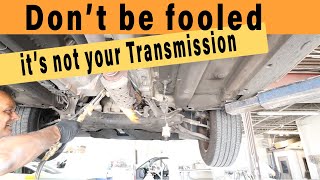
- Engine may feel sluggish as if there is a transmission problem
- Immediately replacing the catalytic converter without checking for underlying engine problems like oil consumption or misfires. This often leads to the new converter failing prematurely, sometimes within a few thousand miles.
- Replacing the catalytic converter when the actual fault is a less expensive downstream O2 sensor. 🎬 See how to tell if it's the converter or O2 sensor
Most Likely Causes

- Failing Catalytic Converter 🔴 High Probability Often fails as a result of other issues, such as oil consumption or persistent misfires, which are known problems on these models. Unburned fuel from misfires or oil burning past piston rings will overheat and contaminate the precious metals inside the converter, rendering it useless.
How to confirm: After confirming O2 sensors are working and there are no exhaust leaks or engine issues, the converter is the likely culprit. A temperature gun showing a higher temp at the inlet than the outlet indicates a clog. A pressure transducer test can also show increased backpressure in the cylinder.
Typical fix: Replace the catalytic converter. For the 2019 2.0L GDI, this must be paired with an ECM update per TSB #20-FL-010H. 🎬 Watch: 2019 Tucson manifold catalytic converter replacement guide It is critical to fix the root cause (e.g., oil consumption, misfires) first.
Est. part cost: $400-$1200 - Engine Oil Consumption 🟡 Medium Probability The 2.0L and 2.4L Theta II GDI engines are known for high oil consumption due to issues with piston rings. This oil burns in the combustion chamber and contaminates the catalytic converter and oxygen sensors. NHTSA complaints for this vehicle explicitly link P0420 to low oil levels.
How to confirm: Monitor engine oil level closely between changes. A loss of more than 1 quart per 1,000 miles is excessive. Look for blueish smoke from the exhaust. A failed PCV valve is a common, inexpensive cause to check first.
Typical fix: Address the cause of oil consumption. This could range from replacing the PCV valve (OEM Part # 26740-2G000) to more significant engine repairs like piston ring replacement, which may be covered under warranty extensions related to class-action lawsuits.
Est. part cost: $20-$4000+ - Faulty Oxygen (O2) Sensor 🟡 Medium Probability A lazy or failed downstream (Bank 1, Sensor 2) O2 sensor can send incorrect data to the ECM, mimicking a bad converter. Oil contamination can also foul the sensor, causing it to fail.
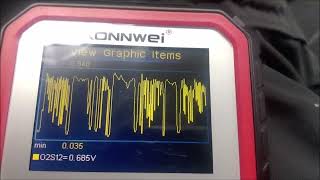
How to confirm: Use a scan tool to graph the voltage of the upstream and downstream O2 sensors. The upstream sensor should fluctuate rapidly between ~0.1V and ~0.9V. The downstream should be relatively stable. If the downstream sensor mirrors the upstream, the converter is likely bad. If it's flat, stuck, or slow to respond, the sensor itself is likely faulty.
Typical fix: Replace the downstream oxygen sensor (Bank 1, Sensor 2). It's often recommended to use OEM or high-quality brands like Denso or NTK for reliability.
Est. part cost: $50-$150 - Engine Misfires ⚪ Low Probability An owner complaint filed with the NHTSA shows P0420 appearing with multiple misfire codes (P0300, P0302, etc.). Driving with a misfire dumps unburned fuel into the exhaust, which quickly overheats and destroys the catalytic converter.
How to confirm: Check for other trouble codes, specifically P0300-P0304. Address any misfire codes before diagnosing the P0420. A common diagnostic step is to swap ignition coils between cylinders to see if the misfire code follows the coil.
Typical fix: Repair the cause of the misfire (e.g., replace spark plugs, ignition coils).
Est. part cost: $25-$200 - Exhaust Leak ⚪ Low Probability
How to confirm: Visually inspect the exhaust system from the engine to the rear O2 sensor for cracks or loose connections, especially at gaskets. Listen for ticking or hissing noises. A smoke test is the most effective diagnostic method.
Typical fix: Repair the leak by replacing the gasket or damaged exhaust component.
Est. part cost: $10-$300
Diagnosis Steps
- Scan for all stored trouble codes. If misfire (P030x) or lean (P0171) codes are present, diagnose and fix them first. A misfire is a converter killer.
- Check the engine oil level and service history. If it is low or has a history of needing top-offs, suspect an oil consumption issue. A bad PCV valve is a simple first check.
- Thoroughly inspect the exhaust system for any leaks between the engine and the downstream O2 sensor. Pay close attention to manifold and flange gaskets.
- Use a scan tool to observe the live data from the upstream (Bank 1, Sensor 1) and downstream (Bank 1, Sensor 2) oxygen sensors. The upstream sensor's voltage should switch rapidly between ~0.1V and ~0.9V. A properly functioning converter will result in a much steadier, flatter voltage reading from the downstream sensor (typically above 0.5V). 🎬 Watch: Easy diagnostic and repair steps for the P0420 code
- If the downstream sensor's readings are erratic and mimic the upstream sensor, the catalytic converter has likely failed.
- If the downstream sensor's reading is stuck or slow to respond, the sensor itself is the likely problem.
- If a 2019 2.0L model, check with a dealer if TSB #20-FL-010H (ECM update and catalyst replacement) has been performed.
- If all other components check out, the catalytic converter is the confirmed point of failure.
Parts You'll Likely Need
- Manifold Catalytic Converter Assembly
(OEM #28510-2EMN0 (2WD), 28510-2EPE0 (4WD) for 2019 2.0L)— This is the part that has lost its efficiency. TSB #20-FL-010H specifically calls for its replacement (along with an ECM update) for the 2019 2.0L model to fix P0420. It is often damaged by underlying engine issues.
Trusted brands: Hyundai (OEM), Walker, MagnaFlow, AP Exhaust
OEM price range: $900-$1400
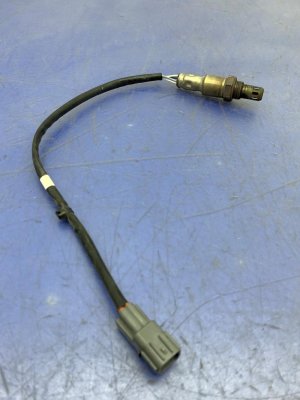
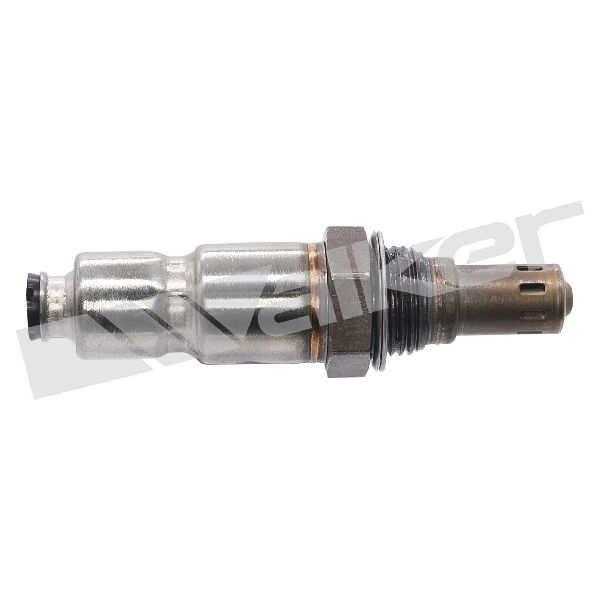
Aftermarket price range: $400-$800 - Downstream Oxygen Sensor (Bank 1, Sensor 2) — A faulty downstream sensor can incorrectly report poor catalyst efficiency, making it a common cause and a frequent misdiagnosis. It's often replaced as a diagnostic step or preventative measure.
Trusted brands: Bosch, Denso, NGK/NTK
OEM price range: $120-$180
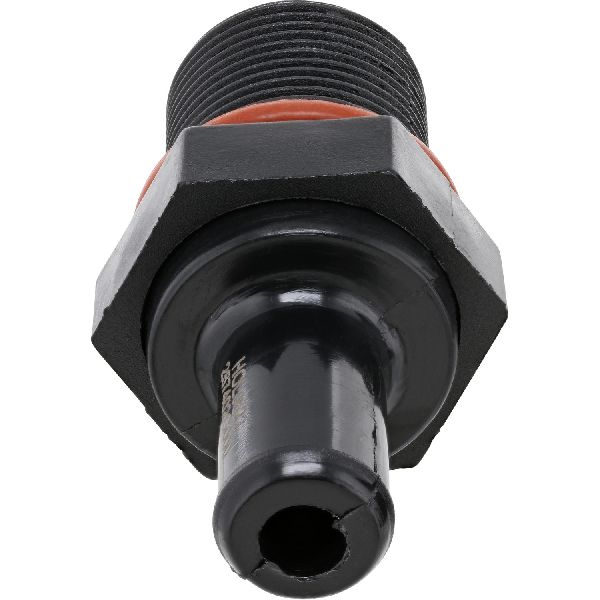
Aftermarket price range: $50-$100 - PCV Valve
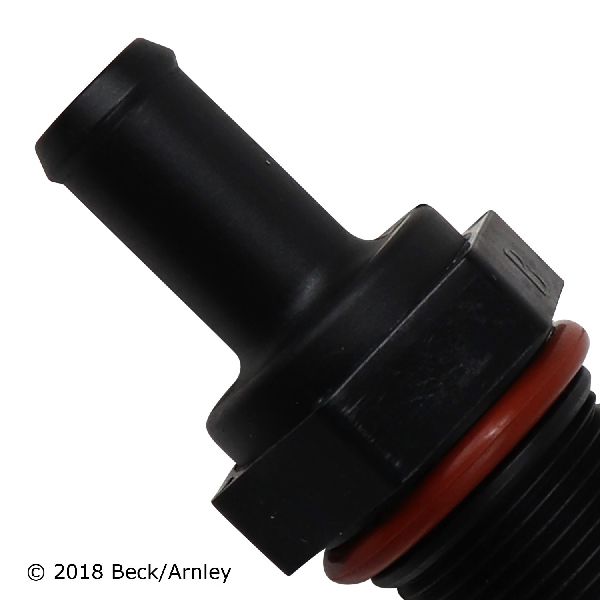
(OEM #26740-2G000)— A stuck-open PCV valve is a common and inexpensive cause of excessive oil consumption on the 2.0L and 2.4L engines, which can lead to P0420.
Trusted brands: Hyundai (OEM), Standard Motor Products
OEM price range: $20-$40
Aftermarket price range: $10-$25
Related Codes That Often Appear With This One
- P0171 — A TSB from Hyundai (5NP-R9N8H-10) links P0420 and P0171 (System Too Lean), suggesting a potential vacuum leak or fuel delivery issue could be a contributing factor that raises exhaust gas temperatures and damages the converter.
- P0300, P0301, P0302, P0303, P0304 — NHTSA complaints and repair stories show these misfire codes appearing with P0420. An engine misfire allows unburned fuel to enter the exhaust, which will quickly overheat and destroy the catalytic converter.
Technical Service Bulletins (TSBs) & Recalls
- 20-FL-010H
- 5NP-R9N8H-10
Platform-Specific Known Issues
- TSB for 2019 2.0L GDI (TSB #20-FL-010H): Hyundai issued Technical Service Bulletin #20-FL-010H for the 2019 Tucson with the 2.0L GDI engine. It addresses DTC P0420 by replacing the exhaust manifold catalyst and performing a mandatory ECM software update to improve DTC logic. Part numbers are 28510-2EMN0 for 2WD models and 28510-2EPE0 for 4WD models.
- Theta II GDI Engine Oil Consumption: The 2.0L and 2.4L GDI engines in this Tucson generation are part of the broader Hyundai/Kia Theta II engine family known for excessive oil consumption, which has led to class-action lawsuits. This condition fouls spark plugs, O2 sensors, and ultimately poisons the catalytic converter, making it the root cause of many P0420 codes. Owners report needing to add a quart of oil every 1000-3000 miles.
- Owner Experience: Repeat Converter Failure: A complaint to the NHTSA (ODI #11633642) from a 2019 Tucson owner details replacing the catalytic converter three times in five years due to recurring P0420 codes, highlighting the importance of diagnosing the root cause rather than just replacing the converter.
- Owner Experience: Misfire Leading to P0420: A detailed repair video for an 2018 Tucson showed that the customer first experienced a misfire on cylinder 2 (P0302), continued driving, and then developed a P0420 code with power loss. The root cause was a bad ignition coil that dumped raw fuel into the exhaust, destroying the converter. The fix required replacing the coil, spark plugs, and the catalytic converter.
Mechanic-Grade Diagnostic Values
- Downstream O2 Sensor (Bank 1, Sensor 2) Voltage — expected: A steady voltage, typically between 0.4V and 0.9V, at steady RPM with a warm engine.. Failure: Voltage rapidly fluctuates in a pattern that mimics the upstream O2 sensor (e.g., switching between 0.1V and 0.9V), indicating the catalyst is not storing oxygen.
- In-Cylinder Pressure Transducer Reading (during exhaust stroke) — expected: Pressure should be at or very near 0 PSI (atmospheric pressure).. Failure: The pressure waveform shows a plateau significantly above 0 PSI during the exhaust stroke, indicating high exhaust backpressure from a clogged catalytic converter.
- Short-Term and Long-Term Fuel Trims — expected: Within a range of -5% to +5% at idle and steady cruise.. Failure: Consistently high positive values (>10%) suggest a lean condition (like a vacuum leak) that can overheat and damage the converter. Consistently high negative values suggest a rich condition.
Hidden / Shadow Codes Worth Checking
- Mode 6, TID $81, CID $01: This is the raw data for the Catalyst Efficiency Monitor for Bank 1. The value represents a calculated ratio of the downstream vs. upstream oxygen sensor switching frequency. A value above the maximum threshold will fail the test and set P0420. (see via A professional scan tool or advanced OBD-II app (like Torque Pro, OBD Fusion) capable of displaying Mode $06 test results.)
Scan Tool Commands That Help
- Hyundai GDS (or equivalent professional scanner): Catalyst Monitor Drive Cycle — After a repair (like replacing a converter or O2 sensor) or clearing codes, this specific drive cycle must be performed to force the catalyst monitor to run and confirm the fix. The procedure involves driving at specific speeds and conditions to meet the monitor's enable criteria.
Wiring & Ground Locations
- Downstream O2 Sensor (B1S2) Connector — Underneath the vehicle, after the primary catalytic converter section of the exhaust.. On 2016+ models, this is a 4-wire narrowband sensor. Wire 1 is sensor ground, Wire 2 is the signal wire (sent to ECM), Wire 3 is heater control (from ECM), and Wire 4 is the 12V power supply for the heater. Damage to these wires can cause incorrect readings and mimic a P0420 fault.
- Upstream O2 Sensor (B1S1) Connector — On the back of the engine, accessible from the top, with its electrical connector located on the right (passenger) side of the engine bay.. On 2016+ GDI models, this is a 6-wire wideband sensor. While not the direct cause of P0420 (which is a downstream measurement), a faulty upstream sensor can cause fuel control problems that ultimately damage the converter.
Real Owner Repair Stories
- Auto Repair Tips YouTube Channel (2018 Hyundai Tucson) — Vehicle would shake badly, significant loss of power, felt like a bad transmission.
❌ Tried (didn't work) The owner continued to drive with the symptoms for a while before seeking repair.
✅ What actually fixed it The root cause was a failed ignition coil on cylinder #2 (Code P0302). The prolonged misfire dumped raw fuel into the exhaust, destroying the catalytic converter. The fix required replacing both the bad ignition coil and the catalytic converter assembly. - Reddit user aquapura89 in r/Hyundai (Hyundai/Kia GDI Engine (2011-2020) with oil consumption) — P0420 code appears after or concurrently with the onset of heavy oil consumption.
❌ Tried (didn't work) Simply replacing the catalytic converter without addressing the oil burning. The new converter will fail again.
✅ What actually fixed it The user states the root cause is carboned-up/stuck oil control rings. The recommended DIY fix is to perform a "piston soak" using a solvent like Berryman's B12 poured directly into the cylinders to free the rings. After fixing the oil consumption, the catalytic converter can be replaced.
"I Checked Everything" — The Actual Cause
- In many cases for the 2014-2019 Tucson, an exhaust smoke test will come back clean (no leaks), yet the P0420 code persists. This is because the failure is not due to outside air entering the exhaust, but rather the catalytic converter being internally destroyed by either excessive oil burning (from piston ring issues) or raw fuel (from engine misfires). The root cause is inside the engine itself.
When the Usual Fixes Don't Work
- While replacing the downstream O2 sensor is a common diagnostic step, many owners find it does not resolve the P0420 code on this platform. The ultimate cause is very frequently the degradation of the catalytic converter itself, which in turn is caused by known engine issues like oil consumption or misfires. An owner on Reddit with a 2017 model experiencing heavy oil consumption and P0420 was advised by another user that a piston soak to free the oil control rings was the necessary first step before even considering a catalytic converter replacement, as the new part would just be destroyed by the continued oil burning.
Model Year Variations Within This Range

- 2016-2019 (Third Generation): The upstream oxygen sensor (B1S1) is a 6-wire wideband Air/Fuel Ratio sensor, while the downstream sensor (B1S2) used to measure catalyst efficiency is a conventional 4-wire narrowband oxygen sensor. They are not interchangeable and require different diagnostic approaches.
- 2019 (2.0L Engine): TSB #20-FL-010H provides a specific repair for P0420 that involves replacing the catalytic converter AND performing a mandatory ECM software update. Failing to perform the update may result in the code returning.
- 2014: TSB #5NP-R9N8H-10 links P0420 with P0171 (System Too Lean), indicating that on these earlier models, a vacuum leak or fuel delivery issue causing a lean condition could be a primary contributor to converter failure due to high exhaust temperatures.
Helpful Videos

Used OEM Parts in Stock
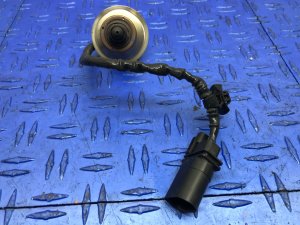
New Aftermarket Parts Available



The information in this article is provided for general reference and educational purposes only. Vehicle specifications, procedures, and part compatibility can vary by production date, trim level, and region. Always consult your vehicle's factory service manual and verify part numbers before purchasing or performing repairs. Safety-critical components such as airbags, seat belts, and braking systems should be installed by a qualified professional.
- Hyundai TUCSON:
- 🎬 Helpful Videos
- 🛍️ Shop This Part
- What's Unique About the 2014-2019 Hyundai Tucson
- Diagnostic Flowchart
- Symptoms You May Notice
- Most Likely Causes
- Diagnosis Steps
- Parts You'll Likely Need
- Related Codes That Often Appear With This One
- Technical Service Bulletins (TSBs) & Recalls
- Platform-Specific Known Issues
- Mechanic-Grade Diagnostic Values
- Hidden / Shadow Codes Worth Checking
- Scan Tool Commands That Help
- Wiring & Ground Locations
- Real Owner Repair Stories
- "I Checked Everything" — The Actual Cause
- When the Usual Fixes Don't Work
- Model Year Variations Within This Range
- 🎟️ Get 5% Off