

P0420 on 2011-2014 Hyundai Sonata: Catalyst Efficiency Causes & Fixes
On a 2011-2014 Sonata, P0420 often means the catalytic converter has failed, usually due to excessive engine oil consumption from the 2.4L GDI engine. Before replacing the expensive converter, you must verify and fix the oil burning issue, which may be covered under an extended engine warranty, or the new part will fail quickly. An ECM software update should also be investigated.
- P0420 on a 2011-2014 Sonata is very likely caused by a failed catalytic converter.
- The catalytic converter likely failed due to excessive oil consumption from the 2.4L GDI engine, a known issue for this vehicle.
- You MUST diagnose and fix the root cause (oil burning, misfires, etc.) before replacing the catalytic converter, or the new part will be damaged as well.
- Check with a Hyundai dealer about warranty extensions for the engine and any open TSBs for an ECM update related to P0420.
- Do not automatically replace the O2 sensors; proper diagnosis is needed to confirm if the converter or the sensor is the true culprit.
What's Unique About the 2011-2014 Hyundai SONATA

The 2011-2014 Sonata (YF generation) with the 2.4L GDI "Theta II" engine is particularly prone to this code due to widespread issues with excessive oil consumption. This oil burning contaminates and destroys the catalytic converter, meaning the P0420 code is often a symptom of a larger engine problem that may be covered by a class-action lawsuit settlement and warranty extension. Unlike many other vehicles where a bad oxygen sensor is a common cause, on this specific Sonata, the converter itself is frequently the confirmed failure point, but only because the engine ruined it.
Diagnostic Flowchart
Tap your situation to follow the diagnostic path that matches what you're seeing on this vehicle.
Symptoms You May Notice
- Check Engine Light is on
- Failure to pass an emissions test
- Reduced engine power or sluggish acceleration, especially if the converter is clogged.
- A rotten egg or sulfur smell from the exhaust.
- Noticeable increase in engine oil consumption. 🎬 Watch: Why the Sonata engine burns oil and how to check it.
- Replacing the oxygen sensors when the catalytic converter is truly the part that has failed. While O2 sensors can be a cause, the high rate of oil consumption on this platform makes converter failure more likely.
- Replacing the catalytic converter without fixing an underlying oil consumption or engine misfire problem. This will lead to the new converter failing in a short amount of time, sometimes within a few months.
Most Likely Causes
- Failed Catalytic Converter 🔴 High Probability The 2.4L GDI Theta II engine is known for excessive oil consumption due to issues like connecting rod bearing wear. This oil burns and sends contaminants into the exhaust, which coats and melts the internal honeycomb structure of the catalytic converter, rendering it useless. Often, the P0420 code appears after the engine has already been consuming oil for some time.
How to confirm: A mechanic can use a scan tool to graph the upstream and downstream O2 sensor voltages. If the downstream sensor voltage fluctuates rapidly, mirroring the upstream sensor, the converter is not working. An infrared thermometer can also be used to check temperatures; the outlet should be significantly hotter than the inlet on a working converter. If it's cooler or the same temperature, it's likely clogged or dead.
Typical fix: Replace the catalytic converter assembly. CRUCIALLY, the root cause (oil consumption) must be repaired first, or the new converter will also fail. Check with a Hyundai dealer about eligibility for engine repair or replacement under the extended warranty/class action settlement before paying for any repairs.
Est. part cost: $500-$1800 - Failed Downstream Oxygen (O2) Sensor 🟡 Medium Probability While less likely than a failed converter on this platform, an aged or oil-fouled O2 sensor can become sluggish and send incorrect readings, falsely triggering P0420. It's a common first step in diagnosis due to its lower cost.
How to confirm: Test the sensor's operation using a multimeter or a capable scan tool. A lazy or faulty sensor may not respond correctly. Visually inspect the sensor for heavy carbon or oil deposits.
Typical fix: Replace the downstream (Bank 1, Sensor 2) oxygen sensor. The OEM part number is 39210-2G560 for some 2.0L/2.4L models.
Est. part cost: $50-$150 - Engine Control Module (ECM) Software Issue 🟡 Medium Probability Hyundai released a Technical Service Bulletin (TSB 15-FL-003, also mentioned in NHTSA file 5NP-V6G6F-10) for an ECM update to prevent high catalyst temperatures that can trigger P0420. This update is a critical step that a dealer should check for.
How to confirm: A Hyundai dealership can check your VIN to see if the software has been updated per the relevant TSBs. If not, the update should be performed.
Typical fix: Update the ECM software at a dealership. The TSB notes that if P0420 is present, the catalyst should also be replaced along with the update.
Est. part cost: $0-$200 - Exhaust Leak ⚪ Low Probability Flex pipes on exhaust systems are a common failure point over time, though not exceptionally high on this specific model.
How to confirm: Visually inspect the exhaust manifold and pipes between the two oxygen sensors for cracks or loose gaskets. A leak can be heard as a ticking noise that gets louder with acceleration. A smoke test can pinpoint the exact location. An unrepaired leak can allow oxygen to enter the exhaust, tricking the O2 sensor and causing a false P0420 code.
Typical fix: Replace the leaking gasket or repair the cracked pipe/manifold.
Est. part cost: $20-$300
Rare But Worth Checking
- Engine Misfires or Fuel System Issues: While less common as the direct cause, persistent misfires or a rich/lean fuel condition (like code P0171 mentioned in the TSB) will send unburned fuel into the exhaust, quickly destroying the catalytic converter. These must be addressed to prevent repeat failure of a new converter.
Diagnosis Steps

- Check engine oil level and consumption rate. Before any other step, determine if the engine is consuming excessive oil (e.g., more than 1 quart per 1,000 miles). If so, the root cause is likely the engine itself. Contact a Hyundai dealer to check for warranty coverage.
- Check for any other stored trouble codes. Address codes for misfires (P030x), fuel mixture (P0171), or knock sensor (P1326) first, as they are root causes.
- Verify with a Hyundai dealer if TSB 15-FL-003 (or a newer version) has been performed on your vehicle. An ECM update may be required.
- Thoroughly inspect the exhaust system for any leaks between the engine and the downstream O2 sensor. Pay close attention to the exhaust manifold and flex pipe.
- Use a scan tool with live data capability to graph the voltage of the upstream (Bank 1, Sensor 1) and downstream (Bank 1, Sensor 2) oxygen sensors. At a steady 2500 RPM, the upstream sensor should fluctuate rapidly, while the downstream sensor should hold a relatively steady voltage. If the downstream sensor mirrors the upstream, the converter has failed. 🎬 See this video for a step-by-step P0420 diagnosis and repair.
- If the converter appears to be working based on the graph, test the oxygen sensors individually to ensure they are responding correctly and are not contaminated.
Parts You'll Likely Need

- Catalytic Converter (Exhaust Manifold Assembly)
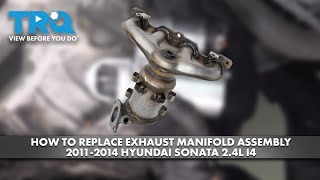
(OEM #28510-2G195 (2.4L, California emissions), 28510-2G245 (2.4L Federal))— This is the most common failure part for P0420 on this vehicle, often destroyed by engine oil consumption. On the 2.4L engine, it is integrated with the exhaust manifold. 🎬 Watch: How to replace the exhaust manifold and catalytic converter assembly. Part numbers can vary, so VIN confirmation is essential.
Trusted brands: Hyundai (OEM), Walker, MagnaFlow, Davico
OEM price range: $1000-$2100
Aftermarket price range: $400-$900 - Downstream Oxygen Sensor
(OEM #39210-2G560)— A faulty downstream O2 sensor can send incorrect data to the ECM, falsely triggering a P0420 code. It's a common misdiagnosis but should be ruled out.
Trusted brands: Bosch, Denso, NGK/NTK
OEM price range: $120-$200
Aftermarket price range: $50-$150
Related Codes That Often Appear With This One
- P0171 — System Too Lean (Bank 1). A Hyundai TSB explicitly links P0171 and P0420, suggesting a software update can address conditions that cause both codes.
- P0300-P0304 — Misfire codes. An engine misfire allows unburned fuel to enter the exhaust, which can overheat and damage the catalytic converter, leading to P0420.
- P1326 — Knock Sensor Detection System. This code indicates the KSDS has detected vibrations indicative of engine bearing wear. This is a direct link to the root cause (engine failure) that often leads to oil consumption and subsequent P0420.
Technical Service Bulletins (TSBs) & Recalls
- 5NP-V6G6F-10 (also TSB 15-FL-003): Addresses P0420 and P0171 codes, recommending an ECM update and, if P0420 is present, replacement of the catalytic converter.
- Recall Campaign 132 / NHTSA 15V568000: Pertains to GDI engine inspection and replacement for connecting rod bearing wear, a root cause of oil consumption that leads to P0420.
- Service Campaign 966 / 982: Free software update to install the Knock Sensor Detection System (KSDS), which is a prerequisite for the extended engine warranty.
Platform-Specific Known Issues
- Theta II Engine Problems & Warranty Extension: The 2.4L GDI engine in 2011-2014 Sonatas was subject to recalls and a class-action lawsuit for connecting rod bearing wear, which leads to engine seizure. A primary symptom is excessive oil consumption, which directly causes P0420 by contaminating the catalytic converter. Hyundai extended the warranty for the engine short block to 15 years/150,000 miles for eligible vehicles that have had the Knock Sensor Detection System (KSDS) software update performed.
- TSB for ECM Update: Hyundai issued Technical Service Bulletin 15-FL-003 for 2011-2014 Sonatas with the 2.4L GDI engine. It involves an ECM software update to correct logic that could lead to high catalyst temperatures, triggering P0420 and/or P0171. The bulletin states that if P0420 is found, the converter should be replaced along with the software update.
- Repair Chain of Events: A common story from owners is that the P0420 code appears months after they noticed the engine was burning oil. After the engine is replaced under warranty, the catalytic converter often needs to be replaced as well because it has been saturated with oil.
Mechanic-Grade Diagnostic Values
- Downstream O2 Sensor (Sensor 2) Voltage — expected: Relatively steady voltage, typically between 0.4V and 0.5V, when the engine is at operating temperature and steady RPM.. Failure: Voltage fluctuates rapidly, mimicking the pattern of the upstream (Sensor 1) O2 sensor.
- Upstream O2 Sensor (Sensor 1) Voltage — expected: Rapidly fluctuating (swinging) between a low of <0.3V and a high of >0.8V.. Failure: A flat or slow-to-respond signal indicates a faulty sensor, which can affect the P0420 diagnosis.
- Catalytic Converter Temperature Differential — expected: The outlet pipe temperature should be significantly hotter than the inlet pipe temperature after the engine has been running for at least 20 minutes.. Failure: The outlet temperature is the same as or cooler than the inlet temperature, suggesting the converter is clogged or chemically inactive.
- Short-Term (STFT) and Long-Term (LTFT) Fuel Trims — expected: Both STFT and LTFT should be under +/- 10% at idle, 1500 RPM, and 2500 RPM.. Failure: Consistently high positive or negative fuel trims suggest an underlying engine issue (vacuum leak, fuel delivery problem) that could be causing the P0420 code.
Hidden / Shadow Codes Worth Checking
- P0420-11: Warm Up Catalyst Efficiency Below Threshold Bank 1. This is a manufacturer-specific extension of the generic P0420 code, indicating the failure was detected during the engine warm-up phase. (see via May require a more advanced scanner than a basic code reader; reported by a FIXD OBD reader.)
Scan Tool Commands That Help
- OBD-II Scan Tool: Catalyst Monitor Readiness Drive Cycle — After a repair (like replacing a converter or O2 sensor) or clearing codes, the catalyst monitor will show as 'Not Complete'. A specific drive cycle must be performed to force the monitor to run and confirm the fix. This is required to pass an emissions test. The procedure typically involves a cold start, idling, steady-speed driving (e.g., 57 mph for 3-5 minutes), and coasting periods without using the brake.
Wiring & Ground Locations
- Gf03 — Located at the right 'B' pillar.. Poor grounds can cause erratic sensor readings. While not exclusive to the O2 sensor circuit, checking major body and chassis grounds is a key step in diagnosing electrical issues that could falsely trigger codes.
- Gm01 — Located at the center of the dash.. This is another central grounding point. Verifying that grounds are clean and tight can prevent chasing phantom sensor failures.
- ECM Connector Pins (O2 Sensors) — At the Engine Control Module (ECM), typically located in the engine compartment.. To properly test sensor wiring for continuity or shorts, you must know the corresponding pin at the ECM. For example, on some models, the upstream O2 sensor heater control is on Pin 7. A wiring diagram is essential for confirming the exact pinout for your specific vehicle.
Real Owner Repair Stories
- Reddit user in /r/MechanicAdvice (2019 Hyundai Sonata (newer model but with the same GDI engine family issues)) — P0420 code and rough idling.
❌ Tried (didn't work) Replacing the manifold catalytic converter. The fix only lasted for 45 minutes before the rough idle and code returned.
✅ What actually fixed it The user acknowledged the true root cause was the engine burning oil ('a GDI thing'), which had destroyed the original catalytic converter and the new one. The ultimate, correct fix is to repair or replace the engine to stop the oil consumption before installing another new converter.
"I Checked Everything" — The Actual Cause
- An exhaust leak located just before the downstream (Sensor 2) oxygen sensor can cause a P0420 code. The leak pulls fresh, un-metered oxygen into the exhaust stream. The downstream sensor reads this high oxygen level and reports it to the ECM, which interprets the reading as a sign that the catalytic converter is not working, even if the converter itself is perfectly fine. This can be missed if a smoke test isn't performed carefully or if the leak is very small and only opens up under specific temperature/pressure conditions.
When the Usual Fixes Don't Work
- While replacing the downstream O2 sensor is a common first step for a P0420 code on many vehicles, on this specific platform it is often a misdiagnosis. Due to the high prevalence of engine oil consumption destroying the catalyst, the P0420 code on a 2011-2014 Sonata is far more likely to be a failed converter. As one owner story illustrates, even replacing the entire catalytic converter assembly will fail quickly if the underlying engine problem is not resolved first.
OEM Part Supersession History
28510-2G175→28510-2G195— Standard part revision or improvement by the manufacturer.
Heads up: The new part number (28510-2G195) is the correct replacement for the old one. Using the old part number, if found, is not advisable. This part is often specified for California emissions models.
Model Year Variations Within This Range
- 2011-2014: Vehicles were manufactured to either Federal or California emissions standards, which require different catalytic converters. The part number 28510-2G195 is specified for California emissions. Always confirm the required part with your vehicle's VIN.
- 2011-2014: Some aftermarket exhaust components, like the front flex pipe, are listed with exceptions for models equipped with the 'Sport Suspension', indicating a potential difference in exhaust routing or fitment for those trims.
Helpful Videos
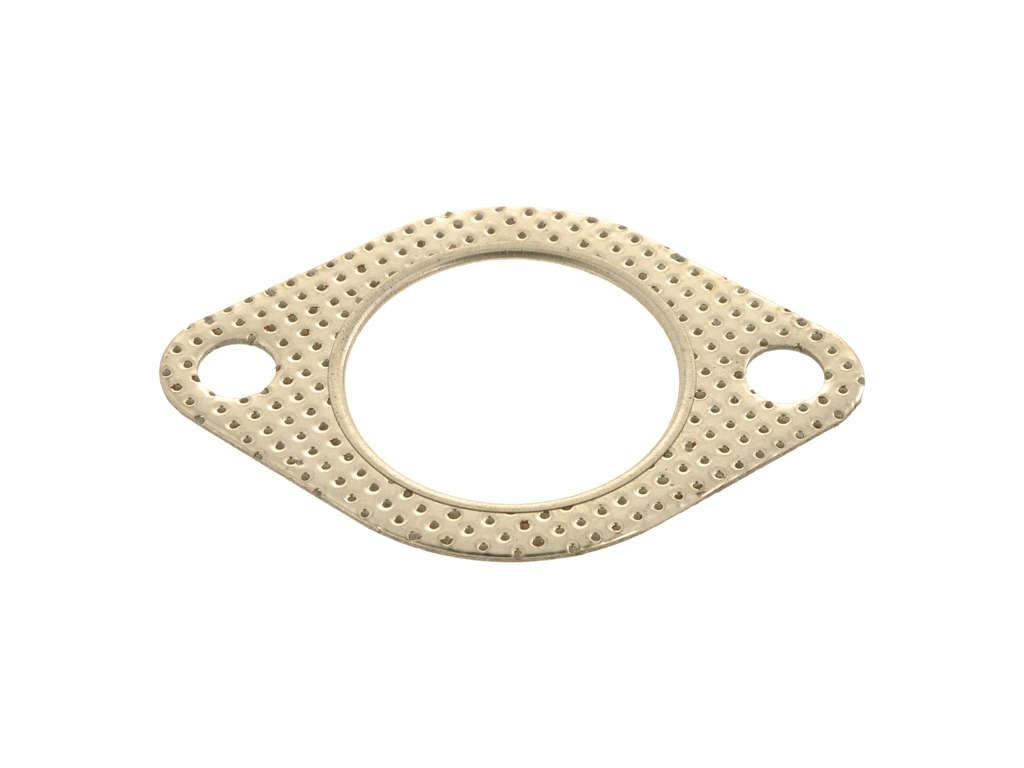
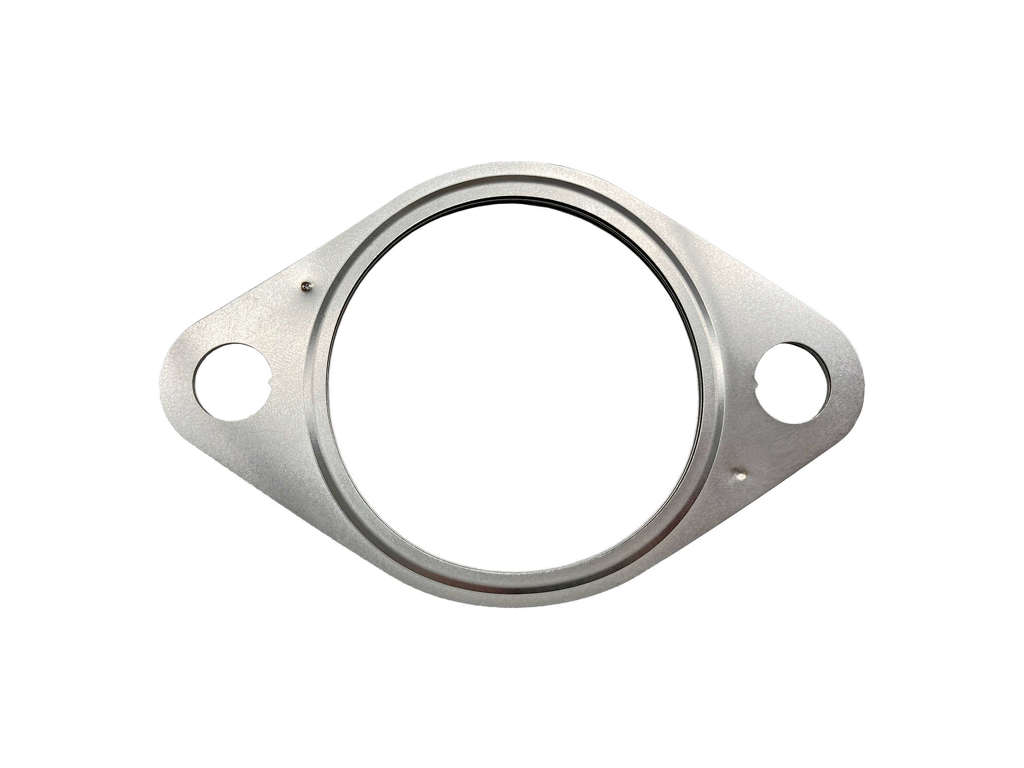
We Have This Part in Stock




The information in this article is provided for general reference and educational purposes only. Vehicle specifications, procedures, and part compatibility can vary by production date, trim level, and region. Always consult your vehicle's factory service manual and verify part numbers before purchasing or performing repairs. Safety-critical components such as airbags, seat belts, and braking systems should be installed by a qualified professional.
- Hyundai SONATA:
- 🎬 Helpful Videos
- 🛍️ Shop This Part
- What's Unique About the 2011-2014 Hyundai SONATA
- Diagnostic Flowchart
- Symptoms You May Notice
- Most Likely Causes
- Rare But Worth Checking
- Diagnosis Steps
- Parts You'll Likely Need
- Related Codes That Often Appear With This One
- Technical Service Bulletins (TSBs) & Recalls
- Platform-Specific Known Issues
- Mechanic-Grade Diagnostic Values
- Hidden / Shadow Codes Worth Checking
- Scan Tool Commands That Help
- Wiring & Ground Locations
- Real Owner Repair Stories
- "I Checked Everything" — The Actual Cause
- When the Usual Fixes Don't Work
- OEM Part Supersession History
- Model Year Variations Within This Range
- 🎟️ Get 5% Off