

P0420 on 2013-2016 Hyundai Santa Fe: Catalyst Failure or a Deeper Engine Problem?
On a 2013-2016 Santa Fe, especially with the 2.4L or 2.0T engine, P0420 often means the catalytic converter has failed due to excessive oil consumption from underlying engine issues. Before replacing the expensive converter, check your oil level and investigate engine health to avoid a repeat failure. The converter is almost always the victim, not the initial cause.
- For the 2013-2016 Santa Fe (especially 2.4L/2.0T), P0420 is a strong indicator to immediately check for excessive engine oil consumption.
- Do not replace the catalytic converter without first ruling out underlying engine problems, exhaust leaks, and faulty oxygen sensors.
- A lazy downstream O2 sensor is a possible cause and is much cheaper to replace than a catalytic converter.
- If you have a 2.4L or 2.0T engine, research Hyundai's engine warranty extensions and recalls, as a P0420 code could be a symptom of a covered engine defect.
What's Unique About the 2013-2016 Hyundai SANTA FE

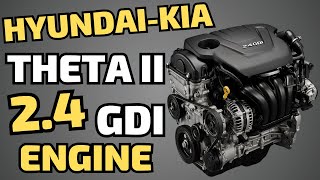
For the 2013-2016 Santa Fe, particularly the 'Sport' models with the 2.4L and 2.0T Theta II engines, P0420 is a major red flag that goes beyond a simple emissions part. These engines are known for significant oil consumption problems due to issues with piston rings, which can lead to catastrophic engine failure. 🎬 Watch: Learn why these Theta II engines fail and how to prevent it. This burning oil contaminates and ultimately destroys the catalytic converter by melting or clogging its internal structure. An owner complaint filed with the NHTSA reported a P0420 code and a backordered catalytic converter just one month before the entire engine needed to be replaced (ODI #11551817). Therefore, treating P0420 as just a 'bad cat' without first investigating the engine's health is a common and costly mistake.
Diagnostic Flowchart
Tap your situation to follow the diagnostic path that matches what you're seeing on this vehicle.
Symptoms You May Notice
- Check Engine Light is on
- Reduced engine power or acceleration, especially under load or going up hills
- Failing a state emissions inspection
- A sulfur or "rotten egg" smell from the exhaust
- Decreased fuel efficiency
- Excessive oil consumption (needing to add oil between changes)
- Replacing the catalytic converter without checking for oil consumption. The new converter will be damaged by the same underlying engine problem.
- Replacing the upstream (Air/Fuel Ratio) oxygen sensor when the downstream sensor is the one that primarily measures catalyst efficiency.
- Replacing an oxygen sensor without testing it first. A graphing scan tool can often confirm if the sensor is reporting correctly or is faulty.
Most Likely Causes

- Engine Consuming Excessive Oil 🔴 High Probability The 2.4L and 2.0T Theta II GDI engines are widely known for issues with piston rings (specifically, clogged oil control rings) that lead to oil burning. This oil fouls sensors and contaminates the catalytic converter, rendering it useless. This is the most probable root cause on these specific engines.
How to confirm: Check the engine oil dipstick frequently (every few hundred miles). If the level is consistently low without visible external leaks, the engine is burning oil. A dealership can perform an official oil consumption test, which involves sealing the oil system and having you return after 1,000 miles for measurement.
Typical fix: Hyundai has issued TSBs (e.g., 23-EM-008H) outlining a procedure that often starts with a chemical "piston soak" or "combustion chamber cleaning" to free up stuck piston rings. If this fails to resolve the oil consumption, the ultimate fix is an engine replacement, which may be covered under extended warranties related to class-action lawsuits.
Est. part cost: $200-$8000+ - Failing Catalytic Converter 🔴 High Probability This is almost always a symptom of the oil consumption issue. The converter becomes contaminated by burning oil or clogged from engine misfires, which melts the internal ceramic substrate. Replacing the converter without fixing the oil burning will result in the new converter failing quickly.
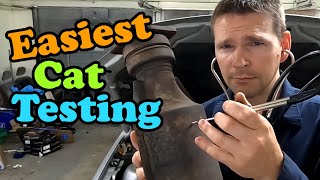
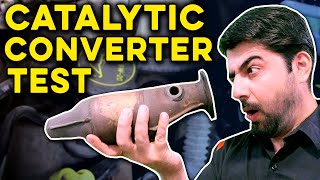
How to confirm: Use an infrared thermometer to check temperatures after the engine is fully warmed up; the converter outlet should be significantly hotter (at least 100°F) than the inlet. If temps are similar or the outlet is cooler, the converter is not working. 🎬 See how to test a catalytic converter like a professional mechanic. A professional can also perform an exhaust backpressure test.
Typical fix: Replace the catalytic converter, but ONLY after confirming the root cause (oil consumption, misfires) is fixed.
Est. part cost: $500-$2000 - Faulty Downstream Oxygen (O2) Sensor 🟡 Medium Probability While less common than the converter failing due to oil, the downstream O2 sensor can fail on its own or become contaminated with oil/soot, sending incorrect data to the ECM. It's a frequent misdiagnosis but should be properly tested.
How to confirm: Use a scan tool to graph the voltage of the Bank 1 Sensor 2 (downstream). A healthy sensor on a working converter should show a relatively stable, flat voltage between 0.6V and 0.8V. If the sensor is bad, its readings may be stuck, lazy, or fluctuate wildly, mimicking a bad converter.
Typical fix: Replace the downstream (Bank 1, Sensor 2) oxygen sensor.
Est. part cost: $55-$280 - Exhaust System Leak ⚪ Low Probability
How to confirm: Visually inspect the exhaust system from the engine to the catalytic converter for cracks, rust holes, or loose flanges. A shop can use a smoke machine to find small, hard-to-see leaks that can allow oxygen to enter the exhaust and skew O2 sensor readings.
Typical fix: Repair the leak, which may involve replacing a gasket or welding a crack.
Est. part cost: $20-$200
Rare But Worth Checking
- Engine Misfires or Fuel System Issues: A persistent misfire or a leaky fuel injector can dump raw fuel into the exhaust, which superheats and melts the internal structure of the catalytic converter. This is often accompanied by other codes (e.g., P030x for misfires).
- ECU Software Logic: On some Hyundai/Kia models, the original software for monitoring the catalyst was overly sensitive. Hyundai has released TSBs for other models (like TSB 20-FL-010H for the Tucson) that involve an ECM update to correct the P0420 logic. It's worth checking with a dealer if any software updates are available for your specific vehicle.
Diagnosis Steps

- Check engine oil level immediately. If it is low, top it off and begin monitoring for consumption every few hundred miles. This is the most critical first step for this vehicle.
- Scan for any other trouble codes. Address codes for knock sensors (P1326), misfires (P030x), or fuel trim (P0171) first, as they are likely the root cause.
- Check for applicable TSBs and Recalls. Inquire with a Hyundai dealer about warranty extensions for the engine (related to Campaign T3G) and any potential ECM software updates for P0420.
- Inspect the exhaust system between the two oxygen sensors for any signs of leaks, such as black soot marks or audible hissing.
- Using a scan tool with live data, graph the voltage for the upstream (Bank 1 Sensor 1) and downstream (Bank 1 Sensor 2) oxygen sensors. At a steady 2500 RPM, the upstream sensor should fluctuate rapidly between ~0.1V and ~0.9V, while the downstream sensor should remain relatively flat and stable around 0.6V-0.8V. If the downstream sensor mimics the upstream, the converter has failed.
- If O2 sensor data is inconclusive, use an infrared temperature gun to measure the inlet and outlet pipes of the catalytic converter after the engine is fully warmed up. The outlet should be at least 100°F hotter than the inlet.
- If the converter appears to be the problem, you MUST confirm the engine is healthy (not burning oil, no misfires) before spending money on a replacement.
Parts You'll Likely Need
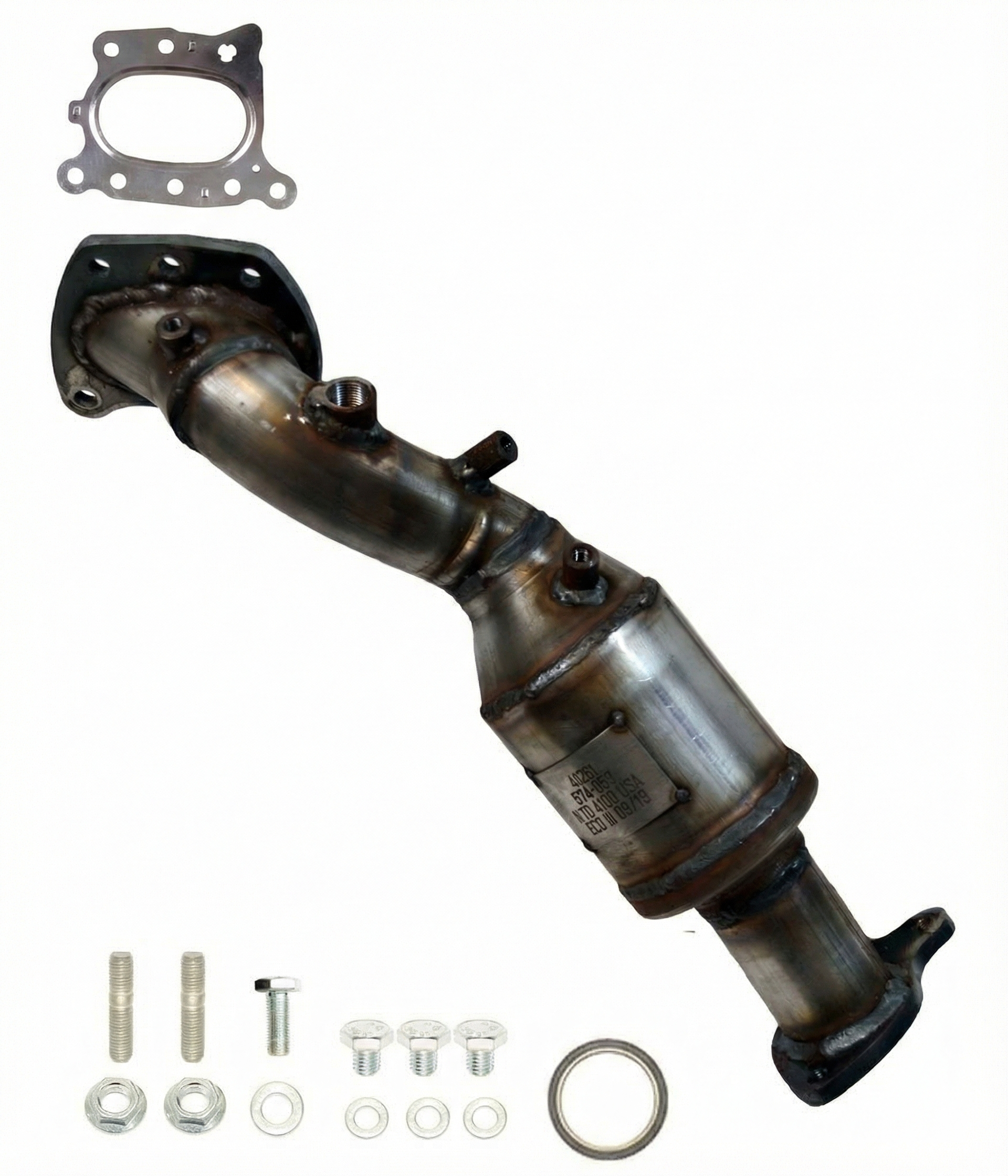
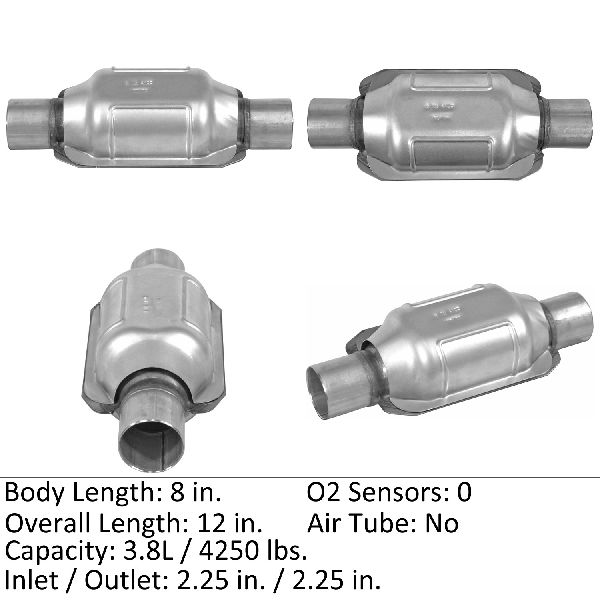
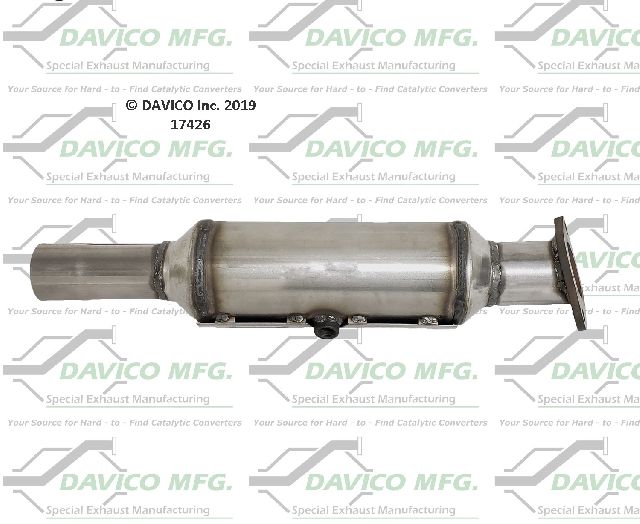
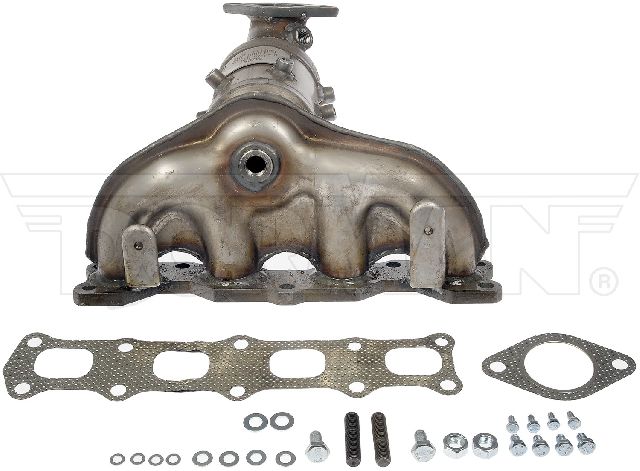
- Catalytic Converter (Bank 1)
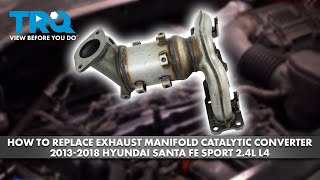
(OEM #2.4L: 28510-2G445, 28600-4Z300; 2.0T: 28600-4Z500)— This is the part identified by the code itself. It often fails due to contamination from engine oil or unburned fuel from misfires. Part numbers can vary by specific model year and emissions (Federal vs. California).
Trusted brands: Walker Exhaust, MagnaFlow, AP Exhaust, Hyundai (OEM)
OEM price range: $1200-$3800
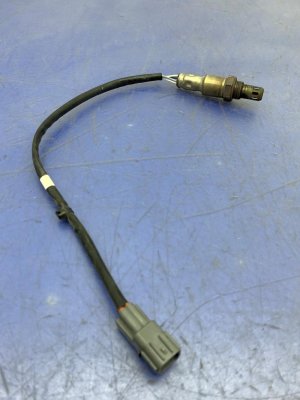
Aftermarket price range: $400-$900 - Downstream Oxygen Sensor (Bank 1, Sensor 2) — A faulty sensor can send incorrect readings, falsely triggering a P0420 code. It's a common cause and much cheaper to replace than the converter, but should be tested before replacement.
Trusted brands: Denso, Bosch, NGK/NTK, Hyundai (OEM)
OEM price range: $150-$280
Aftermarket price range: $55-$150
Related Codes That Often Appear With This One
- P1326 — This code relates to the Knock Sensor Detection System and is a critical warning of potential engine bearing failure. 🎬 Watch: How to diagnose P1326 and replace the knock sensor. It often precedes or accompanies total engine failure, which will inevitably destroy the catalytic converter from oil and metal debris, triggering P0420. Owners on forums frequently report P1326 appearing shortly before or after P0420.
- P0171 — A lean fuel condition (P0171) can cause high combustion temperatures, which can damage the catalytic converter over time, as noted in Hyundai TSB #5NP-F8N6C-10.
- P0300-P0304 — These codes indicate random or specific cylinder misfires. Unburned fuel from a misfiring cylinder enters the exhaust and can quickly overheat and destroy the catalytic converter.
Technical Service Bulletins (TSBs) & Recalls

- 5NP-F8N6C-10: Mentions P0420 in conjunction with P0171 due to high exhaust gas temperature, potentially leading to catalyst restriction and reduced power.
- 23-EM-008H (supersedes 21-EM-003H): Provides the official dealer procedure for diagnosing and repairing engine oil consumption, which is the root cause of many P0420 codes. The process may involve combustion chamber cleaning.
- 20-FL-010H: While for a Tucson, this TSB shows a precedent for Hyundai fixing a P0420 code via an ECM software update and catalyst replacement, indicating software logic can be a factor.
Platform-Specific Known Issues
- Many 2013-2016 Santa Fe models with 2.4L and 2.0T engines are part of a class-action lawsuit and recall/warranty extension program (Campaign T3G / 966) for engine defects causing excessive oil consumption and eventual seizure. This is a primary driver of catalytic converter failure.
- A Technical Service Bulletin (#5NP-F8N6C-10) for the 2013 model year notes that high exhaust temperatures can trigger P0420, sometimes in conjunction with P0171 (System Too Lean).
Mechanic-Grade Diagnostic Values
- Downstream O2 Sensor (B1S2) Voltage at steady 2500 RPM — expected: Relatively stable voltage, typically between 0.6V and 0.8V.. Failure: Voltage mimics the rapid switching of the upstream sensor (0.1V-0.9V), or is flatlined/unresponsive.
- Upstream O2 Sensor (B1S1) Voltage at steady 2500 RPM — expected: Rapidly fluctuating (switching) voltage between approximately 0.1V and 0.9V.. Failure: Slow or non-existent fluctuation.
- Catalytic Converter Temperature Differential — expected: The outlet pipe should be at least 100°F hotter than the inlet pipe after the engine is at full operating temperature.. Failure: The outlet temperature is the same as or cooler than the inlet temperature, indicating the catalyst is not 'lighting off'.
- Mode $06 Catalyst Efficiency Monitor Data (e.g., TID $81, CID $01) — expected: The test value reported by the ECU is below the maximum allowable threshold.. Failure: The test value exceeds the maximum threshold, which is what triggers the P0420 code. This provides a more granular look at how badly the test failed.
Hidden / Shadow Codes Worth Checking
- Mode $06 Test Results: While not a 'shadow code,' Mode $06 data reveals the raw results of the ECU's self-tests, including the catalyst efficiency monitor. A technician can view these values to see if the catalyst is barely failing or failing catastrophically, which can aid in diagnosis before the MIL is even triggered in some cases. (see via A professional scan tool or an advanced consumer OBD-II scanner with Mode $06 capability.)
Scan Tool Commands That Help
- Professional Scan Tool (e.g., Hyundai GDS, Autel, Snap-on): Live Data Graphing for O2 Sensors — This is the primary diagnostic step for P0420. Graphing Bank 1 Sensor 1 and Bank 1 Sensor 2 simultaneously allows for a direct visual comparison of their performance to determine if the catalytic converter is functioning.
Wiring & Ground Locations
- Downstream O2 Sensor Connector (Bank 1, Sensor 2) — On the exhaust pipe, after the primary catalytic converter.. Damaged wiring or a corroded connector can mimic a failed sensor. On a 2014 model, the wire colors are reportedly Orange, Yellow, Red, Black, and White. The connector has 4 pins. Checking for power, ground, and signal integrity at this connector is a key diagnostic step before replacing parts.
- ECM Ground Circuit — The main ground wire(s) for the Engine Control Module (ECM), typically grounded to the chassis or engine block.. A poor ECM ground can cause erratic sensor readings and incorrect diagnostic trouble codes. A generic test is to measure the resistance between the ECM connector's ground pin and the chassis, which should be near zero ohms.
Real Owner Repair Stories
- CarKiller Forum User (2014 Santa Fe Sport, 2.4L, 80k miles) — Check Engine Light with P0420 code, significant drop in fuel economy (24-28 MPG down to 17 MPG).
❌ Tried (didn't work) Clearing the code (it returned). Cleaning the O2 sensors with carb cleaner provided a temporary fix for several months, but the code eventually returned.
✅ What actually fixed it The owner suspected the root cause was the original engine, which suffered from excessive oil consumption (1qt every 250 miles) and was replaced under warranty at 65k miles. The belief is that the long-term oil burning fouled and permanently damaged the original catalytic converter, and the P0420 code is the result of that pre-existing damage.
OEM Part Supersession History
28510-2G445→May be related to or superseded by 28510-2G455— Unknown. Often due to minor design improvements, change in manufacturer, or consolidation of parts.
Heads up: Aftermarket cross-reference databases list both part numbers as fitting the 2.4L engine, suggesting they are likely interchangeable for the specified model years. Always confirm with the dealer using a VIN.
Model Year Variations Within This Range
- 2013-2016: There are no significant variations in the emissions control system or engine design within the 2013-2016 model years that would fundamentally change the diagnosis of a P0420 code. The primary diagnostic path is consistent across this generation for a given engine.
Helpful Videos
Used OEM Parts in Stock
New Aftermarket Parts Available



The information in this article is provided for general reference and educational purposes only. Vehicle specifications, procedures, and part compatibility can vary by production date, trim level, and region. Always consult your vehicle's factory service manual and verify part numbers before purchasing or performing repairs. Safety-critical components such as airbags, seat belts, and braking systems should be installed by a qualified professional.
- Hyundai SANTA FE:
- 🎬 Helpful Videos
- 🛍️ Shop This Part
- What's Unique About the 2013-2016 Hyundai SANTA FE
- Diagnostic Flowchart
- Symptoms You May Notice
- Most Likely Causes
- Rare But Worth Checking
- Diagnosis Steps
- Parts You'll Likely Need
- Related Codes That Often Appear With This One
- Technical Service Bulletins (TSBs) & Recalls
- Platform-Specific Known Issues
- Mechanic-Grade Diagnostic Values
- Hidden / Shadow Codes Worth Checking
- Scan Tool Commands That Help
- Wiring & Ground Locations
- Real Owner Repair Stories
- OEM Part Supersession History
- Model Year Variations Within This Range
- 🎟️ Get 5% Off