

P0420 on 2008-2009 Hummer H3: Catalyst Efficiency Causes and Fixes
P0420 on a Hummer H3 typically points to a failing catalytic converter, but it's crucial to first rule out cheaper causes like faulty oxygen sensors or exhaust leaks. On the 3.7L I5 engine, a cracked exhaust manifold is a very common cause of a false P0420. On some 2009 V8 models, a TSB suggests the code can appear at low mileage due to a sensitive diagnostic system, not an actual part failure. Check if the vehicle is under the 8-year/80,000-mile federal emissions warranty before paying for a ne
- Do not immediately replace the catalytic converter for a P0420 code. Always diagnose cheaper possibilities first.
- Thoroughly inspect for exhaust leaks, especially a cracked exhaust manifold, which is a known issue on the H3.
- Use a scan tool to analyze O2 sensor data. A lazy or faulty downstream sensor is a common misdiagnosis.
- If you have a 2009 model with low mileage, be aware of TSB PIP3119N, which suggests the code could be set falsely and may be resolved with a specific drive cycle.
- Any engine performance issues like misfires must be fixed before replacing the catalytic converter, or the new converter will be quickly destroyed.
What's Unique About the 2008-2009 Hummer H3
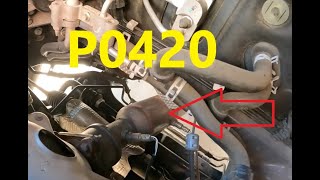
For the 2008-2009 Hummer H3, especially V8 models, GM issued a Technical Service Bulletin (TSB #PIP3119N) 🎬 Watch: Diagnosing the P0420 code on a Hummer H3 acknowledging that P0420 could be triggered on low-mileage vehicles or after a converter replacement. This was not necessarily due to a failed part, but because the diagnostic system could run its check before the new catalytic converter had a proper "break-in" period. Additionally, the cast iron exhaust manifold, which integrates the primary catalytic converter on the 3.7L I5, is known to crack. This issue is shared with its platform-mates, the Chevrolet Colorado and GMC Canyon, and is a frequent cause of a false P0420 code due to the resulting exhaust leak.
Diagnostic Flowchart
Tap your situation to follow the diagnostic path that matches what you're seeing on this vehicle.
Symptoms You May Notice
- Check Engine Light is on
- Noticeable loss of engine power, especially during acceleration or on the highway.
- A sulfur or "rotten egg" smell from the exhaust.
- Rattling noise from the exhaust if the converter's internal structure has broken apart.
- Reduced fuel efficiency
- A deeper or louder exhaust sound than normal, which can indicate a clogged converter.
- A ticking or hissing noise from the engine bay, especially when cold, which strongly suggests a cracked exhaust manifold.
- Immediately replacing the catalytic converter without checking for exhaust leaks or faulty oxygen sensors first. The cracked manifold on the 3.7L I5 is a very common culprit and should be thoroughly inspected before replacing the expensive converter.
- Replacing a failed catalytic converter without addressing the root cause, such as an engine misfire (P030x codes), which will quickly destroy the new converter.
Most Likely Causes
- Failing Catalytic Converter 🔴 High Probability Converters fail from age or contamination. Engine issues like misfires can send unburned fuel into the exhaust, overheating and melting the converter's internal structure. The federal emissions warranty covers catalytic converters for 8 years or 80,000 miles, a fact confirmed by an owner on HummerForums.com who received a free replacement on their '08 Alpha.
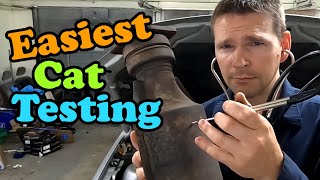
How to confirm: Use an infrared thermometer to check the temperature of the pipe before and after the converter; a working converter should be significantly hotter at the outlet. A real-world method shared on forums is to carefully feel the converters after the engine has run; a working unit will be very hot, while a hollowed-out one will be noticeably cooler. A hollow sound when tapped can also indicate the internal material has disintegrated. An exhaust back-pressure test can confirm if the converter is clogged.
Typical fix: Replace the catalytic converter. On the H3, the primary converter is integrated with the exhaust manifold.
Est. part cost: $400-$1200+ - Exhaust Leak (Cracked Manifold) 🔴 High Probability The cast iron exhaust manifold on the 3.7L I5 engine is notoriously prone to cracking. This allows oxygen to enter the exhaust stream before the O2 sensors, skewing the readings and causing the computer to falsely trigger a P0420 code. This is a well-documented issue on H3 and Colorado/Canyon forums.
How to confirm: Visually inspect the exhaust manifold for cracks, often appearing as black soot trails. A distinct ticking or hissing sound, especially when the engine is cold, is a strong indicator of a manifold leak. Check that all manifold bolts are tight.
Typical fix: Repair the leak. This almost always involves replacing the entire exhaust manifold/catalytic converter assembly, as welding the cast iron is often unsuccessful.
Est. part cost: $20-$1000 (depending on if the manifold needs replacement) - Faulty Downstream (Post-Cat) Oxygen Sensor 🟡 Medium Probability An aging or lazy O2 sensor can send incorrect data to the ECM, mimicking the signal of a bad converter. It is a common and relatively inexpensive part to replace as a first step before condemning the converter.
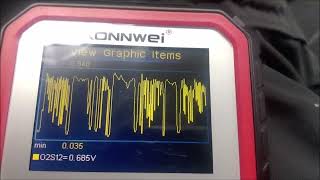
How to confirm: Use a scan tool to graph the voltage of the upstream and downstream O2 sensors. The upstream sensor's voltage should fluctuate rapidly (0.1V-0.9V), while the downstream sensor's voltage should remain relatively steady and stable. If the downstream sensor is fluctuating similarly to the upstream one, the converter is likely bad; if it's flatlined or slow to respond, the sensor itself is suspect.
Typical fix: Replace the Bank 1, Sensor 2 oxygen sensor.
Est. part cost: $50-$120 - Engine Misfires or Fuel System Issues ⚪ Low Probability Ignored engine misfires (from bad spark plugs or coils) or a rich fuel condition (from a leaky injector) will dump raw fuel into the exhaust, destroying a new catalytic converter quickly. This is the root cause that must be fixed before replacing a failed converter.
How to confirm: Check for other trouble codes related to misfires (P0300-P0305) or fuel trim (P0171, P0172). Address these codes first before suspecting the converter.
Typical fix: Perform a full engine tune-up: replace spark plugs, ignition coils, and address any fuel delivery problems.
Est. part cost: $100-$500
Rare But Worth Checking
- Improper Catalytic Converter Break-In: Per TSB PIP3119N, on low-mileage 2009 V8 models or after a converter replacement, the code can set falsely if the diagnostic runs before the converter material has fully broken in. The fix is to clear the code and perform a specific drive cycle.
- O2 Sensor Spacer / 'Non-Fouler' Installation: This is not a cause of the code, but a common illicit 'fix' owners discuss. Some install a spark plug non-fouler or a dedicated spacer on the downstream O2 sensor to pull it out of the direct exhaust stream. This can trick the sensor into giving a steady reading, clearing the P0420 code. This is illegal for on-road vehicles, masks the root problem, and will not help if the converter is physically clogged.
Diagnosis Steps
- Check for any other stored trouble codes. If misfire (P030x) or fuel system codes are present, diagnose and fix them first.
- On 3.7L I5 engines, perform a careful visual and auditory inspection of the exhaust manifold for cracks, soot marks, or a distinct ticking/hissing noise when the engine is cold. This is a top priority.
- Visually inspect the entire exhaust system from the engine to the tailpipe for broken gaskets and holes in the pipes.
- Use a scan tool with live data capability to monitor the voltage signals from the Bank 1 upstream (Sensor 1) and downstream (Sensor 2) oxygen sensors.
- The upstream sensor should show a rapidly fluctuating voltage (approx. 0.1V to 0.9V). The downstream sensor should show a much steadier, stable voltage.
- If the downstream sensor's graph mimics the upstream sensor's graph, the catalytic converter is not working and likely needs replacement.
- If the downstream sensor's voltage is flat, stuck, or slow to respond, the sensor itself is likely faulty and should be replaced.
- If O2 sensors appear to be working, use an infrared thermometer to measure the exhaust pipe temperature before and after the catalytic converter. The outlet should be at least 100°F hotter than the inlet on a fully warmed-up, working converter.
- If all other causes are ruled out, the catalytic converter is the most likely failed component. Check if the vehicle's age and mileage fall under the 8-year/80,000-mile federal emissions warranty.
Parts You'll Likely Need
- Catalytic Converter with Integrated Exhaust Manifold (3.7L I5)
(OEM #12604221 (superseded by 12655846, 12607895))— This is the most common ultimate failure for a P0420 code on the 5-cylinder, often due to the manifold cracking.
Trusted brands: ACDelco (OEM), Dorman (e.g., 674-989 for 07-08, 674-294 for 09-10), Walker Exhaust, MagnaFlow
OEM price range: $800-$1200
Aftermarket price range: $400-$700 - Catalytic Converter (5.3L V8)
(OEM #Bank 1 (Right/Passenger): 20786844, 25863674)— The primary failure point for P0420 on the V8 engine. Bank 1 is the passenger side.
Trusted brands: ACDelco (OEM), Walker Exhaust, MagnaFlow
OEM price range: $700-$1100
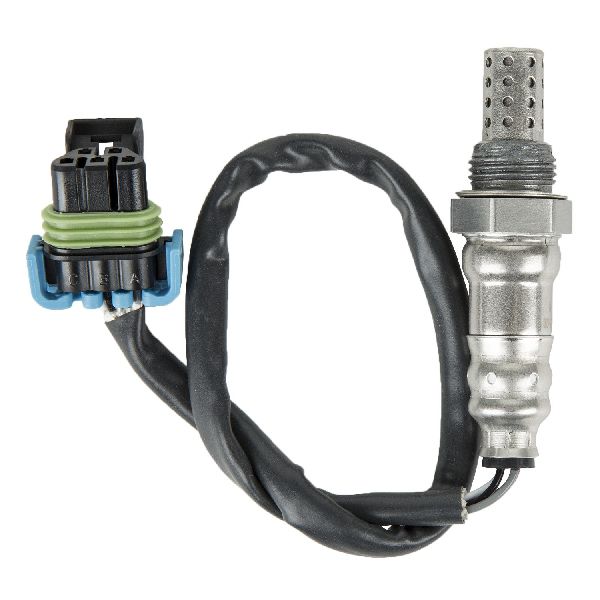
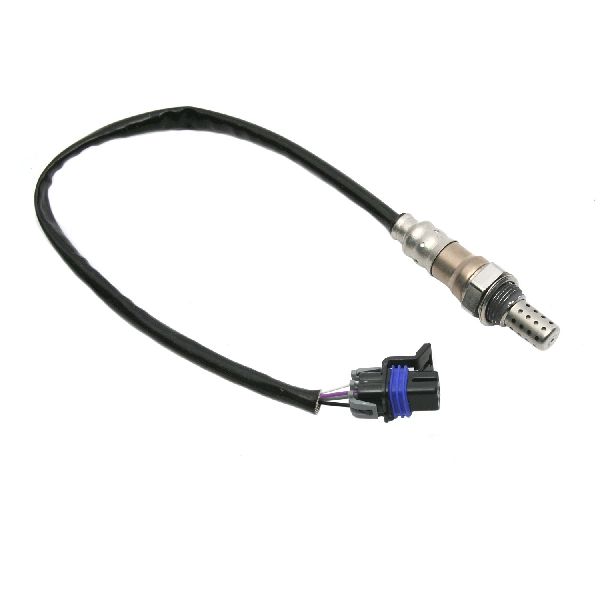
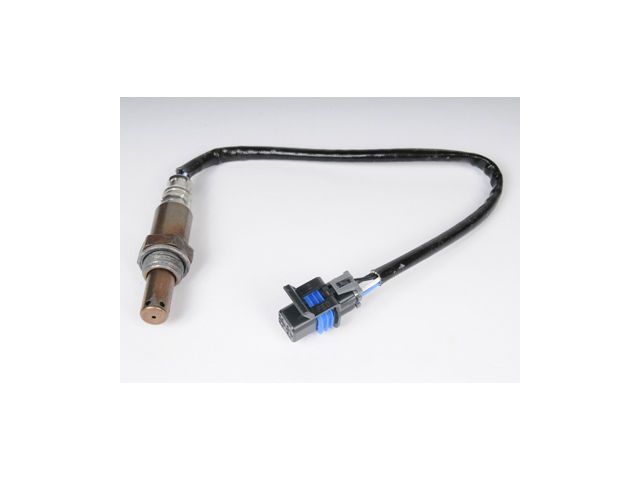
Aftermarket price range: $350-$600 - Downstream Oxygen Sensor (Bank 1, Sensor 2)
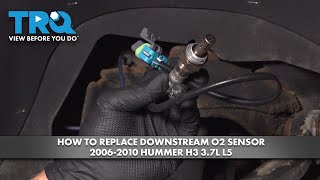
(OEM #ACDelco 213-4243, Denso 234-4112)— This sensor monitors converter efficiency. A faulty sensor can falsely trigger P0420 and is a common replacement item.
Trusted brands: ACDelco (OEM), Denso, Bosch, NTK
OEM price range: $70-$130
Aftermarket price range: $40-$80 - Upstream Oxygen Sensor (Bank 1, Sensor 1)
(OEM #ACDelco 213-4337, Denso 234-4337)— While less likely to cause P0420 directly, a lazy upstream sensor can affect fuel trim, leading to conditions that damage the converter over time. Often replaced with the converter as a set.
Trusted brands: ACDelco (OEM), Denso, Bosch, NTK
OEM price range: $60-$120
Aftermarket price range: $40-$70 - Exhaust Manifold Gasket
(OEM #Fel-Pro MS 96694)— Required when replacing the integrated exhaust manifold/catalytic converter on the 3.7L I5 engine to ensure a proper seal against the cylinder head.
Trusted brands: Fel-Pro, ACDelco, Victor Reinz
OEM price range: $20-$40
Aftermarket price range: $10-$25
Related Codes That Often Appear With This One
- P0430 — On the 5.3L V8 engine, P0430 indicates the same catalyst efficiency problem but on Bank 2 (the opposite side of the engine). They often appear together if the issue is systemic, like contaminated fuel or high mileage.
- P0300-P0305 — Misfire codes (P030x) indicate the root cause that is likely damaging the catalytic converter by sending unburned fuel into the exhaust. These must be fixed first.
- P0136 — This code points specifically to a malfunction in the downstream O2 sensor circuit (Bank 1, Sensor 2), which can be the actual cause of the P0420 reading. One owner on a forum reported this code appeared along with P0420.
Technical Service Bulletins (TSBs) & Recalls
- PIP3119N: Addresses the potential for false P0420/P0430 codes on low-mileage V8 vehicles or after a recent converter replacement due to an incomplete break-in cycle.
Platform-Specific Known Issues
- A known issue on the Hummer H3 3.7L I5 (and its platform-mates) is a cracked cast iron exhaust manifold, which causes an exhaust leak and frequently triggers a false P0420 code.
- TSB #PIP3119N (and later revisions) notes that on 2009 V8 models, a P0420 code can set on low-mileage vehicles or after a converter replacement due to the diagnostic monitor running before the converter is properly broken-in.
- The federal emissions performance warranty covers catalytic converters for 8 years or 80,000 miles. Owners within this window may be eligible for a free replacement from a dealership, as one 2008 H3 Alpha owner confirmed on a forum.
Mechanic-Grade Diagnostic Values
- Fuel Pressure (Key On, Engine Off & Idle) — expected: 50-65 PSI, holding steady. Some sources specify 57-58 PSI at startup, which may then drop to around 43 PSI at idle on a healthy system as commanded by the Fuel Pump Control Module.. Failure: Pressure below 50 PSI or pressure that bleeds off quickly after the pump primes can indicate a weak fuel pump, which can cause lean conditions that damage the converter.
- Mode $06 Catalyst Monitor Test (TID $21) — expected: The test value should be below the maximum threshold stored in the PCM. A scan tool is required to view this data.. Failure: A test value that exceeds the maximum limit indicates the catalyst failed the PCM's internal efficiency test, confirming the P0420 code.
- Engine Oil Pressure (Hot Idle) — expected: Minimum of 12 PSI at 1200 RPM.. Failure: Extremely low oil pressure (e.g., 2 PSI at hot idle) can indicate severe engine wear, which may lead to oil consumption that contaminates and destroys the catalytic converter.
Scan Tool Commands That Help
- Tech2 / GDS2 or equivalent professional scan tool: Catalyst System Efficiency Test / Catalyst Monitor — This function forces the PCM to run the internal test for catalyst efficiency under specific conditions (idle, after driving >1500 RPM). It can be used to verify a fix or confirm a failure without waiting for multiple drive cycles.
- SPS (Service Programming System): Engine Control Module Reprogramming — According to a GM bulletin, some vehicles may have a calibration error causing a false P0420. If diagnostics find no other cause, checking for and applying the latest ECM calibration is a required step. The TCM must be reprogrammed simultaneously.
Wiring & Ground Locations
- G102 / G103 — On the lower left side of the engine block. G103 is forward of G102.. These are primary engine block grounds. A poor connection here can affect the Engine Control Module (ECM) and various sensors, potentially causing erratic readings that could contribute to a false P0420 or other engine management codes.
- G105 — On the left inner front wheelwell, behind the battery.. This ground point serves the Mass Air Flow (MAF) / Intake Air Temperature (IAT) sensor. An incorrect MAF reading due to a bad ground can alter fuel trims, leading to a rich or lean condition that can damage the catalytic converter over time.
- O2 Sensor Connector (Bank 1, Sensor 2) — The connector for the downstream O2 sensor is located on the vehicle's frame rail, accessible from underneath the vehicle.. This is the direct electrical connection for the sensor that triggers the P0420 code. Check for corrosion, moisture, or damaged pins in this connector before replacing the sensor itself.
Real Owner Repair Stories
- HummerForums.com user 'V8-H3' (Hummer H3 Alpha (5.3L V8)) — P0420 code present.
❌ Tried (didn't work) Replaced the catalytic converters with aftermarket MagnaFlow units., Replaced the O2 sensors.
✅ What actually fixed it The code persisted after replacing the cats and sensors. The user concluded the O2 sensors did not 'like' the aftermarket converters. The suggested fix was to have the vehicle tuned to turn off the rear O2 sensor monitoring, which is not an option in states with emissions testing. Another user suggested the 'non-fouler' trick as a workaround. - Hummer4x4Offroad.com user 'lowtrac' (Hummer H3 (engine not specified)) — P0420 code, rattling from exhaust, noticeable loss of power.
❌ Tried (didn't work) Replaced the rear O2 sensor six months prior, but the code returned., Installed an O2 sensor spacer after the new cat was installed, but the code did not clear on its own.
✅ What actually fixed it The downstream catalytic converter had broken apart internally and was clogged. The user cut out the old cat and had a new one welded in. However, the P0420 code returned. The user then also received a P0136 (O2 Sensor Circuit Malfunction) code, swapped the rear sensor again, and the MIL turned off, allowing it to pass an emissions test even with a history code stored. This indicates a complex issue involving both the cat and the sensor/wiring.
OEM Part Supersession History
12604221→12607895, 12655846— Standard part evolution for design improvements or supplier changes.
Model Year Variations Within This Range
- 2009: The 3.7L LLR I5 engine's power ratings were slightly revised for 2009, down to 239 hp and 241 lb-ft of torque from 242 hp/242 lb-ft in 2007-2008. Additionally, TSB PIP3119N specifically calls out 2009 models as potentially setting a false P0420 at low mileage, suggesting a sensitivity in that year's diagnostic programming.
Helpful Videos

We Have This Part in Stock


The information in this article is provided for general reference and educational purposes only. Vehicle specifications, procedures, and part compatibility can vary by production date, trim level, and region. Always consult your vehicle's factory service manual and verify part numbers before purchasing or performing repairs. Safety-critical components such as airbags, seat belts, and braking systems should be installed by a qualified professional.
- Hummer H3:
- 🎬 Helpful Videos
- 🛍️ Shop This Part
- What's Unique About the 2008-2009 Hummer H3
- Diagnostic Flowchart
- Symptoms You May Notice
- Most Likely Causes
- Rare But Worth Checking
- Diagnosis Steps
- Parts You'll Likely Need
- Related Codes That Often Appear With This One
- Technical Service Bulletins (TSBs) & Recalls
- Platform-Specific Known Issues
- Mechanic-Grade Diagnostic Values
- Scan Tool Commands That Help
- Wiring & Ground Locations
- Real Owner Repair Stories
- OEM Part Supersession History
- Model Year Variations Within This Range
- 🎟️ Get 5% Off