

P0420 on 2004-2009 Hummer H2: Catalyst Efficiency Causes and Fixes
P0420 on a Hummer H2 almost always means the catalytic converter on Bank 1 (passenger side) has failed. Before replacing this expensive part, it is critical to rule out exhaust leaks (especially at the manifold) and faulty oxygen sensors, which can mimic converter failure. A single OEM replacement converter can cost over $1,000, and aftermarket units have a mixed reputation for longevity and compatibility.
- P0420 on a 2004-2009 Hummer H2 points to a failing catalytic converter on the passenger side (Bank 1).
- Before spending over $1,000 on a new converter, always rule out cheaper causes like exhaust leaks and faulty oxygen sensors.
- If you have a misfire code (P030x), you MUST fix that problem first, or you will destroy the new catalytic converter.
- Be cautious with cheap aftermarket converters; some may not meet the PCM's strict efficiency standards and can cause the Check Engine Light to return.
- If the code appears on a very new or recently replaced converter, follow the GM-specified break-in drive cycle before replacing parts.
What's Unique About the 2004-2009 Hummer H2

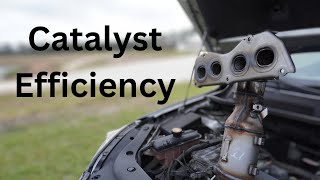
On the Hummer H2, the P0420 code is a straightforward efficiency code, 🎬 Watch: A breakdown of P0420 causes and common solutions. but GM has issued technical bulletins that are important. For very low mileage vehicles, TSB PIP3119N suggests the diagnostic test might run before the new converter is properly broken in, causing a false code. For older, higher-mileage H2s, the cause is overwhelmingly the catalytic converter itself. These GM V8 engines are also known for breaking exhaust manifold bolts, particularly the rear-most ones, causing a pre-catalyst exhaust leak that will trigger a P0420 code and should be checked before replacing the converter. Owners in forums frequently report that cheaper aftermarket converters may not work correctly and can cause the code to return, sometimes requiring ECU tuning to disable the rear O2 sensors for a permanent fix if emissions testing is not a concern.
Diagnostic Flowchart
Tap your situation to follow the diagnostic path that matches what you're seeing on this vehicle.
Generation note: This range covers the entire Hummer H2 generation. However, there was a powertrain update for the 2008 model year. 2004-2007 models used the 6.0L V8 (LQ4) engine, while 2008-2009 models received a more powerful 6.2L V8 (L92) and a new 6-speed automatic transmission. The diagnostic process for P0420 is similar, but part numbers for converters and sensors will differ between these two groups. The 6.2L L92 engines in 2008-2009 models also featured Active Fuel Management (AFM), which can have its own set of related issues like oil consumption that could potentially impact converter life.
Symptoms You May Notice
- Check Engine Light is on
- Failed emissions test
- Possible reduction in engine power if the converter is clogged
- A sulfur or 'rotten egg' smell from the exhaust if the converter is severely overworked or failing.
- Rattling noise from the exhaust system if the internal substrate of the converter has broken apart.
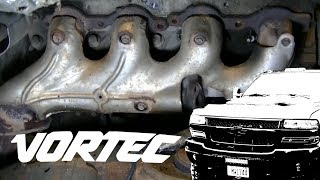
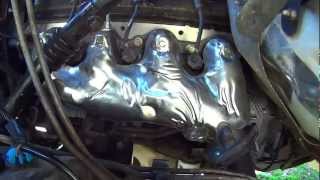
- A ticking sound from the engine bay, especially when cold, that goes away as the engine warms up, indicating an exhaust manifold leak. 🎬 See why these exhaust manifold leaks are so common.
- Replacing the oxygen sensors when the catalytic converter is actually bad. While O2 sensors can be the cause, a bad converter is more common for this code on a high-mileage H2.
- Replacing the catalytic converter without fixing an underlying engine problem like a misfire, rich fuel condition, or an exhaust manifold leak, which will cause the new converter to fail quickly or the code to return.
Most Likely Causes

- Failed Catalytic Converter 🔴 High Probability Catalytic converters have a finite lifespan and fail from age and mileage. The large V8 engines in the H2 produce significant heat and exhaust volume, contributing to wear over time. Contamination from engine issues (misfires, oil consumption) is a primary killer of converters.
How to confirm: Use a scan tool to graph the voltage of the upstream (Bank 1, Sensor 1) and downstream (Bank 1, Sensor 2) oxygen sensors. The downstream sensor's voltage should be relatively steady (e.g., above 0.6V). If it mirrors the rapid fluctuations of the upstream sensor, the converter is not working. An infrared thermometer can also be used; a healthy, warm converter should be hotter at the outlet than the inlet.
Typical fix: Replace the Bank 1 (passenger side) catalytic converter. On some H2 models, this part is integrated with the exhaust manifold. Many owners report issues with aftermarket converters causing the code to return; OEM or high-quality aftermarket (like MagnaFlow OEM Grade) are recommended for best results.
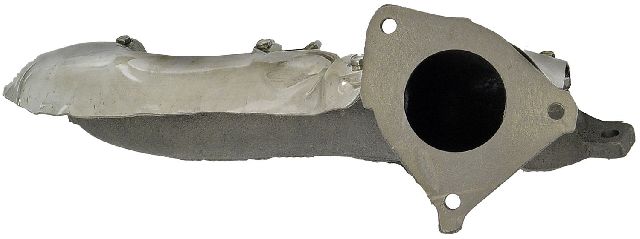
Est. part cost: $300-$1,600 - Exhaust Leak 🟡 Medium Probability The 6.0L and 6.2L V8 engines are notorious for the rear exhaust manifold bolts breaking off, causing a leak between the cylinder head and the manifold. This introduces oxygen into the exhaust stream before the O2 sensors, skewing the readings and tricking the PCM into setting a P0420 code.
How to confirm: Listen for a distinct 'ticking' noise from the engine bay on a cold start that may disappear as the engine warms up and the metal expands. Visually inspect the exhaust manifold for black soot trails near the cylinder head. A smoke test is the most definitive way to find small leaks.
Typical fix: Replace the exhaust manifold gasket. This often requires extracting the broken bolt(s), which can be a difficult job. 🎬 Watch: How to extract those stubborn broken manifold bolts. Some owners replace the factory bolts with stronger studs.
Est. part cost: $20-$200 - Faulty Downstream Oxygen (O2) Sensor 🟡 Medium Probability O2 sensors are exposed to extreme heat and wear out over time, leading to inaccurate readings that can falsely trigger a P0420 code. While less common than a bad converter on high-mileage vehicles, it's a crucial diagnostic step.
How to confirm: If the downstream O2 sensor's voltage is stuck high, low, or is slow to respond on a scan tool, it is likely faulty. It should be tested or replaced before condemning the catalytic converter.
Typical fix: Replace the Bank 1, Sensor 2 oxygen sensor. It is often recommended to replace O2 sensors when replacing a catalytic converter as a preventative measure.
Est. part cost: $50-$150 - Engine Misfires or Fuel System Issues ⚪ Low Probability Any condition that causes unburnt fuel to enter the exhaust (like a misfire from a bad spark plug, ignition coil, or a leaking fuel injector) will overheat and destroy the catalytic converter's internal structure.
How to confirm: Check for other trouble codes, especially misfire codes (P0300-P0308) or fuel trim codes (P0171, P0174). Address these codes first, as they are the root cause of the converter failure.
Typical fix: Perform a tune-up (spark plugs, wires), replace faulty ignition coils, or fix leaking fuel injectors. The catalytic converter will also need to be replaced if it has been damaged by the raw fuel.
Est. part cost: $100-$500+
Rare But Worth Checking
- Contaminated Catalytic Converter: A blown head gasket can cause engine coolant to enter the exhaust, contaminating the catalytic converter and oxygen sensors, which will trigger this code. This is a major engine repair.
- PCM Calibration Issue: As noted in TSB PIP3119N, on very low mileage vehicles or after a converter replacement, the diagnostic may run before the converter is fully broken-in, causing a false code. The TSB states the P0420/P0430 diagnostic is disabled for the first hour of engine run time to allow for break-in. A power loss event could reset this timer. Clearing the code and performing a drive cycle is the recommended fix.
Diagnosis Steps

- Check for any other DTCs. If misfire (P030x), fuel system (P0171/P0174), or O2 sensor circuit codes are present, diagnose and repair them first.
- Thoroughly inspect the exhaust system for any leaks between the cylinder head and the downstream (Bank 1, Sensor 2) oxygen sensor. Pay close attention to the exhaust manifold for signs of leaks (soot, ticking noises when cold), as this is a known issue on these engines.
- Use a scan tool with live data capability to monitor the voltage signals from the Bank 1 upstream (Sensor 1) and downstream (Sensor 2) O2 sensors at a steady 2,000-2,500 RPM.
- If the downstream O2 sensor signal mimics the rapid fluctuations of the upstream signal, the catalytic converter has failed and needs replacement.
- If the downstream O2 sensor signal is flat, unresponsive, or biased to one voltage, test the sensor and its circuit. It may be faulty.
- If no exhaust leaks are found and the O2 sensors test good, the catalytic converter is the most likely culprit. An infrared temperature gun can provide secondary confirmation: a working converter should be at least 100°F hotter at its outlet than its inlet after the engine is fully warmed up.
- Some owners on forums report using a spark plug non-fouler to pull the downstream O2 sensor out of the direct exhaust stream as a temporary fix to turn off the light, but this only masks the problem and will not pass a visual emissions inspection.
Parts You'll Likely Need
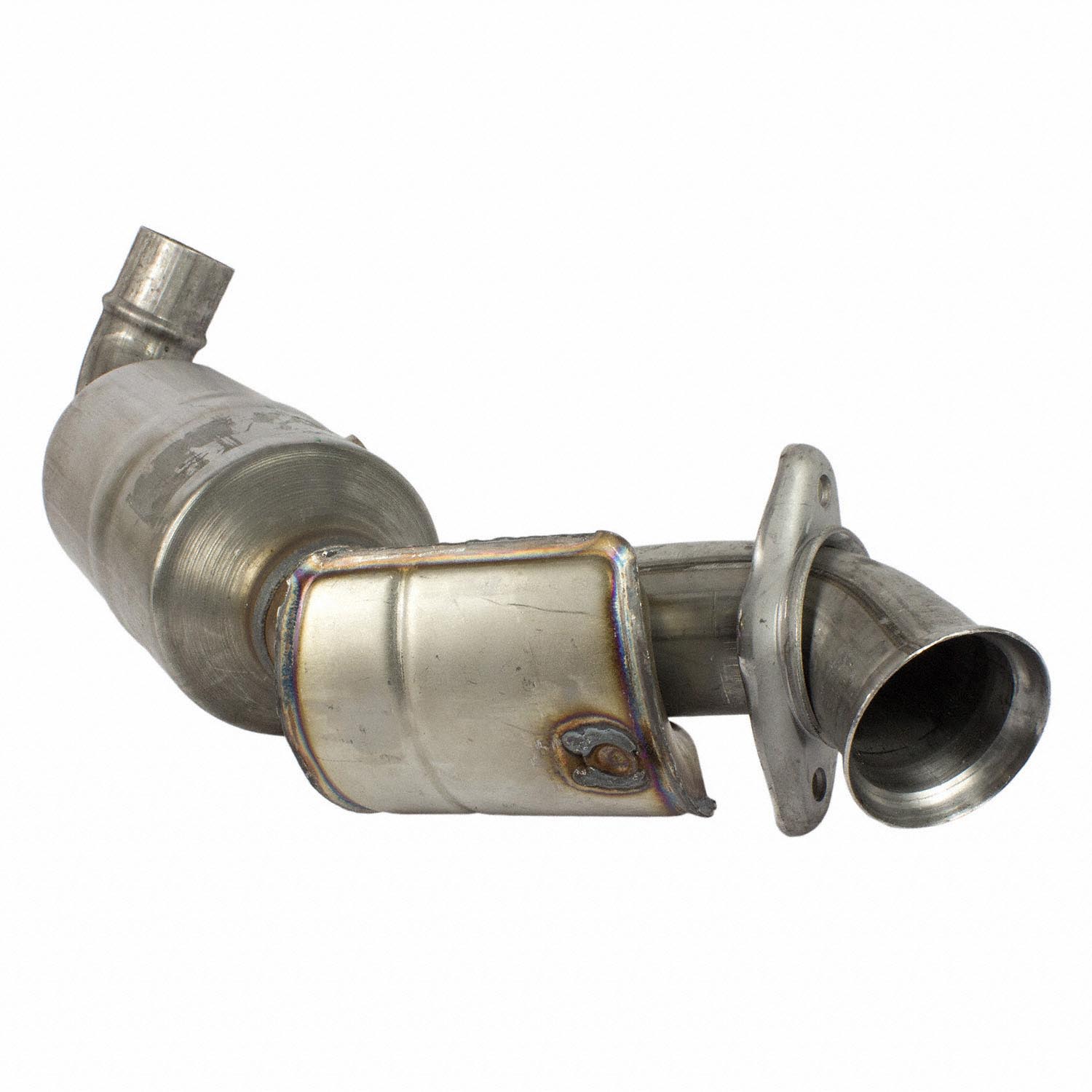
- Catalytic Converter (Bank 1)
(OEM #e.g., GM 15284113 (check specific year/model))— This is the most common failure that directly causes the P0420 code due to natural wear and tear or contamination.
Trusted brands: ACDelco (OEM), MagnaFlow (OEM Grade), Walker
OEM price range: $1100-$1600
Aftermarket price range: $300-$800 - Downstream Oxygen Sensor (Bank 1, Sensor 2)
(OEM #e.g., ACDelco 213-4226, 12589321 (check specific year/model))— A faulty sensor can send incorrect data to the PCM, falsely triggering the P0420 code. It's often replaced as a precaution when installing a new converter.
Trusted brands: ACDelco, Denso, Bosch
OEM price range: $70-$150
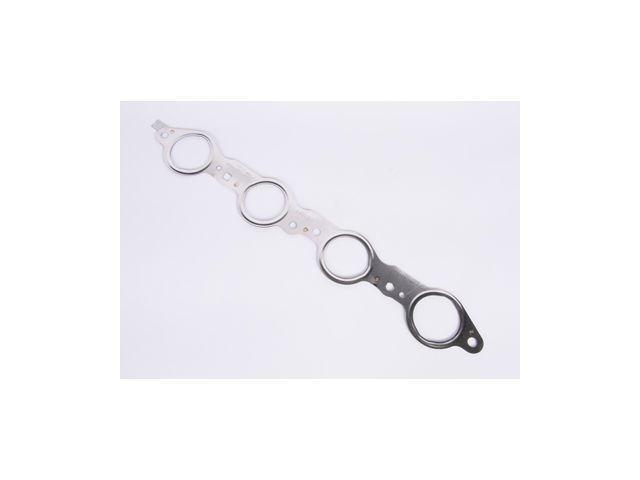
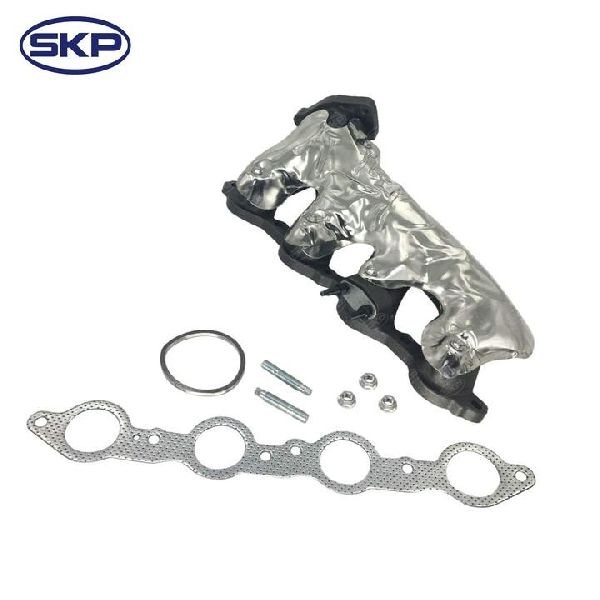
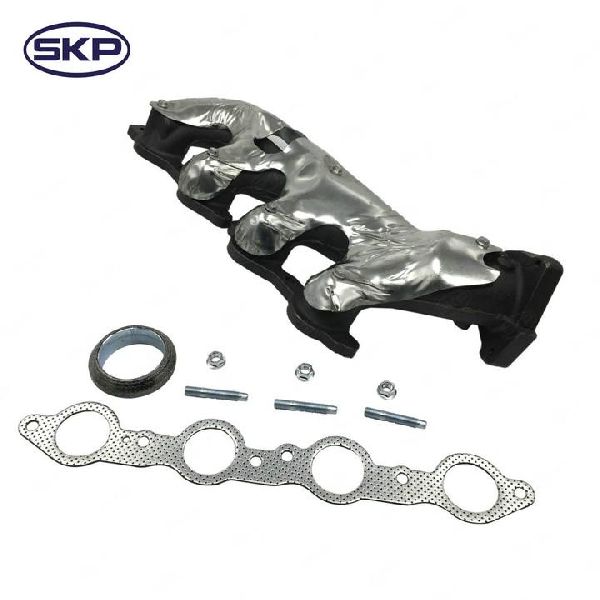
Aftermarket price range: $50-$100 - Exhaust Manifold Gasket — An exhaust leak before the catalytic converter is a common cause of P0420. This gasket is required when fixing a leak at the manifold, which is a known weak point on these GM V8s.
Trusted brands: Fel-Pro, ACDelco
OEM price range: $30-$60
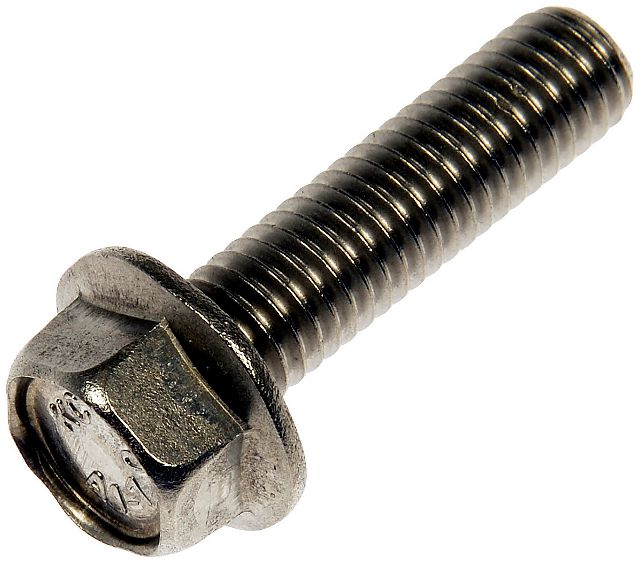
Aftermarket price range: $15-$40 - Exhaust Manifold Bolt/Stud Kit — Factory manifold bolts are prone to breaking, especially the rearmost ones. When repairing a manifold leak, it is highly likely one or more bolts will need to be replaced. Upgraded stud kits are available.
Trusted brands: Dorman, ARP
OEM price range: $20-$50
Aftermarket price range: $30-$70
Related Codes That Often Appear With This One
- P0430 — This is the same catalyst efficiency code but for Bank 2 (driver's side). It's common for both converters to fail around the same time due to age and similar operating conditions.
- P0300-P0308 — These are misfire codes (P0300 for random, P0301-P0308 for specific cylinders). An engine misfire sends raw fuel into the exhaust, which superheats and destroys the catalytic converter, directly causing the P0420 code.
Technical Service Bulletins (TSBs) & Recalls
- PIP3119N: Service Engine Soon Malfunction Indicator Lamp on at low mileage with DTC P0420 and or P0430 stored.
Platform-Specific Known Issues

- Technical Service Bulletin PIP3119N (and later revisions) notes that on new or low-mileage vehicles, or after a converter replacement, a false P0420/P0430 can set because the diagnostic runs before the converter is fully broken-in.
- Broken exhaust manifold bolts are extremely common on the 6.0L and 6.2L engines, causing a pre-cat exhaust leak that is a frequent underlying cause of a P0420 code.
- Owners on HummerForums.com report that aftermarket catalytic converters frequently fail to meet the PCM's strict efficiency parameters, causing the P0420 code to return shortly after installation. Some resort to having the rear O2 sensors 'tuned out' of the ECU to solve the issue when using aftermarket parts.
Mechanic-Grade Diagnostic Values
- Upstream O2 Sensor (Bank 1, Sensor 1) Voltage — expected: Rapidly fluctuating between approximately 0.1V (lean) and 0.9V (rich) while in closed loop.. Failure: A slow, lazy, or flat-lined signal indicates a faulty sensor.
- Downstream O2 Sensor (Bank 1, Sensor 2) Voltage — expected: A steady, stable voltage, typically between 0.4V and 0.8V, when the engine is warm and at a steady RPM.. Failure: Voltage that rapidly fluctuates in a pattern similar to the upstream sensor indicates the catalytic converter is not storing oxygen and has failed.
- Long Term Fuel Trim (LTFT) and Short Term Fuel Trim (STFT) — expected: Ideally within +/- 5% at idle and steady cruise.. Failure: Consistently high positive numbers (e.g., a combined total of +15% or more) indicate the engine is running lean due to issues like vacuum leaks or a weak fuel pump. This lean condition can cause a P0420 and must be fixed before replacing the converter.
Hidden / Shadow Codes Worth Checking
- Mode $06, Test ID $21: This is not a DTC, but the raw diagnostic data the PCM uses to monitor the efficiency of the Bank 1 catalytic converter. It provides a numerical value of the converter's oxygen storage capacity from the most recent test cycle. (see via A professional scan tool (like a GM Tech2 or equivalent) with Mode $06 capability. This allows a technician to see if the converter is borderline failing before the P0420 code is set, or to confirm a new converter is working correctly.)
Scan Tool Commands That Help
- GM Tech2 or equivalent professional scanner: Catalyst Monitor Test State — After meeting the 'Conditions for Running the DTC' (e.g., specific engine temp, speed, and load), a technician can use the scan tool to monitor this parameter. It will show when the catalyst efficiency test is 'Active' and what the final 'Test Result' is (Pass/Fail/No Decision). This is used to definitively confirm if the converter is failing the PCM's internal test without waiting for the check engine light to return over multiple drive cycles.
Wiring & Ground Locations
- PCM (Powertrain Control Module) — On the left front of the engine compartment, near the battery and underhood fuse block.. The PCM is the brain that receives data from the O2 sensors and makes the decision to set the P0420 code. Its connections and grounds are critical.
- G102 / G103 / G104 — These are key engine harness ground points located on the engine block itself. G102 is at the left front side of the engine block, while G103 and G104 are at the top rear of the engine.. These grounds are essential for the PCM, ignition coils, and various sensors. A corroded or loose ground at these locations can cause erratic voltage signals, including from the O2 sensors, potentially leading to a false P0420 code.
Real Owner Repair Stories
- Hummer Forums user (Hummer H2 (year not specified)) — Check Engine Light with code P0420 after the previous owner had already replaced an O2 sensor.
❌ Tried (didn't work) Replacing the O2 sensor (by previous owner).
✅ What actually fixed it The owner diagnosed the issue by touching the catalytic converters after the engine had run; the passenger side was hot, while the driver's side (Bank 2, but the method is key) was cool. Knocking on the cool converter produced a hollow sound, confirming its internal substrate was gone. The user installed a spark plug non-fouler on the downstream O2 sensor as a temporary workaround to turn off the light.
"I Checked Everything" — The Actual Cause
- While a smoke test is critical for finding exhaust leaks, a P0420 can still occur on a leak-free system. Technicians report that a lazy or slow-to-respond upstream O2 sensor can fail to report fuel mixture changes correctly, or a downstream sensor can become biased, leading the PCM to miscalculate catalyst efficiency. These sensor-related issues will not be found with a smoke test and must be diagnosed by graphing sensor data on a scan tool.
OEM Part Supersession History
Varies by year/engine (e.g., 84805858 for some GM V8 applications)→Varies by year/engine (e.g., 85542366 for some GM V8 applications)— Often due to improvements in design, materials, or consolidation of part numbers.
Heads up: Always verify the exact part number for your H2's VIN. Using a converter designed for a different engine or emissions standard (e.g., Federal vs. California) can cause the P0420 code to return even if the part is brand new and fits physically.
Model Year Variations Within This Range
- 2004-2007 vs 2008-2009: The primary difference is the engine (6.0L LQ4 vs 6.2L L92) and transmission. While the P0420 diagnostic logic is the same, the catalytic converters, O2 sensors, and exhaust manifold part numbers are different. The 2008-2009 models with the 6.2L L92 also have Active Fuel Management (AFM), which can introduce oil consumption issues that may shorten converter life if not addressed.
Helpful Videos

Used OEM Parts in Stock
New Aftermarket Parts Available


The information in this article is provided for general reference and educational purposes only. Vehicle specifications, procedures, and part compatibility can vary by production date, trim level, and region. Always consult your vehicle's factory service manual and verify part numbers before purchasing or performing repairs. Safety-critical components such as airbags, seat belts, and braking systems should be installed by a qualified professional.
- Hummer H2:
- 🎬 Helpful Videos
- 🛍️ Shop This Part
- What's Unique About the 2004-2009 Hummer H2
- Diagnostic Flowchart
- Symptoms You May Notice
- Most Likely Causes
- Rare But Worth Checking
- Diagnosis Steps
- Parts You'll Likely Need
- Related Codes That Often Appear With This One
- Technical Service Bulletins (TSBs) & Recalls
- Platform-Specific Known Issues
- Mechanic-Grade Diagnostic Values
- Hidden / Shadow Codes Worth Checking
- Scan Tool Commands That Help
- Wiring & Ground Locations
- Real Owner Repair Stories
- "I Checked Everything" — The Actual Cause
- OEM Part Supersession History
- Model Year Variations Within This Range
- 🎟️ Get 5% Off