

P0420 on 2010-2017 Honda CR-V: Causes for Catalyst System Inefficiency
P0420 on a 2010-2017 Honda CR-V most often means the catalytic converter has failed and needs replacement. Before replacing this expensive part, it's wise to first check for exhaust leaks, test the oxygen sensors, inspect the air intake tube for tears, and check for any available ECU software updates, as these can also trigger this code.
- P0420 on a 2010-2017 CR-V means the catalytic converter is not working efficiently.
- The most common fix is replacing the catalytic converter, but you should rule out cheaper fixes first.
- Always test the oxygen sensors and inspect for exhaust/intake leaks before buying a new converter.
- Engine problems like misfires or oil consumption can destroy a new converter, so fix those issues first.
- For some models, a simple software update from a Honda dealer might fix an overly sensitive monitoring system.
What's Unique About the 2010-2017 Honda CR-V

The 2010-2017 CR-V spans three vehicle generations with multiple engine updates, including a shift to direct injection in 2015, which can influence diagnosis. Notably, some K24 engines in this range can suffer from oil consumption, which can contaminate and prematurely destroy the catalytic converter. Honda has also issued Technical Service Bulletins like TSB 22-040 for some models, where the PGM-FI software is overly sensitive and can be updated by a dealer to correct a false P0420 trigger. This makes checking for software updates a critical early diagnostic step.
Diagnostic Flowchart

Tap your situation to follow the diagnostic path that matches what you're seeing on this vehicle.
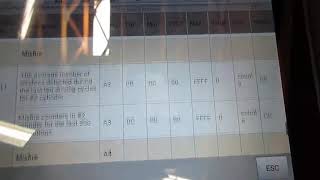
Generation note: This range covers three generations of the CR-V: - 3rd Gen Facelift (2010-2011): Used a 180-hp 2.4L (K24Z6) engine. TSBs from 2014 specifically mention the 2010 model for P0420 investigations. Oil consumption can be a contributing factor to P0420 on these models. Incorrect valve lash (clearance) can also affect combustion and contribute to the code. 🎬 Watch: Using Mode 6 data to check catalyst efficiency. - 4th Gen (2012-2016): Used a 185-hp 2.4L (K24Z7) engine from 2012-2014, then switched to a direct-injected 2.4L "Earth Dreams" (K24W9) with a CVT for 2015-2016. The 2012-2016 models are known for tears in the air intake hose (Part No. 17228-R5A-A00) causing lean conditions and P0420. - 5th Gen (2017): The 2017 model introduced a new body style and two engines: the carryover 2.4L (K24W9) and a new 1.5L Turbo (L15B7). Later model years with the 1.5L Turbo have been subject to investigations for P0420.
Symptoms You May Notice
- Check Engine Light is on.
- Reduced engine performance or acceleration.
- Vehicle may struggle to go above 30-40 mph if the converter is clogged.
- A rotten egg or sulfur smell from the exhaust, especially under hard acceleration.
- Decreased fuel efficiency.
- Guaranteed failure of an emissions or smog test.
- A rattling noise from underneath the vehicle if the converter's internal honeycomb has broken apart.
- Immediately replacing the catalytic converter without testing the oxygen sensors or checking for exhaust/intake leaks first.
- Replacing oxygen sensors when the true cause is a worn-out catalytic converter. If the downstream O2 sensor is fluctuating like the upstream, it's doing its job correctly by reporting the converter's failure.
- Using cheap, universal aftermarket catalytic converters which may not have enough precious metals to satisfy the Honda ECU, causing the code to return.
Most Likely Causes

- Failing Catalytic Converter 🔴 High Probability Catalytic converters have a finite lifespan and can be damaged by other engine issues like burning oil or misfires. The K24 engines in some CR-Vs are known for oil consumption issues, which can poison the catalyst material over time, leading to failure. Forum discussions for the CR-V frequently point to the converter itself being the ultimate failure point after high mileage.
How to confirm: After confirming O2 sensors are working correctly and there are no exhaust or intake leaks, the converter is the most likely cause. A mechanic can use a scan tool to graph O2 sensor data; if the downstream sensor (Sensor 2) voltage mimics the upstream sensor's rapid fluctuations, the converter is bad. 🎬 Watch: Advanced diagnostic steps to confirm a bad converter. A non-contact thermometer can also be used; a healthy converter should be at least 100°F hotter at the outlet than the inlet.
Typical fix: Replacement of the catalytic converter assembly. Using an OEM or high-quality EPA-compliant aftermarket converter is recommended, as cheap alternatives are known to fail quickly and cause the code to return.
Est. part cost: $400-$1800 - Failing Oxygen (O2) Sensor 🟡 Medium Probability O2 sensors are wear items and can degrade over time, sending inaccurate data to the ECM. While a completely failed sensor often has its own code (like P0138 or P0139), a 'lazy' or slow-to-respond downstream sensor can sometimes fail to show a stable voltage reading, leading the ECM to incorrectly flag the converter.
How to confirm: Use a scan tool to observe the live data from both the upstream (Sensor 1/Air-Fuel Ratio Sensor) and downstream (Sensor 2) O2 sensors with the engine fully warm. The upstream sensor should fluctuate rapidly. The downstream sensor voltage should be relatively stable, typically above 0.6V. If the downstream sensor is stuck or mirroring the upstream sensor, it may be faulty.
Typical fix: Replace the faulty oxygen sensor, most commonly the downstream (Sensor 2) sensor for this code. Using OEM-brand sensors like Denso is highly recommended for Hondas to ensure accurate readings.
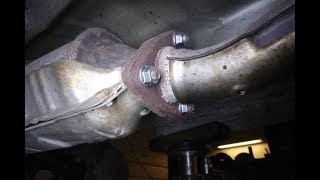
Est. part cost: $50-$180 - Exhaust System Leak ⚪ Low Probability Rust can cause leaks at gasket flanges (especially the donut gasket between the manifold and converter) or cracks in the exhaust manifold, especially in regions that use road salt. A leak before the catalytic converter can introduce oxygen that fools the O2 sensors.
How to confirm: Visually inspect the exhaust system from the engine to the tailpipe for black soot marks, cracks, or holes. Listen for hissing or ticking sounds that are loudest when the engine is cold. A mechanic may use a smoke machine to pressurize the exhaust and easily spot leaks.
Typical fix: Replace the leaking gasket or repair/replace the cracked exhaust component. Rusted spring bolts between converter sections are a common failure point.
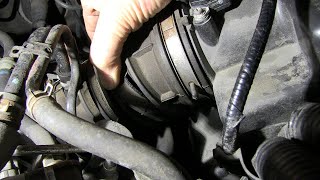
Est. part cost: $20-$300 - Torn Air Intake Tube ⚪ Low Probability On 4th generation CR-Vs (2012-2016), the flexible rubber air intake tube between the air filter box and the throttle body is known to become brittle and tear in the accordion folds. This creates an unmetered air leak (vacuum leak), causing a lean condition that can trigger P0420.
How to confirm: Visually inspect the accordion-style rubber intake tube (Part No. 17228-R5A-A00) for any cracks or tears, especially in the hidden folds. Squeezing or bending the tube may reveal hidden damage.
Typical fix: Replace the air intake tube. It is highly recommended to use an OEM part for better fit and longevity.
Est. part cost: $40-$80
Rare But Worth Checking
- Engine Misfires or Fuel System Issues: An engine that misfires or runs rich (due to leaking fuel injectors or high fuel pressure) can send unburned fuel into the exhaust, which superheats and destroys the catalytic converter's internal structure. If you replace the converter without fixing the root engine problem (e.g., bad spark plugs, coils, or injectors), the new converter will fail quickly. Always resolve other codes (e.g., for misfires or fuel trim) before addressing P0420.
- PGM-FI Software Update Needed: Honda has issued service bulletins, such as TSB 22-040, for some models where the engine computer's software is too sensitive and can incorrectly trigger a P0420 code. A dealership can check if a software update is available for your vehicle's VIN, which could be a simple, non-mechanical fix.
Diagnosis Steps

- Scan for any other trouble codes. If misfire (P030x) or fuel system (P017x) codes are present, diagnose and fix them first.
- Check with a Honda dealer for any open recalls or Technical Service Bulletins (TSBs) related to P0420 for your VIN. A PGM-FI software update could be the fix.
- Visually inspect the flexible air intake tube for cracks or tears, a known issue on 2012-2016 CR-Vs.
- Thoroughly inspect the entire exhaust system for leaks, from the manifold to the tailpipe. Pay close attention to gaskets and flex pipes. A smoke test is the most effective method.
- Use an OBD-II scanner with live data to monitor the upstream (Sensor 1 / Air-Fuel Ratio) and downstream (Sensor 2 / Oxygen) sensors at operating temperature. The upstream sensor should show rapidly fluctuating readings. The downstream sensor should be relatively steady (>0.6V).
- If the downstream sensor's graph mirrors the upstream, the converter is likely bad. If the downstream sensor shows no activity or a fixed low voltage, the sensor itself is likely faulty.
- If you suspect oil consumption, check the oil level and look for signs of blue smoke from the exhaust. Excessive consumption will destroy a new converter.
- If all other components test good, the catalytic converter is the confirmed cause of the problem.
Parts You'll Likely Need
- Catalytic Converter
(OEM #18190-R5A-A00 (2012-14 Upper/Manifold); 18150-R5A-000 (2012-14 Lower); 18150-5LA-A00 (2015-16 Lower))— This is the most common cause of a P0420 code, as the internal materials that convert pollutants degrade over time or are contaminated by oil.
Trusted brands: Honda (OEM), Walker Exhaust, MagnaFlow
OEM price range: $800-$1800
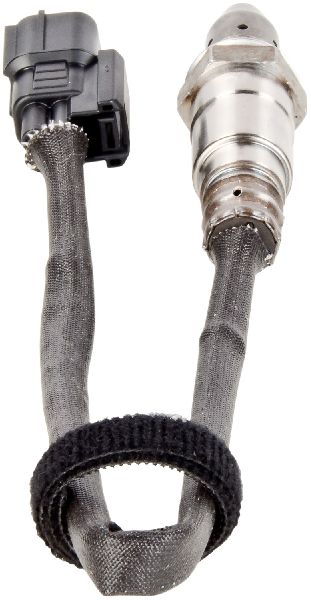
Aftermarket price range: $400-$900 - Downstream Oxygen Sensor (Sensor 2) — A lazy or failed downstream O2 sensor can send incorrect data to the ECU, falsely triggering a P0420 code.
Trusted brands: Denso, NGK/NTK, Bosch
OEM price range: $120-$200
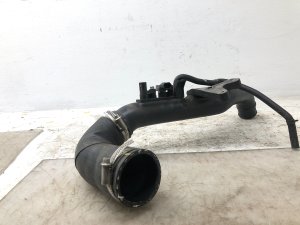
Aftermarket price range: $50-$120 - Air Intake Tube
(OEM #17228-R5A-A00)— Specific to 2012-2016 models, this part is known to crack and cause unmetered air leaks that lead to P0420.
Trusted brands: Honda (OEM)
OEM price range: $60-$80
Aftermarket price range: $30-$50
Related Codes That Often Appear With This One
- P0300-P0304 — Misfire codes (P030x) indicate unburned fuel is entering the exhaust, which can quickly damage the catalytic converter and cause a P0420 code.
- P0171 or P0172 — Fuel trim codes (P0171 Lean, P0172 Rich) indicate an air/fuel mixture problem that can lead to catalytic converter damage and trigger a P0420 code. A torn intake boot is a common cause of P0171 on these vehicles.
Technical Service Bulletins (TSBs) & Recalls
- DLR MSG - RFV RF (2014-07-24)
- DLR MSG - RFV, R (2014-06-19)
- ENG REQ - AER140 (2014-05-29)
- DLR MSG - RFV RF (2014-05-05)
- DLR MSG - RFV, R (2014-03-31)
- DLR MSG - RFP - (2014-02-12)
- TSB 22-040 (September 21, 2022) - MIL Is On With DTC P0420
- TSB 15-055 - Product Update: Electric Power Steering (EPS) Software Update
Platform-Specific Known Issues
- 2010 Model Year Investigation: American Honda issued multiple Technical Service Bulletins (TSBs) in 2014 requesting dealership assistance in investigating the cause of P0420 on 2010 CR-Vs, indicating a higher-than-normal occurrence for that model year. (Bulletins: DLR MSG - RFV RF, DLR MSG - RFV, R, ENG REQ - AER140)
- Software Sensitivity: On some Honda models, the engine control software can be overly sensitive, leading to a false P0420 code. A software update from a dealer may resolve the issue without replacing any parts.
Mechanic-Grade Diagnostic Values
- Downstream O2 Sensor (Sensor 2) Voltage at Idle — expected: Relatively stable voltage, typically between 0.6V and 0.9V on a warm engine with a healthy converter.. Failure: Voltage rapidly fluctuates in a sine wave pattern, mirroring the upstream sensor, or is stuck at a very low voltage (e.g., < 0.2V).
- Upstream Air/Fuel Ratio Sensor (Sensor 1) Live Data — expected: On a Honda-specific scan tool (HDS), this may be displayed in milliamps (mA) rather than volts.. Failure: Readings that are stuck or do not respond quickly to changes in throttle.
- K-Series Engine Valve Lash/Clearance (Cold) — expected: Intake: 0.21-0.25 mm (0.008-0.010 in). Exhaust: 0.28-0.32 mm (0.011-0.013 in).. Failure: Valves that are too tight or too loose can affect combustion efficiency, potentially contributing to a P0420 code over time.
Hidden / Shadow Codes Worth Checking
- Permanent DTC (p-code): Using the Honda Diagnostic System (HDS), a P0420 code may show up as both a 'pending' and a 'permanent' DTC. A permanent code cannot be cleared by a simple reset and requires the completion of a specific drive cycle to verify the fix before it will clear itself. (see via Honda Diagnostic System (HDS) or other high-end professional scan tools.)
Scan Tool Commands That Help
- Honda Diagnostic System (HDS): Reset ECM/PCM — After replacing a component like an O2 sensor or catalytic converter, an ECM reset should be performed to clear learned fuel trims and historical data.
- Honda Diagnostic System (HDS): Catalyst Monitor Status Check — During a specific drive cycle, a technician can monitor the live status of the catalyst efficiency test. The HDS will display 'EXECUTING', 'PASSED', or 'FAILED', which confirms if the converter is the problem without waiting for the check engine light to return.
Wiring & Ground Locations
- G101 — This is a critical ECU and sensor ground. On many K-series engines, it is located on or near the thermostat housing, bolted to the engine block. It can also refer to a ground point on the chassis near the battery or on the transmission housing.. Corrosion or a loose connection at G101 can cause erratic sensor readings, including from the O2 sensors, leading to false trouble codes. Cleaning this ground point is a crucial step in diagnosing electrical gremlins.
- Downstream O2 Sensor Connector — The connector for the downstream O2 sensor is often located on the passenger side of the transmission tunnel, accessible from underneath the vehicle or sometimes through the wheel well.. This connector and its wiring are exposed to road debris and heat. Damage here can interrupt the signal from the sensor, causing codes P0138, P0139, or contributing to an incorrect P0420 diagnosis.
Real Owner Repair Stories
- YouTube user comment (2016 Honda CR-V) — Persistent P0420 code, check engine light.
❌ Tried (didn't work) Replacing both oxygen sensors.
✅ What actually fixed it The air intake tube had become hard and brittle, with significant tears in the accordion section. Replacing the tube with a new OEM part (Part No. 17228-R5A-A00) resolved the unmetered air leak and cleared the P0420 code. - CRV Owners Club forum user (2013 Honda CR-V with 207k+ miles) — Recurring P0420 code.
❌ Tried (didn't work) Replacing both O2 sensors with Denso units., Removing and cleaning the catalytic converter.
✅ What actually fixed it The user discovered a significant exhaust leak at the outlet flange of the catalytic converter due to a failed gasket. The user theorized that fixing this leak would likely resolve the code without needing to replace the expensive converter. - Reddit user r/Honda (Unknown year CR-V) — P0420 code.
❌ Tried (didn't work) Initial assumption was a bad catalytic converter.
✅ What actually fixed it Upon inspection, the user found that one of the two spring bolts connecting the exhaust sections between the O2 sensors had completely rusted through and broken. This created a significant exhaust leak. Replacing the rusted bolts and springs fixed the leak and resolved the code.
"I Checked Everything" — The Actual Cause
- In some cases, a P0420 code on a 4th generation CR-V (2012-2016) can be caused by a torn air intake boot. A smoke test of the exhaust system will come back clean because the leak is on the intake side of the engine. This unmetered air causes a lean condition, which the ECU may misinterpret as a catalyst efficiency problem.
When the Usual Fixes Don't Work
- While a P0420 code is most commonly a failed catalytic converter, numerous owner reports for the 2010-2017 CR-V show that other, cheaper components are often the true cause. For 2012-2016 models, a torn air intake hose is a very frequent culprit that is often misdiagnosed. Similarly, rusted-out exhaust spring bolts creating a leak between the two O2 sensors is another common fix that avoids a costly converter replacement. These examples underscore the importance of a thorough diagnosis before defaulting to converter replacement.
Model Year Variations Within This Range
- 2012-2014 vs 2015-2016: The 2015 model year introduced the direct-injected "Earth Dreams" K24W9 engine with a CVT. While the P0420 code can occur on both, the fuel systems and engine management are different. The torn air intake boot (17228-R5A-A00) is a well-documented issue primarily on the 2012-2016 models.
- 2010-2014: These models use a conventional multi-port fuel injection K24 engine. The upstream sensor is a traditional O2 sensor or an Air/Fuel Ratio sensor that operates on voltage.
Helpful Videos
Used OEM Parts in Stock
New Aftermarket Parts Available




The information in this article is provided for general reference and educational purposes only. Vehicle specifications, procedures, and part compatibility can vary by production date, trim level, and region. Always consult your vehicle's factory service manual and verify part numbers before purchasing or performing repairs. Safety-critical components such as airbags, seat belts, and braking systems should be installed by a qualified professional.
- Honda CR-V:
- 🎬 Helpful Videos
- 🛍️ Shop This Part
- What's Unique About the 2010-2017 Honda CR-V
- Diagnostic Flowchart
- Symptoms You May Notice
- Most Likely Causes
- Rare But Worth Checking
- Diagnosis Steps
- Parts You'll Likely Need
- Related Codes That Often Appear With This One
- Technical Service Bulletins (TSBs) & Recalls
- Platform-Specific Known Issues
- Mechanic-Grade Diagnostic Values
- Hidden / Shadow Codes Worth Checking
- Scan Tool Commands That Help
- Wiring & Ground Locations
- Real Owner Repair Stories
- "I Checked Everything" — The Actual Cause
- When the Usual Fixes Don't Work
- Model Year Variations Within This Range
- 🎟️ Get 5% Off