

P0420 on 2004-2011 GMC Yukon XL: Catalytic Converter & O2 Sensor Fixes
On a 2004-2011 Yukon XL, code P0420 almost always points to a failed Bank 1 (driver's side) catalytic converter. Before replacing this expensive part, it's crucial to rule out cheaper fixes like a bad downstream oxygen sensor or an exhaust leak, which are also common culprits. For 2007+ models, check for broken exhaust manifold bolts and address any oil consumption issues related to Active Fuel Management (AFM).
- P0420 on a 2004-2011 Yukon XL means the driver's side catalytic converter is not working efficiently.
- The most likely cause is a failed catalytic converter, but you must rule out exhaust leaks and bad O2 sensors first to avoid a costly misdiagnosis.
- Always check for and resolve other engine codes (especially for misfires or fuel mixture problems) before replacing the catalytic converter.
- A simple diagnostic test involves using an infrared thermometer to see if the converter's outlet is hotter than its inlet; if not, it has failed.
- Broken exhaust manifold bolts are a known issue on these trucks and can cause an exhaust leak that triggers this code.
What's Unique About the 2004-2011 Gmc YUKON XL
On these specific GM trucks, especially the earlier GMT800 models (2004-2006), the P0420 code has a very high probability of being an accurate report of a failed catalytic converter. While oxygen sensors can fail, many owners on forums like tahoeyukonforum.com report that replacing them is a waste of money when the converter is the true source of the problem. For the later GMT900 models (2007-2011), converter failure is still common, but two other issues are rampant: broken exhaust manifold bolts causing leaks that fool the O2 sensors, and excessive oil consumption from the Active Fuel Management (AFM) system, which contaminates and destroys the converters.
Diagnostic Flowchart
Tap your situation to follow the diagnostic path that matches what you're seeing on this vehicle.
Generation note: This range covers two generations: the GMT800 (2004-2006) and the GMT900 (2007-2011). While the primary cause (catalytic converter) is the same for both, GMT900 models are notorious for having issues with broken exhaust manifold bolts causing leaks that can trigger this code. Furthermore, GMT900s with the 5.3L and 6.2L engines often suffer from oil consumption due to the Active Fuel Management (AFM) system, which poisons the cats. GMT800 owners report a very high likelihood that the code means the converter itself has simply failed from age.
Symptoms You May Notice
- Check Engine Light is on.
- Reduced engine power and acceleration.
- Significantly worse fuel economy.
- A "rotten egg" or sulfur smell from the exhaust.
- Inability to pass a state emissions inspection.
- A ticking noise from the engine bay, especially when cold, indicating an exhaust manifold leak.
- Replacing oxygen sensors without confirming they are faulty. While they can be the cause, on these trucks the converter itself is more likely to have failed. Many owners on forums report changing O2 sensors with no success.
- Replacing the catalytic converter without fixing underlying engine problems like misfires, rich fuel conditions, or AFM oil consumption, which will cause the new converter to fail quickly.
- Mistaking an exhaust leak from a broken manifold bolt for a bad catalytic converter. The symptoms (P0420 code) are identical, but the fix is much cheaper.
Most Likely Causes
- Failed Catalytic Converter (Bank 1) 🔴 High Probability Catalytic converters have a finite lifespan and can fail from age (often around 150k miles), contamination from burning oil/coolant, or overheating caused by engine misfires. On these trucks, it is the most frequent cause for P0420, a fact echoed in numerous owner forums.
How to confirm: Use an infrared thermometer to measure the temperature of the exhaust pipe before and after the converter (once fully warmed up). The outlet should be at least 100°F hotter than the inlet. If temperatures are similar or the outlet is cooler, the converter is not working. A scan tool showing the downstream O2 sensor voltage fluctuating rapidly like the upstream sensor also points to a bad converter.
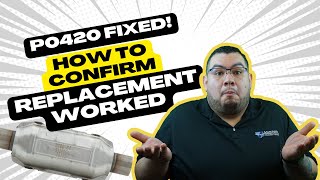
Typical fix: Replace the Bank 1 catalytic converter assembly (Y-pipe). It is critical to fix any engine issues (misfires, oil consumption) before replacing the converter, or the new one will fail prematurely. After replacement, perform the break-in procedure outlined in TSB PIP3119N to prevent a false code from returning. 🎬 Watch: How to confirm your new catalytic converter is working.
Est. part cost: $300-$1500 - Faulty Downstream Oxygen Sensor (Bank 1, Sensor 2) 🟡 Medium Probability The downstream O2 sensor's only job is to monitor the converter. If it becomes lazy or fails, it can send incorrect data to the PCM, falsely triggering a P0420 code. However, many owners replace this sensor only to have the code return, indicating the converter was the issue all along.
How to confirm: Use a scan tool to graph the sensor's voltage. It should be relatively stable. If it's fluctuating wildly like the upstream sensor, it may be bad. The easiest test is to swap the downstream sensors from Bank 1 and Bank 2. Clear the codes and drive. If the code returns as P0430 (for Bank 2), the sensor you moved is the problem.
Typical fix: Replace the Bank 1, Sensor 2 oxygen sensor. Use a quality brand like ACDelco or Denso, as cheap sensors can cause issues.
Est. part cost: $50-$120 - Exhaust Leak 🟡 Medium Probability Broken exhaust manifold bolts are extremely common on the GMT900 (2007-2011) trucks. The bolts, especially those at the rear near the firewall, snap off, creating a leak. This leak allows fresh air into the exhaust, which the downstream O2 sensor interprets as a poorly functioning converter, triggering the P0420 code.
How to confirm: Listen for a distinct ticking sound from the engine bay, particularly when the engine is cold, which disappears as the metal expands and seals the leak. Visually inspect the exhaust manifolds (especially the rear-most bolt on the driver's side) for black soot marks or a missing/broken bolt head.
Typical fix: Repair the leak. This can involve extracting the broken bolt and replacing it, which can be very difficult. A popular and effective alternative is to install a Dorman-style exhaust manifold clamp 🎬 See this easy fix for broken exhaust manifold bolts. that bolts to the cylinder head and presses the manifold tight, sealing the leak without requiring bolt extraction.
Est. part cost: $20-$300
Rare But Worth Checking
- Engine Misfires or Fuel System Issues: A constant misfire or a rich fuel condition (e.g., from a leaking fuel injector) will dump unburned fuel into the exhaust, which superheats and destroys the catalytic converter. These issues will usually be accompanied by other codes (P030x for misfires, P0172/P0175 for rich conditions). Always fix these codes FIRST.
- Internal Engine Wear (AFM-related Oil Consumption): On 2007-2011 models with Active Fuel Management (AFM), a faulty PCV system or stuck piston rings can cause excessive oil consumption (e.g., 1 quart per 2000 miles). This oil burns in the combustion chamber and the resulting contaminants poison the catalytic converter, causing it to fail. This is a major engine issue (addressed in TSB 10-06-01-008L) and the converter should not be replaced until the oil consumption is resolved via AFM delete, piston soak/cleaning, or engine repair.
- New Converter Break-In Not Performed: Per GM TSB PIP3119N, a newly installed catalytic converter needs a specific break-in drive cycle (approx. 30-45 minutes of highway driving) to properly cure and out-gas internal materials. If this is not done, the catalyst monitor may run prematurely and falsely set a P0420/P0430 code.
Diagnosis Steps
- Scan for any other trouble codes. Address any misfire (P030x), fuel trim (P017x), or oil pressure codes before proceeding with P0420 diagnosis.
- Perform a thorough visual and auditory inspection of the exhaust system, especially the exhaust manifolds. Listen for a cold-start 'tick' and look for broken bolt heads or soot trails, particularly on the rearmost cylinders.
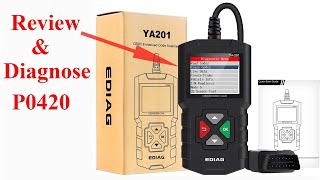
- Use a scan tool with live data graphing. 🎬 Watch: How to diagnose P0420 using a basic OBD2 scanner. Observe the voltage for Bank 1 Sensor 1 (upstream) and Bank 1 Sensor 2 (downstream). Sensor 1 should fluctuate rapidly (0.1V-0.9V). A healthy, warm converter will result in a steady reading from Sensor 2 (typically above 0.5V and not fluctuating wildly). If Sensor 2 is mirroring Sensor 1's fluctuations, the converter is not working.
- If you have access to an infrared thermometer, check the converter's inlet and outlet temperatures when the engine is fully warmed up. The outlet should be at least 100°F hotter than the inlet. An outlet that is cooler or the same temperature indicates a dead converter.
- If an exhaust leak is not found and the converter appears to be failing, consider swapping the downstream (Sensor 2) O2 sensors between Bank 1 and Bank 2. Clear codes and drive. If the code changes to P0430, the O2 sensor is the culprit.
- Check for excessive oil consumption, especially on 2007+ models. If the engine is burning more than a quart of oil every 3,000 miles, investigate AFM-related issues before replacing the converter.
- If all other tests point to a healthy engine and sensors, the catalytic converter has failed and needs replacement. After replacement, follow the GM break-in procedure.
Parts You'll Likely Need
- Catalytic Converter Assembly (Bank 1, Y-Pipe)
(OEM #GM 19418939 (replaces 15127418, 25904628 for 5.3L/6.0L))
Related Codes That Often Appear With This One
- P0430 — This is the same efficiency code but for Bank 2 (passenger side). It's common for both converters to fail around the same time due to age and mileage.
- P0300-P0308 — These are misfire codes (P0300 for random, P0301-P0308 for specific cylinders). An engine misfire sends raw fuel into the exhaust, which can overheat and damage the catalytic converter, leading to a P0420 code.
- P0172 / P0175 — These codes indicate a rich fuel condition on Bank 1 and Bank 2. A rich condition from issues like a leaking fuel injector can foul the catalytic converter over time, reducing its efficiency.
Technical Service Bulletins (TSBs) & Recalls
- PIP3119P: Explains that a new catalytic converter requires a specific break-in drive cycle to prevent falsely setting P0420/P0430 codes.
- 10-06-01-008L: Details the diagnosis and repair for excessive engine oil consumption on engines with Active Fuel Management (AFM), a common root cause for converter failure on 2007+ models.
Platform-Specific Known Issues
- Broken Exhaust Manifold Bolts: Extremely common on 2007-2011 GMT900 models. The bolt heads snap off, usually on the rearmost cylinder closest to the firewall, causing an exhaust leak that triggers P0420/P0430. The tell-tale sign is a ticking noise on a cold start that may go away as the engine warms up. Repair clamps are a popular DIY fix.
- Active Fuel Management (AFM) Oil Consumption: The 5.3L and 6.2L engines in 2007-2011 models with AFM are known for excessive oil consumption. This can be caused by a faulty PCV valve in the valve cover or carbon-fouled piston rings. The burned oil contaminates the catalytic converters, leading to premature failure and P0420/P0430 codes. This underlying issue must be addressed before replacing the converters.
- O2 Sensor Spacers / Non-Foulers (Illegal Fix): Some owners attempt to clear a P0420 code by installing a spark plug non-fouler or a purpose-built spacer on the downstream O2 sensor. This pulls the sensor out of the direct exhaust stream, tricking the computer into thinking the converter is working. This is illegal for on-road vehicles, will cause an emissions test failure, and only masks the root problem.
Mechanic-Grade Diagnostic Values
- Upstream O2 Sensor (Bank 1, Sensor 1) Voltage — expected: Rapidly fluctuating between approximately 0.1V and 0.9V on a warm engine.. Failure: A sensor that is stuck at a constant voltage (high or low) or is slow to respond is likely faulty.
- Downstream O2 Sensor (Bank 1, Sensor 2) Voltage — expected: A relatively stable voltage, typically between 0.4V and 0.8V, on a fully warmed-up, healthy catalytic converter.. Failure: Voltage that fluctuates in a similar pattern to the upstream sensor indicates the catalytic converter is not working. A sensor stuck at 0V may be dead.
- Fuel Pressure at Idle (Scan Tool) — expected: Approximately 43 psi was reported on a 2009 Yukon Denali 6.2L.. Failure: Significantly low fuel pressure can cause lean conditions, while high pressure can cause rich conditions, both of which can affect the catalytic converter over time.
Hidden / Shadow Codes Worth Checking
- Mode $06, OBDMID $21, TID $81: Catalyst Monitor Bank 1 Test Time. This shows the time the PCM took to complete the catalyst efficiency test. (see via A professional scan tool capable of reading Mode $06 data.)
- Mode $06, OBDMID $21, TID $82: Catalyst Monitor Bank 1 O2 Response. This measures the response of the oxygen storage capacity of the catalyst. (see via A professional scan tool capable of reading Mode $06 data.)
Scan Tool Commands That Help
- GM Tech 2 / GDS2: Catalyst Monitor Test — A technician can use a bidirectional scan tool to observe the catalyst monitor test as it runs. The PCM commands the air/fuel ratio from lean to rich in open loop and graphs the response of the front and rear O2 sensors to evaluate the converter's oxygen storage capacity.
- Scan Tool / Manual Procedure: Catalyst Monitor Drive Cycle — This specific drive cycle must be performed to allow the PCM to run the internal test for catalyst efficiency. It is required after repairs like replacing a converter or battery to get the monitor to a 'Ready' state for emissions testing. The cycle typically involves a cold start, a 2.5-minute idle with electrical load (A/C on), followed by steady-speed driving at 55 mph for 3-5 minutes.
Wiring & Ground Locations
- G103 — On the front of the passenger side (right) cylinder head on GMT900 trucks.. This is a primary engine ground. A poor connection here can cause erratic sensor readings and various drivability issues that could be misdiagnosed as component failure.
- G104 — On the left rear (driver's side) of the engine, near the firewall. A ground strap often connects from this point.. This ground is critical for components on the driver's side of the engine. A loose or corroded G104 is known to cause difficult-to-diagnose drivability problems.
- G108 — A ground strap connection point on the firewall/cowl, often connected to the G104 ground stud on the back of the cylinder head.. Ensures a solid ground connection between the engine and the vehicle's chassis/body, which is essential for stable sensor operation.
Real Owner Repair Stories
- CarKiller forum user (2007 GMC Yukon) — P0420 and P0430 codes that would set at idle.
❌ Tried (didn't work) A mechanic's 'fix' for a supposed vacuum leak., Replacing both catalytic converters., Replacing O2 sensors., Replacing spark plugs and air filter.
✅ What actually fixed it The code still returned. The owner noted fluctuating battery voltage (dropping from 14V to 12V while driving). The suggested underlying cause was a faulty charging system (battery/alternator) that needed to be load tested and repaired before further diagnosis, as unstable voltage can cause persistent electronic faults. - Acurazine forum user (Vehicle not specified, but general principle applies.) — P0420 code after confirming O2 sensors and catalytic converter were good.
❌ Tried (didn't work) Checking O2 sensors., Checking catalytic converter., Checking spark plugs, fuel injectors, timing, and exhaust.
✅ What actually fixed it The final fix was replacing the intake manifold and EGR valve gaskets. A vacuum leak from the hardened gaskets was the root cause of the code.
"I Checked Everything" — The Actual Cause
- In one documented case, a 2007 Yukon owner replaced the catalytic converters and O2 sensors to fix P0420/P0430, but the codes kept returning at idle. Standard diagnostics like checking for leaks had failed to find the issue. The owner observed fluctuating system voltage (14V down to 12V). The actual suspected cause was an unstable charging system (battery or alternator), which can create electronic issues that mimic component failures.
When the Usual Fixes Don't Work
- While most P0420 codes on these trucks point to the catalytic converter or an exhaust leak, there are cases where extensive parts replacement fails to solve the problem. One owner of a 2007 Yukon replaced the cats, O2 sensors, and more, only to have the P0420/P0430 codes return. The clue was that the codes set at idle and the system voltage was unstable. This suggests that before replacing expensive exhaust components, it is critical to verify the health of the charging system (battery and alternator), as low or fluctuating voltage can cause the PCM and its sensors to behave erratically, falsely setting trouble codes.
OEM Part Supersession History
15127418, 25824120, 25904628→19418939— Part consolidation and revision by the manufacturer.
Model Year Variations Within This Range
- 2004-2011: While the fundamental causes are similar, the diagnostic procedure for the catalyst monitor is specific. The GM system can run the test at idle after a 2.5-minute warm-up with A/C on, but also requires a steady cruise at 55 mph for up to 5 minutes to fully complete. This may need to be repeated over several drive cycles if the battery was recently disconnected.
Helpful Videos
We Have This Part in Stock



The information in this article is provided for general reference and educational purposes only. Vehicle specifications, procedures, and part compatibility can vary by production date, trim level, and region. Always consult your vehicle's factory service manual and verify part numbers before purchasing or performing repairs. Safety-critical components such as airbags, seat belts, and braking systems should be installed by a qualified professional.
- Gmc YUKON XL:
- 🎬 Helpful Videos
- 🛍️ Shop This Part
- What's Unique About the 2004-2011 Gmc YUKON XL
- Diagnostic Flowchart
- Symptoms You May Notice
- Most Likely Causes
- Rare But Worth Checking
- Diagnosis Steps
- Parts You'll Likely Need
- Related Codes That Often Appear With This One
- Technical Service Bulletins (TSBs) & Recalls
- Platform-Specific Known Issues
- Mechanic-Grade Diagnostic Values
- Hidden / Shadow Codes Worth Checking
- Scan Tool Commands That Help
- Wiring & Ground Locations
- Real Owner Repair Stories
- "I Checked Everything" — The Actual Cause
- When the Usual Fixes Don't Work
- OEM Part Supersession History
- Model Year Variations Within This Range
- 🎟️ Get 5% Off