

P0420 on 2017-2018 GMC Yukon Denali 6.2L: Catalyst Efficiency Causes and Fixes
On a 2017-2018 GMC Yukon Denali, code P0420 means the driver's side catalytic converter is inefficient. Before replacing the expensive converter, check for two common GM-specific issues: a poorly sealing air filter housing (TSB #16-NA-111) and exhaust leaks from broken manifold bolts.
- Do not replace the catalytic converter for a P0420 code on a 2017-2018 Yukon Denali without performing a full diagnosis.
- First, inspect the air filter housing for a proper seal, as detailed in TSB #16-NA-111.
- Second, check thoroughly for exhaust leaks, especially from broken exhaust manifold bolts, which are a known problem.
- Use a scan tool to analyze live O2 sensor data to definitively confirm the catalytic converter's condition before purchasing expensive parts.
- If the vehicle has very low mileage or recently had a converter replaced, follow the drive cycle procedure in TSB #PIP3119P.
What's Unique About the 2017-2018 Gmc YUKON DENALI
For this generation of Yukon (K2XX platform), a P0420 code isn't an automatic death sentence for the catalytic converter. GM has issued at least two Technical Service Bulletins (TSBs) that point to less expensive root causes. One bulletin, #16-NA-111, highlights that a poorly sealing air filter box can allow sand and debris to enter, which can damage O2 sensors and even clog the converter, triggering the code. Another, #PIP3119P, indicates that on low-mileage trucks or after a converter replacement, the code can set falsely if the converter hasn't completed a specific break-in procedure, which can be resolved with a prescribed drive cycle. These platform-specific issues, combined with a known tendency for exhaust manifold bolts to break, mean that proper diagnosis is critical to avoid a costly misdiagnosis.
Diagnostic Flowchart
Tap your situation to follow the diagnostic path that matches what you're seeing on this vehicle.
Symptoms You May Notice
- Check Engine Light is on
- Vehicle may not pass an emissions inspection
- Reduced engine power or sluggish acceleration, especially if the converter is clogged
- A 'rotten egg' or sulfur smell from the exhaust if the converter is failing severely
- A ticking noise from the engine bay on a cold start that may quiet down as the engine warms, which can indicate an exhaust manifold leak
- Reduced fuel economy if the root cause is a fuel system issue or clogged converter
- Immediately replacing the catalytic converter without checking for airbox seal issues, exhaust leaks, or faulty O2 sensors.
- Replacing the O2 sensor when the catalytic converter is actually bad. Analyzing scan tool data is key to differentiating them. 🎬 Watch: How to diagnose catalyst efficiency codes with confidence
- Using an O2 sensor spacer or 'defouler' to trick the sensor. This does not fix the underlying problem and will not pass a visual emissions inspection in many states.
Most Likely Causes
- Poorly Sealing Air Filter Housing 🔴 High Probability GM issued TSB #16-NA-111 specifically for 2015-2017 models. The air filter housing may not seal correctly, allowing sand and debris to bypass the filter. This can contaminate the MAF sensor, physically damage the O2 sensors, and clog the catalytic converter.
How to confirm: Inspect the air filter housing cover for missing tabs or fasteners. Check the air filter sealing surface and the intake duct downstream of the filter for any signs of dirt, sand, or debris.
Typical fix: Ensure the air filter is seated correctly. If the housing is warped or damaged, it must be replaced. Clean any debris from the intake tract. Some owners report adding extra clips to ensure a tight seal.
Est. part cost: $0-$300 - Exhaust Leak (Broken Manifold Bolts) 🔴 High Probability The 5.3L and 6.2L V8 engines in these K2XX trucks are notorious for breaking exhaust manifold bolts, particularly the one at the rear of the cylinder head near the firewall, due to constant heat cycles. This allows unmetered oxygen to enter the exhaust, skewing O2 sensor readings and falsely triggering P0420.
How to confirm: Listen for a distinct 'ticking' sound on a cold start that may quiet down as the engine warms up. Visually inspect the exhaust manifold bolts, especially the rear-most one on the driver's side (Bank 1). Look for black soot trails around the manifold/head mating surface.
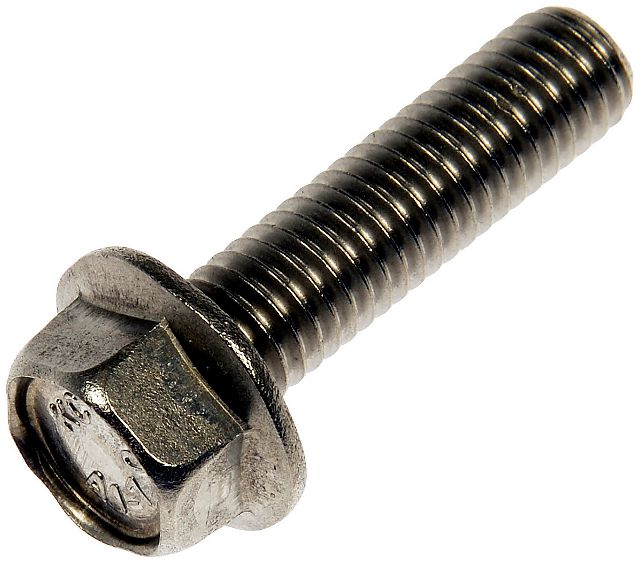
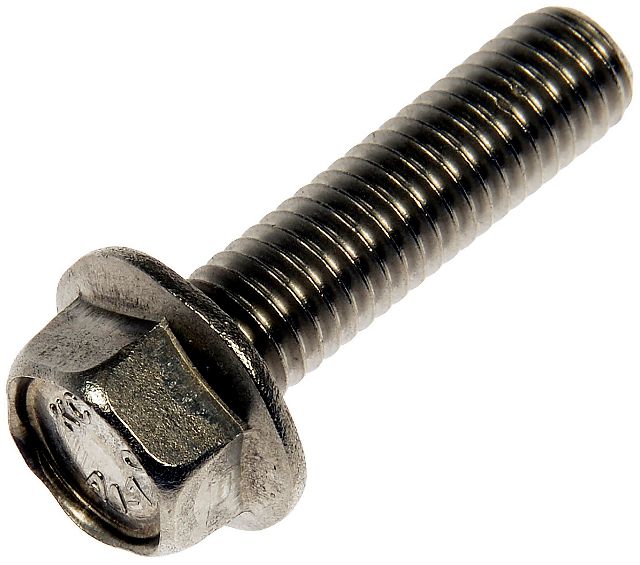
Typical fix: The broken bolt must be extracted and replaced, along with a new manifold gasket (e.g., GM Part #12617944). A popular, less invasive repair is to install an aftermarket exhaust manifold clamp kit (e.g., Dorman 917-142 or similar) which seals the leak without requiring extraction of the broken bolt. 🎬 See this easy fix for broken exhaust manifold bolts
Est. part cost: $20-$150 - Failing Catalytic Converter (Bank 1) 🟡 Medium Probability Catalytic converters can fail from age or contamination from underlying engine issues like misfires, excessive oil consumption (sometimes related to the Active Fuel Management system), or rich/lean fuel conditions. A prior issue, like a leaking injector, can ruin a converter, and the P0420 code may only appear after the initial problem is fixed.
How to confirm: Use a scan tool to graph O2 sensor data at a steady 2,000-2,500 RPM. If the downstream sensor (Bank 1, Sensor 2) voltage fluctuates rapidly, mimicking the upstream sensor (Bank 1, Sensor 1), the converter is not working. A good converter shows a relatively steady downstream voltage. An infrared thermometer can also be used; the outlet of a working converter should be significantly hotter (by at least 100-200°F) than the inlet.
Typical fix: Replace the Bank 1 (driver's side) catalytic converter assembly. It is critical to fix any other engine codes (misfires, fuel trim issues) first. The OEM part is often a Y-pipe assembly. An example OEM part number for the 6.2L assembly is GM #19420265. Aftermarket options are available from brands like MagnaFlow and Walker.
Est. part cost: $500-$1800 - Faulty Downstream Oxygen (O2) Sensor ⚪ Low Probability While less common than the converter itself failing, a slow, biased, or damaged O2 sensor can send incorrect data to the ECM, falsely triggering a P0420 code. Debris from a faulty airbox seal can also damage the sensor.
How to confirm: With a scan tool, observe the Bank 1 Sensor 2 voltage. It should be relatively stable. If it's stuck at a specific voltage or behaving erratically without a corresponding change in engine operation, the sensor may be faulty. A good diagnostic step is to swap the downstream sensors from Bank 1 and Bank 2 and see if the code changes to P0430 (Bank 2).
Typical fix: Replace the Bank 1, Sensor 2 (downstream driver's side) oxygen sensor. An example of a correct OEM-equivalent part number for this application is 12666612 (cross-references to aftermarket #234-4974). Other trusted brands include Denso and Bosch.
Est. part cost: $40-$120
Rare But Worth Checking
- Improper Catalytic Converter Break-In: Per GM TSB #PIP3119P, on new or very low mileage vehicles (or after a converter replacement), the P0420 diagnostic is disabled for the first hour of engine run time. If the battery was disconnected, this timer may reset, causing a false code. The fix is to clear the code and perform a specific drive cycle (e.g., 25-30 mins at highway speed, stop for 1 min, then another 10-15 mins at highway speed) to allow the converter to break in.
Diagnosis Steps
- Check for other DTCs. If any codes for misfires (P030x) or fuel mixture (P017x) are present, diagnose and repair them first, as they are the likely root cause.
- Inspect the Air Intake System per TSB #16-NA-111. Check for a tight seal on the air filter housing and look for any dirt or debris in the intake tube past the filter.
- Inspect for Exhaust Leaks. Start the engine cold and listen for an audible 'ticking' noise from the exhaust manifolds. Visually inspect the manifold bolts, especially the rear-most bolts on both heads, for breakage or signs of soot. Consider using a smoke machine 🎬 Watch: A simple walkthrough for fixing broken manifold bolts to find smaller leaks.
- Analyze Oxygen Sensor Data with a Scan Tool. Warm the engine to operating temperature. Use the graphing function on a scan tool to display Bank 1 Sensor 1 and Bank 1 Sensor 2 voltages. Hold the engine RPM steady at around 2,000-2,500 RPM.
- Evaluate O2 Sensor Graphs. The upstream sensor (B1S1) should show rapid fluctuation between ~0.1V and ~0.9V. If the downstream sensor (B1S2) mimics this rapid fluctuation, the catalytic converter has failed. A good converter will produce a much steadier, slower-reacting downstream signal, typically above 0.5V.
- Test the Oxygen Sensor. If the downstream O2 sensor signal is stuck, flat, or unresponsive, it may be faulty. Consider swapping the left and right downstream sensors to see if the fault code follows to the other bank (P0430).
- Check for TSB #PIP3119P conditions. If the vehicle is new, has very low miles, or the converter was just replaced, perform the recommended drive cycle before replacing parts.
- Inspect the Catalytic Converter. If all other tests fail, visually inspect the catalytic converter for physical damage or signs of overheating (discoloration). An infrared thermometer can be used to check temperature differential between the inlet and outlet pipe; the outlet should be at least 100°F hotter.
Parts You'll Likely Need
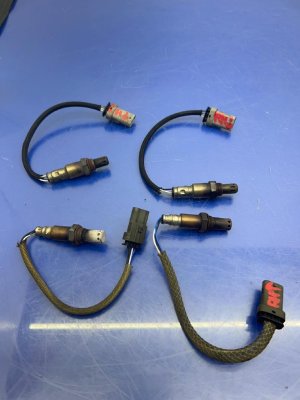
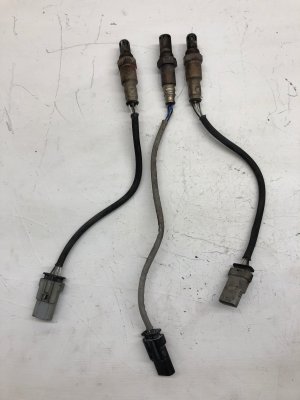
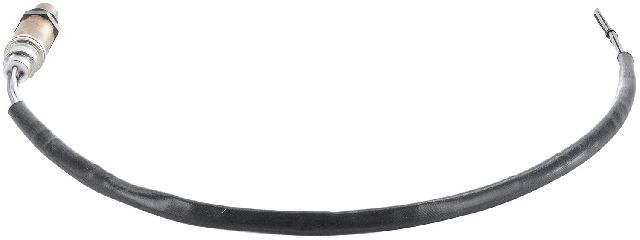
- Bank 1 Downstream Oxygen Sensor
(OEM #12659516)— This sensor (Bank 1, Sensor 2) is what the ECM uses to determine catalyst efficiency. While often not the root cause, it can fail or be damaged by other issues, making it a common replacement during a P0420 repair.
Trusted brands: ACDelco, Denso, NTK, Bosch
OEM price range: $60-$100
Aftermarket price range: $40-$80 - Bank 1 Catalytic Converter — If diagnosis confirms inefficiency, the converter must be replaced. This is the ultimate fix when all other potential causes have been ruled out.
Trusted brands: GM Genuine Parts, Walker Exhaust, MagnaFlow, AP Exhaust
OEM price range: $1200-$2000+
Aftermarket price range: $500-$1200 - Air Cleaner Housing Assembly — Per TSB #16-NA-111, if the original housing is warped or broken and not sealing against the air filter, it must be replaced to prevent debris from damaging emissions components.
Trusted brands: ACDelco, GM Genuine Parts
OEM price range: $150-$300
Aftermarket price range: $100-$200 - Exhaust Manifold Gasket & Bolts — Required when repairing an exhaust leak caused by broken manifold bolts, a common issue on this platform.
Trusted brands: Fel-Pro, ACDelco
OEM price range: $40-$80
Aftermarket price range: $20-$50
Related Codes That Often Appear With This One
- P0430 — This is the same efficiency code but for Bank 2 (passenger side). It's common to see both if a systemic issue like a bad air filter seal is present or if both converters have aged similarly.
- P0300-P0308 — These are engine misfire codes. An ongoing misfire allows unburned fuel to enter the exhaust, which will quickly overheat and destroy the catalytic converter, causing P0420. The misfire must be fixed first.
- P0171 / P0174 — These codes indicate a lean fuel condition. An exhaust leak before the upstream O2 sensor is a common cause for both lean codes and a P0420 code, as the extra oxygen affects both fuel trim and catalyst monitoring.
Technical Service Bulletins (TSBs) & Recalls
- TSB #16-NA-111: Addresses a poorly sealing air filter housing on 2015-2017 models that can allow debris to enter the intake, damage sensors, and trigger P0420/P0430.
- TSB #PIP3119P: Details a required catalytic converter break-in procedure for new/low-mileage vehicles or after converter replacement to prevent false P0420/P0430 codes.
Platform-Specific Known Issues
- Broken Rear Exhaust Manifold Bolts: The rearmost exhaust manifold bolts on the 6.2L V8 are highly prone to breaking due to thermal stress. This creates an exhaust leak right before the primary oxygen sensor, which introduces excess oxygen and commonly triggers a false P0420 code. A ticking noise on cold start is the primary symptom. A common fix is an aftermarket clamp that avoids the difficult task of extracting the broken bolt.
- Air Filter Housing Seal Leak (TSB #16-NA-111): On 2015-2017 models, the factory airbox may not seal properly against the air filter. This allows unfiltered air and abrasive debris (sand, dirt) to be ingested by the engine, which can damage the delicate sensing elements of the oxygen sensors and even clog the catalyst monolith, leading to a P0420 code.
Mechanic-Grade Diagnostic Values
- Low-Pressure Fuel System Pressure (KOEO) — expected: 48-52 psi for Flex Fuel models. Failure: Pressure below 46 psi suggests a weak fuel pump or fuel system issue.
- Engine Vacuum at Hot Idle — expected: ~16-21 inches of Mercury (inHg). Failure: When revving to 2,500 RPM, vacuum should drop and then quickly return to baseline. A slow return indicates a potential exhaust restriction (clogged converter).
- Catalytic Converter Temperature Differential — expected: The outlet pipe should be at least 100-200°F hotter than the inlet pipe on a fully warmed-up engine.. Failure: Little to no temperature increase across the converter indicates it is not functioning chemically.
- High-Pressure Fuel System (Direct Injection) — expected: Can exceed 2,000 PSI under load.. Failure: Inability to build or maintain specified high pressure, diagnosed via scan tool live data, points to issues with the high-pressure fuel pump.
Hidden / Shadow Codes Worth Checking
- Mode 6, Test ID $A9 (Bank 1): This is not a DTC, but the raw test data the PCM uses to determine catalyst efficiency. It provides a numerical value of the catalyst's oxygen storage capacity compared to a minimum/maximum threshold. (see via A professional scan tool with Mode 6 capability. This allows a technician to see if the converter is truly failing or is only marginally below the threshold, which might indicate an intermittent issue or a lazy O2 sensor rather than a dead converter.)
Scan Tool Commands That Help
- GM GDS2 (or equivalent professional scanner): Control Functions / Bidirectional Controls — While not a direct catalyst test, a technician can use bidirectional controls to command specific components (like EGR, fuel injectors, or idle speed) and observe the live data response of the upstream and downstream O2 sensors. This helps verify the health of sensors and rule out other system faults that could be mimicking a P0420.
- GM GDS2: Catalyst System Test (if available) — Some OEM software includes a specific guided test that forces the engine into the correct conditions to run the catalyst monitor. This can confirm a pass or fail without extensive driving cycles.
Wiring & Ground Locations
- G103 / G108 — Typically located on the rear of the cylinder heads.. These are primary engine-to-chassis grounds. A poor connection at these points can create voltage offsets and electrical noise, affecting the sensitive readings of the ECM and oxygen sensors, potentially causing false codes.
- ECM Grounds — Multiple pins on the Engine Control Module (ECM) connector which are grounded to the engine block.. The ECM, O2 sensors, and other engine sensors must share a stable and common ground plane. If the ECM's ground path to the block is compromised, it can lead to inaccurate sensor interpretation and incorrect diagnostic trouble codes.
Real Owner Repair Stories
- Reddit user, r/MechanicAdvice (2016 GMC Yukon XL Denali 6.2L) — Persistent P0420 code for Bank 1.
❌ Tried (didn't work) Replacing the Bank 1 catalytic converter with a direct-fit aftermarket unit (MagnaFlow #51656).
✅ What actually fixed it The code returned after 3 days. The dealership advised that the ECM on these trucks is 'finicky' and often requires a genuine OEM catalytic converter to resolve the code. The vehicle was also separately undergoing repairs for failing AFM lifters, which can cause misfires that damage converters. The final resolution points to either the aftermarket converter's incompatibility or the underlying lifter issue being the true root cause.
OEM Part Supersession History
23111625, 84362281→19420265— Standard part evolution, design updates, or manufacturer changes.
Heads up: The newest part number, 19420265, is the correct service replacement for the earlier numbers on 2015-2020 6.2L models.
Helpful Videos
Used OEM Parts in Stock

New Aftermarket Parts Available



The information in this article is provided for general reference and educational purposes only. Vehicle specifications, procedures, and part compatibility can vary by production date, trim level, and region. Always consult your vehicle's factory service manual and verify part numbers before purchasing or performing repairs. Safety-critical components such as airbags, seat belts, and braking systems should be installed by a qualified professional.
- Gmc YUKON DENALI:
- 🎬 Helpful Videos
- 🛍️ Shop This Part
- What's Unique About the 2017-2018 Gmc YUKON DENALI
- Diagnostic Flowchart
- Symptoms You May Notice
- Most Likely Causes
- Rare But Worth Checking
- Diagnosis Steps
- Parts You'll Likely Need
- Related Codes That Often Appear With This One
- Technical Service Bulletins (TSBs) & Recalls
- Platform-Specific Known Issues
- Mechanic-Grade Diagnostic Values
- Hidden / Shadow Codes Worth Checking
- Scan Tool Commands That Help
- Wiring & Ground Locations
- Real Owner Repair Stories
- OEM Part Supersession History
- 🎟️ Get 5% Off