

P0420 on 2007-2011 GMC Yukon Denali: Catalyst Efficiency Causes & Fixes
P0420 on a 2007-2011 Yukon Denali typically points to a failing Bank 1 catalytic converter, which is a very expensive part. However, before replacing it, always check for cheaper causes like a faulty downstream oxygen (O2) sensor or an exhaust leak, as these are common misdiagnoses.
- P0420 means the passenger-side catalytic converter is not performing efficiently.
- Do not automatically replace the catalytic converter. It is very expensive, and the code can be caused by a cheaper faulty O2 sensor or an exhaust leak.
- A proper diagnosis involves checking for exhaust leaks and analyzing live O2 sensor data with a scan tool.
- Always resolve underlying engine problems like misfires or rich/lean conditions before replacing a catalytic converter, or you will likely damage the new one.
What's Unique About the 2007-2011 Gmc YUKON DENALI
The GMT900 platform, which includes the 2007-2011 Yukon Denali, is well-known for triggering P0420 and P0430 codes, often due to the vehicle's age and mileage. These trucks can be prone to conditions like oil consumption from piston ring issues or rich fuel mixtures that contaminate and degrade the catalytic converters over time. A notable Technical Service Bulletin (TSB) for this generation, #PIP3119P, even mentions that under certain low-mileage conditions, the P0420/P0430 diagnostic codes are disabled, indicating GM was aware of potential issues with the monitoring system's sensitivity. The bulletin also provides a specific drive cycle procedure to 'break-in' a new catalytic converter to prevent a false P0420 code after replacement.
Diagnostic Flowchart
Tap your situation to follow the diagnostic path that matches what you're seeing on this vehicle.
Symptoms You May Notice
- Check Engine Light is on.
- Vehicle may fail an emissions test.
- Potential for reduced engine power, though often no drivability issues are noticed.
- A 'rotten egg' smell from the exhaust if the converter is severely malfunctioning.
- Rattling noise from underneath the vehicle if the internal honeycomb of the converter has broken apart.
- Immediately replacing the catalytic converter without first testing the oxygen sensors or checking for exhaust leaks. An O2 sensor is a much cheaper part to replace and is a common cause.
- Replacing the catalytic converter when the root cause is an engine performance issue (like a misfire or rich condition) that will only destroy the new converter as well.
Most Likely Causes
- Failing Catalytic Converter (Bank 1) 🔴 High Probability Converters fail from age, contamination from burning oil or coolant, or from engine misfires sending unburnt fuel into the exhaust. These are common issues on higher-mileage trucks. Owners on forums frequently confirm that after ruling out other causes, the converter was the ultimate culprit.
How to confirm: Use a scan tool to graph O2 sensor data. If the downstream sensor (Bank 1, Sensor 2) voltage fluctuates rapidly, mimicking the upstream sensor (Bank 1, Sensor 1), the converter is not working. A properly working converter will result in a relatively steady and slow-to-react downstream O2 sensor reading. Another method is to use an infrared thermometer to measure the converter's inlet and outlet pipe temperatures. A working converter should be significantly hotter at the outlet (by 30-100°F) than the inlet.
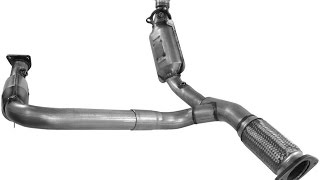
Typical fix: Replace the Bank 1 catalytic converter assembly. Some owners opt for aftermarket Y-pipes with integrated converters.
Est. part cost: $300-$2500 - Failing Downstream Oxygen (O2) Sensor 🟡 Medium Probability O2 sensors are wear items and can become lazy or biased with age, sending incorrect data to the ECM and falsely triggering a P0420 code. It's a common recommendation to check or replace the O2 sensor before the much more expensive converter.
How to confirm: Observe the sensor's live data on a scan tool. If the voltage is stuck, slow to respond, or flat, the sensor is likely bad. Swapping the downstream sensors from Bank 1 and Bank 2 and seeing if the code changes to P0430 is another diagnostic trick.
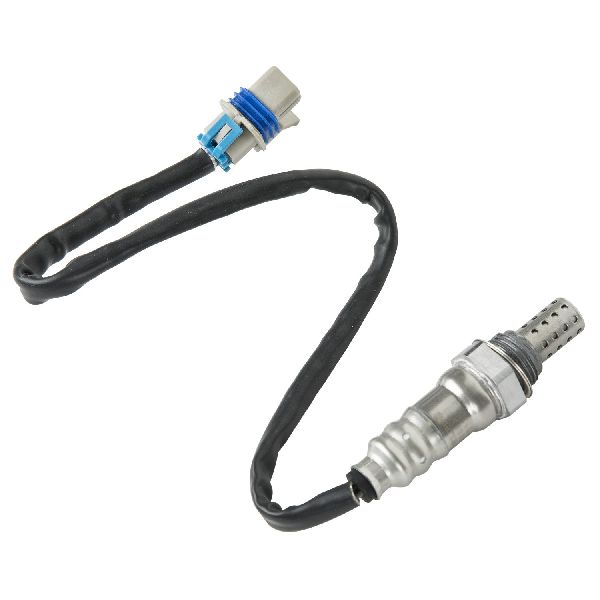
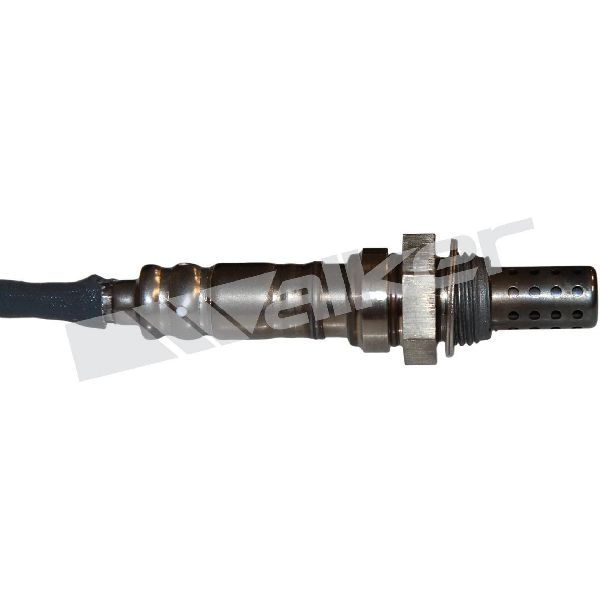
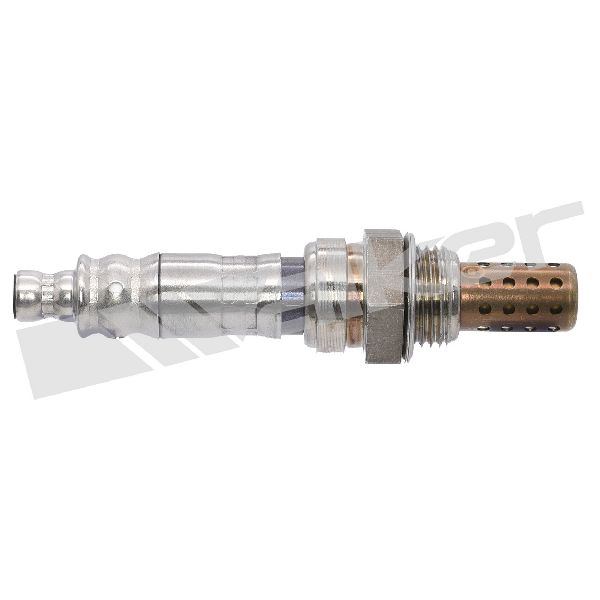
Typical fix: Replace the Bank 1, Sensor 2 oxygen sensor. The ACDelco GM OE part number is a common replacement.
Est. part cost: $50-$150 - Exhaust Leak 🟡 Medium Probability Exhaust manifolds on these V8 engines are notorious for broken bolts, especially the one at the rear of the cylinder head near the firewall. This allows outside oxygen to enter the exhaust stream, which can fool the downstream sensor into thinking the catalyst isn't working.
How to confirm: Perform a visual inspection for soot trails or broken manifold bolts, especially near the cylinder head. A smoke test is the most effective way to find small leaks. Some owners report hearing a 'ticking' noise when the engine is cold that goes away as it warms up and the metal expands.
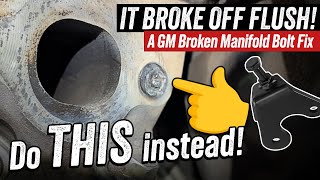
Typical fix: Repair the leak by replacing the gasket and/or any broken exhaust manifold bolts. In cases where the bolt is broken flush, special brackets are available that clamp the manifold to the head without needing to extract the broken bolt.
Est. part cost: $20-$100 - Engine Performance Issues ⚪ Low Probability Ignition misfires (bad plugs, wires, coils) or fuel system problems (leaky injectors, bad fuel pressure regulator) can send unburnt fuel into the exhaust, overheating and destroying the catalytic converter. A rich running condition, sometimes caused by a faulty thermostat, can also lead to this code.
How to confirm: Check for other diagnostic trouble codes, especially misfire codes (P0300-P0308) or fuel trim codes (P0171, P0174). Address these codes first before condemning the converter.
Typical fix: Repair the underlying engine issue, such as replacing spark plugs, ignition coils, or faulty fuel system components.
Est. part cost: $50-$500
Rare But Worth Checking
- Contaminated Catalytic Converter: Internal engine problems, such as failing piston rings or valve seals associated with Active Fuel Management (AFM), can cause excessive oil consumption. This oil can enter the exhaust and coat the catalytic converter, rendering it ineffective. Similarly, a leaking head gasket can contaminate it with coolant.
- O2 Sensor Wiring Damage: The wiring harness for the oxygen sensors can sometimes be routed too close to the hot exhaust, causing it to melt and short out. This can send erratic signals to the ECM, triggering a false P0420 code. Always inspect the wiring for damage before replacing a sensor.
Diagnosis Steps
- Scan for all stored DTCs. Address any misfire, fuel system, or O2 sensor codes before diagnosing the P0420.
- Visually inspect the exhaust system for leaks, paying close attention to the exhaust manifold gaskets for black soot trails and checking for broken manifold bolts, especially at the rear of the heads.
- Use a scan tool with live data graphing capabilities to monitor the voltage of the upstream (Bank 1, Sensor 1) and downstream (Bank 1, Sensor 2) oxygen sensors with the engine at operating temperature and held around 2000 RPM.
- A healthy system will show the upstream sensor switching rapidly between ~0.1V and ~0.9V, while the downstream sensor remains relatively stable and steady.
- If the downstream sensor's waveform mimics the upstream sensor's rapid switching, the catalytic converter has likely failed.
- If the downstream sensor's voltage is flat, stuck, or very slow to respond, the sensor itself is likely faulty.
- If scan tool data is inconclusive, use an infrared thermometer to check the catalytic converter's temperature. Point it at the pipe just before the converter and then just after. The outlet should be at least 30-100°F hotter than the inlet on a working converter.
- If a new converter is installed and the code returns, perform the break-in drive cycle outlined in TSB #PIP3119P to ensure the converter has properly out-gassed.
Parts You'll Likely Need
- Catalytic Converter (Bank 1) — This is the most common, though most expensive, fix for a confirmed P0420 code when sensors and exhaust integrity are verified. Often replaced as a Y-pipe assembly.
Trusted brands: ACDelco, MagnaFlow, Walker Exhaust
OEM price range: $2200-$2500
Aftermarket price range: $300-$900 - Downstream Oxygen Sensor (Bank 1, Sensor 2)
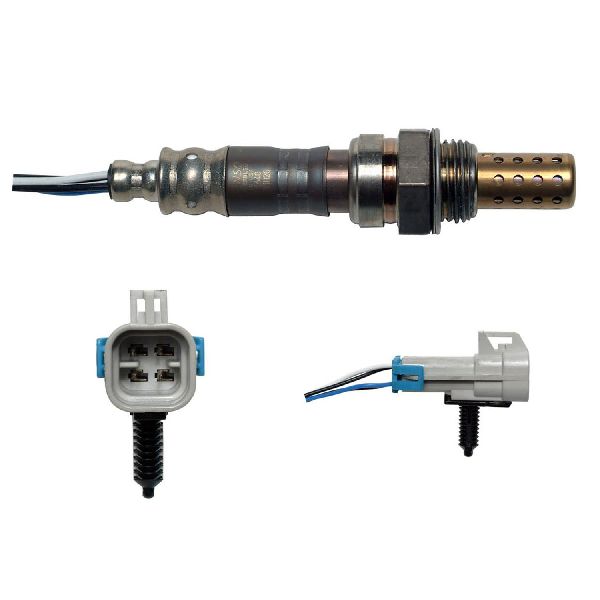
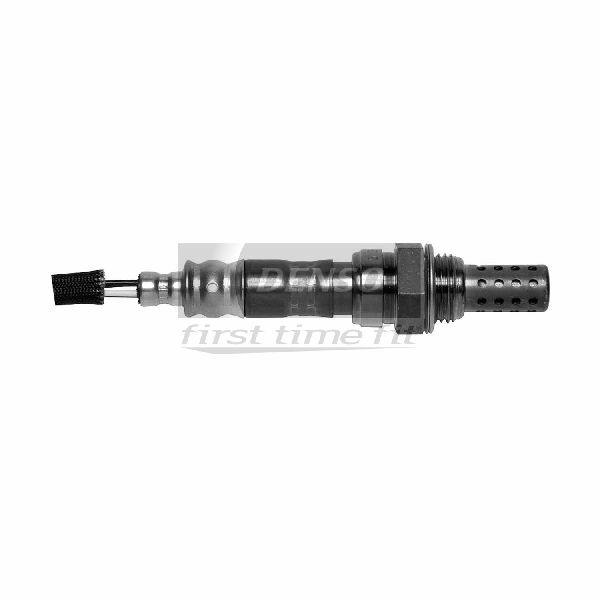
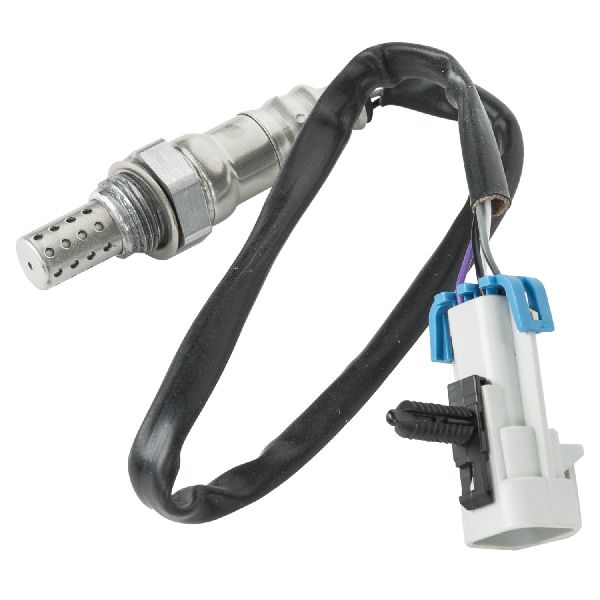
(OEM #ACDelco 213-4229 (GM 12609457))— A faulty sensor can send incorrect data, falsely triggering the P0420 code. It's a critical diagnostic step and a much cheaper potential fix.
Trusted brands: ACDelco, Denso, Bosch
OEM price range: $80-$150
Aftermarket price range: $50-$100
Related Codes That Often Appear With This One
- P0430 — This is the same catalyst efficiency code but for Bank 2 (driver's side). The conditions that cause one converter to fail (age, contamination) often affect both around the same time.
- P0300-P0308 — These are misfire codes. A persistent misfire dumps raw fuel into the exhaust, which can quickly overheat and destroy the catalytic converter.
- P0171/P0174 — These are lean fuel trim codes. A lean condition can cause higher combustion temperatures, which can damage the catalytic converter over time. An exhaust leak before the O2 sensor can also cause a false lean reading.
- P0172/P0175 — These are rich fuel trim codes. A rich condition from a leaky injector or other fuel system issue can dump excess fuel into the exhaust, fouling the O2 sensors and damaging the catalytic converter.
Technical Service Bulletins (TSBs) & Recalls
- PIP3119P: Addresses a Service Engine Soon lamp at low mileage where DTCs P0420 and/or P0430 may be stored, noting that the diagnostics for these codes are disabled for the first hour of engine run time on a new vehicle to allow for converter break-in. It provides a procedure to follow if the code appears after a converter replacement.
Platform-Specific Known Issues
- A known issue with broken exhaust manifold bolts can cause exhaust leaks that trigger this code. The bolts, especially those closest to the firewall, can break due to thermal stress. Owners often report a ticking sound on cold starts that disappears as the engine warms up.
- GM Technical Service Bulletin #PIP3119P notes that for some vehicles, the P0420 and P0430 codes may be disabled by the factory software under certain conditions, acknowledging potential sensitivity in the diagnostic system. It also provides a specific drive cycle for breaking in a new converter to prevent a false code.
Mechanic-Grade Diagnostic Values
- Long-Term Fuel Trim (LTFT) — expected: Less than +/- 10% at idle, 1500, 2000, and 2500 RPM.. Failure: Values greater than +/- 10% indicate an underlying fuel mixture issue (vacuum leak, injector problem, MAF fault) that must be corrected before diagnosing the P0420.
- Downstream O2 Sensor (Bank 1, Sensor 2) Voltage at Idle — expected: Slowly and steadily fluctuating voltage, typically between 0.1V and 0.8V.. Failure: Voltage rapidly switching between 0.1V and 0.8V, mimicking the upstream sensor, indicates a failed catalytic converter.
- Catalytic Converter Temperature Differential — expected: The outlet pipe should be significantly hotter (30-100°F) than the inlet pipe after the engine is at operating temperature.. Failure: If the outlet temperature is the same or cooler than the inlet temperature, the converter is not functioning and is likely clogged or inactive.
Hidden / Shadow Codes Worth Checking
- Mode $06: This is not a code, but a diagnostic mode on advanced scan tools that shows the results of the ECM's self-tests. For P0420, a technician can view the 'Catalyst Monitor Bank 1' test results (e.g., Test ID $21, Component ID $01). It provides a measured value against a minimum/maximum threshold, showing exactly how close the converter was to failing the test, even if it hasn't set a code yet. (see via An advanced OBD2 scan tool with Mode $06 capability.)
Scan Tool Commands That Help
- Tech2 / GDS2 or equivalent: Live Data Graphing (O2 Sensors) — This is the primary diagnostic step. Use it to graph Bank 1 Sensor 1 and Bank 1 Sensor 2 voltages simultaneously while holding the engine at a steady 2000-2500 RPM. Comparing the waveforms (rapid switching vs. steady) is the most common way to confirm a failed converter.
- Tech2 / GDS2 or equivalent: Catalyst System Test — Some GM diagnostics include a specific catalyst monitor test. This automated test runs the engine under specific conditions to check converter efficiency. It's important to ensure no other engine load (like A/C or a cycling cooling fan) interrupts the test, as it may cause the test to abort.
Wiring & Ground Locations
- G103 / G104 — On the front of the cylinder heads. G103 is typically on the driver's side head, and G104 is on the passenger's side head.. These are primary engine ground points. A poor connection here can affect the ECM and multiple sensors, including the oxygen sensors, leading to erratic readings and false codes. Cleaning these grounds is a critical step in resolving persistent, hard-to-diagnose electrical issues.
- O2 Sensor Fuses — In the underhood fuse block. For a 2008 model, these are often listed as Fuse 8 (10A) and Fuse 58 (10A).. These fuses power the heater circuits within the oxygen sensors. A blown fuse will cause the sensor heater to fail, leading to slow sensor response, incorrect readings, and potentially a P0420 code, along with specific heater circuit codes.
- O2 Sensor Pigtail Harness — The wiring leading directly from the oxygen sensor body to its connector.. Per GM service information, the sensor gets its clean air reference through the wire strands themselves. Do not solder repairs on this harness. If the pigtail, connector, or terminals are damaged, the entire oxygen sensor must be replaced to prevent obstructing the air reference, which would degrade sensor performance and cause incorrect readings.
Real Owner Repair Stories
- Reddit user on r/MechanicAdvice (2016 GMC Yukon XL Denali 6.2L) — P0420 code for Bank 1.
❌ Tried (didn't work) Replaced the catalytic converter with a direct-fit aftermarket MagnaFlow (part 51656).
✅ What actually fixed it Unresolved in the post, but the code returned after 3 days. The dealership suggested the vehicle's ECM is 'finicky' and requires an OEM catalytic converter. The owner was also having lifter work done, suggesting a possible underlying oil consumption issue that could be fouling even the new converter. This highlights the risk of aftermarket converters and the importance of fixing root causes. - YouTube video (GMC Denali Yukon (year not specified, but GMT900 platform)) — P0420 code.
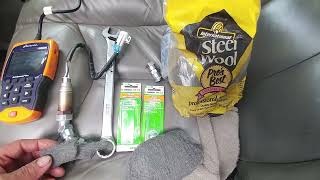
✅ What actually fixed it The owner installed an O2 sensor spacer (also called a non-fouler or eliminator) on the downstream sensor (Bank 1, Sensor 2). This 'fix' pulls the sensor out of the direct exhaust stream, tricking the ECM into seeing a steady, 'clean' reading. The owner acknowledges this does not fix the inefficient converter but does turn off the check engine light to pass a visual inspection.
"I Checked Everything" — The Actual Cause
- A common scenario for the GMT900 platform is a P0420 caused by a broken rear exhaust manifold bolt. This often creates a leak that is only present when the engine is cold. As the engine warms up, the metal expands and seals the leak. A technician performing a smoke test on a warm engine may find no leaks, leading them to misdiagnose the issue as a bad sensor or converter. The actual cause is the cold-start exhaust leak that allows unmetered oxygen to enter the system, skewing O2 sensor readings.
OEM Part Supersession History
GM 12609457 (ACDelco 213-4229)→No supersession found, this part number remains current.
Heads up: While this part number is correct, some vendors note that the part may require 'programming and/or special setup procedures' after installation, which may involve a scan tool to reset adaptations or perform a relearn.
Model Year Variations Within This Range
- 2007-2009: The 6.2L V8 engine (L92) in the 2007-2009 Yukon Denali did NOT have Active Fuel Management (AFM). Therefore, AFM-related oil consumption is not a likely root cause for P0420 on these specific model years.
- 2010-2011: The 6.2L V8 engine (L94) in these years included Active Fuel Management (AFM). On these models, issues with AFM lifters causing oil consumption are a known potential root cause for fouling and destroying the catalytic converters, making it a primary suspect to investigate when a P0420 code appears.
- 2011: Forum discussions suggest a change in the engine computer and electronics occurred around the 2011 model year. This can create compatibility issues when swapping engines or modules from earlier years (e.g., installing a 2007 engine into a 2011 truck) and may require custom tuning to resolve.
Helpful Videos


We Have This Part in Stock

The information in this article is provided for general reference and educational purposes only. Vehicle specifications, procedures, and part compatibility can vary by production date, trim level, and region. Always consult your vehicle's factory service manual and verify part numbers before purchasing or performing repairs. Safety-critical components such as airbags, seat belts, and braking systems should be installed by a qualified professional.
- Gmc YUKON DENALI:
- 🎬 Helpful Videos
- 🛍️ Shop This Part
- What's Unique About the 2007-2011 Gmc YUKON DENALI
- Diagnostic Flowchart
- Symptoms You May Notice
- Most Likely Causes
- Rare But Worth Checking
- Diagnosis Steps
- Parts You'll Likely Need
- Related Codes That Often Appear With This One
- Technical Service Bulletins (TSBs) & Recalls
- Platform-Specific Known Issues
- Mechanic-Grade Diagnostic Values
- Hidden / Shadow Codes Worth Checking
- Scan Tool Commands That Help
- Wiring & Ground Locations
- Real Owner Repair Stories
- "I Checked Everything" — The Actual Cause
- OEM Part Supersession History
- Model Year Variations Within This Range
- 🎟️ Get 5% Off