

P0420 on 2012-2018 GMC Yukon: Catalyst Efficiency Causes & Fixes
On a 2012-2018 GMC Yukon, code P0420 indicates low catalyst efficiency on Bank 1. While this often means a failed catalytic converter, two major issues specific to these GM trucks are a faulty air filter box seal causing incorrect air/fuel mixtures (per TSB #16-NA-111) and broken exhaust manifold bolts causing leaks. Always diagnose these cheaper, common problems before replacing the expensive converter.
- P0420 on a 2012-2018 Yukon means the driver's side catalytic converter is underperforming.
- DO NOT replace the catalytic converter without first inspecting the air filter housing seal for leaks, as per GM TSB #16NA111.
- Always check for exhaust leaks between the engine and the rear oxygen sensor; broken manifold bolts are a possibility.
- Use a scan tool to watch live O2 sensor data to confirm the converter is bad before spending money on parts.
- If you have misfire codes (P0300-P0308), fix them immediately to avoid destroying a new catalytic converter.
What's Unique About the 2012-2018 Gmc YUKON

The 2012-2018 year range covers two distinct generations of the GMC Yukon, but P0420 is a common fault across both. What's particularly notable for these GM trucks and SUVs is a specific issue identified in Technical Service Bulletin #16-NA-111. A warped or poorly sealed air filter housing can allow unmetered, debris-laden air into the engine. This leans out the fuel mixture, can damage the oxygen sensors, and may incorrectly trigger a P0420 code. Owners often replace expensive catalytic converters when the real, and much cheaper, problem lies with the air intake. Additionally, the V8 engines in these trucks are known for breaking exhaust manifold bolts, especially the rear-most bolt on the driver's side, which creates an exhaust leak that also causes a false P0420 code.
Diagnostic Flowchart
Tap your situation to follow the diagnostic path that matches what you're seeing on this vehicle.
Generation note: This range covers the end of the third generation (2012-2014, GMT900 platform) and the beginning of the fourth generation (2015-2018, K2UG platform). While the primary causes for P0420 are similar, part numbers for catalytic converters, oxygen sensors, and other components will differ between these generations. The airbox issue (TSB #16-NA-111) is primarily associated with the 2014-2016 models. Broken exhaust manifold bolts are a common issue across all V8-equipped models in this range.
Symptoms You May Notice
- Check Engine Light is on
- Vehicle may fail an emissions test
- Possible reduction in fuel economy
- In some cases, a rotten egg smell from the exhaust
- Reduced engine power, especially on acceleration, if the converter is clogged
- A ticking or hissing sound from the engine bay, especially when cold, indicating an exhaust manifold leak
- Immediately replacing the catalytic converter without performing a full diagnosis. The air intake seal issue (TSB #16-NA-111) and exhaust manifold leaks are common culprits that are much cheaper to fix.
- Replacing the downstream oxygen sensor assuming it is faulty, when it is often accurately reporting the inefficiency of the catalytic converter or an exhaust leak.
- Using a cheap, universal aftermarket catalytic converter. Many owners report that the P0420 code returns shortly after installing a low-quality converter because its efficiency isn't high enough to satisfy the ECM's parameters.
Most Likely Causes

- Failing Catalytic Converter 🔴 High Probability Catalytic converters have a finite lifespan and fail due to age, heat cycles, and contamination from issues like misfires or excessive oil consumption. On high-mileage Yukons, this is a very common failure point.
How to confirm: After ruling out all other possibilities (exhaust leaks, sensor issues, air intake problems), the converter is the likely culprit. A definitive test involves comparing upstream and downstream O2 sensor readings on a scan tool; if the downstream sensor fluctuates rapidly like the upstream one, the converter is not working. An infrared thermometer can also be used to check temperatures; the outlet should be significantly hotter than the inlet on a working converter.
Typical fix: Replace the Bank 1 catalytic converter assembly.
Est. part cost: $400-$900 for an aftermarket direct-fit unit, $1200-$2800 for OEM. - Warped or Improperly Sealed Air Filter Housing 🟡 Medium Probability As identified in GM TSB #16-NA-111, the air filter housing on 2014-2016 models can warp or fail to seal, allowing unmetered air and debris to bypass the mass airflow sensor. This leans out the fuel mixture and can trigger P0420/P0430, and the debris can damage the O2 sensors and clog the converter.
How to confirm: Visually inspect the air filter box for warping, damage, or missing/broken clips. Check the air filter's rubber seal and the housing's mating surface for any signs of dirt, sand, or debris bypassing the filter into the clean air intake tube.
Typical fix: Ensure the air filter is seated correctly. If the housing is warped or damaged, it must be replaced. Some owners add extra clips to ensure a tight seal.
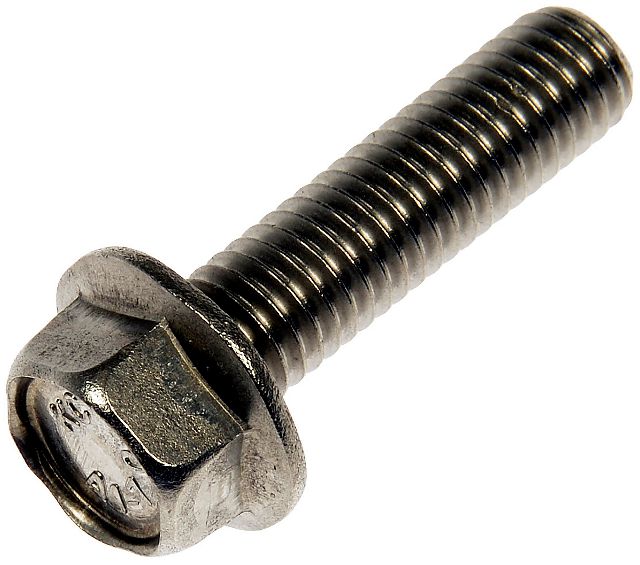
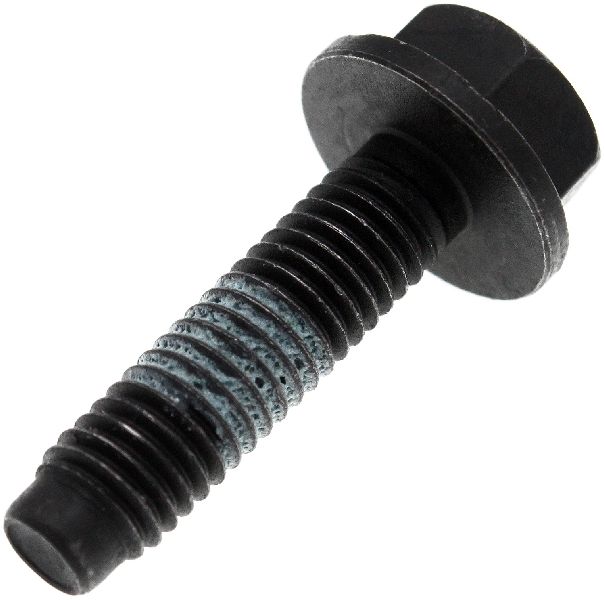
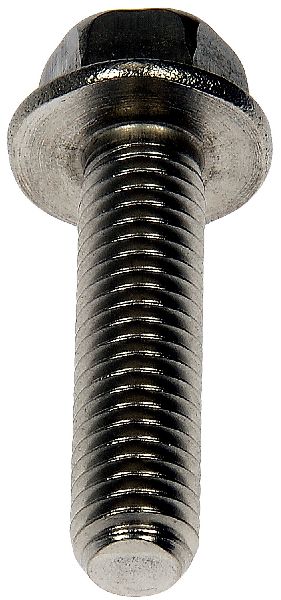
Est. part cost: $0 if reseating fixes it, $150-$300 for a new air filter housing assembly. - Exhaust System Leak (Broken Manifold Bolts) 🟡 Medium Probability The 5.3L and 6.2L V8 engines are notorious for breaking exhaust manifold bolts, particularly the one at the rear of the cylinder head near the firewall. This causes a leak that allows oxygen into the exhaust stream, which fools the O2 sensors and triggers a P0420 code.
How to confirm: Listen for a distinct ticking noise from the engine area, especially on a cold start, that may quiet down as the engine warms and the metal expands. A visual inspection may reveal black soot trails around the manifold-to-head mating surface. A smoke test is the most reliable method to pinpoint the leak.
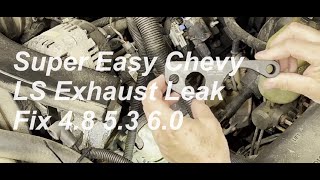
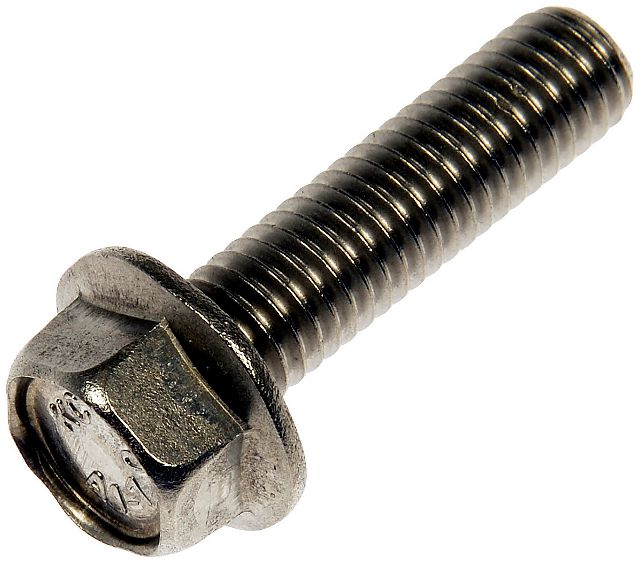
Typical fix: The broken bolt must be extracted and replaced. This can be difficult due to the location. In cases where extraction fails, special aftermarket clamps (e.g., Dorman exhaust manifold clamp) can be installed 🎬 See how to install an easy manifold bolt repair clamp. to seal the leak without removing the bolt.
Est. part cost: $10-$50 for gaskets and new bolts. Aftermarket repair clamps cost $20-$60. Labor can be significant if the bolt needs to be drilled out. - Failing Oxygen (O2) Sensor ⚪ Low Probability O2 sensors are wear items and can become lazy or biased with age, sending inaccurate readings. However, they are more likely to be accurately reporting a problem than to be the problem themselves. It's a common misdiagnosis.
How to confirm: Use a scan tool to graph the sensor voltage. A healthy downstream (Sensor 2) O2 sensor should show a relatively steady voltage on a warm engine at steady RPM. If it's stuck at one voltage or fluctuating wildly for no reason, the sensor may be faulty. Swapping the downstream sensors from side-to-side (Bank 1 to Bank 2) and seeing if the code changes to P0430 is a good diagnostic trick.
Typical fix: Replace the Bank 1, Sensor 2 (downstream) oxygen sensor.
Est. part cost: $50-$100 for an aftermarket sensor. An OEM ACDelco sensor (e.g., part #213-4229 for many 2008-2014 models) costs around $50-$80.
Rare But Worth Checking
- Engine Misfires: A misfiring cylinder dumps unburned fuel into the exhaust, which can quickly overheat and destroy the catalytic converter. This is usually accompanied by codes like P0300-P0308.
- Fuel System Issues: Leaking fuel injectors or a faulty fuel pressure regulator can cause a rich fuel condition, which can contaminate and damage the catalytic converter over time. Checking long-term fuel trims (LTFT) can help identify this; values consistently above +/- 10% indicate a problem that must be fixed first.
- Improper Catalytic Converter Break-in: According to GM TSB #PIP3119P, a new vehicle or one with a recently replaced converter needs about an hour of engine run time for the converter to break in properly. If the battery was disconnected or power was lost, this process can be interrupted and may cause a false P0420/P0430 code. A specific drive cycle may be needed to clear the code.
Diagnosis Steps

- Check for any other stored trouble codes. Address any misfire (P030x), fuel system (P0171/P0174), or MAF sensor codes before proceeding.
- Thoroughly inspect the air intake system, especially the air filter housing cover and the filter seal, for any gaps, warping, or signs of debris bypassing the filter, as detailed in TSB #16-NA-111.
- Inspect the exhaust system for leaks, paying close attention to the exhaust manifold-to-cylinder head connection on Bank 1 (driver's side). Listen for a cold-start tick and look for soot trails.
- Use a scan tool to monitor live data from the Bank 1 oxygen sensors with the engine fully warmed up and running at a steady 2,000 RPM. The upstream sensor (Sensor 1) voltage should fluctuate rapidly between ~0.1V and ~0.9V. The downstream sensor (Sensor 2) voltage should remain relatively stable and high (e.g., >0.6V).
- If the downstream sensor's voltage reading mirrors the upstream sensor's rapid fluctuations, it confirms the catalytic converter is not storing oxygen and has likely failed.
- If the downstream sensor appears stuck or responds very slowly, the sensor itself may be faulty. Consider swapping it with the Bank 2 downstream sensor to see if the fault follows the sensor.
Parts You'll Likely Need
- Catalytic Converter (Bank 1)
(OEM #Varies by year/engine, e.g., 23486656 (V8-5.3L), 85542366 (6.2L). Always verify with VIN.)— This is the most common part to ultimately fail and require replacement after all other diagnostic steps are completed.
Trusted brands: ACDelco (OEM), MagnaFlow, Walker, AP Exhaust
OEM price range: $1200-$2800
Aftermarket price range: $400-$900 - Downstream Oxygen Sensor (Bank 1, Sensor 2)
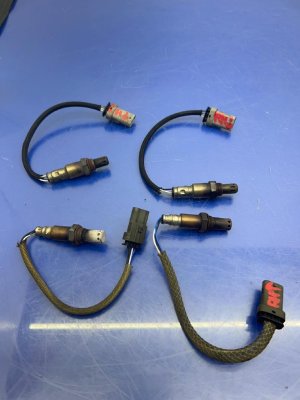
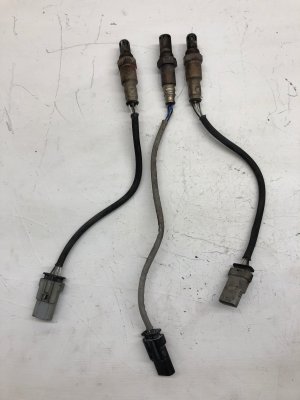
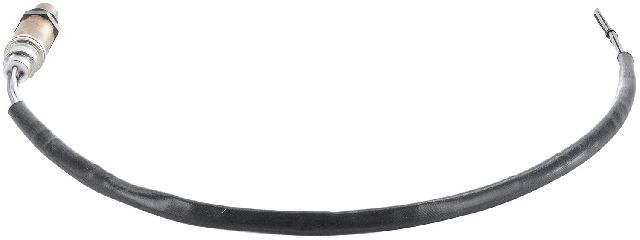
(OEM #ACDelco 213-4229 (fits many 2008-2014 models, verify with VIN))— This sensor is responsible for monitoring the converter's efficiency. It can fail, but is more often misdiagnosed. It's located on the driver's side, after the catalytic converter.
Trusted brands: ACDelco, Denso, Bosch, NTK
OEM price range: $50-$80
Aftermarket price range: $40-$70 - Exhaust Manifold to Head Gasket — Required when repairing an exhaust leak caused by broken manifold bolts.
Trusted brands: ACDelco, Fel-Pro, Mahle
OEM price range: $15-$30
Aftermarket price range: $10-$20
Related Codes That Often Appear With This One
- P0430 — This is the identical code for Bank 2 (passenger side). Seeing both P0420 and P0430 together strongly points to a systemic issue like the air filter box seal, a fuel delivery problem, or simply both converters failing around the same time due to high mileage.
- P0300-P0308 — These are cylinder misfire codes. A misfire is a primary cause of catalytic converter failure because it sends raw fuel into the exhaust, so these codes must be addressed first to prevent destroying a new converter.
- P0171/P0174 — These are 'System Too Lean' codes for Bank 1 and Bank 2. They often appear alongside P0420/P0430 when the root cause is unmetered air from a warped airbox or a vacuum leak.
Technical Service Bulletins (TSBs) & Recalls
- 16-NA-111: Details the issue of a poorly sealing air filter housing causing lean conditions and P0420/P0430 codes.
- PIP3119N / PIP3119P: Explains that P0420/P0430 codes are disabled for the first hour of engine run time on a new vehicle to allow for converter break-in and provides a drive cycle to perform if the code sets prematurely.
Platform-Specific Known Issues

- A critical issue to check is detailed in Technical Service Bulletin #16NA111, which states that a poorly sealing air filter box can allow dirt and debris to bypass the filter. This unmetered air can cause the P0420 code and, in severe cases, damage the O2 sensors and clog the catalytic converter with particles.
Mechanic-Grade Diagnostic Values
- Upstream O2 Sensor (Sensor 1) Voltage — expected: Rapidly fluctuating between 0.1V and 0.9V on a warm engine.. Failure: Slow or non-existent fluctuation.
- Downstream O2 Sensor (Sensor 2) Voltage — expected: Relatively steady voltage, typically above 0.6V-0.7V, on a warm engine at steady RPM.. Failure: Voltage fluctuates rapidly, mimicking the upstream sensor, indicating the catalyst is not working.
- Long Term Fuel Trim (LTFT) — expected: Should be within +/- 10%. Ideally close to 0%.. Failure: Consistently greater than +10% (lean) or less than -10% (rich) indicates an underlying fuel or air metering issue that must be addressed before condemning the converter.
- Fuel Pressure (GMT900, 2012-2014) — expected: 55-65 PSI with key on, engine off (KOEO). At idle, pressure should be between 52-59 PSI.. Failure: Pressure below 55 PSI at KOEO or dropping significantly at idle can indicate a weak fuel pump.
- Fuel Pressure (K2UG, 2015-2018) — expected: These models use a returnless system with a Fuel System Control Module (FSCM). Pressure should be around 60 PSI at startup and can drop to ~43 PSI at idle as commanded by the FSCM.. Failure: While a drop to ~43 PSI is normal at idle, inability to maintain higher pressure under load could indicate a pump issue.
Wiring & Ground Locations
- O2 Sensor Heater Circuit Wires — On the O2 sensor's own connector harness.. On many GM O2 sensors, the two wires of the same color (often black) are for the heater circuit. A failed heater can slow sensor response and contribute to inaccurate readings. On the connector, the heater circuit pins are often silver-plated, while the signal pins are gold-plated for better conductivity.
- Instrument Panel Fuse Block (Left) — On the driver's side of the instrument panel.. For 2015+ models, this fuse block contains fuses related to the Engine Control Module and its various inputs, including potentially the oxygen sensors. A loss of power here could cause sensor-related codes.
- Engine Compartment Fuse Block — In the engine bay, typically on the driver's side.. Contains primary relays and fuses for the ECM, Throttle Control, and Oxygen Sensor B (on some diagrams), which are all critical for the systems that monitor for P0420.
Real Owner Repair Stories
- Tahoe Yukon Forum user 'Meccanoble' (2009 Yukon Denali 6.2L, 157,000 miles) — Persistent P0420 code, must pass emissions. Strongly negative long-term fuel trims (-14% or more). Engine oil smells of gasoline. Rough idle when hot.
❌ Tried (didn't work) Replacing spark plugs and wires (improved idle temporarily but fuel economy worsened)., Observing O2 sensor data which did not initially point to a bad converter.
✅ What actually fixed it The user's diagnostic plan, which was validated by other forum members, pointed toward a rich condition causing the P0420. The final fix was not posted in the thread, but the diagnosis correctly focused on fixing the negative fuel trims (caused by a likely fuel injector or fuel pressure issue) before replacing the catalytic converter. Another user suggested checking for a broken exhaust manifold bolt near the firewall, a common issue.
Model Year Variations Within This Range
- 2012-2014 (GMT900) vs 2015-2018 (K2UG): The fuel systems are different. The earlier GMT900 trucks use a more traditional fuel system with a return line or a regulator on the rail. The 2015+ K2UG trucks use a returnless fuel system controlled by a Fuel System Control Module (FSCM). This changes diagnostic procedures for fuel pressure, as the pressure at idle on a K2UG truck (~43 PSI) is actively controlled and lower than on a GMT900 (~55 PSI).
Helpful Videos
Used OEM Parts in Stock

New Aftermarket Parts Available

The information in this article is provided for general reference and educational purposes only. Vehicle specifications, procedures, and part compatibility can vary by production date, trim level, and region. Always consult your vehicle's factory service manual and verify part numbers before purchasing or performing repairs. Safety-critical components such as airbags, seat belts, and braking systems should be installed by a qualified professional.
- Gmc YUKON:
- 🎬 Helpful Videos
- 🛍️ Shop This Part
- What's Unique About the 2012-2018 Gmc YUKON
- Diagnostic Flowchart
- Symptoms You May Notice
- Most Likely Causes
- Rare But Worth Checking
- Diagnosis Steps
- Parts You'll Likely Need
- Related Codes That Often Appear With This One
- Technical Service Bulletins (TSBs) & Recalls
- Platform-Specific Known Issues
- Mechanic-Grade Diagnostic Values
- Wiring & Ground Locations
- Real Owner Repair Stories
- Model Year Variations Within This Range
- 🎟️ Get 5% Off