

P0420 on 2004-2011 GMC Yukon: Catalyst Efficiency Causes & Fixes
P0420 on a 2004-2011 GMC Yukon means the driver's side catalytic converter is failing. While the converter itself is the most common cause, always check for exhaust leaks from broken manifold bolts and test the rear oxygen sensor first to avoid a costly misdiagnosis. On 2007+ models with Active Fuel Management (AFM), excessive oil consumption is a known root cause that destroys converters. Expect costs to range from ~$150 for a sensor to over $1,000 for a new converter assembly.
- P0420 on a Yukon points to a failing driver's side catalytic converter, but don't replace it without further diagnosis.
- Always check for exhaust leaks first, especially from broken exhaust manifold bolts, a common issue on these trucks.
- Swap the two downstream O2 sensors to confirm if the sensor is bad. If the code changes to P0430, you only need a new sensor.
- If you have a 2007-2011 model, monitor your oil level. Excessive oil consumption due to the AFM system is a known root cause of converter failure.
- If other codes are present, especially for engine misfires, fix them first to avoid destroying a new catalytic converter.
What's Unique About the 2004-2011 Gmc YUKON
The 2004-2011 Yukon spans two distinct generations, the GMT800 (2004-2006) and GMT900 (2007-2011). While both are prone to age-related converter failure and notorious for exhaust manifold bolts breaking off and causing leaks, the GMT900 models (2007+) with 5.3L or 6.2L engines introduced Active Fuel Management (AFM). This system is widely known to cause increased oil consumption due to issues with piston rings and the PCV system. This oil gets burned in the combustion chamber and contaminates the catalytic converters, leading to premature failure and a P0420 code. Owners of 2007 and newer models should be particularly mindful of engine oil levels and address any oil consumption issues to prevent repeat converter failure.
Diagnostic Flowchart
Tap your situation to follow the diagnostic path that matches what you're seeing on this vehicle.
Generation note: This guide covers the end of the second generation (GMT800, 2004-2006) and the beginning of the third generation (GMT900, 2007-2011) of the GMC Yukon. A key difference is the introduction of Active Fuel Management (AFM) in the GMT900 generation, which is a known contributor to oil consumption that can lead to catalytic converter failure. GMT800 models are more likely to experience this code due to age and from exhaust leaks caused by broken manifold bolts, a common issue on these trucks.
Symptoms You May Notice
- Check Engine Light is on
- Failure to pass an emissions test
- Reduced engine power or sluggish acceleration (if the converter is clogged)
- Rotten egg smell from the exhaust (in severe cases of converter failure).
- A ticking or hissing noise from the engine bay, especially when cold, indicating a leak from a broken exhaust manifold bolt.
- Immediately replacing the catalytic converter without testing the O2 sensors or checking for exhaust leaks. An O2 sensor swap is a free diagnostic step, and a thorough check for broken manifold bolts is critical on these trucks.
- Replacing the upstream O2 sensor (Bank 1, Sensor 1). While it can be a contributing factor to fuel trim issues that damage a cat, it's the downstream sensor (Bank 1, Sensor 2) that is primarily responsible for monitoring the converter's efficiency and triggering the P0420 code.
- Using cheap, universal catalytic converters. Many owners report in forums that low-quality aftermarket cats do not have enough precious metal loading to satisfy the ECM's monitoring, causing the P0420 code to return shortly after installation.
Most Likely Causes
- Failed Catalytic Converter (Bank 1) 🔴 High Probability Converters fail from age, mileage, and contamination. On 2007+ models with Active Fuel Management (AFM), increased oil consumption can poison the catalyst material, causing premature failure. Unaddressed engine misfires or rich fuel conditions will also destroy a converter by sending unburnt fuel into the exhaust, causing it to overheat.
How to confirm: Use a scan tool to graph the downstream O2 sensor (Bank 1, Sensor 2). If its voltage graph mirrors the rapid fluctuations of the upstream sensor (Bank 1, Sensor 1), the converter is not working. An infrared thermometer can also be used; the outlet of a working converter should be at least 100°F hotter than the inlet. A cooler or equal outlet temperature indicates a dead converter.
Typical fix: Replace the Bank 1 catalytic converter. This is often part of a Y-pipe assembly that includes both converters. Using OEM or high-quality aftermarket converters (e.g., MagnaFlow, Walker) is recommended, as some owners report that cheap aftermarket units fail to keep the code away.
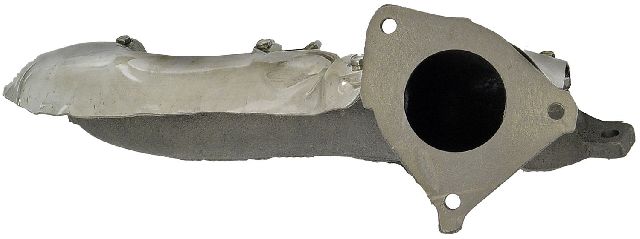
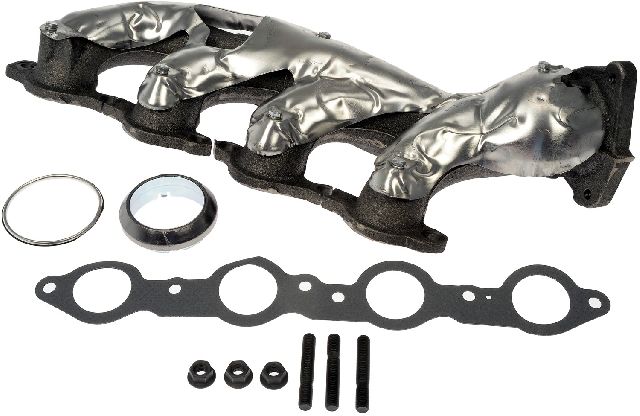
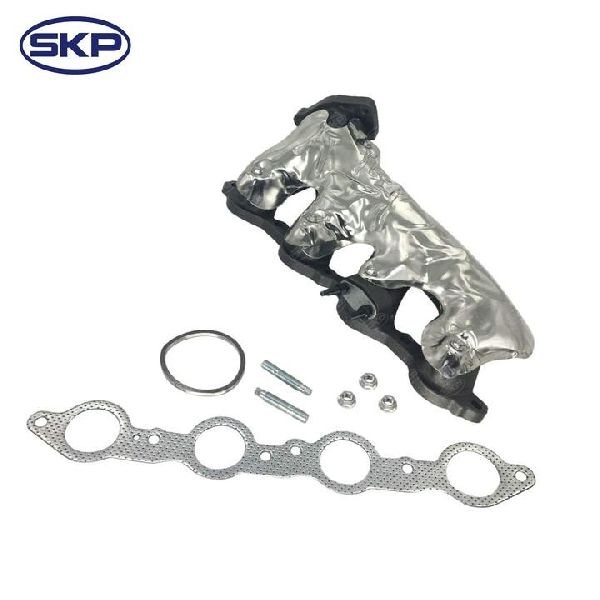
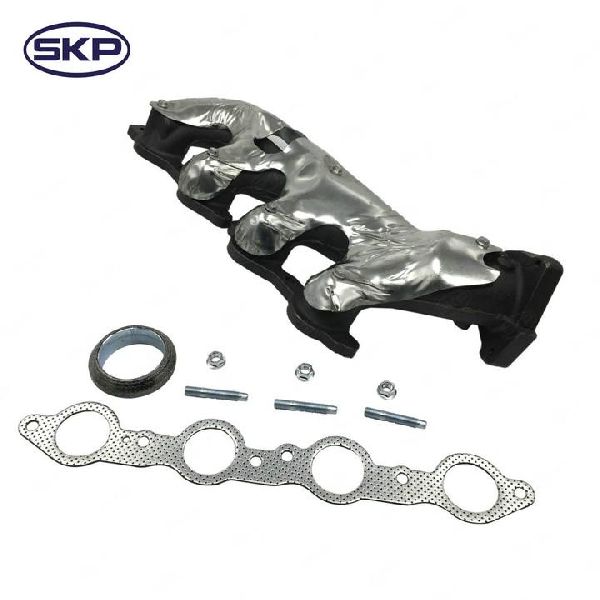
Est. part cost: $400-$1200 - Exhaust Leak 🟡 Medium Probability Exhaust manifold bolts on GM V8s are notoriously prone to rusting and breaking, especially the rear-most bolts near the firewall. This creates a leak that allows oxygen into the exhaust stream. This extra oxygen fools the O2 sensors into providing false readings to the ECM, triggering a P0420 code even with a good converter. Leaks can also occur at flange gaskets.
How to confirm: Perform a visual and audible inspection with the engine running, especially when cold, listening for a distinct 'ticking' sound from the manifold area. Look for black soot trails around the manifold-to-head mating surface. A smoke machine test is the most effective way to pinpoint small leaks. Sometimes the broken bolt head is visibly missing.
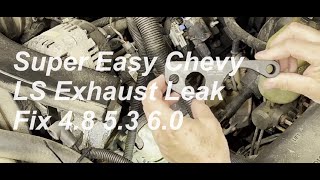
Typical fix: Repair the leak. This often involves extracting the broken manifold bolt(s) 🎬 See this walkthrough for repairing broken exhaust manifold bolts. and replacing them, along with the gasket. In some cases, a clamp-style repair kit (like those from Dorman) 🎬 Watch: A super easy way to fix broken manifold bolts. can be used as a workaround to avoid bolt extraction.
Est. part cost: $20-$500 - Failed Downstream Oxygen (O2) Sensor (Bank 1, Sensor 2) 🟡 Medium Probability O2 sensors are wear items and can become lazy or biased with age, sending inaccurate data to the ECM. They can also be contaminated by oil or coolant. Many forum users recommend using only OEM/ACDelco or Denso sensors, as Bosch sensors have been reported to cause issues on these trucks.
How to confirm: The best method is to swap the downstream O2 sensors from Bank 1 and Bank 2. Clear the codes and drive the vehicle. If the code returns as P0430 (Bank 2), the O2 sensor is faulty. If P0420 returns, the sensor is likely good and the converter or an exhaust leak is the issue.
Typical fix: Replace the Bank 1, Sensor 2 oxygen sensor. An O2 sensor socket is highly recommended for this job.
Est. part cost: $50-$150
Rare But Worth Checking
- Engine Misfires or Fuel System Issues: While not a direct cause of the code, issues like leaking fuel injectors, a bad fuel pressure regulator, or persistent misfires (e.g., P0300) will dump raw fuel into the exhaust, rapidly destroying the catalytic converter. If you replace the converter without fixing the root engine problem, the new one will fail quickly. Always check for and resolve other engine codes first, especially rich conditions like P0172/P0175.
- Engine Coolant Temperature (ECT) Sensor Malfunction: A faulty ECT sensor that reads colder than reality can cause the engine to run in a continuous rich fuel state. This excess fuel can overwhelm and damage the catalytic converter over time. One owner of a related platform noted their thermostat was opening too early, causing a rich condition that triggered the code.
Diagnosis Steps
- Check for any other stored trouble codes. Address codes for misfires (P030x), fuel trim (P0171/P0174/P0172/P0175), or oxygen sensor circuits first.
- With the engine cold, start it and listen carefully for any 'ticking' or hissing sounds from the engine bay, which strongly indicate an exhaust leak. Visually inspect the exhaust manifolds for broken bolts, especially the one at the rear of the driver's side head, closest to the firewall.
- Use a scan tool to monitor live data for the Bank 1 oxygen sensors. At operating temperature and a steady 2,000 RPM, the upstream sensor (B1S1) should fluctuate rapidly between ~0.1 and ~0.9 volts. The downstream sensor (B1S2) should hold a relatively steady voltage, typically above 0.5-0.6 volts.
- If the B1S2 voltage is fluctuating wildly and mirroring B1S1, the converter is likely bad or an exhaust leak is present.
- To definitively test the O2 sensor, swap the downstream (post-cat) sensors between Bank 1 and Bank 2. They are identical parts. Clear the codes and drive until the monitor runs. If P0430 appears, you have a bad O2 sensor. If P0420 reappears, the catalytic converter or a leak is the problem.
- If a clogged converter is suspected due to lack of power, use an infrared thermometer to measure the inlet and outlet temperature of the converter after the engine is fully warmed up. The outlet should be at least 100°F hotter than the inlet on a working converter.
- If you have a 2007+ model, check engine oil levels. Low oil is a strong indicator of an oil consumption problem (AFM-related) that has likely damaged the converter.
Parts You'll Likely Need
- Catalytic Converter Assembly (Y-Pipe)
(OEM #19418939 (Supersedes: 15127418, 25824120, 25904628 for some 5.3L models))— This is the most common failure for a P0420 code, especially on higher-mileage vehicles or those with a history of oil consumption or misfires. The part is often a complete Y-pipe including both Bank 1 and Bank 2 converters.
Trusted brands: ACDelco (OEM), MagnaFlow, Walker Exhaust, AP Exhaust Technologies
OEM price range: $800-$1500
Aftermarket price range: $400-$900 - Downstream Oxygen Sensor (Bank 1, Sensor 2)
(OEM #12583804 (ACDelco #213-3866) or Denso 234-4668 are common replacements for GMT900 models)— A faulty O2 sensor can send incorrect data, falsely triggering the P0420 code. It's a critical diagnostic step and a common point of failure. It's best practice to use OEM/Denso parts.
Trusted brands: ACDelco (OEM), Denso, NTK
OEM price range: $100-$180
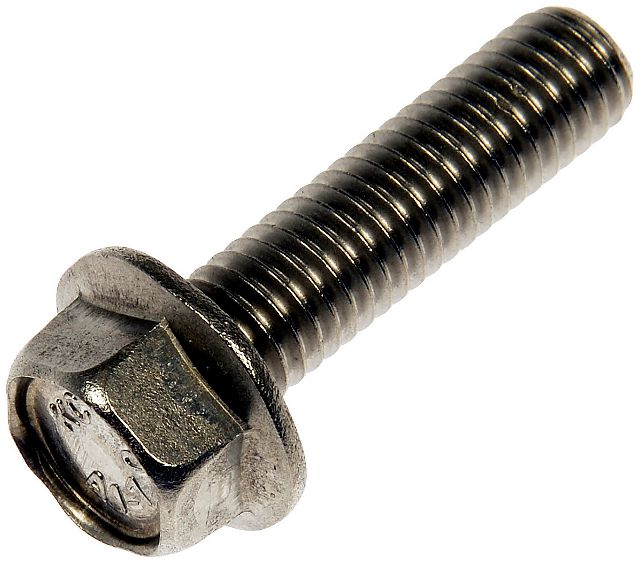
Aftermarket price range: $50-$120 - Exhaust Manifold Bolt Repair Clamp — Broken exhaust manifold bolts are a frequent cause of leaks that trigger a false P0420. Instead of a costly and difficult bolt extraction, these brackets clamp the manifold to the head, sealing the leak. Dorman is a popular brand for these kits.
Trusted brands: Dorman, APDTY
OEM price range: N/A
Aftermarket price range: $30-$80
Related Codes That Often Appear With This One
- P0430 — This is the identical code for Bank 2 (passenger side). Seeing both P0420 and P0430 together strongly suggests a systemic issue like excessive oil consumption from AFM affecting both banks, contaminated fuel, or simply that both aged converters are failing around the same time.
- P0300-P0308 — These are misfire codes (P0300 for random, P0301-P0308 for specific cylinders). An engine misfire allows unburnt fuel to enter the exhaust, which will overheat and destroy the catalytic converter. A misfire is a root cause that must be fixed to protect the new converter.
- P0172 / P0175 — These codes indicate a rich fuel condition on Bank 1 and Bank 2, respectively. A rich condition will saturate the catalytic converter with fuel, eventually damaging it and causing a P0420/P0430 code. Fixing the rich condition is necessary before replacing the converter.
Technical Service Bulletins (TSBs) & Recalls
- PIP3119N: A bulletin related to disabling P0420/P0430 codes at low mileage, possibly during specific diagnostic procedures or via a software update to reduce sensitivity. Full context is limited but indicates manufacturer awareness of the code's prevalence.
Platform-Specific Known Issues
- Active Fuel Management (AFM) Oil Consumption (2007-2011): The AFM system on the 5.3L and 6.2L engines can lead to increased oil consumption, which contaminates the catalytic converters and causes them to fail prematurely. This was acknowledged in TSB #PIP3119N, which noted P0420 codes on low-mileage vehicles. [⭐ MANUFACTURER TSB — highest authority]
- Broken Exhaust Manifold Bolts: The bolts securing the exhaust manifolds to the cylinder heads, particularly those at the rear near the firewall, are prone to breaking. This creates an exhaust leak that lets in oxygen and triggers a false P0420 code.
Mechanic-Grade Diagnostic Values
- Upstream O2 Sensor (B1S1) Live Data — expected: Voltage should fluctuate rapidly and consistently between a low value (lean, approx. <0.3V) and a high value (rich, approx. >0.8V) when in closed loop.. Failure: A flat, lazy, or fixed voltage indicates a faulty sensor.
- Downstream O2 Sensor (B1S2) Live Data — expected: On a healthy, warm converter, voltage should be relatively steady and stable, typically above 0.5V. Slow fluctuations between 0.1V and 0.8V can be normal.. Failure: Voltage fluctuates rapidly, mirroring the pattern of the upstream (B1S1) sensor. This indicates the converter is not storing oxygen and is inefficient.
- Mode $06 Catalyst Monitor Test (Test ID $21) — expected: The test value should be below the maximum threshold set by the manufacturer. This data is viewed on a capable scan tool.. Failure: The test value exceeds the maximum threshold, or is very close to it. This can indicate a marginal converter even before a P0420 code is set.
Hidden / Shadow Codes Worth Checking
- Mode $06, Test ID $21: This is not a DTC, but a non-continuous monitor test for Catalyst Efficiency Bank 1. It provides the raw test value the PCM uses to determine if the converter is passing or failing, along with the minimum and maximum allowable thresholds. (see via A scan tool with Mode $06 capabilities is required. The data is found under On-Board Monitor Test Results. This allows a technician to see if the converter is performing marginally before a full-blown DTC is triggered.)
Scan Tool Commands That Help
- GDS2/Tech2 or equivalent professional scan tool: Catalyst System Test / Catalyst Monitor Drive Cycle — After replacing a catalytic converter or clearing codes, a specific drive cycle must be performed to run the internal monitor and verify the repair. This ensures the P0420 code does not return due to an incomplete test.
- Any scan tool with live data graphing: Graphing B1S1 vs. B1S2 Oxygen Sensors — This is the primary diagnostic step. Graphing the two sensors' voltage readings on the same screen allows for a direct visual comparison to see if the downstream sensor is mimicking the upstream sensor, which confirms a lack of catalyst efficiency.
- GM-specific or advanced scan tool: Catalytic Converter Break-In Procedure (per TSB PIP3119N) — On a new vehicle or after a catalytic converter has been replaced, a specific drive cycle is required to 'break-in' the new converter. If this is not done (e.g., if the battery was disconnected, resetting the timer), a false P0420 may set. The procedure involves sustained highway driving to properly condition the new catalyst.
Wiring & Ground Locations
- O2 Sensor Fuses (GMT900) — In the under-hood fuse block on 2007-2014 models, these are typically fuse #8 and fuse #18.. These two fuses control all four oxygen sensors. A blown fuse will cause the sensor heaters to fail, leading to incorrect readings and potentially triggering catalyst or sensor codes.
- G103 / G104 — These are primary engine and body ground points. G103 is often located on the cowl, above the brake booster, while other key engine grounds are on the front or rear of the cylinder heads or engine block.. The ECM and its sensors rely on clean ground connections. A corroded or loose ground at G103 can affect the Data Link Connector (DLC) and Body Control Module, while a bad engine block ground can introduce noise into sensor signals, potentially causing false readings from the O2 sensors.
- O2 Sensor Pigtail Harness — The wiring leading directly from the oxygen sensor to its connector.. Per GM service information, the O2 sensor gets its clean air reference through the signal and heater wires. Attempting to repair damaged wires, pins, or the connector (e.g., by soldering) can block this air reference path, degrading sensor performance and causing incorrect readings. If the pigtail is damaged, the entire sensor must be replaced.
OEM Part Supersession History
12609457→ACDelco 213-4229— This is the GM Genuine Parts number and its corresponding ACDelco service part number for the downstream oxygen sensor.
Heads up: This part is specified for many 2008-2014 GM trucks and SUVs, including the Yukon.15896591→Unknown current PN— This is an older part number for a catalytic converter assembly that has been replaced by a newer version.25824121→Unknown current PN— This is an older part number for a catalytic converter assembly that has been replaced by a newer version.
Model Year Variations Within This Range
- 2007-2011 (GMT900): The under-hood fuse box contains specific fuses for the O2 sensors (typically #8 and #18) that are critical to check. Also, engine ground locations like G103 (cowl) and G104 (cylinder head) are specific to this generation's architecture.
- 2004-2006 (GMT800): While also prone to broken manifold bolts, these models do not have the Active Fuel Management (AFM) system, making oil consumption a less likely root cause for converter failure compared to the GMT900s. Grounding locations are also different; key grounds are on the engine block, firewall, and radiator support.
Helpful Videos
We Have This Part in Stock


The information in this article is provided for general reference and educational purposes only. Vehicle specifications, procedures, and part compatibility can vary by production date, trim level, and region. Always consult your vehicle's factory service manual and verify part numbers before purchasing or performing repairs. Safety-critical components such as airbags, seat belts, and braking systems should be installed by a qualified professional.
- Gmc YUKON:
- 🎬 Helpful Videos
- 🛍️ Shop This Part
- What's Unique About the 2004-2011 Gmc YUKON
- Diagnostic Flowchart
- Symptoms You May Notice
- Most Likely Causes
- Rare But Worth Checking
- Diagnosis Steps
- Parts You'll Likely Need
- Related Codes That Often Appear With This One
- Technical Service Bulletins (TSBs) & Recalls
- Platform-Specific Known Issues
- Mechanic-Grade Diagnostic Values
- Hidden / Shadow Codes Worth Checking
- Scan Tool Commands That Help
- Wiring & Ground Locations
- OEM Part Supersession History
- Model Year Variations Within This Range
- 🎟️ Get 5% Off