

P0420 on 2009-2013 GMC Sierra Denali: Catalyst, O2 Sensor, or Exhaust Leak?
On a 2009-2013 GMC Sierra Denali with the 6.2L V8, code P0420 almost always points to a failing Bank 1 (passenger side) catalytic converter. However, before replacing this expensive part, it is critical to rule out cheaper and common causes. Thoroughly check for exhaust leaks anywhere in the system, as even leaks *after* the rear O2 sensor can trigger this code per GM TSBs. Also, consider that a 'lazy' or faulty downstream oxygen sensor can send false data, mimicking a bad converter.
- P0420 on your Sierra Denali means the passenger-side catalytic converter is reported as inefficient.
- DO NOT immediately replace the catalytic converter. It's the most expensive part and may not be the problem.
- First, inspect thoroughly for exhaust leaks, especially near the rear O2 sensor, as noted in GM service bulletins.
- Second, test the downstream (Bank 1, Sensor 2) oxygen sensor. A faulty sensor is a common and much cheaper fix.
- Only after ruling out leaks and bad sensors should you consider replacing the catalytic converter.
What's Unique About the 2009-2013 Gmc SIERRA DENALI
For the GMT900 platform Sierra Denali and its relatives (Silverado, Escalade), General Motors issued specific Technical Service Bulletins (TSBs) that highlight an unusual cause for P0420: 🎬 Watch: EricTheCarGuy explains how the P0420 code works. exhaust leaks occurring *after* the rear oxygen sensor. This can be caused by aftermarket equipment like utility beds or hitches creating clearance issues or from corrosion at flange joints. Technicians are advised to perform a thorough exhaust leak check before condemning the catalytic converter. Additionally, these 6.2L engines can suffer from excessive oil consumption due to the Active Fuel Management (AFM) system, which can foul and prematurely destroy the catalytic converters.
Diagnostic Flowchart
Tap your situation to follow the diagnostic path that matches what you're seeing on this vehicle.
Symptoms You May Notice
- Check Engine Light is on
- Vehicle will fail an emissions test
- Slight decrease in fuel efficiency
- Reduced engine performance, hesitation, or lack of power, especially if the converter is clogged or internally damaged.
- A sulfur or "rotten egg" smell from the exhaust, indicating the converter is overheating or failing.
- A rattling sound from the exhaust if the internal honeycomb substrate of the converter has broken apart.
- Immediately replacing the catalytic converter without checking for exhaust leaks or testing the oxygen sensors. An exhaust leak or a bad O2 sensor is a much cheaper fix and a frequent cause of a false P0420 code.
- Replacing the catalytic converter without addressing the root cause of its failure, such as engine misfires or excessive oil consumption. The new converter will likely fail prematurely.
Most Likely Causes
- Failing Catalytic Converter 🔴 High Probability Catalytic converters have a finite lifespan. On these 6.2L V8 engines, a significant contributing factor is oil contamination from excessive oil consumption, a known issue related to the Active Fuel Management (AFM) system. Unburnt oil and carbon deposits can coat the catalyst materials, rendering them ineffective. Age and high mileage are also primary factors.
How to confirm: After ruling out other causes, a technician can use a scan tool to graph the upstream and downstream O2 sensor voltages. A downstream sensor that mimics the upstream sensor's fluctuations indicates a failed converter. An infrared thermometer can also be used; a healthy converter should be significantly hotter at the outlet than the inlet. A backpressure test can confirm a clog.
Typical fix: Replace the Bank 1 (passenger side) catalytic converter assembly. It is a direct-fit assembly and universal converters are not recommended.
Est. part cost: $400-$1200 - Faulty Downstream Oxygen (O2) Sensor 🟡 Medium Probability The rear O2 sensor can become 'lazy' or fail with age, sending inaccurate data to the PCM that mimics a bad catalytic converter. It's a very common misdiagnosis for P0420, and replacing it is a wise diagnostic step before condemning the expensive converter.
How to confirm: Graph the O2 sensor's voltage with a scan tool. A healthy downstream sensor should show a relatively steady, stable voltage. If it's stuck high, low, or fluctuating wildly like the upstream sensor, it's likely faulty. A good DIY test is to swap the downstream sensors from Bank 1 and Bank 2. If the code changes to P0430 (Bank 2), the sensor is confirmed bad.
Typical fix: Replace the Bank 1, Sensor 2 (passenger side, downstream) oxygen sensor. Using high-quality OEM (ACDelco) or reputable aftermarket (Denso, NTK, Bosch) brands is highly recommended.
Est. part cost: $50-$120 - Exhaust System Leak 🟡 Medium Probability GM Technical Service Bulletins (TSBs) specifically mention checking for exhaust leaks. Leaks can occur at the exhaust manifold gaskets, flange connections, or from cracks in the pipes. These leaks allow outside oxygen to enter the exhaust stream, which skews O2 sensor readings and can falsely trigger a P0420 code. TSB PIP5110B/C specifically points to leaks *after* the rear O2 sensor as a potential cause on these trucks.
How to confirm: Visually inspect the entire exhaust system for black soot marks, cracks, or loose connections, especially around flanges and gaskets. A professional smoke test is the most effective method. A simple DIY method involves using a shop-vac on its 'blow' setting, sealing it to the tailpipe, and spraying soapy water on all joints and seams to look for bubbles.
Typical fix: Replace the leaking gasket or damaged section of pipe. Tighten loose flange bolts. Exhaust manifold to cylinder head gaskets are a common leak point.
Est. part cost: $20-$200 - Engine Misfires or Fuel Mixture Issues ⚪ Low Probability Underlying engine problems are a root cause of permanent converter failure. Unburnt fuel from misfires (bad plugs/coils) or a rich condition (leaking injectors) can enter the exhaust, overheat, and physically melt or destroy the catalyst substrate inside the converter.
How to confirm: Check for other DTCs, especially misfire codes (P0300-P0308) or fuel trim codes (P0171, P0174, P0172, P0175). Address these codes first before diagnosing the P0420, as they are the root cause of the converter's failure.
Typical fix: Repair the underlying engine issue, which may include replacing spark plugs, ignition coils, fuel injectors, or addressing the AFM oil consumption issue.
Est. part cost: $50-$500
Rare But Worth Checking
- Contaminated Fuel: Using leaded fuel (if available) can quickly destroy a catalytic converter.
- PCM Calibration Issues: TSB PIP3119N/P notes that on new or low-mileage vehicles, or after a converter replacement, the P0420 code can set falsely before the new catalyst has completed its break-in cycle. A specific drive cycle may be required to clear the code.
Diagnosis Steps
- Check for other DTCs. If any misfire (P030x), fuel system (P017x), or O2 sensor heater circuit codes are present, diagnose and fix them first.
- Thoroughly inspect the entire exhaust system for leaks. Use a smoke machine or the shop-vac/soapy water method. Check manifold gaskets for soot trails (often accompanied by a ticking noise on cold starts) and flange connections. Per GM TSB PIP5110B/C, specifically check for leaks behind the Bank 1 Sensor 2 oxygen sensor.
- Use a scan tool to monitor live data from the Bank 1 oxygen sensors at operating temperature. The upstream sensor (Sensor 1) voltage should fluctuate rapidly between approximately 0.1V and 0.9V. The downstream sensor (Sensor 2) should hold a relatively steady, stable voltage (typically above 0.5V).
- If the downstream sensor's reading mirrors the upstream sensor's rapid fluctuations, the catalytic converter has failed and is no longer storing oxygen.
- If the downstream sensor's reading is flat-lined (e.g., stuck at 0V or 1V) or very slow to respond, the sensor itself is likely the problem. Consider swapping the Bank 1 and Bank 2 downstream sensors to see if the fault code follows to P0430.
- Check for excessive oil consumption. The AFM system on these engines is known to cause oil burning, which destroys converters. If you are adding more than a quart of oil between changes, this is likely the root cause.
- If all sensors and the exhaust system check out and there are no underlying engine issues, the catalytic converter has lost its efficiency and requires replacement.
Parts You'll Likely Need
- Bank 1 Catalytic Converter
(OEM #19419599 (Supersedes 15896591))— This is the component that the code directly identifies as inefficient. If it has failed internally due to age, contamination from oil burning, or melting from misfires, replacement is the only fix.
Trusted brands: ACDelco (OEM), Walker, Magnaflow, Davico
OEM price range: $800-$1500
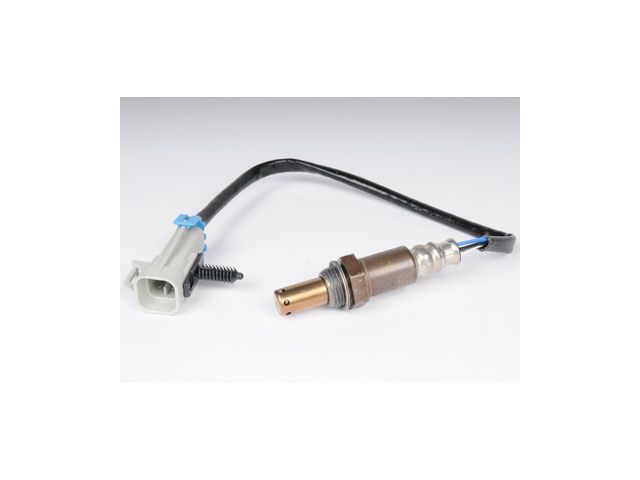
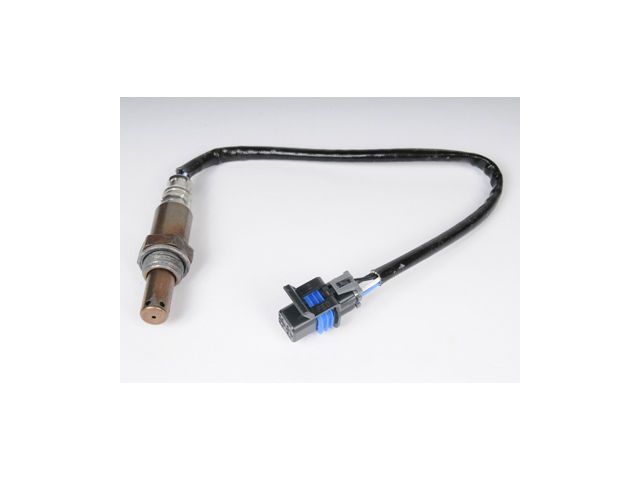
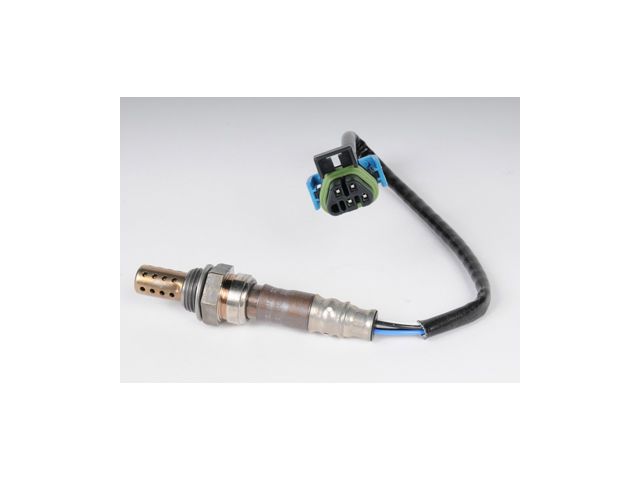
Aftermarket price range: $400-$900 - Downstream Oxygen Sensor (Bank 1, Sensor 2)
(OEM #ACDelco 213-4229 (GM 12609457))— This sensor is responsible for reporting the converter's efficiency. It can fail and send incorrect data, leading to a misdiagnosis. It's a common
Trusted brands: ACDelco (OEM), Denso, NTK, Bosch
OEM price range: $70-$120
Aftermarket price range: $50-$90
Related Codes That Often Appear With This One
- P0430 — This is the identical code but for Bank 2 (driver's side). If both P0420 and P0430 appear, it strongly suggests a systemic issue like contaminated fuel, a common exhaust leak affecting both banks, or widespread catalyst damage from excessive oil consumption.
- P0300-P0308 — These are cylinder misfire codes (P0300 for random, P0301-P0308 for specific cylinders). An engine misfire allows unburnt fuel to enter the exhaust, which can overheat and destroy the catalytic converter, leading to the P0420 code.
Technical Service Bulletins (TSBs) & Recalls
- PIP5110B: Advises checking for exhaust leaks behind the rear O2 sensor.
- PIP5110C: Supersedes previous version with similar advice on checking for exhaust leaks.
- PIP3119N/P: Mentions P0420 codes setting at low mileage or after converter replacement due to lack of catalyst break-in.
- PIP5085C: Notes P0420 may appear with other DPF-related codes on diesel models, but is less relevant here.
- 10-06-01-008M: Details causes and fixes for excessive oil consumption on AFM engines, a primary cause of catalyst failure.
Platform-Specific Known Issues
- TSB #PIP5110B and #PIP5110C specifically advise technicians to check for exhaust leaks behind the Bank 1 Sensor 2 oxygen sensor when diagnosing a P0420 code. This can be caused by improper clearance with aftermarket equipment like utility beds or hitches.
- TSB #PIP3119N/P notes that P0420 codes could appear at low mileage or after a converter replacement because the diagnostic may run before the catalyst has been properly broken in. A specific drive cycle may be needed to resolve a false code in this scenario.
- TSB #10-06-01-008M addresses excessive oil consumption on engines with Active Fuel Management (AFM), including the 6.2L V8. This is a critical underlying issue that leads to catalyst failure. The fix can involve installing an oil deflector, cleaning pistons, and potentially replacing piston rings.
Mechanic-Grade Diagnostic Values
- Upstream O2 Sensor (Bank 1, Sensor 1) Voltage — expected: Rapidly fluctuating between ~0.1V and ~0.9V at steady 2,000 RPM.. Failure: Slow or non-existent switching.
- Downstream O2 Sensor (Bank 1, Sensor 2) Voltage — expected: Relatively steady and stable, typically above 0.5V (e.g., 0.6V-0.8V) at steady cruise.. Failure: Voltage rapidly mirrors the upstream sensor's fluctuations, indicating the catalyst is not storing oxygen.
- Short-Term (STFT) & Long-Term (LTFT) Fuel Trims — expected: Within +/- 5% at idle and steady cruise.. Failure: Consistently high positive values (e.g., > +10%) suggest a vacuum leak, while high negative values suggest a rich condition (e.g., leaking injector). Both can lead to catalyst damage.
- Catalytic Converter Temperature Differential — expected: The outlet pipe should be at least 100°F hotter than the inlet pipe on a fully warmed-up engine.. Failure: Inlet and outlet temperatures are nearly the same, indicating the converter is not chemically active.
Scan Tool Commands That Help
- GDS2/Tech2 (or equivalent professional scanner): Catalyst Monitor Test / Service Bay Test — After a repair, a specific drive cycle or a service bay test is needed to run the catalyst monitor and confirm the fix. For GM, this often involves holding a steady speed of 55 mph for 3-5 minutes. It may take up to five complete drive cycles for the monitor to run and clear a pending code after a new converter installation.
Wiring & Ground Locations
- G103 — On the front of the right (passenger side) cylinder head.. This is a primary engine ground. A poor connection here can cause erratic behavior from sensors connected to the engine, including the oxygen sensors, leading to false codes.
- G104 — On the rear of the left (driver side) cylinder head.. Another critical engine-to-chassis ground. A loose or corroded G104 can cause a host of electrical issues, including intermittent sensor readings and communication problems with the ECM.
- O2 Sensor Fuses (Engine Bay Fuse Box) — Under the hood, in the main fuse box.. The heater circuits for the oxygen sensors are fused. Specifically for this platform, Fuse #8 (O2-B SNSR) and Fuse #18 are often associated with the oxygen sensor circuits. A blown fuse will set a heater circuit code but can also affect sensor readings.
Real Owner Repair Stories
- silveradosierra.com forum user (2011 GMC Sierra 6.2L) — Persistent P0420 and P0430 codes, excessive oil consumption (1 quart every 1000 miles).
❌ Tried (didn't work) Replacing both catalytic converters, Replacing all four oxygen sensors
✅ What actually fixed it The root cause was the Active Fuel Management (AFM) system causing oil to be consumed and foul the cats. The owner installed an AFM Disabler device that plugs into the OBD-II port. This kept the engine in V8 mode, stopped the oil consumption, and after clearing the codes, the P0420/P0430 codes did not return. This confirms the oil consumption was destroying the new converters.
OEM Part Supersession History
15896591→19419599— Standard part lifecycle update by GM. The new part number represents the currently available OEM replacement for the Bank 1 catalytic converter.
Model Year Variations Within This Range
- 2009: The 2009 Sierra Denali primarily used the L9H 6.2L V8 engine. This engine has Variable Valve Timing (VVT) and is Flex-Fuel capable, but it does NOT have Active Fuel Management (AFM). Therefore, AFM-related oil consumption is not a likely root cause for P0420 on this specific model year.
- 2010-2013: Starting in 2010, the Sierra Denali transitioned to the L94 6.2L V8. This engine is nearly identical to the L9H but adds Active Fuel Management (AFM), also known as Displacement on Demand (DOD). For these model years, AFM-related issues, particularly excessive oil consumption leading to catalyst contamination, become a primary suspect for the root cause of a P0420 code.
Helpful Videos


We Have This Part in Stock




The information in this article is provided for general reference and educational purposes only. Vehicle specifications, procedures, and part compatibility can vary by production date, trim level, and region. Always consult your vehicle's factory service manual and verify part numbers before purchasing or performing repairs. Safety-critical components such as airbags, seat belts, and braking systems should be installed by a qualified professional.
- Gmc SIERRA DENALI:
- 🎬 Helpful Videos
- 🛍️ Shop This Part
- What's Unique About the 2009-2013 Gmc SIERRA DENALI
- Diagnostic Flowchart
- Symptoms You May Notice
- Most Likely Causes
- Rare But Worth Checking
- Diagnosis Steps
- Parts You'll Likely Need
- Related Codes That Often Appear With This One
- Technical Service Bulletins (TSBs) & Recalls
- Platform-Specific Known Issues
- Mechanic-Grade Diagnostic Values
- Scan Tool Commands That Help
- Wiring & Ground Locations
- Real Owner Repair Stories
- OEM Part Supersession History
- Model Year Variations Within This Range
- 🎟️ Get 5% Off