

P0420 on 2003-2010 GMC Sierra 2500: Catalyst Efficiency Causes & Fixes
The P0420 code on a 2003-2010 GMC Sierra 2500 usually means the catalytic converter on Bank 1 has failed. Before replacing this expensive part, it's crucial to rule out exhaust leaks from broken manifold bolts and faulty oxygen sensors, which are also common causes. A converter replacement can cost from $400 for an aftermarket part to over $1,000 for an OEM unit.
- P0420 means the catalytic converter on Bank 1 (passenger side on V8s) is no longer efficient.
- Before buying a new converter, ALWAYS check for exhaust leaks, especially broken exhaust manifold bolts, as this is a common issue on these trucks and a much cheaper fix.
- Test the oxygen sensors. A bad downstream O2 sensor can mimic a bad converter.
- If you have other engine codes (especially for misfires), fix those problems first, as they are the likely root cause of the converter failure.
- If the converter must be replaced, consider replacing the oxygen sensors at the same time for best results.
What's Unique About the 2003-2010 Gmc SIERRA 2500
The GMC Sierra 2500 is a heavy-duty truck often subjected to high mileage and demanding work, which naturally shortens the life of exhaust components like catalytic converters. For this specific year range, it's important to check for exhaust manifold leaks, especially broken or missing manifold bolts at the rearmost cylinder, which can cause a false P0420 code. This issue is so common it is sometimes referred to as the 'Chevy tick'. Additionally, GM Technical Service Bulletin #PIP3119P addresses false P0420/P0430 codes on new or low-mileage vehicles, or after a converter replacement, due to an incomplete catalyst break-in procedure.
Diagnostic Flowchart
Tap your situation to follow the diagnostic path that matches what you're seeing on this vehicle.
Generation note: This range covers two Sierra 2500 generations: the first generation (GMT800, 2003-2007 "Classic") and the second generation (GMT900, 2007-2010). While the P0420 code's meaning is the same for both, specific exhaust components and part numbers may differ. The gasoline V8 engines (6.0L, 8.1L) are the primary platforms for this code, not the Duramax diesel. The issue of broken exhaust manifold bolts is prevalent across both generations. GMT900 trucks (2007.5+) feature more refined interiors and a 6-speed transmission, while GMT800s are known for their simpler, more mechanical feel and 4-speed transmission.
Symptoms You May Notice
- Check Engine Light is on.
- Vehicle fails emissions/smog test.
- Reduced engine power or sluggish acceleration if the converter is clogged.
- A rattling noise from the exhaust if the internal catalyst material has broken apart.
- A "rotten egg" or sulfur smell from the tailpipe.
- Disabled remote start feature.
- Audible ticking or hissing noise from the engine bay, especially when cold, indicating an exhaust leak.
- Replacing the catalytic converter immediately without first checking for exhaust leaks or testing the oxygen sensors. An exhaust leak is a much cheaper fix and a common cause.
- Replacing the oxygen sensors when the catalytic converter is truly at the end of its life.
- Replacing the catalytic converter without fixing the root cause (like misfires or oil consumption) that destroyed the original one, leading to repeat failure.
Most Likely Causes
- Failed Catalytic Converter 🔴 High Probability High mileage and age are the primary factors. Contamination from engine issues like burning oil or coolant can also destroy the converter. Aftermarket converters may also have a shorter lifespan than OEM parts.
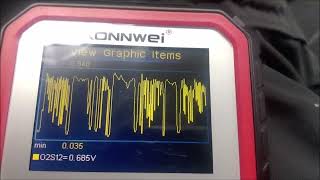
How to confirm: Use a scan tool to graph O2 sensor data; if the Bank 1 Sensor 2 voltage fluctuates similarly to Sensor 1, the converter is not working. 🎬 See how to tell if it's the converter or O2 sensor. An infrared thermometer can also be used; the outlet temperature of a working converter should be at least 100-150°F hotter than the inlet temperature after the engine is fully warm and running at ~2000 RPM.
Typical fix: Replace the Bank 1 catalytic converter. After replacement, a specific break-in drive cycle may be required as per TSB #PIP3119P to prevent the code from returning.
Est. part cost: $400-$1200 - Exhaust Leak 🟡 Medium Probability Broken exhaust manifold bolts are a known issue on these GM trucks, leading to leaks near the cylinder head. The bolts, especially at the front or rear of the manifold, are prone to breaking from thermal cycles. Gaskets and pipe flanges can also fail from rust and age.
How to confirm: Visually inspect the exhaust manifolds and pipes for black soot trails, which indicate a leak. Listen for a ticking or hissing sound, especially when the engine is cold. A shop vac in 'blow' mode connected to the tailpipe and soapy water sprayed on the exhaust system can help pinpoint small leaks.
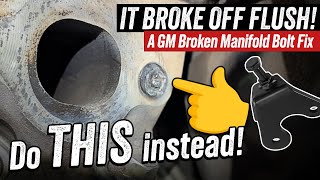
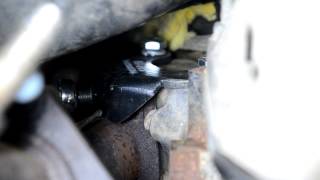
Typical fix: Replace the broken manifold bolts and/or the leaking gasket. In some cases, a clamp-on repair bracket (like the Kral Auto Parts KAP169) can be used to seal the leak without removing the manifold or extracting the broken bolt. Welding a nut onto the broken stud is a common extraction method for professionals.
Est. part cost: $20-$150 - Faulty Oxygen (O2) Sensor 🟡 Medium Probability O2 sensors are wear items and can become slow or biased with age (over 80,000-100,000 miles), sending incorrect data to the PCM. A new, more sensitive sensor can sometimes trigger the code faster if the converter is borderline.
How to confirm: Monitor sensor voltage on a scan tool. A lazy downstream (Bank 1, Sensor 2) O2 sensor can falsely trigger a P0420 code. A good downstream sensor should show a steady voltage around 0.7V-0.8V, while the upstream sensor switches rapidly between ~0.1V and ~0.9V. Swapping the downstream sensors between Bank 1 and Bank 2 (if P0430 is not present) and seeing if the code follows to P0430 can confirm a bad sensor.
Typical fix: Replace the downstream (post-catalyst) oxygen sensor for Bank 1. It's often recommended to replace O2 sensors when installing a new converter.
Est. part cost: $50-$150 - Underlying Engine Issues ⚪ Low Probability Engine misfires (from bad spark plugs or ignition coils) or rich/lean running conditions can send unburnt fuel into the exhaust, overheating and destroying the catalytic converter. Excessive oil consumption, a known issue on some GM V8s, can also contaminate the catalyst.
How to confirm: Check for other diagnostic trouble codes, such as P030x (misfire) or P0171/P0174 (lean condition). Address these codes first before diagnosing the P0420. Check for excessive oil consumption (more than 1 quart per 2,000 miles).
Typical fix: Perform a full engine tune-up, including replacing spark plugs and wires. Diagnose and repair any fuel system or ignition system faults. Address oil consumption issues if present.
Est. part cost: $100-$500
Rare But Worth Checking
- ECM Calibration Issue / PCM Failure: In some cases, particularly on earlier models, GM has issued software updates for the Engine Control Module (ECM) to correct false P0420 triggers. It's worth checking with a dealer if the vehicle has the latest software. In very rare instances, a faulty PCM itself can cause the code even with new parts.
- Contaminated Fuel: Using leaded fuel (if available) or fuel with improper additives can quickly poison the catalytic converter.
- Illegal O2 Sensor 'Fixes': Sometimes a previous owner may have installed a spark plug non-fouler or an O2 sensor extender on the downstream sensor to trick the computer. These are illegal for on-road use and mask the real problem.
Diagnosis Steps
- Scan for any other DTCs. If codes for misfires, O2 sensor heaters, or fuel trim are present, diagnose and fix them first.
- Visually and audibly inspect the entire exhaust system from the engine to the tailpipe for leaks. Pay close attention to the exhaust manifold-to-cylinder head connection for broken bolts and black soot trails.
- Use a scan tool with live data capability. Graph the voltage signals for the upstream (Bank 1 Sensor 1) and downstream (Bank 1 Sensor 2) oxygen sensors.
- Observe the sensor readings with the engine fully warmed up and running at around 2,000 RPM. The upstream sensor should show rapid, high-frequency switching between approximately 0.1 and 0.9 volts. The downstream sensor should show a relatively stable, flat voltage, typically above 0.6 volts.
- If the downstream sensor's voltage pattern mirrors the upstream sensor, the catalytic converter has likely failed.
- If the downstream sensor signal is flat, stuck high, or stuck low, the sensor itself is likely faulty.
- If no definitive conclusion can be made from sensor data, use an infrared thermometer to measure the temperature of the pipe just before and just after the catalytic converter. The outlet should be at least 100-150°F hotter than the inlet on a working converter.
- If a new converter was recently installed, perform the GM break-in procedure outlined in TSB #PIP3119P to prevent a false code. This involves a specific sequence of highway driving.
Parts You'll Likely Need
- Catalytic Converter (Bank 1) — This is the most common cause of a true P0420 code, where the catalyst materials have degraded from age or contamination.
Trusted brands: ACDelco, Walker Exhaust, MagnaFlow
OEM price range: $800-$1200
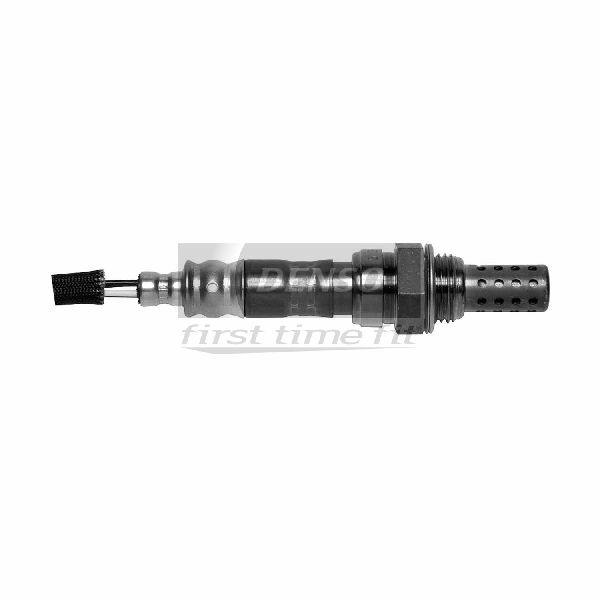
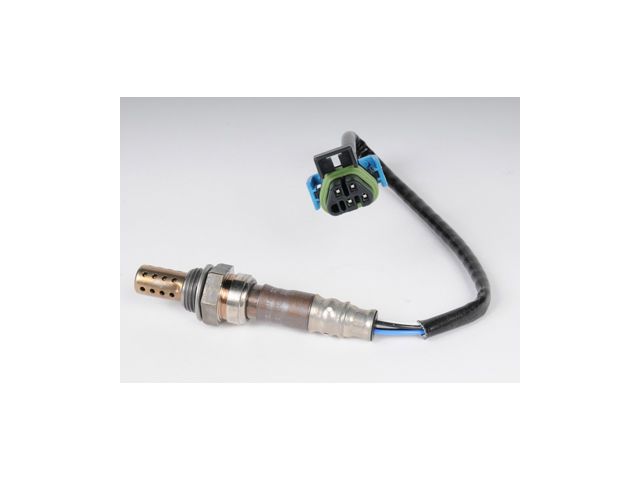
Aftermarket price range: $400-$700 - Downstream Oxygen Sensor (Bank 1, Sensor 2)
(OEM #ACDelco 213-4668 or GM 12609877 (verify by VIN))— A faulty or aged sensor can send incorrect readings, falsely triggering a P0420 or being the root cause of catalyst failure. It is often replaced with the converter.
Related Codes That Often Appear With This One
- P0430 — This is the identical code for the opposite engine bank (Bank 2). If both appear, it may point to a systemic issue like a fuel problem or suggest both converters have failed due to high mileage.
- P0300-P0308 — These are misfire codes. An engine misfire allows unburnt fuel to enter the exhaust, which can overheat and damage the catalytic converter, causing the P0420 code.
- P0171, P0174 — These codes indicate a lean running condition. This can be caused by unmetered air entering the system, such as from an exhaust manifold leak, affecting the catalytic converter's operating temperature and efficiency, sometimes leading to a P0420.
Technical Service Bulletins (TSBs) & Recalls
- PIP3119P: Addresses false P0420/P0430 codes setting on low-mileage vehicles or after a catalytic converter has been replaced. It outlines a specific drive cycle procedure required to properly 'break-in' the new converter so the catalyst monitor can run correctly.
Platform-Specific Known Issues
- Broken Exhaust Manifold Bolts: A very common issue on the 6.0L and 8.1L V8 engines is for the exhaust manifold bolts to break, especially the one at the rearmost position (closest to the firewall). This creates an exhaust leak that allows oxygen to enter the exhaust stream, which fools the O2 sensors and triggers a false P0420 or P0430 code. The tell-tale sign is an audible 'ticking' noise from the engine bay that is most prominent on a cold start and may quiet down as the engine warms up and the metal expands.
Mechanic-Grade Diagnostic Values
- Long Term and Short Term Fuel Trims (LTFT/STFT) — expected: Combined value should be within +/- 10%. Ideally close to 0%.. Failure: Sustained positive values (e.g., +10% or higher) indicate a lean condition (possible vacuum or exhaust leak). Sustained negative values indicate a rich condition. High positive trims at idle that improve with RPM strongly suggest a vacuum leak.
- Catalytic Converter Temperature Differential — expected: Outlet temperature should be at least 100-150°F hotter than the inlet temperature.. Failure: Outlet temperature being the same or cooler than the inlet temperature suggests the converter is not 'lighting off' and is inactive.
- Engine Vacuum at 2,000 RPM — expected: A steady vacuum reading.. Failure: If the vacuum gauge needle slowly drops while trying to hold a steady 2,000 RPM, it's a strong indicator of an exhaust restriction, such as a clogged catalytic converter.
Hidden / Shadow Codes Worth Checking
- Mode $06, Test ID $21 (or similar): Mode $06 provides raw test data from the PCM's onboard monitors before a code is set. For the catalyst monitor, it shows the measured efficiency value versus the PCM's minimum and maximum thresholds. This allows a technician to see if the converter is borderline and about to fail, even if no code is pending. (see via A professional-grade scan tool (like a Launch, Autel, or GM's Tech 2/GDS2) that can access Mode $06 data. The specific Test ID (TID) and Component ID (CID) for the catalyst monitor can vary by year and specific ECM calibration.)
Scan Tool Commands That Help
- GM Tech 2 / GDS2 or equivalent professional scanner: Catalyst System Test / Catalyst Monitor Drive Cycle — After replacing a catalytic converter, a specific drive cycle is required to allow the PCM to run its internal monitor and confirm the repair. Forcing the monitor to run with a scan tool or following the manual procedure is necessary to extinguish a P1000 (monitors not complete) code and ensure the P0420 does not return falsely.
- GM Tech 2 / GDS2: Catalyst Break-In Procedure (per TSB #PIP3119P) — Specifically after installing a NEW catalytic converter to prevent a false P0420/P0430. The procedure involves a sustained highway drive to properly 'out-gas' the new converter materials. The steps are: 1. Drive at highway speed for 25-30 mins. 2. Stop and shut off the engine for 1 min. 3. Restart and drive at highway speed for another 10-15 mins. 4. Stop, shut off for 1 min, then operate the vehicle under the conditions required to run the P0420 test to confirm it passes.
Wiring & Ground Locations
- G102 / G103 — Typically located on the rear of the driver's side cylinder head or on the cowl above the brake booster. G102 often grounds the ignition coils, while G103 grounds the ECM/PCM and various sensors.. A poor ground at these locations can cause erratic voltage signals from sensors, including the oxygen sensors and their heater circuits. This can lead to incorrect data being sent to the PCM, potentially triggering a false P0420 code or other sensor-related faults. Verifying these grounds are clean and tight is a critical step in diagnosing electrical issues on these trucks.
- Oxygen Sensor Harness — Runs along the transmission and exhaust system. The connectors are near the exhaust pipes before and after the catalytic converter.. The wiring is susceptible to heat damage from the exhaust, physical damage from road debris, or contamination from oil/fluid leaks. A damaged wire or corroded connector for the upstream or downstream O2 sensor can cause a loss of signal or incorrect readings, directly leading to a P0420 code.
Real Owner Repair Stories
- Reddit user post in r/Silverado (GM Truck with P0420 and P0430 codes) — Check engine light with both P0420 and P0430 codes, and an audible engine 'tick' on startup.
❌ Tried (didn't work) Initial diagnosis pointed towards catalytic converters or O2 sensors.
✅ What actually fixed it The user identified a snapped exhaust manifold bolt head. The actual fix required replacing the warped exhaust manifold, gaskets, and extracting the broken bolts. Commenters confirmed this is a very common failure and the root cause of the codes, as the leak introduces oxygen that fools the O2 sensors. - YouTube video by 'The Daninator' (2002 GMC Sierra 5.3L V8 (GMT800)) — Exhaust leak tick, broken manifold bolts discovered during header installation.
❌ Tried (didn't work) Attempting to weld a nut to the rear bolt failed because it was seized.
✅ What actually fixed it For a rear broken bolt that was flush with the head, an aftermarket exhaust manifold repair bracket was installed. This bracket uses other existing bolt holes on the cylinder head to apply pressure to the manifold, sealing the leak without needing to extract the broken bolt.
OEM Part Supersession History
GM 88864359→ACDelco 213-4668— Part number update and branding change. This part is often listed as a Throttle Position Sensor but cross-references show it as the downstream O2 sensor for many of these V8 applications. Always verify fitment with VIN.
Heads up: The part number 213-4668 is used for multiple sensor types across GM vehicles (TPS, O2). It is critical to verify the application via VIN and part description to ensure the correct sensor (downstream O2) is being purchased.
Model Year Variations Within This Range
- 2003-2007 (GMT800): These models use a 4-speed automatic transmission (4L80-E in 2500 models) and have simpler electronics and interior designs. They do not have Active Fuel Management (AFM). Grounding points and harness routing may differ slightly from the later generation.
- 2007.5-2010 (GMT900): Introduced a new chassis, a 6-speed automatic transmission (6L90 in 2500 models), and more modern electronics and interiors. While the 6.0L V8 in the 2500HD did not typically have AFM, the electrical architecture is more complex, making clean grounds even more critical for proper sensor function.
Helpful Videos

We Have This Part in Stock




The information in this article is provided for general reference and educational purposes only. Vehicle specifications, procedures, and part compatibility can vary by production date, trim level, and region. Always consult your vehicle's factory service manual and verify part numbers before purchasing or performing repairs. Safety-critical components such as airbags, seat belts, and braking systems should be installed by a qualified professional.
- Gmc SIERRA 2500:
- 🎬 Helpful Videos
- 🛍️ Shop This Part
- What's Unique About the 2003-2010 Gmc SIERRA 2500
- Diagnostic Flowchart
- Symptoms You May Notice
- Most Likely Causes
- Rare But Worth Checking
- Diagnosis Steps
- Parts You'll Likely Need
- Related Codes That Often Appear With This One
- Technical Service Bulletins (TSBs) & Recalls
- Platform-Specific Known Issues
- Mechanic-Grade Diagnostic Values
- Hidden / Shadow Codes Worth Checking
- Scan Tool Commands That Help
- Wiring & Ground Locations
- Real Owner Repair Stories
- OEM Part Supersession History
- Model Year Variations Within This Range
- 🎟️ Get 5% Off