

P0420 on 2009-2013 GMC Sierra: Catalyst, O2 Sensor, or Exhaust Leak?
P0420 on a 2009-2013 GMC Sierra means the driver's side catalytic converter is not working efficiently. While this often points to a bad converter, you should first rule out cheaper fixes like faulty oxygen sensors or exhaust leaks, which are common culprits on these trucks. Oil consumption on V8s with Active Fuel Management (AFM) is a known underlying cause that can destroy a new converter if not addressed.
- P0420 on your Sierra points to an inefficient driver's side catalytic converter, but do not replace it without further diagnosis.
- Always check for exhaust leaks first, especially after the rear O2 sensor, as per GM Technical Service Bulletin #PIP5110A.
- Test the oxygen sensors. A faulty downstream (Bank 1, Sensor 2) O2 sensor is a common, and much cheaper, cause of this code.
- If you have an engine with Active Fuel Management (AFM), check your oil level. High oil consumption can ruin a new catalytic converter quickly.
- If other engine codes are present, fix them first, as they are likely the root cause of the catalyst failure.
What's Unique About the 2009-2013 Gmc SIERRA
For the GMT900 generation of Sierra trucks (2007-2014), a unique and often overlooked cause for P0420 is an exhaust leak *after* the downstream (Bank 1, Sensor 2) oxygen sensor. Manufacturer technical service bulletin TSB #PIP5110A specifically advises technicians to check for leaks in this area, as it can cause false readings before condemning the expensive catalytic converter. Additionally, the V8 engines with Active Fuel Management (AFM) can be prone to oil consumption due to issues with the PCV system or oil spray from the AFM pressure relief valve, as detailed in TSB #10-06-01-008K. This oil burning contaminates and prematurely fails the catalytic converter over time, and the underlying oil issue must be fixed to protect a replacement converter.
Diagnostic Flowchart
Tap your situation to follow the diagnostic path that matches what you're seeing on this vehicle.
Symptoms You May Notice
- Check Engine Light is on
- Reduced engine power or sluggish acceleration, especially if the converter is clogged.
- A 'rotten egg' or sulfur smell from the exhaust, indicating the converter is struggling.
- Inability to use remote start feature (if equipped), as it is often disabled when a check engine light is active.
- Vehicle will fail an emissions test.
- A rattling noise from under the vehicle if the internal honeycomb of the converter has broken apart.
- Immediately replacing the catalytic converter without testing oxygen sensors or checking for exhaust leaks. The converter is the most expensive part, and the code is often caused by a cheaper, simpler component.
- Replacing the downstream O2 sensor when the catalytic converter is truly bad. A new, more accurate sensor will correctly detect the inefficient converter and the code will return quickly.
Most Likely Causes
- Failing Catalytic Converter 🔴 High Probability Converters can fail from old age (>100k miles), but on these trucks are often damaged by other issues. The most common are engine misfires dumping raw fuel, or oil contamination from the known AFM oil consumption issues which poisons the catalyst substrate.
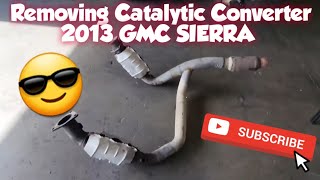
How to confirm: Use a scan tool to graph the upstream (B1S1) and downstream (B1S2) O2 sensors. If B1S2 voltage mirrors the rapid fluctuations of B1S1, the converter is not working. Another test is to use an infrared thermometer to measure the inlet and outlet temperatures of the converter with the engine at operating temperature; the outlet should be at least 100°F hotter than the inlet. If it's the same temperature or cooler, the catalyst is inactive. 🎬 Watch: EricTheCarGuy shows you how to diagnose a bad converter.
Typical fix: Replace the Bank 1 catalytic converter assembly. It is highly recommended to use OEM or high-quality aftermarket parts, as cheap converters often fail quickly.
Est. part cost: $400-$900 - Faulty Downstream Oxygen (O2) Sensor 🟡 Medium Probability O2 sensors are wear items and can become lazy or biased over time, sending inaccurate data to the computer. While less common than a failed cat, it's a much cheaper part to replace first.
How to confirm: Graph the sensor's voltage with a scan tool. A healthy downstream sensor should show a relatively steady voltage (e.g., ~0.7-0.8V) on a warm, working converter. If it's stuck high, low, or fluctuating wildly like the upstream sensor (when you know the cat is good), it's likely bad. Swapping the Bank 1 and Bank 2 downstream sensors and seeing if the code changes to P0430 (Bank 2) is an effective diagnostic step.
Typical fix: Replace the Bank 1, Sensor 2 (downstream) oxygen sensor.
Est. part cost: $50-$120 - Exhaust System Leak 🟡 Medium Probability Rust can cause leaks at manifold gaskets, flange connections, or flex pipes. A leak between the upstream and downstream O2 sensors can draw in outside air, tricking the downstream sensor and triggering a false P0420. GM TSB #PIP5110A specifically highlights checking for leaks *after* the rear O2 sensor as well.
How to confirm: Visually inspect the exhaust system from the manifold to the tailpipe for black soot marks, cracks, or holes, especially around flanges and welds. A smoke machine test is the most effective way to find small leaks. 🎬 See how to perform professional exhaust leak and efficiency testing. Listen for ticking noises on a cold start, which often indicates a leaking exhaust manifold gasket.
Typical fix: Replace the leaking gasket, repair the crack, or replace the affected section of pipe.
Est. part cost: $20-$200 - Faulty Upstream Oxygen (O2) Sensor ⚪ Low Probability A lazy or failing upstream sensor can cause an improper air/fuel mixture. The PCM may try to compensate, leading to conditions that can affect the converter's efficiency and trigger the code, even if the converter itself is okay.
How to confirm: Graph the Bank 1, Sensor 1 voltage. It should fluctuate rapidly between approximately 0.1V and 0.9V. If it's slow to respond or stuck, it needs replacement.
Typical fix: Replace the Bank 1, Sensor 1 (upstream) oxygen sensor.
Est. part cost: $50-$120
Rare But Worth Checking
- Engine Misfires or Fuel System Issues: Unburned fuel from a misfire or a leaking fuel injector can enter the exhaust and overheat the catalytic converter, causing permanent damage. Always resolve other engine codes (e.g., for misfires, fuel trim) before addressing P0420.
- Engine Oil Contamination (AFM Engines): On V8 engines with Active Fuel Management (AFM), excessive oil consumption can lead to oil burning and contaminating the catalytic converter, reducing its efficiency. This is a known issue (TSB 10-06-01-008K) and if not corrected, will destroy a new converter. 🎬 Watch this deep dive into fixing AFM-related misfires and leaks.
- Improperly Sealed Air Filter Housing: TSB #16-NA-111 notes that on some GM trucks, a poor seal on the air filter box can allow sand and debris to be ingested by the engine. This abrasive material can damage the oxygen sensors and physically clog the catalytic converter, causing a P0420 code.
- O2 Sensor Spacers / Defoulers (Illegal Fix): Some owners install a spacer or 'defouler' on the downstream O2 sensor to pull it out of the direct exhaust stream. This tricks the sensor into reading cleaner exhaust, clearing the code without fixing the actual problem. This is illegal for on-road vehicles and will cause an automatic emissions test failure if detected.
Diagnosis Steps
- Scan for any other trouble codes. If codes for misfires (P030x), O2 sensor circuits, or fuel trim (P0171/P0174) are present, diagnose and fix them first.
- Perform a thorough visual inspection of the entire exhaust system. Look for cracks in the exhaust manifolds, broken flange bolts, and rust holes in the pipes. Pay special attention to the area between the two O2 sensors and the area noted in TSB #PIP5110A.
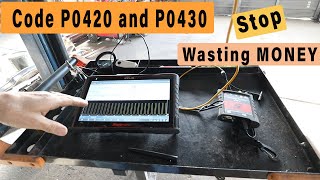
- Use a scan tool with live data graphing capabilities. Warm the engine to operating temperature. Monitor the voltage of the Bank 1 Sensor 1 (upstream) and Bank 1 Sensor 2 (downstream) O2 sensors.
- A good upstream sensor (B1S1) will show voltage fluctuating rapidly between ~0.1V and ~0.9V. A good downstream sensor (B1S2) on a working converter will show a much steadier, flatter voltage, typically above 0.5V.
- If B1S2 is mirroring the rapid switching of B1S1, the catalytic converter has likely failed or is being overwhelmed by a fuel/air issue.
- If B1S2 is flatlined (e.g., 0V or 1V) or unresponsive, the sensor itself or its wiring is likely faulty.
- If you suspect an exhaust leak but cannot see one, use a smoke machine to pressurize the exhaust system and pinpoint the source.
- If sensors and exhaust are good, test the catalytic converter directly using an infrared thermometer. At operating temperature (engine held at ~2000 RPM), the outlet pipe should be significantly hotter (at least 100°F) than the inlet pipe. If temperatures are similar or the outlet is cooler, the converter is not functioning.
Parts You'll Likely Need
- Catalytic Converter (Bank 1)
- Downstream Oxygen Sensor (Bank 1, Sensor 2)
- Upstream Oxygen Sensor (Bank 1, Sensor 1)
- Exhaust Gaskets
Related Codes That Often Appear With This One
- P0430 — This is the identical code but for Bank 2 (passenger side). Seeing both P0420 and P0430 together might point to a systemic issue like a fuel problem, contaminated fuel, or significant oil consumption affecting both banks, rather than two converters failing simultaneously.
- P0300-P0308 — These are misfire codes (P0300 for random, P0301-P0308 for specific cylinders). An active misfire will dump raw fuel into the exhaust, quickly destroying the catalytic converter. The misfire must be fixed first.
- P0171, P0174 — These codes indicate a lean condition on Bank 1 and Bank 2. An unmetered air leak (like a vacuum leak or an exhaust leak before the O2 sensor) can cause these codes and also contribute to a P0420.
Technical Service Bulletins (TSBs) & Recalls
- TSB #PIP5110A: Advises technicians to specifically check for exhaust leaks *after* the Bank 1, Sensor 2 oxygen sensor, as this can introduce unmetered air and cause a false P0420 code before condemning the converter. This is especially noted if aftermarket equipment has been installed.
- TSB #10-06-01-008K: Details issues with Active Fuel Management (AFM) V8 engines where oil spray from the AFM pressure relief valve in the crankcase can be pulled through the PCV system during certain driving conditions (extended high RPMs), leading to oil consumption and eventual contamination of the catalytic converters.
- TSB #16-NA-111: Points to a less common cause where an improperly sealed engine air filter box allows sand and debris to bypass the filter, damaging the O2 sensor elements and physically blocking the catalytic converter substrate, leading to P0420/P0430 codes.
- TSB #PIP3119N: Mentions that P0420/P0430 codes can be disabled under certain conditions, likely during specific diagnostic procedures or software updates, indicating GM is aware of the sensitivity of this monitoring system.
Platform-Specific Known Issues
- TSB #PIP5110A: Specifically calls out checking for exhaust leaks behind the Bank 1 Sensor 2 oxygen sensor, which can cause a false P0420 code. This should be checked before replacing the catalytic converter.
- TSB #PIP3119N: Notes that on some low-mileage vehicles, the diagnostic for P0420 may be disabled, indicating a potential for software-related nuances with this code from the factory.
- TSB #PIP5085C: Mentions P0420 in conjunction with other codes, reinforcing the need to follow standard diagnostic procedures and not jump to conclusions.
Mechanic-Grade Diagnostic Values
- Upstream O2 Sensor (B1S1) Voltage — expected: Rapidly fluctuating between ~0.1V and 1.0V.. Failure: Slow, lazy, or stuck voltage.
- Downstream O2 Sensor (B1S2) Voltage (Good Converter) — expected: Steady voltage at 450mV (0.45V) or higher.. Failure: Voltage fluctuates and mirrors the upstream sensor's pattern.
- Long/Short Term Fuel Trims — expected: Within the range of -5% to +5%.. Failure: Values significantly outside the normal range, indicating an underlying fuel mixture problem that could damage the converter.
- Catalytic Converter Temperature Differential — expected: Outlet temperature should be at least 100°F hotter than the inlet temperature.. Failure: Outlet temperature is the same or cooler than the inlet, indicating the catalyst is not lighting off.
Hidden / Shadow Codes Worth Checking
- Mode $06, TID $21: This is not a DTC, but a diagnostic monitor ID for the catalyst system. It provides the raw test data the PCM uses to determine if the converter passes or fails its efficiency test. A value close to the maximum limit indicates a borderline converter, even before a P0420 code is set. (see via A scan tool capable of displaying Mode $06 data. The specific Test ID (TID) or Component ID (CID) may vary slightly by year and specific ECU calibration, but will be labeled related to the catalyst monitor.)
Wiring & Ground Locations
- ECM Connector C2 (Bank 1 O2 Sensors) — On the Engine Control Module (ECM). The specific location of the ECM varies, but it is typically in the engine bay.. Damage to these specific pins or wires can cause incorrect O2 sensor readings, leading to a false P0420. A document for a similar GM engine shows HO2S High and Low signals for Bank 1 Sensor 1 and 2 on this connector, which is critical for diagnosis.
- Underhood Fuse Block — In the engine compartment, typically on the driver's side.. The O2 sensor heater circuits are powered by fuses in this block (e.g., fuses 46 and 50 on some Silverados). A blown or partially burnt fuse can cause the O2 sensor to operate incorrectly, leading to diagnostic trouble codes.
Real Owner Repair Stories
- SilveradoSierra.com forum user (2011 GMC Sierra 5.3L) — Persistent P0420 code.
❌ Tried (didn't work) Replacing the catalytic converter, Replacing both Bank 1 O2 sensors
✅ What actually fixed it The user eventually discovered a small, hard-to-see crack in the Bank 1 exhaust manifold. The crack was only visible after removing the heat shield. Replacing the manifold and gasket resolved the code.
"I Checked Everything" — The Actual Cause
- In some cases, a smoke test may not reveal a small crack in an exhaust manifold, especially one that only opens up significantly when hot. As reported by owners, a persistent P0420 after replacing sensors and the converter was traced back to a cracked exhaust manifold that was missed on initial inspection. Removing the heat shield for a direct visual check was necessary to find the fault.
OEM Part Supersession History
15896590, 20854453→19418926— Standard part evolution, design updates, or manufacturer changes.
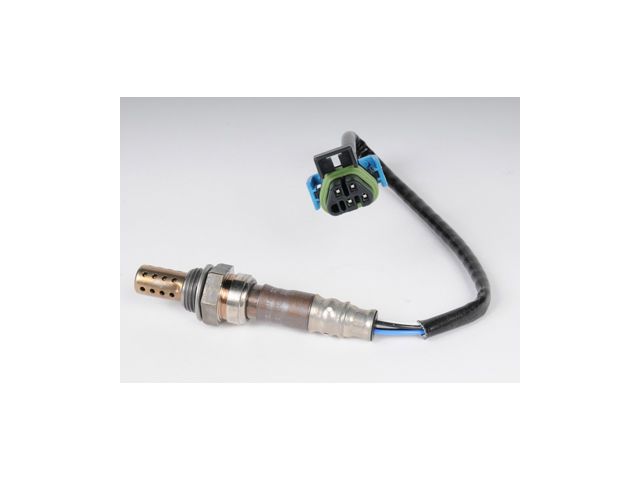
Heads up: This is the GM Genuine Parts catalytic converter assembly for Bank 1. It is crucial to verify fitment with the vehicle's VIN, as different emission systems (Federal vs. California) and engine types may require different parts.N/A→N/A— ACDelco 213-4229 is a widely referenced part number for the O2 sensors on these trucks.
Heads up: This part number (also GM 12609457) fits many GM trucks in this range, but can be used for upstream or downstream positions depending on the specific application. Always verify which sensor is needed (Bank 1 Sensor 1 or Bank 1 Sensor 2) as they are physically the same but have different functions.
Model Year Variations Within This Range
- 2009+: Starting in 2009, the 6-speed 6L80 automatic transmission began replacing the 4-speed 4L60-E. While not directly related to the P0420 code's cause, different transmission behavior can affect engine load and the conditions under which the catalyst monitor runs.
Helpful Videos
We Have This Part in Stock




The information in this article is provided for general reference and educational purposes only. Vehicle specifications, procedures, and part compatibility can vary by production date, trim level, and region. Always consult your vehicle's factory service manual and verify part numbers before purchasing or performing repairs. Safety-critical components such as airbags, seat belts, and braking systems should be installed by a qualified professional.
- Gmc SIERRA:
- 🎬 Helpful Videos
- 🛍️ Shop This Part
- What's Unique About the 2009-2013 Gmc SIERRA
- Diagnostic Flowchart
- Symptoms You May Notice
- Most Likely Causes
- Rare But Worth Checking
- Diagnosis Steps
- Parts You'll Likely Need
- Related Codes That Often Appear With This One
- Technical Service Bulletins (TSBs) & Recalls
- Platform-Specific Known Issues
- Mechanic-Grade Diagnostic Values
- Hidden / Shadow Codes Worth Checking
- Wiring & Ground Locations
- Real Owner Repair Stories
- "I Checked Everything" — The Actual Cause
- OEM Part Supersession History
- Model Year Variations Within This Range
- 🎟️ Get 5% Off