

P0420 on 2017-2018 GMC Savana: Catalyst Efficiency Causes & Fixes
P0420 on a 2017-2018 GMC Savana indicates that the Bank 1 catalytic converter is no longer operating efficiently. While this often means the catalytic converter needs replacement, it's crucial to first rule out exhaust leaks from notoriously common broken manifold bolts, faulty oxygen sensors, and underlying engine issues to avoid a costly misdiagnosis.
- P0420 means the Bank 1 catalytic converter is inefficient, but this doesn't automatically mean the converter is bad.
- Always check for exhaust leaks and test the oxygen sensors before considering a costly converter replacement.
- Address any other engine codes (especially for misfires) immediately, as they are a leading cause of catalytic converter failure.
- For 2017 models, be aware of TSB #PIP3119P, which indicates a possible software issue causing the code at low mileage.
- When replacing a converter, ensure the new part complies with your local emissions laws (Federal EPA vs. CARB).
What's Unique About the 2017-2018 Gmc SAVANA
For the 2017-2018 GMC Savana and its Chevrolet Express twin, a P0420 code is frequently misdiagnosed. The 4.8L and 6.0L V8 engines are notorious for the rearmost exhaust manifold bolts breaking off due to heat cycling. This creates a small exhaust leak near the cylinder head that introduces oxygen into the exhaust stream, fooling the O2 sensors and triggering a false P0420. Furthermore, GM issued Technical Service Bulletin #PIP3119P, which applies to 2017-2018 models. It explains that on new or low-mileage vehicles (or after a converter replacement), the P0420/P0430 diagnostics are disabled for the first hour of engine run time to allow for a 'break-in' period. If battery power is lost, this timer can reset, and the diagnostic may run prematurely, setting a false code. A specific drive cycle may be required to properly complete the break-in and clear the code.
Diagnostic Flowchart
Tap your situation to follow the diagnostic path that matches what you're seeing on this vehicle.
Symptoms You May Notice
- Check Engine Light is on
- Sluggish acceleration or loss of power, especially under load
- Inability to pass an emissions inspection
- A ticking or tapping noise from the engine bay (especially on the passenger side) that is loudest on a cold start and may quiet down as the engine warms up, indicating an exhaust manifold leak.
- A rotten egg or sulfur smell from the exhaust, indicating the converter is not properly processing exhaust gases.
- Rattling noises from underneath the vehicle, which could be a sign of a physically broken and clogged catalytic converter.
- Immediately replacing the catalytic converter without first thoroughly checking for exhaust manifold leaks, which are extremely common on the V8 models.
- Replacing an oxygen sensor when it is accurately reporting the inefficiency of the catalytic converter.
- Replacing a catalytic converter without fixing the root cause (like a misfire or fuel issue), leading to the new converter failing prematurely.
Most Likely Causes
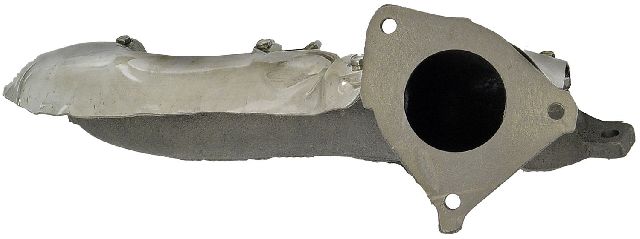
- Exhaust System Leak (Especially Broken Manifold Bolts) 🔴 High Probability The Vortec V8 engines are notorious for the rear-most exhaust manifold bolts breaking due to constant heat cycles. This creates a leak that introduces oxygen and corrupts O2 sensor readings, falsely triggering P0420. This is one of the most common causes of a P0420 on these vans and is often misdiagnosed as a failed converter.
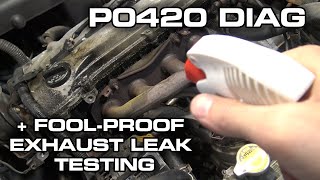
How to confirm: Listen for a distinct ticking noise from the passenger-side engine bay on a cold start. Visually inspect the exhaust manifold for broken bolt heads (the rear ones are most common) or black soot trails indicating a leak. A shop can perform a smoke test to pinpoint the leak. 🎬 Watch this guide on professional exhaust leak testing methods.
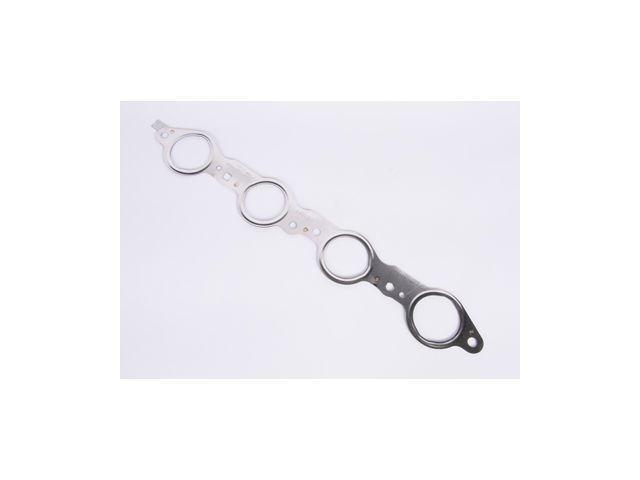
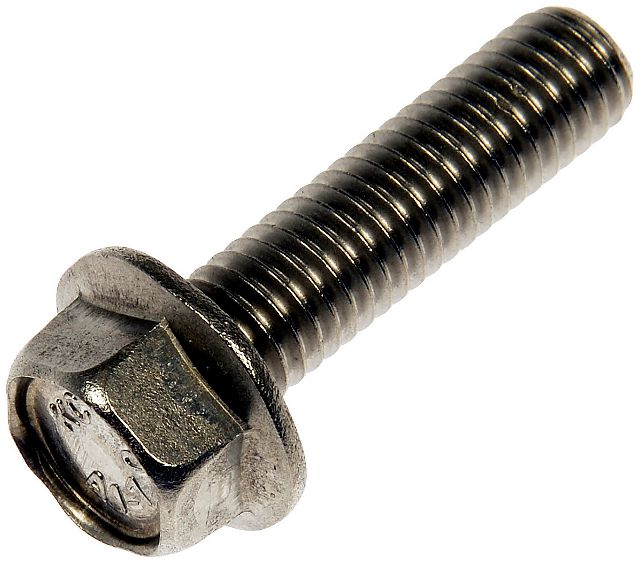
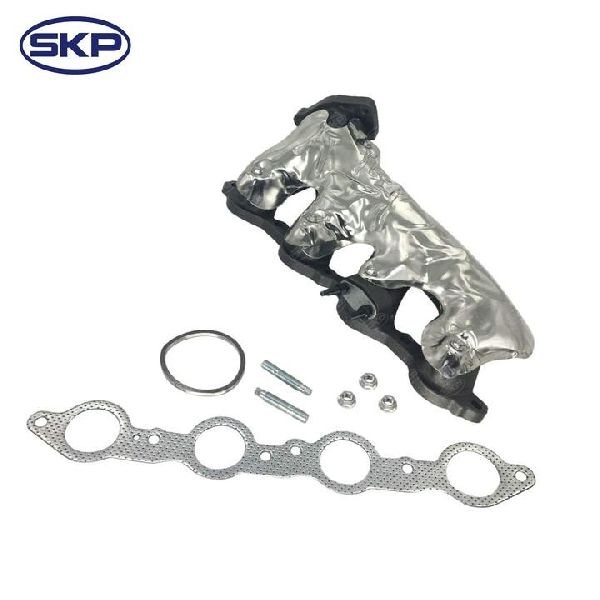
Typical fix: The broken bolt must be extracted and replaced, along with a new exhaust manifold gasket. In many cases, a clamp kit (like Dorman 917-107) can be used to repair the leak without extracting the bolt. 🎬 See how a clamp kit fixes broken manifold bolts.
Est. part cost: $20-$200 - Failed Catalytic Converter 🟡 Medium Probability Catalytic converters are wear items and can fail from age, or more commonly, from contamination due to engine problems like misfires or burning oil that damage the internal catalyst structure. Generally, a converter should last over 100,000 miles unless damaged by an external cause.
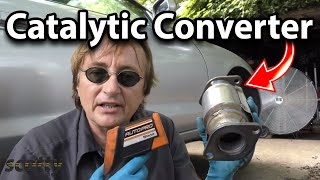
How to confirm: After ruling out all other causes, a professional can perform a backpressure test. A DIY method involves using an infrared thermometer on a fully warmed-up engine; the outlet pipe should be significantly hotter (by at least 100°F) than the inlet pipe. If the inlet is hotter than the outlet, the converter is likely clogged or inactive.
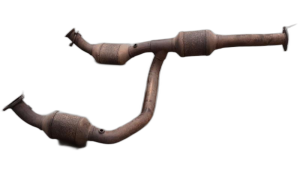
Typical fix: Replace the Bank 1 catalytic converter. Ensure you use a part that matches your vehicle's emissions certification (Federal EPA vs. CARB).
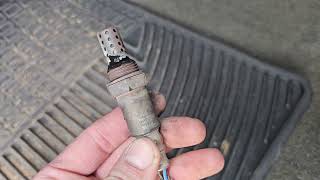
Est. part cost: $450-$3700 - Faulty Downstream Oxygen Sensor (Bank 1, Sensor 2) 🟡 Medium Probability Oxygen sensors are exposed to extreme heat and exhaust gases, causing them to degrade over time. A lazy or inaccurate sensor can send incorrect data to the PCM, falsely triggering a P0420 code.
How to confirm: Use an OBD-II scanner with live data graphing. The downstream O2 sensor voltage should be relatively steady (e.g., above 0.6V or 600mV). If it fluctuates rapidly, mimicking the upstream sensor, the converter is likely bad. If the sensor voltage is stuck high, low, or doesn't respond, the sensor itself is likely faulty.
Typical fix: Replace the Bank 1, Sensor 2 oxygen sensor. It's recommended to use quality OEM brands like ACDelco or reputable aftermarket brands like Denso or NGK.
Est. part cost: $50-$150 - Underlying Engine Issue ⚪ Low Probability Problems like engine misfires (from bad spark plugs or coils), leaking fuel injectors, or internal coolant/oil leaks can send unburned fuel and contaminants into the exhaust, which can quickly destroy a catalytic converter. These issues must be addressed before replacing the converter, or the new part will fail quickly.
How to confirm: Check for other diagnostic trouble codes related to misfires (P0300-P0308) or fuel trim (P0171, P0174). Address these codes first.
Typical fix: Repair the root cause, which could involve a tune-up (spark plugs, wires), replacing a fuel injector, or fixing an engine gasket leak.
Est. part cost: $50-$1000+
Rare But Worth Checking
- PCM Software Issue / Incomplete Break-in: As detailed in TSB #PIP3119P, the parameters for triggering the code may be too sensitive on low-mileage vehicles or after a converter replacement if a proper break-in was not completed. A dealership may need to check if a software update is available, or the specific drive cycle in the TSB may need to be performed.
- Leaking Flex Pipe: Some owners have reported that the flexible exhaust pipe located behind the catalytic converter can develop leaks. Even though this leak is downstream of the converter, the turbulence can sometimes affect the rear O2 sensor reading and trigger a false code.
Diagnosis Steps
- Scan for all stored trouble codes. If any misfire (P030x), fuel system (P017x), or other O2 sensor codes are present, diagnose and fix them first.
- Perform a critical inspection for exhaust leaks. On a cold engine, start the vehicle and listen for a ticking sound from the passenger side engine bay. Visually inspect the exhaust manifold for soot trails or broken bolt heads, especially the rearmost ones. Inspect the flex pipe (if equipped) for leaks.
- Use an OBD-II scanner with live data capabilities to monitor the voltage of the Bank 1 upstream (Sensor 1) and downstream (Sensor 2) oxygen sensors. At a steady 2,500 RPM, the upstream sensor should fluctuate rapidly between ~0.1V and 0.9V, while the downstream sensor should remain relatively stable and steady (typically >0.6V). If the downstream sensor mirrors the upstream, the converter is not working.
- Test the oxygen sensor itself. If its readings are stuck or slow to respond when they should be fluctuating (or vice-versa), the sensor may be the problem.
- If other tests are inconclusive, use an infrared temperature gun to measure the temperature of the pipe just before and just after the catalytic converter. The outlet should be at least 100°F hotter than the inlet. If the inlet is hotter, or temperatures are nearly identical, the converter is likely clogged or inactive.
- If the vehicle is new, low-mileage, or has had a recent converter replacement, consider the possibility of an incomplete break-in cycle per TSB #PIP3119P. Performing the prescribed drive cycle may resolve the issue.
Parts You'll Likely Need
- Catalytic Converter (Bank 1)
(OEM #Varies by engine/chassis. e.g., GM 19418944 for some V8 models (verify fitment).)— This is the most common cause of a P0420 code after leaks are ruled out, indicating the part has reached the end of its life or has been damaged by an engine issue.
Trusted brands: ACDelco, Walker, MagnaFlow - Downstream Oxygen Sensor (Bank 1, Sensor 2)
(OEM #e.g., ACDelco 213-4768 (verify by VIN))— A faulty sensor can send incorrect data, leading to a false P0420 code. It's a common wear item.
Trusted brands: ACDelco, Denso, NGK/NTK - Exhaust Manifold Bolt Kit
(OEM #e.g., GM 11546600 (verify by VIN))— Required to fix the extremely common exhaust manifold leak caused by broken bolts on the V8 engines.
Trusted brands: GM Genuine Parts, Dorman
Related Codes That Often Appear With This One
- P0430 — This is the identical code for Bank 2 (the driver's side on V6/V8 models). If both appear, it may point to a systemic issue like contaminated fuel, a common engine problem affecting both banks, or a widespread exhaust leak issue like broken bolts on both manifolds.
- P0300-P0308 — These are misfire codes. An engine misfire is a primary cause of catalytic converter failure, as it sends raw fuel into the exhaust, overheating and melting the converter's internal structure.
- P0171 / P0174 — These codes indicate a lean fuel condition. An improper air/fuel mixture, often caused by an unmetered air leak (like a broken manifold bolt), can affect converter efficiency and trigger P0420.
Technical Service Bulletins (TSBs) & Recalls
- PIP3119P: Details the catalytic converter break-in procedure and explains why P0420/P0430 may set on low-mileage vehicles.
Platform-Specific Known Issues
- Broken Exhaust Manifold Bolts: The 4.8L and 6.0L V8 engines are widely known for breaking the rearmost exhaust manifold bolts. This causes an exhaust leak that is often misdiagnosed as a failed catalytic converter. A ticking noise on a cold start is a primary symptom.
- TSB #PIP3119P: Premature Code Setting: For 2017-2018 models, GM noted that a P0420 or P0430 code may appear at low mileage. This can be due to an interrupted break-in cycle for the converter, possibly caused by a battery disconnect. Performing a specific drive cycle may be required to resolve the code before replacing parts.
Mechanic-Grade Diagnostic Values
- Downstream O2 Sensor (Bank 1, Sensor 2) Voltage — expected: A steady reading between 0.6V and 0.8V on a fully warmed-up engine at steady RPM.. Failure: Voltage fluctuates rapidly, mirroring the upstream sensor, or is stuck at a very low (<0.2V) or high (>0.9V) value.
- Upstream O2 Sensor (Bank 1, Sensor 1) Voltage — expected: Rapidly fluctuating between approximately 0.1V (lean) and 0.9V (rich) on a warm engine in closed loop.. Failure: Slow or no fluctuation, or voltage stuck at a specific level.
- Fuel Pressure (V8 Engines) — expected: Approximately 55-65 PSI with the key on, engine running.. Failure: Significantly low pressure can cause a lean condition (P0171/P0174) and high pressure can cause a rich condition, both of which can damage the converter.
- Catalyst Temperature Differential — expected: The outlet pipe of the converter should be at least 100°F (38°C) hotter than the inlet pipe after holding the engine at a steady 2000-2500 RPM.. Failure: Outlet temperature is the same as or cooler than the inlet, indicating the catalyst is chemically inactive or clogged.
Hidden / Shadow Codes Worth Checking
- Mode $06, Test ID $53 (pre-CAN) or Monitor ID $21 (CAN): This is not a DTC but a test result from the onboard diagnostic monitor for catalyst efficiency. It provides a raw data value of the catalyst's switching ratio. Technicians can compare this value against the manufacturer's specified maximum limit to see how close the catalyst is to failing, even before a P0420 code is set. (see via A professional scan tool capable of displaying Mode $06 data. The specific ID for catalyst monitoring on GM vehicles is often TID $53 or MID $21.)
Scan Tool Commands That Help
- Tech2 / GDS2 (GM Dealer Tools) or high-end aftermarket: Catalyst System Test — Some GM service procedures may include a specific bidirectional test that forces the catalyst monitor to run under controlled conditions, providing a pass/fail result more quickly than a standard drive cycle.
- Tech2 / GDS2: View Engine Run Time — As per TSB #PIP3119P, this is used to verify if the total engine run time is less than one hour on a low-mileage vehicle, which could indicate a premature and false P0420 due to an incomplete break-in.
Wiring & Ground Locations
- G103 — Typically located at the rear of the left (driver's side) cylinder head.. This is a primary engine-to-chassis ground. A poor connection here can affect the Engine Control Module (ECM) and its sensor readings, including those from the oxygen sensors, potentially causing false codes.
- G105 / G106 — G105 is often at the left front of the engine compartment; G106 is on the front frame cross rail.. These are important chassis and component grounds. While not directly for the O2 sensors, poor grounding at these points can introduce electrical noise and voltage offsets that affect overall PCM operation and sensor readings.
- O2 Sensor Heater Fuse — Located in the underhood fuse block. Check the owner's manual or fuse block diagram for the specific fuse number (often labeled O2 HTR or similar).. A blown fuse for the O2 sensor heater circuit will prevent the sensor from reaching operating temperature quickly. This causes slow or inaccurate readings, which can lead to incorrect fuel trim and potentially trigger a P0420 code, usually accompanied by a heater circuit code (e.g., P0141).
OEM Part Supersession History
25943821, 22832592→19418944— Part number consolidation and potential design updates by the manufacturer.
Heads up: This part number is for the driver's side (Bank 2, P0430) converter assembly but illustrates the supersession process. Always verify the correct part number for Bank 1 (P0420) using the vehicle's VIN.11548928→11546600— Part number update for exhaust manifold bolts.
Heads up: These are general exhaust manifold bolts; always verify fitment for the specific engine and year with the VIN.
Model Year Variations Within This Range
- 2017-2018: The 2017 model year introduced the 2.8L LWN Duramax diesel and 8L90 8-speed automatic transmission as options alongside the existing V6 and V8 gasoline engines. While the P0420 code primarily applies to gasoline engines, diagnostic approaches for the diesel's aftertreatment system are entirely different.
Helpful Videos

Used OEM Parts in Stock
New Aftermarket Parts Available


The information in this article is provided for general reference and educational purposes only. Vehicle specifications, procedures, and part compatibility can vary by production date, trim level, and region. Always consult your vehicle's factory service manual and verify part numbers before purchasing or performing repairs. Safety-critical components such as airbags, seat belts, and braking systems should be installed by a qualified professional.
- Gmc SAVANA:
- 🎬 Helpful Videos
- 🛍️ Shop This Part
- What's Unique About the 2017-2018 Gmc SAVANA
- Diagnostic Flowchart
- Symptoms You May Notice
- Most Likely Causes
- Rare But Worth Checking
- Diagnosis Steps
- Parts You'll Likely Need
- Related Codes That Often Appear With This One
- Technical Service Bulletins (TSBs) & Recalls
- Platform-Specific Known Issues
- Mechanic-Grade Diagnostic Values
- Hidden / Shadow Codes Worth Checking
- Scan Tool Commands That Help
- Wiring & Ground Locations
- OEM Part Supersession History
- Model Year Variations Within This Range
- 🎟️ Get 5% Off