

P0420 on 2002-2006 GMC Savana: Catalyst Efficiency Causes and Fixes
This code indicates the catalytic converter on Bank 1 is failing. However, on these vans, it's critical to first check for exhaust leaks (especially broken exhaust manifold bolts) and faulty oxygen sensors, as these are common issues that are cheaper to fix and often misdiagnosed as a bad converter.
- P0420 on a 2002-2006 Savana means the Bank 1 (driver's side) catalytic converter is not working efficiently.
- Before assuming the expensive converter is bad, you MUST check for exhaust leaks. Broken exhaust manifold bolts are a very common problem on these vans and a frequent cause of this code.
- Use a scan tool to watch the O2 sensor data. A rapidly fluctuating downstream (Sensor 2) reading points to a bad converter, while a steady reading is normal.
- Always fix other engine codes first, especially for misfires (P030x), as they will destroy a new catalytic converter in a short amount of time.
- If you do replace the converter, consider replacing the downstream O2 sensor at the same time, and use quality parts to avoid having the code return.
What's Unique About the 2002-2006 Gmc SAVANA
GMC Savana vans are work vehicles often subjected to heavy loads and long idle times, which puts extra stress on the exhaust and catalytic converters. A very common issue on the Vortec V8 engines (4.8L, 5.3L, 6.0L) used in these vans is for the rear exhaust manifold bolts to break, causing an exhaust leak that fools the oxygen sensors and triggers a false P0420 code. Additionally, a specific Technical Service Bulletin (TSB #PIP3119P) was issued for 2002 models, noting that the diagnostics for this code could be overly sensitive at low mileage or after a new converter is installed without a proper break-in procedure.
Diagnostic Flowchart
Tap your situation to follow the diagnostic path that matches what you're seeing on this vehicle.
Generation note: This range covers the first generation of the GMC Savana, including the significant facelift for the 2003 model year. The 2003+ models received updated electronics and the newer Gen III Small-Block V8 engines (4.8L, 5.3L, 6.0L). However, the causes and diagnostic principles for a P0420 code, especially the prevalence of broken exhaust manifold bolts, remain consistent across this entire year range and affect many GM trucks and SUVs with these engines.
Symptoms You May Notice
- Check Engine Light is on
- Failure to pass an emissions inspection
- Reduced engine power or sluggish acceleration (if the converter is clogged).
- A rotten egg or sulfur smell from the exhaust (uncommon, but indicates a failing converter)
- A distinct ticking or tapping noise from the engine bay, especially when cold, which often points to an exhaust manifold leak.
- Immediately replacing the catalytic converter without checking for exhaust leaks first. The broken exhaust manifold bolt issue is very common on these vans and is a much cheaper repair.
- Replacing the downstream O2 sensor when it is accurately reporting the failure of the catalytic converter. The sensor is often the messenger, not the problem.
- Replacing the catalytic converter when the true root cause is an engine performance issue (like a misfire or rich fuel condition) that will destroy the new converter as well.
Most Likely Causes
- Failed Catalytic Converter 🔴 High Probability Catalytic converters are wear items that fail from age, high mileage, or contamination from other engine problems like misfires or burning oil. A rich fuel mixture or unburned fuel from misfires can superheat and melt the internal structure of the converter.
How to confirm: After confirming no exhaust leaks or sensor issues, use a scan tool to watch O2 sensor data. If the downstream (Sensor 2) voltage fluctuates rapidly like the upstream (Sensor 1) sensor, the converter is not working. Another method is to use an infrared thermometer to check the temperature of the pipe before and after the converter; a working converter should be significantly hotter at the outlet than the inlet.
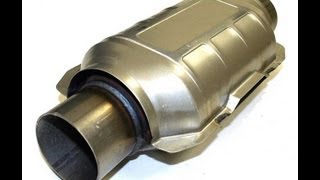
Typical fix: Replace the Bank 1 catalytic converter. It is often part of a Y-pipe assembly on these vans.
Est. part cost: $200-$1300 - Exhaust Leak 🟡 Medium Probability A widely reported issue on the Vortec engines in these vans is the tendency for the rear-most exhaust manifold bolts to rust and break, causing a leak between the cylinder head and the manifold. This leak allows fresh air to be drawn into the exhaust, which corrupts the O2 sensor readings and mimics a bad converter.
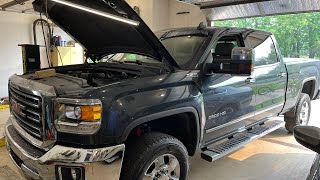
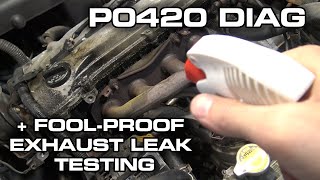
How to confirm: Perform a visual inspection for black soot trails around the exhaust manifold, particularly at the rearmost bolt on the driver's side. A ticking noise from the engine bay, especially when cold, is a strong indicator. A smoke test can pinpoint the leak. 🎬 See how to perform an exhaust leak and efficiency test.
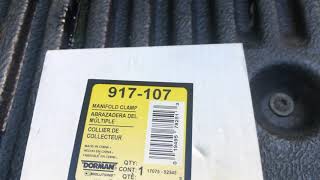
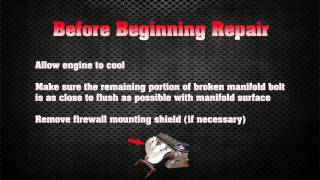
Typical fix: Repair the leak. This may involve replacing the exhaust manifold gasket and extracting and replacing the broken bolts. Alternatively, special clamp kits (e.g., Dorman 917-107) are available that bypass the need to extract the broken bolt by clamping the manifold to the head. 🎬 Watch: How to install the Dorman manifold clamp kit.
Est. part cost: $20-$150 - Faulty Oxygen (O2) Sensor 🟡 Medium Probability O2 sensors are exposed to extreme heat and wear out over time. A 'lazy' or failing downstream (Bank 1, Sensor 2) sensor can send incorrect data, falsely triggering the P0420 code. Sometimes a P0420 code will appear immediately after replacing a different faulty O2 sensor, because the new, accurate sensor is now correctly reporting a pre-existing converter issue that the old sensor missed.
How to confirm: Use a scan tool to graph the sensor's voltage. A healthy downstream sensor should show a relatively steady voltage (e.g., 0.6-0.8V) when the engine is warm and at a steady RPM. If it's stuck at one voltage or fluctuates wildly without reason, it's likely bad.
Typical fix: Replace the Bank 1, Sensor 2 oxygen sensor. The OEM part is often ACDelco.
Est. part cost: $35-$100 - Engine Misfires or Fuel System Issues ⚪ Low Probability These are not the direct cause of the code, but are the root cause of converter failure. Misfires (from bad spark plugs/wires) or a rich fuel condition (from a leaky injector) dump unburned fuel into the exhaust, which superheats and melts the inside of the catalytic converter, destroying it.
How to confirm: Check for other trouble codes, such as P030x (misfires) or P0172/P0175 (rich condition). Address these codes FIRST before replacing any exhaust components.
Typical fix: Perform a full tune-up (spark plugs, wires), test fuel injectors, and check fuel pressure.
Est. part cost: $50-$400
Diagnosis Steps
- Check for any other stored trouble codes. Address codes for misfires (P030x), fuel trim (P017x), or other O2 sensor circuits first, as these are often the root cause.
- Perform a thorough visual inspection of the exhaust system from the engine to the tailpipe. Look for black soot stains, cracks, or holes. Pay extremely close attention to the exhaust manifolds where they bolt to the cylinder heads, checking for broken bolts, especially the rearmost bolt on the driver's side.
- With the engine cold, start it and listen for any ticking or tapping sounds from the engine bay that might indicate an exhaust leak. The sound is often most prominent on a cold start and may quiet down as the engine warms up.
- If no leaks are obvious, use a scan tool with live data capability. Bring the engine to operating temperature.
- Graph the voltage for the Bank 1, Sensor 1 (Upstream) and Bank 1, Sensor 2 (Downstream) O2 sensors.
- The Upstream sensor (B1S1) should fluctuate rapidly between approximately 0.1 and 0.9 volts.
- The Downstream sensor (B1S2) should show a relatively steady and stable voltage, typically above 0.5 volts.
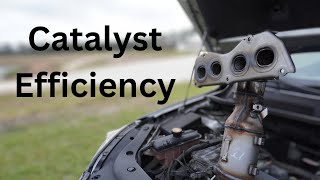
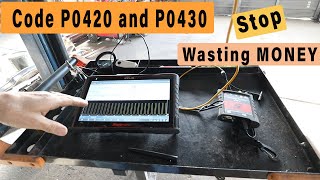
- If the Downstream sensor's graph mimics the rapid switching of the Upstream sensor, it confirms the catalytic converter is no longer functioning. 🎬 Watch this guide on diagnosing P0420 and P0430 codes.
- If the Downstream sensor's voltage is flatlined or slow to respond, the sensor itself may be faulty.
- If a new converter was just installed, follow the break-in procedure outlined in TSB PIP3119P, which involves specific highway driving cycles to prevent a false code.
Parts You'll Likely Need
- Catalytic Converter (Bank 1) — This is the most common direct cause for the P0420 code once exhaust leaks and sensor issues have been ruled out.
Trusted brands: Walker, MagnaFlow, AP Exhaust, ACDelco (OEM)
OEM price range: $800-$1400
Aftermarket price range: $200-$600 - Downstream Oxygen Sensor (Bank 1, Sensor 2)
(OEM #ACDelco 213-4229 (or superseding part number, verify by VIN))— A faulty or 'lazy' downstream sensor can send incorrect data, falsely triggering the P0420 code. It is also often replaced as a preventative measure when the converter is changed.
Trusted brands: ACDelco, Denso, NTK, Bosch
OEM price range: $75-$150
Aftermarket price range: $35-$100 - Exhaust Manifold Bolt & Gasket Kit — Required to fix the very common exhaust leak caused by broken manifold bolts on the Vortec engines.
Trusted brands: Fel-Pro, Dorman, ACDelco
OEM price range: $40-$80
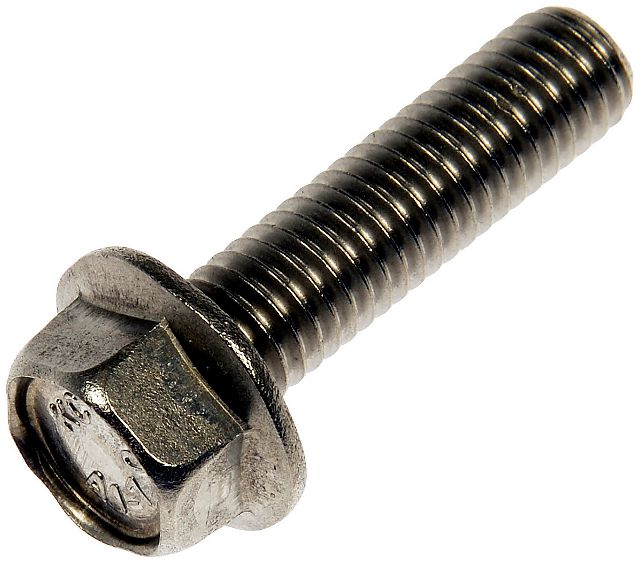
Aftermarket price range: $20-$50 - Exhaust Manifold Bolt Repair Clamp
(OEM #Dorman 917-107 (Example))— A popular aftermarket solution that clamps the manifold to the cylinder head, avoiding the difficult process of extracting a broken rear manifold bolt.
Trusted brands: Dorman, APDTY
OEM price range: N/A
Aftermarket price range: $30-$60
Related Codes That Often Appear With This One
- P0430 — This is the same 'Catalyst Efficiency' code but for Bank 2 (passenger side). It's common for both converters to fail around the same time due to age and mileage. It can also be triggered by a broken manifold bolt on the passenger side.
- P0300-P0308 — These are misfire codes. An engine misfire sends raw, unburned fuel into the exhaust, which will quickly destroy the catalytic converter. The misfire is the root cause of the P0420.
- P0172 / P0175 — These 'System Too Rich' codes indicate too much fuel is being injected. This excess fuel can overheat and damage the catalytic converter, leading to a P0420 code.
Technical Service Bulletins (TSBs) & Recalls
- Catalytic Converter Break-In Information To Prevent DTCs P0420 And/Or P0430: This TSB, updated in 2019, addresses situations where a P0420/P0430 code sets on a low-mileage vehicle or shortly after a catalytic converter has been replaced. It explains that the diagnostic may run before the new converter has been properly 'broken in'. The bulletin provides a specific drive cycle (sustained highway driving) to perform after clearing the codes to allow the converter to break in and prevent a false failure code.
Platform-Specific Known Issues
- The Broken Exhaust Manifold Bolt: The most significant vehicle-specific issue for the P0420 code on this platform is not the converter itself, but a broken exhaust manifold bolt. The bolts, especially the one at the rear of the driver's side manifold, are prone to breaking off flush with the cylinder head. This creates an exhaust leak that draws in oxygen, fooling the O2 sensors into reporting a bad converter. The tell-tale sign is a ticking noise when the engine is cold. Many owners successfully fix this with a special clamp kit (like Dorman 917-107) that avoids the difficult task of extracting the broken bolt.
- False Code After Converter Replacement: As noted in TSB PIP3119P, it's possible to get a P0420 code shortly after installing a brand new catalytic converter. This can happen if the vehicle's computer runs the catalyst efficiency test before the new converter has gone through a proper heat/break-in cycle. The fix is to clear the code and perform the specific GM drive cycle procedure to allow the converter to break in properly.
Mechanic-Grade Diagnostic Values
- Fuel Pressure (V8 Engines) — expected: 55-62 PSI. Failure: Pressure below 55 PSI can indicate a weak fuel pump or clogged filter, potentially leading to a lean condition that damages the converter over time.
- Oxygen Sensor Heater Resistance — expected: 4-6 Ohms at ambient temperature. Failure: An open circuit (infinite resistance) or a reading far outside the typical 3-15 Ohm range indicates a failed heater element. This prevents the sensor from reaching operating temperature quickly, affecting its accuracy.
- Long Term Fuel Trim — expected: -5% to +5%. Failure: Consistently high positive trims (>10%) suggest a vacuum leak or low fuel delivery, while high negative trims (<-10%) suggest a leaking injector or other rich condition. Either condition can destroy a catalytic converter.
- Mode $06 Catalyst Efficiency Test (TID $01, CID $01) — expected: Value should be below the maximum threshold specified by the manufacturer in the scan tool data.. Failure: If the test value exceeds the maximum limit, it confirms the PCM's diagnosis that the converter's oxygen storage capacity is below the minimum required efficiency.
Hidden / Shadow Codes Worth Checking
- Mode $06 Data: This is not a specific code but a diagnostic mode that provides access to the raw results of the PCM's onboard diagnostic tests, including the catalyst efficiency monitor. It allows a technician to see the actual measured value of the catalyst's performance against the manufacturer's pass/fail threshold. This can show if a converter is truly failed or just borderline, and can be used to verify a repair worked. (see via A professional scan tool like a GM Tech2 or a high-end consumer scanner with Mode $06 capability is required.)
Scan Tool Commands That Help
- GM Tech2 / GDS2: Powertrain Bi-Directional Controls — A dealer-level scan tool like the Tech2 allows for comprehensive bi-directional control of powertrain components. While there isn't a single 'start catalyst test' button, a technician can use these functions to command changes in engine parameters (like fuel mixture or timing) to observe the O2 sensors' reactions and stress-test the system, which aids in advanced diagnosis of catalyst function.
- Professional Scan Tool: Catalyst Monitor Drive Cycle / Readiness Monitor Reset — After a repair (like replacing a converter or O2 sensor), the catalyst monitor must run again to verify the fix. Instead of driving for days, a technician can use the scan tool to identify the specific drive cycle parameters (e.g., steady speed between 40-60 mph for several minutes) needed to force the monitor to run and confirm the P0420 code does not return as pending or active.
Wiring & Ground Locations
- G103 (Gasoline V8) — On the right rear of the engine, typically on the passenger side cylinder head.. This is a primary engine-to-chassis ground. A poor connection here can cause erratic behavior in the PCM and sensors, including the oxygen sensors, leading to false codes. It's a critical point to check for corrosion or looseness during diagnosis.
- G102 (Gasoline V8) — On the left rear of the engine.. This ground is often used for the ignition coils. While not directly tied to the O2 sensors, intermittent misfires caused by a bad ground can destroy a catalytic converter, making this ground's integrity important for the root cause analysis of a P0420.
- O2 Sensor Heater Fuse — In the underhood fuse block, typically labeled 'O2A' or 'O2B'.. The oxygen sensors have a heater circuit that is critical for proper operation. This circuit is protected by a fuse. If the fuse is blown due to a short in the wiring or a faulty sensor, the sensor will not heat up correctly, providing inaccurate readings to the PCM and potentially triggering a false P0420 code.
Real Owner Repair Stories
- Auto Repair Tips YouTube Channel (2014 Chevrolet Silverado 5.3L (similar engine and systems)) — Persistent P0420 and P0430 codes after multiple repairs.
❌ Tried (didn't work) Replacing both catalytic converters., Replacing all four oxygen sensors., Replacing fuel injectors.
✅ What actually fixed it The owner revealed the vehicle had been in an accident and the battery was hooked up backward, frying some components. The technician traced the issue to the O2 sensor heater circuit, checking the 15-amp fuses (O2A and O2B) in the underhood fuse block and testing for correct voltage at the sensor connector. The root cause was electrical damage, not the components that were replaced.
"I Checked Everything" — The Actual Cause
- In some cases, an exhaust leak may not be a large crack or gasket failure but a small, hard-to-find pinhole or a crack in the exhaust manifold that only opens up when the metal expands with heat. These may not show up during a cold smoke test but can still allow enough oxygen to be pulled into the exhaust stream under certain engine loads to corrupt O2 sensor readings and trigger a P0420 code.
OEM Part Supersession History
ACDelco 213-4229→GM 12609457— Part number consolidation and branding changes from ACDelco to GM Genuine Parts.
Heads up: These part numbers are generally interchangeable for the specified applications, but it's always critical to verify fitment by VIN as there can be mid-year production changes.
Model Year Variations Within This Range
- 2002 vs 2003-2006: The 2003 model year marked a significant update. The 2002 models could still be equipped with the older 5.0L, 5.7L, or 6.5L Diesel engines, which have different exhaust manifold, Y-pipe, and catalytic converter designs compared to the Gen III V8s (4.8L, 5.3L, 6.0L) that became standard in 2003. Parts are generally not interchangeable across this 2002/2003 divide.
Helpful Videos

We Have This Part in Stock



The information in this article is provided for general reference and educational purposes only. Vehicle specifications, procedures, and part compatibility can vary by production date, trim level, and region. Always consult your vehicle's factory service manual and verify part numbers before purchasing or performing repairs. Safety-critical components such as airbags, seat belts, and braking systems should be installed by a qualified professional.
- Gmc SAVANA:
- 🎬 Helpful Videos
- 🛍️ Shop This Part
- What's Unique About the 2002-2006 Gmc SAVANA
- Diagnostic Flowchart
- Symptoms You May Notice
- Most Likely Causes
- Diagnosis Steps
- Parts You'll Likely Need
- Related Codes That Often Appear With This One
- Technical Service Bulletins (TSBs) & Recalls
- Platform-Specific Known Issues
- Mechanic-Grade Diagnostic Values
- Hidden / Shadow Codes Worth Checking
- Scan Tool Commands That Help
- Wiring & Ground Locations
- Real Owner Repair Stories
- "I Checked Everything" — The Actual Cause
- OEM Part Supersession History
- Model Year Variations Within This Range
- 🎟️ Get 5% Off