

P0420 on 2023-2024 Ford Maverick: Catalyst Efficiency Causes and Fixes
For a 2023-2024 Ford Maverick, code P0420 is frequently caused by a powertrain control module (PCM) software issue. Before replacing any parts, check with a Ford dealer about Technical Service Bulletin (TSB) 25-2407 (or its successor TSB 25-2355), which addresses this. If not a software issue, the cause is likely a failing catalytic converter (which can occur even on new trucks and should be a warranty repair) or a bad oxygen sensor.
- For a 2023-2024 Maverick, your first step for a P0420 code should be to check with a Ford dealer about TSB 25-2407 for a potential software update.
- Do not immediately replace the expensive catalytic converter. A faulty downstream oxygen sensor or an exhaust leak are more common and cheaper to fix.
- The main symptom is the check engine light. You can continue to drive the truck, but you will fail an emissions test and should get it diagnosed to prevent potential long-term issues.
- If you have other codes, especially for engine misfires, fix those first. A misfire can destroy a brand new catalytic converter.
What's Unique About the 2023-2024 Ford MAVERICK
For the 2023-2024 Ford Maverick, a primary and well-documented cause for P0420 is not a hardware failure, but a software glitch. Ford issued Technical Service Bulletin (TSB) 25-2407 specifically for 2023 models, stating that the Malfunction Indicator Lamp (MIL) can be incorrectly illuminated with code P0420 due to a software error in the PCM. This TSB was later superseded by TSB 25-2355, which addressed a broader software issue that could also cause 'Pro Power Onboard Unavailable' messages. This makes a trip to the dealer for a potential software update the most logical first step, potentially saving hundreds or thousands of dollars on unnecessary part replacements.
Diagnostic Flowchart
Tap your situation to follow the diagnostic path that matches what you're seeing on this vehicle.
Symptoms You May Notice
- Check Engine Light is on
- Reduced fuel efficiency
- Slight loss of engine power, especially if the converter becomes clogged
- A sulfur or "rotten egg" smell from the exhaust
- Message on FordPass app indicating a malfunction in the emissions system
- Replacing the catalytic converter without first checking for software updates (TSB 25-2355) or diagnosing the oxygen sensors. The converter is the most expensive part, and it may not be the root cause, especially on a new vehicle.
- Using an O2 sensor spacer or 'defouler' to pull the downstream sensor out of the direct exhaust stream. While this may turn off the light by tricking the PCM, it does not fix the underlying emissions problem and is illegal in many jurisdictions.
Most Likely Causes
- Powertrain Control Module (PCM) Software Error 🔴 High Probability Ford has issued TSB 25-2407, later superseded by TSB 25-2355, for 2023 models specifically identifying a software issue that can falsely trigger the P0420 code. This is the most likely culprit for this specific model year.
How to confirm: Contact a Ford dealership and provide your vehicle's VIN. They can verify if TSB 25-2355 or any other software update applies to your truck. This should be the first step.
Typical fix: The dealer will reprogram the PCM and potentially other modules (like the BCM) with the latest software level using their FDRS scan tool.
Est. part cost: $0 (if covered under warranty or TSB) - Failing Catalytic Converter 🟡 Medium Probability While converters are designed to last the life of the vehicle, premature failure can occur. There are owner reports on MaverickTruckClub.com of 2024 models requiring catalytic converter replacement under warranty, confirming it can be a hardware issue even on a new truck.
How to confirm: A mechanic can perform a catalyst efficiency test using a scan tool to graph O2 sensor data. An infrared thermometer can also be used to check if the converter's outlet is significantly hotter than its inlet, which indicates it's working.
Typical fix: Replacement of the catalytic converter assembly. This should be covered under the federal emissions warranty (8 years/80,000 miles).
Est. part cost: $800-$2000 - Faulty Downstream Oxygen (O2) Sensor 🟡 Medium Probability O2 sensors can degrade over time or fail prematurely, becoming 'lazy' and sending inaccurate data to the PCM, which can mimic the signal of a failing converter. Given the low cost relative to a converter, it's a common diagnostic step to replace this sensor if software is ruled out.
How to confirm: Use a scan tool to graph the voltage of the downstream O2 sensor (Bank 1, Sensor 2). A healthy sensor on a working converter will show a relatively steady voltage. If the voltage is flat, stuck, or fluctuating wildly like the upstream sensor, it's likely faulty.
Typical fix: Replacement of the downstream (post-catalyst) oxygen sensor for Bank 1.
Est. part cost: $50-$150 - Exhaust Leak ⚪ Low Probability Leaks in the exhaust system between the upstream and downstream O2 sensors can allow outside oxygen to enter, skewing sensor readings and triggering the code. This can happen from damaged gaskets or cracked pipes.
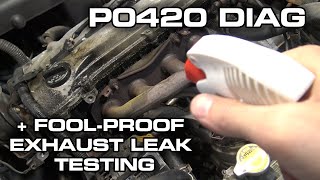
How to confirm: Visually inspect the exhaust manifold, gaskets, and pipes for cracks or black soot marks. A mechanic may use a smoke machine to pinpoint hard-to-see leaks. 🎬 See how to perform professional exhaust leak and efficiency tests.
Typical fix: Repairing the leak, which may involve replacing a gasket or welding a cracked pipe.
Est. part cost: $20-$300
Rare But Worth Checking
- Engine Misfires or Fuel Mixture Issues: An underlying engine problem, like a bad spark plug or leaky fuel injector, can send unburned fuel into the exhaust, overheating and damaging the catalytic converter. If other codes (like P030x for misfires or P0171 for lean mixture) are present, they must be fixed first to protect the new converter.
- Aftermarket Exhaust Modifications: Installing an aftermarket downpipe, even a high-flow catted version, can change the exhaust flow characteristics enough to trigger a P0420 code. Owners on MaverickTruckClub.com have reported this issue immediately after such modifications. The fix often involves custom tuning or attempting to use an O2 sensor spacer, which is not a proper repair.
- High-Sulfur Fuel: While less common with modern gasoline, high sulfur content can temporarily contaminate the catalyst surface and reduce its efficiency, triggering a P0420 code. Other Ford TSBs (like 22-2260 for the F-150) describe a specific 'de-sulfate' driving procedure to burn off the deposits. This could be a potential cause if the code appeared shortly after refueling at a questionable station.
Diagnosis Steps
- Check for Technical Service Bulletins: Before any other step, contact a Ford dealer with your VIN to see if TSB 25-2355 applies to your 2023 Maverick. This is the most likely cause and is a simple software fix.
- Scan for Other Codes: Use an OBD-II scanner to check for any other pending or stored codes. Misfire codes (P0300-P0304) or fuel trim codes (P0171, P0172) must be addressed first as they can cause converter damage.
- Inspect for Exhaust Leaks: Visually and audibly inspect the exhaust system from the engine to the tailpipe for any signs of leaks, especially between the two oxygen sensors.
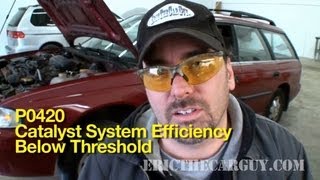
- Analyze Oxygen Sensor Data: 🎬 Watch EricTheCarGuy demonstrate how to diagnose a failing converter. Use a scan tool with live data graphing capabilities. Observe the voltage signals from the Bank 1 upstream (Sensor 1) and downstream (Sensor 2) O2 sensors. The upstream sensor should fluctuate rapidly, while the downstream should be relatively stable. If the downstream sensor mirrors the upstream, the converter is likely inefficient. If the downstream sensor is flat or slow to respond, the sensor itself is suspect.
- Test the Catalytic Converter: If O2 sensors and software are ruled out, a direct test of the converter is needed. This can involve checking for a significant temperature increase from the inlet to the outlet with an infrared thermometer. A lack of temperature rise indicates the converter is not functioning.
- Check Emissions Warranty: If the converter is confirmed bad, remember that it is covered under the Federal Emissions Warranty for 8 years or 80,000 miles, whichever comes first.
Parts You'll Likely Need
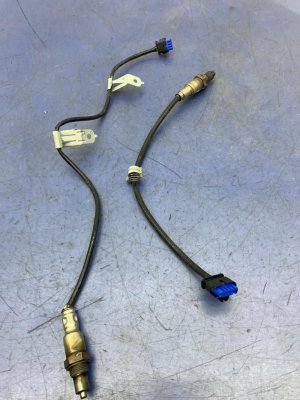
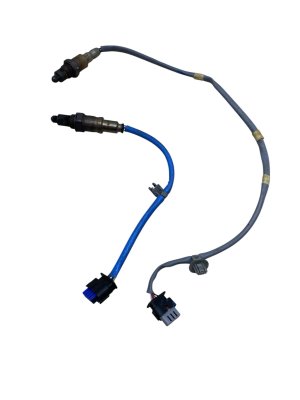
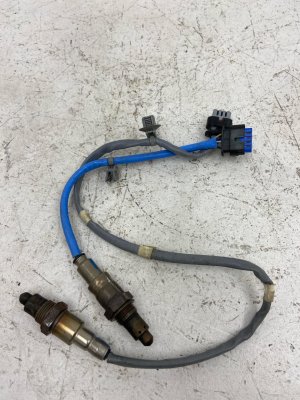
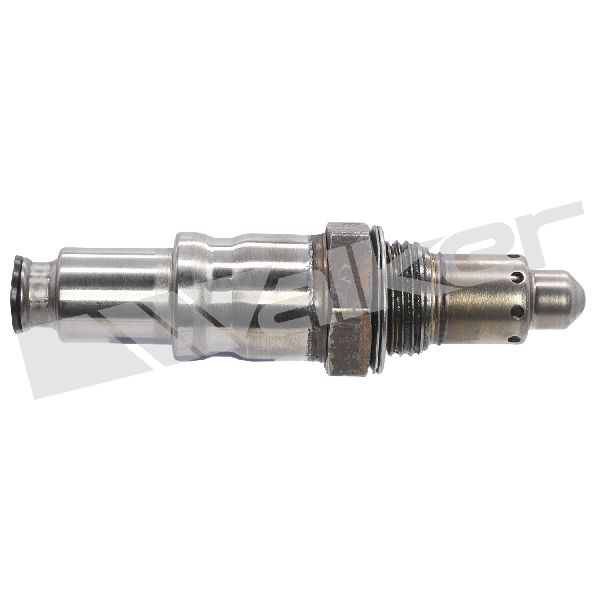
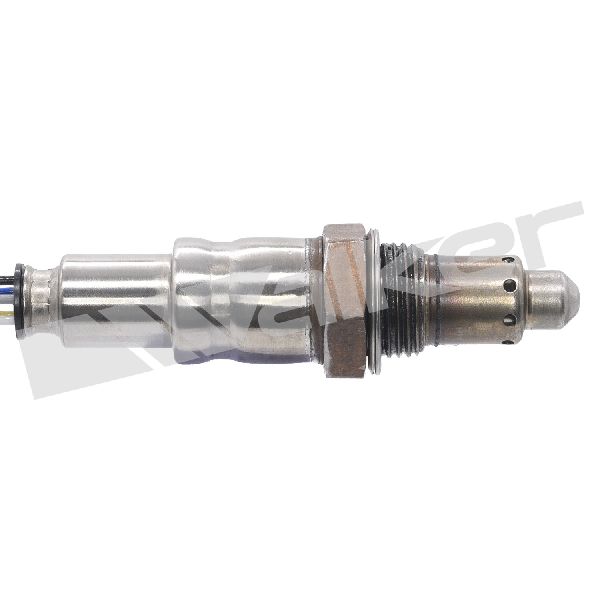
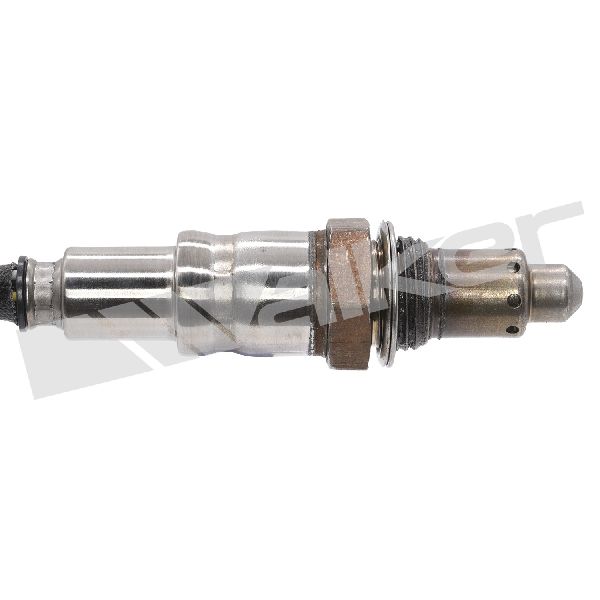
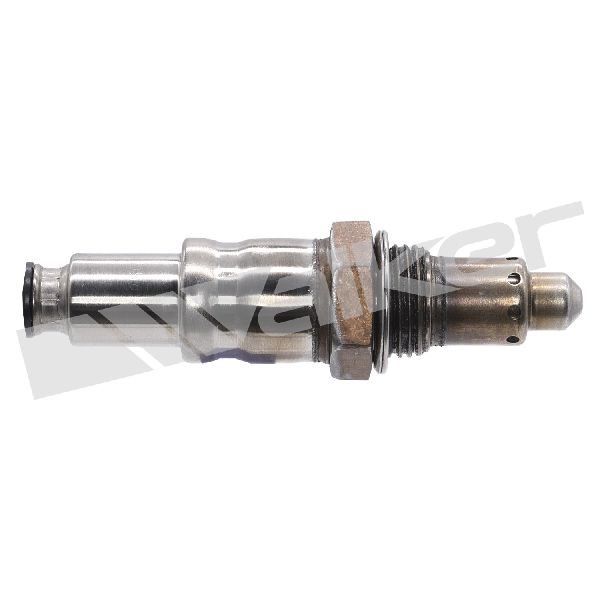
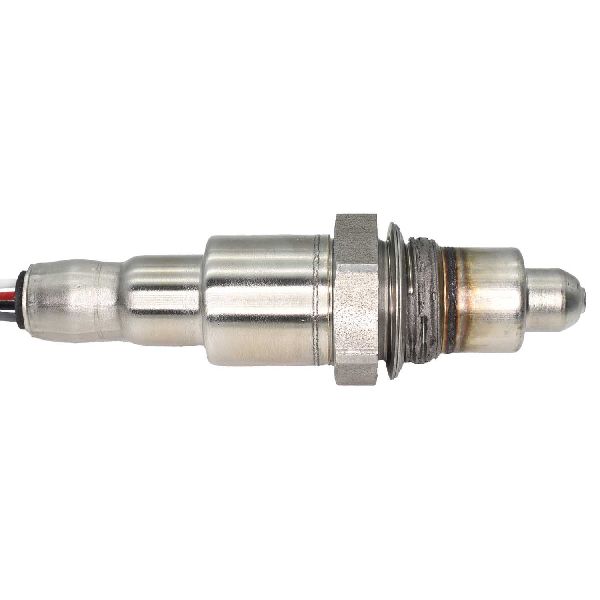
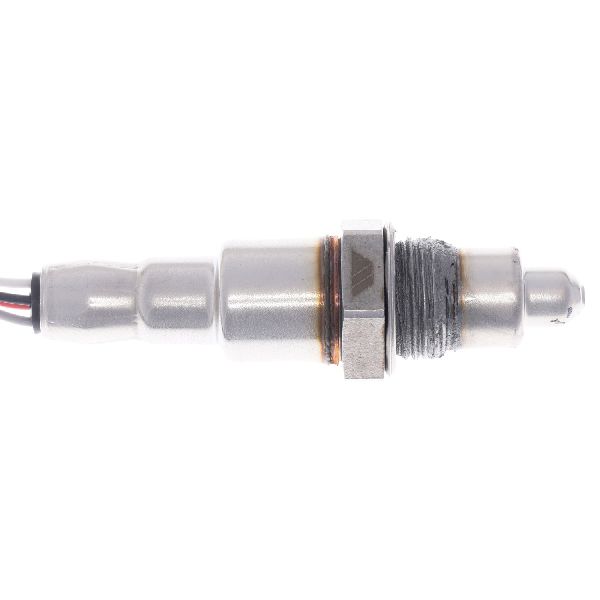
- Downstream Oxygen Sensor (Bank 1, Sensor 2)
(OEM #Motorcraft DY-1671 (for 2.0L EcoBoost))— This sensor is responsible for reporting the converter's efficiency. It can fail and send false data, making it a common and relatively inexpensive part to replace before condemning the converter.
Trusted brands: Motorcraft, Bosch, Denso, NGK
OEM price range: $100-$180
Aftermarket price range: $50-$120 - Catalytic Converter Assembly (Bank 1)
(OEM #LX6Z-5G232-A (for 2.5L Hybrid, supersedes LX6Z-5G232-C) or SX6Z-5G232-A (fits both 2.0L and 2.5L))— If software and sensor issues are ruled out, the catalytic converter itself has likely failed and is no longer efficient enough to meet emissions standards. This has been reported even on low-mileage 2024 models and should be a warranty claim.
Trusted brands: Motorcraft (OEM), Walker Exhaust, MagnaFlow
OEM price range: $1200-$2000+
Aftermarket price range: $600-$1200
Technical Service Bulletins (TSBs) & Recalls
- TSB 25-2407
- TSB 25-2355
Platform-Specific Known Issues
- A software glitch in the Powertrain Control Module (PCM) is a known issue for the 2023 model year, as documented in Ford TSB 25-2407 and its successor, 25-2355. This can cause the P0420 code to appear even when the catalytic converter and sensors are functioning correctly.
- While the software issue is prominent, actual catalytic converter failures are not unheard of, even on 2024 models with low mileage, as reported by owners. These cases are typically handled under Ford's emissions warranty.
Mechanic-Grade Diagnostic Values
- Downstream O2 Sensor (Bank 1, Sensor 2) Voltage — expected: Relatively steady reading between 0.4V and 0.8V when the catalyst is hot and working efficiently. Some sources suggest a tighter range of 0.4V to 0.5V is normal.. Failure: Voltage fluctuates rapidly, mimicking the upstream O2 sensor, or is stuck at a very low voltage (near 0.1V) or very high voltage (near 0.9V).
- Mode $06 Catalyst Monitor Test (TID $81) — expected: The test result value, often expressed as a ratio, should be below the maximum threshold. For example, a test value of 0.05469 against a max threshold of 0.52734 is a clear pass.. Failure: The test result value exceeds the maximum threshold specified in the Mode $06 data. A ratio near 1.0 indicates very low oxygen storage and a failed test. The test may also report as 'incomplete'.
- Long Term Fuel Trim (Bank 1) — expected: Should be within +/- 5% for a healthy engine. Values up to +/- 10% are generally acceptable.. Failure: Consistently high positive values (>10%) suggest a vacuum leak or under-reporting MAF sensor. Consistently high negative values (< -10%) suggest leaking injectors or other issues causing a rich condition. These underlying issues must be fixed as they can damage a new catalytic converter.
Scan Tool Commands That Help
- Ford FDRS (Ford Diagnostic & Repair System): Guided Routines / PCM Self-Test — When diagnosing a P0420, running the PCM self-test in FDRS can identify other related DTCs that a generic scanner might miss. The 'Guided Routines' can walk a technician through the specific diagnostic steps recommended by Ford for the P0420 code, including checking for applicable software updates (TSBs).
Wiring & Ground Locations
- Grounded Bolts in Passenger Footwell — Two threaded bolts on the firewall, located under the BCM (Body Control Module) and fusebox area in the passenger footwell.. The PCM and its associated sensors, including oxygen sensors, rely on clean ground connections. A poor ground can introduce voltage offsets and erratic signals, potentially causing the PCM to misinterpret sensor data and falsely trigger a P0420 code. These are known, accessible ground points for testing or cleaning.
- PCM Ground (G104) — On some Ford platforms, a specific ground wire (G104) runs from the PCM directly back to the battery negative terminal, separate from the main chassis ground.. This dedicated ground is critical for stable PCM operation. If this wire is corroded or damaged, it can cause a host of difficult-to-diagnose issues, including erroneous sensor-related codes like P0420. Verifying the integrity of this connection is a key step in advanced diagnosis when other causes are ruled out.
Real Owner Repair Stories
- MaverickTruckClub.com owner report (2024 Ford Maverick) — Check Engine Light with P0420 code.
❌ Tried (didn't work) Initial diagnosis pointed towards a faulty catalytic converter.
✅ What actually fixed it The dealership replaced the catalytic converter under the federal emissions warranty (8 years/80,000 miles). This confirms that even on very new models, a hardware failure of the converter is a possible cause, not just the widely known software issue. - MaverickTruckClub.com owner report (2023 Ford Maverick Hybrid) — Check Engine Light with P0420 code at ~10,000 miles.
❌ Tried (didn't work) The owner was concerned it was a catalytic converter failure.
✅ What actually fixed it The dealership performed a software update based on a TSB (likely 25-2355). The PCM was reprogrammed, which resolved the code without replacing any parts.
OEM Part Supersession History
LX6Z-5G232-C→LX6Z-5G232-A— This is a common part revision. While the exact reason isn't public, it often involves minor manufacturing improvements, material changes, or updates to address field issues.
Heads up: LX6Z-5G232-A is the correct current replacement for vehicles that originally had LX6Z-5G232-C. Using old stock of the '-C' version is not recommended.
Model Year Variations Within This Range
- 2023 vs 2024: The standard powertrain was inverted. For 2023, the 2.5L Hybrid was standard and the 2.0L EcoBoost was optional. For 2024, the 2.0L EcoBoost became the standard engine, with the 2.5L Hybrid being the optional choice. This is critical for diagnosis, as the TSB for the false P0420 code is primarily associated with the 2023 model year software.
- 2024 Lariat: For the 2024 model year, the Lariat trim comes standard with features that were part of the optional Lariat Luxury package in 2023, such as a wireless phone charger and the B&O premium sound system. While not directly related to P0420, this indicates software and module differences between the years that could affect diagnostics.
Helpful Videos
Used OEM Parts in Stock


New Aftermarket Parts Available

The information in this article is provided for general reference and educational purposes only. Vehicle specifications, procedures, and part compatibility can vary by production date, trim level, and region. Always consult your vehicle's factory service manual and verify part numbers before purchasing or performing repairs. Safety-critical components such as airbags, seat belts, and braking systems should be installed by a qualified professional.
- Ford MAVERICK:
- 🎬 Helpful Videos
- 🛍️ Shop This Part
- What's Unique About the 2023-2024 Ford MAVERICK
- Diagnostic Flowchart
- Symptoms You May Notice
- Most Likely Causes
- Rare But Worth Checking
- Diagnosis Steps
- Parts You'll Likely Need
- Technical Service Bulletins (TSBs) & Recalls
- Platform-Specific Known Issues
- Mechanic-Grade Diagnostic Values
- Scan Tool Commands That Help
- Wiring & Ground Locations
- Real Owner Repair Stories
- OEM Part Supersession History
- Model Year Variations Within This Range
- 🎟️ Get 5% Off