

P0420 on 2008-2011 Ford Focus 2.0L: Catalyst Efficiency Causes and Fixes
On a 2008-2011 Ford Focus, P0420 almost always means the catalytic converter is failing. While replacing O2 sensors first is a common attempt, the most probable fix is a new catalytic converter, which can be a costly repair. Owners in forums frequently report that aftermarket converters may only last a year or two before the code returns due to the PCM's sensitivity.
- P0420 on the 2008-2011 Focus most often means the catalytic converter has reached the end of its life.
- Always check for other engine codes first; fixing misfires or fuel issues is critical to prevent damaging a new converter.
- Diagnose before you buy: use a scan tool to watch O2 sensor data. If the downstream sensor mimics the upstream, the converter is bad.
- While a faulty downstream O2 sensor can cause this code, it's less common than the converter itself failing on these models.
- Aftermarket converters may be cheaper but often don't last as long as OEM-quality parts and may cause the code to return sooner.
What's Unique About the 2008-2011 Ford Focus

The 2008-2011 Ford Focus is known to be susceptible to the P0420 code, particularly as it accumulates higher mileage (typically over 100,000-150,000 miles). The catalytic converters on these models can simply wear out from age. While other issues can cause the code, a worn-out original converter is a very common scenario reported by owners. It's also noted that the PCM on these vehicles is quite sensitive to catalyst efficiency, sometimes setting the code when the converter is only degraded to ~95% efficiency. This sensitivity is a key reason why some cheaper aftermarket converters may fail to keep the light off for an extended period.
Symptoms You May Notice
- Check Engine Light is on.
- Reduced engine performance or a sluggish feeling during acceleration.
- Decreased fuel economy.
- A rotten egg or sulfur-like smell from the exhaust, which indicates unburned fuel is being processed by the converter.
- Inability to pass a state emissions test.
- Engine may run rough or misfire if the converter is severely clogged.
- Visible white smoke from the exhaust in cases of severe converter failure (NHTSA ODI #11485071).
- Immediately replacing the catalytic converter without checking for exhaust leaks or testing the oxygen sensors first. A faulty O2 sensor is a much cheaper fix and should be ruled out.
- Replacing the upstream O2 sensor. While a bad upstream sensor can cause long-term damage to the converter by affecting fuel trim, it is the downstream sensor that directly triggers the P0420 code by monitoring the converter's efficiency.
- Using an O2 sensor spacer/extender. This is a common 'trick' discussed in forums to pull the downstream sensor out of the direct exhaust stream, fooling the PCM. While it may turn the light off, it does not fix the underlying problem, is illegal for emissions purposes, and may not work if the converter is too degraded.
Most Likely Causes

- Failing Catalytic Converter 🔴 High Probability Catalytic converters have a finite lifespan and can fail from age and high mileage (100k+ miles). This is the most common reason for a P0420 code on a Focus. The catalyst materials simply degrade over time.
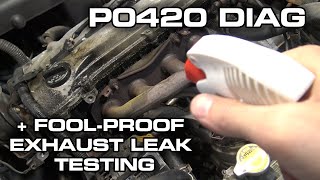
How to confirm: After ruling out other causes, the definitive test is to analyze the upstream and downstream O2 sensor readings 🎬 Watch: How to diagnose P0420 and test for exhaust leaks. on a scan tool. If the downstream sensor voltage is fluctuating rapidly like the upstream sensor, the converter is not storing oxygen and has failed. An infrared thermometer can also be used to check temperatures; the outlet should be at least 100°F hotter than the inlet on a working converter after the engine is at operating temperature.
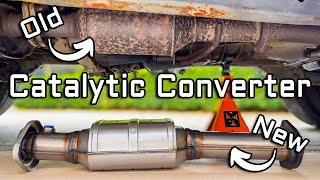
Typical fix: Replace the catalytic converter. OEM is recommended for longevity; many owners report aftermarket units failing within 1-2 years.
Est. part cost: $400-$1200 - Faulty Downstream Oxygen (O2) Sensor 🟡 Medium Probability O2 sensors are also wear items. A lazy or failing downstream sensor can send incorrect data to the PCM, falsely triggering a P0420 code. Many owners attempt this fix first due to the lower cost, but it's often not the root cause.
How to confirm: Graph the sensor's voltage with a scan tool. A healthy downstream sensor should show a relatively steady voltage (typically 0.6-0.8V). If it's stuck at a certain voltage, not responding, or fluctuating wildly without a corresponding change in engine conditions, it's likely faulty.
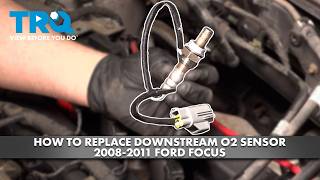
Typical fix: Replace the downstream (post-catalyst, Bank 1 Sensor 2) oxygen sensor. The Motorcraft part is recommended. 🎬 See this walkthrough on replacing the downstream O2 sensor.
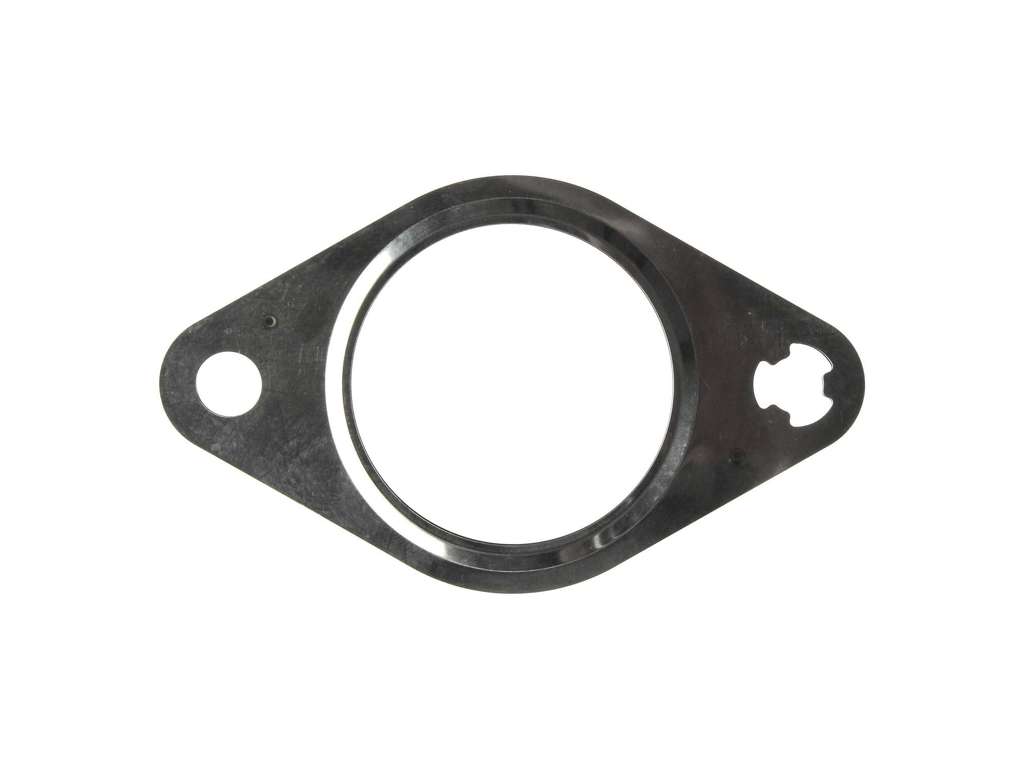
Est. part cost: $50-$150 - Exhaust Leak ⚪ Low Probability Rust and vibration can cause leaks at gaskets or the exhaust flex pipe. A leak between the upstream and downstream O2 sensors can allow extra oxygen into the exhaust, tricking the downstream sensor and causing a P0420 code. The flex pipe is a known potential leak point.
How to confirm: Visually inspect the exhaust system from the manifold to the downstream O2 sensor for cracks, holes, or black soot marks indicating a leak. A common DIY method is to use a shop vacuum on its blower setting to pressurize the exhaust and spray soapy water on joints to look for bubbles.
Typical fix: Repair the leak by replacing the gasket or damaged exhaust section (e.g., welding in a new flex pipe).
Est. part cost: $20-$250 - Engine Misfires or Rich/Lean Running Condition ⚪ Low Probability Underlying engine issues can destroy a catalytic converter. A constant misfire (from bad spark plugs or ignition coils) or a faulty fuel injector can send unburned fuel into the exhaust, which then superheats and melts the converter's internal structure. Always resolve other engine codes first before replacing a converter.
How to confirm: Check for other stored trouble codes (e.g., P030x for misfires, or fuel trim codes like P0171/P0172). Address these codes before diagnosing the P0420. A leaking fuel injector or faulty purge valve can create a rich condition that damages the cat over time.
Typical fix: Fix the root cause of the misfire or fuel mixture issue (e.g., replace spark plugs, ignition coils, or fuel injectors).
Est. part cost: $50-$500
Rare But Worth Checking
- Faulty Canister Purge Valve (CPV): A stuck-open purge valve can affect the air-fuel mixture and, in some cases, contribute to conditions that set a P0420 code. While more commonly discussed for the 2012+ Focus models, a leaking purge valve on the 2008-2011 model can cause lean/rich conditions that overwork and damage the converter. NHTSA ODI #11485071 notes that a canister purge valve issue can directly cause a P0420 code.
- PCM Software Issues: While no specific TSB for the 2008-2011 Focus was found in this search, some Ford vehicles have received PCM updates to adjust the sensitivity of the catalyst monitor. It's a possibility if all other causes are ruled out.
Diagnosis Steps

- Check for any other trouble codes stored in the PCM. Address any misfire, fuel system, or oxygen sensor codes before proceeding with P0420 diagnosis.
- Perform a visual inspection of the exhaust system. Look for any signs of cracks, rust, or black soot that would indicate an exhaust leak, especially between the engine and the downstream O2 sensor. Pay close attention to the flex pipe.
- Use a scan tool with live data capability to observe the voltage of the upstream (Bank 1, Sensor 1) and downstream (Bank 1, Sensor 2) oxygen sensors while the engine is warm and running at a steady 2000-2500 RPM.
- The upstream O2 sensor's voltage should fluctuate rapidly between approximately 0.1 and 0.9 volts.
- A healthy downstream O2 sensor's voltage should remain relatively stable and steady, typically around 0.6 to 0.8 volts.
- If the downstream O2 sensor's voltage is fluctuating in a similar pattern to the upstream sensor, it confirms the catalytic converter is not storing oxygen and has likely failed.
- If the downstream O2 sensor's voltage is stuck high, low, or is not responding, the sensor itself is likely faulty.
- If available, use an infrared thermometer to check the converter's temperature. With the engine fully warmed up, the outlet pipe should be at least 100°F hotter than the inlet pipe. If it's the same temperature or cooler, the converter is not working.
- If no other issues are found, the catalytic converter is the most likely cause.
Parts You'll Likely Need

- Catalytic Converter
(OEM #8S4Z-5E212-A (Rear Converter Assembly, PZEV spec, check VIN for exact fitment))— This is the most common failed component for a P0420 code on a high-mileage Focus. The original converter's catalyst material degrades over time.
Trusted brands: Ford/Motorcraft (OEM), Walker Exhaust, MagnaFlow, Davico
OEM price range: $1000-$1500
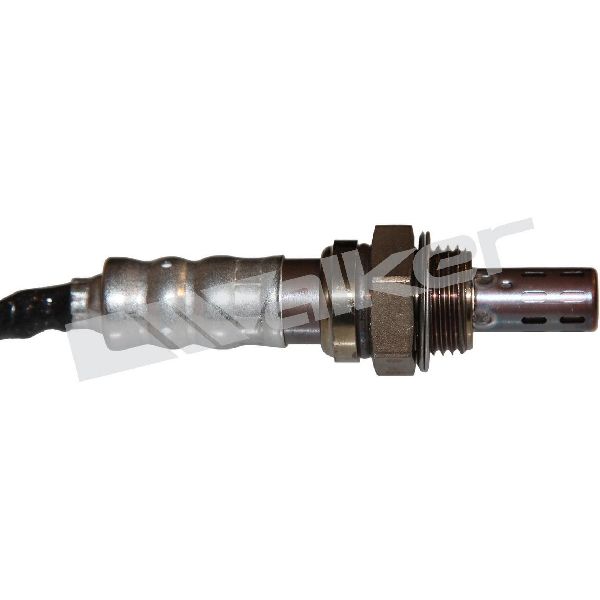
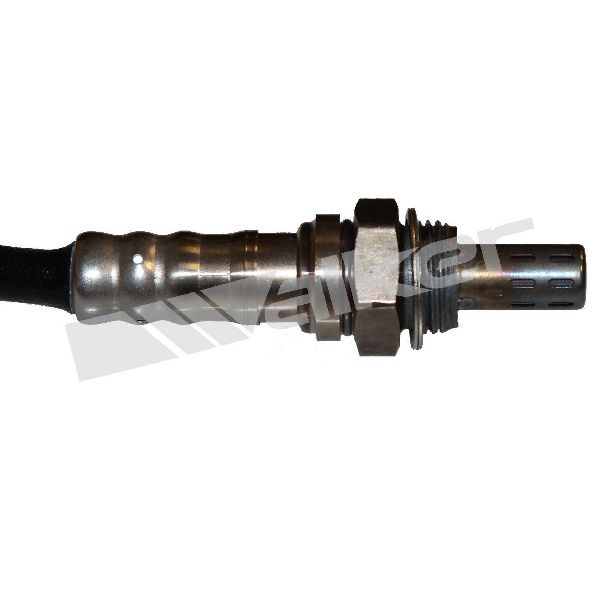
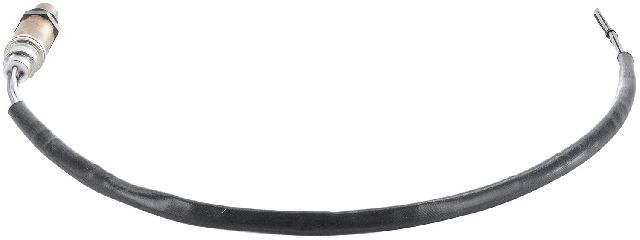
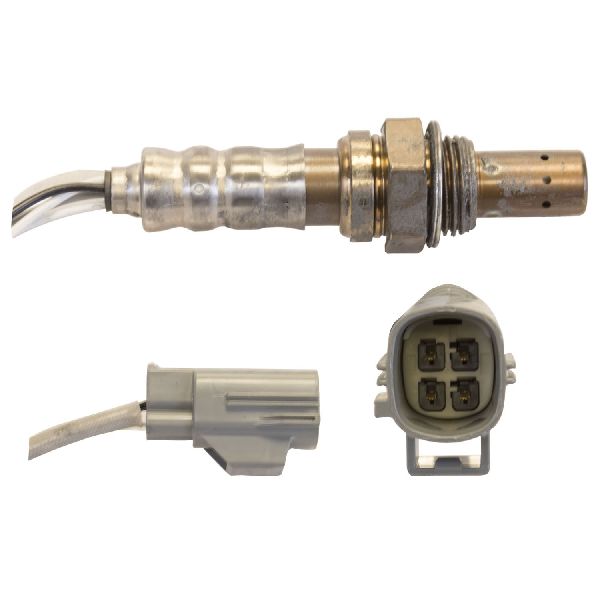
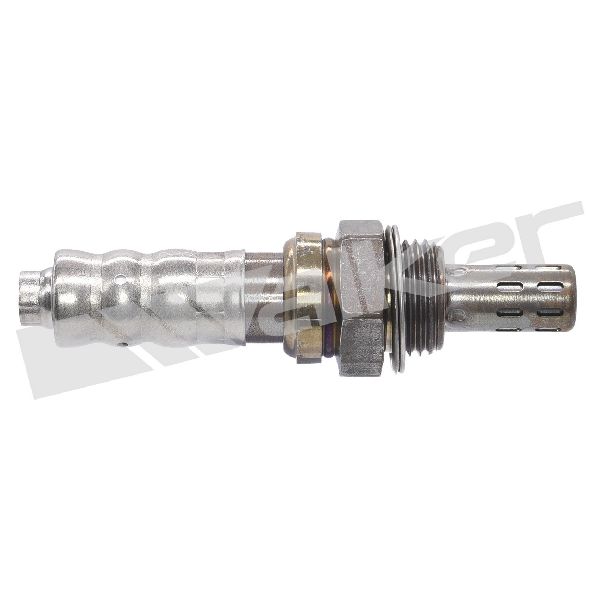
Aftermarket price range: $300-$700 - Downstream Oxygen Sensor (Bank 1, Sensor 2)
(OEM #Motorcraft DY-1038 (This is a common part number, but it's critical to verify with VIN. Superseded by DY-1401 / GU2Z-9G444-A))— This sensor provides the direct measurement of catalyst efficiency. It can fail and send erroneous data, falsely triggering the P0420 code. It's a common, lower-cost first attempt at a fix.
Related Codes That Often Appear With This One
- P013x / P015x — These codes relate to oxygen sensor faults. If you see one of these alongside P0420, it strongly suggests the O2 sensor itself is the problem, or part of the problem.
- P0300-P0304 — These are misfire codes. An ongoing misfire will send unburned fuel to the catalytic converter, quickly damaging it and causing a P0420 code. The misfire is the root cause that must be fixed.
- P0171 / P0172 — These codes indicate a lean (P0171) or rich (P0172) condition. These fuel mixture problems can contaminate and destroy the catalytic converter over time. The fuel system issue must be addressed to prevent repeat failure of a new converter.
- P1450 — This code indicates excessive vacuum in the fuel tank or EVAP system. NHTSA ODI #11531982 and #11583587 describe cases where P0420 appears concurrently with P1450, often accompanied by vehicle stuttering or shaking during acceleration.
- P0443, P0452, P0456, P0460, P2196 — These codes relate to the EVAP system and fuel trim. NHTSA ODI #11427851 notes that these codes can appear alongside P0420, indicating broader engine or emissions system malfunctions.
- P2782, P07A3 — These are transmission-related codes. NHTSA ODI #11658562 reports these codes appearing with P0420 in vehicles that also had recalls regarding the Transmission Control Module (TCM).
Technical Service Bulletins (TSBs) & Recalls
- TSB 22-2260: While this TSB for 'Illuminated MIL With DTC P0420' applies to newer F-150 and Expedition models with EcoBoost engines, it details a procedure to de-sulfate catalytic converters that have been contaminated by high-sulfur fuel. This indicates that fuel quality can be a factor in setting this code on Ford vehicles, though this specific TSB does not apply to the 2008-2011 Focus.
Platform-Specific Known Issues
- Owner Experience: Aftermarket Cat Failure: Multiple owners on forums like FocusFanatics and Reddit report that cheaper, aftermarket catalytic converters often fail to keep the P0420 code away for more than a year or two. The sensitive Ford PCM detects the lower efficiency of these units, even when new. Many who initially installed an aftermarket part ended up having to replace it again, with some opting for a more expensive OEM or high-quality aftermarket (e.g., Magnaflow, Walker) unit the second time.
- Owner Experience: The O2 Spacer 'Fix': A very common topic in owner forums is the use of an O2 sensor spacer (also called a non-fouler or extender) on the downstream sensor. This pulls the sensor out of the direct exhaust flow to trick the PCM. While many report success in turning off the CEL, it is an illegal modification for on-road vehicles, will not pass a visual emissions inspection, and does not fix the root cause of the problem.
- Owner Experience: Flex Pipe Leak: A user on the BobIsTheOilGuy forum reported successfully fixing a persistent P0420 code by repairing a leak in the exhaust flex pipe, which was located after the downstream O2 sensor. This highlights the importance of checking the entire exhaust system for leaks, as pulsations can draw in outside air and affect sensor readings even if the leak is downstream.
Documented NHTSA Reports
- An owner reported in NHTSA ODI #11531982 that their vehicle stutters and shakes when accelerating from a stop while throwing codes P1450 and P0420, suggesting excessive vacuum in the fuel tank.
- According to NHTSA ODI #11583587, a diagnostic exam confirmed P0420 and P1450 codes on a vehicle that also experienced issues with the "distance to empty" fuel gauge reading.
- NHTSA ODI #11485071 describes a scenario where a canister purge valve caused a P0420 code and the catalytic converter failed, resulting in white smoke from the exhaust and causing the vehicle to stall on public roads.
- In NHTSA ODI #11658562, an owner noted that the check engine light remained on with codes P0420, P2782, and P07A3, even after attempting to address TCM-related recalls.
- NHTSA ODI #11427851 documents a vehicle exhibiting an illuminated MIL with a cluster of codes including P0420, P1450, P0443, P0452, P0456, P0460 and P2196.
Mechanic-Grade Diagnostic Values
- Mode $06 Catalyst Monitor Test (Bank 1) — expected: The measured value should be below the maximum threshold set by the PCM. For example, a test may show a current value of 13 and a maximum of 9.99, indicating a failure.. Failure: When the scan tool shows the current test value exceeds the maximum limit, or reports a 'Fail' status for the catalyst monitor TID.
- Downstream O2 Sensor (B1S2) Voltage at steady cruise (2500 RPM) — expected: A relatively steady voltage between 0.6V and 0.8V.. Failure: Voltage that rapidly fluctuates in a pattern mimicking the upstream O2 sensor, indicating the catalyst is not storing oxygen.
- O2 Sensor Heater Circuit Resistance — expected: Typically between 2 and 30 ohms, depending on the specific sensor. This test is performed on a cold sensor with a multimeter.. Failure: A reading of infinite resistance (open circuit) or zero resistance (short circuit) indicates a failed heater element, which can prevent the sensor from operating correctly and contribute to inaccurate readings.
Hidden / Shadow Codes Worth Checking
- Mode $06, TID $01: On many pre-CAN Ford vehicles, Test ID (TID) $01 corresponds to the Catalyst Efficiency Monitor. This is not a DTC (trouble code) but the result of the PCM's internal self-test. It provides a raw data value of the catalyst's performance, which can show a marginal or failing converter before the P0420 code becomes permanent. (see via A scan tool that can display Mode $06 data. Many modern scan tools can translate the hexadecimal values and provide a 'Pass' or 'Fail' status directly.)
Scan Tool Commands That Help
- Ford IDS (or equivalent advanced scan tool): Catalyst Monitor Drive Cycle — This is not a direct command, but a specific driving procedure required to make the PCM run its internal test on the catalytic converter. After a repair (like replacing a cat or O2 sensor) or clearing codes, the monitor must be run to completion to verify the fix. The procedure involves stop-and-go driving at various speeds between 25-45 MPH for about 10 minutes.
- Ford IDS (or equivalent advanced scan tool): PCM Reset / Clear KAM (Keep Alive Memory) — After replacing a component like an O2 sensor or catalytic converter, clearing the KAM forces the PCM to relearn fuel trims and other adaptive strategies. This can be crucial for allowing the emissions monitors to run correctly and can sometimes resolve issues caused by learned bad data.
Wiring & Ground Locations
- Main Engine/Transmission Ground — A primary ground strap runs from the negative battery terminal down to a bolt on the transmission casing.. A corroded or damaged main ground can cause a host of electrical issues, including erratic sensor readings. The PCM and its sensors rely on a stable ground reference. An unstable ground can lead to incorrect O2 sensor voltage readings, potentially triggering a false P0420.
- PCM Ground — On Fords with the PCM in the engine bay, there is typically a dedicated ground point on the chassis near the PCM itself. For the Focus, a key ground is located under the airbox.. A poor ground connection directly at the PCM can corrupt all sensor inputs and calculation outputs, leading to numerous phantom codes, including P0420.
- O2 Sensor Wiring Harness — The wiring for the downstream O2 sensor runs along the vehicle's underbody near the hot exhaust system.. This harness is susceptible to physical damage from road debris or melting from contact with the exhaust. A frayed or shorted wire can cause incorrect voltage signals to be sent to the PCM, directly causing a P0420 or related O2 sensor codes.
Real Owner Repair Stories
- Reddit user in r/FordFocus (2013 Ford Focus with 155k miles) — P0420 code appeared. Resetting it would work for about 600 miles before it returned.
❌ Tried (didn't work) Resetting the code with a scanner (temporary fix), Spraying intake cleaner down the intake pipe
✅ What actually fixed it The owner cleaned the Mass Airflow (MAF) sensor, added a bottle of Cataclean to a 1/4 tank of gas, drove it hard for 60 miles, then filled the tank with E85 flex fuel. The check engine light went out the next morning and had not returned after 1000 miles. The user also reported better power and a 3-4 MPG increase.
"I Checked Everything" — The Actual Cause
- In some cases reported by mechanics, a P0420 can be triggered by a small vacuum leak from a failing intake manifold gasket, especially on plastic intakes. This introduces unmetered air that the PCM tries to compensate for, leading to a fuel trim imbalance that can overwork the converter and cause it to fail the efficiency test, even though there are no leaks in the exhaust system itself.
OEM Part Supersession History
Motorcraft DY-1038→Motorcraft DY-1401 (Ford P/N GU2Z-9G444-A)— Standard part evolution and updates by the manufacturer.
Heads up: While physically similar, using a non-specified or universal O2 sensor can cause issues due to different response characteristics, potentially leading to a persistent P0420 code even with a new sensor.
Model Year Variations Within This Range
- 2008-2011: Some Focus models sold in California and other CARB states were designated as Partial Zero Emission Vehicles (PZEV). These vehicles have a more advanced catalytic converter with higher precious metal loading and are subject to an extended emissions warranty of 15 years or 150,000 miles. A PZEV vehicle may have a different, more expensive catalytic converter (like part 8S4Z-5E212-A) compared to a standard Federal emissions vehicle. It is critical to check the vehicle's emissions sticker (usually under the hood) before ordering a replacement converter.
Diagnostic Flowchart
Real Owner Stories
Aggregated from forums and TSBs cited above. Mileages and costs reflect what owners reported in those sources.
2008-2011 Ford Focus 2.0L — ~150000 miles
Symptoms: Check Engine Light on with a P0420 code.
What fixed it: Replaced the catalytic converter after initially trying cheaper solutions like cleaning the MAF sensor, and replacing the purge valve and O2 sensors.
Source hint: reddit.com/r/FordFocus thread titled 'P0420 Catalytic converter easiest fix?'
2008-2011 Ford Focus 2.0L
Symptoms: Persistent P0420 code.
What fixed it: Repaired a leak in the exhaust flex pipe located after the downstream O2 sensor, which was allowing outside air to affect sensor readings via exhaust pulsations.
Source hint: bobistheoilguy.com thread titled 'Exhaust leak and P0420 code'
2008-2011 Ford Focus 2.0L
Symptoms: Intermittent P0420 code that persisted for a year.
What fixed it: The dealer replaced the catalytic converter and downstream O2 sensor, though the owner suspected a pre-cat sensor or previous exhaust leak was the ultimate root cause.
Source hint: fordownersclub.com
2008-2011 Ford Focus 2.0L
Symptoms: P0420 code illuminating the Check Engine Light.
What fixed it: Replaced the catalytic converter after first attempting to fix the issue by replacing the oxygen sensors.
Source hint: focusfanatics.com
Related OBD-II Codes
Frequently Asked Questions
Does TSB 22-2260 apply to my 2008-2011 Ford Focus?
Should I install a cheap aftermarket catalytic converter on my 2.0L Duratec?
Can an exhaust leak cause the P0420 code on this vehicle?
Is using an O2 sensor spacer a good way to fix the P0420 code on my Focus?
Should I replace the downstream O2 sensor first since it's cheaper?
Helpful Videos
We Have This Part in Stock

The information in this article is provided for general reference and educational purposes only. Vehicle specifications, procedures, and part compatibility can vary by production date, trim level, and region. Always consult your vehicle's factory service manual and verify part numbers before purchasing or performing repairs. Safety-critical components such as airbags, seat belts, and braking systems should be installed by a qualified professional.
- Ford Focus:
- 🎬 Helpful Videos
- 🛍️ Shop This Part
- What's Unique About the 2008-2011 Ford Focus
- Symptoms You May Notice
- Most Likely Causes
- Rare But Worth Checking
- Diagnosis Steps
- Parts You'll Likely Need
- Related Codes That Often Appear With This One
- Technical Service Bulletins (TSBs) & Recalls
- Platform-Specific Known Issues
- Documented NHTSA Reports
- Mechanic-Grade Diagnostic Values
- Hidden / Shadow Codes Worth Checking
- Scan Tool Commands That Help
- Wiring & Ground Locations
- Real Owner Repair Stories
- "I Checked Everything" — The Actual Cause
- OEM Part Supersession History
- Model Year Variations Within This Range
- Diagnostic Flowchart
- Real Owner Stories
- 2008-2011 Ford Focus 2.0L — ~150000 miles
- 2008-2011 Ford Focus 2.0L
- 2008-2011 Ford Focus 2.0L
- 2008-2011 Ford Focus 2.0L
- Related OBD-II Codes
- Frequently Asked Questions
- 🎟️ Get 5% Off