

P0420 on 2020-2022 Ford Escape: Causes and Fixes for Catalyst System Inefficiency
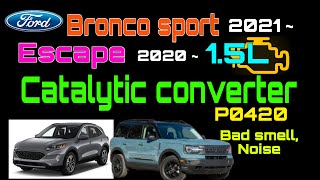
On a 2020-2022 Ford Escape with the 1.5L Ecoboost engine, the P0420 code is most often caused by a failed catalytic converter. Ford has acknowledged this with a Technical Service Bulletin (TSB 23-2259), which also applies to the 2021-2023 Ford Bronco Sport. The primary fix is to replace the catalytic converter, and it is highly recommended to replace the downstream O2 sensor at the same time.
- For the 2020-2022 Ford Escape with a 1.5L engine, a P0420 code is very likely due to a failed catalytic converter.
- Ford has acknowledged this issue in Technical Service Bulletin TSB 23-2259, which recommends replacing the converter.
- Before replacing the expensive converter, it is still wise to rule out exhaust leaks and faulty oxygen sensors.
- Always investigate and resolve any other engine trouble codes (like for misfires or fuel mixture) before replacing the converter, as they could be the root cause of the failure.
What's Unique About the 2020-2022 Ford ESCAPE

For the 2020-2022 Ford Escape, particularly models with the 1.5L Ecoboost engine, the P0420 code is a known issue. Ford issued Technical Service Bulletin #TSB 23-2259 directly addressing this problem, stating that the catalytic converter itself is the likely cause for vehicles built on or before September 28, 2022. This TSB also includes the 2021-2023 Ford Bronco Sport, a platform mate that shares the same engine and transmission. This acknowledgment from the manufacturer points directly to a specific part failure, making the diagnosis more straightforward than on many other vehicles where O2 sensors or exhaust leaks are equally probable causes.
Diagnostic Flowchart
Tap your situation to follow the diagnostic path that matches what you're seeing on this vehicle.
Symptoms You May Notice
- Check Engine Light is on
- Reduced engine power and acceleration
- Worse fuel economy
- A sulfur or "rotten egg" smell from the exhaust
- Vehicle will fail an emissions test
- Loud exhaust noise, if the converter housing is cracked
- Replacing oxygen sensors when the catalytic converter is the actual point of failure. Given TSB 23-2259 for this vehicle, the converter should be the primary suspect, especially on the 1.5L engine.
Most Likely Causes

- Failed Catalytic Converter 🔴 High Probability Ford TSB 23-2259 specifically identifies the catalytic converter as the likely cause for the P0420 code on 2020-2022 Escapes with the 1.5L Ecoboost engine built on or before 28-Sep-2022. Owner complaints and forum discussions widely corroborate this as the primary failure point.
How to confirm: A mechanic can perform an efficiency test. An infrared thermometer can also be used to check the inlet and outlet temperatures of the converter; the outlet should be significantly hotter than the inlet on a working converter. Visual inspection may reveal cracks in the converter housing, which is a reported issue on this platform.
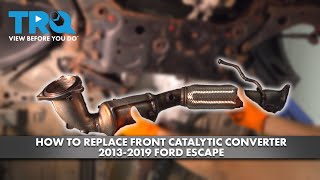
Typical fix: Replace the catalytic converter. Per TSB 23-2259, this is the manufacturer-recommended repair. The Federal Emissions Warranty may cover this repair if the vehicle has under 8 years or 80,000 miles.
Est. part cost: $700-$2200 - Failed Oxygen (O2) Sensor 🟡 Medium Probability
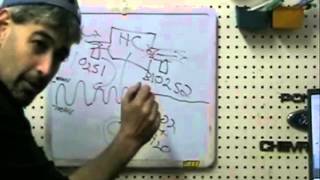
How to confirm: A scan tool with live data graphing can be used to monitor the voltage of the upstream and downstream O2 sensors. The downstream sensor's voltage should be relatively stable, while the upstream sensor's voltage fluctuates. If the downstream sensor mimics the upstream sensor, the converter is likely bad. If the downstream sensor shows no activity or has erratic readings, the sensor itself may be faulty.
Typical fix: Replace the downstream (post-catalyst) oxygen sensor for Bank 1. It is highly recommended to replace the O2 sensors when replacing the converter.
Est. part cost: $50-$185 - Exhaust System Leak ⚪ Low Probability Some reports mention the converter housing or an exhaust flange can physically crack on newer Escapes and the related Bronco Sport, causing a leak.
How to confirm: Visually inspect the exhaust system from the engine to the tailpipe for cracks, holes, or loose connections. Listen for an audible ticking or hissing noise that gets louder with acceleration. A smoke test can pinpoint the exact location of a leak.
Typical fix: Repair the leak. This may involve replacing a gasket, tightening a flange, or welding a crack. If the converter housing is cracked, the entire unit must be replaced.
Est. part cost: $20-$300
Rare But Worth Checking
- Engine Performance Issues: A catalytic converter rarely fails on its own; its failure is often a symptom of another problem. Issues like engine misfires, leaking fuel injectors, or burning oil/coolant can send unburned fuel or contaminants into the exhaust, destroying a new converter. Always rule out other engine codes first.
- PCM Software Issue: One owner on Reddit noted the P0420 code appeared after an over-the-air emissions system update, suggesting a potential software sensitivity, though this is not widely reported.
Diagnosis Steps
- Scan for any other DTCs. If codes for misfires (P030x), fuel mixture (P017x), or O2 sensors are present, diagnose and fix them first, as these can cause catalyst failure.
- Check for applicable warranties. The Federal Emissions Warranty legally covers catalytic converters for 8 years or 80,000 miles. Check with a dealer before authorizing any paid repairs.
- Visually inspect the entire exhaust system for leaks, cracks, or damage, paying close attention to the manifold and the catalytic converter housing, which has been reported to crack on this platform.
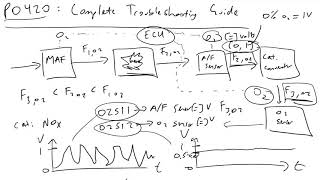
- Use a scan tool to observe live O2 sensor data. Compare the upstream (Bank 1, Sensor 1) and downstream (Bank 1, Sensor 2) sensor readings. A healthy converter will show a fluctuating upstream signal and a steady downstream signal. 🎬 Watch: A complete guide to troubleshooting O2 sensors and emissions. A downstream signal that mimics the upstream signal points to a bad converter.
- If O2 sensors and the exhaust system are confirmed to be in good condition, the catalytic converter is the most likely culprit, as supported by TSB 23-2259.
Parts You'll Likely Need

- Catalytic Converter (Bank 1)
(OEM #LX6Z-5E212-LA, LX6Z-5E212-D, LX6Z-5E212-KZ)— This is the most common cause of P0420 on this vehicle, as confirmed by Ford's TSB 23-2259. Multiple part numbers may exist depending on specific vehicle configuration (FWD/AWD).
Trusted brands: Motorcraft, Walker Exhaust, MagnaFlow
OEM price range: $725-$2220
Aftermarket price range: $400-$900 - Downstream Oxygen Sensor (Bank 1, Sensor 2)
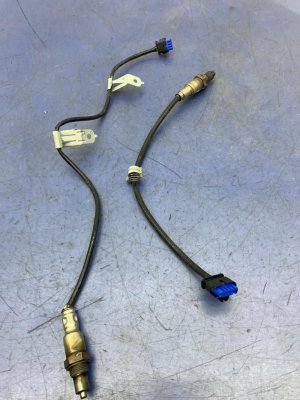
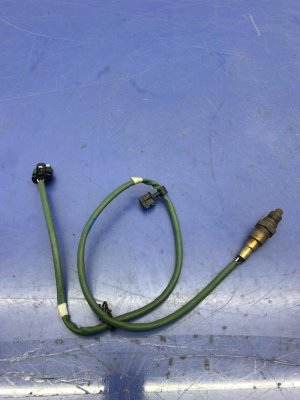
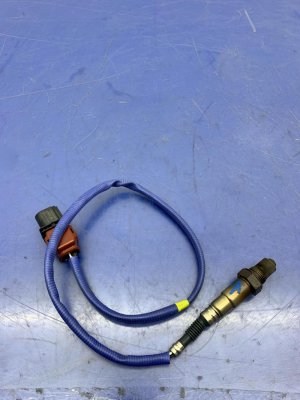
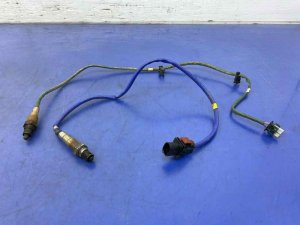
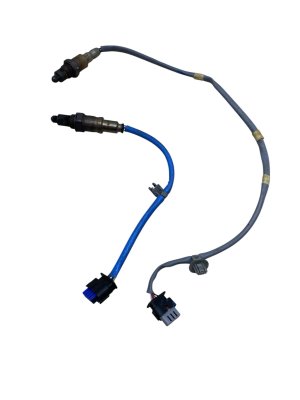
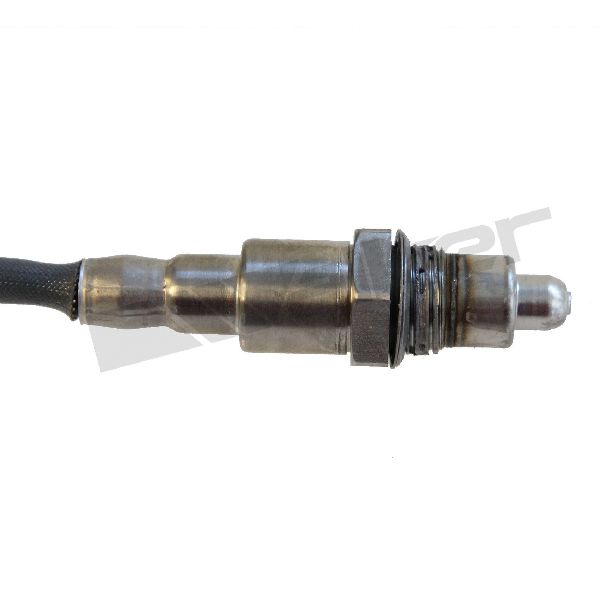
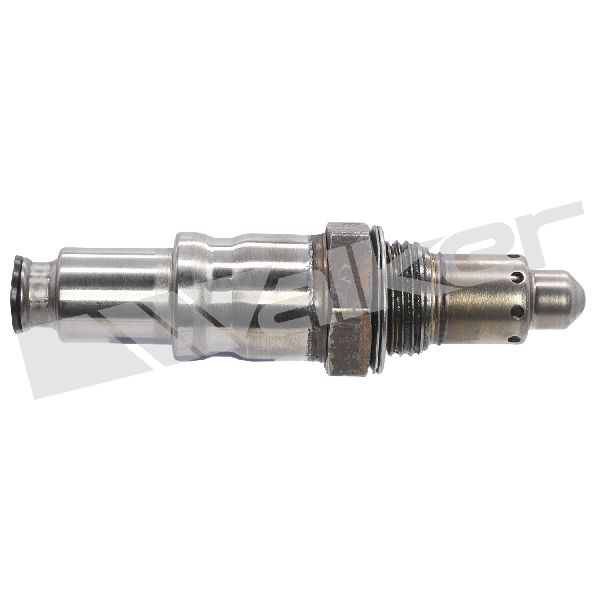
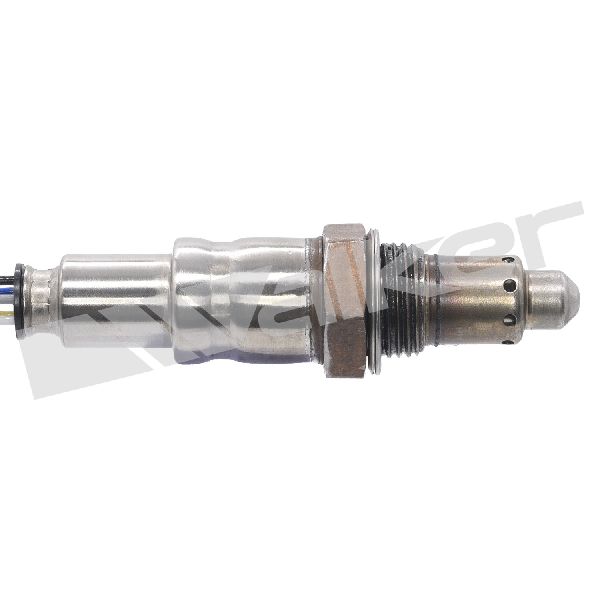
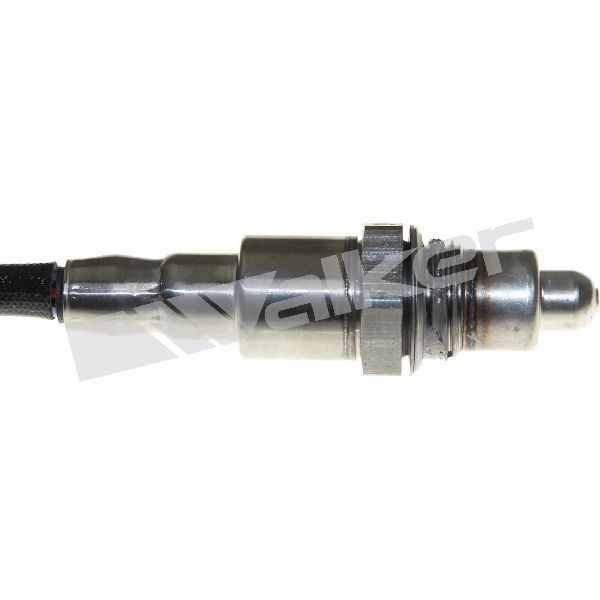
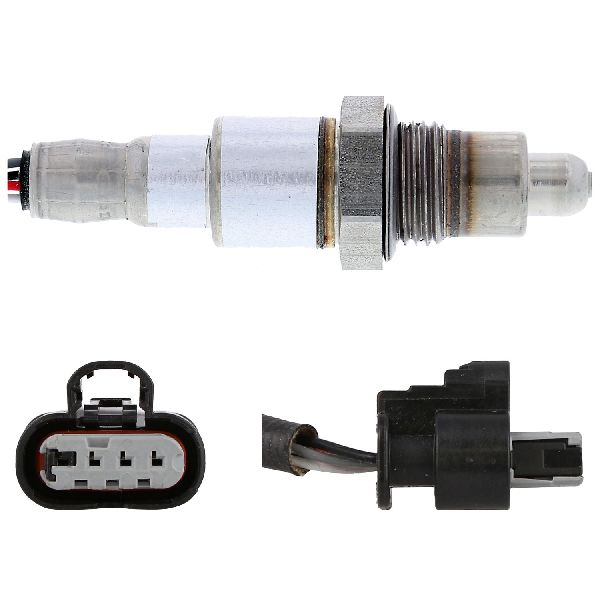
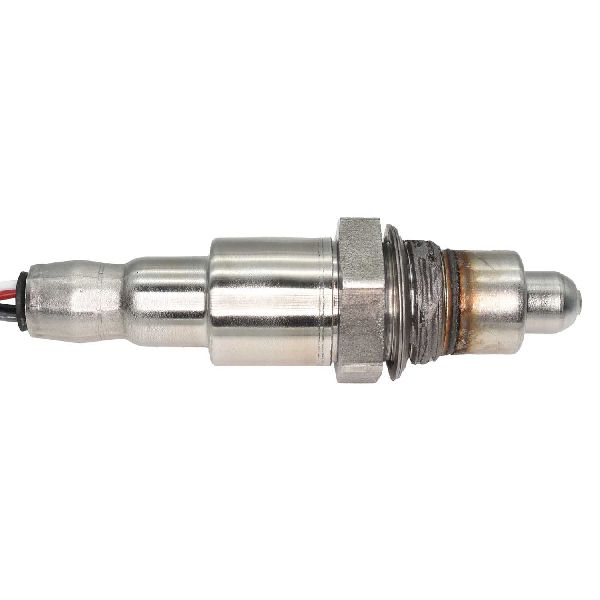
(OEM #LX6Z-9G444-M (replaces LX6Z-9G444-A, LX6Z-9G444-F))— A faulty downstream O2 sensor can incorrectly report low catalyst efficiency. It is highly recommended to replace this sensor when replacing the catalytic converter to ensure the system functions correctly.
Trusted brands: Motorcraft, Bosch, Denso, NTK
OEM price range: $120-$185
Aftermarket price range: $50-$120
Related Codes That Often Appear With This One
- P0234 — A Turbocharger/Supercharger Overboost Condition was reported alongside P0420 in one NHTSA complaint [ODI #11688277], suggesting a potential related engine performance issue that could contribute to catalyst failure.
Technical Service Bulletins (TSBs) & Recalls
- TSB 23-2259: States that an illuminated MIL with DTC P0420 on some 2020-2022 Escapes and 2021-2023 Bronco Sports with the 1.5L engine may be due to the catalytic converter and instructs technicians to replace it. Applies to vehicles built on or before September 28, 2022.
Platform-Specific Known Issues
- TSB 23-2259: Ford issued this bulletin for some 2020-2022 Escapes and 2021-2023 Bronco Sports with the 1.5L Ecoboost engine (built on or before 28-Sep-2022) that may exhibit a P0420 code. The bulletin states the cause is likely the catalytic converter and provides the procedure for replacement.
- Owner Complaint ODI #11688277: A 2020 Escape owner reported recurring P0420 and P0234 codes, indicating a potential link between catalyst failure and turbo overboost conditions.
- Owner Complaint ODI #11590881: A 2020 Escape owner reported a P0420 code accompanied by the vehicle smoking, suggesting a more severe failure that could contaminate the catalytic converter.
- Cracked Converter Housing: There are reports of the catalytic converter housing physically cracking on 2020+ Escapes and the related Bronco Sport, causing a loud exhaust leak.
Mechanic-Grade Diagnostic Values

- Downstream O2 Sensor (Bank 1, Sensor 2) Voltage — expected: Relatively stable reading between 0.4 to 0.5 volts at steady throttle on a warm engine.. Failure: Voltage fluctuates in a similar pattern to the upstream O2 sensor, or is stuck at 0V or 1V.
- O2 Sensor Heater Element Resistance — expected: Approximately 6 ohms when the sensor is cold.. Failure: A reading of infinite resistance (open circuit) or zero resistance (short circuit) indicates a failed heater element, which can affect sensor performance.
- Catalyst Temperature Differential — expected: The outlet pipe of the catalytic converter should be significantly hotter than the inlet pipe on a fully warmed-up engine.. Failure: The inlet temperature is hotter than or equal to the outlet temperature, suggesting the catalyst is not 'lighting off' and performing its chemical reaction, or is clogged.
Hidden / Shadow Codes Worth Checking
- Mode $06, TID $81 (example ID): This is not a DTC but a test result from the onboard diagnostic monitor for Catalyst Efficiency. It typically shows a calculated ratio comparing the switching activity of the upstream and downstream O2 sensors. A ratio near 0.0 indicates high efficiency, while a ratio approaching 1.0 indicates low efficiency and a failing test. (see via A professional scan tool capable of reading Mode $06 data is required. The specific Test ID (TID) and Component ID (CID) can vary by model year and software calibration.)
Scan Tool Commands That Help
- Ford IDS (or equivalent): Catalyst Monitor Drive Cycle — After a repair (like replacing the converter or an O2 sensor), the catalyst monitor must be run to completion to verify the fix and extinguish the MIL. The Ford-specific cycle requires driving in stop-and-go traffic at five different cruise speeds between 25 and 45 mph for about 10 minutes.
- Ford IDS (or equivalent): Reset KAM (Keep Alive Memory) — After replacing a major component like a catalytic converter or O2 sensor, resetting the KAM is recommended. This clears all learned adaptive values for fuel trim, idle, and emissions monitoring, forcing the PCM to relearn with the new components.
Real Owner Repair Stories
- Reddit user, r/AskAMechanic (2020 Ford Escape SE) — Loud noise from engine bay, mechanic suspected cracked catalytic converter or turbo.
❌ Tried (didn't work) Initial diagnosis was inconclusive between turbo and catalytic converter.
✅ What actually fixed it The exhaust flange was found to be cracked through. The repair, including the catalytic converter, was covered under the 8-year/80,000-mile federal emissions warranty. - Reddit user, r/volt (2016 GM vehicle (demonstrates a common engine principle)) — Persistent P0420 code.
❌ Tried (didn't work) A dealership diagnosed the issue as a bad catalytic converter and O2 sensors.
✅ What actually fixed it The actual cause was a leaking PCV valve, which is integrated into the valve cover on many modern engines. Replacing the valve cover fixed the vacuum leak, which in turn resolved the P0420 code without replacing the expensive catalytic converter.
"I Checked Everything" — The Actual Cause
- A faulty PCV (Positive Crankcase Ventilation) valve can cause a P0420 code that may be misdiagnosed as a bad catalytic converter. Since the PCV system creates an internal vacuum leak when it fails, it will not be detected by a standard exhaust smoke test. This unmetered air can alter the air-fuel ratio, leading the PCM to trigger a P0420 code even if the converter is functional.
OEM Part Supersession History
LX6Z-5E212-A, LX6Z-5E212-KT→LX6Z-5E212-LA— Part revision by manufacturer. Often done to improve durability, change materials, or streamline production.
Heads up: The new part number (LX6Z-5E212-LA) is the correct service part for FWD models requiring this replacement.
Model Year Variations Within This Range
- 2020-2022 (built on or before 28-Sep-2022): Vehicles built within this date range are specifically called out in TSB 23-2259 as being prone to premature catalytic converter failure causing a P0420 code.
- 2020 vs. prior years: The cost of exhaust manifold replacement sees a significant increase starting with the 2020 model year, suggesting a design change in the exhaust system compared to the previous generation.
Helpful Videos

Used OEM Parts in Stock
New Aftermarket Parts Available

The information in this article is provided for general reference and educational purposes only. Vehicle specifications, procedures, and part compatibility can vary by production date, trim level, and region. Always consult your vehicle's factory service manual and verify part numbers before purchasing or performing repairs. Safety-critical components such as airbags, seat belts, and braking systems should be installed by a qualified professional.
- Ford ESCAPE:
- 🎬 Helpful Videos
- 🛍️ Shop This Part
- What's Unique About the 2020-2022 Ford ESCAPE
- Diagnostic Flowchart
- Symptoms You May Notice
- Most Likely Causes
- Rare But Worth Checking
- Diagnosis Steps
- Parts You'll Likely Need
- Related Codes That Often Appear With This One
- Technical Service Bulletins (TSBs) & Recalls
- Platform-Specific Known Issues
- Mechanic-Grade Diagnostic Values
- Hidden / Shadow Codes Worth Checking
- Scan Tool Commands That Help
- Real Owner Repair Stories
- "I Checked Everything" — The Actual Cause
- OEM Part Supersession History
- Model Year Variations Within This Range
- 🎟️ Get 5% Off