

P0420 on 2008-2012 Ford Escape 2.5L: Causes and Fixes for Catalyst Inefficiency
On a 2008-2012 Ford Escape with the 2.5L engine, a P0420 code almost always points to a failing catalytic converter. While checking for exhaust leaks and testing O2 sensors is wise, the converter itself is the most common culprit. Expect to pay $250-$500+ for an aftermarket part and $700+ for OEM. Before replacement, ensure no other codes (misfire, fuel trim) are present, as they can destroy a new converter.
- P0420 on your Escape means the Bank 1 catalytic converter is no longer cleaning the exhaust effectively.
- The most likely cause is a worn-out catalytic converter, which is integrated with the exhaust manifold on the 2.5L engine.
- Before replacing the expensive converter, always check for exhaust leaks and test the oxygen sensors, as they can also cause this code.
- ALWAYS fix any engine misfires (P030x codes) or fuel mixture problems (P0171/P0172 codes) *before* replacing the converter, or you will ruin the new part.
- Due to the location and integration with the manifold, replacing this part is a difficult DIY job (4/5 difficulty) that may be best left to a professional.
What's Unique About the 2008-2012 Ford Escape
The 2008-2012 Ford Escape, along with its platform mates the Mercury Mariner and Mazda Tribute, uses a catalytic converter integrated with the exhaust manifold for the 2.5L Duratec I4 engine. This design is common for emissions and packaging reasons but makes replacement more involved than a simple mid-pipe converter. While the 2.5L Duratec engine itself is known for its durability, the catalytic converters are a known wear item, especially as the vehicle ages past 100,000 miles. Owners frequently report this code as the first major emissions-related repair needed on an otherwise reliable vehicle.
Symptoms You May Notice
- Check Engine Light is on
- Reduced engine power or sluggish acceleration, especially under load
- A rotten egg or sulfur smell from the exhaust
- Vehicle will fail an emissions test
- In some cases, no noticeable symptoms other than the Check Engine Light
- Immediately replacing the catalytic converter without checking for exhaust leaks or testing the oxygen sensors first. A faulty O2 sensor is a cheaper fix and should be ruled out before condemning the expensive converter.
- Replacing the O2 sensor or converter without fixing an underlying engine problem like a misfire (P030x codes) or a rich/lean condition (P0171/P0172 codes), which will cause the new parts to fail again.
Most Likely Causes
- Failed Catalytic Converter 🔴 High Probability Catalytic converters are wear items. The internal precious metal coatings (platinum, palladium, rhodium) degrade over time and with mileage, losing their ability to convert harmful gases. This is the most frequent cause of P0420 on higher-mileage Escapes, Mariners, and Tributes.
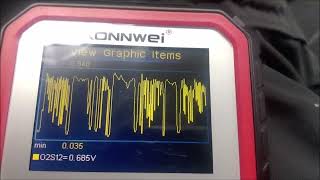
How to confirm: Use an infrared thermometer to check the temperature of the exhaust pipe before and after the converter. A healthy, working converter should be significantly hotter at the outlet than the inlet (at least 100°F hotter). A professional can also use a scan tool to analyze the live data from the upstream and downstream oxygen sensors; a downstream sensor that mimics the upstream sensor's rapid fluctuations points to a bad converter. 🎬 See how to differentiate between a bad converter and sensor.
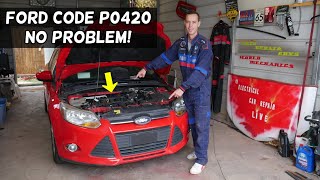
Typical fix: Replace the catalytic converter assembly. Since it is integrated with the exhaust manifold on this engine, the entire manifold-converter unit must be replaced. 🎬 Watch this walkthrough on fixing P0420 codes on Ford vehicles.
Est. part cost: $250-$800 - Failing or Sluggish Oxygen (O2) Sensor 🟡 Medium Probability Oxygen sensors degrade over time, typically after 80,000-100,000 miles. A slow-to-respond downstream (rear) O2 sensor can send incorrect data to the PCM, falsely indicating a bad converter. It's often misdiagnosed.
How to confirm: Use a scan tool with graphing capabilities to monitor the voltage of both the upstream and downstream O2 sensors. The upstream sensor should fluctuate rapidly between ~0.1V and ~0.9V. A good downstream sensor on a healthy converter should show a relatively steady, flat voltage above 0.5V. If the downstream sensor is lazy, stuck, or mimicking the upstream sensor, it may be faulty.
Typical fix: Replace the downstream (Bank 1, Sensor 2) oxygen sensor. It's often recommended to replace O2 sensors when replacing a catalytic converter to ensure the entire system is fresh.
Est. part cost: $50-$120 - Exhaust System Leak ⚪ Low Probability Rust can cause leaks at gasket flanges or cracks in the exhaust manifold or pipes, especially in regions that use road salt. A leak between the engine and the catalytic converter, or between the two O2 sensors, can introduce extra oxygen, skewing the sensor readings and triggering the code.
How to confirm: Perform a visual inspection of the exhaust system from the manifold to the tailpipe, looking for black soot, cracks, or holes. A smoke test, where smoke is forced into the exhaust system, is the most effective way to pinpoint small leaks.
Typical fix: Replace the leaking gasket or exhaust component. Small cracks can sometimes be welded.
Est. part cost: $20-$200
Rare But Worth Checking
- Engine Misfires or Rich Fuel Condition: If you have other codes like P030x (misfire) or fuel trim codes (P0171/P0172), these must be addressed first. Unburned fuel from misfires can enter the exhaust and overheat/destroy a new catalytic converter quickly. Causes can include bad spark plugs, ignition coils, or leaking fuel injectors.
- Engine Oil or Coolant Contamination: Internal engine leaks (e.g., from a bad valve cover gasket or piston rings) can allow oil or coolant to enter the exhaust, contaminating the catalytic converter and O2 sensors. This will destroy a new converter if the underlying leak is not fixed. An owner report in NHTSA ODI #11590881 noted the vehicle was smoking under the hood shortly after the P0420 code appeared.
- PCM Software Issue: On some Ford vehicles, a P0420 can be triggered by overly sensitive parameters in the Powertrain Control Module (PCM) software. While no specific TSB for this model year Escape is widely cited, checking with a dealer for any available PCM reflash is a valid diagnostic step, especially if the converter and sensors appear to be functioning correctly.
Diagnosis Steps
- Read the codes: Use an OBD-II scanner to confirm P0420 is present. 🎬 Watch: EricTheCarGuy explains what this catalyst efficiency code means. If other codes exist (especially misfire P030x, fuel system P017x, or O2 sensor circuit codes), diagnose and fix them first as they are the likely root cause. NHTSA ODI #11688277 describes a situation where P0420 was triggered alongside a P0234 turbocharger overboost condition, highlighting how multiple codes can appear together.
- Inspect for exhaust leaks: Visually and audibly check the entire exhaust system from the engine manifold to the tailpipe for any signs of leaks, such as cracks, rust holes, or black soot stains at flanges. A professional smoke test is the most reliable method.
- Analyze Oxygen Sensor Data: Use a scan tool with live data graphing. Observe the upstream (Sensor 1) and downstream (Sensor 2) O2 sensor readings with the engine fully warmed up and running at around 2,000 RPM. The upstream sensor should show rapid voltage fluctuations. The downstream sensor should show a relatively steady, stable voltage. If the downstream sensor is mirroring the upstream sensor's fluctuations, it confirms the converter is not storing oxygen efficiently.
- Test the Catalytic Converter Temperature: With the engine fully warm, use an infrared thermometer to measure the temperature of the pipe just before the catalytic converter and just after it. The outlet temperature should be at least 100°F (38°C) hotter than the inlet. If it's the same or cooler, the converter is not working.
- If steps 2-4 do not point to a bad converter, consider replacing the downstream O2 sensor as it may be sluggish or faulty before committing to a converter replacement. Given the age of the vehicle, if sensors are original, they are suspect.
Parts You'll Likely Need
- Catalytic Converter with Integrated Exhaust Manifold
(OEM #9L8Z-5G232-C (This is a common OEM number, but always verify with VIN))— This is the most common failure part for a P0420 code on this vehicle. The original converter's efficiency degrades over time and with mileage.
Trusted brands: Walker, MagnaFlow, AP Exhaust, Motorcraft
OEM price range: $700-$900+
Aftermarket price range: $250-$500 - Downstream Oxygen Sensor (Bank 1, Sensor 2)
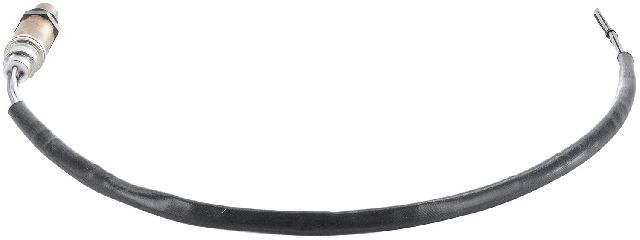
(OEM #Motorcraft DY-1179 (Cross-references to BB5Z9G444A, CV6Z9G444A))— A failing or slow O2 sensor can misreport converter efficiency. It is also best practice to replace the O2 sensors when installing a new converter to ensure the system functions correctly.
Trusted brands: Bosch, Denso, NGK/NTK, Motorcraft
OEM price range: $90-$150
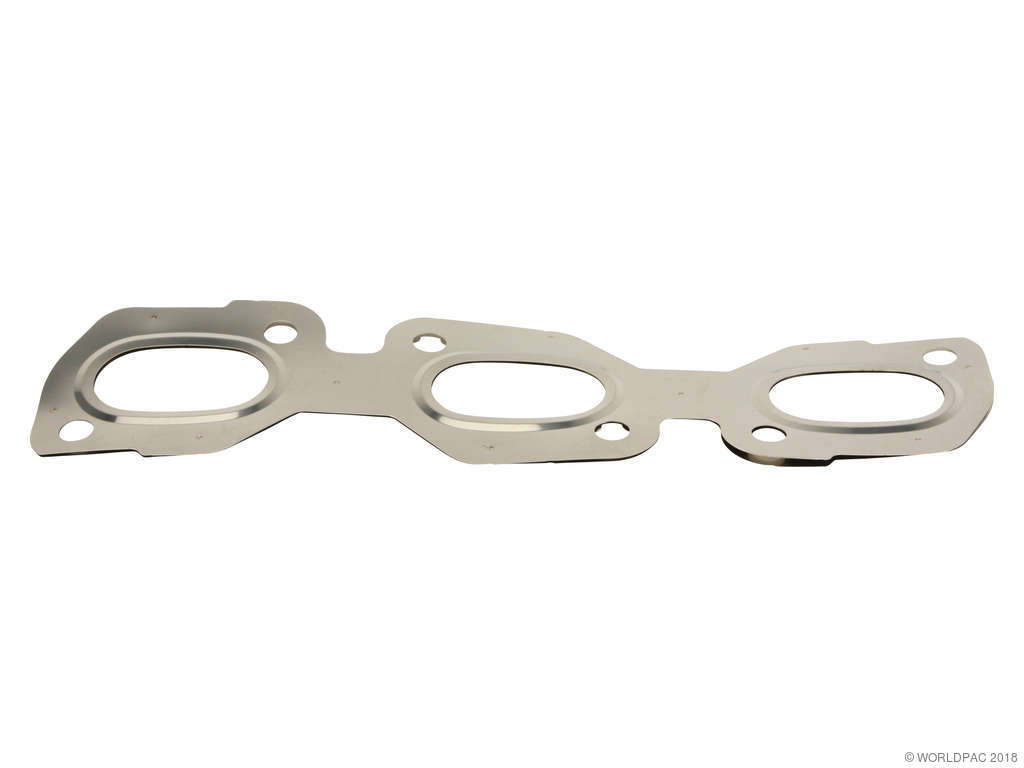
Aftermarket price range: $50-$100 - Exhaust Manifold Gasket
(OEM #Motorcraft 9L8Z-9448-A)— This gasket is required when replacing the manifold-style catalytic converter to ensure a proper seal to the cylinder head.
Trusted brands: Fel-Pro (MS 96901), Victor Reinz, Motorcraft
OEM price range: $20-$40
Aftermarket price range: $15-$30 - Exhaust Flange Gasket — A new gasket is needed to seal the connection between the new catalytic converter assembly and the rest of the exhaust system.
Trusted brands: Walker, Fel-Pro, Bosal
OEM price range: $15-$30
Aftermarket price range: $10-$20
Related Codes That Often Appear With This One
- P0136 — This code indicates a malfunction with the downstream O2 sensor circuit (Bank 1, Sensor 2), which can be a cause of or related to the P0420 code.
- P0300, P0301, P0302, P0303, P0304 — These are misfire codes. An engine misfire allows unburned fuel to enter the exhaust, which can quickly overheat and damage the catalytic converter, causing a P0420 code.
- P0171, P0172 — These are fuel trim codes (lean or rich). An incorrect air/fuel mixture can lead to catalytic converter inefficiency and damage over time. A vacuum leak is a common cause for P0171 on these vehicles.
Technical Service Bulletins (TSBs) & Recalls
- No specific TSB for P0420 on the 2008-2012 Escape 2.5L was found in searches. However, for many Ford models, PCM software updates have been issued to correct overly sensitive P0420 logic. For example, TSB Bulletin #TSB 23-2259 notes that certain Ford vehicles may exhibit an illuminated MIL with DTC P0420 stored in the PCM due to the catalytic converter, requiring a specific service procedure. It is worth checking with a dealer for the latest calibration for your VIN.
Mechanic-Grade Diagnostic Values
- Downstream O2 Sensor (Bank 1, Sensor 2) Voltage — expected: Relatively stable voltage, typically between 0.2V and 0.8V, on a fully warm engine at steady RPM.. Failure: Voltage fluctuates rapidly, mimicking the pattern of the upstream O2 sensor. This indicates the catalyst is not storing oxygen.
- Upstream O2 Sensor (Bank 1, Sensor 1) Voltage — expected: Rapid and constant fluctuation between approximately 0.1V and 0.9V on a fully warm, closed-loop engine.. Failure: Slow or lazy switching, or voltage that is stuck high (rich) or low (lean).
- Long Term Fuel Trim (LTFT) — expected: At or near 0%, with an acceptable range typically within +/- 10%.. Failure: Consistently high positive values (e.g., > +10%) suggest a vacuum leak or under-reporting MAF sensor. Consistently high negative values suggest a leaking injector or other rich condition that could be damaging the converter.
- Mode $06 Catalyst Monitor Test — expected: The test value should be below the maximum allowable limit specified by the manufacturer's data.. Failure: On many pre-CAN Fords, for TID $01, CID $01, a test value exceeding the maximum limit (e.g., a value of 255 when the max is 128) indicates a test failure. On CAN vehicles, this is often MID $21.
Hidden / Shadow Codes Worth Checking
- Mode $06, TID $01/CID $01 (pre-CAN) or MID $21 (CAN): This is not a DTC, but raw test data from the PCM's self-diagnostic for the Catalyst Efficiency Monitor. It provides a numerical value for the catalyst's oxygen storage capacity, along with minimum and maximum thresholds. A value outside the threshold confirms the failure that triggers P0420. (see via Requires a professional scan tool (like Ford IDS) or an advanced consumer scan tool that can display Mode $06 data. Basic code readers will not show this.)
Scan Tool Commands That Help
- Ford IDS or equivalent professional scanner: Catalyst De-sulfation Procedure / Catalyst Sulfur Removal Cycle — This is a specific, multi-step drive cycle used when sulfur contamination of the catalyst is suspected of causing a false P0420. It involves a series of WOT accelerations, highway cruising, and extended idling to burn off sulfur deposits. This should be considered if the vehicle has a history of short trips or if fuel quality is questionable, before replacing the converter.
- Ford IDS or equivalent professional scanner: Reset Keep Alive Memory (KAM) — After replacing components that affect the air/fuel ratio (like O2 sensors or fuel injectors), a KAM reset should be performed. This clears the long-term fuel trim adaptations, forcing the PCM to relearn fuel strategies with the new parts, ensuring accurate catalyst monitoring.
Wiring & Ground Locations
- PCM — Located at the center rear of the firewall.. The PCM is the central computer that receives data from the O2 sensors and determines if the catalytic converter is efficient. All related wiring terminates here.
- G101 (for 2.5L engine) — Located at the rear of the engine.. This is a primary engine ground. A poor connection here can cause erratic sensor readings, including from the O2 sensors and their heaters, potentially leading to a false P0420 code.
- G104 / G105 — Located at the left front of the engine compartment.. These are major chassis and engine compartment grounds. Corrosion or looseness can affect various systems, including the PCM and its sensor inputs.
- PCM Connector Pin 35 — At the 104-pin PCM connector. The wire color is typically Red with a Light Green stripe (RD/LG).. This is the signal wire for the downstream oxygen sensor (Bank 1, Sensor 2). A technician can test for voltage, shorts, or open circuits at this pin to diagnose the sensor and wiring harness integrity without having to access the sensor connector itself.
- PCM Connector Pin 60 — At the 104-pin PCM connector. The wire color is typically Gray with a Light Blue stripe (GY/LB).. This is the signal wire for the upstream oxygen sensor (Bank 1, Sensor 1). It can be used to test the integrity of the upstream sensor circuit directly at the PCM.
Real Owner Repair Stories
- YouTube video by 'Ratchets And Wrenches' (Chevrolet Sonic with high mileage (197k+ miles), but demonstrating a method applicable to any vehicle with P0420.) — Check Engine Light with code P0420.
❌ Tried (didn't work) The owner opted for a chemical cleaning attempt before considering part replacement.
✅ What actually fixed it The upstream O2 sensor was removed, and a can of Seafoam spray was sprayed directly into the catalytic converter through the O2 sensor bung. After letting it soak and then running the engine to burn it off, the P0420 code was cleared and did not return after 258 miles of driving. The car later passed a state emissions inspection. - NHTSA ODI #11289056 — An owner reported receiving a check engine light with code P0420 just two weeks after a previous engine-related repair.
When the Usual Fixes Don't Work
- A common but improper method to clear a P0420 code without fixing the root cause is to install an O2 sensor extender (also known as a spark plug non-fouler) on the downstream O2 sensor. This pulls the sensor partially out of the main exhaust stream, causing it to read a lower, steadier oxygen level. The PCM is tricked into thinking the catalytic converter is working efficiently, thus keeping the check engine light off. This does not fix the emissions problem and may be illegal in jurisdictions with emissions testing, but it is a widely documented 'fix' used by some owners to avoid costly converter replacement.
Model Year Variations Within This Range
- 2008 vs. 2009-2012: The 2.5L Duratec I4 engine specified in this article was introduced for the 2009 model year, replacing the previous 2.3L engine. Therefore, a 2008 Escape would have the 2.3L engine, while 2009-2012 models have the 2.5L. The diagnosis for P0420 is fundamentally similar, but part numbers for the manifold/converter and sensors may differ between the 2.3L and 2.5L engines.
Diagnostic Flowchart
Real Owner Stories
Aggregated from forums and TSBs cited above. Mileages and costs reflect what owners reported in those sources.
2011 Ford Escape L4-2.5L — 65000 miles
Symptoms: Check engine light (P0420) comes on after refueling, then turns off after a couple of drives.
What fixed it: A mechanic suggested the issue might be a leaking purge valve causing an excessively rich mixture on startup after refueling. (Owner did not confirm if the repair was performed).
Source hint: yourmechanic.com - Q: Check engine light code P0420
2010 Ford Escape XLT 4Cyl 2.5L
Symptoms: Check engine light on, error code indicated Bank 1 Sensor 1 O2 sensor was bad.
What fixed it: Replaced the Bank 1 Sensor 1 (upstream) O2 sensor using an 8mm socket for the shroud and a 7/8 inch wrench for the sensor.
Source hint: YouTube - Episode 32 - 2010 Ford Escape XLT 4Cyl 2.5L - Bank 1 Sensor 1 O2 Sensor replacement
Ford Escape 2.5L
Symptoms: Got a CEL (P0420) while driving.
What fixed it: Replaced the catalytic converter after ruling out the O2 sensors as the root cause.
Source hint: Reddit r/fordescape
Related OBD-II Codes
Frequently Asked Questions
Is there a specific TSB or software update for the P0420 code on my 2008-2012 Escape 2.5L?
Can I just replace the catalytic converter pipe, or do I have to replace the exhaust manifold too?
My 2011 Escape gets a P0420 code intermittently right after refueling. What could cause this?
How can I test if the catalytic converter on my Escape is actually bad before spending $250-$800 on a replacement?
Are the Mercury Mariner and Mazda Tribute prone to this same P0420 issue?
Helpful Videos

We Have This Part in Stock


The information in this article is provided for general reference and educational purposes only. Vehicle specifications, procedures, and part compatibility can vary by production date, trim level, and region. Always consult your vehicle's factory service manual and verify part numbers before purchasing or performing repairs. Safety-critical components such as airbags, seat belts, and braking systems should be installed by a qualified professional.
- Ford Escape:
- 🎬 Helpful Videos
- 🛍️ Shop This Part
- What's Unique About the 2008-2012 Ford Escape
- Symptoms You May Notice
- Most Likely Causes
- Rare But Worth Checking
- Diagnosis Steps
- Parts You'll Likely Need
- Related Codes That Often Appear With This One
- Technical Service Bulletins (TSBs) & Recalls
- Mechanic-Grade Diagnostic Values
- Hidden / Shadow Codes Worth Checking
- Scan Tool Commands That Help
- Wiring & Ground Locations
- Real Owner Repair Stories
- When the Usual Fixes Don't Work
- Model Year Variations Within This Range
- Diagnostic Flowchart
- Real Owner Stories
- 2011 Ford Escape L4-2.5L — 65000 miles
- 2010 Ford Escape XLT 4Cyl 2.5L
- Ford Escape 2.5L
- Related OBD-II Codes
- Frequently Asked Questions
- 🎟️ Get 5% Off