

P0420 on 2012-2014 Dodge Avenger: Catalyst Efficiency Causes & Fixes
P0420 on a 2012-2014 Dodge Avenger indicates low catalyst efficiency. While this often means a failed catalytic converter, especially on the 2.4L engine which was subject to an emissions recall (U67), it's crucial to first rule out cheaper fixes like faulty oxygen sensors or exhaust leaks. Some owners have also had success with catalytic converter cleaners as a temporary measure.
- P0420 means the Bank 1 catalytic converter is not working efficiently.
- For 2.4L engines, check if your VIN was part of Emissions Recall U67 for a free converter replacement before paying for repairs.
- Always diagnose oxygen sensors and check for exhaust leaks before replacing the expensive catalytic converter.
- If multiple, seemingly unrelated codes appear with P0420, refer to TSB #1810216 as there may be an underlying electrical or software fault.
- Ignoring the problem can lead to failed emissions tests and potential engine damage if the converter becomes clogged.
What's Unique About the 2012-2014 Dodge AVENGER

Many 2012-2014 Dodge Avengers with the 2.4L engine were part of a major emissions recall (U67) for premature catalytic converter failure. FCA identified that the original converters could degrade and lose efficiency over time, causing this exact code. Before paying for a new converter, owners must check if their vehicle's VIN is part of this recall, as the repair, which includes a new converter and a PCM software update, is free. Additionally, a Technical Service Bulletin (TSB #18-102-16) for the 3.6L V6 engine notes that P0420 can appear with other electrical and sensor codes, suggesting the root cause isn't always the converter itself but could be a broader electrical or software issue requiring a PCM flash.
Diagnostic Flowchart
Tap your situation to follow the diagnostic path that matches what you're seeing on this vehicle.
Symptoms You May Notice
- Check Engine Light is on
- Reduced engine power or acceleration
- Poor fuel economy
- Rattling noise from under the vehicle (indicates the internal catalyst substrate has broken apart)
- A sulfur or "rotten egg" smell from the exhaust
- Engine may run rough or have an erratic idle
- Replacing the catalytic converter without first testing the oxygen sensors. A bad sensor can falsely trigger a P0420 code, leading to an expensive and unnecessary repair.
- Replacing oxygen sensors when the catalytic converter is truly degraded or clogged. This results in the code returning after a short period.
- Using a cheap, low-quality aftermarket catalytic converter. Many universal or low-cost converters do not have enough precious metal loading to meet the PCM's efficiency standards, causing the P0420 code to return.
Most Likely Causes

- Failed Catalytic Converter 🔴 High Probability Many 2.4L models were subject to Emissions Recall U67 for premature catalytic converter failure. The original parts were known to degrade. On higher mileage vehicles, failure is common regardless of the recall.
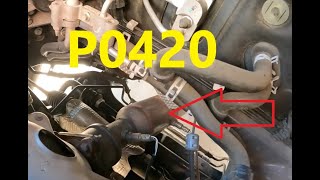
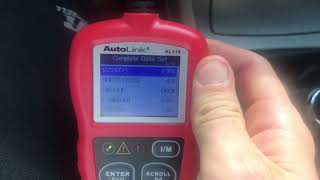
How to confirm: Use a scan tool to graph live data from the upstream (Bank 1, Sensor 1) and downstream (Bank 1, Sensor 2) O2 sensors with the engine at operating temperature and held at a steady 2,500 RPM. If the downstream sensor's voltage fluctuates rapidly, mirroring the upstream sensor, the converter is not working. 🎬 Watch: How to troubleshoot O2 sensors and the converter. A healthy converter will show a relatively steady, flat voltage from the downstream sensor. An infrared thermometer can also be used; the outlet of the converter should be significantly hotter than the inlet.
Typical fix: Replace the catalytic converter. For 2.4L engines, this is the entire exhaust manifold assembly. For the 3.6L V6, Bank 1 is the converter on the firewall side of the engine. Always address the root cause (e.g., misfires, oil consumption) before replacing the converter to prevent damaging the new part.
Est. part cost: $300-$800 - Failed Downstream (Post-Catalyst) Oxygen Sensor 🟡 Medium Probability
How to confirm: The sensor may provide slow, biased, or flatlined readings. A scan tool can graph its performance. A definitive test involves forcing the engine rich (e.g., with propane) or lean (e.g., by creating a vacuum leak) and watching for a corresponding voltage change from the sensor. A lazy or failed downstream sensor can incorrectly report poor catalyst efficiency.
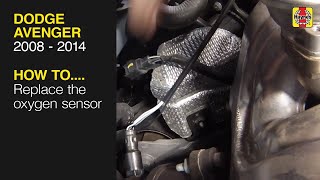
Typical fix: Replace the Bank 1 downstream oxygen sensor. The Mopar OEM part number is often cited as 56029050AA for many Chrysler/Dodge applications, but always verify fitment with your VIN. 🎬 See this walkthrough on replacing the oxygen sensor.
Est. part cost: $40-$100 - Exhaust Leak 🟡 Medium Probability Rust and corrosion can cause leaks at manifold gaskets, flex pipes, or pipe flanges, which is common as vehicles age.
How to confirm: Visually inspect the exhaust system from the engine to the downstream O2 sensor for black soot trails, cracks, or holes. Listen for a ticking or hissing sound that gets louder with engine RPM. A smoke machine test is the most effective way to find small leaks that can introduce oxygen and fool the sensors.
Typical fix: Replace the leaking gasket or repair/replace the leaking section of the exhaust pipe.
Est. part cost: $10-$150 - Failed Upstream (Pre-Catalyst) Oxygen Sensor ⚪ Low Probability
How to confirm: A faulty upstream sensor can create an improper air/fuel mixture (running rich or lean), which can damage the converter over time and lead to a P0420 code. Check live data on a scan tool; the sensor should fluctuate rapidly between approximately 0.1 and 0.9 volts. A slow or stuck reading indicates a problem.
Typical fix: Replace the Bank 1 upstream oxygen sensor.
Est. part cost: $50-$120
Rare But Worth Checking
- Engine Misfires or Fuel System Issues: Unburned fuel from persistent misfires (bad spark plugs, coils) or leaking injectors can enter the exhaust and overheat, melting the converter's internal structure. This is a root cause that must be fixed to prevent destroying a new converter. Always check for and resolve any P030x misfire codes first.
- PCM Software Issue: TSB #18-102-16 for the 3.6L engine indicates that P0420 can be set with other DTCs due to an electrical system fault or overly sensitive diagnostic parameters. In these specific cases, a PCM software update (flash) performed by a dealer is the required fix. The U67 recall for the 2.4L also includes a mandatory PCM update.
- Contaminated Catalytic Converter: An engine that burns excessive oil or leaks coolant internally can contaminate the catalytic converter with deposits, reducing its efficiency and triggering a P0420 code. This must be repaired before replacing the converter.
Diagnosis Steps

- Check for any other stored trouble codes. Address codes for misfires (P030x), oxygen sensors (P0133, etc.), or fuel trim before diagnosing P0420, as these are often the root cause.
- Check your VIN for applicable recalls. For 2.4L engines, check for Emissions Recall U67. For 3.6L engines, check for TSB #18-102-16.
- Visually inspect the exhaust system for any leaks between the engine and the downstream O2 sensor. Pay close attention to the exhaust manifold, flex pipe, and flange gaskets. A smoke test is the most reliable method.
- Use a scan tool to view live data. Warm up the engine to full operating temperature.
- Bring the engine to a steady 2000-2500 RPM and observe the voltage graphs for the Bank 1 upstream (Sensor 1) and downstream (Sensor 2) oxygen sensors.
- A properly functioning system will show the upstream sensor fluctuating rapidly (0.1V-0.9V) and the downstream sensor holding a steady, relatively flat voltage (typically >0.65V).
- If the downstream sensor voltage is fluctuating rapidly, mirroring the upstream sensor, the catalytic converter has failed its efficiency test.
- If the downstream sensor voltage is low and steady (e.g., <0.2V), this may indicate an exhaust leak introducing excess oxygen.
- If either sensor is slow to respond or flatlined, test the oxygen sensors and their wiring before condemning the converter.
Parts You'll Likely Need

- Catalytic Converter
(OEM #68091591AF (Superseded by 68091591AG for some 3.6L models, verify with VIN))— This is the most common cause of a persistent P0420 code, especially on 2.4L models with the known recall issue. For the 2.4L, this is an integrated manifold/converter assembly.
Trusted brands: Walker Exhaust, MagnaFlow, Bosal
OEM price range: $600-$1000+
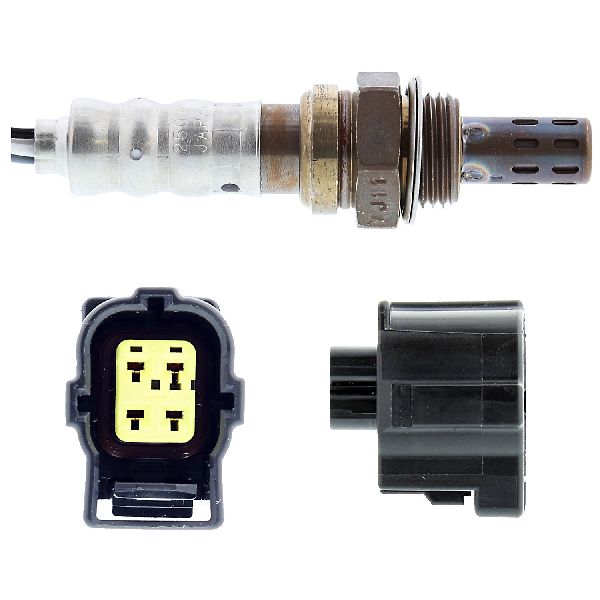
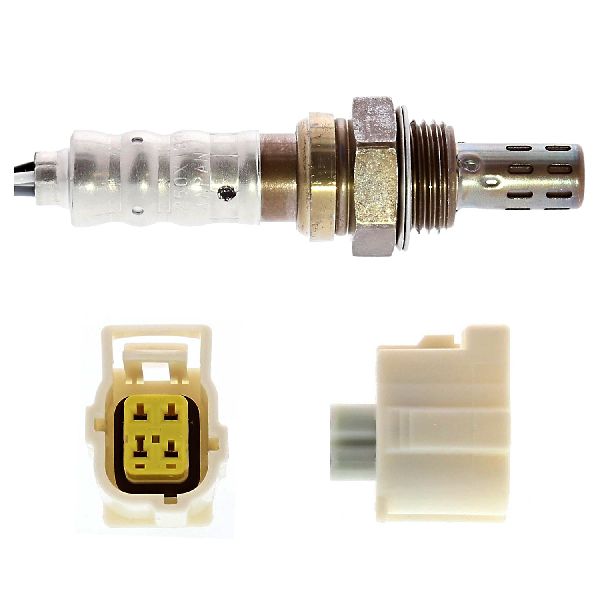
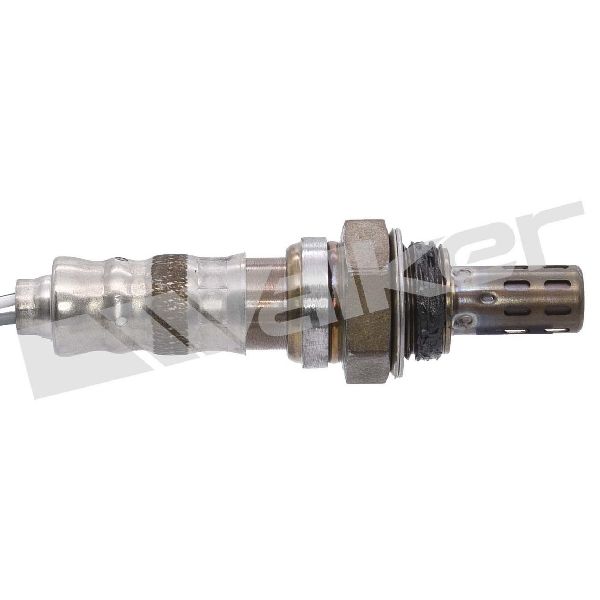
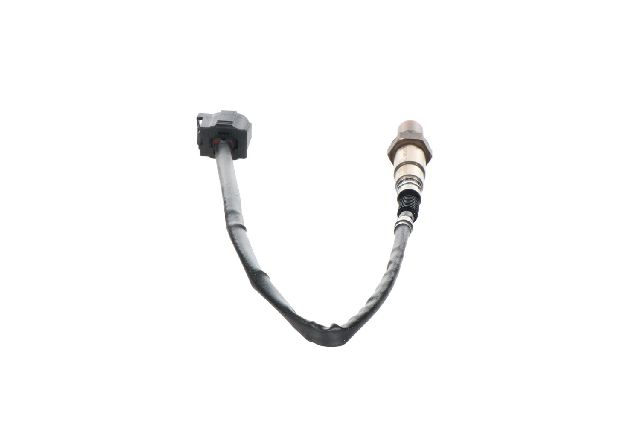
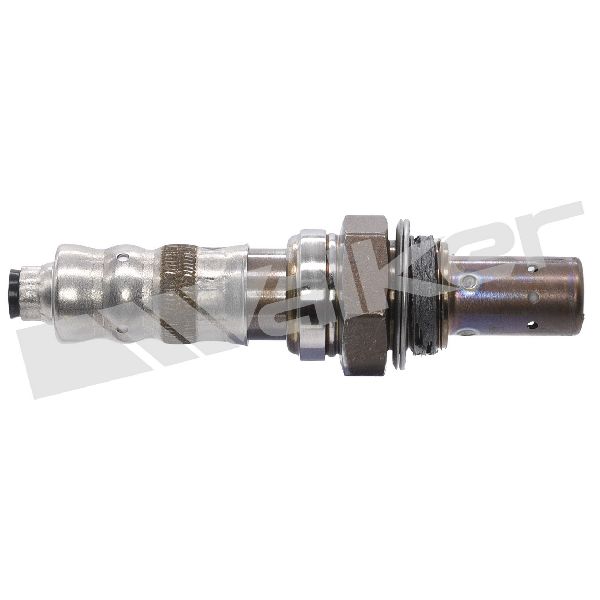
Aftermarket price range: $250-$500 - Downstream Oxygen Sensor (Bank 1 Sensor 2)
(OEM #56029050AA (Common Mopar part, but always verify with VIN))— This sensor is responsible for reporting the converter's efficiency. If it fails, it can provide false data to the PCM, triggering the code. It's a common misdiagnosis but also a frequent point of failure.
Trusted brands: Denso, NGK, Bosch, Mopar
OEM price range: $80-$150
Aftermarket price range: $40-$100
Related Codes That Often Appear With This One
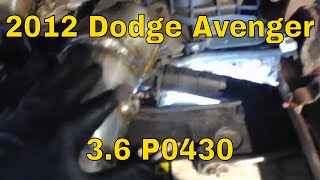
- P0430 — If the vehicle has the 3.6L V6 engine, P0430 indicates the same catalyst efficiency problem but on Bank 2 (the front/radiator side of the engine). This code is also mentioned in TSB #18-102-16.
- P0133 — This code for 'O2 Sensor Circuit Slow Response (Bank 1, Sensor 1)' can appear alongside P0420, as a failing upstream sensor can affect the converter's operation and the system's ability to test it. This is mentioned in TSB #18-102-16 for the 3.6L engine.
- P0300-P0306 — Misfire codes (P0300 for random, P0301-P0306 for specific cylinders) indicate a root cause. Unburned fuel from misfires will destroy a catalytic converter, leading to P0420.
Technical Service Bulletins (TSBs) & Recalls
- Bulletin #18-102-16: For 3.6L V6 models, notes that P0420 can be set along with various other electrical and sensor codes (U0140, P0441, P0430, P0133, P0153), suggesting a potential underlying electrical or software issue that requires a PCM reflash.
Platform-Specific Known Issues
- Emissions Recall U67: FCA recalled many 2011-2014 Avengers with the 2.4L FWD powertrain for premature catalytic converter
Mechanic-Grade Diagnostic Values
- Downstream O2 Sensor Voltage (Healthy Converter) — expected: Steady voltage, typically above 0.65V (650mV). Some sources state a steady 0.4V to 0.5V is acceptable.. Failure: Voltage fluctuates rapidly, mirroring the upstream sensor, or holds a steady low voltage (e.g., <0.2V) which may indicate an exhaust leak.
- Short Term & Long Term Fuel Trim (STFT/LTFT) — expected: Within +/- 5% at idle and steady cruise.. Failure: Consistently high positive values (>10%) suggest a vacuum leak or under-reporting O2 sensor. Consistently high negative values suggest a leaking injector or other rich condition that could be damaging the converter.
- Catalytic Converter Temperature — expected: Outlet temperature should be significantly hotter than inlet temperature (e.g., 100°F+ difference).. Failure: Outlet temperature is similar to or cooler than the inlet, indicating no chemical reaction is occurring. Temperatures exceeding 870°C (1600°F) can cause permanent damage.
Hidden / Shadow Codes Worth Checking
- Mode $06, TID $21: This is not a trouble code, but a specific test result from the onboard diagnostic monitors. TID (Test ID) $21 corresponds to the Catalyst Monitor test for Bank 1. Viewing this data shows if the catalyst monitor has run and passed or failed, and by how much it is outside the acceptable limits, often before a full-blown DTC is set. (see via A professional scan tool capable of displaying Mode $06 data.)
Scan Tool Commands That Help
- Professional Scan Tool (e.g., wiTECH, Autel, Launch): Force Rich / Force Lean Condition — To definitively test the responsiveness of both upstream and downstream O2 sensors. Forcing the engine lean (by creating a vacuum leak) should cause sensor voltage to drop, while forcing it rich (by adding propane to the intake) should cause voltage to rise. This confirms if the sensors are capable of reading the full range and are not 'lazy' or biased, which could cause a misdiagnosis of the converter.
- Professional Scan Tool: View Mode $06 Catalyst Monitor Data (TID $21) — To see the raw test results from the PCM's last catalyst efficiency test. This can confirm a failure and show the measured value versus the PCM's maximum allowable threshold, providing deeper insight than just the P0420 code itself.
Wiring & Ground Locations
- G902a — Located on the left rear of the engine for both 2.4L and 3.6L engines.. This is a primary engine ground. A poor connection here can affect various sensors, including the crankshaft position sensor and potentially interfere with clean signals for the O2 sensor circuits that share a common sensor return with the PCM.
- G21a — Located at the left rear of the engine compartment for the 2.4L engine.. This is another critical ground point in the engine bay. Intermittent or poor grounding can introduce electrical noise and cause erratic sensor readings, potentially leading the PCM to misinterpret O2 sensor data and falsely trigger a P0420 code.
- O2 Sensor Harness — Runs along the exhaust system from the sensors to connectors in the engine bay.. The wiring for the downstream O2 sensor is susceptible to damage from road debris or contact with hot exhaust components. Frayed wires or corroded connectors can cause incorrect signals to be sent to the PCM, mimicking a failed converter.
Real Owner Repair Stories
- Medium article based on owner experience (Volvo S60 (demonstrates a common P0420 pattern applicable across brands)) — Check Engine light with P0420 code.
❌ Tried (didn't work) Using a catalytic converter cleaner (OXICAT) provided a temporary fix for a few months, but the code returned.
✅ What actually fixed it Replacing the downstream (post-catalyst) oxygen sensor permanently resolved the P0420 code. - GenVibe Forums (Pontiac Vibe (demonstrates a common P0420 pattern)) — Persistent P0420 code.
❌ Tried (didn't work) Replacing the catalytic converter., Replacing O2 sensors.
✅ What actually fixed it The user was advised that the only remaining 'fix' was to install a spark plug non-fouler (an extender) on the downstream O2 sensor to pull it out of the direct exhaust stream, tricking the PCM. This indicates either the replacement converter was also low quality or an underlying fuel trim issue was not resolved.
When the Usual Fixes Don't Work
- While a failed catalytic converter is a high-probability cause, numerous owner experiences show that replacing the converter is not always the fix. In one documented case, a catalyst cleaner provided a temporary fix, but the code returned until the downstream O2 sensor was replaced, which solved the problem permanently. This demonstrates that a faulty sensor can perfectly mimic a failed converter. In other cases, owners have replaced both the converter and the sensors only for the code to return immediately, pointing to either a low-quality aftermarket converter that cannot meet efficiency standards or an unaddressed root cause like a persistent fuel mixture problem.
OEM Part Supersession History
56029050AA (Downstream O2 Sensor)→N/A— N/A
Heads up: This part number is widely listed for many Chrysler, Dodge, and Jeep vehicles from 2004-2011. However, its direct compatibility with the 2012-2014 Avenger is not explicitly confirmed in parts catalogs. Given the sensitivity of the emissions system, it is critical to verify the exact part number required using the vehicle's VIN before purchasing.
Model Year Variations Within This Range
- 2012: TSB #1810216, dated in 2016, specifically addresses a potential software issue on 2012 models with the 3.6L engine where P0420 can be set along with other electrical and sensor codes. The fix is a PCM flash, indicating a sensitivity issue in the original software calibration for that model year.
Helpful Videos


We Have This Part in Stock


The information in this article is provided for general reference and educational purposes only. Vehicle specifications, procedures, and part compatibility can vary by production date, trim level, and region. Always consult your vehicle's factory service manual and verify part numbers before purchasing or performing repairs. Safety-critical components such as airbags, seat belts, and braking systems should be installed by a qualified professional.
- Dodge AVENGER:
- 🎬 Helpful Videos
- 🛍️ Shop This Part
- What's Unique About the 2012-2014 Dodge AVENGER
- Diagnostic Flowchart
- Symptoms You May Notice
- Most Likely Causes
- Rare But Worth Checking
- Diagnosis Steps
- Parts You'll Likely Need
- Related Codes That Often Appear With This One
- Technical Service Bulletins (TSBs) & Recalls
- Platform-Specific Known Issues
- Mechanic-Grade Diagnostic Values
- Hidden / Shadow Codes Worth Checking
- Scan Tool Commands That Help
- Wiring & Ground Locations
- Real Owner Repair Stories
- When the Usual Fixes Don't Work
- OEM Part Supersession History
- Model Year Variations Within This Range
- 🎟️ Get 5% Off