

P0420 on 2012-2018 Chevrolet Suburban: Exhaust Leaks, O2 Sensors, and Catalytic Converter Causes
On a 2012-2018 Suburban, P0420 often points to an exhaust leak at the manifold or a bad downstream oxygen sensor, not always a failed catalytic converter. The V8 engines are known for broken exhaust manifold bolts causing leaks that mimic a bad cat. Always check for leaks and test sensors before replacing the expensive converter.
- Always diagnose P0420 in a specific order: check for other codes, inspect for exhaust leaks, test O2 sensors, and only then condemn the catalytic converter.
- On these Suburbans, an exhaust leak at the manifold is a very common cause and should be the first physical inspection.
- For 2015-2018 models, check the air filter box for a proper seal as outlined in TSB #16NA111.
- Do not use a cheap, generic catalytic converter. Many aftermarket converters do not have enough precious metals to satisfy the PCM's efficiency test, causing the code to return.
What's Unique About the 2012-2018 Chevrolet SUBURBAN

The 2012-2018 Suburban spans two distinct generations, the GMT900 (2012-2014) and the K2XX (2015-2018), which introduced direct injection 5.3L and 6.2L EcoTec3 engines. A very common issue on these V8 trucks is exhaust manifold leaks from broken or missing bolts, especially the rearmost bolt on either side, which can trick the oxygen sensors and falsely trigger a P0420 code. Furthermore, a GM Technical Service Bulletin for the 2015-2018 models identifies a unique potential cause: a poorly sealed air filter box allowing sand and debris to enter the engine, damaging O2 sensors and clogging the catalytic converter, as noted in TSB #16NA111.
Diagnostic Flowchart

Tap your situation to follow the diagnostic path that matches what you're seeing on this vehicle.
Generation note: The 2012-2014 models belong to the 10th generation (GMT900 platform) with Vortec V8 engines. The 2015-2018 models are the 11th generation (K2XX platform) with newer, direct-injected EcoTec3 V8 engines like the 5.3L L83. While causes are similar, the 2015+ models are specifically mentioned in TSB #16-NA-111 regarding airbox seal issues and are widely known for exhaust manifold bolt failures. Some later models may also have a software calibration update available from GM to address false P0420 codes, as mentioned in bulletin 19-NA-057 (which supersedes 18-NA-331).
Symptoms You May Notice

- Check Engine Light is on
- Reduced engine power or hesitation during acceleration
- Decrease in fuel economy
- A sulfur or "rotten egg" smell from the exhaust, indicating an overheating converter due to a rich condition.
- Vehicle may fail an emissions test
- A ticking noise from the engine bay, especially when cold, which often points to an exhaust manifold leak.
- Replacing the catalytic converter without first checking for exhaust leaks, faulty oxygen sensors, or engine performance issues. This often leads to the P0420 code returning because the root cause was not addressed.
- Using cheap, universal aftermarket catalytic converters that lack sufficient catalyst material to meet the PCM's efficiency standards, causing the code to return.
Most Likely Causes

- Exhaust Leak (before catalytic converter) 🔴 High Probability These V8 engines are notorious for exhaust manifold bolts breaking, particularly the rear-most bolts on both driver (Bank 1) and passenger (Bank 2) sides. The constant heat cycles cause the steel bolts in the aluminum heads to snap. Additionally, GM Preliminary Information bulletin PIP5681C notes that a broken or poor weld on an exhaust flex pipe bracket can cause cracks in the exhaust pipe leading to the converter, triggering P0420.
How to confirm: Listen for a 'ticking' or 'puffing' noise from the engine bay that is loudest on a cold start and may quiet down as the engine warms up and the metal expands. Visually inspect the exhaust manifolds for black soot trails around the bolt heads, which indicate a leak. A smoke machine or the 'shop-vac-and-soapy-water' method can be used to definitively pinpoint the source of the leak.
Typical fix: Replace the broken bolts and the exhaust manifold gasket. It is highly recommended to replace all bolts on that manifold, 🎬 See this walkthrough on fixing common exhaust manifold leaks. not just the broken one. Some owners opt for higher-quality ARP bolts to prevent recurrence. If a cracked pipe is found per PIP5681C, the affected pipe section must be replaced.
Est. part cost: $20-$60 for gaskets and OEM bolts. $50-$100 for clamp kits or upgraded ARP bolts. - Failing Downstream Oxygen Sensor (Bank 1) 🔴 High Probability O2 sensors are a wear item and typically degrade after 80,000+ miles. A 'lazy' or biased sensor can send incorrect voltage data to the PCM, mimicking the signal of a bad converter.
How to confirm: Use a scan tool to graph the voltage of the upstream (Sensor 1) and downstream (Sensor 2) O2 sensors. The upstream sensor should fluctuate rapidly between ~0.1V and ~0.9V. A healthy downstream sensor on a warm engine at steady RPM should show a relatively steady, stable voltage, typically above 0.650V. If the downstream sensor's graph mirrors the upstream sensor's rapid switching, the converter or the sensor is faulty.
Typical fix: Replace the Bank 1 downstream (Post-Catalyst) oxygen sensor. It is often recommended to use OEM ACDelco or reputable brands like Denso, as some aftermarket sensors can cause compatibility issues.
Est. part cost: $40-$90 - Failed Catalytic Converter 🟡 Medium Probability Converters can fail from age (150k+ miles is common) or contamination. However, this is often a symptom of another problem (misfires, oil/coolant leaks, bad fuel) that must be fixed first. Using cheap aftermarket converters is a common reason for the code to return quickly.
How to confirm: After ruling out leaks and sensor issues, a catalytic converter efficiency test can be performed. A non-contact infrared thermometer can also be used to check for a significant temperature increase (100°F+) from the converter's inlet pipe to its outlet pipe, indicating it's working. If the temperature is the same or hotter at the inlet, the converter may be clogged or dead.
Typical fix: Replace the Bank 1 catalytic converter. Ensure any underlying issues like engine misfires are resolved first. Many owners on forums report success with high-quality aftermarket brands like Magnaflow, while others insist on OEM to prevent the code from returning.
Est. part cost: $300-$800 for a quality aftermarket part, $1000+ for OEM. - Poor Air Filter Housing Seal (2015-2018 models) 🟡 Medium Probability TSB #16-NA-111 specifically calls out this issue on 2015-2018 models. Debris (sand, dirt) bypassing a poorly sealed air filter can contaminate the MAF sensor, damage the sensitive coating on O2 sensors, and physically clog the catalytic converter.
How to confirm: Inspect the air filter box for proper sealing, ensuring all tabs and fasteners are secure. Check the air filter itself and the intake tube downstream of the filter for any signs of sand, dirt, or debris.
Typical fix: Correct the air filter box seal and clean the intake tract and MAF sensor. If damage has occurred, the O2 sensors and/or catalytic converter may also need replacement.
Est. part cost: $0 if only resealing, cost of parts if damage is found. - Engine Misfires or Rich Fuel Mixture ⚪ Low Probability Worn spark plugs, failing ignition coils, or leaking fuel injectors can cause unburned fuel to enter the exhaust, which will rapidly overheat and destroy the catalytic converter's internal structure. Issues with the Active Fuel Management (AFM) system can also lead to oil consumption and misfires that damage the cats.
How to confirm: Check for other trouble codes, specifically misfire codes (P0300-P0308) or fuel trim codes (P0171, P0172, P0174, P0175). Address these codes first as they are the root cause.
Typical fix: Address the root cause of the misfire or rich condition, such as replacing spark plugs, ignition coils, or fuel injectors. If AFM lifters are failing, a more extensive repair is needed.
Est. part cost: $50-$400 depending on the faulty component.
Rare But Worth Checking
- ECM Software Calibration:
- New Catalytic Converter Break-in:
Diagnosis Steps
- Scan for all DTCs. If misfire (P030x) or fuel trim (P017x) codes are present, diagnose and fix them first, as they are the likely cause of catalyst damage.
- Visually and audibly inspect the exhaust system from the engine to the catalytic converter for leaks. Pay close attention to the exhaust manifold bolts (especially the rear ones) and gaskets for soot trails or ticking sounds, particularly on a cold start.
- For 2015-2018 models, inspect the air filter housing for a proper seal and check the intake tube for any signs of debris, per TSB #16-NA-111.
- Use a scan tool with live data to graph the Bank 1 Sensor 1 (upstream) and Bank 1 Sensor 2 (downstream) oxygen sensors. At a steady 2,500 RPM, Sensor 1 should show rapid switching, while Sensor 2 should be relatively flat and steady. If Sensor 2 mimics Sensor 1, proceed to the next step.
- Test the downstream O2 sensor for proper operation. If the sensor is confirmed to be good but is still mimicking the upstream sensor, and no exhaust leaks are present, the catalytic converter has likely failed.
- Before replacing the converter, use an infrared temperature gun to measure the inlet and outlet pipe temperatures. A working converter should be at least 100°F hotter at the outlet.
- Check with a dealer if any ECM calibration updates are available for your VIN to address false P0420 codes.
Parts You'll Likely Need
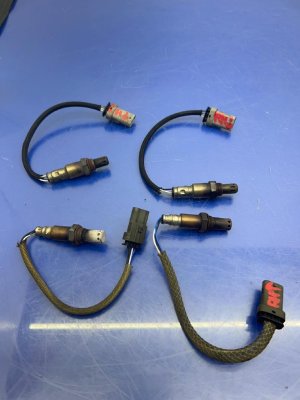
- Downstream Oxygen Sensor (Bank 1, Sensor 2)
(OEM #GMT900 (2012-14): 12609457 or 12616644. K2XX (2015-18): 12678993)— This sensor is responsible for measuring catalyst efficiency. It is a common failure point and is often replaced during diagnosis. Part numbers differ between generations.
Trusted brands: ACDelco, Denso, Bosch, NGK
OEM price range: $60-$110
Aftermarket price range: $40-$80 - Exhaust Manifold Gasket Kit (with bolts)
(OEM #12657093 (Gasket), 11588899 (Bolts))— Required when fixing an exhaust leak at the manifold, a very common cause for P0420 on these trucks. It is critical to replace the gasket and bolts together.
Trusted brands: Fel-Pro (MS 96995 is a popular kit), ACDelco, Mahle, Dorman
OEM price range: $40-$70
Aftermarket price range: $25-$50 - Y-Pipe with Catalytic Converters — If the converter has failed, it is often replaced as a complete Y-pipe assembly containing both Bank 1 and Bank 2 converters. Using high-quality or OEM parts is crucial to prevent the code from returning.
Trusted brands: GM Genuine, Magnaflow, Walker
OEM price range: $1200+
Aftermarket price range: $500-$900
Related Codes That Often Appear With This One
- P0430 — This is the identical code for Bank 2 (passenger side). It is common for both to appear if the cause is systemic, like a bad air filter seal, poor fuel quality, or if both converters are of similar age and condition.
- P0300-P0308 — These are misfire codes (P0300 for random, P0301-P0308 for specific cylinders). An engine misfire allows unburned fuel into the exhaust, which can quickly damage the catalytic converter, causing P0420.
- P0171 / P0174 — These are 'System Too Lean' codes. An unmetered air leak, such as from a broken exhaust manifold bolt or a cracked flex pipe, can cause both a lean condition and a false P0420 code as extra oxygen enters the exhaust stream.
Technical Service Bulletins (TSBs) & Recalls
- 16-NA-111: Addresses MIL on with P0420/P0430 due to a poorly sealed air filter box allowing debris to damage sensors and clog the converter on 2015-2018 models.
- PIP3119P: Provides information on a required catalytic converter break-in procedure to prevent false P0420/P0430 codes on new vehicles or after converter replacement.
- 18-NA-331: Notes that a false P0420 may be set due to a calibration error and the fix is to reprogram the ECM with updated software.
Platform-Specific Known Issues
- Broken Rear Exhaust Manifold Bolts: The most frequently cited cause of P0420 on these trucks, aside from a legitimate converter failure, is an exhaust leak from broken manifold bolts. The rear-most bolt on both Bank 1 (driver) and Bank 2 (passenger) is especially prone to snapping due to heat cycles. This introduces unmetered oxygen into the exhaust stream ahead of the upstream O2 sensor, corrupting its readings and causing the PCM to incorrectly flag the catalyst. The primary symptom is a ticking noise when the engine is cold.
- Air Filter Housing Seal (2015-2018 K2XX): As detailed in TSB 16-NA-111, the air filter housing on the EcoTec3 engine models can fail to seal properly. This allows abrasive particles like sand and dirt to bypass the filter, damaging the MAF sensor, contaminating the delicate platinum elements on the O2 sensors, and eventually clogging the fine passages of the catalytic converter, leading to P0420 and P0430 codes.
Mechanic-Grade Diagnostic Values
- Downstream O2 Sensor (Bank 1, Sensor 2) Voltage — expected: Relatively steady voltage above 0.650V (650mV) on a fully warmed-up engine at a steady cruise.. Failure: Voltage fluctuates rapidly, mirroring the upstream O2 sensor's pattern, or stays consistently low.
- Upstream O2 Sensor (Bank 1, Sensor 1) Voltage — expected: Rapidly fluctuating voltage between approximately 0.1V and 0.9V as the PCM adjusts the air-fuel ratio.. Failure: A flat or slow-to-respond signal indicates a faulty sensor.
- Mode $06 Catalyst Monitor Test (TID $A9, CID $A9 for Bank 1) — expected: The scan tool will show a 'Test Value' and a 'Standard' or 'Max' value. The test value should be within the specified range for the monitor to pass.. Failure: The test value exceeds the maximum threshold, and the test result shows 'Fail'. This is a strong indicator the PCM has confirmed low catalyst efficiency.
Scan Tool Commands That Help
- GDS2 / Tech2 or equivalent professional scan tool: Catalyst Monitor Test State — After meeting the conditions for running the DTC (specific ECT, engine speed, etc.), a technician can monitor this parameter to see if the catalyst monitor is 'Active', 'Inactive', and if the result is 'Pass', 'Fail', or 'No Decision'. This forces the vehicle to run its internal test to confirm a failure before replacing parts.
- GDS2 / Tech2: ECM/TCM Reprogramming with SPS (Service Programming System) — This is used when a vehicle's VIN matches a service bulletin like 19-NA-057, which indicates that an overly sensitive calibration may be the cause of a false P0420. The bulletin specifies that both the ECM and TCM must be updated together.
Real Owner Repair Stories
- Lincoln vs Cadillac Forums user (2006 Lincoln LS 3.9L V8 (similar principle of unmetered air applies to Suburban)) — Persistent P0420 code and a slight bump/misfire at idle.
❌ Tried (didn't work) Previous owner had replaced spark plugs and multiple ignition coils of different brands with no success.
✅ What actually fixed it The final fix was twofold: 1) Repairing a cracked plastic retainer on the PCV inlet tube where it connected to the air intake tube, which was causing an unmetered air leak after the MAF sensor. 2) Replacing the old, crumbly, rock-hard plastic intake manifold gaskets with a new set. This combination resolved the lean condition and the P0420 code. - YouTube - Hood Rats Garage (2015 Chevrolet Suburban 5.3L V8) — P0430 (Bank 2 equivalent of P0420), audible exhaust leak.
❌ Tried (didn't work) Customer believed the catalytic converter needed to be replaced.
✅ What actually fixed it The technician identified a missing rear-most exhaust manifold bolt on the passenger side (Bank 2). Black soot trails confirmed a significant exhaust leak at the manifold. Replacing the missing bolt and the manifold gasket resolved the issue without needing to replace the expensive catalytic converter.
"I Checked Everything" — The Actual Cause
- A lean condition (indicated by codes P0171/P0174) can prevent a catalytic converter from 'lighting off' or reaching the temperature needed to start the chemical reaction. In these cases, the converter itself is not faulty, but it cannot function due to a lack of fuel in the exhaust stream. A technician confirmed this by adding supplemental fuel (propane) to the intake, which allowed the converter to start working properly. The root cause was the lean condition, not the converter.
Model Year Variations Within This Range
- 2015-2018: These K2XX models with EcoTec3 Direct Injection engines (L83, L86) are specifically noted in TSB #16-NA-111 for air box seal issues and are the primary subjects of exhaust manifold bolt breakage reports.
- 2012-2014: These GMT900 models use Vortec engines without direct injection. While still prone to exhaust leaks, some bulletins like PIP5110 specifically mention leaks at exhaust clamps *behind* the rear O2 sensor as a cause for P0420 on 2011-2013 HD models with 6.0L engines, a principle that could apply to the 1500 series.
- 2014-2015: A voluntary emission recall (#14390) was issued for some 2014-2015 GM trucks and SUVs for a high-pressure fuel pump that could leak. While not directly causing P0420, such a leak could affect fuel mixture and potentially contribute to catalyst issues over time.
Helpful Videos
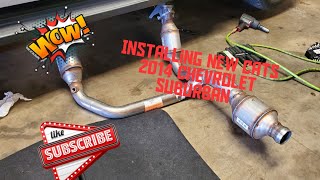
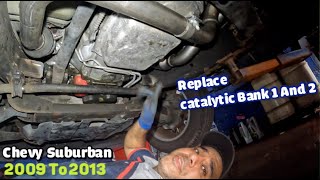
We Have This Part in Stock


The information in this article is provided for general reference and educational purposes only. Vehicle specifications, procedures, and part compatibility can vary by production date, trim level, and region. Always consult your vehicle's factory service manual and verify part numbers before purchasing or performing repairs. Safety-critical components such as airbags, seat belts, and braking systems should be installed by a qualified professional.
- Chevrolet SUBURBAN:
- 🎬 Helpful Videos
- 🛍️ Shop This Part
- What's Unique About the 2012-2018 Chevrolet SUBURBAN
- Diagnostic Flowchart
- Symptoms You May Notice
- Most Likely Causes
- Rare But Worth Checking
- Diagnosis Steps
- Parts You'll Likely Need
- Related Codes That Often Appear With This One
- Technical Service Bulletins (TSBs) & Recalls
- Platform-Specific Known Issues
- Mechanic-Grade Diagnostic Values
- Scan Tool Commands That Help
- Real Owner Repair Stories
- "I Checked Everything" — The Actual Cause
- Model Year Variations Within This Range
- 🎟️ Get 5% Off