

P0420 on 2004-2010 Chevrolet Silverado 2500: Catalyst Efficiency Causes and Fixes
P0420 on a 2004-2010 Silverado 2500 means the Bank 1 catalytic converter is inefficient. Before replacing the expensive converter, thoroughly check for exhaust leaks (especially broken manifold bolts) and failing oxygen sensors, which are very common and cheaper to fix. On 2007+ models, oil consumption from the Active Fuel Management (AFM) system is also a primary suspect for destroying the converter.
- Always check for exhaust leaks from broken manifold bolts before replacing any parts. This is the most common cause of a false P0420 on these trucks.
- On 2007-2010 models, investigate for excessive oil consumption related to the AFM system, as this will destroy a new catalytic converter if not addressed.
- Use a scan tool to analyze O2 sensor data to differentiate between a bad sensor and a bad converter.
- Only replace the catalytic converter after all other possibilities (leaks, sensors, engine issues) have been definitively ruled out.
What's Unique About the 2004-2010 Chevrolet SILVERADO 2500
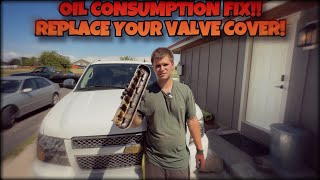
For this generation of Silverado 2500, a P0420 code is frequently caused by something other than a failed catalytic converter. These trucks are notorious for exhaust manifold bolts breaking, especially the rearmost bolts on the driver's side and the foremost on the passenger's side. This creates an exhaust leak that lets in oxygen, tricking the sensors into reporting a bad converter. Additionally, the GMT900 models (2007-2010) with Active Fuel Management (AFM) on some V8s can suffer from oil consumption issues detailed in TSB 10-06-01-008L, which 🎬 Watch: How to fix the common AFM oil consumption issue contaminates and ruins converters over time. A less common but notable cause is a leaking intake manifold gasket, which creates a lean condition that can lead to the code.
Diagnostic Flowchart
Tap your situation to follow the diagnostic path that matches what you're seeing on this vehicle.
Generation note: This range covers two Silverado 2500 generations: the GMT800 (2004-2006, and 2007 "Classic") and the GMT900 (2007-2010). The GMT900 introduced Active Fuel Management (AFM) on some V8s, which is a known cause of oil consumption that can lead to premature catalytic converter failure, as documented in GM TSB 10-06-01-008L. However, exhaust manifold leaks from broken bolts are a very common issue across both generations. The 2007 model year is a transition year; the "Classic" is a carryover of the 2006 GMT800 body style, while the "New Body Style" is the GMT900.
Symptoms You May Notice
- Check Engine Light is on
- Reduced engine power or sluggish acceleration
- A ticking or tapping noise from the engine bay, especially when cold, which is a classic sign of an exhaust leak from a broken manifold bolt.
- A rotten egg or sulfur smell from the exhaust, indicating unburnt fuel is reaching the converter.
- Reduced fuel economy
- Visible soot tracks around the exhaust manifold where it meets the cylinder head.
- Immediately replacing the catalytic converter without checking for exhaust leaks or testing the oxygen sensors. An exhaust leak from a broken manifold bolt is a very common, and much cheaper, root cause on these specific trucks.
- Replacing the O2 sensor without confirming it is faulty via live data. While they are a common failure item, an exhaust leak can make a good sensor read as if the converter is bad.
Most Likely Causes
- Exhaust Leak (especially broken manifold bolts) 🔴 High Probability The cast iron exhaust manifolds and steel bolts expand and contract at different rates, causing the bolts to fatigue and break over time. The rear bolts on the driver's side and front bolts on the passenger's side are most susceptible due to thermal stress. This is a very well-documented issue on these GM trucks, mentioned in TSB #PIP5110A.
How to confirm: Listen for a ticking sound from the engine bay that is loudest on a cold start and may quiet down as the engine warms up. Visually inspect the exhaust manifolds for broken bolt heads or black soot trails. A definitive test is to use a smoke machine to pressurize the exhaust system and look for smoke escaping from the manifold area.
Typical fix: Replace the broken exhaust manifold bolts and the manifold gasket. This can be a difficult DIY job if the broken bolt needs to be extracted by drilling or welding a nut onto the remaining stud. A popular and often easier fix is to install an aftermarket exhaust manifold repair clamp (like Dorman or Kral Auto Parts KAP169/KAP108) which clamps the manifold to the head, sealing the leak without requiring removal of the broken bolt.
Est. part cost: $20-$80 for gaskets and bolts; $50-$100 for a repair clamp kit. - Faulty Oxygen (O2) Sensor 🟡 Medium Probability O2 sensors are wear-and-tear items with a finite lifespan. A failing or 'lazy' downstream (Bank 1, Sensor 2) sensor can send inaccurate data, falsely triggering the P0420 code. Using cheap, no-name aftermarket sensors is also a known cause for triggering false codes on these trucks.
How to confirm: Use a scan tool with live data to graph O2 sensor voltage. At operating temperature and steady RPM, the upstream sensor (B1S1) should fluctuate rapidly between ~0.1V and ~0.9V. A healthy downstream sensor (B1S2) should show a relatively steady, stable voltage (typically 0.6V-0.8V). If the B1S2 sensor is flatlined, slow, or mirrors the B1S1 sensor's fluctuations without an exhaust leak present, it is suspect.
Typical fix: Replace the downstream oxygen sensor for Bank 1 (driver's side, after the catalytic converter). It is recommended to use OEM ACDelco or a reputable OE-equivalent brand like Denso to avoid compatibility issues.
Est. part cost: $40-$90 - Failed Catalytic Converter 🟡 Medium Probability Converters can fail from age, but failure is often accelerated by other issues. On 2007+ AFM engines, oil consumption (per TSB 10-06-01-008L) is a major cause of catalyst contamination. Engine misfires, leaking injectors, or long-term rich/lean conditions will also overheat and destroy the internal catalyst materials.
How to confirm: This is confirmed after definitively ruling out exhaust leaks and faulty O2 sensors. A non-contact infrared thermometer can be used to check temperatures; the converter outlet should be at least 100°F hotter than the inlet after the engine is fully warmed. If temperatures are similar or the outlet is cooler, the catalyst is not working. If all other causes are eliminated and the downstream O2 sensor mimics the upstream, the converter has failed.
Typical fix: Replace the Bank 1 catalytic converter. It is critical to fix the root cause (e.g., misfires, oil consumption, exhaust leaks) first, or the new converter will also fail quickly.
Est. part cost: $400-$1200
Rare But Worth Checking
- Engine Misfires or Fuel System Issues: While less common to be the *only* issue, an underlying problem like a leaking fuel injector or a persistent misfire (codes P0300-P0308) will send unburnt fuel into the exhaust, quickly destroying a catalytic converter. Always fix these codes first.
- Damaged O2 Sensor Wiring: The wiring harness for the oxygen sensors runs close to the hot exhaust and can be damaged by heat, road debris, or improper routing, leading to shorted or open circuits that cause false readings.
- Leaking Intake Manifold Gasket: A leaking intake manifold gasket can introduce unmetered air, causing a lean condition (P0171/P0174) that the ECM tries to correct by adding fuel. This constant fuel trim adjustment can affect the catalyst efficiency calculation and sometimes trigger a P0420 code.
Diagnosis Steps
- Check for other diagnostic trouble codes (DTCs). Address any misfire (P030x), fuel trim (P017x), or other O2 sensor codes first, as they are often the root cause.
- Perform a thorough visual and auditory inspection of the exhaust system. Start the engine when cold and listen for a distinct 'ticking' noise from the engine bay, which points to a manifold leak. Visually inspect the exhaust manifolds (especially the rear bolt on the driver's side) for soot trails or broken bolts.
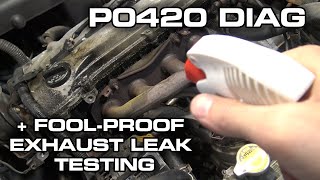
- Confirm or rule out an exhaust leak. For a definitive test, use a smoke machine connected to the tailpipe and watch for smoke emerging from the manifold gaskets or other joints. Alternatively, a shop vacuum on 'blow' can be used with soapy water sprayed on joints to look for bubbles. 🎬 See how to diagnose P0420 and test for exhaust leaks
- Use a scan tool to observe live data from the Bank 1 oxygen sensors. Warm the engine to operating temperature. At a steady 2,500 RPM, the upstream O2 sensor (B1S1) voltage should fluctuate rapidly between approximately 0.1V and 0.9V. The downstream O2 sensor (B1S2) voltage should remain relatively stable and steady, typically above 0.5V (e.g., 0.6V-0.8V).
- If the downstream O2 sensor voltage is fluctuating in a similar pattern to the upstream sensor, and you have confirmed there are NO exhaust leaks, the catalytic converter has likely failed.
- If the downstream O2 sensor voltage is flat (e.g., 0V) or stuck high without responding, the sensor itself or its wiring is likely faulty.
- If a clogged converter is suspected (due to low power), perform a backpressure test using a pressure gauge in the upstream O2 sensor port. Backpressure should typically be less than 1.5 PSI at idle.
- Check long-term and short-term fuel trims (LTFT/STFT). Consistently high positive values (e.g., > +10%) suggest a vacuum leak (like an intake gasket) or an exhaust leak before the upstream O2 sensor, which could be the root cause of the P0420.
Parts You'll Likely Need
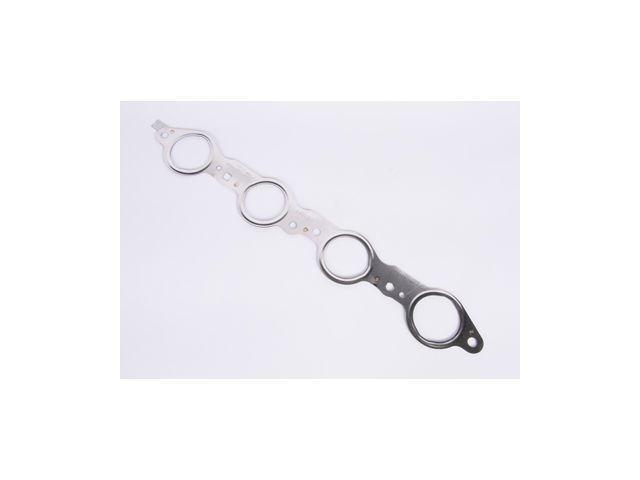
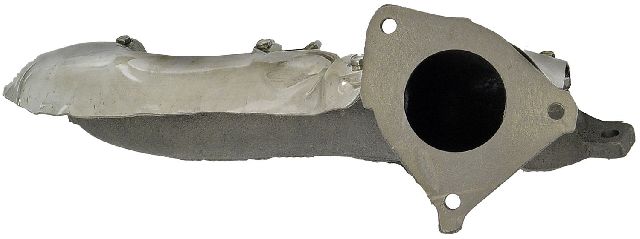
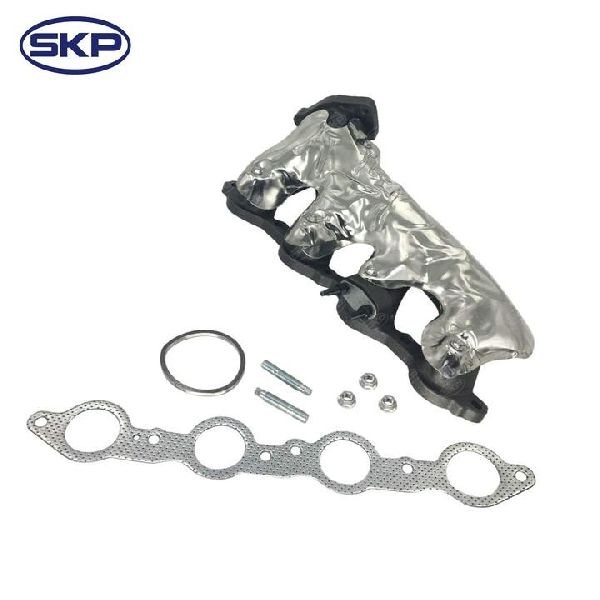
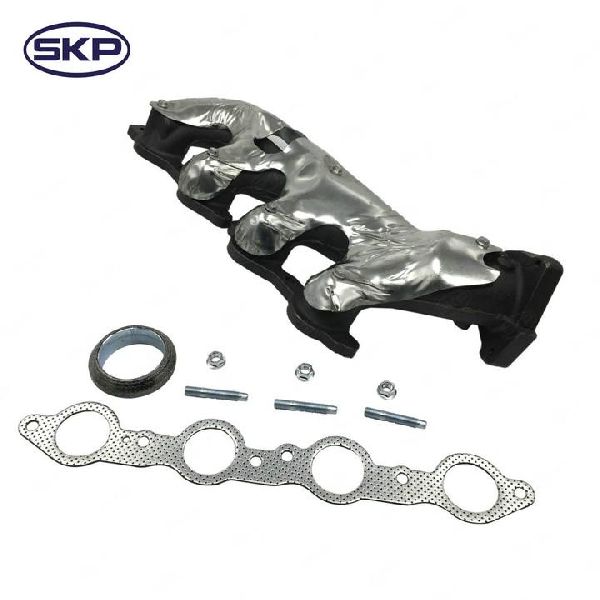
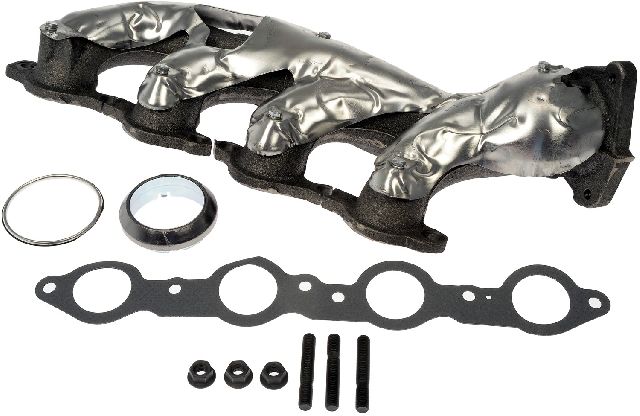
- Exhaust Manifold Bolt & Gasket Kit / Repair Clamp — Due to the extremely high frequency of broken exhaust manifold bolts causing leaks that trigger a false P0420 code. A repair clamp is often the easiest fix.
Trusted brands: ACDelco (Gaskets), Dorman (Bolts/Clamps), Kral Auto Parts (Clamps)
OEM price range: $40-$70
Aftermarket price range: $20-$60 (Kits), $50-$100 (Clamps) - Oxygen Sensor (Bank 1, Sensor 2) — The downstream O2 sensor is the primary reporting sensor for catalyst efficiency. It can fail or become 'lazy' with age, causing a false P0420 code. Using an OEM/OES part is highly recommended.
Trusted brands: ACDelco, Denso
OEM price range: $60-$90
Aftermarket price range: $40-$70 - Catalytic Converter (Y-Pipe Assembly) — This is the final step after all other causes (leaks, sensors, engine issues) have been ruled out. Failure is often caused by oil consumption on AFM engines or other unaddressed problems.
Trusted brands: Walker, MagnaFlow, AP Exhaust
OEM price range: $800-$1200
Aftermarket price range: $400-$700
Related Codes That Often Appear With This One
- P0430 — This is the same efficiency code for Bank 2 (passenger side). If both P0420 and P0430 are present, it could point to a systemic issue like a fuel pressure problem, widespread oil consumption, or simply that both converters have failed due to high mileage.
- P0171 / P0174 — These codes indicate a lean fuel condition. They are often caused by unmetered air entering the system, such as from an exhaust manifold leak or an intake manifold gasket leak, which are also primary causes of a false P0420. The leak lets in oxygen, which the O2 sensors read as a lean condition.
- P0300-P0308 — These are misfire codes. A misfire sends raw fuel into the exhaust, which superheats and melts the inside of the catalytic converter, causing it to fail and trigger P0420. The misfire must be fixed before replacing the converter.
Technical Service Bulletins (TSBs) & Recalls
- PIP3119K: Mentions disabling P0420/P0430 diagnostics under certain conditions, suggesting GM is aware of issues with false codes.
- PIP5110A: Specifically advises technicians to check for exhaust leaks, particularly from broken manifold bolts at the rearmost driver's side and foremost passenger's side positions, before replacing a catalytic converter for a P0420/P0430 code.
- 10-06-01-008L: Details the causes and repair procedures for excessive oil consumption on engines with Active Fuel Management (AFM), a known root cause for catalytic converter failure on 2007-2010 models.
Platform-Specific Known Issues
- Broken Exhaust Manifold Bolt Fix with Dorman Clamp: Numerous owners on forums like silveradosierra.com and Reddit report successfully fixing the P0420 code by installing a Dorman (or similar brand like Kral) exhaust manifold clamp. One user on Reddit mentioned their clamp has been holding strong for 3 years on their 2010 model, solving the exhaust tick and the code. This avoids the difficult and risky job of extracting the broken bolt from the aluminum cylinder head.
- AFM Oil Consumption Leading to Converter Failure: On GMT900 (2007+) trucks with Active Fuel Management (AFM), excessive oil consumption is a well-documented problem covered by GM TSB 10-06-01-008L. The bulletin describes how oil can be pulled through the PCV system or sprayed from an AFM relief valve, leading to carbon buildup and oil burning. This burned oil contaminates the catalytic converters with phosphorus, eventually poisoning the catalyst material and causing a true P0420/P0430 failure. The fix often involves installing a shield in the oil pan and an updated valve cover, but if the damage is done, the converter will need replacement after the oil issue is resolved.
Mechanic-Grade Diagnostic Values
- Fuel Pressure (6.0L V8 LY6/L96) — expected: 55-62 PSI (constant, returnless system). Failure: Pressure below 55 PSI can cause a lean condition, which can affect catalyst operation and potentially contribute to a P0420 code over time.
- Long Term Fuel Trim (LTFT) & Short Term Fuel Trim (STFT) — expected: Within +/- 5% at idle and steady cruise.. Failure: Sustained positive values above +10% indicate the ECM is adding fuel to compensate for unmetered air, pointing to a vacuum or exhaust leak that could be the true cause of the P0420.
- Mode $06 Catalyst Monitor Test (Bank 1) — expected: The test value should be below the maximum threshold set by the manufacturer. For example, on some GM vehicles, the value may be a normalized ratio that needs to stay below a certain number (e.g., 0.35).. Failure: If the reported test value exceeds the maximum limit stored in the ECM, the monitor fails and will set a pending or active P0420 code. This data confirms the ECM's reason for setting the code.
Hidden / Shadow Codes Worth Checking
- Mode $06, TID $21, CID $A0 (or similar): This is not a 'code' but the result of the onboard Catalyst Efficiency Monitor test. It provides the raw test value that the ECM uses to determine if the converter passes or fails. A value exceeding the programmed threshold will trigger P0420. (see via A professional scan tool capable of displaying Mode $06 data. The specific Test ID (TID) and Component ID (CID) can vary by year and ECU software.)
Scan Tool Commands That Help
- Professional Scan Tool (e.g., Tech2, GDS2, high-end aftermarket): Catalyst Monitor Drive Cycle — After a repair (like replacing a cat or O2 sensor), performing a specific drive cycle is necessary to force the catalyst monitor to run and confirm the fix. A typical cycle involves steady-state driving (e.g., 55 mph for 5+ minutes) and a period of deceleration. This verifies the repair without waiting for the monitor to run on its own.
- GM Tech2/GDS2 or equivalent: ECM/TCM Reprogramming with SPS (Service Programming System) — In some cases, particularly noted in GM TSBs like #PIP3119K and 19-NA-057, the P0420 code can be triggered by a software anomaly. If all mechanical and sensor checks are good, checking for an updated ECM calibration may be the final fix.
Wiring & Ground Locations
- G102 / G104 (varies by GMT800/900) — Typically located on the rear of the driver's side cylinder head.. This is a critical ground point for the ignition coils and often the main PCM ground harness. A poor connection here can cause erratic sensor readings, misfires, and incorrect data for the catalyst monitor, potentially triggering a false P0420.
- G103 (GMT900) — Located on the front of the passenger's side cylinder head.. This is another primary engine ground. Corrosion or a loose connection here can affect the entire engine management system, including the reference voltage for sensors involved in the P0420 diagnosis.
- Engine Block to Chassis/Firewall Strap — A braided strap typically running from the back of the engine block to the firewall.. This is a main engine ground path. These straps are known to corrode and break, leading to a host of electrical issues, including unstable sensor grounds that can cause false diagnostic codes.
Real Owner Repair Stories
- Reddit user in r/MechanicAdvice (2007 Silverado 1500, 140k miles) — Started with P0420 and a known exhaust leak. After fixing the leak by replacing the manifold, both P0420 and P0430 appeared.
❌ Tried (didn't work) Using cat cleaner.
✅ What actually fixed it The user replaced the exhaust manifold to fix a leak, but the codes then appeared on both banks, indicating the original leak had likely masked the fact that both catalytic converters were already failing. The final fix was replacing the entire Y-pipe with converters and the O2 sensors. - GenVibe Forums user (Pontiac Vibe (similar P0420 logic)) — Persistent P0420 code.
❌ Tried (didn't work) Replacing the catalytic converter (aftermarket), Replacing both oxygen sensors, Replacing the intake manifold gasket, Replacing spark plugs
✅ What actually fixed it After all other repairs failed, the owner installed two spark plug non-foulers on the downstream O2 sensor to pull it out of the direct exhaust stream. This tricked the sensor into providing a stable reading and finally cleared the P0420 code, suggesting the aftermarket converter was not efficient enough to satisfy the ECM's strict parameters.
"I Checked Everything" — The Actual Cause
- A cracked exhaust flex pipe. A smoke test at low pressure may not reveal a crack that only opens up under the heat, vibration, and torque of a running engine. This allows oxygen to be pulled in, fooling the O2 sensors and triggering P0420 even when a visual inspection and smoke test show no leaks.
Model Year Variations Within This Range
- 2007: 2007 was a transition year. The 'Classic' body style is a GMT800 platform, identical to the 2004-2006 models. The 'New Body Style' is the updated GMT900 platform. They have different bodies, frames, and interiors, and many parts are not interchangeable. The GMT900 introduced the 6.0L LY6 V8 with VVT and, on some V8s, Active Fuel Management (AFM), a known source of oil consumption that leads to P0420.
- 2004+: Per TSB #PIP3119K, on some low-mileage vehicles, GM issued a calibration that *disables* the P0420 and P0430 diagnostic tests. This means on certain trucks, the code will not set even if the converter is borderline, which is a critical diagnostic consideration.
Helpful Videos
We Have This Part in Stock


The information in this article is provided for general reference and educational purposes only. Vehicle specifications, procedures, and part compatibility can vary by production date, trim level, and region. Always consult your vehicle's factory service manual and verify part numbers before purchasing or performing repairs. Safety-critical components such as airbags, seat belts, and braking systems should be installed by a qualified professional.
- Chevrolet SILVERADO 2500:
- 🎬 Helpful Videos
- 🛍️ Shop This Part
- What's Unique About the 2004-2010 Chevrolet SILVERADO 2500
- Diagnostic Flowchart
- Symptoms You May Notice
- Most Likely Causes
- Rare But Worth Checking
- Diagnosis Steps
- Parts You'll Likely Need
- Related Codes That Often Appear With This One
- Technical Service Bulletins (TSBs) & Recalls
- Platform-Specific Known Issues
- Mechanic-Grade Diagnostic Values
- Hidden / Shadow Codes Worth Checking
- Scan Tool Commands That Help
- Wiring & Ground Locations
- Real Owner Repair Stories
- "I Checked Everything" — The Actual Cause
- Model Year Variations Within This Range
- 🎟️ Get 5% Off