

P0420 on 2014-2017 Chevrolet Silverado: Causes, Fixes, and TSBs
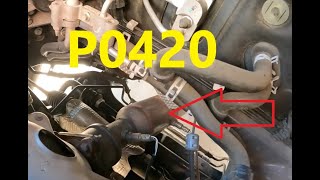
On 2014-2017 Silverados, P0420 often points to issues other than a bad catalytic converter. A crucial first step is to inspect the air filter box for a poor seal, as per GM TSB #16-NA-111, before suspecting O2 sensors or the expensive converter itself. This specific issue can allow sand and debris to be ingested, damaging downstream components.
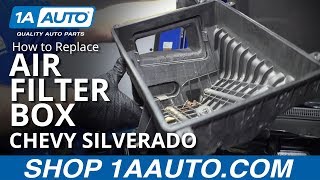
- Before buying any parts, inspect the air filter and air filter housing for a proper seal. This is a known issue on the 2014-2017 Silverado and a common cause of P0420.
- Do not automatically assume the catalytic converter has failed. Exhaust leaks and faulty oxygen sensors are more common, less expensive problems to fix.
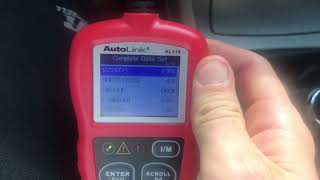
- A scan tool that can display live O2 sensor data is one of the most valuable tools for diagnosing this code correctly.
- If you do need to replace the converter, be aware that the root cause (e.g., misfire, oil consumption) must be fixed first, or the new converter will fail quickly.
What's Unique About the 2014-2017 Chevrolet SILVERADO

For this generation of Silverado (K2XX platform), a P0420 code has a significant, documented cause that is unusual for most vehicles: a poorly sealed air filter housing. GM issued Technical Service Bulletin #16-NA-111 specifically because sand and debris can bypass the air filter seal, get ingested by the engine, and damage the oxygen sensors and catalytic converter. This makes checking the air intake system a top diagnostic priority, potentially saving owners from a costly and unnecessary catalytic converter replacement. Forum users on Reddit and Silverado/Sierra forums frequently advise starting with this check.
Diagnostic Flowchart

Tap your situation to follow the diagnostic path that matches what you're seeing on this vehicle.
Symptoms You May Notice

- Check Engine Light (Malfunction Indicator Lamp) is on
- Reduced engine power or sluggish acceleration, especially if the converter is clogged
- Potentially decreased fuel economy
- A rotten egg or sulfur smell from the exhaust (less common, indicates a rich fuel condition damaging the converter)
- Remote start may be disabled by the system when a Check Engine Light is active.
- Replacing the catalytic converter without first inspecting for air intake leaks (per TSB #16-NA-111), exhaust leaks, or testing the oxygen sensors. The TSB on the air filter seal makes this a critical first check for Silverados.
Most Likely Causes

- Air Intake System Leak (Poorly Sealed Air Filter Box) 🔴 High Probability As documented in TSB #16-NA-111, the air filter box design can warp or the clips can fail, allowing unmetered, dirty air to bypass the filter. This sand and debris can 'sandblast' and damage the internal elements of the O2 sensors and catalytic converters.
How to confirm: Visually inspect the air filter housing for damage, missing clips, or signs of dirt/debris on the 'clean' side of the air filter and inside the intake tube. Ensure the lid sits perfectly flat and all locking tabs engage securely.
Typical fix: Replace the air filter and the air cleaner housing assembly if it's warped or damaged to ensure a proper seal. Some owners have had success adding weather stripping as a temporary measure.
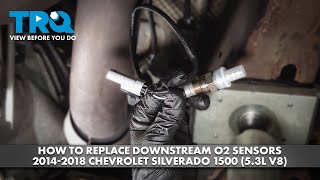
Est. part cost: $20-$50 for a filter, $150-$300 for a housing assembly. - Faulty Oxygen (O2) Sensor 🟡 Medium Probability The downstream (post-catalyst) O2 sensor is responsible for reporting catalyst efficiency. A lazy or failing sensor can send incorrect data, falsely triggering a P0420 code. Contamination from a leaky air intake can also cause premature sensor failure.
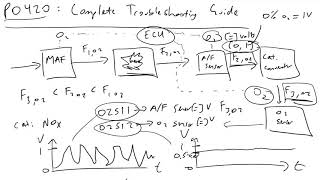
How to confirm: Use a scan tool to graph the voltage of the upstream (Sensor 1) and downstream (Sensor 2) O2 sensors. The upstream sensor should fluctuate rapidly between ~0.1V and ~0.9V. The downstream sensor should remain relatively steady and stable, typically above 0.6V. If the downstream sensor mimics the upstream's rapid switching, the converter is likely inefficient. If the downstream sensor is flatlined or slow to respond, the sensor itself is suspect.
Typical fix: Replace the Bank 1, Sensor 2 oxygen sensor.
Est. part cost: $50-$150 - Exhaust Leak 🟡 Medium Probability
How to confirm: Visually inspect the exhaust manifold, gaskets, and pipes forward of the catalytic converter for cracks, rust, or black soot trails. Broken exhaust manifold bolts are a common issue. A shop can perform a smoke test to pinpoint leaks.
Typical fix: Repair the leak by replacing the gasket, replacing broken manifold bolts, or welding the cracked component.
Est. part cost: $20-$500 depending on the nature of the leak. - Failed Catalytic Converter ⚪ Low Probability While often the first part blamed, it should be the last part replaced. However, premature failure can occur due to the airbox issue or other underlying problems. Underlying issues like engine misfires, oil consumption, or coolant leaks can also destroy a converter by contaminating or overheating it.
How to confirm: This is confirmed after all other possibilities (intake leaks, O2 sensors, exhaust leaks, engine performance issues) have been ruled out. An infrared thermometer can be used to check temperatures; the outlet of a working converter should be at least 100°F hotter than the inlet after the engine is fully warmed up.
Typical fix: Replace the Bank 1 catalytic converter. Must fix the root cause (e.g., airbox, misfire) first.
Est. part cost: $600-$2000+
Rare But Worth Checking
- Engine Misfires: A consistent misfire (from a bad spark plug, coil, or injector) dumps unburned fuel into the exhaust, which superheats and melts the internal structure of the catalytic converter. Usually accompanied by P030x codes.
- Excessive Oil Consumption: Some 5.3L and 6.2L GM engines can consume oil due to issues with the Active Fuel Management (AFM) system or piston rings. This oil can enter the exhaust and contaminate the oxygen sensors and catalytic converters, leading to a P0420 code.
- Engine Control Module (ECM) Calibration: While less common for this specific model year range, other GM vehicles have had TSBs for P0420 caused by a calibration error, requiring a software update. It's a possibility if all hardware checks out.
Diagnosis Steps
- Read all stored diagnostic trouble codes. If any other codes are present, especially for misfires (P030x) or fuel trim (P0171, P0174), diagnose them first.
- Crucially for this truck: Inspect the air filter housing for a proper seal per TSB #16-NA-111. Remove the cover and filter. Look for dirt, sand, or a 'dust ring' on the clean side of the filter and inside the intake tube. Check for warped plastic or broken tabs on the housing.
- Inspect the entire exhaust system from the engine to the catalytic converter for any signs of leaks, such as black soot, cracks, or audible hissing. Pay close attention to the exhaust manifold bolts, which are known to break.
- Use a scan tool with live data capability. Graph the voltage signals from the Bank 1 Sensor 1 (upstream) and Bank 1 Sensor 2 (downstream) oxygen sensors at operating temperature and ~2000 RPM.
- A healthy system will show rapid switching on Sensor 1 (approx. 0.1V-0.9V) and a steady, stable voltage on Sensor 2 (typically >0.6V). If Sensor 2's graph mirrors Sensor 1's, the converter is not working efficiently.
- If Sensor 2's voltage is stuck low (e.g., <0.2V) or unresponsive, test the sensor itself and its wiring before condemning the converter.
- If all other tests pass, use an infrared temperature gun to check the converter's inlet and outlet temperatures. The outlet should be at least 100°F hotter than the inlet on a fully warmed-up engine.
- Only after confirming all the above should you conclude the catalytic converter has failed.
Parts You'll Likely Need
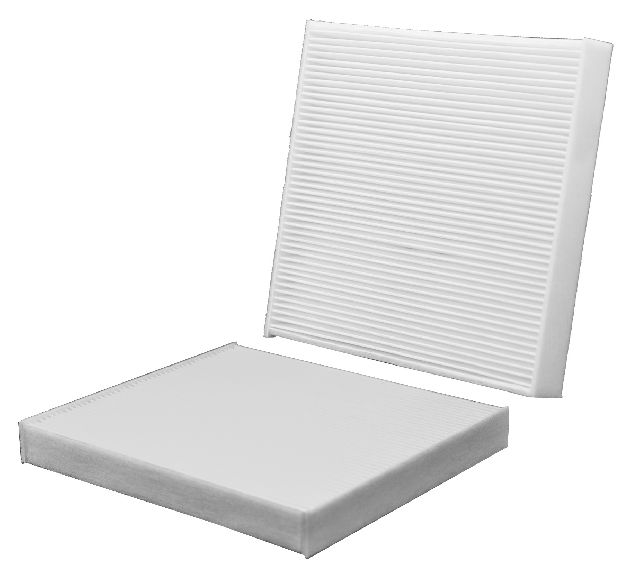
- Air Filter Housing Seal or Assembly
(OEM #23147037 (Example for 2015 5.3L, verify by VIN))— A known issue on these trucks (TSB #16-NA-111) where a poor seal allows debris to enter the engine and damage emissions components.
Trusted brands: ACDelco, GM Genuine
OEM price range: $150-$300
Aftermarket price range: $100-$200 - Downstream Oxygen Sensor (Bank 1, Sensor 2)
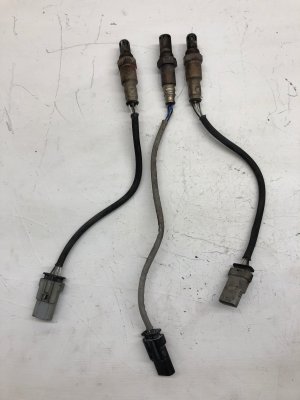
(OEM #12657188 (Replaces 12665163))— This sensor is responsible for monitoring the converter. It can fail and give false readings, or be damaged by contaminants from the airbox leak.
Trusted brands: ACDelco, Denso, Bosch
OEM price range: $60-$100
Aftermarket price range: $40-$80 - Catalytic Converter (Bank 1)
(OEM #19420277 (Y-Pipe Assembly, verify by VIN))— This is the final and most expensive part to fail. It is often replaced unnecessarily when the true cause is one of the items listed above.
Trusted brands: GM Genuine, Walker Exhaust, MagnaFlow
OEM price range: $1000-$2000+
Aftermarket price range: $400-$900 (Note: Aftermarket converters may not meet emissions standards in all states)
Related Codes That Often Appear With This One
- P0430 — This is the identical 'Catalyst System Efficiency Below Threshold' code, but for Bank 2 (the passenger side). The root cause, especially an air intake leak, often affects both banks, causing both codes to appear together.
- P0300-P0308 — These are misfire codes. A misfire is a common root cause of catalytic converter failure, as it sends raw fuel into the exhaust, overheating the converter.
Technical Service Bulletins (TSBs) & Recalls
- Bulletin #16NA111: Provides diagnostic information for the air box and air filter seal to correct DTCs P0420 and P0430.
- Bulletin #PIP5085C: Mentions P0420 in conjunction with other codes (P24A0, P2463), likely for diesel models, and advises technicians to follow published diagnostics.
- Bulletin #PIP3119P: Notes that P0420/P0430 diagnostics may be disabled at low mileage on some vehicles.
Platform-Specific Known Issues
- TSB #16-NA-111 documents that a poorly sealing air filter box can cause this code by allowing sand and debris to damage the O2 sensors and catalytic converter. This should be the first inspection point.
- Broken exhaust manifold bolts are a common
Mechanic-Grade Diagnostic Values
- Downstream O2 Sensor (Bank 1, Sensor 2) Voltage — expected: Relatively steady voltage, typically above 650mV (0.65V) on a healthy, warm converter.. Failure: Voltage fluctuates in a similar pattern to the upstream O2 sensor, or is stuck low (below 0.2V).
- Upstream O2 Sensor (Bank 1, Sensor 1) Voltage — expected: Rapidly fluctuates between approximately 100mV (0.1V) and 900mV (0.9V).. Failure: Slow or no fluctuation, or voltage stuck at a specific level.
- Long Term and Short Term Fuel Trims (Total) — expected: Within +/- 10% (ideally closer to +/- 5%).. Failure: Consistently high positive values (e.g., > +10%) indicate the engine is compensating for a vacuum leak or lean condition. High negative values indicate a rich condition.
- Catalytic Converter Temperature Differential — expected: The outlet temperature should be at least 100°F (approx. 38°C) hotter than the inlet temperature when the engine is warm and running at a steady RPM (e.g., 2000 RPM).. Failure: Outlet temperature is the same or cooler than the inlet temperature, indicating the catalyst is not functioning.
Scan Tool Commands That Help
- GDS2 (GM Dealer/Professional Scan Tool): Catalyst Monitor Test State — To manually initiate and observe the vehicle's internal catalyst efficiency test. The scan tool will show the test as 'Active' while running and then display a 'Pass,' 'Fail,' or 'No Decision' result, which is more definitive than just watching O2 sensor graphs.
- GDS2 (GM Dealer/Professional Scan Tool): Oxygen Sensor Test — To actively test the response time of the O2 sensors by forcing the engine into rich and lean conditions. This helps confirm if a sensor is 'lazy' or non-responsive, which could be the true cause of the P0420, before condemning the catalytic converter.
Wiring & Ground Locations
- Engine Harness Chafe Point — On K2XX trucks, the engine wiring harness may chafe on the corner of the left-hand cylinder head, the drive belt idler pulley bracket, or the ECM/TCM bracket in the driver-side wheel well.. Chafing can damage wires for the oxygen sensors, leading to incorrect signals, short-to-ground, and false P0420 codes. A visual inspection of the harness in these specific areas is warranted if electrical issues are suspected.
- Main PCM/Engine Ground — A critical ground connection is located on the top of the engine block, often on the passenger side cylinder head.. A loose or corroded main engine ground can cause a wide range of bizarre electrical issues and incorrect sensor readings, including those from the O2 sensors that the ECM relies on to monitor catalyst efficiency. Ensuring this ground is clean and tight is a fundamental electrical check.
Real Owner Repair Stories
- Reddit user in r/MechanicAdvice (2003 Silverado 1500 4.3L (Similar GMT800 platform, but demonstrates a common diagnostic path)) — Persistent P0420 code for over a year.
❌ Tried (didn't work) Replaced catalytic converters, Replaced intake manifold gasket (to fix a lean code that appeared temporarily), Replaced fuel pump and filter, Replaced exhaust manifold gasket, Replaced Bank 1 O2 sensors
✅ What actually fixed it The user installed a spark plug non-fouler on the downstream O2 sensor to move it out of the direct exhaust stream. While this is a trick to clear the code and not a true repair of the underlying efficiency issue, it highlights a common last resort for owners after extensive and expensive part replacement fails to resolve the light.
OEM Part Supersession History
12665163→12657188— Standard part evolution and consolidation by the manufacturer.
Heads up: The new part number (12657188) is the correct replacement for the original. Some documentation notes that this part may require programming or special setup procedures, which can be performed with dealer tools.
Model Year Variations Within This Range
- 2016-2017: The Silverado 1500 received a mid-cycle facelift for the 2016 model year, which included revised front-end styling and expanded availability of the 8-speed automatic transmission with the 5.3L and 6.2L engines. While the core engine and emissions components related to P0420 remained largely the same, software calibrations within the ECM could differ between the 2014-2015 (pre-facelift) and 2016-2017 (post-facelift) models.
Helpful Videos



Used OEM Parts in Stock

New Aftermarket Parts Available




The information in this article is provided for general reference and educational purposes only. Vehicle specifications, procedures, and part compatibility can vary by production date, trim level, and region. Always consult your vehicle's factory service manual and verify part numbers before purchasing or performing repairs. Safety-critical components such as airbags, seat belts, and braking systems should be installed by a qualified professional.
- Chevrolet SILVERADO:
- 🎬 Helpful Videos
- 🛍️ Shop This Part
- What's Unique About the 2014-2017 Chevrolet SILVERADO
- Diagnostic Flowchart
- Symptoms You May Notice
- Most Likely Causes
- Rare But Worth Checking
- Diagnosis Steps
- Parts You'll Likely Need
- Related Codes That Often Appear With This One
- Technical Service Bulletins (TSBs) & Recalls
- Platform-Specific Known Issues
- Mechanic-Grade Diagnostic Values
- Scan Tool Commands That Help
- Wiring & Ground Locations
- Real Owner Repair Stories
- OEM Part Supersession History
- Model Year Variations Within This Range
- 🎟️ Get 5% Off