

P0420 on 2009-2013 Chevrolet Silverado: Catalyst Efficiency Causes and Fixes
On a 2009-2013 Silverado, P0420 often points to a failing catalytic converter, but don't replace it yet. First, thoroughly check for exhaust leaks, especially at the manifold and flanges, as this is a very common cause cited in GM service bulletins. Broken exhaust manifold bolts are a frequent culprit. A new downstream O2 sensor is another likely, and much cheaper, fix.
- For a 2009-2013 Silverado, ALWAYS check for exhaust leaks before buying any parts for a P0420 code. Broken manifold bolts are a known issue.
- The code means the driver's side (Bank 1) catalytic converter is not working efficiently, but the cause may be a bad sensor or a leak.
- Use a scan tool to watch O2 sensor data. A downstream sensor that copies the upstream sensor's pattern points to a bad converter, but only if there are no exhaust leaks.
- Fix any engine misfires (P030x codes) immediately, as they will destroy a new catalytic converter in a short amount of time.
What's Unique About the 2009-2013 Chevrolet SILVERADO

For this generation of Silverado (GMT900), the P0420 code is frequently caused by something other than the catalytic converter itself. General Motors issued multiple Technical Service Bulletins (TSBs), like #PIP5110A, advising technicians to specifically check for exhaust leaks before condemning the converter. Broken exhaust manifold bolts are a particularly common failure point on these V8 engines, creating leaks that introduce oxygen into the exhaust stream, which tricks the sensors and triggers a false P0420 code. The bolts, especially the rearmost one on the driver's side and the foremost on the passenger's side, are known to break due to thermal expansion and contraction cycles. The Active Fuel Management (AFM) system, which deactivates cylinders under light load, can also contribute to issues; problems with AFM lifters can cause misfires that damage the catalytic converters.
Diagnostic Flowchart

Tap your situation to follow the diagnostic path that matches what you're seeing on this vehicle.
Symptoms You May Notice
- Check Engine Light is on
- Reduced engine power or acceleration
- Worse than usual fuel economy
- A sulfur or "rotten egg" smell from the exhaust, indicating a failing catalytic converter
- Inability to pass a state emissions inspection
- A distinct "ticking" or "puttering" sound from the engine bay, especially when the engine is cold, which points to an exhaust manifold leak.
- Replacing the catalytic converter without first checking for exhaust leaks. An exhaust leak before or near the O2 sensors is a very common cause on these trucks and a much cheaper repair.
- Replacing oxygen sensors without testing them. While they can fail, a simple scan tool graph can often confirm if the sensor is the problem or if it's just accurately reporting a bad converter or an exhaust leak.
Most Likely Causes

- Exhaust Leak 🔴 High Probability GM TSBs #PIP5110 and #PIP5110A specifically highlight this issue. The V8 engine exhaust manifolds are known to warp or break bolts, causing leaks at the cylinder head flange. The rearmost driver-side bolt is notoriously difficult to access and prone to breaking. Leaks can also occur at flange gaskets or even small cracks in the flex pipe.
How to confirm: Perform a visual inspection of the exhaust manifold for broken bolts (the head will be missing) or black soot trails indicating a leak. With the engine cold, start it and listen for an audible ticking sound that may disappear as the engine warms up and the metal expands. A professional can use a smoke machine to pressurize the exhaust and pinpoint the leak, or you can use a shop-vac on its blower setting connected to the tailpipe and spray soapy water on joints to look for bubbles.
Typical fix: Replace the broken exhaust manifold bolts and the manifold gasket. If a bolt is broken flush with the head, it may need to be extracted, or a nut can be welded to the remaining stud for removal. In many cases, an aftermarket exhaust manifold repair clamp (like Dorman or Kral Auto Parts KAP169) can be installed to seal the leak without removing the broken bolt. 🎬 See how to install an exhaust manifold repair clamp.
Est. part cost: $20-$150 - Failing Downstream Oxygen Sensor (Bank 1, Sensor 2) 🟡 Medium Probability O2 sensors are wear items and can become lazy or biased with age, sending inaccurate data to the PCM. It may falsely report poor catalyst efficiency when the converter is still functional. Contamination from engine issues can also degrade sensor performance.
How to confirm: Use a diagnostic scan tool to graph the voltage of the Bank 1 Sensor 2. It should show a relatively steady voltage (typically above 0.5V-0.6V) when the engine is warm and at a steady RPM. If it's fluctuating rapidly like the upstream sensor or is stuck at a low voltage, the sensor is likely faulty. Swapping the downstream sensors from Bank 1 and Bank 2 can also be a diagnostic step; if the code changes to P0430 (Bank 2), the sensor is bad.
Typical fix: Replace the Bank 1, Sensor 2 oxygen sensor. It is recommended to use OEM or high-quality aftermarket brands like ACDelco, Denso, or NGK/NTK for reliability.
Est. part cost: $50-$120 - Failed Catalytic Converter 🟡 Medium Probability Converters can fail from old age or contamination. More often, they are damaged by an unresolved engine issue, like misfires or a rich fuel condition, which causes them to overheat and melt the internal substrate. Issues with the Active Fuel Management (AFM) system can lead to oil consumption and lifter failure, which in turn can foul and destroy the converters.
How to confirm: This is typically diagnosed by ruling out all other causes first (exhaust leaks, O2 sensor issues, engine misfires). A temperature gun can be used to check the inlet and outlet temperatures of the converter; the outlet should be at least 100°F hotter than the inlet on a fully warmed-up engine. If the downstream O2 sensor voltage mirrors the upstream sensor's voltage and there are no leaks, the converter has failed.
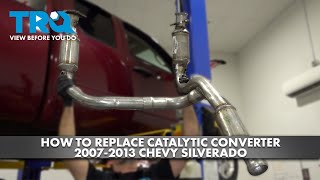
Typical fix: Replace the Bank 1 catalytic converter assembly. 🎬 Watch this walkthrough on replacing the catalytic converter assembly. Ensure any underlying engine problems are fixed first to prevent damage to the new converter.
Est. part cost: $400-$1200 - Engine Misfires or Fuel System Issues ⚪ Low Probability
How to confirm: Check for other trouble codes, especially P0300-P0308 (misfires) or fuel trim codes (P0171, P0174). Worn spark plugs, failing ignition coils, or leaking fuel injectors can cause raw fuel to enter the exhaust, damaging the converter.
Typical fix: Perform a full engine tune-up (spark plugs, wires/coils) or repair the underlying fuel system fault before addressing the P0420 code.
Est. part cost: $100-$500
Rare But Worth Checking
- Contaminated Catalytic Converter: An internal engine problem, like a leaking head gasket or failing piston rings (sometimes related to AFM issues), can allow engine oil or coolant to enter the exhaust and coat the catalytic converter, ruining it. This is usually accompanied by other symptoms like white or blue smoke from the exhaust or noticeable fluid loss.
- PCM Software Issue: GM TSB #PIP3119N mentions that on some low-mileage vehicles, the P0420/P0430 diagnostic thresholds may be too sensitive and can be disabled or updated by a dealer. This is less common but a possibility.
- Intake Manifold Gasket Leak: A vacuum leak from a failed intake manifold gasket can cause a lean condition, prompting the PCM to add excessive fuel. This rich condition can overwhelm the catalytic converter and trigger a P0420 code, even though the primary fault is an air leak.
Diagnosis Steps
- Check for other DTCs: Use an OBD-II scanner to see if any other codes are present. Misfire, fuel system, or O2 sensor heater codes must be addressed first.
- Inspect for Exhaust Leaks: This is the most critical first step for a Silverado. Visually inspect the exhaust manifolds for broken bolts against the cylinder head (especially the rear bolt on the driver's side). Check flanges and pipes for black soot marks or audible leaks, especially when the engine is cold. For a definitive test, use a smoke machine or a shop vacuum in reverse to pressurize the system and spray with soapy water.
- Analyze O2 Sensor Live Data: 🎬 Watch: How to use a scanner to test your converter. Use a scanner with live data capabilities. Warm up the engine completely. At a steady 2000 RPM, observe the Bank 1 Sensor 1 (upstream) and Bank 1 Sensor 2 (downstream) voltages. The upstream sensor should switch rapidly between ~0.1V and ~0.9V. The downstream sensor should remain relatively stable and high (e.g., >0.6V). If the downstream sensor mimics the upstream, and no leaks are present, the converter is likely bad. If it's flat or unresponsive, the sensor itself may have failed.
- Check Fuel Trims: Observe Short Term (STFT) and Long Term (LTFT) Fuel Trim values. The combined total should not exceed +/- 10%. Consistently high positive numbers (e.g., > +10%) on Bank 1 could indicate a vacuum or exhaust leak that the PCM is trying to compensate for, supporting the exhaust leak theory.
- Test for Upstream Problems: If you suspect misfires or fuel issues, check spark plugs, ignition coils, and fuel injector data.
- Confirm Converter Failure: Only after confirming there are no exhaust leaks, no engine performance issues, and that the O2 sensors are responding correctly should you conclude the catalytic converter has failed.
Parts You'll Likely Need

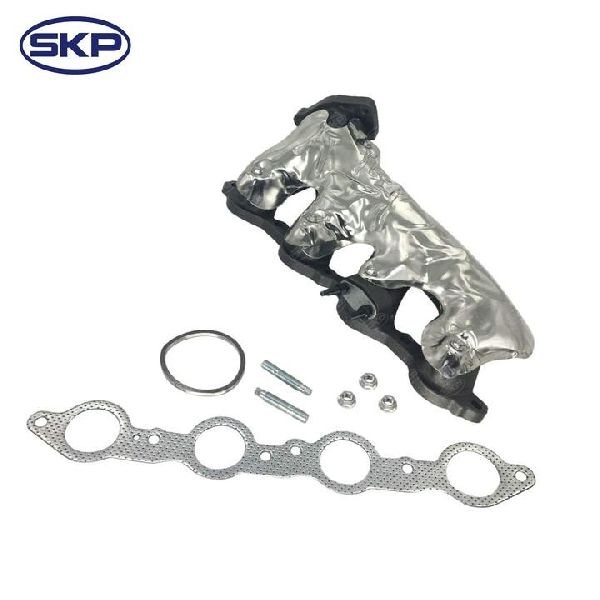
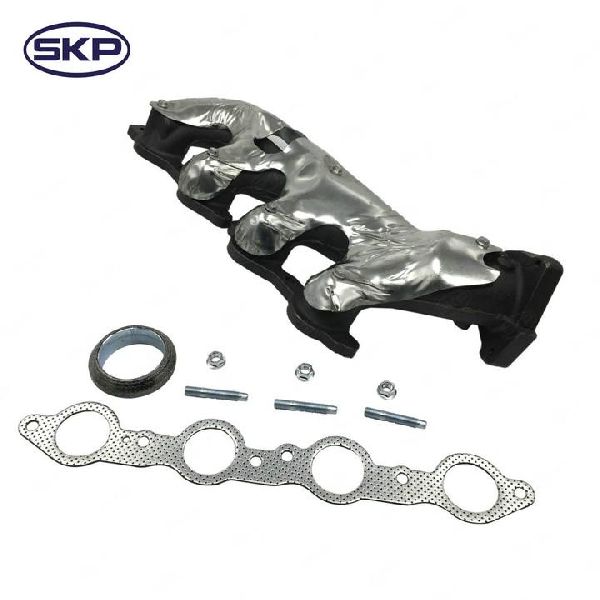
- Exhaust Manifold Bolt & Gasket Kit — To fix the common exhaust leaks at the cylinder head caused by broken manifold bolts. Often requires a new gasket as well.
Trusted brands: ACDelco, Dorman (e.g., Kit 03414B), Fel-Pro
OEM price range: $50-$100
Aftermarket price range: $20-$60 - Downstream Oxygen Sensor (Bank 1, Sensor 2)
(OEM #12609877)— If the sensor is determined to be faulty after testing, it must be replaced to get an accurate reading of catalyst efficiency.
Trusted brands: ACDelco, Denso, NGK/NTK
OEM price range: $70-$130
Aftermarket price range: $50-$120 - Catalytic Converter Assembly (Bank 1)
(OEM #19418941)— The final step if all other potential causes have been ruled out. This is the most expensive part.
Trusted brands: GM Genuine, MagnaFlow, Walker
OEM price range: $600-$1200
Aftermarket price range: $400-$800
Related Codes That Often Appear With This One
- P0430 — This is the same catalyst efficiency code but for Bank 2 (passenger side). If both appear, it could indicate a systemic issue like poor fuel quality, a problem affecting both engine banks, or widespread exhaust leaks from broken bolts on both manifolds.
- P0300-P0308 — These are misfire codes (P0300 for random, P0301-P0308 for specific cylinders). An engine misfire sends unburnt fuel into the exhaust, which can quickly overheat and destroy the catalytic converter. If you have a misfire code, you must fix it first.
- P0171/P0174 — These codes indicate a lean condition on Bank 1 or Bank 2. They often point to an unmetered air leak, such as from a broken exhaust manifold bolt or a leaking intake manifold gasket, which are also root causes of a false P0420.
Technical Service Bulletins (TSBs) & Recalls
- PIP5110
- PIP5110A
- PIP3119N
- PIP5085C
Platform-Specific Known Issues
- TSB #PIP5110A specifically advises technicians to check for possible exhaust leaks before replacing the catalytic converter.
- The rearmost exhaust manifold bolt on the driver's side (Bank 1) and the foremost bolt on the passenger's side (Bank 2) are the most common to break due to thermal stress.
- A ticking noise from the engine bay on a cold start that goes away after a few minutes is a classic symptom of a broken manifold bolt on these trucks.
- Owners on forums like SilveradoSierra.com frequently report fixing P0420 by addressing broken manifold bolts, sometimes using a clamp kit as a permanent, time-saving repair.
Mechanic-Grade Diagnostic Values
- Long-Term + Short-Term Fuel Trim (Total) — expected: Should not exceed ±10% at idle on a warm engine.. Failure: A sustained value greater than +10% suggests an unmetered air leak (like an exhaust or intake gasket leak) that the PCM is compensating for by adding fuel. A sustained negative value below -10% indicates a rich condition.
- Downstream O2 Sensor (Bank 1, Sensor 2) Voltage — expected: A relatively steady reading above 0.6V when cruising at a steady speed.. Failure: Voltage rapidly switching between high and low values, mimicking the upstream O2 sensor, indicates the catalyst is not storing oxygen. A flat, unresponsive voltage may indicate a failed sensor.
- Catalytic Converter Temperature Differential — expected: The outlet pipe temperature should be at least 100°F hotter than the inlet pipe temperature on a fully warmed-up engine running at ~2000 RPM.. Failure: If the outlet temperature is the same as or cooler than the inlet, the converter is not functioning (not 'lighting off').
Scan Tool Commands That Help
- Tech2 / GDS2: Catalyst System Test — This is a GM-specific diagnostic routine that forces the conditions needed to test converter efficiency. It can confirm if the catalyst passes or fails the PCM's internal test criteria without having to complete a full drive cycle.
- Tech2 / GDS2: AFM Cylinder Deactivation (Enable/Disable) — If an AFM-related issue is suspected (e.g., oil consumption, misfires on specific cylinders), a technician can use this command to manually enable and disable V4 mode while monitoring engine data to see how it affects performance and O2 readings.
Wiring & Ground Locations
- Bank 1 Sensor 2 O2 Sensor Connector — On the driver's side of the transmission, connected to the wiring harness that runs along the frame rail. The sensor itself is located in the exhaust pipe after the catalytic converter.. The wiring for the downstream O2 sensor can be damaged by heat from the exhaust or debris. A poor connection or damaged wire at the connector can cause incorrect readings, leading to a false P0420 code or other O2 sensor codes.
- G107 — On the rear of the driver's side cylinder head.. This is a primary engine ground. A loose or corroded ground at this location can cause erratic behavior from various engine sensors, including the oxygen sensors and their heater circuits, potentially contributing to incorrect readings and fault codes.
Real Owner Repair Stories
- Reddit user in r/Silverado (Year not specified, but GMT900 with 5.3L V8 and AFM) — AFM lifter failure caused misfires, which in turn damaged the catalytic converters.
❌ Tried (didn't work) Replacing the catalytic converters with new ones.
✅ What actually fixed it The persistent P0420 and P0430 codes after the cat replacement were due to the tune. The owner's next step was to have the tuner disable the check engine light for those specific codes, implying the aftermarket cats were not efficient enough for the stock PCM parameters. - Reddit user in r/Silverado (2017 Silverado LTZ 5.3L (newer generation, but demonstrates a relevant principle)) — No check engine light while using a plug-in Range Technologies AFM disabler. When the disabler was unplugged for an emissions test, codes P0420 and P0430 appeared almost immediately.
❌ Tried (didn't work) Clearing the codes (they returned within a few miles).
✅ What actually fixed it The user concluded the AFM disabler was masking the codes by preventing the catalyst monitor from running to completion. The underlying issue was failing catalytic converters that needed replacement. - Tahoe Yukon Forum user (2007 Tahoe 5.3L) — P0420 code appeared a week after a full AFM/DOD delete, which included a new non-AFM camshaft, new lifters, and a computer flash.
❌ Tried (didn't work) Using fuel system cleaners (Berryman's, Lacquer Thinner)., Replacing exhaust manifold gaskets.
✅ What actually fixed it The user noted the original AFM lifter failure likely damaged the catalytic converter before the delete was performed. The consensus from other forum members was that the original failure had destroyed the cat, and the P0420 code was now appearing because the system was running correctly post-repair, finally allowing the catalyst monitor to run and fail. The ultimate fix is replacing the bad catalytic converter.
"I Checked Everything" — The Actual Cause

- In some cases, a very small crack or pinhole leak in the exhaust, particularly in the flexible pipe section, may not show up on a smoke test, especially when the exhaust is cold. As the pipe heats up and expands, the crack can open enough to pull in air and trigger a P0420 code, but it may seal again when cool.
OEM Part Supersession History
12609877→12621258— This part number is for an AC Delco Iridium Spark Plug, not an O2 sensor as sometimes misidentified in catalogs. It was updated to a newer plug specification.15905948, 20854454→19418941— Updated part number for the Bank 1 (driver side) catalytic converter assembly for 5.3L engines. Revisions often involve changes in catalyst materials or construction.
Model Year Variations Within This Range
- 2009-2010: Early models in this generation with the 5.3L engine are considered to have a higher risk of AFM-related oil consumption issues, which can lead to premature catalytic converter failure due to oil contamination.
- 2011-2013: Later models reportedly had some improvements to the AFM system, but are still susceptible to lifter failures. The fundamental risk of AFM issues causing downstream converter damage remains across the entire 2009-2013 range.
Helpful Videos
We Have This Part in Stock




The information in this article is provided for general reference and educational purposes only. Vehicle specifications, procedures, and part compatibility can vary by production date, trim level, and region. Always consult your vehicle's factory service manual and verify part numbers before purchasing or performing repairs. Safety-critical components such as airbags, seat belts, and braking systems should be installed by a qualified professional.
- Chevrolet SILVERADO:
- 🎬 Helpful Videos
- 🛍️ Shop This Part
- What's Unique About the 2009-2013 Chevrolet SILVERADO
- Diagnostic Flowchart
- Symptoms You May Notice
- Most Likely Causes
- Rare But Worth Checking
- Diagnosis Steps
- Parts You'll Likely Need
- Related Codes That Often Appear With This One
- Technical Service Bulletins (TSBs) & Recalls
- Platform-Specific Known Issues
- Mechanic-Grade Diagnostic Values
- Scan Tool Commands That Help
- Wiring & Ground Locations
- Real Owner Repair Stories
- "I Checked Everything" — The Actual Cause
- OEM Part Supersession History
- Model Year Variations Within This Range
- 🎟️ Get 5% Off