

P0420 on 2004-2008 Chevrolet Silverado: Catalytic Converter & O2 Sensor Guide
P0420 on a 2004-2008 Silverado means the Bank 1 catalytic converter is inefficient. While this often points to a failed converter, always check for exhaust leaks and faulty oxygen sensors first to avoid a costly misdiagnosis. A new downstream O2 sensor costs around $50-$100 and is a common, simpler fix. Broken exhaust manifold bolts are a very frequent root cause on these trucks.
- P0420 points to an inefficient catalytic converter on Bank 1, but the converter itself is not always the root cause.
- Always diagnose before replacing parts. Check for exhaust leaks (listen for ticking) and test the oxygen sensors using a scan tool.
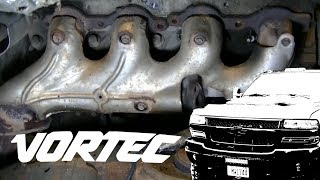
- An exhaust leak from a broken manifold bolt is a very common problem on these Silverado V8 engines.
- Replacing the downstream (Bank 1, Sensor 2) O2 sensor is a cost-effective diagnostic step before committing to a new catalytic converter.
- Ensure any replacement parts match your truck's specific year, as the 2007 model year was a transition between two different generations (GMT800 'Classic' and GMT900).
What's Unique About the 2004-2008 Chevrolet SILVERADO

This year range covers two Silverado generations: the mechanically simpler GMT800 ('04-'06 and '07 Classic) and the more modern GMT900 ('07-'08). On both, exhaust manifold leaks, often identified by a ticking noise on startup, are a frequent cause of P0420 by allowing un-metered oxygen to enter the exhaust and skew sensor readings. The manifold bolts, especially the front-most and rear-most, are prone to breaking off. Owners often replace expensive catalytic converters only to find the true cause was a less expensive O2 sensor or a fixable exhaust leak. A specific GM bulletin for 2004 models, TSB #PIP3119M, noted that the P0420 diagnostic could be disabled under certain conditions, and a later version, PIP3119P, explains that the test is disabled for the first hour of engine run time on a new vehicle to allow the converter to break in. If this break-in is interrupted (e.g., battery disconnect), a false P0420 can be set.
Diagnostic Flowchart

Tap your situation to follow the diagnostic path that matches what you're seeing on this vehicle.
Generation note: This range covers the end of the 1st generation (GMT800, 2004-2006 and 2007 'Classic') and the beginning of the 2nd generation (GMT900, 2007-2008). While the P0420 code's meaning is the same, part numbers for exhaust components and sensors will differ between these two distinct platforms. For example, the GMT800 trucks often have a single exhaust pipe per bank, while many GMT900s have a more complex Y-pipe design.
Symptoms You May Notice
- Check Engine Light is on
- Reduced engine power or hesitation during acceleration, especially if the converter is clogged.
- A sulfur or "rotten egg" smell from the exhaust, indicating the converter is struggling with a rich fuel mixture.
- A ticking or puffing noise from the engine bay, especially when cold, which strongly points to an exhaust manifold leak from a broken bolt or bad gasket.
- Failing a state emissions inspection.
- Reduced fuel economy if the root cause is a fuel system issue or a clogged converter.
- Immediately replacing the catalytic converter without checking O2 sensor data or inspecting for exhaust leaks. The converter is expensive, and if it's not the root cause, the P0420 code will return.
- Replacing the O2 sensor but using a cheap, poor-quality aftermarket brand, which may not solve the problem or could introduce new issues.
- Ignoring other codes like P0171, P0174, or P0300. These codes indicate problems that will destroy a new catalytic converter quickly.
Most Likely Causes

- Failing Catalytic Converter 🔴 High Probability Converters can fail from age (over 100k-150k miles) or contamination from unresolved engine issues like misfires or burning oil. An engine running rich can also overheat and destroy the converter substrate.
How to confirm: After ruling out all other causes, a professional can perform a backpressure test or use an infrared thermometer to check converter inlet/outlet temperatures. 🎬 Watch: How to test a catalytic converter like a professional. A properly working converter should be at least 100°F hotter at the outlet than the inlet. A clogged converter may be hotter at the inlet.
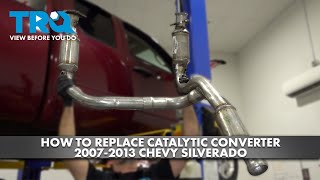
Typical fix: Replace the Bank 1 catalytic converter. Ensure you use a model that complies with your state's emissions laws (Federal EPA or CARB). Using a cheap, universal converter may not work and can cause the code to return.
Est. part cost: $300-$800 - Faulty Downstream Oxygen (O2) Sensor 🟡 Medium Probability O2 sensors are wear items and can become 'lazy' or biased with age, sending slow or inaccurate signals to the PCM. This can trick the computer into thinking the converter is bad when it's not. It's a very common first-step replacement for this code.
How to confirm: Use a scan tool with live data to graph the Bank 1 Sensor 2 voltage. A healthy downstream sensor on a warm engine at steady RPM should show a relatively steady voltage (typically above 0.5V). If it's fluctuating rapidly between ~0.1V and ~0.9V, mirroring the upstream sensor, the converter is likely bad. If the sensor is stuck or slow to respond, the sensor itself is faulty.
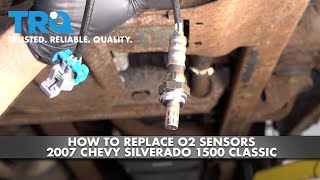
Typical fix: Replace the Bank 1 downstream (post-catalyst) oxygen sensor. Use a quality OEM or equivalent brand like ACDelco or Denso, 🎬 See this walkthrough for replacing O2 sensors on Classic models. as some aftermarket sensors can be overly sensitive and cause issues.
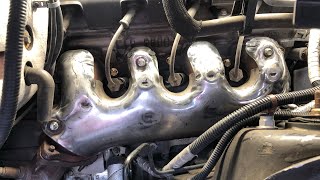
Est. part cost: $50-$120 - Exhaust System Leak 🟡 Medium Probability Exhaust manifold bolts on the V8 engines are notorious for breaking, especially the one at the very front or very rear of the manifold. The resulting leak introduces oxygen into the exhaust stream, which causes the O2 sensors to send false readings and can trigger both P0420 and lean codes (P0171/P0174).
How to confirm: Listen for a distinct ticking or puffing noise from the engine area, especially on a cold start. A visual inspection may reveal black soot trails near the manifold-to-head mating surface. A smoke test is the definitive way to find a leak. You can also sometimes feel the leak with your hand (be careful of hot surfaces).
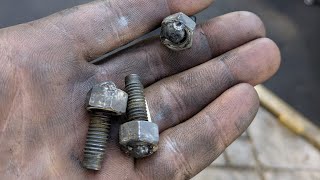
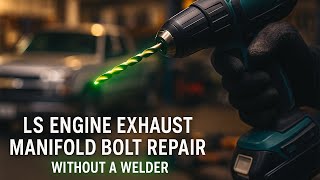
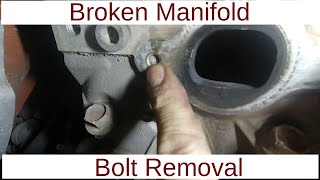
Typical fix: Repair the leak. This may involve extracting and replacing broken exhaust manifold bolts and the gasket. For the difficult-to-access rear bolts, some owners use a clamp-style repair bracket that bolts to the head and applies pressure to the manifold, sealing the leak without 🎬 Watch: A clever trick for fixing broken exhaust manifold bolts. requiring bolt extraction.
Est. part cost: $20-$250 - Engine Misfires or Fuel Mixture Issues ⚪ Low Probability Unburned fuel from misfires (bad plugs, coils) or a rich condition (leaking injectors, bad intake manifold gaskets) can enter the exhaust and overheat the catalytic converter, destroying its internal structure. Intake manifold gaskets are a known failure point that can cause lean codes (P0171/P0174) that should be addressed before P0420.
How to confirm: Check for other trouble codes, especially misfire codes (P0300-P0308) or fuel trim codes (P0171, P0174). Address these codes FIRST, as they are the root cause that will destroy a new converter if not fixed.
Typical fix: Perform a full engine tune-up: replace spark plugs and wires. If fuel trim codes are present, diagnose for vacuum leaks (especially intake manifold gaskets), MAF sensor issues, or fuel pressure problems.
Est. part cost: $50-$400
Rare But Worth Checking
- Contaminated Fuel: Using leaded fuel (if available) or fuel with improper additives can quickly poison the catalytic converter.
- Internal Engine Problems: Excessive oil consumption from worn piston rings or valve seals can contaminate the catalytic converter with oil ash, leading to failure.
- PCM Software Update Needed: In some cases, the PCM's parameters for triggering the P0420 code may be too sensitive. A dealer can check for and apply any available software updates. TSB PIP3119M points to this possibility.
Diagnosis Steps
- Read all stored fault codes with an OBD-II scanner. Note any other codes besides P0420 and check freeze frame data. Prioritize fixing misfire (P03xx) or fuel trim (P0171/P0174) codes first.
- Perform a thorough visual and auditory inspection of the exhaust system when the engine is cold. Start the engine and listen for a distinct 'ticking' sound from the manifold areas. Look for black soot trails near gaskets and flanges.
- If an exhaust leak is not obvious, a smoke test is the most effective way to find small cracks or gasket failures.
- Use a scan tool with live data to monitor the upstream (Bank 1, Sensor 1) and downstream (Bank 1, Sensor 2) oxygen sensors with the engine fully warmed up and held at a steady 2,000-2,500 RPM.
- Analyze the O2 sensor data: The upstream sensor should show rapid switching between ~0.1V and ~0.9V. The downstream sensor should show a much slower, steadier voltage, typically above 0.5V. If the downstream sensor is mirroring the upstream sensor's activity, the converter is not working efficiently.
- If the downstream sensor appears lazy, stuck, or has a flat low voltage, suspect a faulty sensor and replace it as the next step.
- If no exhaust leaks are found and the O2 sensors test good, use an infrared thermometer to measure the temperature of the exhaust pipe just before and just after the catalytic converter. The outlet should be at least 100°F hotter than the inlet. If it's cooler or the same temperature, the converter has failed internally.
- Before replacing the converter, ensure there are no underlying engine issues (misfires, rich/lean conditions) that could damage the new part. Consider performing the converter break-in drive cycle described in TSB PIP3119P after replacem
Parts You'll Likely Need

- Catalytic Converter (Bank 1) — This is the most common final fix if all other causes are ruled out. The original converter may have failed due to age or contamination.
Trusted brands: Walker, MagnaFlow, AP Exhaust
OEM price range: $600-$1200
Aftermarket price range: $300-$800 - Downstream Oxygen Sensor (Bank 1, Sensor 2)
(OEM #ACDelco 213-1570 (GM OE #12573721) - Note: Verify exact fitment for your specific year/engine.)— A faulty sensor can send incorrect data, falsely triggering a P0420 code. It's a common point of failure and a wise part to replace before condemning the expensive converter.
Trusted brands: ACDelco, Denso, NTK
OEM price range: $80-$150
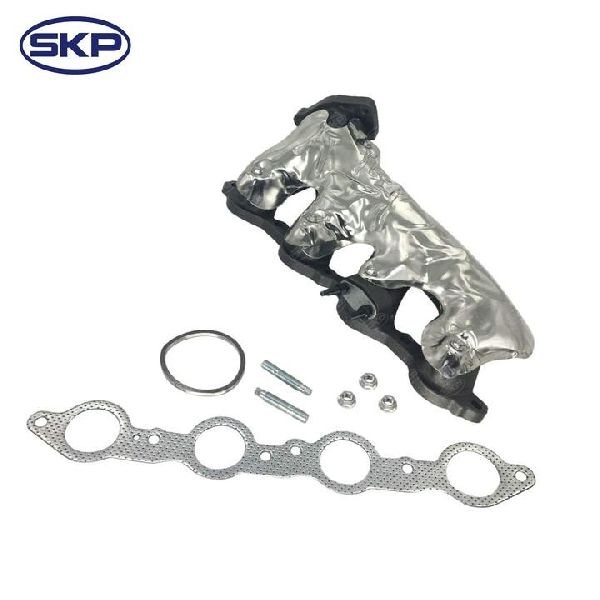
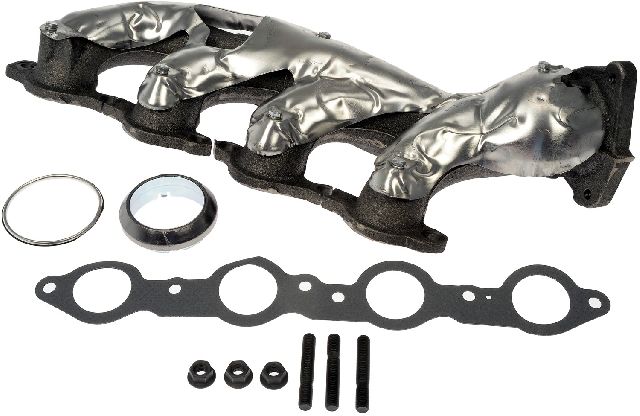
Aftermarket price range: $50-$100 - Exhaust Manifold Gasket
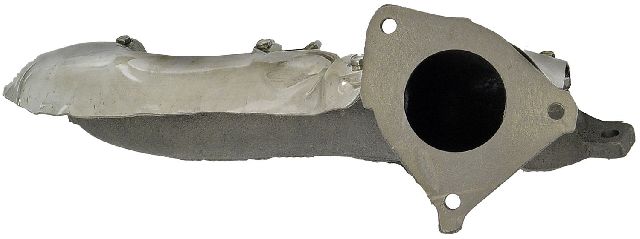
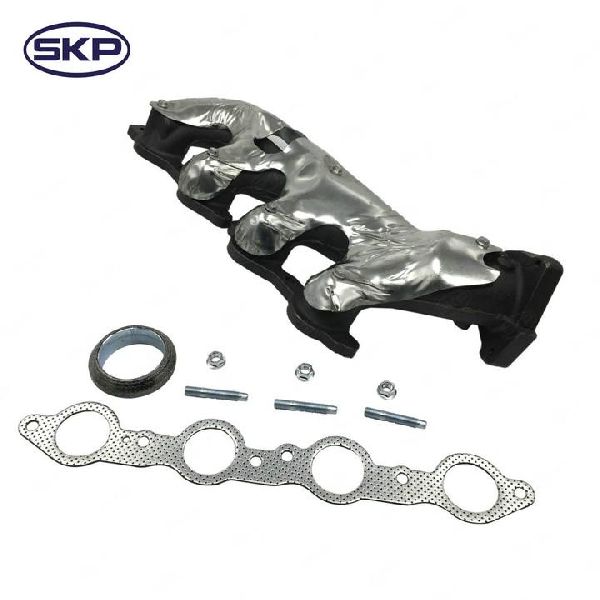
(OEM #Fel-Pro MS 96587 (Commonly used for V8 models, verify fitment))— Needed when repairing an exhaust leak at the cylinder head due to broken manifold bolts, a very common issue on these trucks.
Trusted brands: Fel-Pro, ACDelco
OEM price range: $40-$70
Aftermarket price range: $25-$50
Related Codes That Often Appear With This One
- P0430 — This is the same catalyst efficiency code but for Bank 2 (passenger side). If both appear, it may suggest a systemic issue like a fuel problem, bad MAF sensor, or that both converters are at the end of their service life.
- P0300-P0308 — These are misfire codes. An ongoing misfire allows unburned fuel to enter the exhaust, which will overheat and damage the catalytic converter, causing P0420.
- P0171 / P0174 — These 'System Too Lean' codes can be caused by vacuum or exhaust leaks. An exhaust leak before the O2 sensor is a classic cause for both a lean code and a P0420 code simultaneously on these trucks.
Technical Service Bulletins (TSBs) & Recalls
- TSB #PIP3119M / PIP3119P: Addresses false P0420/P0430 codes on new/low-mileage vehicles or after a converter replacement. Explains that the catalyst monitor test is disabled for the first hour of engine operation to allow for a break-in period. If interrupted, the code can set falsely. Provides a specific highway drive cycle procedure to complete the break-in and clear the false code.
Platform-Specific Known Issues
- The Post-Repair P0420: A common story on forums involves an owner fixing other engine problems, such as misfires or a vacuum leak that set a P0171 code. After clearing the codes, they are surprised when a P0420 code appears for the first time. This is not a new problem, but rather the PCM finally being able to run the catalyst efficiency monitor test (which is often suspended when other major faults are present). The original problem (e.g., misfire) likely damaged the catalytic converter, and its failure was only revealed after the primary issue was fixed.
Mechanic-Grade Diagnostic Values

- Fuel Pressure (Key On, Engine Off) — expected: 55-65 PSI for 1999-2006 models. A reading of 50 PSI is considered borderline low.. Failure: Pressure significantly below 55 PSI can cause lean conditions and misfires, which can lead to a P0420 code.
- Upstream O2 Sensor (Bank 1, Sensor 1) Live Data — expected: Rapidly fluctuating voltage between approximately 0.1V (lean) and 0.9V (rich) on a warm engine.. Failure: A sensor that is stuck at a specific voltage or is slow to respond is faulty.
- Downstream O2 Sensor (Bank 1, Sensor 2) Live Data — expected: A relatively stable voltage, typically between 0.4V and 0.8V, on a warm engine with a good catalytic converter.. Failure: Voltage that rapidly fluctuates in a similar pattern to the upstream sensor indicates the catalytic converter is not functioning. A stuck or non-responsive sensor indicates a faulty sensor.
- Long-Term Fuel Trim (LTFT) — expected: Ideally within +/- 10%.. Failure: Values consistently greater than +10% (adding fuel) suggest a vacuum leak, exhaust leak before the O2 sensor, or a weak fuel pump. Values less than -10% (subtracting fuel) can indicate leaking injectors or a faulty MAF sensor. These underlying issues must be fixed to prevent damage to the catalytic converter.
Scan Tool Commands That Help
- Professional Scan Tool (Tech2, GDS2, etc.): Catalyst Monitor Test / Drive Cycle — After a repair (like replacing a converter or O2 sensor) to force the PCM to re-run the catalyst efficiency test and confirm the fix. The GM-specific cycle often involves holding a steady speed of 55 mph for five minutes. It may take up to five complete drive cycles for the monitor to run and confirm the status of a marginal catalyst.
Wiring & Ground Locations
- G103 (Right Rear of Engine Block) — On the GMT800 (2004-2006), this crucial ground for the ECM is located on the right (passenger) side rear of the engine block.. A corroded or loose G103 ground can cause erratic sensor readings, including from the oxygen sensors, leading to false trouble codes. It is a common source of mysterious electrical issues on these trucks and should be inspected and cleaned during diagnosis.
- O2 Sensor Harness Connector — The connectors for the O2 sensors are located along the frame rails or on brackets attached to the transmission bellhousing.. GM service information explicitly warns against soldering or attempting to repair the O2 sensor pigtail wiring. The sensor uses the gaps between the wire strands to get its clean air reference; sealing these gaps can obstruct this reference and degrade sensor performance, leading to incorrect readings. If the pigtail is damaged, the entire sensor must be replaced.
Real Owner Repair Stories
- Reddit user in r/MechanicAdvice (2003 Silverado 1500 4.3L V6) — Persistent P0420 code for over a year.
❌ Tried (didn't work) Replaced catalytic converters (twice)., Swapped O2 sensors to test for failure., Replaced intake manifold gasket., Replaced fuel pump and fuel filter., Replaced Bank 1 O2 sensors with new parts.
✅ What actually fixed it The user installed a non-fouler (spark plug anti-fouler) on the downstream O2 sensor to pull it out of the direct exhaust stream. This is a known 'trick' to extinguish the light when the catalyst is borderline, though it does not fix the underlying emissions issue. The user was still driving to see if the light would stay off. - Reddit user in r/MechanicAdvice (2008 Silverado 1500 5.3L (with a swapped 2011 5.3L LC9 engine)) — Engine stalling on deceleration, long term fuel trims at -16% to -21% (running rich), but no P0420/P0172/P0175 codes set yet.
❌ Tried (didn't work) Checked for exhaust/vacuum leaks (none found)., Verified MAF sensor readings were correct., Verified fuel pressure was 43 PSI (Note: this is low for some models)., Tested O2 sensors (reported as good)., Replaced MAP sensor., Tested MAP sensor wiring harness (all circuits passed)., Replaced the ECM.
✅ What actually fixed it The user discovered the swapped 2011 LC9 engine used larger 37 lb/hr flex-fuel injectors, while the original 2008 LY5 tune in the ECM was programmed for smaller 30 lb/hr injectors. The ECM was commanding fuel for the smaller injectors, but the larger injectors were delivering too much, causing the severe rich condition (negative fuel trims). The fix required reprogramming the ECM to account for the larger injectors.
"I Checked Everything" — The Actual Cause
- In cases where an exhaust smoke test reveals no leaks, a persistent P0420 can be caused by underlying fuel system issues. One owner found that after replacing cats and O2 sensors, the code returned. The final fix was cleaning a dirty MAF sensor that was causing incorrect fuel mixture calculations, which in turn made the catalyst efficiency test fail.
- A rich condition caused by larger-than-stock fuel injectors being installed without a corresponding ECM tune can overload the catalytic converter. Even with no exhaust leaks, the excess fuel will cause the downstream O2 sensor to read incorrectly, triggering a P0420 and high negative fuel trims.
OEM Part Supersession History
Unknown→ACDelco 213-4229 (GM 12609457)— This is a common downstream oxygen sensor for many 2008-2013 GM trucks, including the Silverado.
Model Year Variations Within This Range
- 2004-2006 (GMT800): These models typically use a return-style fuel system with a vacuum-referenced fuel pressure regulator. Fuel pressure should be 55-65 PSI. The primary ECM ground (G103) is on the right rear of the engine block.
- 2007-2008 (GMT900): These models transitioned to a returnless fuel system, and the ECM directly controls fuel pressure via a fuel pump control module (FPCM) on many configurations. The O2 sensor connectors and wiring harness clips may differ from the GMT800 generation. The primary ECM ground location may also differ from earlier models.
Helpful Videos
We Have This Part in Stock



The information in this article is provided for general reference and educational purposes only. Vehicle specifications, procedures, and part compatibility can vary by production date, trim level, and region. Always consult your vehicle's factory service manual and verify part numbers before purchasing or performing repairs. Safety-critical components such as airbags, seat belts, and braking systems should be installed by a qualified professional.
- Chevrolet SILVERADO:
- 🎬 Helpful Videos
- 🛍️ Shop This Part
- What's Unique About the 2004-2008 Chevrolet SILVERADO
- Diagnostic Flowchart
- Symptoms You May Notice
- Most Likely Causes
- Rare But Worth Checking
- Diagnosis Steps
- Parts You'll Likely Need
- Related Codes That Often Appear With This One
- Technical Service Bulletins (TSBs) & Recalls
- Platform-Specific Known Issues
- Mechanic-Grade Diagnostic Values
- Scan Tool Commands That Help
- Wiring & Ground Locations
- Real Owner Repair Stories
- "I Checked Everything" — The Actual Cause
- OEM Part Supersession History
- Model Year Variations Within This Range
- 🎟️ Get 5% Off