

P0420 on 2002-2009 Chevrolet Silverado 1500: Catalyst, O2 Sensor, or Something Else?
On a 2002-2009 Silverado, P0420 usually means the catalytic converter on Bank 1 has failed due to age and high mileage. Before replacing the converter (which can be costly), it's crucial to check for cheaper causes like a bad downstream O2 sensor or an exhaust leak, which are also common on these trucks.
- P0420 on your Silverado means the driver's side (Bank 1) catalytic converter is failing its efficiency test.
- While the converter itself is the most likely culprit on a higher-mileage truck, always check for cheaper fixes first: exhaust leaks (especially at the manifold) and a faulty downstream (Sensor 2) oxygen sensor.
- Address any other engine codes, like misfires (P030x), before replacing the catalytic converter, as they can damage the new part.
- You can continue driving with P0420, but you will fail emissions and may experience reduced power and fuel economy over time.
- Bank 1 is the driver's side on a Chevrolet V8 engine.
What's Unique About the 2002-2009 Chevrolet SILVERADO 1500

For the GMT800 and GMT900 generation Silverados, a P0420 code is a very common issue, often appearing as the truck exceeds 100,000-150,000 miles. While catalytic converter failure is the most frequent final diagnosis, these trucks are also known for exhaust manifold gasket leaks and aging oxygen sensors that can trigger the code falsely. The V8 engines are particularly notorious for the rear-most exhaust manifold bolts breaking off due to thermal stress, creating a leak that introduces oxygen and fools the sensors. An interesting manufacturer TSB for this era, #PIP3119P, even mentions that the P0420 diagnostic was disabled for the first hour of engine run time on new vehicles to allow for a 'break-in' period, suggesting GM was aware of potential early or erroneous readings.
Diagnostic Flowchart


Tap your situation to follow the diagnostic path that matches what you're seeing on this vehicle.
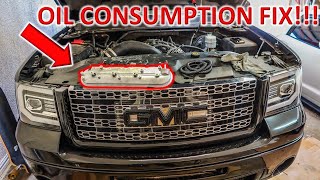
Generation note: This range covers two Silverado 1500 generations: the 1st Gen (GMT800), sold until 2006 (and as the 'Classic' in 2007), and the 2nd Gen (GMT900), which debuted in 2007. While the causes for P0420 are largely the same, the physical parts (converters, sensors) and their locations may differ slightly. The GMT800s are particularly prone to exhaust manifold leaks due to broken bolts, a well-documented issue in owner forums. The GMT900s (2007+) with Active Fuel Management (AFM) can suffer from excessive oil consumption, which can foul spark plugs and contaminate the catalytic converter, 🎬 Watch: An easy valve cover fix for oil consumption issues. leading to a P0420 code.
Symptoms You May Notice
- Check Engine Light is on
- Possible reduction in fuel economy
- Slight loss of engine power, especially if the converter is becoming clogged
- A sulfur or "rotten egg" smell from the exhaust
- A ticking or puffing noise from the engine bay, especially when cold, indicating an exhaust manifold leak
- Immediately replacing the catalytic converter without checking for exhaust leaks or testing the oxygen sensors first. The converter is expensive, and if the root cause is a cheap sensor or a small leak, the new converter won't fix the problem and the code will return.
- Replacing the O2 sensor when the catalytic converter is actually bad. A new, more accurate O2 sensor will often detect the bad converter even more quickly and cause the light to return faster.
Most Likely Causes

- Failing Catalytic Converter 🔴 High Probability Converters have a finite lifespan, and on high-mileage trucks, they simply wear out. They can also be damaged by other engine problems like misfires or burning oil, which are not uncommon on older Silverados.
How to confirm: Use a scan tool to watch live O2 sensor data; the downstream (Bank 1, Sensor 2) reading should be steady, not fluctuating like the upstream sensor. An infrared thermometer can also be used; the outlet of the converter should be significantly hotter (at least 100°F) than the inlet on a working converter.
Typical fix: Replace the Bank 1 catalytic converter assembly.
Est. part cost: $250-$800 - Faulty Downstream Oxygen (O2) Sensor 🟡 Medium Probability O2 sensors are a common failure item and are responsible for reporting the data that triggers the P0420 code. A lazy or failing sensor can send incorrect data, though many professional technicians note that a bad sensor is less common than a bad converter.
How to confirm: Test the sensor's voltage output with a scan tool or multimeter. If the readings are erratic, stuck, or slow to respond, the sensor is likely bad. A common diagnostic tip is to swap the downstream sensors from Bank 1 and Bank 2. If the code changes to P0430 (Bank 2), the sensor is faulty.
Typical fix: Replace the Bank 1, Sensor 2 (post-catalyst) oxygen sensor.
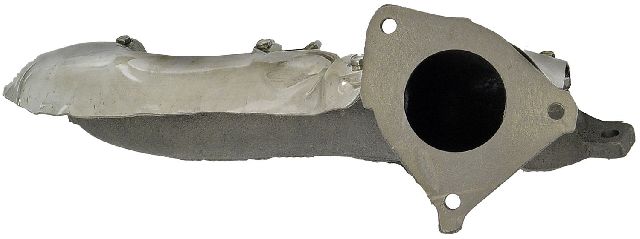
Est. part cost: $40-$100 - Exhaust Leak 🟡 Medium Probability The exhaust manifolds on the V8 engines, particularly the GMT800s, are notorious for broken bolts at the rearmost cylinder on either bank. This allows outside air to be sucked into the exhaust, skewing O2 sensor readings and causing a false P0420.
How to confirm: Perform a visual inspection for black soot trails around the manifold or physical cracks. Listen for a ticking or puffing noise, especially when the engine is cold. A smoke test is the most definitive way to find a leak.
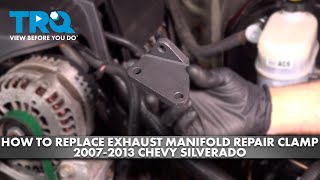
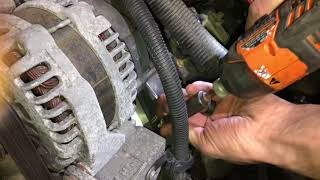
Typical fix: Replace the leaking gasket and repair the broken manifold bolts. Special aftermarket brackets (like those from Dorman or Kral) are available to clamp the manifold down without needing to extract the broken bolt. 🎬 See how to install a manifold repair clamp yourself.
Est. part cost: $20-$200 - Underlying Engine Issue ⚪ Low Probability Issues like leaking fuel injectors, worn spark plugs/coils causing misfires, or excessive oil consumption can send unburnt fuel or contaminants into the exhaust, which will destroy a new catalytic converter quickly.
How to confirm: Check for other trouble codes (e.g., P030x for misfires, P0171/P0174 for lean conditions). Address any other codes *before* replacing the catalytic converter. A user on ChevroletForum.com with a 2014 Silverado experienced a persistent P0420/P0430 that was only resolved after replacing manifolds, gaskets, sensors, and finally, fuel injectors.
Typical fix: Repair the root cause, such as replacing spark plugs, ignition coils, or fuel injectors.
Est. part cost: $50-$400
Rare But Worth Checking
- Contaminated Fuel: Using leaded fuel (if available) or fuel with high levels of contaminants can quickly poison the catalytic converter.
- PCM Software Issue: Less common, but some GM vehicles have had TSBs for calibration updates to prevent overly sensitive P0420 triggers. Check if your vehicle's software is up to date. One owner on a forum considered an ECU reflash after replacing numerous parts without success.
- Spark Plug Non-Fouler 'Fix': A common but improper 'fix' discussed in forums involves installing a spark plug non-fouler to pull the downstream O2 sensor out of the direct exhaust stream. This tricks the sensor and may clear the code to pass an inspection, but it does not fix the underlying problem and is illegal in many jurisdictions.
Diagnosis Steps
- Scan for all stored trouble codes. If any other codes are present (especially for misfires, fuel trim, or O2 sensor circuits), diagnose and fix them first.
- Perform a thorough visual inspection of the exhaust system from the engine to the tailpipe. Listen for a distinct 'ticking' sound when the engine is cold, which is a classic sign of a manifold leak. Look for black soot marks indicating a leak, paying close attention to the rearmost exhaust manifold bolts on both banks.
- Use a scan tool with live data capability. Graph the voltage of the Bank 1 Sensor 1 (upstream) and Bank 1 Sensor 2 (downstream) O2 sensors.
- At a steady 2,500 RPM, the upstream sensor should fluctuate rapidly between ~0.1V and ~0.9V. The downstream sensor should hold a steady, high voltage (typically >0.6V or 0.7V).
- If the downstream sensor's graph mirrors the upstream sensor's fluctuations, the catalytic converter is not working and likely needs replacement.
- If the downstream sensor's voltage is flat, low, or slow to respond, the sensor itself is the primary suspect. Consider swapping with the Bank 2 sensor to confirm.
- If no definitive conclusion can be made from sensor data, perform an exhaust backpressure test or use an infrared thermometer to check the converter's inlet and outlet temperatures. The outlet should be at least 100°F hotter than the inlet on a working converter.
Parts You'll Likely Need
- Catalytic Converter (Bank 1)
(OEM #Varies by year/engine. Example for 2007-2008 is part of a kit like GM #19419599.)— This is the most common part that fails and directly causes the P0420 code when its efficiency drops below the required threshold.
Trusted brands: ACDelco (OEM), Walker, MagnaFlow, AP Exhaust
OEM price range: $600-$1200
Aftermarket price range: $250-$800 - Oxygen Sensor (Bank 1, Sensor 2)
(OEM #Example: ACDelco #213-4229 or Denso #234-4668 for many 5.3L models.)— This downstream sensor is what monitors the converter's performance. A faulty sensor can give false readings, triggering the code. It's a common failure item and a good first part to replace due to its low cost.
Trusted brands: ACDelco, Denso, Bosch, NTK
OEM price range: $60-$120
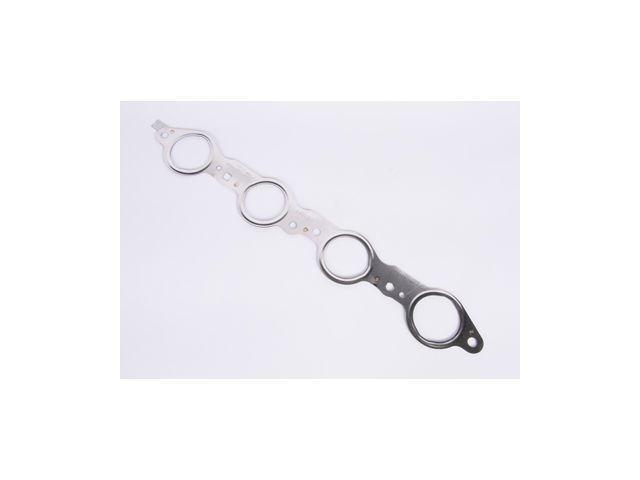
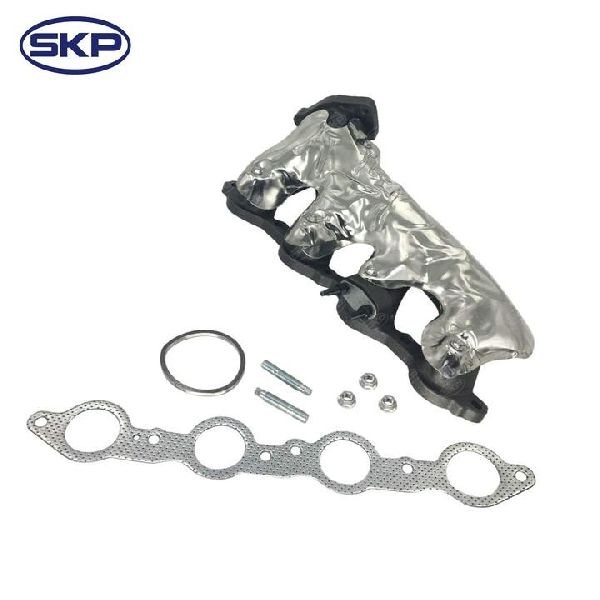
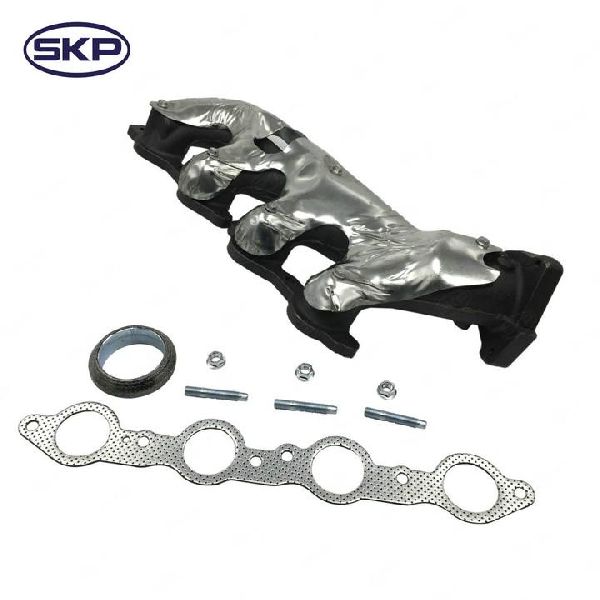
Aftermarket price range: $40-$100 - Exhaust Manifold Gasket
(OEM #Varies by engine. Example for 5.3L is ACDelco #12617944.)— The gaskets on these trucks, especially GMT800s, are prone to leaking, particularly at the rearmost cylinder. This leak introduces unmetered air and can falsely trigger a P0420 code.
Trusted brands: ACDelco, Fel-Pro, Mahle
OEM price range: $15-$30
Aftermarket price range: $10-$25
Related Codes That Often Appear With This One
- P0430 — This is the same catalyst efficiency code but for Bank 2 (passenger side). It's common to see both codes together on high-mileage trucks, indicating both converters are failing around the same time.
- P0300-P0308 — These are misfire codes. An engine misfire allows unburnt fuel to enter the exhaust, which can overheat and damage the catalytic converter, causing a P0420.
- P0131, P0133, P0151, etc. — These are specific oxygen sensor circuit codes. If you have one of these, it points directly to a faulty sensor or wiring, which should be fixed first as it could be the cause of the P0420 reading.
Technical Service Bulletins (TSBs) & Recalls
- PIP3119P: Catalytic Converter Break-In Information To Prevent DTCs P0420 And/Or P0430. This TSB explains that on new vehicles or after a converter replacement, the diagnostic for P0420/P0430 is disabled for the first hour of engine run time to allow the converter to break in. If the code sets on a low-mileage vehicle or after a replacement, a specific highway drive cycle should be performed to complete the break-in before further diagnostics.
Platform-Specific Known Issues
- Broken exhaust manifold bolts are a well-documented problem on the GMT800 (1999-2007) trucks, leading to exhaust leaks that can trigger a P0420 code.
- The provided TSB #PIP3119P notes that for some vehicles, the P0420 and P0430 DTCs were disabled at low mileage, indicating a potential for early, erroneous codes from the factory that may have been addressed with software updates.
Mechanic-Grade Diagnostic Values
- Total Fuel Trim (Short Term + Long Term) — expected: Within +/- 10%. Failure: A total trim consistently above +10% indicates a lean condition (e.g., vacuum leak) that can affect converter operation. A total trim below -10% indicates a rich condition.
- Downstream O2 Sensor (Bank 1 Sensor 2) Voltage — expected: Steady voltage, typically above 0.6V (600mV) when the engine is at a steady RPM and in closed loop.. Failure: Voltage that fluctuates rapidly, mirroring the upstream O2 sensor, indicates a failed catalytic converter.
- Catalytic Converter Temperature Differential — expected: The outlet pipe temperature should be at least 100°F hotter than the inlet pipe temperature after the engine is fully warmed up.. Failure: An outlet temperature that is the same as or cooler than the inlet temperature suggests the catalyst is not lighting off and performing its chemical reaction.
Hidden / Shadow Codes Worth Checking
- Mode $06, Test ID $21: This is not a DTC, but a test result from the onboard diagnostic monitor for Catalyst Efficiency Bank 1. A scan tool capable of reading Mode $06 data can show the raw test value and the minimum/maximum thresholds. (see via Use a professional-grade scan tool (like a Tech 2 or modern equivalent) and navigate to the "Onboard Monitors" or "Mode 6" section.)
Scan Tool Commands That Help
- Tech 2 / GDS2 or equivalent: Graphing O2 Sensor Data — This is the primary diagnostic step. Graphing Bank 1 Sensor 1 and Bank 1 Sensor 2 simultaneously allows you to visually compare their waveforms. A good cat shows a rapidly switching upstream sensor and a steady downstream sensor.
- Tech 2 / GDS2 or equivalent: Fuel Trim Reset — After repairing a vacuum leak, fuel delivery issue, or other problem that caused skewed fuel trims, this command should be used to clear the learned long-term fuel trim values. This forces the ECM to relearn fuel delivery strategy immediately.
Wiring & Ground Locations
- G102 / G104 — On the rear of the left (driver's side) cylinder head for G104, and the right (passenger's side) cylinder head for G102 on many V8 models.. These are primary engine-to-chassis grounds. A poor connection here can cause erratic sensor readings, including from the O2 sensors and crankshaft position sensor, leading to various codes and misdiagnosis.
- G103 — On GMT800 models, this can be on the engine block, left front side. On some vehicles, it's located on the cowl, above the brake booster.. This is a critical ground for the ECM and multiple interior modules. Corrosion or a loose connection at G103 can cause a host of bizarre electrical issues, including false sensor codes.
- EBCM Ground — On the frame rail under the driver's door area.. While primarily for the ABS system, this ground point is notorious for corrosion. A poor connection here can introduce electrical noise into the vehicle's data network, potentially affecting ECM calculations and sensor readings.
Real Owner Repair Stories
- Reddit user in r/MechanicAdvice (2003 Silverado 1500 4.3L V6) — Persistent P0420 code.
❌ Tried (didn't work) Replacing catalytic converters (twice), Swapping O2 sensors to see if code moved to other bank, Replacing Bank 1 O2 sensors, Installing a non-fouler on the downstream O2 sensor
✅ What actually fixed it The user first got a lean code, which led them to replace the intake manifold gasket, fuel pump, and fuel filter. After these repairs, the code reverted back to P0420, and the issue remained unresolved at the time of the post, indicating a complex underlying problem beyond the typical causes.
"I Checked Everything" — The Actual Cause
- A common scenario where a smoke test reveals no leaks is when the root cause is an unmetered air leak at the intake manifold gasket. On plastic intakes, these gaskets can become hard and brittle, allowing just enough air to be sucked in to lean out the mixture and affect catalyst operation, but the leak is not part of the exhaust system that a smoke test would check.
When the Usual Fixes Don't Work
- In many forum discussions, owners report replacing both the catalytic converter and the O2 sensors, only for the P0420 code to return. In these cases, the ultimate cause was often an overlooked issue like a small crack in an exhaust flex pipe, a leaking intake manifold gasket creating a lean condition, or excessive oil consumption on AFM-equipped engines (2007+) that contaminated the new converter. One owner on a forum fixed a persistent P0420 by replacing the intake manifold and EGR valve gaskets, suggesting an unmetered air leak was the true root cause.
OEM Part Supersession History
Varies→ACDelco 213-4229 (Downstream)— Part consolidation and design updates.
Heads up: ACDelco 213-4229 is a downstream sensor. It supersedes GM part #12609457 and is cross-referenced with Denso #234-4256. The Denso #234-4668 is a widely cited part that fits both upstream and downstream on many 2002-2006 models but may be upstream-only on some later models. Always verify the specific position (upstream/downstream) when ordering.
Model Year Variations Within This Range
- 2007-2009: The introduction of Active Fuel Management (AFM) on many V8 engines (RPOs LMG, LY5, LC9, etc.) brought a new potential cause for P0420. PCV issues and oil spray from the AFM pressure relief valve can lead to carbon buildup on piston rings, causing excessive oil consumption that fouls spark plugs and poisons the catalytic converters.
- 2002-2006 (GMT800): These models are particularly well-known for the rear exhaust manifold bolts breaking. While it can happen on GMT900s, it is a hallmark issue of the GMT800 platform that is a primary suspect for a P0420 code, especially if accompanied by a ticking noise when cold.
Helpful Videos
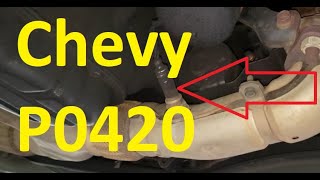
We Have This Part in Stock


The information in this article is provided for general reference and educational purposes only. Vehicle specifications, procedures, and part compatibility can vary by production date, trim level, and region. Always consult your vehicle's factory service manual and verify part numbers before purchasing or performing repairs. Safety-critical components such as airbags, seat belts, and braking systems should be installed by a qualified professional.
- Chevrolet SILVERADO 1500:
- 🎬 Helpful Videos
- 🛍️ Shop This Part
- What's Unique About the 2002-2009 Chevrolet SILVERADO 1500
- Diagnostic Flowchart
- Symptoms You May Notice
- Most Likely Causes
- Rare But Worth Checking
- Diagnosis Steps
- Parts You'll Likely Need
- Related Codes That Often Appear With This One
- Technical Service Bulletins (TSBs) & Recalls
- Platform-Specific Known Issues
- Mechanic-Grade Diagnostic Values
- Hidden / Shadow Codes Worth Checking
- Scan Tool Commands That Help
- Wiring & Ground Locations
- Real Owner Repair Stories
- "I Checked Everything" — The Actual Cause
- When the Usual Fixes Don't Work
- OEM Part Supersession History
- Model Year Variations Within This Range
- 🎟️ Get 5% Off