

P0420 on 2002-2006 Chevrolet Express: Catalyst, O2 Sensor, and Leak Fixes
On a 2002-2006 Express, P0420 most often means the Bank 1 catalytic converter has failed due to age. However, always check for cheaper fixes first, like a bad downstream oxygen sensor or an exhaust leak, to avoid a costly misdiagnosis. A new converter can cost over $500 plus labor. Some studies suggest faulty oxygen sensors account for up to 30% of P0420 cases.
- P0420 means the catalytic converter on Bank 1 (driver's side) is no longer working efficiently.
- While a bad converter is the most likely cause on a high-mileage Express, always rule out cheaper fixes first: a bad downstream O2 sensor or an exhaust leak.
- The 2002 model year is a different generation (GMT600) than 2003-2006 (GMT610), so parts are not interchangeable.
- If you replace the catalytic converter, you must first fix any engine misfires or leaks, or you will quickly destroy the new part.
What's Unique About the 2002-2006 Chevrolet EXPRESS
As workhorse vehicles, these Express vans often accumulate high mileage, leading to natural wear and tear on emissions components. The 2002-2006 year range also covers a significant platform update in 2003, moving from older V8s to the newer LS-based engine family. For 2002 models specifically, GM issued a Technical Service Bulletin (TSB #PIP3119P) acknowledging that P0420 could appear at very low mileage. [⭐] This TSB explains that the P0420/P0430 diagnostics are disabled for the first hour of engine run time to allow for converter break-in. A power loss event during manufacturing or a new converter replacement could cause the code to set prematurely.
Diagnostic Flowchart
Tap your situation to follow the diagnostic path that matches what you're seeing on this vehicle.
Generation note: This range covers two versions of the Express. The 2002 model is the last year of the first generation (GMT600). The 2003-2006 models are the updated second generation (GMT610), which featured a new frame, revised styling, and a switch to the more modern Gen III LS-based V8 engines (4.8L, 5.3L, 6.0L). While the P0420 code's meaning is the same, part numbers for exhaust components will differ between these generations. The GMT610 platform is shared directly with the GMC Savana.
Symptoms You May Notice
- Check Engine Light is on.
- Reduced engine power or sluggish acceleration if the converter is clogged.
- A smell of rotten eggs or sulfur from the exhaust, which can indicate the converter is overworked or failing.
- Decreased fuel economy.
- Engine may not go above 30 to 40 mph in cases of severe blockage.
- Immediately replacing the catalytic converter without testing the oxygen sensors or checking for exhaust leaks. An O2 sensor is much cheaper and a common point of failure.
- Replacing the converter without performing the GM-recommended drive cycle to run the internal monitor, leading to a repeat P0420 code.
Most Likely Causes
- Failed Catalytic Converter 🔴 High Probability These vans are often used for commercial purposes, leading to high mileage and extended run times that simply wear out the converter's precious metals over 15-20+ years. Contamination from leaking engine oil or coolant can also destroy the converter.
How to confirm: Use an infrared temperature gun to measure the pipe temperature before and after the converter once the engine is fully warm. The outlet should be at least 100-200°F hotter than the inlet. If it's the same or cooler, the converter is not working. A clogged converter may show a much hotter temperature *before* the inlet than after.
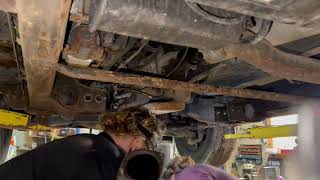
Typical fix: Replace the Bank 1 catalytic converter. 🎬 Watch: Step-by-step guide to replacing the catalytic converter and Y-pipe. It is critical to fix any engine misfires or oil/coolant leaks first, as they will destroy a new converter. After replacement, a specific drive cycle may be needed to run the catalyst monitor and confirm the fix.
Est. part cost: $300-$800 - Failed Downstream Oxygen Sensor (Bank 1, Sensor 2) 🟡 Medium Probability Oxygen sensors are wear items that typically degrade after 80,000-100,000 miles. A lazy or contaminated sensor can send incorrect data to the PCM, falsely triggering a P0420 code. This is a very common misdiagnosis for a bad catalytic converter.
How to confirm: Use a scan tool with live data graphing. The Bank 1 Sensor 2 voltage should be relatively steady between 0.5V and 0.8V. If it's fluctuating rapidly like Sensor 1, the sensor may be bad (or the converter has failed). You can also test the sensor's internal heater element with a multimeter.
Typical fix: Replace the Bank 1, Sensor 2 oxygen sensor. Use a special O2 sensor socket for removal. It is often recommended to use OEM or high-quality aftermarket brands like Denso or NTK to avoid compatibility issues.
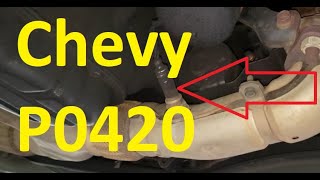
Est. part cost: $40-$100 - Exhaust Leak 🟡 Medium Probability Rust and vibration can cause leaks at exhaust manifold gaskets, flange connections, or cracks in the pipes. A common failure point on these vans is the flange bolts rusting and breaking between the manifold and the Y-pipe. 🎬 See this easy fix for leaking exhaust manifold bolts. A leak before the downstream O2 sensor can introduce oxygen and trick the sensor into sending false readings.
How to confirm: Perform a visual inspection for black soot marks around gaskets and welds. Listen for a ticking or puffing noise, especially when the engine is cold. A professional can use a smoke machine to pinpoint small leaks, but a shop-vac in reverse hooked to the tailpipe can also reveal leaks when you spray connections with soapy water.
Typical fix: Replace the leaking gasket or repair/replace the cracked exhaust component. For broken flange bolts, the old studs may need to be drilled or pressed out and replaced with a new nut and bolt set.
Est. part cost: $10-$150 - Upstream Engine Problems ⚪ Low Probability Neglected maintenance can lead to issues that damage the converter. Common issues include engine misfires from worn spark plugs/coils or leaking fuel injectors, which dump unburned fuel into the exhaust and overheat the converter.
How to confirm: Check for other trouble codes (e.g., P030x for misfires, P0171/P0174 for lean conditions). Address these codes FIRST before suspecting the converter.
Typical fix: Perform a full tune-up (spark plugs, wires), replace faulty ignition coils, or replace leaking fuel injectors.
Est. part cost: $50-$400
Rare But Worth Checking
- Contaminated fuel
- PCM software issue requiring an update
- Use of an O2 sensor extender/non-fouler, which is an illegal modification in many areas that only masks the problem.
Diagnosis Steps
- Scan for Codes: Use an OBD-II scanner to confirm P0420 and check for any other codes 🎬 Watch: A mechanic explains common causes and fixes for P0420. (misfire, fuel trim, O2 sensor codes). Address any other codes first, as they are often the root cause.
- Inspect for Exhaust Leaks: Visually inspect the exhaust system from the engine manifold past the rear O2 sensor. Look for cracks, holes, or black soot indicating a leak. Listen for ticking noises on a cold start, which often diminish as the metal heats up and expands. Pay close attention to the manifold-to-head and flange connections.
- Analyze Oxygen Sensor Data: Using a scanner with live data, graph the voltage for Bank 1 Sensor 1 and Bank 1 Sensor 2. Sensor 1 should switch rapidly between ~0.1V and ~0.9V. A good converter will show Sensor 2 holding a steady, high voltage (~0.7V). If Sensor 2 is mirroring Sensor 1's fluctuations, the converter is likely bad or the sensor has failed.
- Test the Catalytic Converter: With the engine fully warmed up, use an infrared thermometer to check the inlet and outlet pipe temperatures of the Bank 1 converter. A working converter should be at least 100°F hotter at the outlet.
- Test the Oxygen Sensor: If the converter temperature test is inconclusive, suspect the O2 sensor. You can test the sensor's heater element for continuity with a multimeter; resistance should typically be between 3 and 15 ohms when cold. Also check for battery voltage (~12V) at the heater power wire (often pink) on the harness side with the key on.
- Address Root Cause: If a bad converter is confirmed, ensure there are no engine misfires, oil leaks, or coolant leaks that caused it to fail before installing a new one. After replacement, perform the GM catalyst monitor drive cycle to confirm the repair.
Parts You'll Likely Need
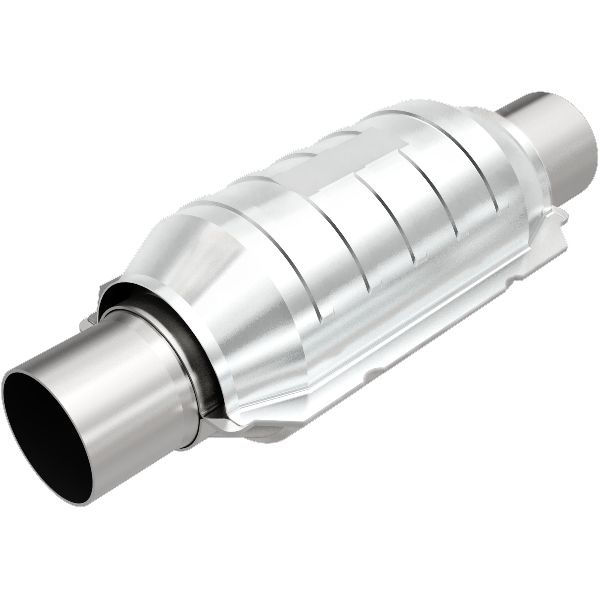
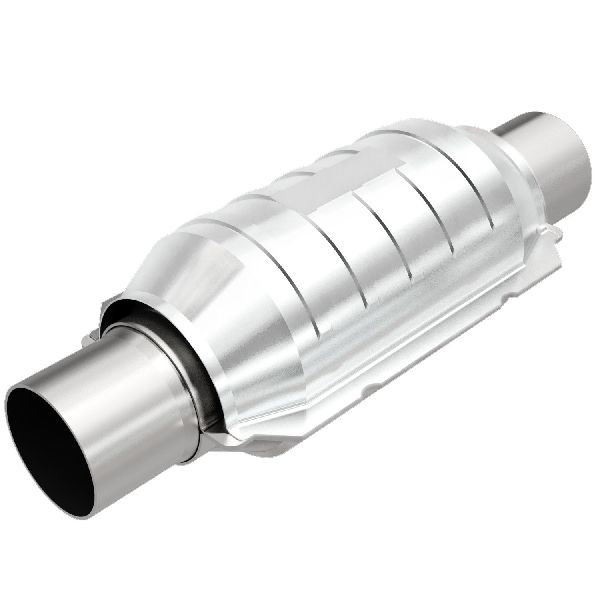
- Catalytic Converter (Bank 1) — This is the most common failure for P0420 on a high-mileage vehicle. The internal catalyst materials degrade over time and lose their efficiency.
Trusted brands: ACDelco, Walker, MagnaFlow, AP Exhaust
OEM price range: $600-$1000
Aftermarket price range: $300-$800 - Downstream Oxygen Sensor (Bank 1, Sensor 2)
(OEM #ACDelco 213-4229 (cross-references to Denso 234-4668, NTK 21514 for many 6.0L V8 applications, verify by VIN))— A faulty O2 sensor can send incorrect readings, tricking the computer into setting a P0420 code. It's a common wear item and a frequent point of misdiagnosis.
Trusted brands: ACDelco, Denso, NTK, Bosch
OEM price range: $60-$120
Aftermarket price range: $40-$100
Related Codes That Often Appear With This One
- P0430 — This is the identical code but for Bank 2 (passenger side). It's common for both converters to fail around the same time on high-mileage V8 engines. The TSB for premature codes also applies to P0430. [⭐]
- P0300-P0308 — These are misfire codes. An engine misfire allows unburned fuel to enter the exhaust, which can overheat and melt the inside of the catalytic converter, causing P0420.
- P0137, P0138, P0140, P0141 — These are all codes related to the Bank 1, Sensor 2 (downstream) oxygen sensor circuit (low voltage, high voltage, no activity, heater circuit). Their presence strongly suggests the O2 sensor itself is the problem, not the converter.
Technical Service Bulletins (TSBs) & Recalls
- Bulletin #PIP3119P: Catalytic Converter Break-In Information To Prevent DTCs P0420 And/Or P0430. This bulletin explains that on new or low-mileage vehicles, or after a converter replacement, a false P0420/P0430 may set because the converter has not been properly broken in. It provides a specific drive cycle procedure to perform before replacing parts.
Platform-Specific Known Issues
- Per TSB #PIP3119P, some 2002-2006 models experienced P0420 at low mileage or after a converter replacement. This is often due to an incomplete break-in cycle for the catalyst material. The fix is to clear the code and perform a specific, extended highway drive cycle to allow the converter to 'out-gas' and mature before the PCM's diagnostic will pass.
- Exhaust manifold bolts on the LS-based V8 engines are notorious for breaking, especially the rear-most bolts, causing an exhaust leak that can trigger P0420. Repair often involves extracting the broken bolt, which can significantly increase labor time.
Mechanic-Grade Diagnostic Values
- Downstream O2 Sensor Heater Resistance — expected: 3 to 15 Ohms when measured at ambient temperature across the two heater circuit pins (often same-colored wires). New Bosch sensors often measure around 8.4-9.0 Ohms.. Failure: A reading of infinity (Open Loop) or zero ohms (short circuit) indicates a failed heater element. The PCM may also set a code if heater current is less than 0.25A or more than 1.375A.
- O2 Sensor Connector Voltage (Key On, Engine Off) — expected: On the harness side of the connector: Battery voltage (~12V) on the pink wire (heater power feed) and near-zero voltage (~0.01V) on the light blue wire (heater computer ground).. Failure: No voltage on the power feed indicates a blown fuse (check O2A/O2B fuses in underhood panel) or wiring issue. High voltage on the ground wire indicates a poor ground at the PCM.
- Fuel Pressure (Key On, Engine Running) — expected: Approximately 55-65 PSI for the 4.8L, 5.3L, and 6.0L engines.. Failure: Significantly low pressure can cause lean conditions, while excessively high pressure can cause rich conditions that damage the converter. A leaking regulator can also cause issues.
Hidden / Shadow Codes Worth Checking
- Mode 6, Catalyst Monitor Test: Mode 6 is a diagnostic mode that shows the raw test results from the PCM's onboard monitors, rather than just a simple pass/fail. For P0420, a technician can view the calculated catalyst efficiency value (often as a ratio of sensor switching) that the PCM uses to decide whether to set the code. This allows seeing how close to the failure threshold the converter is operating. (see via Requires a professional-grade scan tool that can access and interpret Mode 6 data. The specific Test ID (TID) and Component ID (CID) are manufacturer-specific.)
Scan Tool Commands That Help
- OBD-II Scanner / Tech 2: Catalyst System Monitor Drive Cycle — After replacing a catalytic converter or clearing the P0420 code, this drive cycle must be performed to force the PCM to re-run its internal test and confirm the repair. Failure to do so may result in the monitor not running and the code returning later or failing an emissions test due to 'not ready' status. The cycle typically involves a cold start, idle period with electrical load, and sustained highway driving at 55 mph for at least 5 minutes.
Wiring & Ground Locations
- G102 / G103 — On 2003+ models, these are key engine grounds located on the rear of the cylinder heads (G102 on the left/driver side, G103 on the right/passenger side). Poor contact at these grounds can cause a variety of issues, including erratic sensor behavior.. The PCM and its sensors rely on clean ground connections for accurate readings. A faulty ground can introduce electrical noise or voltage offsets, potentially corrupting the O2 sensor signals that the catalyst monitor depends on.
- Bank 1 O2 Sensor Wiring (2006 6.0L example) — At the 4-wire sensor connector.. Knowing the wire colors is critical for testing. On a 2006 6.0L, the wires were identified as: Pink (Heater Power), Light Blue (Heater Ground), Purple/White (Signal), and Tan (Signal Ground/Low Reference). Checking for power, ground, and signal integrity at these specific wires is a key diagnostic step.
Real Owner Repair Stories
- Lincoln vs Cadillac Forums user (2006 GM Vehicle (similar V8 architecture)) — Persistent P0420 code and a slight bump/misfire at idle.
❌ Tried (didn't work) Replacing spark plugs, Replacing ignition coils (previous owner had tried this with multiple brands)
✅ What actually fixed it The final fix was replacing the dried-out, crumbly intake manifold plenum gaskets. The owner first noticed a cracked PCV inlet tube, and fixing that improved the idle, but the P0420 code was only resolved after replacing the main intake gaskets with a new Fel-Pro set. - Comment on YouTube video by KIT'S Auto and Truck Repair (Vehicle with P0420 (specific model not mentioned, but common GM issue)) — Check Engine Light with P0420 code.
❌ Tried (didn't work) Initial diagnostics focusing on sensors and the converter itself.
✅ What actually fixed it The root cause was a single missing nut on the exhaust manifold. This created a very small exhaust leak that was difficult to detect but allowed enough unmetered oxygen into the exhaust stream to throw off the O2 sensor readings and trigger the catalyst efficiency code.
"I Checked Everything" — The Actual Cause
- A common scenario that fools technicians is when an exhaust system smoke test comes back clean, but the P0420 code persists. In several documented cases, the root cause was not an exhaust leak, but rather a vacuum leak at the intake manifold gasket. This unmetered air enters the engine, is not measured by the MAF sensor, and creates a lean condition. The PCM compensates by adding fuel, which can affect the upstream O2 sensor's readings and ultimately cause the catalyst monitor to fail, even though there are no leaks in the exhaust itself.
Helpful Videos
We Have This Part in Stock



The information in this article is provided for general reference and educational purposes only. Vehicle specifications, procedures, and part compatibility can vary by production date, trim level, and region. Always consult your vehicle's factory service manual and verify part numbers before purchasing or performing repairs. Safety-critical components such as airbags, seat belts, and braking systems should be installed by a qualified professional.
- Chevrolet EXPRESS:
- 🎬 Helpful Videos
- 🛍️ Shop This Part
- What's Unique About the 2002-2006 Chevrolet EXPRESS
- Diagnostic Flowchart
- Symptoms You May Notice
- Most Likely Causes
- Rare But Worth Checking
- Diagnosis Steps
- Parts You'll Likely Need
- Related Codes That Often Appear With This One
- Technical Service Bulletins (TSBs) & Recalls
- Platform-Specific Known Issues
- Mechanic-Grade Diagnostic Values
- Hidden / Shadow Codes Worth Checking
- Scan Tool Commands That Help
- Wiring & Ground Locations
- Real Owner Repair Stories
- "I Checked Everything" — The Actual Cause
- 🎟️ Get 5% Off