

P0420 on 2014-2019 Chevrolet Corvette: Catalyst Efficiency Causes and Fixes
On a C7 Corvette, code P0420 is often caused by something other than a bad catalytic converter. Before replacing the expensive converter, inspect the engine air filter box for a poor seal, as outlined in a GM Technical Service Bulletin. Also, check for exhaust leaks and failing oxygen sensors, especially after installation of aftermarket parts like an X-pipe.
- First, check the engine air filter and air box for a perfect seal. This is a known issue on the C7 Corvette and is a free fix.
- Second, inspect for exhaust leaks between the engine and the rear O2 sensor, especially if any exhaust work has been done.
- Third, test the Bank 1 downstream O2 sensor before assuming the catalytic converter has failed.
- Only replace the catalytic converter after you have definitively ruled out all other possibilities.
What's Unique About the 2014-2019 Chevrolet CORVETTE
For the C7 Corvette, a P0420 code has a very specific and unusual potential cause that is not common on other vehicles. General Motors issued Technical Service Bulletin #16-NA-111 which directly links this code to an improperly sealed engine air box or air filter. This can allow unmetered, debris-laden air to enter the engine, which can damage the O2 sensors and even block the catalytic converter with particles. The TSB explicitly states not to replace any parts until the air filter housing has been validated to be completely sealed. Owners or technicians who have recently changed the air filter should pay close attention to this possibility before suspecting more expensive components.
Diagnostic Flowchart
Tap your situation to follow the diagnostic path that matches what you're seeing on this vehicle.
Symptoms You May Notice
- Check Engine Light is on.
- Reduced engine power and acceleration, especially if the converter is clogged.
- A rotten egg or sulfur-like smell from the exhaust.
- Decreased fuel economy.
- Vehicle may fail an emissions test.
- A rattling or hissing sound from the exhaust area if the catalyst material inside the converter has broken apart.
- Immediately replacing the catalytic converter without checking for air intake leaks, exhaust leaks, or faulty oxygen sensors first. This is a very expensive mistake, especially given the known airbox issue on the C7.
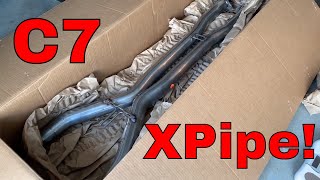
- Replacing the catalytic converter when the code was actually caused by an exhaust leak from a recent aftermarket X-pipe installation. 🎬 See this X-pipe installation guide to check for common leak points.
Most Likely Causes
- Improperly Sealed Air Box / Air Filter 🔴 High Probability Per GM Technical Service Bulletin #16-NA-111, the air box design can be susceptible to improper sealing after an air filter change, allowing dirt and debris to bypass the filter. This can damage O2 sensors and clog the converter.
How to confirm: Visually inspect the engine air box and the seal around the air filter. Look for dirt/debris tracks inside the airbox past the filter seal. Ensure the cover is fully seated, all clips are engaged, and there are no visible gaps.
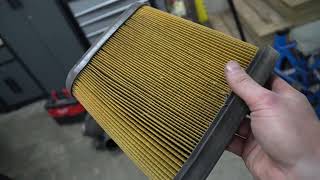
Typical fix: Reseat the air filter and air box cover correctly. Clean any debris from the airbox and intake tube. If the seal is damaged, replace the air filter. 🎬 Watch: How to properly change and seal your C7 air filter.
Est. part cost: $0-$80 - Exhaust System Leak 🟡 Medium Probability Leaks are very common after installing aftermarket parts like an X-pipe or headers, which is a popular modification for the C7. Leaks often occur at the donut gaskets where the manifolds meet the mid-pipe or at the clamps connecting the X-pipe to the mufflers. A leak between the engine and the rear O2 sensor allows oxygen to enter the exhaust, skewing the sensor's readings and tricking the ECM into setting a P0420 code.
How to confirm: Perform a visual inspection of the exhaust system from the manifolds to the rear O2 sensors. Look for black soot trails or listen for hissing sounds. A professional smoke test is the most effective way to find small leaks. Some owners find leaks by having a helper cover the tailpipes with a rag while the engine is running to build pressure and make leaks more audible.
Typical fix: Tighten loose clamps or replace failed gaskets. Several forum users report having to re-torque exhaust clamps multiple times after an aftermarket install to achieve a good seal.
Est. part cost: $20-$100 - Failing Downstream (Post-Cat) Oxygen Sensor 🟡 Medium Probability Oxygen sensors have a finite lifespan and can be damaged by exhaust leaks, contamination, or physical impact during other repairs. They can become 'lazy' or biased, sending incorrect data to the ECM without failing completely.
How to confirm: Use a scan tool to graph the voltage of the Bank 1 downstream O2 sensor (Sensor 2). A healthy sensor on a warm engine at steady RPM should show a relatively stable voltage (typically 0.6V-0.8V). If it's fluctuating rapidly like the upstream sensor, or is stuck at a specific voltage, it is likely faulty. Swapping the Bank 1 and Bank 2 downstream sensors and seeing if the code changes to P0430 is a common diagnostic trick.
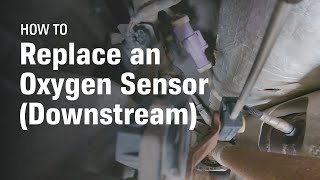
Typical fix: Replace the Bank 1, Sensor 2 (downstream) oxygen sensor. It's often wise to replace them in pairs (both downstream sensors). The GM part number varies by year; for 2017-2019 models, Bank 1 Sensor 2 is GM part #12665161. 🎬 Watch: A helpful walkthrough on replacing a downstream oxygen sensor.
Est. part cost: $50-$150 - Failed Catalytic Converter ⚪ Low Probability Catalytic converters on the C7 are generally robust but can fail from age or contamination. Failure is often accelerated by other issues like persistent engine misfires, or oil/coolant contamination which overheat and destroy the internal catalyst structure. Sometimes they are damaged during transmission removal/reinstallation.
How to confirm: This should be the last diagnosis after ruling out all other causes. A temperature gun can show if the converter outlet is significantly hotter than the inlet (which is normal). If temperatures are similar or the inlet is hotter, the converter may be clogged or inactive. Tapping the converter with a rubber mallet may produce a rattling sound if the internal honeycomb is broken.
Typical fix: Replace the Bank 1 catalytic converter. This is a federally mandated emissions component and may be covered under warranty for 8 years or 80,000 miles.
Est. part cost: $500-$1500+
Rare But Worth Checking
- Engine Misfire: An engine misfire can dump unburnt fuel into the exhaust, quickly destroying the catalytic converter. If you have other codes like P0300-P0308, address the misfire first.
- Rich or Lean Fuel Condition: Issues with fuel injectors or the fuel pressure regulator can create an improper air/fuel mixture that either overheats the converter or causes a false P0420 code.
- Aftermarket High-Flow Catalytic Converters: Owners who install aftermarket headers with high-flow cats frequently report P0420 and P0430 codes because these cats are less efficient than the OEM units. This often requires an ECU tune or O2 sensor spacers (sometimes called 'mini cats' or 'defoulers') to resolve.
Diagnosis Steps
- Check for other DTCs. If misfire codes (P030x) are present, diagnose and fix them first.
- Thoroughly inspect the engine air box and air filter for a proper seal, as per TSB #16-NA-111. Check for any signs of dirt bypassing the filter seal. Ensure it is clean and latched securely.
- Inspect the exhaust system for any leaks between the exhaust manifold and the downstream oxygen sensor. Pay close attention to the manifold-to-pipe 'donut' gaskets, especially if aftermarket parts have been installed.
- Use a scan tool to monitor the live data stream for the upstream and downstream O2 sensors for Bank 1. The upstream (Sensor 1) voltage should fluctuate rapidly between ~0.2V and ~0.8V. The downstream (Sensor 2) voltage should remain relatively steady and stable (e.g., >0.7V) on a hot, running engine at steady speed.
- If the downstream O2 sensor is mimicking the upstream sensor, and you have confirmed no air intake or exhaust leaks, the catalytic converter is suspect.
- If the downstream O2 sensor signal is flat, stuck, or slow to respond, the sensor itself is likely the problem. Consider swapping the left and right downstream sensors to see if the code follows the sensor (changes to P0430).
- As a final check, use an infrared temperature gun to measure the temperature of the pipe entering and exiting the catalytic converter on a fully warmed-up engine. The outlet should be at least 100°F (38°C) hotter than the inlet.
Parts You'll Likely Need
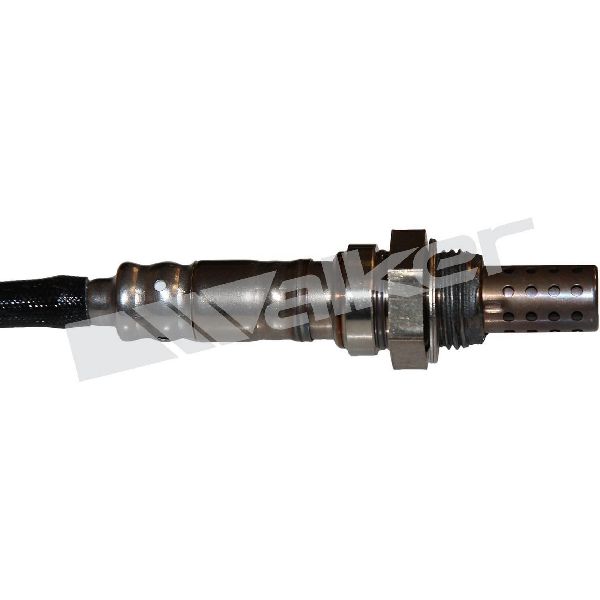
- Downstream Oxygen Sensor (Bank 1, Sensor 2)
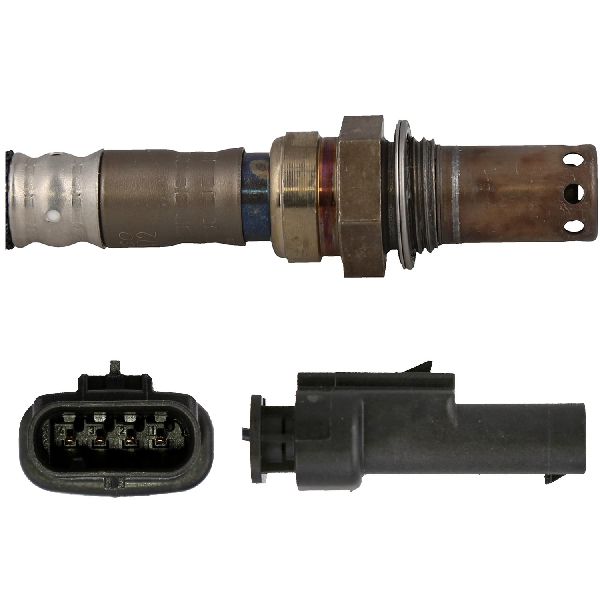
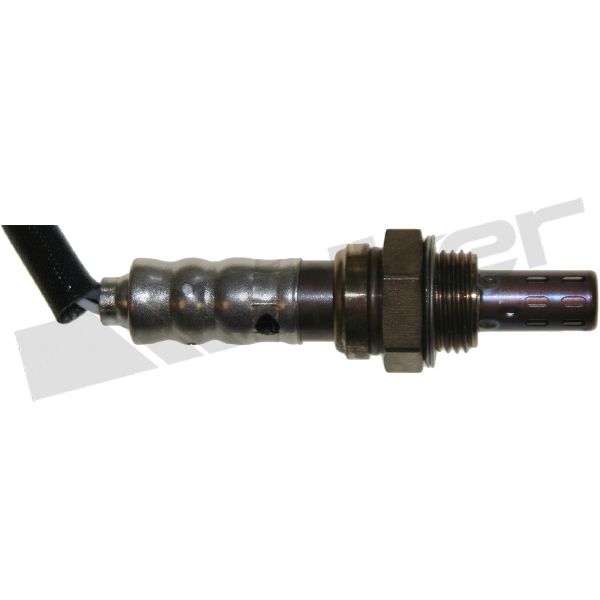
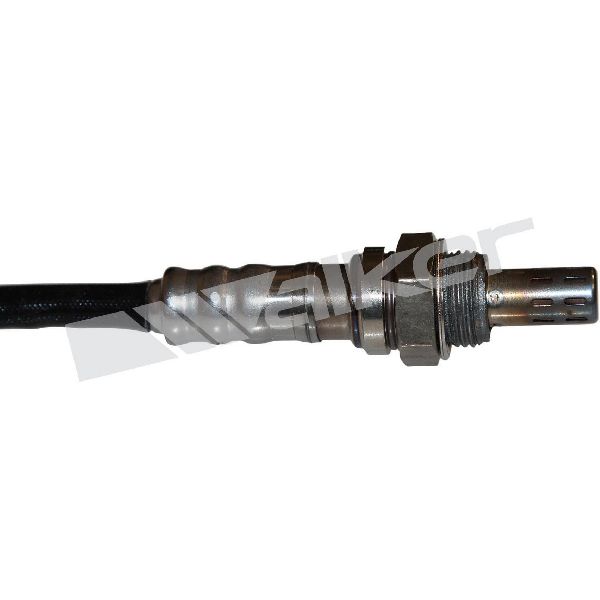
(OEM #12665161 (2017-2019), 12655678 (2014-2016))— A faulty or 'lazy' sensor is a common cause for a false P0420 code and is much cheaper to replace than the catalytic converter.
Trusted brands: ACDelco, Denso, Bosch
OEM price range: $70-$120
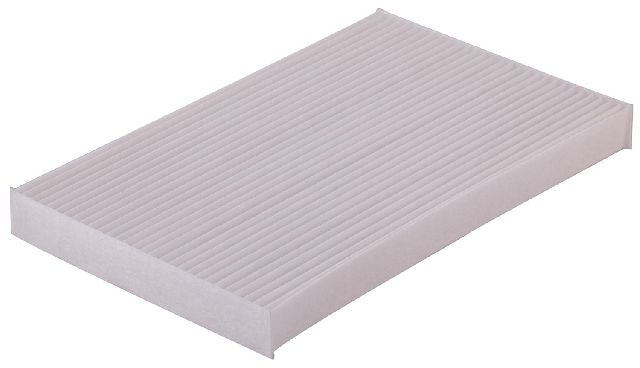
Aftermarket price range: $50-$90 - Engine Air Filter
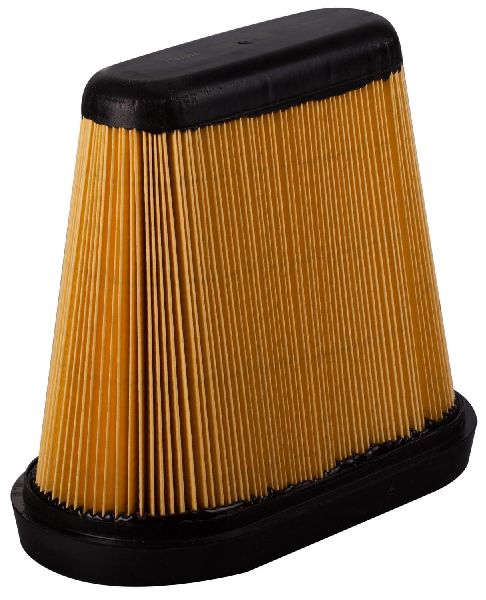
(OEM #23104239 (ACDelco A3181C))— If the existing filter's seal is damaged or the filter is incorrectly installed, it can cause the P0420 code per TSB #16-NA-111.
Related Codes That Often Appear With This One
- P0430 — This is the identical code for Bank 2 (passenger side). If both appear, it strongly points to a common issue like the air box seal problem, a vacuum leak, bad fuel, or a systemic engine issue.
- P0300-P0308 — These are misfire codes. A misfire is a primary cause of catalytic converter failure, as it sends raw fuel into the exhaust which ignites in the converter, melting it.
- P0137 / P0157 — These are 'O2 Sensor Circuit Low Voltage' codes for Bank 1 Sensor 2 and Bank 2 Sensor 2, respectively. They can appear alongside P0420/P0430 after installing aftermarket headers, often indicating an exhaust leak or that the sensors are relocated too far downstream.
Technical Service Bulletins (TSBs) & Recalls
- 16-NA-111
Platform-Specific Known Issues
- GM TSB #16-NA-111 explicitly states that an improperly seated air filter or airbox can cause P0420 and P0430 codes. This should be the first inspection point.
- Forum discussions frequently point to exhaust leaks after installing aftermarket X-pipes as a trigger for this code on the C7 platform. The connection at the manifold donut gaskets is a common leak point.
- Owners installing long tube headers with high-flow cats almost universally report getting P0420/P0430 codes, which typically requires a tune or O2 sensor spacers to fix.
Mechanic-Grade Diagnostic Values
- Long Term Fuel Trim (LTFT) at idle — expected: Close to 0%, ideally within +/- 5%.. Failure: Sustained positive values of +10% or higher indicate the engine is compensating for a vacuum/unmetered air leak, a common cause of false P0420 codes.
- Downstream O2 Sensor (Sensor 2) Voltage — expected: Relatively steady voltage around 700mV (0.7V) on a fully warmed engine at a steady 3000 RPM.. Failure: Voltage fluctuates rapidly, mimicking the upstream sensor's waveform (200-800mV), indicating the catalyst is not functioning.
- Mass Airflow (MAF) Sensor Reading at idle — expected: 4-7 grams/second on a fully warmed engine.. Failure: Readings significantly outside this range can indicate a sensor issue or a large air leak, affecting the air/fuel ratio.
- Fuel Pressure (engine off, reference line disconnected) — expected: Approximately 45 PSI.. Failure: Low fuel pressure can cause a lean condition, while high pressure can cause a rich condition, both of which can lead to P0420.
Hidden / Shadow Codes Worth Checking
- Mode $06, Catalyst Monitor: Mode $06 provides access to the raw results of the onboard emissions monitor tests before they reach the failure threshold to set a Check Engine Light. For the catalyst, the ECU calculates an efficiency ratio based on O2 sensor switching and compares it to a minimum and maximum value. Viewing this data can show if the converter is marginal and close to failing, even if no code is currently set. (see via A professional scan tool or an advanced OBD-II app that supports Mode $06 is required. The specific Monitor ID (OBDMID) and Test ID (TID) are manufacturer-specific but will be labeled under catalyst monitoring.)
Scan Tool Commands That Help
- GDS2 or other professional scan tool: GM Drive Cycle for Catalyst Monitor — After a repair (like replacing an O2 sensor or converter) or after clearing codes, a specific drive cycle must be performed to allow the catalyst monitor to run its self-test and confirm the fix. A technician uses the scan tool to view the 'Readiness Monitor' status and confirm the Catalyst Monitor has completed. The cycle typically involves a cold start, idle period, and steady-state driving at specific speeds (e.g., 55 mph for 5 minutes).
- GDS2 or other professional scan tool: Reset Fuel Trims / Oxygen Sensor Replacement Procedure — After replacing an oxygen sensor, a reset procedure may be required. This command resets the long-term fuel trim adaptations in the ECM, forcing it to relearn values with the new sensor, ensuring accurate air/fuel control.
Wiring & Ground Locations
- Engine Block Grounds (G105, G106, G107) — Various points on the engine block; G106 is typically on the passenger side above the starter, G107 behind the driver's side cylinder head, and G105 on the driver's side of the block. (Note: These specific designators are from C5 diagrams but are conceptually similar for C7).. The PCM, ignition coils, and sensors rely on clean engine grounds. A poor ground can introduce electrical noise or voltage offsets, leading to incorrect sensor readings (including O2 sensors) and potential misfires, both of which can trigger a P0420 code.
- Chassis/Frame Grounds (G104, G401) — G104 is a critical ground on the frame next to the battery. G401 for C7 is located on the outboard side of the left frame rail, forward of the rear axle.. The main engine-to-chassis ground is essential for the entire electrical system. A corroded or loose main ground can cause widespread, intermittent issues, including phantom sensor codes as the system seeks a path to ground through sensor circuits.
Real Owner Repair Stories
- CorvetteForum users (C7 Corvette (various years) with aftermarket long-tube headers and high-flow catalytic converters.) — Check Engine Light with P0420 and/or P0430 codes appearing weeks or months after the header installation, with no other symptoms.
❌ Tried (didn't work) Clearing the codes (they would always return)., Checking for exhaust leaks (often none were found).
✅ What actually fixed it The aftermarket high-flow cats are less efficient than OEM, eventually triggering the code. The two common fixes were: 1) Using O2 sensor spacers (also called 'defoulers' or 'mini-cats') on the downstream sensors to pull them out of the direct exhaust flow, tricking the sensor into sending a 'clean' signal. 2) Getting an ECU tune to disable the reporting for the catalyst efficiency monitor codes (P0420/P0430). - CorvetteForum user (2014 Corvette Z51) — P0420 and P0430 codes appearing at the same time.
❌ Tried (didn't work) Resetting the long-term fuel trims (the lean condition returned).
✅ What actually fixed it The user diagnosed a significant lean condition at idle, with Long Term Fuel Trims rising to +15%. This pointed to a vacuum leak (unmetered air entering after the MAF sensor). The excessive oxygen from the leak was causing the downstream O2 sensors to report false catalyst inefficiency. The fix is to find and repair the source of the vacuum leak.
"I Checked Everything" — The Actual Cause
- A common scenario for a false P0420 on the C7 Corvette is a leak at the engine air intake box seal, as described in TSB #16-NA-111. A technician performing a standard exhaust system smoke test would find no leaks and might incorrectly condemn the catalytic converter. The actual root cause is unmetered air entering the intake system, which leans out the fuel mixture and causes the ECU to see unusual oxygen sensor readings, leading to the false catalyst code.
When the Usual Fixes Don't Work
- While a P0420 code most commonly points to a failed catalytic converter on many vehicles, on the C7 Corvette it is critical to exhaust all other possibilities first. Real-world owner experiences frequently show the code being triggered by secondary issues. These include the TSB-documented air box seal leak, exhaust leaks introduced by popular aftermarket X-pipe installations, and false codes set by less-efficient aftermarket high-flow catalysts. In these cases, replacing the expensive OEM catalytic converter would not have fixed the problem.
OEM Part Supersession History
12655678→N/A - Model Year Specific— This is the downstream oxygen sensor for 2014-2016 models.
Heads up: This part is not compatible with 2017-2019 models, which use part number 12665161.12665161→N/A - Model Year Specific— This is the downstream oxygen sensor for 2017-2019 models.
Heads up: This part is not compatible with 2014-2016 models, which use part number 12655678.12655678 / 12665161→
Heads up: Multiple parts suppliers note that these oxygen sensors require 'programming and/or special setup procedures.' This implies that simply installing the part may not resolve the issue without a corresponding reset or relearn procedure performed with a GM-compatible scan tool.
Model Year Variations Within This Range
- 2014-2016 vs 2017-2019: The downstream oxygen sensor part numbers are different. 2014-2016 models use GM part #12655678, while 2017-2019 models use GM part #12665161. They are not interchangeable.
- Up to ~2016: Some earlier models may have been built with an improper ground crimp for the ignition coil packs, creating a potential for misfires that can lead to catalytic converter damage. This issue is reported to have been resolved in later model years.
- 2014 vs 2015-2019: The 2014 model year was available with a 6-speed (6L80) automatic transmission. From 2015 onward, this was replaced by an 8-speed (8L90) automatic. This can affect ECM software and diagnostic parameters.
Helpful Videos

Used OEM Parts in Stock
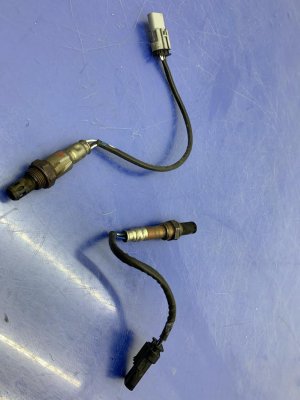

New Aftermarket Parts Available

The information in this article is provided for general reference and educational purposes only. Vehicle specifications, procedures, and part compatibility can vary by production date, trim level, and region. Always consult your vehicle's factory service manual and verify part numbers before purchasing or performing repairs. Safety-critical components such as airbags, seat belts, and braking systems should be installed by a qualified professional.
- Chevrolet CORVETTE:
- 🎬 Helpful Videos
- 🛍️ Shop This Part
- What's Unique About the 2014-2019 Chevrolet CORVETTE
- Diagnostic Flowchart
- Symptoms You May Notice
- Most Likely Causes
- Rare But Worth Checking
- Diagnosis Steps
- Parts You'll Likely Need
- Related Codes That Often Appear With This One
- Technical Service Bulletins (TSBs) & Recalls
- Platform-Specific Known Issues
- Mechanic-Grade Diagnostic Values
- Hidden / Shadow Codes Worth Checking
- Scan Tool Commands That Help
- Wiring & Ground Locations
- Real Owner Repair Stories
- "I Checked Everything" — The Actual Cause
- When the Usual Fixes Don't Work
- OEM Part Supersession History
- Model Year Variations Within This Range
- 🎟️ Get 5% Off