

P0420 on 2004-2006 Chevrolet Avalanche 2500 8.1L: Catalyst Efficiency Causes & Fixes
P0420 on the 8.1L Avalanche 2500 most often means the Bank 1 catalytic converter has failed due to age. Before replacing this expensive part, check for exhaust leaks (especially broken manifold bolts) and confirm the oxygen sensors are working correctly. A new converter can cost between $400 and $1,200.
- P0420 means the driver's side catalytic converter is no longer working efficiently.
- Before buying a new converter, ALWAYS inspect for exhaust leaks, especially broken exhaust manifold bolts near the back of the engine.
- Use a scan tool to verify the downstream O2 sensor isn't simply faulty before condemning the much more expensive converter.
- Address any engine misfire or fuel system codes immediately, as they can quickly destroy a new catalytic converter.
What's Unique About the 2004-2006 Chevrolet AVALANCHE 2500
The 2004-2006 Avalanche 2500 uses the large 8.1L V8 engine, which produces significant heat and exhaust volume, contributing to eventual catalytic converter wear. A notable issue for this platform is GM Technical Service Bulletin #PIP3119N (later superseded by PIP3119P), which mentioned that the P0420 code could appear on low-mileage vehicles or after a converter replacement due to the catalyst material not being properly broken in. Additionally, these GM trucks are known for exhaust manifold bolts breaking, creating leaks that can fool the oxygen sensors and cause a false P0420 code. This is often heard as a distinct ticking noise from the engine bay, especially when cold.
Diagnostic Flowchart
Tap your situation to follow the diagnostic path that matches what you're seeing on this vehicle.
Symptoms You May Notice
- Check Engine Light is on
- Reduced engine power or hesitation, especially if the converter is clogged
- Rotten egg or sulfur smell from the exhaust
- Rattling noises from the exhaust if the internal converter material has broken apart
- Failing an emissions test
- Replacing the oxygen sensor when the catalytic converter is the actual failure.
- Replacing the catalytic converter when an upstream exhaust leak (like a broken manifold bolt) was the true cause of the incorrect O2 sensor readings.
- Replacing the catalytic converter without fixing an underlying engine misfire, leading to the new converter failing shortly after.
Most Likely Causes
- Failed Catalytic Converter 🔴 High Probability High mileage and the high heat output of the 8.1L V8 engine lead to natural degradation of the converter's precious metals over time. Contamination from engine issues like burning oil or coolant can also destroy the converter.
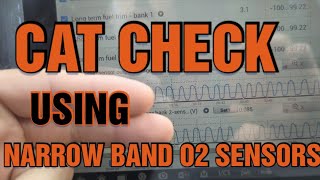
How to confirm: After ruling out all other causes, this is the most likely culprit. A diagnostic test involves comparing upstream and downstream O2 sensor readings 🎬 Watch: A professional guide to diagnosing P0420 and P0430 codes. on a scan tool; if the downstream sensor mirrors the upstream, the converter is bad. An infrared thermometer can also be used; the outlet should be at least 100°F hotter than the inlet on a working converter. An exhaust back pressure test can also confirm a clog.
Typical fix: Replace the Bank 1 catalytic converter assembly. It is often recommended to replace oxygen sensors at the same time.
Est. part cost: $400-$1200 - Exhaust Leak 🟡 Medium Probability GM trucks of this era are known for the rear-most exhaust manifold bolts breaking off due to heat cycles, causing a leak right before the primary oxygen sensor. This is often called the 'Chevy tick'. This introduces unmetered oxygen into the exhaust, skewing sensor readings.
How to confirm: Perform a visual inspection of the exhaust manifold and listen for a ticking noise, especially when the engine is cold. You can also use a smoke machine to pinpoint leaks in the exhaust system before the rear O2 sensor. Look for black soot trails near gaskets.
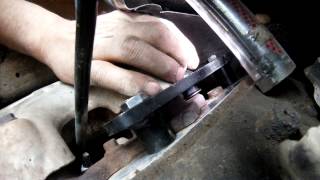
Typical fix: Replace the broken exhaust manifold bolts and the manifold gasket. This can be a difficult job as the broken bolt often needs to be drilled out. 🎬 See a simple fix for broken GM exhaust manifold bolts.
Est. part cost: $20-$100 - Failed Downstream Oxygen (O2) Sensor 🟡 Medium Probability O2 sensors are wear items and typically have a lifespan of around 100,000 miles. A lazy or faulty sensor can send incorrect data to the PCM, mimicking a bad converter.
How to confirm: Use a scan tool to graph the voltage of the Bank 1, Sensor 2. It should show a relatively steady voltage on a healthy, warm engine (typically >0.6V). If it's stuck high, low, or fluctuates wildly like the upstream sensor, it needs replacement. A good diagnostic step is to swap the downstream sensors between Bank 1 and Bank 2 and see if the code changes to P0430.
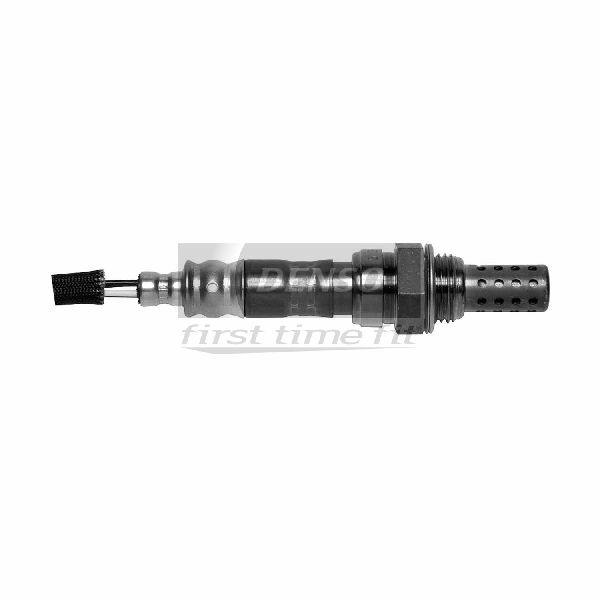
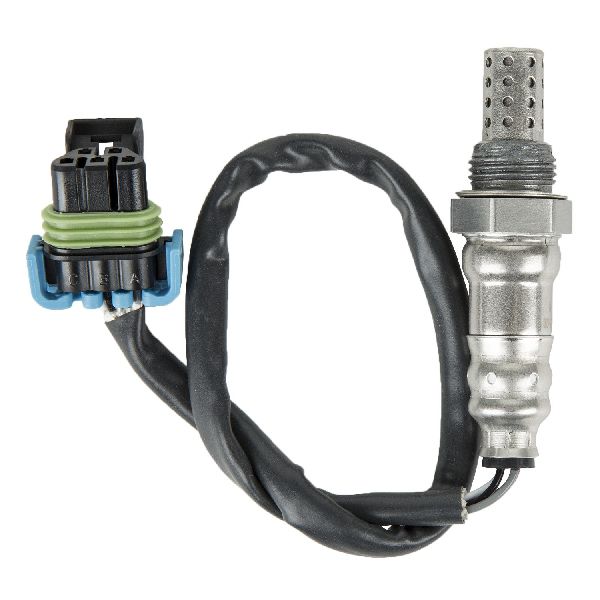
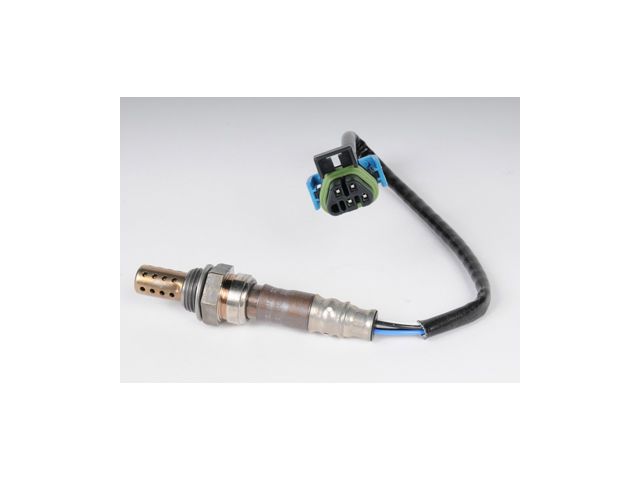
Typical fix: Replace the Bank 1 downstream (post-catalyst) oxygen sensor. The Denso 234-4668 is a commonly cited compatible part.
Est. part cost: $50-$150 - Engine Misfires or Fuel System Issues ⚪ Low Probability Issues like failing spark plugs, ignition coils, or leaky fuel injectors can cause unburned fuel to enter the exhaust. This raw fuel superheats and rapidly destroys the precious metals inside the catalytic converter.
How to confirm: Check for other DTCs, such as misfire codes (P0300-P0308) or fuel trim codes (P0171, P0174). Address these codes first, as they are the root cause of the converter failure.
Typical fix: Resolve the root cause of the misfire or fuel issue, which could be faulty spark plugs, ignition coils, or fuel injectors. Failing to do so will destroy a new catalytic converter quickly.
Est. part cost: $50-$500
Rare But Worth Checking
- PCM Calibration Issue: As noted in TSB #PIP3119N and its successor PIP3119P, some vehicles had overly sensitive diagnostics. This could cause a false P0420, especially on new vehicles or after a converter replacement. The fix can be a specific drive cycle to 'break-in' the converter or a software update from a dealer.
Diagnosis Steps
- Scan for all DTCs. If other codes like misfire (P030x) or fuel system (P017x) codes are present, diagnose and fix them first as they are the likely root cause.
- Inspect the exhaust system thoroughly for leaks. Listen for ticking noises from the exhaust manifolds, especially when cold. Check for broken manifold bolts on the cylinder head, a very common issue on the 8.1L. Look for soot or black marks at gaskets and joints.
- Analyze O2 sensor data with a scan tool. Warm up the engine to operating temperature (closed loop). Graph Bank 1 Sensor 1 (upstream) and Bank 1 Sensor 2 (downstream).
- The upstream sensor should fluctuate rapidly between approximately 0.1V and 0.9V.
- The downstream sensor should show a much steadier, flatter voltage (typically above 0.6V). If the downstream sensor's graph mirrors the upstream sensor's graph, the catalytic converter is not functioning correctly.
- If the downstream sensor's voltage is flat but very low (e.g., <0.2V), or doesn't respond at all, the sensor itself may be faulty.
- Consider swapping the Bank 1 and Bank 2 downstream O2 sensors. If the code moves to P0430, you have confirmed a bad sensor.
- If no leaks are found and O2 sensors test good, the catalytic converter is the most likely cause of the code. Confirm with an infrared thermometer test (outlet should be >100°F hotter than inlet) or an exhaust backpressure test if a clog is suspected.
Parts You'll Likely Need
- Bank 1 Catalytic Converter — This is the most common cause of a true P0420 code on a high-mileage vehicle.
Trusted brands: Walker, MagnaFlow, ACDelco (GM Genuine)
OEM price range: $800-$1200
Aftermarket price range: $400-$700 - Bank 1, Sensor 2 (Downstream) Oxygen Sensor
(OEM #Denso 234-4668 or ACDelco 213-4668 (verify by VIN))— Often replaced as a diagnostic step or when it fails, causing incorrect readings. It's a common misdiagnosis but also a potential cause.
Trusted brands: Denso, Bosch, ACDelco, NTK
OEM price range: $100-$180
Aftermarket price range: $50-$90 - Exhaust Manifold Gasket and Bolt Kit
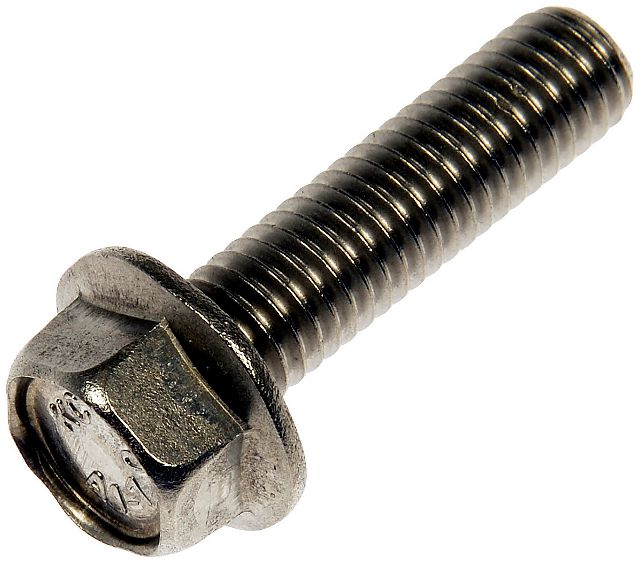
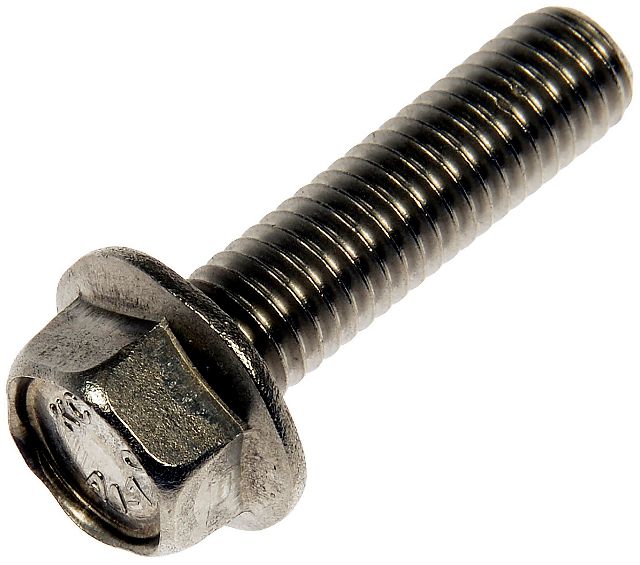
(OEM #Dorman 03414B (Aftermarket Kit))— Required to fix the common issue of broken exhaust manifold bolts, which cause leaks that trigger a false P0420.
Trusted brands: Fel-Pro, Dorman, ACDelco
OEM price range: $50-$100
Aftermarket price range: $20-$50
Related Codes That Often Appear With This One
- P0430 — This is the same catalyst efficiency code but for Bank 2 (passenger side). If both appear, it may indicate a systemic issue like a fuel problem or that both converters have failed due to high mileage.
- P0300-P0308 — These are misfire codes. An engine misfire allows unburned fuel to enter the exhaust, which can overheat and destroy the catalytic converter, leading to a P0420 code.
- P0171, P0174 — These codes indicate a lean fuel condition. This can be caused by unmetered air from an exhaust manifold leak, which in turn can trigger a P0420 code.
Technical Service Bulletins (TSBs) & Recalls
- PIP3119N: Service Engine Soon Malfunction Indicator Lamp on at low mileage with DTC P0420 and or P0430.
- PIP3119P: Catalytic Converter Break-In Information To Prevent DTCs P0420 And/Or P0430. (Supersedes PIP3119N)
Platform-Specific Known Issues
- Broken Exhaust Manifold Bolts: The bolts securing the exhaust manifold to the cylinder head, particularly the one at the rear (closest to the firewall), are prone to breaking from thermal stress. This creates an exhaust leak that allows oxygen into the exhaust stream before the O2 sensor, fooling the sensor into sending data that the PCM interprets as a failed converter, triggering a P0420 code. This is a very common failure on the 8.1L V8.
- TSB #PIP3119P: Catalyst Break-In Procedure: This GM Technical Service Bulletin (superseding PIP3119N) specifically addresses DTCs P0420 and P0430 setting on low-mileage trucks or after a new converter is installed. It indicates the catalyst material needs a 'break-in' period to out-gas properly. The TSB outlines a specific highway drive cycle procedure to perform after installation to prevent a false code from setting.
Mechanic-Grade Diagnostic Values
- Upstream O2 Sensor (Bank 1, Sensor 1) Voltage — expected: Rapidly fluctuating between ~100mV and 900mV (0.1V - 0.9V) on a warm, closed-loop engine.. Failure: Stuck at a specific voltage (e.g., ~450mV), slow to respond, or flat-lined near 0V.
- Downstream O2 Sensor (Bank 1, Sensor 2) Voltage — expected: Relatively steady voltage, typically between 600mV and 800mV (0.6V - 0.8V) on a warm, closed-loop engine with a good converter.. Failure: Fluctuating in a similar pattern to the upstream sensor, indicating the catalyst is not storing oxygen.
- Short-Term Fuel Trim (STFT) & Long-Term Fuel Trim (LTFT) — expected: Ideally close to 0%. Values between -10% and +10% are generally acceptable.. Failure: Sustained positive values (e.g., > +15%) indicate the engine is running lean (adding fuel), which could be caused by an exhaust leak tricking the O2 sensor. Sustained negative values indicate a rich condition.
Hidden / Shadow Codes Worth Checking
- Mode $06, TID $21, CID $80: This refers to the raw test data for the Catalyst Monitor on Bank 1. A scan tool capable of reading Mode $06 data can show the test value, a minimum limit, and a maximum limit. If the current test value exceeds the manufacturer's maximum limit, the P0420 code will be set. (see via A professional scan tool with Mode $06 diagnostic capabilities (e.g., Autel, Snap-on, GM Tech 2).)
Scan Tool Commands That Help
- GM Tech 2 or equivalent: Catalyst System Test — This is a specific service function that forces the engine to run under specific conditions to test the catalyst efficiency directly, rather than waiting for the monitor to run during normal driving. It can speed up diagnosis after a repair.
- GM Tech 2 or equivalent: Snapshot Data Capture — As mentioned in GM bulletins, capturing a 'snapshot' of all sensor data at the moment the fault occurs can be uploaded for analysis, which is useful for intermittent or difficult-to-diagnose P0420 issues.
- Scan Tool with Graphing: GM Drive Cycle / I/M Readiness — After replacing a catalytic converter, a specific drive cycle must be performed to run the internal diagnostic monitor and confirm the fix. A scan tool can show the status of the 'Catalyst' monitor as it changes from 'Incomplete' to 'Complete' or 'OK'.
Wiring & Ground Locations
- PCM Ground — A critical ground wire runs from the main wiring harness and attaches to a bolt on the top rear of the engine block, often on the driver's side.. This is the main ground for the Powertrain Control Module (PCM). Corrosion or a break in this wire can cause erratic sensor readings, including from the oxygen sensors, leading to false trouble codes like P0420.
- Firewall Ground Straps — Braided ground straps are typically found connecting the back of the cylinder heads/engine block to the vehicle's firewall on both the driver and passenger sides.. These straps ensure the engine and body have a common ground potential. A poor connection can introduce electrical noise into sensor circuits, which can interfere with the low-voltage O2 sensor signals.
- G203 — Located near the base of the left (driver's side) 'A' pillar, often behind the kick panel.. This is a major interior ground point. While less likely to directly cause a P0420, it grounds modules like the Body Control Module (BCM) and Instrument Panel Cluster (IPC), and poor grounding can cause a cascade of electrical issues.
- O2 Sensor Connector — The Bank 1 (driver side) downstream O2 sensor connector is located on a bracket attached to the transmission crossmember. The wiring harness runs along the frame rail.. This connector and its wiring are exposed to road debris and heat. Damage here can cause a loss of signal or shorted wires, directly triggering O2 sensor codes or a false P0420.
Real Owner Repair Stories
- iATN (International Automotive Technicians Network) Member Post (2002 Chevrolet Avalanche 2500 8.1L) — Check Engine Light with DTC P0420.
❌ Tried (didn't work) The technician noted that scan tool data showed Bank 1 fuel control at 0%, indicating a potential issue.
✅ What actually fixed it The final diagnosis and fix were not detailed in the available snippet, but the initial data pointed towards a fuel control problem on Bank 1 rather than an immediate converter failure. - Reddit r/MechanicAdvice user comment (2002 Chevy Tahoe (similar GMT800 platform)) — P0420 code appeared after replacing O2 sensors.
❌ Tried (didn't work) Replacing oxygen sensors.
✅ What actually fixed it The consensus from multiple mechanics in the thread was that when a P0420 code is present, it is almost always a failed catalytic converter, and replacing the O2 sensors is a common misdiagnosis. The root cause of the converter failure (misfires, etc.) must be addressed before replacing the converter itself.
OEM Part Supersession History
GM Part # 88864359→ACDelco Part # 213-4668— This part number is for the Throttle Position Sensor (TPS), not the O2 sensor as listed in the pass 2 data. A faulty TPS can cause erratic engine performance but is unlikely to be a direct cause of P0420. The O2 sensor part number is different.
Heads up: The part number Denso 234-4668 from the pass 2 data is correct for the downstream O2 sensor. The ACDelco 213-4668 is a TPS.
Model Year Variations Within This Range
- 2004-2006: Starting in the 2004 model year, the 8.1L Vortec engine (L18) used in these trucks was updated and no longer required an Exhaust Gas Recirculation (EGR) system to meet emissions standards. This simplifies the emissions system compared to earlier 8.1L models.
Helpful Videos
We Have This Part in Stock


The information in this article is provided for general reference and educational purposes only. Vehicle specifications, procedures, and part compatibility can vary by production date, trim level, and region. Always consult your vehicle's factory service manual and verify part numbers before purchasing or performing repairs. Safety-critical components such as airbags, seat belts, and braking systems should be installed by a qualified professional.
- Chevrolet AVALANCHE 2500:
- 🎬 Helpful Videos
- 🛍️ Shop This Part
- What's Unique About the 2004-2006 Chevrolet AVALANCHE 2500
- Diagnostic Flowchart
- Symptoms You May Notice
- Most Likely Causes
- Rare But Worth Checking
- Diagnosis Steps
- Parts You'll Likely Need
- Related Codes That Often Appear With This One
- Technical Service Bulletins (TSBs) & Recalls
- Platform-Specific Known Issues
- Mechanic-Grade Diagnostic Values
- Hidden / Shadow Codes Worth Checking
- Scan Tool Commands That Help
- Wiring & Ground Locations
- Real Owner Repair Stories
- OEM Part Supersession History
- Model Year Variations Within This Range
- 🎟️ Get 5% Off